Home Blog Page 99

Ex-NYSC Director-General Sofoluwe Passes Away, National Service Corps Mourns

0

The National Youth Service Corps, or NYSC, has expressed sorrow over the recent passing of Brigadier General Soyemi Ayodele Sofoluwe, Rtd., its 7th Director-General.

The current DG, Brigadier General Olakunle Nafiu, honored the dead for his outstanding contributions to the expansion of the NYSC during his time as Chief Executive during a condolence visit to the deceased’s family in Lagos.

The DG said that his passing was a huge loss for the family, the NYSC, and the country as a whole.

He asked God to comfort his family and grant the late General eternal rest.

Additionally, Nafiu promised Colonel Kehinde Sofoluwe (Rtd.), the widow and matriarch of the Sofoluwe family, that NYSC would support her throughout the funeral ceremonies.

Sofoluwe, affectionately referred to as “Oga Show” by NYSC employees and Corps members, was well-known and cherished for his friendly, sympathetic, and humorous demeanor.

His spouse, kids, and grandkids survive him.

Makinde Quotes Wike: ‘I Will Not Back Tinubu in 2027’

0

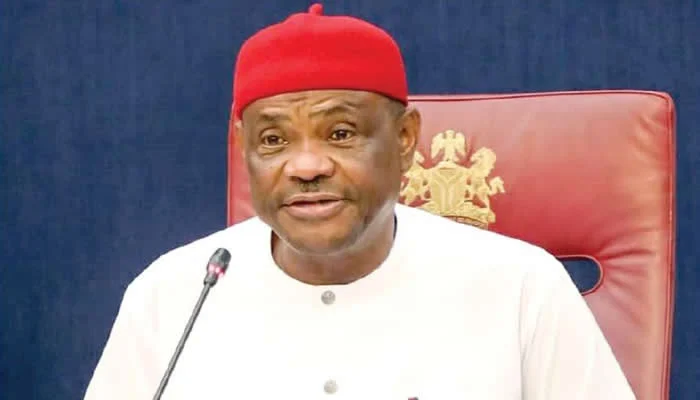
Oyo State Governor Seyi Makinde has pledged not to back President Bola Tinubu’s 2027 reelection campaign.

Speaking at a news conference on Tuesday in the state capital of Ibadan, Makinde took a jab at Federal Capital Territory (FCT) Minister Nyesom Wike, saying that people ought to have the freedom to select their political allies.

He clarified that Wike cannot force people to make political decisions.

Details to come.

Makinde Assures Residents: No Tax Increase Under Our Administration

0

Residents have been reassured by Governor Seyi Makinde that his administration will not impose additional taxes because the state hasn’t done so for more than six years.

In an interview with Channels TV, the governor clarified that his administration has instead concentrated on increasing the number of people who are covered by the current tax system.

He referred to the strategy as a “chicken-and-egg” situation, raising the question of whether it is preferable to enact taxes first or foster an atmosphere that is favorable to economic expansion.

“You build a productive economy when you create a living environment where people and businesses can expand production.” You can only effectively raise revenue at that point, according to Makinde.

In order to guarantee a sustainable and equitable tax system for the people of the state, the governor underlined that the administration’s top objective is promoting economic growth.

Heartfelt Thanks for Your Support on My Traditional Marriage, Says Gideon

0

Agila, Nigeria – In a show of profound gratitude, Unazi Gideon Oche has publicly acknowledged the significant contributions of Hon. Philip Agbese, the Okanga 1 of Agila, toward the success of their traditional marriage ceremony. The heartfelt appreciation highlights the role of Hon. Agbese in ensuring the event was marked by dignity, joy, and a strong sense of community.

Speaking at a post-event gathering, Unazi Gideon Oche emphasized that Hon. Agbese’s presence, encouragement, and fatherly guidance added immense meaning to the occasion. “You did not merely stand by me; you uplifted me, shared in my joy, and ensured that the day was one of pride, peace, and fulfillment,” they stated.

The expression of gratitude also extended to friends, relatives, elders, youth, and well-wishers whose prayers, resources, advice, and moral support contributed to the smooth execution of the ceremony. Special recognition was given to the best man, Dr. Best Orinya Agbese, whose loyalty and guidance were described as invaluable throughout the event.

Hon. Bitrus Agbese was also acknowledged for his presence and contributions, demonstrating the strength of family and community bonds.

In addition, Unazi Gideon Oche offered a humble apology to individuals who were unable to attend the traditional marriage due to space and event limitations, assuring them that the upcoming church wedding would provide an opportunity to celebrate together.

The event, marked by unity, generosity, and goodwill, was described as a resounding success, leaving lasting memories for all attendees.

If you want, I can also rewrite this in a punchy, SEO-friendly style that’s perfect for a news website and social media sharing. This will help attract more readers. Do you want me to do that?

Army Chief Directs Troops to Tackle Crime Within Their Jurisdictions

0

The Nigerian Army’s 2 Division has been tasked by Lieutenant General Waidi Shaibu, Chief of Army Staff (COAS), to intensify offensive operations and completely eradicate criminal elements operating within their sphere of influence.

The order was given to commanders and troops from the division’s various formations during the Army Chief’s first operational visit to the 2 Division Headquarters at Odugbo Barracks in Ibadan.

Colonel Appolonia Anele, Acting Director of Army Public Relations, said in a statement that the COAS praised the soldiers for their tenacity, professionalism, and operational efficacy in fighting banditry, kidnapping, and other criminal activities throughout the division’s operational area.

Lieutenant General Shaibu stated that he had received a thorough briefing on current operations and that he was pleased with the noteworthy accomplishments thus far.

He ordered the soldiers to keep up the current pace and pursue criminals with unwavering determination.

“I’ve been fully informed about your operations and the outstanding accomplishments you’ve made. I applaud your efforts and advise you to keep up the good work. “Go after kidnappers and other miscreants wherever they may be—in bushes, forests, or other hiding places—and make sure these illegal activities are minimized,” he ordered.

The Army Chief reiterated his dedication to personnel welfare in addition to operational directions, stating that unit morale is a crucial component of mission success.

He revealed that both the development of new living facilities within the barracks and the repair of existing accommodations had been approved.

He emphasized the necessity of a comfortable living and working environment to enhance long-term operational performance and urged officers and soldiers to take responsibility for the upkeep of existing facilities.

In closing, Lieutenant General Shaibu reassured the soldiers that, as the Army works to improve internal security throughout the nation, the welfare of personnel will continue to be a key component of his command philosophy.

N18.87 Billion 2026 Budget Unveiled by Enugu East Chairman for Development and Growth

0

Pastor Beloved Dan Anike, the Chairman of the Enugu East Local Government Area, has presented the Enugu East Legislative Council with a ₦18.87 billion 2026 Budget Proposal that outlines an ambitious development agenda centered on social welfare, economic growth, infrastructure expansion, and institutional consolidation.

The proposal, dubbed “The Budget of Consolidation and Economic Advancement,” was introduced in the council chambers. Obi-Anike characterized the fiscal year 2026 as a pivotal scaling phase for his administration. He clarified that although 2025 was a transitional year for system stabilization and policy alignment, the upcoming year would concentrate on speeding up delivery and expanding the influence of governance throughout communities.

The chairman claims that the proposed budget, which reflects the council’s commitment to growth-oriented spending, is a major increase over the 2025 estimates and is purposefully investment-driven, with 78% going toward capital expenditures and 22% going toward recurrent expenditures.

Successes supporting the proposal

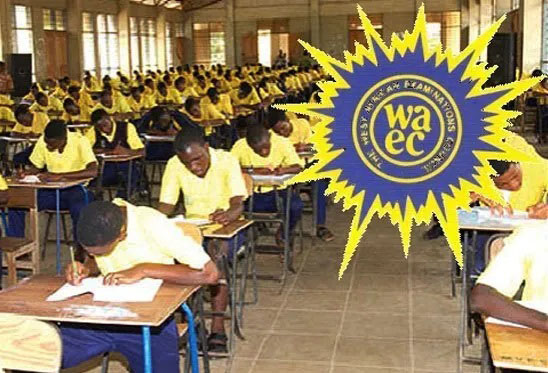
Pastor Anike highlighted the council’s accomplishments from the previous fiscal year, stating that it made focused interventions in the areas of infrastructure, youth development, healthcare, and education. In the field of education, he said that 1,700 students’ WAEC test expenses were covered, and secondary and postsecondary scholarship programs were implemented. He also mentioned the establishment of 15 Smart Green Schools in various wards, which were aided by logistics, fencing, water amenities, and teacher training.

In terms of healthcare, the chairman stated that more than 5,000 locals were enrolled in the Health Insurance Scheme and that the state government was building 12 Type-2 health centers in addition to three new Primary Health Centers in Neke Uno, Obinagu, and Nkpologwu. He continued by saying that Enugu East received praise from the World Health Organization (WHO) and the Enugu State Universal Health Coverage Agency’s Grand Champion Award 2025 for their efforts.

More than 3,000 young people benefited from vocational and technical training in ICT, mechanical trades, aviation middle-level skills, and emerging technologies through cooperation with pertinent institutions, making youth development another major focus. He stated that the One-Youth-One-Skill Initiative will be publicly introduced by the council in January 2026.

Obi-Anike mentioned drainage projects, culverts, a mini-bridge, and the building and renovation of roughly 10.4 kilometers of roads in Emene, Ugwomu, Ifo/Harmony Bypass, Eziama, and Ibagwa. Additionally, he declared the opening of new access roads connecting the Ako–Ugwuomu farm estate corridor (6km) and Onyohu–Awhum (10km). Fifteen transformers were installed and energized among multiple towns to improve the power supply.

Sectoral priority and budgetary structure

According to the chairman’s breakdown of the 2026 projections, the economic sector received the greatest allocation of ₦7.52 billion (38.36%), which was intended for housing, tourism, road construction, agriculture, market development, and rural and urban electricity.

A total of ₦4.45 billion (24.25%) was allotted to the social sector to assist social protection, education, healthcare, youth empowerment, sports development, and gender inclusion. While ₦810 million (4.5%) was designated for law, justice, and security to increase surveillance, neighborhood watch operations, and community safety, the administrative sector received ₦2.05 billion (10.87%) to promote governance efficiency, digital transformation, and staff capacity.

The creation of women’s empowerment cooperatives in every ward, interest-free revolving loans for farmers and traders, bursaries for roughly 1,000 undergraduates, full sponsorship of at least 100 students in critical professions like medicine, expanded healthcare coverage aimed at 10,000 enrollees, completion of ongoing road projects, development of contemporary markets, and full operation of the Enugu East Investment Company are some of the flagship programs scheduled for 2026.

Stakeholders applaud the budget’s direction

In response to the presentation, Rt Hon. Obumneme Obed Eke, the Leader of the Enugu East Legislative Council, praised the chairman for what he called a comprehensive budget that encompasses important industries propelling the local economy. He promised that the council would give the idea expedited consideration and acknowledged the friendly relationship between the executive and the legislature, attributing it to transparent governance.

Igwe Emmanuel Ugwu of Ibagwa Nike, the chairman of the Enugu East Traditional Rulers Council, also spoke. He stated that the current administration has shown a distinct break from previous traditions by managing resources wisely. He promised that traditional leaders will continue to support the council’s development agenda.

Similarly, Rev. Dr. Christian Onyeka Onyia, the Anglican Bishop of the Nike Diocese, noted that the budget had good execution prospects and did not rely on borrowing. “The people will rejoice when the righteous are in authority,” he added, expressing hope that Enugu East inhabitants would continue to see advancements.

Reiterating that the 2026 fiscal plan is intended to provide jobs instead of unemployment, infrastructure instead of deterioration, healthcare instead of neglect, and opportunity instead of exclusion throughout Enugu East Local Government Area, Anike urged the legislature to approve the budget in the best interests of the people.

Niger Governor Receives Rescued Pupils and Teachers from National Security Agency

0

Following their release from captivity, the remaining 130 students and staff of St. Mary’s Catholic Primary and Secondary School, Papiri, were turned over to Niger State Governor Umar Bago by National Security Advisor Nuhu Ribadu.

After a terrifying five-week ordeal, the pupils in Agwara and Borgu Local Government Areas of Niger State were let free on Friday.

315 individuals were kidnapped by gunmen on November 21, 2025, including 12 teachers and 303 students. One hundred students were freed on December 7, while fifty students managed to flee soon after the kidnapping.

Journalists were not allowed to talk with the youngsters during the official handover at the Government House in Minna, but the atmosphere was clearly emotional, with some of the rescued students observed crying.

President Bola Tinubu gave the command for the rescue mission, according to Ribadu, who was represented by Major General Adamu Garba Laka, National Coordinator of the National Counter-Terrorism Center.

He said that the Department of State Services (DSS) and soldiers from the Nigerian Army’s 2 Division, working under the Chief of Army Staff’s orders, made the successful rescue possible.

The Federal Government’s dedication to protecting communities and schools across was reiterated by Ribadu.

In high-risk areas, he continued, state authorities, traditional rulers, and religious leaders were implementing both short-term preventative measures and long-term, community-based security initiatives.

2026 Budget: Uzodimma Proposes N1.4 Trillion Plan to Imo State Legislature

0

Hope Uzodimma, the governor of Imo State, gave the state House of Assembly a proposal worth N1.4 trillion for the 2026 fiscal year on Monday.

With a total of N1,430,573,590,405.04, the budget dubbed the “Budget of economic breakthrough” represents a 78% increase from the N807 billion budget for 2025.

Governor Uzodimma stated, “The proposal consists of 83.4% capital expenditure and 16.6% recurrent expenditure,” while presenting the budget to the legislature.

He went on to say that his goal was to eliminate “a generator-based power economy and provide world-class infrastructure to facilitate economic breakthrough,” and that the figure was based on better government allocation and internally produced revenue.

The Governor stated in the plan that “the total projected Capital Expenditure is N1,201,073,590,752.04, while the Recurrent Expenditure for the 2026 fiscal year is N238,499,999,653, covering personnel costs, overheads, and subventions.”

He characterized this as an unambiguous declaration of the direction and resolve of his administration to supply necessary infrastructure for economic growth.

According to the governor, N20.506 billion will go to the Ministry of Agriculture and Food Security and N698.163 billion to the Ministry of Health.

He claims that the state’s Ministry of Works and Infrastructure Development receives N87.727 billion, the Ministry of Entrepreneurship and Skill Acquisition receives N6.471 billion, the Ministry of Power and Electrification receives N190.451 billion, the Education Ministry receives N60.623 billion, and the Ministry of Rural Development receives N15.106 billion.

Nonetheless, he praised the state legislature for their complete support and collaboration with the executive branch of government and for being genuine partners in growth.

Earlier, Mr. Chike Olemgbe, the Speaker of the House, expressed optimism that the budget will lead to more and better power generation in the state, more infrastructure projects, better healthcare, more human capital development, and continued food security.

Olemgbe praised the governor for his efforts aimed at bolstering state security and said the governor has maintained to uphold the principles of democracy as outlined in the constitution.

Along with praising the governor’s accomplishments, he reassured him that the House will support his policies aimed at advancing the state.

Lagos Govt Issues Warning to Hotels, Restaurants Over Holiday Price Hikes and Cancellations

0

During the ongoing Detty December celebrations, the Lagos State Government has issued a warning to hotels, restaurants, and event venues not to cancel confirmed reservations or raise costs without a good reason.

In an interview with TVC News on Monday, Governor Babajide Sanwo-Olu delivered the warning, emphasizing that companies that break current contracts in search of higher-paying clients will be subject to severe penalties.

“This is intolerable and will not be permitted in Lagos.” The governor stated, “If a commitment has been made, it must be honored, especially if deposits or agreements exist.”

Sanwo-Olu cautioned that such actions erode public confidence and harm Lagos’ standing as a major travel and leisure destination.

“You are damaging our city’s reputation and name.” The government will take severe action against people who engage in this behavior in addition to naming and shaming them, he continued.

The governor disclosed that the Lagos State Consumer Protection Agency, or LASCOPA, and the Ministry of Tourism, Arts, and Culture have been thoroughly briefed and put on notice to take action against businesses that violate the law.

The public is urged to report instances of canceled reservations, contract violations, or unexpected price increases.

Verified complaints will be properly investigated, and those who violate the law will be held accountable.

Sanwo-Olu stated that the state has held talks to make sure that such behavior doesn’t happen again and is already aware of several locations that engage in similar tactics.

Nigeria Only Commonwealth Nation With Highly Restrictive Locus Standi — Falana

0

Femi Falana is a human rights attorney and a Senior Advocate of Nigeria (SAN). In this interview, he discusses the Supreme Court’s decision upholding the President’s authority to take drastic steps to restore law and order in any state where an emergency has been declared in order to stop law and order from collapsing. He also discusses how, among other things, the Supreme Court has offered certain guidelines so that there won’t be any disagreement the next time the president announces a state of emergency. JOY ANIGBOGU provides the passages:

In his ruling, Justice Idris of the Supreme Court stated that as section 305 does not specify the precise form of the extraordinary measures, the President may exercise his discretion. What possible ramifications might this ruling have for Nigerian politics in the coming years?

To be fair to the Supreme Court, I believe that the Honourable Justice Muhammad Idris, who delivered the leading opinion, did issue what is known as a summary decision. Sadly, the majority of commentators have not taken the time to read the ruling. Indeed, the court unquestionably stated or confirmed the President’s authority to take exceptional steps to restore law and order in any state where a state of emergency has been declared. Before today, the President’s ability to use force or take other actions to reestablish law and order was undeniable. The scope of the President’s powers has long been debatable, and the Supreme Court noted that section 305 of the Constitution does not specify the scope of the President’s authority. However, the Honourable Justice Idris stated in the majority ruling that, in contrast to the constitutions of Pakistan and India, section 305 of the Nigerian Constitution does not specifically grant the President the authority to take over or temporarily replace a state’s legislative or executive branches. Furthermore, his lordship stated that Nigeria’s constitutional commitment to federalism and state government autonomy is reflected in this deliberate omission, which is the President’s lack of authority to dissolve democratic structures. Prior to that ruling, the court was informed that Nigeria’s three levels of government—federal, state, and local—are separate, autonomous entities and that none of them is superior to the order. To put it another way, the Supreme Court was merely upholding its previous rulings that state governors are not allowed to suspend or remove democratically elected chairmen and councilors.

Similarly, the Supreme Court has now reaffirmed its stance that elected public officials and structures cannot be disbanded, dissolved, suspended, or relocated unless the Constitution’s requirements are followed. Therefore, I would strongly advise Nigerians to thoroughly review the rulings. In reality, the Honourable Justice Obande Oguiya did not hesitate in the slightest to avoid any ambiguity in what has been considered a minority ruling. His lordship emphasized that the president does not have the authority to remove elected public officials under any clause in the Constitution. The Supreme Court did not decide on the merits of imposing an emergency rule in Rivers State, and I believe this was done on purpose. Given that the governor has since returned to his position, one could argue that it has become academic. I’m referring to Governor Fubara, but the Supreme Court’s challenge to the plaintiffs’ locus standi—that is, the eleven attorneys general who brought the case—is another perplexing aspect of the ruling. This is concerning since the locus standi of the Attorney General of the Federation was contested in the matter of Attorney General of the Federation and Attorney General of Abia State and 35 States, which was resolved in July of last year.

However, the Attorney General has locus standi to bring the case on behalf of the 774 local governments, the Supreme Court ruled. If that was the case, I believed that the court ought to have upheld the locus standi of the 11 attorneys general who filed this extremely important action. However, in contrast to 2004 and 2006, when the emergency rule was contested in Plateau State and Ekiti State, the Supreme Court went beyond its earlier stance this time by merely stating that the court lacks jurisdiction because you lack locus standi. However, the Supreme Court went farther, and only the Supreme Court has the authority to do so by issuing a policy declaration about Section 305 of the Constitution.

According to the ruling, the plaintiffs failed to prove that there was an actionable disagreement between them and the federation, which would have allowed the court to exercise its original jurisdiction. Do you want to elaborate on it and what they were attempting to convey?

Regarding the emergency rule in Rivers State and the suspension of Governor Fubara and other elected officials in that state, the court is attempting to state that the President’s action or decision on Rivers State did not cause a conflict between the plaintiffs, which are the 11 Attorney Generals and the federal government, the Attorney General of the Federation. However, the plaintiffs did assert that any Nigerian governor had a stake in the events in Rivers State and a lawsuit that can be pursued. Furthermore, a few days after the emergency was declared, the Federation’s Attorney General stated that we had only addressed Rivers State and could handle any other governor. The plaintiffs were already terrified, and properly so, because they believed that because it would be our turn, it would be preferable to stop the potential political catastrophe in our states. Therefore, with all due respect, I disagree with the Supreme Court that there was no disagreement between the federal government and the plaintiffs. Of course there was a disagreement. The governors are then free to act without having to wait. They can act quickly in court to stop what they see as constitutional heresy without waiting for their own removal or a state declaration of emergency.

How will the anomaly be fixed if that’s the case and this is the highest court?

When you lose a Supreme Court case, all you have to do is inform your client what to do if he asks. That is the end of the road, you say. The All-Powerful God is appealing. However, the Supreme Court has already offered some guidance on what we might need to do in this specific circumstance, so there shouldn’t be any issue the next time the President of Nigeria needs to declare a state of emergency. As I previously mentioned, the court’s leading ruling made it quite evident that the President is not authorized by section 305 of the Constitution to temporarily replace the state’s legislative or executive branches. And in my opinion, that is the most crucial aspect of the verdict. Whether the plaintiffs have locus standi and whether the court has jurisdiction are the additional areas where we disagree. However, even after the lawsuit was dismissed, the court continued to discuss the case’s merits in great detail. And that will serve as a roadmap for the next time the Nigerian president has a reason to proclaim a state of emergency. That’s my perspective on it.

Many people find this rather perplexing because the final arbiter claims he lacks jurisdiction. It raises a lot of questions. Could you explain how this is possible? Is there any precedence in Nigeria or anyplace else in the globe, and if so, what were the exceptional conditions that made that precedent necessary?

I believe the court’s ruling. When our rights are abused, we also need to learn how to fight back. The suspended governor did not appear in court in the Plateau State case. The suspended governor and lawmakers did not file a lawsuit in the Ekiti State case. The governor and lawmakers of Rivers State did not file a lawsuit. Therefore, if you subscribe to the antiquated locus standi doctrine, you will inevitably disagree with a government decision until it directly affects you. Because any concerned member of the public must be allowed to contest any constitutional dereliction or violation in these days of public interest litigation. It’s also in everyone’s best interests. The president and Abraham Adesanya’s case had been abandoned by the Supreme Court. It happened during the Second Republic. Even then, the late Justice Fatai Williams, who was Nigeria’s Chief Justice at the time, made a minority ruling stating that the courts should open their doors and let disgruntled residents air their grievances. And that was preferable than pushing them underground, where revolutions take place. In the cases of Fawemi Anakilu No. 1 and No. 2, the Supreme Court went one step farther. In fact, the Honourable Justice Ese stated in the Fawemi Anakilu No. 1 case that the word “brother” in England refers to your blood relative, in contrast to the United Kingdom. However, we are all our brothers’ keepers in an African environment with the extended family system. As a result, the Supreme Court has now embraced public interest lawsuits, deviating from the narrow road of locus standi.

In the Centre for Air Pollution v. NNPC case, the Supreme Court reaffirmed that stance. However, the Supreme Court recently seemed to be shifting away from public interest litigation by requiring that your injury be greater than that of other members of the public before you can petition the court. It ridicules the idea of public interest litigation. Furthermore, Nigeria is currently the only nation in the Commonwealth—almost the only one—that is returning to the extremely narrow notion of locus standi. And I sincerely hope that our courts would have granted locus standi or acknowledged the locus standi of the eleven Attorney Generals who petitioned the Supreme Court on this issue, just as they did in the case of local government autonomy last year.

In the first place, why does the Supreme Court provide rulings that allow the parties that filed the case to provide alternative interpretations? How detrimental is this to our policy?

I believe that everyone should study court rulings in order to comprehend the rationale behind the rulings. And once more, as I mentioned in this instance, as soon as word spread that the case had been dismissed. The suspension of elected legislators and governors appeared to have the support of the Supreme Court. I’ve taken my time reading the ruling several times. The president has great authority to guarantee the restoration of law and order or constitutional order if a state of emergency is declared, which is why the court acknowledges the president’s extensive powers. However, this does not provide the president the authority to remove elected lawmakers and governors. Both the majority and minority rulings of the Supreme Court made that extremely evident. Now that I’ve accepted it, we may go to the next phase. Where do we go and where do you go from here when something like this happens? It is to exploit other, comparable instances, and I am aware that the Supreme Court is currently considering a number of cases in which the issue of locus standi will be brought up once more. I mean, I’ve just filed a case. On the locus standi issue, I lost a few of my cases. The High Court stated that I might contest the diversion of cash that ought to have been transferred to the federation account using local standards. However, the appeals court remarked, “Oh, Mr. Falana, we commend your effort.” But you no longer have locus standi because of the Supreme Court’s recent ruling in Fawehinmi and Okonjo-Iweala. Once more, we are bringing that before the Supreme Court so that it can examine his locus standi stance in the public interest and for the benefit of all of us. Because locking up the court’s gates will force residents to take alternative actions that could jeopardize law and order and state security. For this reason, I believe the Supreme Court was involved once more in the case of A.G. A.G. and Bende. of the Federation that the floodgates should be opened in order for the courts to carry out their constitutional function of serving as arbiters in disputes between citizens and the government.

What do you think about the problem of justice being postponed or denied, and then, of course, the issue of the elected governor, deputy, and Assembly members being removed? How can such wrongs be rectified?

Once more, the Supreme Court is advising those impacted to summon the bravery to contest their removal under the constitution. President Bola Tinubu would have gone to court if it had happened in Lagos during his tenure as governor. The goal of every action the Lagos State Government filed against the federal government, as well as every litigation it initiated against the federal government, was to bolster the democratic process. In fact, I can state without fear of contradiction that in some of those cases, state governments may have even been declared bankrupt because the Lagos State Government’s victories in those cases defined Nigerian constitutionalism, whether state governments could establish local governments, whether they could approve building plans within their states, and so on. Since we are transitioning from a military junta-run unitary system of government to a civilian one, the federal government has complete authority over national matters. However, the Lagos State Government organized all the states to oppose the federal government’s efforts to prolong the terms of local government chairmen, hold local government elections, seize local government funds, regulate state physical planning, and so on. They are also redefined. In fact, I contend that litigation encourages restructuring in those circumstances. Because our constitution is unitary, we have been able to settle many conflicts brought on by the military organization. Other governments have also done the same. However, we have been able to redefine federalism and implement it from the unitary structure in Abuja thanks to cases brought by state governments and certain concerned citizens.I]K=8