The Osun State House of Assembly has confirmed the appointments of Wale Abbas and Dr Adekunle Isaac Omoyele as the Chairman and Corps Commander of the Osun State Security Network Agency, Osun Amotekun.
The House of Assembly confirmed Abbas, a retired Assistant Inspector-General of Police, as the new Chairman of the Amotekun Governing Board while it also confirmed Dr. Omoyele as the Corps Commander.
TVN recalled that the state governor, Ademola Adeleke had earlier nominated AIG Abass as the Amotekun Governing Board Chairman and CSP Isaac Omoyele, retired as Corps Commander.
Their appointments followed the expiration of the tenure of the pioneer Corps Commander, Brigadier General Bashir Adewinmbi retired.
The governor had forwarded the names of his nominees to the state House of Assembly for the necessary legislative approval.
The confirmations came after the nominees were screened by the lawmakers on Tuesday, July 16, 2024.
The screening process allowed the House to assess the qualifications and suitability of Abbas and Omoyele for their respective roles.
Speaking after the confirmation, the Speaker of the Osun State House of Assembly, Adewale Egbedun congratulated the new appointees, saying, “I urge both of you to leverage your wealth of experience to enhance security across the state.
“I urge you to foster strong working relationships with other security agencies, with the goal of making Osun State a safer place.”
Speaking with journalists, the new Amotekun Board Chairman, AIG Wale Abbas, pledged to work closely with all stakeholders in the state to combat crime and ensure the security of lives and property.
Amotekun: Osun Assembly confirms Chairman, Corps Commander
Amotekun: Osun Assembly confirms Chairman, Corps Commander

Netizens react as Tinubu’s SSA appoint ‘angry’ skitmaker, Umar Bush as his own SA
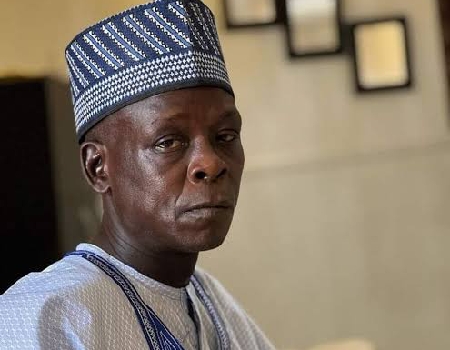
The internet has been buzzing after it was discovered that the Senior Special Assistant to the President On Special Needs and Equal Opportunities, Mohammed Abba Isa, has appointed Alhaji Umar Bush, an Hausa skit maker known for his ‘anger’ and hurling insults at people, as his own Special Assistant.
According to the letter of appointment from the SSA to Bush who is also known as ‘Angry Bird’, he is tasked with managing media promotion, ensure good public relation, and facilitate entertainment initiatives for Isa’s office.
The appointment which is for two years with effect from July 10, 2024, is renewable upon satisfactory performance for another term.
But the appointment of Bush has not gone down well with some social media users who think it is a misplaced priority and a needless and impulsive appointment.
Those in this school of thought are of the opinion that Bush’s skits where he practically lays out curses on people, believe he has not added anything of importance to the society.
A user on X with the handle @el_bonga, in a post, said:
“Umar Bush whose major hallmark is raining curses online is appointed SA on Entertainment while Khalifa Aminu who invents technology to help the blind walk without sticks and automatic spray plant for farmers is ignored.
READ ALSO:SocialMediaTrends: ‘You are lying sir,’ Nigerians disagree with Dogara over salary as Speaker
“Our society rewards mediocrity over creativity/innovations.”
Umar Bush whose major hallmark is raining curses online is appointed SA on Entertainment while Khalifa Aminu who invents technology to help the blind walk without sticks and automatic spray plant for farmers is ignored. Our society rewards mediocrity over creativity/innovations. pic.twitter.com/QOfMxkCbtY
— Mr. El-Bonga (@el_bonga) July 15, 2024
@Mafarees wrote:
“I think they should just make Umar Bush the President of this country, let’s all just be mad!
In all the things we’re going through in this country, someone raining insults on people but it’s him these guys are busy promoting, they left Aminu and his inventions and they’re busy promoting nonsense.”
I think they should just make Umar Bush the President of this country, let's all just be mad!
In all the things we're going through in this country, someone raining insults on people but it's him these guys are busy promoting, they left Aminu and his inventions and they're busy… pic.twitter.com/qYM5bWEDTU
— F A A R E E S (@MFaarees_) July 15, 2024
Another user, @AbbaM_Abiyos said:
“Nigerians and misplaced priorities
Khalifa Aminu is a young student who invented a glasses that gives vision to blind people, UK newspaper published his talented work but Nigerian government doesn’t care about his innovation
Umar Bush who suppose to be in special cares for his mental stability was in the villa but Khalifa never left Kano. Very sad
I remember the time when the National Commission of Persons With Disabilities @NcpwdOfficial invited.” Khalifa to Abuja but unable to attend due to NLC strike.
Nigerians and misplaced priorities
Khalifa Aminu is a young student who invented a glasses that gives vision to blind people, UK newspaper published his talented work but Nigerian government doesn’t care about his innovation
Umar Bush who suppose to be in special cares… pic.twitter.com/QVJg50mQph
— Comrade Abiyos Roni. (@AbbaM_Abiyos) July 10, 2024
@PO_GrassrootsM said:
“On what grounds the Nigerian Government is appointing Mr. Alhaji Umar Bush as SA On Entertainment to the Senior Special Assistant To The President On Special Needs and Equal Opportunities, the man who always gets angry on many viral videos?
“This government is shameless and clown, some appointments are unnecessary and a national disgrace.”
On what grounds the Nigerian Government is appointing Mr. Alhaji Umar Bush as SA On Entertainment to the Senior Special Assistant To The President On Special Needs and Equal Opportunities, the man who always gets angry on many viral videos? This government is shameless and clown,… pic.twitter.com/kn2d9DjajU
— Peter Obi Grassroots Mobilization. (@PO_GrassRootM) July 16, 2024
@Abyuusuuf wrote:
“This blatant disregard for the importance of having qualified and capable individuals in key positions is not only a betrayal, but also a threat to the well-being of our nation.”
This blatant disregard for the importance of having qualified and capable individuals in key positions is not only a betrayal, but also a threat to the well-being of our nation.
— YG (@Abyuusuuf_) July 15, 2024
The post Netizens react as Tinubu’s SSA appoint ‘angry’ skitmaker, Umar Bush as his own SA appeared first on Latest Nigeria News | Top Stories from TVN.
Full list: World’s most beautiful restaurants


Ariana’s Persian Kitchen, nestled in the vibrant United Arab Emirates, has claimed the coveted top spot on the global stage as the most enchanting restaurant, following closely is Reine & La Rue established in the cosmopolitan hub of Melbourne, Australia, celebrated for its allure and ambience.
These exceptional establishments are among the 16 newly opened or renovated restaurants featured in the prestigious Annual Prix Versailles World’s Most Beautiful Restaurants List for 2024.
Each venue not only showcases architectural excellence but also captivates with its unique charm, from Paris’s romantic streets to Kazakhstan’s cultural richness.
The forthcoming announcement of the Prix Versailles laureates for Interior, Exterior, and overall design at UNESCO Headquarters in late November promises to highlight these venues’ seamless blend of aesthetics and hospitality, honouring their profound impact on dining experiences worldwide. SEE FULL LIST HERE
All rights reserved. This material, and other digital content on this website, may not be reproduced, published, broadcast, rewritten or redistributed in whole or in part without prior express written permission from According.
Contact: [email protected]
Hardship: I foresee Nigerian government officials being stoned – Prophet Olujobi

General Overseer of Wisdom Church Of Christ International, Lagos, Prophet Bisi Olujobi on Tuesday urged the President Bola Tinubu administration to address the hardship in Nigeria.
In a statement, Olujobi, who recently led the League of Concerned Prophets to protest the government’s “biting policies”, said poverty could force citizens to vent their anger publicly.
“Many Governors, lawmakers and other government officials will be stoned before December as a result of the lingering suffering across the nation,” he warned.
“I foresee a mother of all revolution that will unseat this government and a number of governors if the right things are not done immediately.
“Nigerians are not asking for too much; their patience should not be misconstrued as foolishness. The fury coming is going to be like a tsunami with consequences.
“The President should look inward and do the needful now that there is still time. Anybody or group telling him not to be worried is just being deceptive.”
Olujobi, however, advised the Central Bank of Nigeria, CBN, Governor, Yemi Cardoso, to stay away from similar actions that put his predecessor, Godwin Emefiele, in trouble.
The church leader also admonished parents and guardians to earnestly intercede for their children and wards in the entertainment industry.
“Many are being recruited into strange occult practices. Almost all Nigerian entertainers have fallen for this bait and the consequence will be disastrous,” he said.
On the forthcoming election in Ghana, the prophet appealed to parties, politicians, and the people to shun acts that may lead to unrest.
“The Nana Akufo-Addo-led government should avoid any occurrence that will destabilize the country; such will have a serious consequence,” the statement added.
Hardship: I foresee Nigerian government officials being stoned – Prophet Olujobi
No plan to sell varsities to private investors, says FG
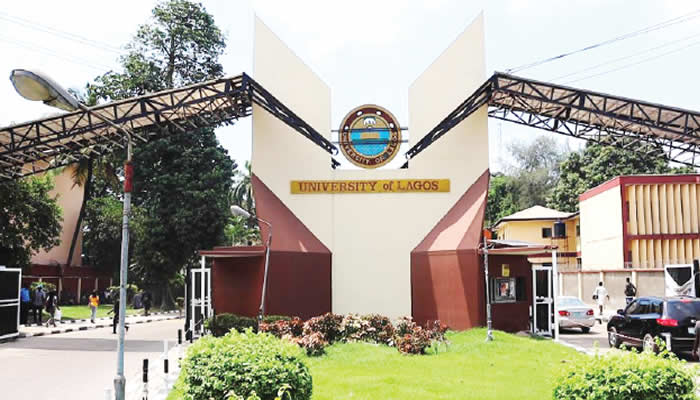
The Minister of Education, Prof. Tahir Mamman, on Tuesday said the Federal Government has no plans to sell universities to private investors.
Mamman clarified the Second Quarterly Engagement of the ministry with heads of units and chief executive officers of parastatals and agencies under the ministry.
The Academic Staff Union of Universities had accused the Federal Government of plans to hand over federal universities to investors through public-private partnerships.
”There is no plan to sell off universities to investors,” he said, noting that the policy of the government allowed for transnational education.
According to him, transnational education is a policy on what this government is doing to open up tertiary education by taking people from the rest of the world to come and invest in our tertiary system.
“Some people are carrying information that the Federal Government is selling off to private investors its universities. This is an absolute lie and completely false.
“This government believes in our public institutions. However, as we all know this government has reforms that this country needs.
“The private sector will play a major role in the provision of tertiary education, as there are more private universities in Nigeria than public universities combined.
“What this government has done is to open up the tertiary education level, in particular the universities, for global competitiveness,” he said.
The minister stressed the need to allow those who operate universities at the international level to come into the country and set up institutions either for themselves or in collaboration with our local universities.
He said that this was in no way to sell its institutions, noting that guidelines on transnational education had been in place.
Mamman said the country must take a cue from what is obtainable in other countries to benefit from the advantage of transnational education.
“In other parts of the world, like Asia, they have benefited immensely from having international institutions in those countries.
“They have taken standards to those countries and also for the exchange and bringing money to those countries,” he said.
He further said that the engagement with heads of agencies as parastatals was to review the progress, and challenges and reaffirm commitment toward the educational landscape of the country.
Court rejects Emefiele’s request to travel abroad for medicals


A High Court of the Federal Capital Territory in Maitama on Tuesday, refused an application by the former Governor of the Central Bank of Nigeria, Godwin Emefiele, to be granted permission to travel to the United Kingdom for a medical check-up.
Emefiele is being prosecuted by the Economic and Financial Crimes Commission before on an amended 20-count charge bordering on procurement fraud, obtaining by pretence, and forgery while he held sway as governor of the apex bank.
At the resumed hearing on the application for medical leave, the trial Judge, Justice Hamza Muazu, held that Emefiele failed to supply sufficient reasons to show that the medical trip was essential and unavoidable.
Justice Muazu, in a ruling, while denying Emefiele’s request said he failed to show the court a copy of the medical appointment or invitation from the United Kingdom he claimed invited him for a medical check-up despite stating he will be away from July 28 to September 10.
The judge also said Emefiele could not establish that his ailment could not be attended to in Nigeria.
The judge said although the court has the power to exercise its discretion, it might be a little too much of a request for Emefiele to ask because he is standing trial in three different courts in FCT and Lagos for various charges.
“As it stands now, I cannot use my discretion to grant the application, and he is standing trial in three courts.
“The application is hereby dismissed, and the adjourned date for continuation of trial still stands,” Justice Muazu said.
Recall that EFCC had argued against Emefiele’s application on July 8.
The prosecution counsel, Muhammad Omeiza, contended that there is no medical report showing that Emefiele was suffering from any particular ailment that could not be treated in Nigeria as presented to the court.
He argued that Emefiele is a flight risk due to his connections with co-conspirators abroad, adding that the applicant is facing trials in three different courts.
Emefiele’s counsel, Hakeem Labi-Lawal, urged the court to grant his client’s request and release his passport which was deposited as part of his bail conditions to the court registrar.
He said the defence arguments were speculative.
He added that an international red alert could ensure Emefiele is returned if he did not comply after the medical trip.
After listening to both parties, Justice Muazu subsequently adjourned to today to rule on the application.
Among others, Emefiele was said to have forged a document titled: “Re: Presidential Directive on Foreign Election Observer Missions ” dated January 26, 2023, with Ref No. SGF.43/L.01/201 and purported same to have emanated from the office of the Secretary to the Government of the Federation.
He is also accused of using his office as CBN governor to confer unfair and corrupt advantage on two companies; April 1616 Nigeria Ltd and Architekon Nigeria Ltd.
Emefiele in the amended charge was alleged to have, on February 8, 2023, knowingly obtained, by pretense, $6,230,000.00 by falsely representing that the Secretary to the Government of the Federation vide a letter dated January 26, 2023, with Ref No. SGF 43/L.01/201 requested the CBN to provide a contingent logistic advance for $6,230,000 “in line with Mr. President’s directive.”
NiMet unveils anti-corruption policy, vows to fight bribery


The Director General and Chief Executive Officer of the Nigerian Meteorological Agency, Prof. Charles Anosike, has urged staff to foster a workplace culture centred on ethical conduct.
Speaking on Tuesday at the launch of NiMet’s Anti-Corruption and Bribery Policy and Code of Ethics in Abuja, Anosike emphasised the importance of ethics, integrity, and accountability as fundamental to organisational success.
He stressed, “Upholding these values will build trust with our clients and stakeholders, enabling NiMet to fulfil its mandate of contributing to national socio-economic development and safety of lives and property.”
Welcoming guests from the Independent Corrupt Practices and Other Related Offences Commission, Anosike highlighted their collaboration in the fight against corruption, underscoring NiMet’s commitment to institutionalizing ethical standards in the public service.
Presenting the NiMet Code of Ethics and Anti-Corruption and Bribery Policy, Anosike said, “These documents demonstrate our unwavering dedication to ethical behaviour and combating corruption. They signal our resolve to foster a culture where corruption is unacceptable.”
Anosike reiterated NiMet’s zero-tolerance stance against corruption, emphasizing the Policy’s role in ensuring transparency and accountability across all operations.
He urged all staff to adhere strictly to the NiMet code of ethics and Anti-Corruption and Bribery Policy.
The Chairman of ICPC, Dr. Musa Aliyu, SAN, represented by Charles Nwosu, commended NiMet for its initiative.
He noted, “We are impressed with the commitment shown by NiMet in launching these documents. We appreciate Prof. Anosike and NiMet’s leadership in joining hands with us in the national fight against corruption.
“Our impressions will be conveyed to the ICPC Chairman and ultimately to President Bola Ahmed Tinubu, affirming NiMet’s alignment with national anti-corruption efforts.”
Student Loan: NELFUND onboards an additional 22 state-owned tertiary institutions [Full List]
![Student Loan: NELFUND onboards an additional 22 state-owned tertiary institutions [Full List]](https://tvn.ng/wp-content/uploads/2024/07/NELFUND-1.webp-768x459.webp "Student Loan: NELFUND onboards an additional 22 state-owned tertiary institutions [Full List]")
The Nigerian Education Loan Fund, NELFUND said it has onboarded 22 additional state-owned Tertiary institutions into its scheme.
NELFUND made this known in a statement through its official X handle on Tuesday.
The development made the total number of state-owned tertiary institutions onboarded into the scheme to 70.
The implication is that the 70 state-owned tertiary can apply for the student loan scheme.
“The Management of Nigerian Education Loan Fund (NELFUND) is by this notice, announcing the onboarding of 22 additional State-owned tertiary institutions.
“Students from the following State-owned institutions (including the 48 institutions earlier announced) can now apply for student loans by visiting nelf.gov.ng”, it stated.
Full List of 22 additional Tertiary Institutions:
Adamawa State Polytechnic Yola,
College of Education Afaha Nsit,
Akwa Ibom State University,
Akwa Ibom State Polytechnic,
Aminu Saleh College of Education, Azare,
Niger Delta University,
Delta State Polytechnic, Ogwashi-uku,
Delta State University of Science and Technology,
Dennis Osadebay University, Asaba,
Benjamin Uwajumogu State College of Education Ihitte Uboma,
Sule Lamido University Kafin Hausa, Jigawa State,
Kaduna State College of Education Gidan Waya,
Isa Mustapha Agwai Polytechnic, Lafia,
Niger State Polytechnic Zungeru,
OGUN STATE INSTITUTE OF TECHNOLOGY, IGBESA,
D.S Adegbenro ICT Polytechnic Itori-Ewekoro,
Adekunle Ajasin University Akungba-Akoko, Ondo State,
Osun State Polytechnic, Iree,
Oyo State College of Agriculture and Technology, Igboora,
Plateau State University Bokkos,
Port Harcourt Polytechnic and
IGNATIUS AJURU UNIVERSITY OF EDUCATION PORT HARCOURT.
Recall upon President Bola Ahmed Tinubu’s signing of the Student Loan Act in April 2024, application for the scheme took off on May 24 with 1.2 million students in federal territory institutions.
Consequently, NELFUND said it has approved the disbursement of loans to successful students.
Student Loan: NELFUND onboards an additional 22 state-owned tertiary institutions [Full List]
France to report Argentina players to FIFA over racist chants


The French Football Federation plans to complain to FIFA about alleged racist chants from members of Argentina’s Copa America winning team.
The chants were heard during a live video posted on social media by Chelsea and Argentina midfielder Enzo Fernandez from the team bus in the wake of the Copa victory over Colombia in Miami on Sunday.
Some players, including Fernandez, sing a chant that dates back to the 2022 World Cup final that Argentina won against France that targets France’s star striker Kylian Mbappe and includes alleged homophobic insults.
A source close to the FFF told AFP on Tuesday that the French body plans to write to the Argentinian football federation and refer the matter to FIFA.
Two years ago, the FFF also filed a complaint against racist comments on social media.
Africa Facts Zone via X who also posted an update noted that Enzo Fernandez and the Argentine Players have been accused of racism, after ridiculing French Players of African descent, following their Copa America victory.
According to them, they were chanting the words, “They play for France, but their parents are from Angola. Their mother is from Cameroon, while their father is from Nigeria. But their passport says French.”
Enzo Fernandez has since been criticised by X users for his involvement in singing the chants.
A user #CFCMod_ wrote, “I can never defend Enzo Fernandez again, publicly making racist chants and laughing about it. There’s no apology that can redeem “racism” and I hope everyone understands this.”
Another #WelBeast wrote, “I just saw a video of Enzo Fernandez cheerleading to a racist song aimed at Kylian Mbappe, and that’s not even the worst part. The worst part is seeing a post from a Chelsea fan asking him to apologize so they can forgive him. I don’t want to speak.”
AFP
All rights reserved. This material, and other digital content on this website, may not be reproduced, published, broadcast, rewritten or redistributed in whole or in part without prior express written permission from According.
Contact: [email protected]
Somali militiamen seize heavy weapons after looting convoy


At least five people were killed when militiamen ambushed a convoy in central Somalia and seized heavy weapons, the local government and residents said on Tuesday.
This is coming seven months after a decades-long arms embargo was lifted.
The convoy was travelling on Monday with a security escort near the town of Abudwaq when militiamen from a local clan attacked and overpowered security forces, four residents told Reuters.
They said the arms, which included machine guns, anti-aircraft weapons, and rocket-propelled grenades, originated in neighbouring Ethiopia.
“Unfortunately, five people died from both sides yesterday over weapons,” said Ahmed Shire, a security adviser to the president of Galmudug State, where Abudwaq is located.
“We understand the weapons fell into the hands of civilians,” he added.
Rashid Abdi, an analyst with the Sahan Research think-tank, called the incident “the single most serious incident of arms proliferation in central Somalia” and said some of the weapons would likely be bought by al Shabaab, an al Qaeda affiliate.
Writing on X, Abdi said it was a “clear case of why lifting of an arms embargo on Somalia was a big strategic mistake.”
The last restrictions under an arms embargo that had been in place, in some form, for more than 30 years were fully lifted by the UN Security Council in December.
Somalia’s government said the move would allow it to confront security threats and build up its national forces.
The country has been confronting an insurgency by al Shabaab for nearly two decades.
African Union peacekeepers are drawing down their presence to hand over great responsibility to Somali forces, but the AU and Mogadishu governments have warned of a possible security vacuum if that happens too quickly.
Clan-based militias have fought alongside government forces in a military campaign against al Shabaab in central Somalia.
They have also turned their weapons on one another in disputes over land and resources.
Reuters/NAN.