Home Blog Page 975

Russia reacts to Zelensky’s peace summit offer

0

Zelensky said on Monday that Russia “should be” represented at a second summit on the Ukraine conflict, following high-level talks last month in Switzerland that Moscow did not attend and heavily criticised.

“The first peace summit was not a peace summit at all. So perhaps it is necessary first to understand what he means,” Kremlin spokesman, Dmitry Peskov told the Zvezda television channel, responding to Zelensky’s comments.

Zelensky’s apparent welcoming of Russia to talks marks a change of tone from the conference in Switzerland, ahead of which the Ukrainian leader categorically ruled out inviting Moscow.

The surprise comments from Kyiv come as Ukraine’s forces lose ground on the front line and as the United States gears up for presidential elections that could fundamentally change the dynamic of the conflict.

Leaders and top officials from more than 90 states gathered at a Swiss mountainside resort on June 15 for the two-day summit dedicated to resolving the largest European conflict since World War II.

China and Russia were markedly absent.

The Kremlin sharply criticised the gathering, saying that any discussions on ending the conflict that did not include Russia were “absurd.”

Washington said Monday that it backed Ukraine’s decision to invite Russia to a second summit, but expressed doubt about whether Moscow was ready for talks.

“When they want to invite Russia to that summit, of course, that is something we support,” US State Department spokesman Matthew Miller told journalists.

“We’ve always supported diplomacy when Ukraine is ready, but it has never been clear that the Kremlin is ready for actual diplomacy,” he said.

Ahead of last month’s summit, Russian President Vladimir Putin said he was open to talks and would announce a ceasefire if Kyiv effectively surrendered territory that Moscow claims as its own.

Zelensky slammed Putin’s demands as a territorial “ultimatum” reminiscent of those issued by Adolf Hitler, and Ukraine’s Western backers including the United States reacted with scorn.

However, there is growing apprehension in Kyiv about how a potential Donald Trump victory in November’s US elections might affect continued American aid to Ukraine.

The Republican Party candidate has suggested he would end the conflict very quickly if he won back the presidency, a promise Kyiv fears would mean being forced to negotiate with Moscow from a weakened position.

Zelensky said on Monday he was “not worried” about the prospect of a Trump victory and that he was still counting on support from the United States, Ukraine’s biggest financial and military backer.

AFP

‘We must address misconceptions about biotechnology’ – FG

0

Nigeria’s Minister of Innovation, Science and Technology, Chief Uche Nnaji has declared that the country must address misconceptions about biotechnology.
He made the statement in Abuja on Monday at an International Conference on Biotechnology with the theme “Biotechnology as an Engine for Economic Growth.”
The Minister, represented at the conference by Olayiwola Agoro (Deputy Director, BRT Department of the Ministry) said: “economic growth involves the increase in the production and consumption of goods and services within an economy over a specified period.”
He described the theme as ambitious, noting that it was “premised on the optimistic notion that biotechnology can significantly expand the output of our national economy. I share this optimism.
“Biotechnology has the potential to boost our Gross Domestic Product (GDP) by increasing the total value of all goods and services produced in Nigeria.
“This optimism is grounded in the fact that science fuels production expansion.
“We have many patriotic and innovative biotechnologists who can ensure that more goods and services are produced and made available in our economy.
“FMIST has prioritized creating a supportive ecosystem for startups, providing them with necessary resources, mentorship, incubators, accelerators, co-working spaces, and networking opportunities.
“These support mechanisms will enable startups to grow quickly, create jobs, introduce new products and services, and stimulate competition in established industries.
“Biotechnology startups are notable revenue generators. With the emerging supportive ecosystem, there is good reason to hope that Nigeria will soon experience a higher economic growth rate, driven by licensing agreements, patents, and the commercialization of products and technologies from startups.
“I am strongly persuaded that food insecurity will become a thing of the past in Nigeria with the application of biotechnology for improved crop yields, drought-resistant crops, and better agricultural practices. However, this also requires attracting investors.”
He identified the impediments to transforming Nigeria’s economy through biotech innovation to include: “the public’s misguided aversion to biotechnology. Many misunderstand what biotechnology is and its contributions to human development.
“Some see it as an esoteric scientific endeavor with no tangible economic value, while others view it as advancing a dangerous agenda.
“To maximize biotechnology’s economic benefits, as seen in the Asian Tigers, we must address these misconceptions through public education and enlightenment campaigns.
“Public awareness of biotechnology’s role in industrial processes, such as fermentation and enzymatic conversions leading to bio-based products like bio-plastics and bio-based chemicals, can improve the investment climate. These products are biodegradable and reduce carbon footprints, enhancing their appeal to the public and investors.
“Moreover, assuring Nigerians that biotechnological practices do not occur in an ethical vacuum is essential.
“There are robust ethical frameworks addressing concerns related to genetic modification, privacy in genetic testing, and equitable access to biotechnological innovations.
“Transforming scientific advances into societal benefits requires dispelling popular myths. For example, GM foods will not foster food security and economic growth unless we execute strategic public communication programs.
“Transparency and accountability in communication can counteract anti-scientific biases and phobia, ensuring our quest for a prosperous future is successful.”
‘We must address misconceptions about biotechnology’ – FG

Reps sports committee chair, Adams, dies at 39

0

A member of the House of Representatives representing Chikun/Kajuru Federal Constituency, Kaduna State, and Chairman House Committee on Sports, Ekene Adams, has passed on.

He reportedly died in the early hours of Tuesday although the cause of his death has not been ascertained at the time of filing this report.

Different sports groups in the country have started mourning Adams.

“My good friend and one of our frontline members of the NPFL Club Owners Association, Chairman House Committee on Sports, Hon Ekene Abubakar Adams is Dead,” Former secretary of the club owners association Alloy Chukwuemeka wrote on Tuesday.

“May God console his family and friends and may his soul rest in peace.”

A former football player, Adams had served as the general manager of Nigeria Premier Football League side Remo Stars as well as Kada City before he won a seat in the House of Representatives during the 2023 general elections.

His sport background earned him the role of the reps committee chairman on sports despite being a first timer in the green chamber.

Abiodun Adewale

Abiodun, who reports Sports for According, covers different tiers of the Nigerian football league, the national teams, as well as cricket, in the last six years

All rights reserved. This material, and other digital content on this website, may not be reproduced, published, broadcast, rewritten or redistributed in whole or in part without prior express written permission from According.

Contact: [email protected]

Heavy security as Kenya braces for more protests

0

Police were out in force in the centre of Kenya’s capital on Tuesday after calls for more demonstrations against the embattled government of President William Ruto.

Activists led by young Gen-Z Kenyans launched peaceful rallies a month ago against deeply unpopular tax hikes but they descended into deadly violence last month, prompting Ruto to drop the planned increases.

Although street protests have eased since dozens of people were killed and parliament stormed in late June, activists are still demanding the president’s resignation, with new rallies called for Tuesday using the hashtag “RutoMustGo”.

There was a heavy police presence in Nairobi’s central business district — the epicentre of previous protest action — while youths armed with clubs stood guard outside their businesses, an AFP journalist said.

“This morning we received credible intelligence indicating that certain organised criminal groups have planned to infiltrate, disrupt and destabilise the peaceful nature of the demonstrations, which could potentially jeopardise the safety of demonstrators,” acting national police chief Douglas Kanja said in a statement.

Some of the previous rallies witnessed scenes of mayhem with widespread looting and property damage, with activists claiming their peaceful action was hijacked by “goons”.

Rights groups say 39 people have lost their lives since the start of the rallies on June 18, with police accused of using excessive force against the protesters.

Ruto, grappling with the most serious crisis of his near two-year presidency, has sought to placate the demonstrators with a series of measures including dropping the tax hikes, sacking almost his entire cabinet and pledging to cut profligate government spending.

But the protest movement has spiralled into a broader campaign against Ruto and his administration as well as calling for action against corruption and justice for victims of alleged police brutality.

AFP

All rights reserved. This material, and other digital content on this website, may not be reproduced, published, broadcast, rewritten or redistributed in whole or in part without prior express written permission from According.

Contact: [email protected]

BREAKING: Another House of Reps member, Abubakar Adams is dead

0

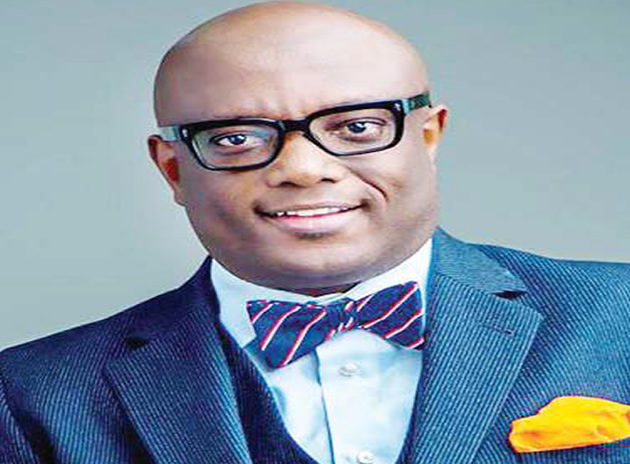
A member of the House of Representatives, Hon. Ekene Abubakar Adams, who represented Chikun/ Kajuru Federal Constituency of Kaduna State is dead.
Ekene, who was the Chairman House Committee on Sports, was ill and died on Tuesday morning, according to his wife.
This is coming barely a week after another lawmaker representing Ibadan North Federal Constituency, Hon Musliudeen Olaide Akinremi died.
Details shortly….
BREAKING: Another House of Reps member, Abubakar Adams is dead

Problem I’ve with LG autonomy-A’Ibom gov

0

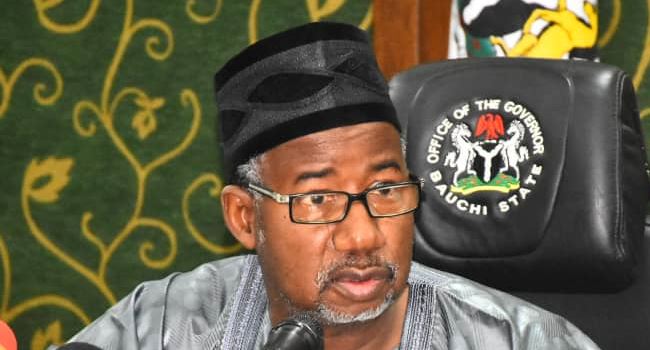
Akwa Ibom State Governor, Umo Eno, has described the recent Supreme Court judgment granting financial autonomy to local government areas as a welcome development and relief to state governments.

This is as he expressed concerns over its effective implementation as it relates to the ability of LGs to handle their financial responsibilities.

Governor Eno made the observations Monday evening while fielding questions from Government House correspondents at the Victor Attah International Airport, Uyo, upon his return to the state from a foreign official engagement.

“Since I assumed office, I’ve not touched any funds allocated to the local governments. The only challenge I envisage now, which we have to sit down and find a way around is how the local government workers would be paid promptly? How will primary school teachers be paid promptly? How do we clear the backlog that we have? I pray that we find a way around this.”

Eno added that the Supreme Court’s verdict on local government autonomy remains sacrosanct, being the pronouncement of the final court in the land.

He noted however, that the judgement would not impact on the Akwa Ibom State Government in anyway, adding that under his administration and previous years, local governments have been getting their due allocations, without any interference with the operations of the joint account.

The governor further explained that in furtherance to his ARISE agenda which places premium on rural development, his administration has channelled volumes of funds into offsetting arrears of gratuities, pensions, salaries and other entitlements to local government workers, noting that the autonomy granted the third tier of government is a relief to the state government.

He urged local governments, under the new arrangement, to take over the responsibility of prompt payment of salaries and other emoluments to teachers, health workers and other LG workers to avoid leaving unnecessary burden of arrears to successive governments.

He said, “The Supreme Court has made pronouncements. That’s the final court of the land, but for us in Akwa Ibom, honestly, I don’t see us having any issues. For me, this is a welcome development because I know how much we, as a state, support the local governments.

“Our ARISE Agenda is also cantered around developing the local government areas, so with this judgement, I feel relieved, but my concern is how they would bear the brunt of the autonomy.”

Police thwart hoodlums’ attempt to destroy INEC office in Delta

0

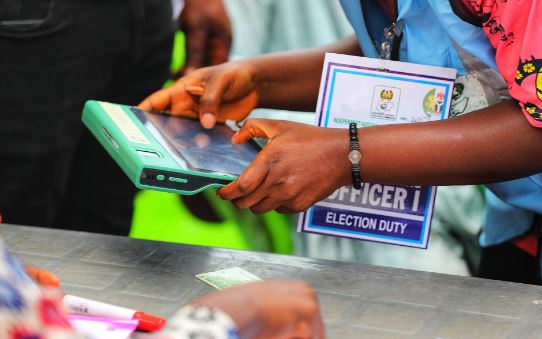
Operatives of Delta State Police Command foiled an attempt by yet-to-be-identified persons to destroy the office of the Independent National Electoral Commission, INEC, in Warri area of the state.
It was gathered that young men in their numbers with weapons and containers filled with substance believed to be fuel, chanted war songs and attempted to force their way into INEC premises while its officials were out for delineation of electoral units and wards in compliance with a Supreme Court judgement.
It was learned that a concerned passer-by, who contacted the police, who responded immediately by chasing the hoodlums away from the Warri INEC office saved the place from being razed.
When contacted, the state Police Public Relations Officer, Bright Edafe, confirmed the incident.
The Itsekiri was alleged to have opposed the implementation of the Supreme Court judgment on delineation of electoral units and wards in the Warri federal constituency while the Warri indigenous Urhobo and their Ijaw counterparts were in support of the exercise.
Police thwart hoodlums’ attempt to destroy INEC office in Delta

Nile University of Nigeria Hosts Successful Project Exhibition Ceremony for Engineering and Computing Students

0

Nile University of Nigeria recently held its annual Project Exhibition Ceremony, showcasing the innovative talents of students from the Engineering and Computing faculties. The event provided students a platform to present their projects that have been transformed into workable and scalable models, capable of addressing real-world challenges.

Delivering the opening remark at the event, the Vice Chancellor of Nile University, Professor Dilli Dogo,FNAMed,commended the ingenuity and dedication demonstrated by the students. “Our students have shown exceptional creativity and problem-solving skills, reflecting Nile University’s commitment to producing world-class graduates,” he stated. “These projects highlight the initiatives taken by our students to become job creators.We are dedicated to nurturing talents that can contribute significantly to solving societal challenges and driving economic growth.”


Professor Dilli Dogo, FNAMed, delivering the opening remark at the annual Project Exhibition Ceremony for Engineering and Computing Faculties

The exhibition featured a wide array of projects, ranging from advanced Cybersecurity, Ride-hailing, and E-commerce solutions to smart city infrastructure, medical and neural network technologies, innovative Agrotech devices, and sustainable energy systems. Each project was meticulously developed to offer practical solutions to contemporary issues, underscoring the university’s emphasis on applied learning and real-world impact.

Computing and Engineering Faculties Students of Nile University of Nigeria  demonstrating their scalable projects to participants at the annual project exhibition ceremony

Employer partners and representatives from various government agencies including the Nigerian Communications Commission (NCC), the National Agency for Science and Engineering Infrastructure (NASENI), National Information Technology Development Agency (NITDA), were highly impressed by the projects exhibited, noting the potential of these project works to be developed into commercial ventures. Many expressed interest in further collaboration with the university to support the students in bringing their ideas to market.

The highlight of the ceremony was the award presentation, where the top projects were recognized for their excellence and practicality. The winning teams received cash prizes, acknowledging their hard work and dedication to solving real-life problems. These awards were also aimed at providing the students with financial support to further develop their innovative solutions.

Top project winners receiving monetary awards, during the the annual project exhibition ceremony

The Project Exhibition Ceremony at Nile University of Nigeria exemplifies the institution’s dedication to fostering a culture of innovation and entrepreneurship among its students. By bridging the gap between academic learning and industry needs, the university continues to prepare its graduates to excel in their careers and contribute meaningfully to society.

About Nile University of Nigeria

Nile University of Nigeria is a private multidisciplinary university established in 2009 and located in Abuja, Nigeria. Nile University is committed to building future generations of professionals and leaders who can thrive and positively impact Africa and beyond by leveraging academic innovation, state-of-the-art facilities, and great talent.

The University currently has over 40 undergraduate programmes and more than 50 postgraduate programmes spread across eight best-in-class faculties: Health Sciences, Law, Engineering, Environmental Sciences, Arts & Social Sciences, Management Sciences, Computing Studies, and Science. Nile University is a proud member of Honoris United Universities, the first and largest pan-African private higher education network with 16 institutions in 10 African countries.

For Media Information

Abel Kure

Senior Communication & PR Officer,

Nile University of Nigeria.

[email protected]

African authors losing identity, cultural heritage- UNIUYO Press MD

0

The Managing Director of the University of Uyo Printing Press and Digital Limited, Mr Kufre Paul, lamented the loss of identity and cultural heritage of African authors due to the lack of a digital platform to preserve their scholarly works.

Paul raised the concern while speaking at the official inauguration of the University of Uyo Printing Press and Digital Limited, held at the Institution’s main campus, Nwanniba Road on Monday.

He observed that stories written by these authors carry their identity, adding that as those materials are lost daily due to a lack of digital platforms to preserve them, the identity of the authors as well as their cultural heritage and norms also get lost in the process.

He said however that the “Project Africa Initiative” pioneered by the printing press would ensure that books and stories of African descent are preserved and stored for students and people of the 21st century.

According to him, the printing press would collate, collect and convert every work done by African authors into a digital platform and archive them on the Internet where they can be accessed by both present and future generations.

Paul said, “Another epic service pioneered by UNIUYO printing press and digital limited is the Project Africa Initiative. By “project Africa’ to us, it connotes the perseveration of our African books, African authors and other African scholarly materials.

“It’s no news that most of our African books and Indigenous stories are not more accessible, especially to the students and people of the 21st century, and this is because we do not have a digital platform where these African literary pieces are stored for the generation to come.

“Sadly, we know too well that most of our stories carry our identity; and as we lose them daily, so do we lose not only our identity but also our cultural heritage and norms daily.

“Our Indigenous scholarly work will henceforth be preserved, as we will  collate, collect and convert every scholarly piece written by African or authors of African descent into electronic format and archive them on the Internet where it can be accessed by both the present and the future”

In his remarks, The Vice-chancellor of the University of Uyo, professor Nyaudoh Ndaeyo, said that the facility was a fulfilment of the long-standing dreams of the university to have its own printing press.

He said that the state-of-the-art facility is a public-private partnership arrangement between the institution and the managing director of Brainspace Limited.  He further noted that the facility would offer opportunities for hands-on training, research and innovation.

The VC encouraged staff and students to explore the possibilities offered by the press and produce outstanding work to showcase their creativity, and talent without compromising on quality and service delivery.

“We gather to celebrate the official opening of the State-of-art Printing and Digital Limited, a facility that will revolutionise our academic and research endeavours.

“It is a fulfilment of the long-standing dreams of the University to have a printing press. This project is a testament to our University’s unwavering commitment to innovation, excellence sustainability and our quest to create a positive impact on our community.

”To our students, staff and members of the public, this facility offers opportunities for hands-on training, research and innovation. I encourage you to explore the possibilities this printing press offers and produce outstanding work that would showcase your creativity, and talent and without compromising in quality and service delivery,” the VC stated.

Rwanda’s Kagame wins fourth term with 99% vote

0

Rwandan President Paul Kagame was gearing up Tuesday for a fourth term in office after winning a thundering 99.15 per cent of the vote in an election where only two challengers were allowed to run against him.

The outcome of Monday’s poll was never in doubt, with Kagame ruling the small African nation with an iron fist as de facto leader and then president for three decades.

Partial results issued by the election commission seven hours after polls closed showed that Kagame had won 99.15 per cent of the vote — even more than the 98.79 per cent he got in the last poll seven years ago.

Democratic Green Party candidate Frank Habineza could only muster 0.53 per cent and independent Philippe Mpayimana 0.32 per cent, according to the results issued with 79 per cent of ballots counted.

In an address from the headquarters of his ruling Rwandan Patriotic Front (RPF), the 66-year-old thanked Rwandans for giving him another five years in office.

“The results that have been presented indicate a very high score, these are not just figures, even if it was 100 per cent, these are not just numbers,” he said.

“These figures show the trust, and that is what is most important,” he added.

“I am hopeful that together we can solve all problems.”

‘Safe and transparent’

Full provisional results are due by July 20 and definitive results by July 27.

“In general, the electoral process happened in a safe and transparent atmosphere for Rwandans living abroad and at home,” the National Electoral Commission said in a statement.

With 65 per cent of the population aged under 30, Kagame is the only leader most Rwandans have ever known.

The bespectacled 66-year-old leader is credited with rebuilding a traumatised nation after the 1994 genocide — but he is also accused of ruling in a climate of fear at home, and fomenting instability in the neighbouring Democratic Republic of Congo.

Over nine million Rwandans — about two million first-time voters — were registered to cast their ballot, with the presidential race being held at the same time as legislative elections for the first time.

“(Kagame) gives us everything we ask him, such as health insurance. This is why he wins by a big margin,” said 34-year-old mechanic Francois Rwabakina.

Kagame won with more than 93 per cent of the vote in 2003, 2010 and in 2017, when he again easily defeated the same two challengers.

He has overseen controversial constitutional amendments that shortened presidential terms from seven to five years and reset the clock for the Rwandan leader, allowing him to potentially rule until 2034.

‘Severe restrictions’

Rwandan courts had rejected appeals from prominent opposition figures Bernard Ntaganda and Victoire Ingabire to remove previous convictions that effectively disqualified them from Monday’s vote.

The election commission also barred high-profile Kagame critic Diane Rwigara, citing issues with her paperwork — the second time she was excluded from running.

Ahead of the vote, Amnesty International said Rwanda’s political opposition faced “severe restrictions… as well as threats, arbitrary detention, prosecution, trumped-up charges, killings and enforced disappearances”.

The imbalance between the candidates was evident during the three-week campaign, as the well-oiled PR machine of the ruling RPF swung into high gear.

The party’s red, white and blue colours and its slogans “Tora Kagame Paul” (“Vote Paul Kagame”) and “PK24” (“Paul Kagame 2024”) were everywhere.

His rivals struggled to make their voices heard, with barely 100 people showing up to some events.

Kagame’s RPF militia is lauded for ending the 1994 genocide when it marched on Kigali — ousting the Hutu extremists who had unleashed 100 days of bloodletting targeting the Tutsi minority.

The perpetrators killed around 800,000 people, mainly Tutsis but also Hutu moderates.

Kagame has overseen a remarkable economic recovery, with GDP growing by an average of 7.2 per cent per year between 2012 and 2022 although the World Bank says almost half the population lives on less than $2.15 a day.

But abroad, Kigali is accused of meddling in the troubled eastern DRC, where a UN report says its troops are fighting alongside M23 rebels.

In the parliamentary election, 589 candidates were chasing 80 seats, including 53 elected by universal suffrage.

In the outgoing assembly, the RPF held 40 seats and its allies 11, while Habineza’s party had two.

Another 27 spots are reserved for women, the youth and people with disabilities.

AFP