The Kogi State Ministry of Agriculture and Food Security has received a significant boost to its animal health services with the delivery of 500,000 doses of Anthrax spore vaccines.
The vaccines were provided by the Livestock Productivity and Resilience Support Project (L-PRES) and delivered by its National Project Coordinator (NPC), Abubakar Sanusi.
Sanusi, who was received by the State Commissioner for Agriculture and Food Security, Timothy Ojomah, emphasized that the delivery is part of L-PRES’s ongoing efforts to enhance animal health services in Kogi State.
He highlighted the critical role of vaccination in preventing the spread of anthrax and safeguarding livestock, which in turn supports the livelihoods of farmers and boosts the local economy.
In his remarks, the Kogi State Commissioner for Agriculture and Food Security, Timothy Ojomah expressed profound appreciation for the delivery, acknowledging the impact such support has on the state’s agricultural sector.
He noted that the delivery of the vaccines is timely and essential for the prevention of anthrax outbreaks, which pose a significant threat to livestock and public health.
The commissioner further requested continued and expanded support from L-PRES to sustain and advance the state’s animal health initiatives. He outlined the need for ongoing collaboration and resource allocation to ensure the robustness of Kogi State’s veterinary services.
“In addition to the vaccine delivery, the visit of the National Project Coordinator also included the inspection of the completed Cold Chain Storage Facility and Laboratory within the ministry’s complex.
“These state-of-the-art facilities are critical for the effective storage and analysis of vaccines and other veterinary supplies, ensuring that they remain potent and safe for use.
“The Cold Chain Storage Facility is equipped with advanced refrigeration systems designed to maintain vaccines at optimal temperatures, while the Laboratory is fitted with modern diagnostic equipment to support comprehensive animal health assessments.
“This initiative aligns with the broader objectives of the L-PRES project, which focuses on strengthening national livestock institutions, enhancing value chain performance, and implementing crisis prevention and management strategies.
“The delivery of the anthrax vaccines and the inspection of the new facilities represent significant steps in bolstering the resilience and productivity of livestock in Kogi State,” the commissioner added.
Kogi Govt receives 500,000 doses of Anthrax Spore vaccines
Kogi Govt receives 500,000 doses of Anthrax Spore vaccines

South-South APC warns NNPCL official against frustrating Tinubu’s agenda

The South-South Zonal Organizing Secretary of the All Progressives Congress (APC), Dr Blessing Agbomhere, has warned the Executive Vice President (Upstream) of the Nigerian National Petroleum Company Limited (NNPCL), Dr Oritsemeyiwa Eyesan, to desist from actions capable of frustrating President Bola Tinubu’s developmental agenda for the region.
Agbomhere, who gave this warning in a statement in Abuja, said it has come to his knowledge that Dr Eyesan is allegedly using her position as a top executive of the NNPCL to play tribal politics with the issue of pipeline security contract which did not favour her preferred bidders that are from her ethnic tribe.
Agbomhere said: “It has come to my knowledge that she apparently wanted a group from her tribe to be in charge of pipeline security, but since that did not happen, she has been using her position to frustrate the company presently in charge of pipeline security in the region and to stoke issues that can lead to a breach of national security.
“My advice to her is that she should not allow herself to be used to promote tribal interests because that is going to undermine President Bola Ahmed Tinubu’s agenda for the South-South and Niger Delta.
“As the South-South Zonal Organizing Secretary of the APC, we are happy about the peace we are enjoying presently in the Niger Delta region and we’re also happy that the President has an agenda to ensure unity and peace in the region, develop our resources and ensure that they are applied to the betterment of our people.
“Therefore anybody who’s bringing the issue of tribe and trying to undermine the job that is being done to ensure peace in the region is against Asiwaju Bola Tinubu’s agenda for the South-South zone and any action capable of undermining national security will not be tolerated.
“So I am advising her to focus on her job as the Executive Vice President of the NNPCL (Upstream) in order to achieve the aims and objectives of the NNPCL rather than trying to play one tribe against another in the region on the issue of pipeline security contract.
“We don’t want anything that would destabilize the Niger Delta region.
“So she must tread cautiously so as not to ignite hostilities in the region which will be against the interest of the APC and Asiwaju in the region in a bid to achieve her selfie motives.”
South-South APC warns NNPCL official against frustrating Tinubu’s agenda
EFCC Vs Bello: Court to continue trial despite pending appeal, to arraign ex-Kogi gov Sept 25

Justice Emeka Nwite of the Federal High Court, Abuja, on Wednesday, adjourned proceedings in the alleged money laundering case instituted by the Economic and Financial Crimes Commission, EFCC, against a former Governor of Kogi State, Yahaya Bello, to September 25, 2024.
The judge held that proceedings would continue despite the appeal filed by the defendant on jurisdiction at the Court of Appeal in Abuja.
Counsel to the former governor, Abdulwahab Mohammed, SAN, had told the court that they had filed an application for stay of proceedings on the case, pending the determination of the appeal pending before the Court of Appeal on an arrest warrant earlier granted by the trial court and other rulings.
When hearing resumed on the matter on Wednesday, counsel to Bello, Mohammed, argued that the court could not proceed on the matter until the pending appeal was determined, citing authorities.
He also decried the treatment meted out to his colleague at the last hearing, saying, “Your lordship is functus officio. Heavens will not fall if the court stayed proceedings awaiting the outcome of the Court of Appeal.
“We are relying on the provision of the Constitution which overrides the EFCC Act which the prosecution is relying on.”
However, EFCC’s counsel, Kemi Pinhero, SAN, opposed the application vehemently, saying the defendant had not shown any Court of Appeal document showing that the court wants the lower court to stay proceeding.
At that point, the trial Judge, Justice Emeka Nwite, asked whether, having received the application and affidavit, and being aware of the pending appeal, it would not amount to judicial rascality for his court to continue proceedings on the matter.
“Won’t it amount to judicial rascality to continue this case when there’s an issue of jurisdiction?” The judge asked.
But the prosecution counsel, Pinheiro, said, “It is not really an issue of jurisdiction,” adding that mere filing of an affidavit could not suffice as the case was not a civil case and urged the court to stick to the matter of the day, which was the ruling on the arguments presented on June 27.
The defendant’s counsel, Abdulwahab Mohammed however told the court that the judge was misled on the 27th of June and that the request was for the proceedings of that day to be expunged.
“They are asking your Lordship to undo the work of the Court of Appeal. To avoid controversy and in order not to render the appeal nugatory, this should not continue. Even if Yahaya Bello were to be here, you cannot arraign him,” he argued.
“The affidavit filed on 16th July 2024, is to bring to your lordship’s attention the notices of appeal filed against your lordship’s ruling on 23rd April and 10th May.
“This appeal was transmitted to the Court of Appeal on 23rd of May and appellant’s brief of argument was filed on the 31st of May. Motion for stay has also been filed at the Court of Appeal. The two appeals basically challenge the jurisdiction of this court to entertain the charges ab initio.
“We urge your lordship to expunge the record of the proceedings on 27th June because at that time, an appeal had been entered and the proceedings should not have happened. The court was functus officio,” Abdulwahab argued, noting that insisting on hearing the matter would bring the trial court into conflict with the Court of Appeal.
Pinheiro, in his submission stated that one of the appeals sought to have the trial court stay further proceedings until the determination of the appeal.
He, however, noted that the judge was bound by his own rulings and, therefore, had the discretion to determine whether to proceed or not, noting that the first authority that the defendant’s counsel cited was a 1999 case that predated the EFCC Act, 2004.
“This same position was canvassed on behalf of Ricky Tarfa Mustapha, SAN, in 2016 case, Mustapha v FRN, and the court held that proceedings can only be stayed where there is a Court of Appeal order to that effect and they relied on Section 306 of ACJA. In Chukwuma v IGP, a 2018 case, the court held something similar,” he submitted.
Responding on point of law, Abdulwahab said, “We have two notices of appeal – one is on mixed law and fact and the other is on jurisdiction. The authorities he has cited are different from jurisdiction. Chukwuma v IGP is on admissibility of document and not jurisdiction.
“In Chief Cletus Ibeto v FRN, which is an ongoing criminal appeal, all the facts are on all fours with the recent case. The lower court stayed proceedings because of the issue of jurisdiction and now the argument at the Court of Appeal is on Section 306. That is how it is supposed to be.”
In his ruling, Justice Nwite said, “The grant of stay of proceedings is at the court’s discretion, and since it is an issue of discretion no one can give an authority for the judge to rely on. The judge only needs to exercise this power judicially.”
The judge, who had asked before going on recess, whether it will not amount to judicial rascality to continue the case when there was an issue of jurisdiction, changed his position and noted that the defendant wanted to use the appeal to delay proceedings.
According to him, there have been previous Court of Appeal judgments on such matters.
He also granted the application for withdrawal of the defendant’s counsel, Adeola Adedipe, SAN, from the case and referred the matter of professional misconduct by the two defendants’ counsel to the Legal Practitioners Disciplinary Committee, LPDC, to conduct investigation on possible infractions.
Justice Nwite noted that, having stated the law, “the question is whether there was an undertaking by Abdulwahab and Adedipe, SAN, which was breached to amount to contempt of court”.
Consequently, he adjourned the case to September 25, 2024, for arraignment of Yahaya Bello.
EFCC Vs Bello: Court to continue trial despite pending appeal, to arraign ex-Kogi gov Sept 25
Ganduje, Ubah, APC chieftains hold close-door meeting in Abuja
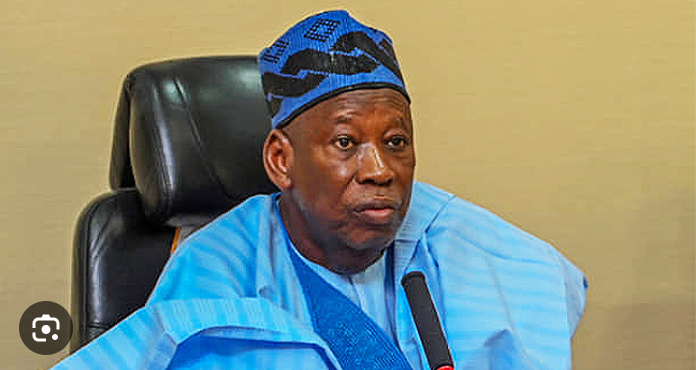

A former governorship candidate, Senator Ifeanyi Ubah, is presently having a closed-door session with the National Chairman of the All Progressives Congress, Dr Abdullahi Ganduje, and several chieftains of Anambra APC in Abuja.
The meeting, which holds at Nicon Luxury Hotel in Abuja, also has Minister of Women Affairs, Uju Kennedy-Ohaneye; Anambra chairman of the party, Chief Basil Ejidike and Deputy National Organising Secretary of the APC, Nze Chidi Duru in attendance.
The gathering comes two days after the ruling party announced that it has intensified efforts in its mission to take over Abia and Enugu States at the 2027 general elections.
Although the agenda of the meeting has not been revealed, a source told our correspondent that the emergency consultative session was called to adopt Ubah as the governorship candidate of the party in the next election.
“I understand the ruling party has been seeking a heavyweight politician to wrest power from the APGA government in Anambra and may have settled for Senator Ifeanyi Ubah,” the source explained.
Ubah, who was re-elected to the Senate on the platform of the Young Progressive Party, had defected to the APC in October 2023.
The senator explained in the letter read by the Senate Chamber that he switched parties because of the insurmountable disagreements within his former party.
More details later…
All rights reserved. This material, and other digital content on this website, may not be reproduced, published, broadcast, rewritten or redistributed in whole or in part without prior express written permission from According.
Contact: [email protected]
Nigeria is seventh-fastest country in Sub-Saharan Africa for internet speed —Report

Nigeria is the fifth fastest Sub-Saharan African country in internet speed, with an average download speed of 27.62 Mbps.
This is according to the 2024 Worldwide Broadband Speed Report, which was released by Cable.co.uk on Tuesday. According to internet speed tests conducted in 220 nations, Nigeria has improved its global speed ranking, rising from 133rd in 2023 to 132nd in 2024.
According to internet speed tests conducted across 220 countries, Nigeria climbed from 133rd in 2023 to 132nd in 2024.
Nigeria is placed seventh in Africa, following the top six countries, behind Réunion, South Africa, Eswatini, Rwanda, Mauritius, and Botswana.
READ ALSO: Amazon, Microsoft, Google under probe for alleged anticompetitive behaviour
Réunion has the highest average internet speed in Sub-Saharan Africa, at 63.29 Mbps, followed by South Africa at 42.42 Mbps.
According to the survey, Africa has the world’s second-lowest average internet speed, at 14.99 Mbps.
“50 countries were measured in the second-slowest region Sub-Saharan Africa, which averaged a download speed of 14.99Mbps overall. All but two of the countries found themselves in the slowest half of the league table.
“Going against the trend somewhat were Réunion (63.29Mbps, 75th), South Africa (42.42Mbps, 114th), and Eswatini (37.23Mbps, 120th). Meanwhile, Sudan (4.02Mbps, 223rd), Central African Republic (4.08Mbps, 222nd), and Ethiopia (4.45Mbps, 221st) all fell among the slowest ten countries in the world for average network speed,” the report noted.
The post Nigeria is seventh-fastest country in Sub-Saharan Africa for internet speed —Report appeared first on Latest Nigeria News | Top Stories from TVN.
Dubai: $10k bank balance, N640k fee visa application requirements not from us – UAE

The United Arab Emirates, UAE, has denied it exempted Nigerians from the customary visa application process.
TheCable exclusively reports that it contacted the UAE’s department of economy and tourism to confirm if obtaining a DVN was part of the resolutions reached between the Nigerian government and the UAE authorities before the suspension of the visa ban on Nigerian passport holders.
According to the report, the department said the DV hub website is not affiliated with the UAE government.
This comes after it emerged that Nigerian passport holders intending to visit UAE are now mandated to first obtain a Document Verification Number, DVN, before applying for visa.
Recall that it was announced on Monday that the UAE has lifted a three-year travel ban on Nigeria.
Following the announcement, Minister of Information and National Orientation, Mohammed Idris, said that the resolution had conditions that were “mutually beneficial”.
Part of the conditions include obtaining a document verification number (DVN).
According to the DV hub, the process is a specialised service designed to authenticate and verify documentation essential for visa applications to the UAE.
The DVN costs a non-refundable N640,000 excluding VAT for each application. This does not include the visa fee.
In addition to obtaining a UAE visa, Nigerians are mandated to provide proof of a six-month bank statement with a minimum balance of $10,000.
Some Nigerians have frowned at the conditions, saying it is a ‘constructive ban’, while others expressed doubt about the authenticity of the DVN.
However, upon enquiry by TheCable, the UAE’s department of economy and tourism said the DV hub website is not affiliated with the UAE government.
When asked if Nigerians are required to make payments for documents’ verification, it referred the media outlet to Dubai’s general directorate of residency and foreigners’ affairs (GDRFAD).
The GDRFAD said, while explaining the process for a visa application: “You will need a personal photo and a copy of your passport which must not have less than six months validity.
“A tourist visa costs about 200-300 dirhams (N60,000 – 90,000) depending on the stay.
“You will also need a travel ticket and valid medical insurance within the UAE.”
Also, on the issue of the need to have a bank balance of $10,000, the directorate said: “We are not aware of such requirements. Make your visa applications through the GDRFAD.”
Meanwhile, spokesperson for Nigeria’s Ministry of Foreign Affairs, Eche Abu-Obe, told TheCable that clarification on the DVN would be sought and provided from the Ministry’s office in the Middle East.
Dubai: $10k bank balance, N640k fee visa application requirements not from us – UAE
Ekiti Govt endorses removal of 2 traditional chiefs for alleged insubordination

The Ekiti State Government has empowered the Onigede of Igede Ekiti, Oba James Aladesuru, to remove two of his traditional chiefs and kingmakers for alleged insubordination and disrespect to his stool.
The government said the action became expedient, sequel to the recalcitrant postures of the two traditional chiefs and their vehement failure to amend their ways, after two previous suspensions slammed on them by Onigede-in-Council.
The chiefs are The Oluri of Odo Uri Quarters, Chief Sunday Alade and the Odofin of Odo Igede, Chief Emmanuel Adetona.
The Ekiti State Deputy Governor, Chief (Mrs) Monisade Afuye, handed down the verdict in Ado Ekiti on Wednesday while deliberating on a petition dated 15th April, 2024, and signed by Oba Aladesuru, seeking the leave of the government to remove the chiefs.
In the petition, Oba Aladesuru alleged that Chief Adetona, a high ranking kingmaker, was allegedly dividing Igede Ekiti by running a parallel administration and making desperate efforts to whittle down his influence and derail his control over the town.
The monarch alleged that he had no personal grudge against Chief Alade, but stated that the crisis stemmed from Alade’s outright rejection by the people of Uri quarters, who craved for his outright removal as their head.
Delivering the verdict, Afuye, according to a statement by her Special Assistant (Media), Victor Ogunje, said it was utterly disrespectful for the chiefs to have refused to mend fences with the monarch despite being given a nine-month window to reconcile and straighten all issues.
“Kabiyesi is the owner of the town, he knows exactly what he wants to make his town progress. It is sad that the two Chiefs have refused to do the needful despite being given nine months by government to appease the monarch and other aggrieved people.
“It is sad that you are behaving this way, you cant take our government for granted. Kabiyesi, go ahead and take whatever action you sought from us.
“No Chief has the right to be terrorising the traditional ruler or the entire town. It is the Kabiyesi that has the final say on this matter and we grant his request for the progress of his town,” Afuye stated.
Speaking at the parley, Oba Aladesuru, whose position was buttressed by Asa of Igede Ekiti, Chief Ola Ogunrinde, specifically accused Chief Adetona of stoking the ember of discord and instigating the kingmakers against him.
However, the two estranged chiefs denied the allegations, saying they were not holding any parallel administration as alleged by the monarch and other opposing chiefs.
They said efforts to reconcile with Onigede and other aggrieved chiefs had always been rebuffed. They called on the government to give them more time to seek forgiveness, but the plea was rejected.
While appreciating the state government on the matter, the Chairman of Irepodun/Ifelodun Local Government, Gbenga Oluwatuyi, assured that he will take all necessary steps to ensure peace and orderliness in the town.
Ekiti Govt endorses removal of 2 traditional chiefs for alleged insubordination
Obi urges supporters to donate to schools, hospitals, others ahead of 63rd birthday
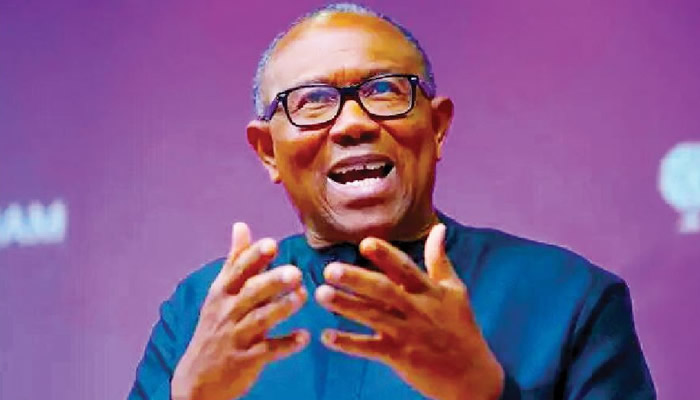

Former presidential candidate of the Labour Party, Peter Obi, has appealed to Nigerians and well-wishers to donate gifts intended for his 63rd birthday celebration to schools, hospitals, and other worthy causes.
In a statement on his X.com handle on Wednesday, Obi disclosed that he has personally redirected resources meant for celebrations towards supporting critical areas such as health, education, and poverty alleviation.
Obi, who turns 63 on Friday, expressed gratitude to God for the gift of life, good health, and the opportunity to contribute to humanity.
He urged supporters to use the occasion to pray fervently for Nigeria and respective countries, and to present themselves to God for guidance and wisdom.
He wrote: “On Friday, July 19th, I will be celebrating my 63rd birthday. As usual, it is a time for personal reflection and thanksgiving to Almighty God, who has graciously granted me life, good health, and the opportunity to contribute to the betterment of humanity.
“I am humbled by the numerous well-wishers, both locally and internationally, who have already begun sending birthday wishes and organizing events in my honour.
“My appeal to my well-wishers and supporters, particularly in Nigeria and Africa, is to use this occasion to fervently pray for our nation and respective countries. Let us present ourselves, as political leaders, to God, so that He may touch our hearts to make sacrifices, utilize public resources for the greater good, and prioritize the needs of the poor and marginalized. Let us also provide better opportunities for our youth to thrive.
“To those organizing events and spending funds in celebration of my birthday, I kindly request that you redirect those resources towards supporting the needy, particularly those in hospitals and schools. Your contributions can help pay medical bills and school fees for the less privileged.
“I also appeal that all gifts intended for my birthday be donated to care homes, schools, and hospitals, which will greatly benefit from your generosity. I have therefore personally, redirected the resources I would have used for celebrations towards supporting critical areas such as health, education, and poverty alleviation.
” I firmly believe that through these sacrifices, God Almighty will grant your heartfelt wishes for me and answer our prayers. Thank you for your kind thoughts and prayers.
“I urge you all to remain faithful to Nigeria, our beloved country, and your respective nations.
“May God Almighty protect, bless, and prosper you and your families, and may He bless our dear nation.”
Katsina gov embarks on vacation, hands over to deputy
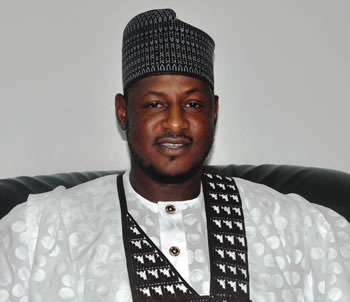
The Katsina State Governor, Dikko Radda will commence a one-month vacation from Thursday, July 18, 2024.
The deputy governor, Faruk Jobe, will assume Radda’s role during the period of 30 days.
The governor announced this during Wednesday’s joint executive and legislative meeting held at General Muhammadu Buhari House, Katsina.
The governor’s vacation was granted in response to a formal letter addressed to the Speaker, which was read before the session by the Assembly Chief Whip, Ibrahim Dikko.
In his application, Radda cited Section 190 of the 1999 Constitution of the Federal Republic of Nigeria (as amended), which empowers state houses of assembly to grant such requests from the executive arm. This constitutional adherence demonstrates the Governor’s commitment to due process and the rule of law.
While announcing the approval, the Speaker of the state House of Assembly, Nasir Daura, who led other members of the Assembly to the joint meeting alongside chairmen of the 34 Local Government areas of the state, extended wishes for Allah’s guidance to Radda throughout the official vacation.
He stated, “It is noteworthy that this marks the second instance in Katsina State’s political history where a Governor has sought constitutional approval for a vacation and formal handover to the deputy. The first occurrence was during the late Governor Umaru Musa Yar’adua’s second tenure.”
Radda while announcing the vacation at the chamber, urged the people to accord the acting Governor support.
All rights reserved. This material, and other digital content on this website, may not be reproduced, published, broadcast, rewritten or redistributed in whole or in part without prior express written permission from According.
Contact: [email protected]
Katsina governor transmits power to deputy, embarks on one-month vacation

Governor Dikko Umaru Radda of Katsina State has officially signed into law the 2024 supplementary budget, totaling N27,399,967,898.
The development brings the state’s total budget for the year to N481,708,830,120.26.
The Speaker, Katsina State House of Assembly, Alhaji Nasir Yahya Daura, presented the approved budget to Governor Radda at the Katsina Government House on Wednesday.
During the ceremony, Radda commended the legislative arm for their swift and efficient handling of the budget.
He thanked the lawmakers for their unwavering support to the executive and their proactive approach to addressing the state’s challenges.
While addressing the audience, Radda revealed his intention to proceed on a one-month vacation and medical checkup commencing this Thursday, July 18, 2024.
Consequently, he formally transmitted power to his deputy, Mallam Faruq Lawal Jobe, who will assume the role of Acting Governor during his absence.
The Karsina governor directed the legislature, the executive, the judiciary, and chairmen of the 34 local government areas to extend their full support and cooperation to the deputy governor during his absence.
Katsina governor transmits power to deputy, embarks on one-month vacation