Home Blog Page 95

NEF Stance on FIRS Disowned by Northern Elders, Tinubu’s Reforms Get Endorsement

0

In response to recent remarks about the Federal Inland Revenue Service (FIRS) that were ascribed to the Northern Elders Forum (NEF), the Concerned Northern Elders have distanced themselves, denouncing the position as unrepresentative of the goals and interests of the North.

The group said it felt obligated to address the country in the interest of truth and accountability in a statement issued on Wednesday and signed by Dr. Nasir Manguno. It warned that staying silent in the face of what it called intentional misrepresentation would amount to endorsement.

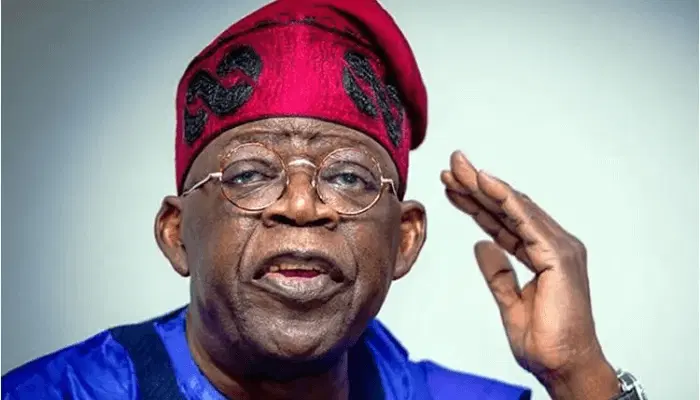
The elders contended that the NEF’s stated opposition to the FIRS, its Executive Chairman, and President Bola Ahmed Tinubu’s economic reform initiatives does not align with the common ideals and aspirations of Northern stakeholders.

They said that the NEF had lost its moral stature and had strayed from its original purpose as a council of wisdom to become a platform for political dissatisfaction and opposition narratives that were shaped by outside forces. The group contends that genuine elder statesmanship must be based on integrity, vision, and the welfare of the country rather than entitlement-driven privileges or adherence to antiquated systems.

The statement praised the FIRS Executive Chairman’s leadership, pointing out that the agency has continuously surpassed income targets, increased non-oil revenue production, and implemented technology-based, data-driven strategies to eliminate long-standing revenue leakages. It further stated that the period in which influence ensured exemption from tax duties has ended due to a renewed dedication to equity and accountability.

These improvements, according to the Concerned Northern Elders, are quantifiable and show Nigeria’s potential when professionalism replaces inertia. They assert that opposition to such reforms frequently originates from people who are uneasy about efficiency and transparency.

Regarding President Tinubu’s larger economic goal, the group claimed that the administration took over an economy that was weakened by reliance on fuel subsidies, opacity, and inconsistent compliance. It described the President’s adoption of challenging but necessary measures as crucial milestones toward a long-term economic recovery.

The elders emphasized that revenue reform should not be seen as punitive but rather as a fundamental component of national development, pointing out that no country advances by shielding elites from civic duty or placing the burden of governance on the poor.

Additionally, they affirmed their support for the Memorandum of Understanding carried out by the FIRS leadership to strengthen interagency collaboration, integrate data platforms, and eliminate duplication. They contended that frameworks that foster institutional strength and transparency ultimately benefit the North as well as the nation at large.

The organization addressed what they called “acts of political sabotage,” noting that fresh attacks on the FIRS seem to correspond with political realignments by opposition groups looking to capitalize on discontent in the region. The North will not be mobilized for partisan purposes, they cautioned.

The statement claims that rather than recycled narratives and inherited excuses for poor performance, the region’s true goals continue to be the creation of jobs, infrastructural development, educational advancement, and accountability. According to the elders, accomplishing these objectives calls for strong institutions, equitable taxation, and fearless leadership.

The group emphasized that history ultimately rewards reformers, not obstructionists, and reaffirmed its support for the FIRS Executive Chairman, President Tinubu’s economic reforms, and public officials dedicated to the national interest above the comfort of the privileged.

“The North is not against reform. The statement said, “It rejects failure and will not be dragged backward by voices financed to fear progress.”
Burkina Faso Hands Over 11 Nigerian Air Force Members After Diplomatic Engagement

0

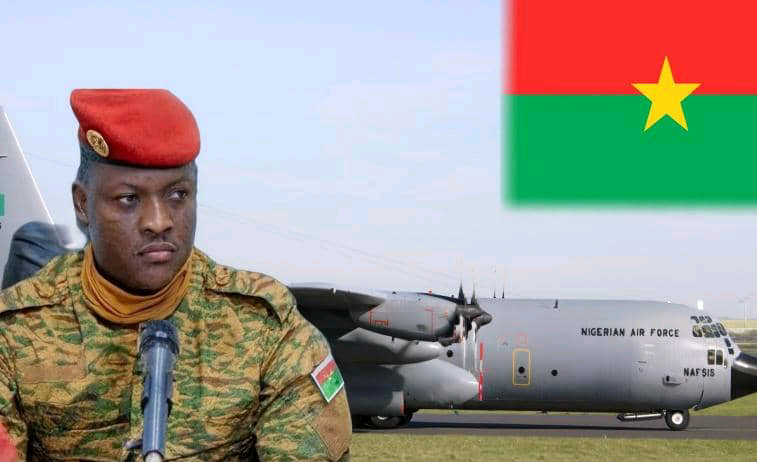
Nine days after being detained, 11 Nigerian Air Force (NAF) pilots and crew members were ultimately freed from Burkina Faso thanks to high-level diplomatic intervention by the Federal Government of Nigeria.

According to the source, the announcement was made soon after a Nigerian delegation headed by Amb. Yusuf Tuggar, Minister of Foreign Affairs, wrapped off discussions with President Ibrahim Traoré and other Burkinabè officials in Ouagadougou.

Senior representatives from the Ministry of Foreign Affairs, the Ministry of Defense, and the NAF Headquarters made up the delegation, which was tasked with using conversation to find a constructive and peaceful solution to the issue.

The engagement was intended to promote mutual understanding, defuse tensions, and secure the release of the detained NAF personnel while reiterating Nigeria’s commitment to regional cooperation and adherence to international aviation and military protocols, a senior official familiar with the mission told Zagazola Makama, a counterinsurgency reporter in Lake Chad.

Nigeria prefers diplomacy and neighborly involvement, according to the delegation. According to the source, the visit was intended to boost confidence and reinforce shared responsibility in tackling the intricate security issues facing the Sahel.

The official noted the long history of cooperation between Nigeria, Burkina Faso, and other members of the Alliance of Sahel States (AES) and said that the Nigerian delegation also communicated Abuja’s unwavering commitment to regional security cooperation, communication, and respect for international norms.

Nigeria and Burkina Faso have long worked together on security training, intelligence sharing, and regional stabilization initiatives, especially in the battle against violent extremism and terrorism throughout West Africa.

The smooth resolution of the incident, according to officials, will strengthen bilateral understanding and support regional efforts to advance peace, stability, and security.

What Nigeria’s Foreign Minister Told Audiences in Burkina Faso [Photos]

0

President Bola Ahmed Tinubu sent a message of sympathy and brotherhood to President Ibrahim Traoré of Burkina Faso through Nigeria’s Minister of Foreign Affairs, Ambassador Yusuf Maitama Tuggar.

According to reports, both nations were looking into methods to improve regional and bilateral cooperation.

Tuggar delivered the message on Wednesday at a meeting with President Traoré in Ouagadougou, where talks centered on collaboration in a number of areas, including security and counterterrorism.

Following the discussion, the minister stated that Burkina Faso and Nigeria had long-standing relationships and shared security concerns, adding that the goal of the engagement was to strengthen neighborly relations and mutual understanding.

We discussed cooperation in a number of areas. Tuggar added, “We also talked about the Nigerian plane that made an emergency landing in Burkina Faso.

He expressed Nigeria’s remorse for the event and admitted procedural flaws in the authorization process for the aircraft’s entry into Burkina Faso’s airspace. He also emphasized Abuja’s respect for international aviation standards and Burkina Faso’s sovereignty.


Additionally, the minister disassociated the Federal Government from statements made by a Nigerian political party representative who claimed that Nigerian military soldiers were mistreated in Burkina Faso.

“We express our sincere regrets to the Burkina Faso government and clearly dissociate ourselves from those comments,” Tuggar stated.

Tuggar praised President Traoré and his administration for their fraternal spirit and the way they treated the passengers when they were in Burkina Faso.

Nigeria and Burkina Faso

He added that discussions included more extensive regional initiatives to combat violent extremism and terrorism, pointing out that Burkina Faso has achieved significant accomplishments in counterterrorism measures.

In order to address common security issues, the minister reiterated Nigeria’s commitment to ongoing communication, regional solidarity, and improved cooperation with Burkina Faso and other nations in the subregion.

Fubara Meets APC National Secretary, Aviation Minister During Visit to Party Headquarters

0

Siminalayi Fubara, the governor of Rivers State, visited the national headquarters of the ruling All Progressives Congress (APC) without prior notice.

Fubara, who recently left the Peoples Democratic Party (PDP), reportedly paid a visit to the ruling party’s headquarters on Wednesday evening.

Around 6:50 p.m., Fubara arrived to the party secretariat, where he was greeted by APC executives in power.

The APC National Secretary, Senator Ajibola Basiru; the National Welfare Secretary, Hon. Donatus Nwapa; and the Deputy National Organizing Secretary, Nze Chidi Duru, are among those who received the South-South governor.

The governor was also welcomed by Festus Keyamo (SAN), Minister of Aviation and Aerospace Development.

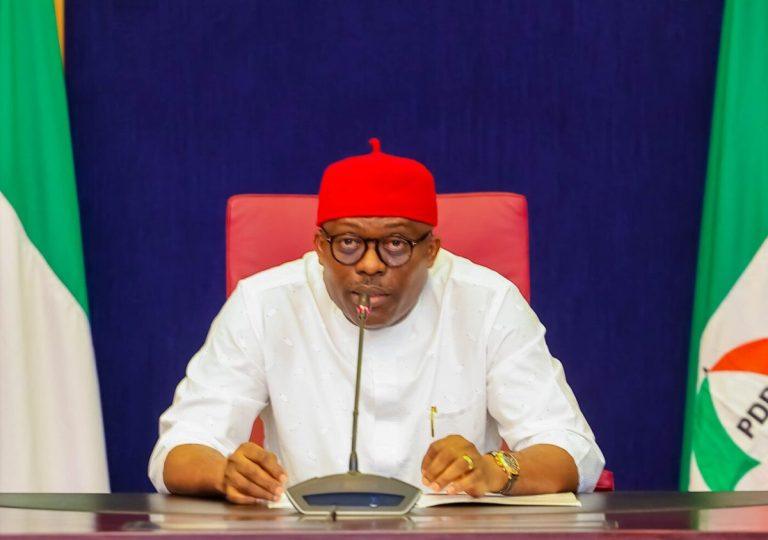
Wearing a crimson cap and white kaftan, Fubara informed the National Secretary that although though he was scheduled to attend the Progressive Governors’ conference, he thought it was essential to first visit the party headquarters.

After that, he was escorted into the National Secretary’s office and they met behind closed doors.

Breaking: Dangote Submits Complaint to ICPC Targeting NMDPRA Chairman

0

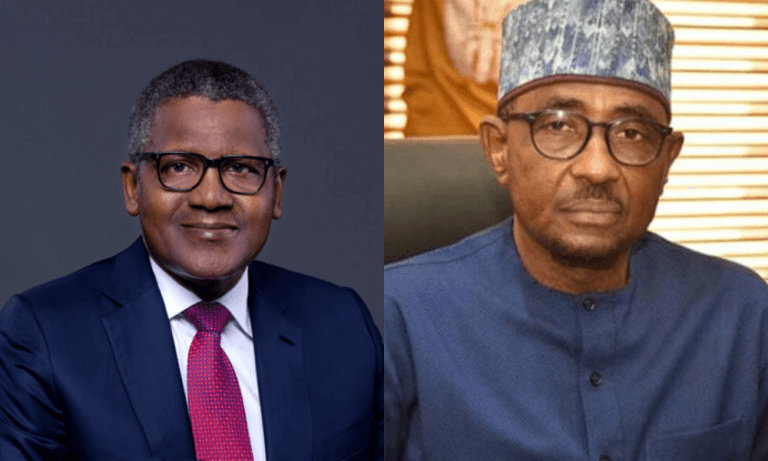
Aliko Dangote, the chairman of Dangote Group, has filed a suit against Ahmed Farouk, the managing director of the Nigerian Midstream and Downstream Petroleum Regulatory Authority (NMDPRA), with the Independent Corrupt Practices and other Related Offenses Commission (ICPC).

According to reports, Dangote charged Farouk with financial irregularities and wrongdoing.

In the December 16 petition, Dangote called for Ahmed to be arrested, investigated, and prosecuted for allegedly living above his means while working for the government.

The ICPC Chairman, Musa Adamu Aliyu (SAN), received the petition.

Dangote accused the NMDPRA MD of paying more over $7 million up front for his four children’s education in several Swiss institutions over a six-year period without providing proof of a legitimate source of income.

In order to support his claims and have the anti-graft agency verify them, Dangote listed the four children and their Swiss schools along with the amount spent for each.

He said that Farouk Ahmed was exploiting the NMDPRA’s power to embezzle and redirect public funds for personal benefit and the pursuit of private interests at the expense of the Nigerian people, causing recent unrest and protests from various organizations.

Dangote further asserted that Farouk Ahmed worked in Nigeria’s public sector throughout his adult life and that the sum of his earnings over the years was not even close to $7 million, allegedly taken from the public coffers to pay for his teenage children’s education overseas.

“There is no question that the aforementioned facts regarding abuse of office, violation of the public officer code of conduct, corrupt enrichment, and embezzlement are egregious acts of corrupt practices for which your Commission (ICPC) is statutorily empowered under section 19, of the ICPC Act to investigate and prosecute,” stated Dangote.

“A person who is successfully prosecuted under section 19 of the ICPC Act faces a five-year prison sentence without the possibility of a fine.” We boldly declare that the ICPC is strategically positioned alongside the sister agencies to prosecute financial crimes and other offenses related to corruption, and that the courts do not hesitate to punish offenders upon proving a prima facie case.

In light of the aforementioned, we urge the Commission, led by you, to look into the allegations of corruption and abuse of authority against Engineer Farouk Ahmed and to prosecute him if necessary.

“We have no reservations that the Commission will act decisively to ensure that justice is done and the good image of President Bola Ahmed Tinubu’s administration is protected, as this is a matter that is in the public domain.”

Supreme Court Under Fire: ADC Alleges Threat to Federalism and Constitutional Order

0

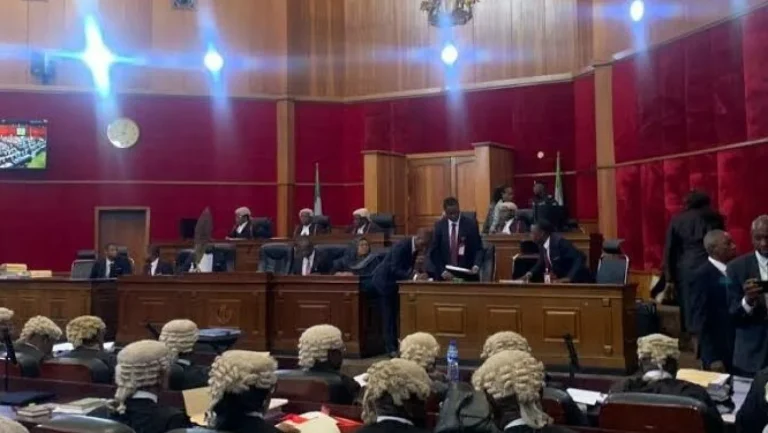
By upholding the President’s authority to dismiss elected governors and state assemblies under a state of emergency, the Supreme Court has been accused by the African Democratic Congress (ADC) of turning the President into a “constitutional tyrant.”

The party cautioned in a statement signed by Mallam Bolaji Abdullahi, its National Publicity Secretary, that despite the ruling’s academic nature, it sets a dangerous precedent and concentrates excessive power in the Presidency in a way that threatens democracy in general as well as Nigeria’s federal system.

According to the ADC, Nigeria’s democracy and federalism are seriously threatened by the ruling.

It cautioned that constitutional dictatorship does not always result from military takeovers and that it frequently develops gradually as leaders gradually undermine democratic institutions and norms.

The entire statement said: “The Supreme Court of Nigeria’s ruling, which gives the President the authority to suspend elected governors and state assemblies during a state of emergency, has alarmed the African Democratic Congress (ADC).” Even while the decision seems harmlessly academic, it could mark a turning point in our democratic evolution and permanently change the character of our democracy.

The President has the “discretion to determine the measures required to restore peace and security” following the declaration of a state of emergency in any state, per the ruling of the Supreme Court. Essentially, the President is free to implement whatever “extraordinary measures” if he believes they are required to bring peace back to that state.

The top court’s stance clearly implies that the President of Nigeria or his representatives might easily create a security situation in any state where the governor is thought to be “unfriendly” and then suspend the governor and the State House of Assembly. Even though the same ruling states that “no arm or tier of government is constitutionally superior to another,” the ruling’s obvious implication is that the President has complete influence over state governors’ political behavior. Thus, the ADC views this ruling as a grave danger to Nigeria’s democracy and federalism.

Examining the protections outlined by the highest court as balances against abuse of presidential authority highlights the tremendous risk inherent in this ruling. Judicial scrutiny, parliamentary oversight, and proportionality are some of these protections.

“Proportionality is obviously out of the question when faced with a president who will stop at nothing to hold onto power, even completely destroying opposition parties, as Nigerians have seen under President Bola Ahmed Tinubu since taking office. Second, legislative monitoring is equally unlikely given the President’s successful takeover of the National Assembly and the legislature’s disgraceful reduction to a mere appendage of the Presidency. Lastly, with regard to judicial review, this same ruling has eliminated any uncertainty regarding the type of review that is now feasible when the nation’s top court decides to give precedence to the letter of the law above its spirit, which is specifically meant to avert the very risk that the Court has now approved.

The Supreme Court has unintentionally contributed to the imposition of constitutional dictatorship on Nigeria through this type of “judicial review,” a perilous form of authoritarianism in which those in positions of authority take advantage of legal frameworks and constitutional flaws to amass and solidify absolute power.

The ADC wants Nigerians to be aware that military takeovers are not the only way that constitutional tyranny may emerge. As we have seen over the last two years, it frequently develops slowly as leaders incrementally undermine democratic institutions and values. It is now painfully obvious that neither the judiciary nor the legislature can be trusted to stop this decline.

Bandit Attack in Osun: Community Leader Killed, Former Customs Officer Abducted

0

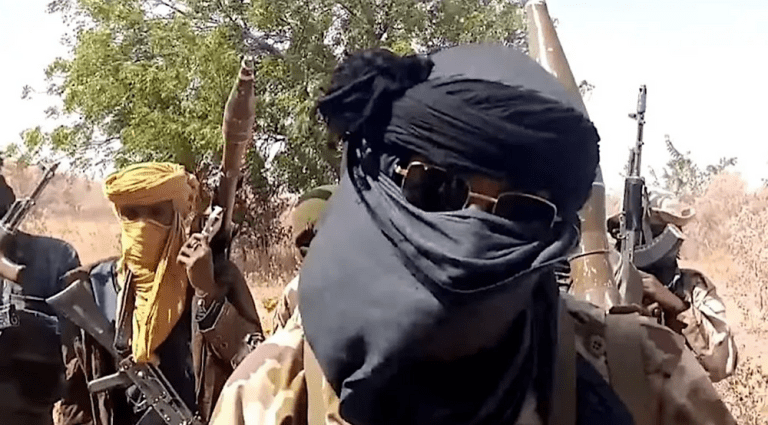
Following a brutal attack by armed bandits on Monday night, which resulted in the death of the town’s non-indigenous leader and the kidnapping of Mr. Emmanuel Owolabi, a former customs officer, from his home, residents of Ora Igbomina in Ifedayo Local Government Area, Osun State, were thrown into panic.

According to eyewitnesses, the attackers invaded the old town, which is close to the borders of Kwara and Ekiti States, in huge numbers and took over the area for several hours after firing multiple gunshots.
Fearing kidnapping, hundreds of locals were compelled to leave their houses due to the onslaught.

Residents in Akisa and the neighboring areas of the town were frightened by the violence and talked about it in private groups.

According to reports, local security personnel and community vigilantes made an effort to fend off the assailants, but their attempts were hindered by the criminals’ superior armament.

The Amotekun Corps, local hunters, and vigilantes are currently searching the surrounding woodlands in an effort to locate the bandits and secure the release of the kidnapped former customs officer, according to High Chief Isaac Fadipe, the Inurin of Ora Igbomina territory, who verified the attack.

He emphasized the need to bolster the town with more armed security guards and urged state security agencies and Governor Senator Ademola Adeleke to act immediately.

Fadipe stated, “We want the government to act quickly on the security of the people because we are living in constant fear.”

More officers have been sent to the area, according to the Osun State Police Command.

Following the event, police officers and volunteers promptly chased the attackers, according to Police Public Relations Officer Mr. Abiodun Ojelabi.

He said that one person was shot during the assault, but the death happened in Kwara State, which is located over the border. Ojelabi stated, “We are working hard to rescue the victim.”

Are, Dalhatu, Oke Approved by Senate for Non-Career Ambassadorial Roles

0

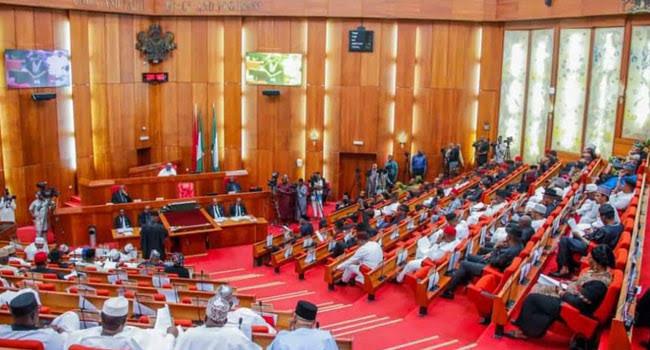
The first three non-career ambassadors that President Bola Tinubu sent to the Senate two weeks ago were confirmed by the Senate on Tuesday.

Aminu Muhammad Dalhatu (Jigawa), Emmanuel Ayodele Oke from Oyo State, and Lateef Kayode Are from Ogun State are the confirmed individuals.

The confirmations came after the Senate Committee on Foreign Affairs, led by Senator Sani Bello (APC Niger North), reviewed the report after screening the nominations last week.

According to Senator Bello’s report, there was no petition against any of the three applicants, and they were all deemed deserving of their appointments.

Senator Godswill Akpabio, the Senate President, called on the confirmed nominees to act honorably as Nigeria’s ambassadors wherever they are stationed.

Senator Godswill Akpabio, the Senate President, read Tinubu’s letter with the nominees’ names during plenary on November 26. He then forwarded it to the Committee on Foreign Affairs for review.

In the letter, the President stated that the nominations were made in compliance with Sections 171 (1), (2)(c), and (4) of the modified 1999 Constitution.

As a result, he gave the parliamentarians his “assurances of highest consideration” and asked the Senate to “consider and confirm the appointments of the nominees expeditiously.”

The Senate has been tasked with assessing 64 more ambassadorial applicants who have not yet been confirmed.

Reforming Nigeria’s Power Sector Amid Liquidity and Political Economy Challenges

0

Greetings One of the most difficult aspects of Nigeria’s economic restructuring program is still the power industry. The industry still has significant structural, financial, and governance issues in spite of numerous reform initiatives over the years.

These issues are multifaceted and include transmission bottlenecks, inadequate investment capacity, political economy restrictions, tariff distortions, and a prolonged liquidity crisis throughout the value chain. The sector’s financing gap has grown and subsidy dependence has been solidified as a result of the failure to establish a fully cost-reflective tariff regime, primarily because of social and political sensitivities following recent macroeconomic reforms.

In order to keep the system from collapsing and maintain the supply of electricity, government involvement has become necessary in the near future. However, without deeper structural repairs, increased transparency, and the execution of reforms gradually but credibly, the existing trajectory—which is marked by mounting sector debt at approximately ₦4 trillion—is not financially sustainable.

Background and Situation

Power sector reform has long been seen as essential to Nigeria’s industrial development, social welfare, and economic competitiveness.

However, progress has been uneven and gradual. Because the electricity sector’s value chain—gas supply, generation, transmission, and distribution—is so intertwined that flaws in one part threaten the system as a whole, it poses a different kind of problem than other reform areas.

The reform environment has become more complex due to recent macroeconomic changes, such as the removal of fuel subsidies and the unification of foreign currencies, which have increased cost-of-living pressures and strengthened opposition to tariff modifications in the power sector.

Tariff Reform’s Political Economics

The challenge of creating a truly cost-reflective pricing structure is a significant barrier to power sector reform.

Because of worries about affordability and the social effects of reforms on consumers and businesses, electricity tariffs are still capped.

However, the industry cannot provide enough cash to support operations or draw in new investment without cost-reflective pricing.

Because of the ensuing subsidy burden, the government has been compelled to make financial interventions on a regular basis, thereby shifting inefficiencies and revenue shortfalls onto the public balance sheet.

Therefore, one of the most politically delicate and technically challenging aspects of Nigeria’s current reform agenda is power sector reform.

Problems with Privatization and Structural Weaknesses

In addition to tariff problems, the industry has intrinsic structural flaws, especially since privatization.

Concerns still exist about:

• Some private investors’ financial and technical capacity

• Deficits in due diligence and transparency throughout the privatization process

• Ineffective operations and poor governance, particularly in the TCN and distribution corporations (Discos) These difficulties have restricted revenue collection, lowered service quality, and decreased operators’ capacity to make investments in network upgrades and loss mitigation.

Public Ownership and Transmission Restrictions

The Transmission Company of Nigeria (TCN) is still entirely owned and run by the government. Control of this vital infrastructure by the public sector has been linked to delayed network growth, insufficient investment, and operational inefficiencies.

Transmission continues to be a major bottleneck that limits the use of generation capacity and lowers system reliability. Liquidity and service delivery issues throughout the value chain are made worse by this segment’s flaws.

Grid collapses are less common, nevertheless, because to recent initiatives under the Presidential Power Initiative.

Crisis in Liquidity Throughout the Power Value Chain

The power industry functions as a closely connected chain. One segment’s financial difficulties spread swiftly to others. Presently:

• It is difficult for generating firms (Gencos) to pay gas providers.

• Discos, or distribution corporations, cannot make enough money to fulfill their commitments to Gencos.

• There are governance issues and underinvestment in transmission infrastructure. A systemic liquidity problem has been solidified by these circumstances, threatening sector sustainability and confidence.

Justification for Governmental Financial Involvement

In the short term, government involvement to close the sector’s financing shortfall is now unavoidable due to the scope and immediacy of the situation.

Preventing a failure of the electrical supply system is the goal of recent efforts, such as bond issuances to settle outstanding commitments, especially to gas suppliers and Gencos.

While longer-term reforms are progressively put into place, such interventions are required to keep power available for homes and businesses.

Progressive Reform and New Positive Advancements

There is a compelling justification for gradual and incremental reform, even though a swift shift to complete subsidy elimination may not be politically feasible. Current events show cautious progress, such as:

• The implementation of distinct tariff bands, like Band A

• Greater decentralization, with states taking on more operational and regulatory responsibilities

• The growth of autonomous power initiatives

• Growing use of renewable energy solutions in homes and businesses These patterns imply that the industry is gradually moving toward higher resilience and diversity in spite of present difficulties.

Risks to Debt, Transparency, and Fiscal Sustainability

The finance paradigm in use today is unsustainable. Sector liabilities have increased to around N4 trillion and are still rising. It is imperative to guarantee that all unresolved claims are:

• Correctly confirmed

• Conducted a thorough audit

• Credibly and openly managed

Nigeria’s experience with fuel subsidy programs highlights how susceptible subsidy schemes are to misuse and dishonesty. Therefore, to avoid comparable results in the power industry, strong oversight and accountability measures are crucial.

Policy Consequences and Suggestions

Establish a Clear Plan for Cost-Reflective Tariffs

Adopt a gradual and predictable shift to cost-reflective pricing while providing vulnerable customers with tailored social protection.

Enhance Accountability and Governance

Boost openness in financial settlements, debt verification, and subsidy administration.

Resolve Weaknesses in the Distribution Sector

Set performance standards for discos, such as loss minimization, technology advancements, and recapitalization.

Restructure Transmission Control

To increase productivity and investment, investigate other management or concession structures for TCN.

Encourage Renewables and Decentralization

To ease the strain on the national grid, promote state-level initiatives, independent power projects, and the use of renewable energy.

Reduce Financial Exposure

Financial assistance from the government should be clearly time-bound and connected to quantifiable reform benchmarks.

Summarization

Nigeria’s power sector reform is a gradual, long-term process rather than a short-term solution.

Progress will be slow due to the sector’s complexity, institutional flaws, and political economy limitations.

However, the current trajectory will continue unsustainable unless strong action is taken to address structural inefficiencies, enhance governance, and guarantee fiscal discipline.

Building a financially viable, dependable, and inclusive electricity industry that can support Nigeria’s economic growth and development requires a balanced approach that combines short-term government support with medium-to long-term structural transformation.

• The CEO of the Centre for the Promotion of Private Enterprise (CPPE) is Dr. Muda Yusuf.

‘I Never Said the South Should Produce 2027 President’ – El-Rufai

0

The former governor of Kaduna State, Mallam Nasir El-Rufai, has claimed that he has never asserted that the country’s southern area should produce the president in 2027.

El-Rufai said that the widely shared assertion was untrue in a statement he put on his former Twitter account, X, on Monday.

He made it clear that he never made such remarks in any of his speeches, talks with the media, or on his verified social media accounts.

“My attention has been drawn to a trending fake news item alleging that I specified which region of the country should produce the president in 2027,” he added.

Despite going viral, this assertion is false. In none of my speeches, interviews, or posts on social media did I make such a claim. I keep up verifiable social media accounts where I directly voice my opinions and speak my thoughts.

Even while I distribute these articles on my platforms as contributions to the national discourse, it is incorrect and improper to assign to me opinion pieces written by other authors.

“These explanations are essential as we deal with both careless politicking and the intentional abuse of social media to propagate false information.

“Treating fake news platforms with any seriousness is not justified by their deliberate attribution of claims I did not make.”

He cautioned that society loses when media leaders and influencers neglect this duty and asked the public and media professionals to always confirm information before publishing or sharing.

In order to stop the propagation of false information and irresponsible politics, the former governor further urged all parties involved to take appropriate action.

anything is now more crucial than ever to confirm facts before posting or publishing anything in this turbulent and deceptive times. It seems that some senior editors disregarded this responsibility in this case.

“When media executives support the most careless social media users in what can only be described as the unedifying Olympics of fiction and fakery, society stands to lose.” Everyone needs to fulfill their obligations.

“I want to reiterate that unless I have specifically stated my opinions on my official social media platforms or in interviews with respectable media organizations, no opinions should be attributed to me,” he continued.