Home Blog Page 888

Marketers project N700bn monthly subsidy

0

•NNPC mum as dealers insist government still paying subsidy, Reps probe crude shortage

•Dangote eyes foreign markets for refinery products, FG meets Kyari, Dangote over dispute

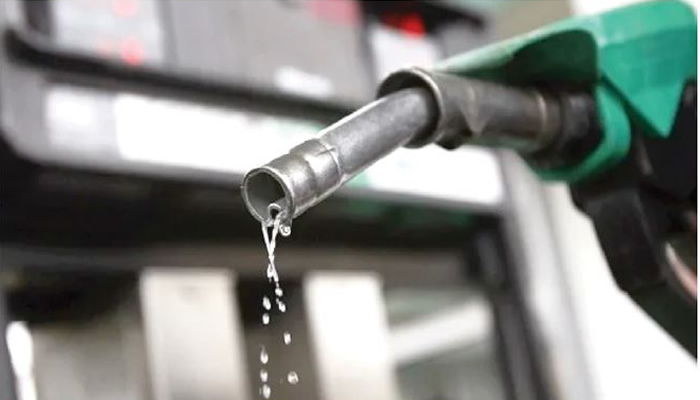
With a landing cost of N1,117 per litre for Premium Motor Spirit, popularly called petrol, the monthly subsidy on the commodity has increased to about N707bn, oil marketers projected on Monday.

It was also gathered that as the Dangote Petroleum Refinery begins petrol production in August, the company might export the product following the crude oil supply crisis and other regulatory challenges confronting the $21bn firm.

This came as the Minister of State for Petroleum Resources (Oil), Heineken Lokpobiri, met with officials of Dangote refinery, Nigerian National Petroleum Company Limited, Nigerian Upstream Petroleum Regulatory Commission and Nigerian Midstream and Downstream Petroleum Regulatory Authority.

The meeting in Abuja on Monday bordered on the recent concerns between Dangote refinery and oil sector regulators and operators.

Also, the House of Representatives inaugurated an investigative committee to look into the non-availability of crude oil to domestic refineries and allegations of deliberate hike in the cost of the product for profiteering.

Last Wednesday, the Major Energies Marketers Association of Nigeria stated that the landing cost of petrol as of the preceding day was N1,117/litre.

This came as the Independent Petroleum Marketers Association of Nigeria insisted that the Federal Government was still subsidising PMS. IPMAN stressed that this was not sustainable and might lead to an increase in the pump prices of petrol soon.

MEMAN also revealed last week that the landing cost of diesel was N1,157/litre, while that of aviation fuel was N1,127/litre.

While the pump prices of diesel and aviation fuel are considerably higher than their landing costs, the pump price of petrol is way lower than its landing cost.

Although retail outlets operated by the Nigerian National Petroleum Company Limited and some major marketers dispense petrol at between N617/litre and N670/litre, dealers said the ex-depot price of the commodity by NNPC is N585/litre.

Idependent marketers hardly get the product at the N585/litre ex-depot price. They mostly buy from private depot owners at higher rates findings show. This makes their pump prices much higher. Some of them dispense the commodity above N700/litre.

NNPC is Nigeria’s sole importer of petrol. Other dealers stopped importing the commodity due to their inability to access the United States dollar, required for PMS imports.

The difference between the landing cost of N1,117 and an ex-depot price of N585 is N532. This implies that every litre of petrol consumed in Nigeria is subsidised by about N532.

Nigeria consumes tens of millions of litres of petrol daily. There are different petrol consumption figures from various agencies of the Federal Government.

NNPC, Nigerian Midstream and Downstream Petroleum Regulatory Authority, and the Federal Ministry of Petroleum Resources, have stated different figures ranging from 66.8 million litres in September 2022 to 44.3 million litres in October 2023.

When the most recent daily PMS consumption figure of 44.3 million litres is multiplied by the N532 subsidy reportedly paid on each litre of petrol, it gives N23.57bn as the daily subsidy spending.

This means that in 30 days, the petrol subsidy should gulp about N707bn.

The Secretary of IPMAN, Abuja-Suleja, Mohammed Shuaibu, said though the Federal Government and NNPC had claimed that there was no subsidy on petrol, the latest figures by MEMAN proved otherwise.

He said petrol subsidy was over N700bn monthly considering the landing cost of the commodity as revealed by MEMAN.

“Petrol price is determined by the forces of demand and supply in the international market. When there is a global price increase, we should experience it in Nigeria. Therefore the N1,117/litre is not just based on our foreign exchange rate, but also the global PMS cost. The sole importer of this product is NNPC and the company is not telling us the truth.

“But data sourced by our counterparts, the major marketers, showed clearly that the landing cost of petrol is above N1,100/litre. This means that the monthly subsidy has crossed N700bn. That also means we should be prepared so that any time the price of petrol jumps, we should not be surprised because they have already told us,” Shuaibu stated.

The IPMAN official insisted that if government was not subsidising petrol, it should have allowed the full deregulation of the downstream sector.

“Of course, you know NNPC will hide this information from you. Former Kaduna State Governor, Nasir El-Rufai, stated a few months ago that the Nigerian government is not telling Nigerians the truth about fuel subsidies because they are still paying subsidies.

“If they are not paying, why is it that up till now only NNPC is importing petrol when they claim that they have liberalised the market? They should open the market to competition by allowing investors to come in and compete favourably. This will crash the price of the product.

“But where only one entity controls the importation of PMS then the sector has not been deregulated. That is why we feel NNPC is economical with the truth by saying that it is not subsidising petrol,” Shuaibu added.

In April, El-Rufai told journalists in Maiduguri that many citizens were not aware that the government had reintroduced the PMS subsidy.

“The Federal Government is now subsidising fuel; many people don’t know this. It is the right policy. I have always supported the withdrawal of oil subsidies; but in the course of implementing the policy, the government realised that subsidy has to be back; right now, the government is paying a lot of money for subsidy, even more than before.

“You start implementing a policy because you are sure it is the right policy, but in the course of implementation, you come across bottlenecks and you modify.

“The keyword in leadership, in my view, is pragmatism. You should be pragmatic. So, when you make a policy, you start implementing it, and if it doesn’t seem to work well, you should have the humility to stand back and say this is not working, and you modify it,” El-Rufai had stated.

NNPC mum

The Chief Corporate Communications Officer, NNPC, Olufemi Soneye, did not respond to an enquiry on whether the national oil company was subsidising petrol based on the latest revelation of MEMAN.

However, Soneye had earlier insisted that the national oil firm had stopped subsidising petrol.

“We are recovering our full costs from the products we import. It is important to emphasise that the subsidy is no longer in place. Contrary to allegations, the petrol subsidy has not been reinstated,” the NNPC spokesperson had stated.

Before the recent revelation by MEMAN on the N1,117/litre landing cost of petrol, the GCEO of NNPC, Malam Mele Kyari, had told state house correspondents after an audience with the President at the Aso Rock Villa a few months ago that fuel subsidy had not been returned.

“No subsidy whatsoever. We are recovering our full cost from the products that we import. We sell to the market, and we understand why the marketers are unable to import. We hope that they do it very quickly and these are some of the interventions the government is doing. There is no subsidy,” Kyari had stated.

But the Public Relations Officer of IPMAN, Chief Ukadike Chinedu, insisted that petrol prices at the pumps should be over N900/litre if the commodity was not subsidised.

“I’ve said before that the PMS subsidy had been returned, and the government said it was a lie. I said before that the government is subsidising PMS and it is on till this moment. I said before that what the government was doing was quasi-subsidy and that has not changed,” Ukadike stated.

He said the N1,117/litre landing cost for petrol as revealed by MEMAN is a clear indication that subsidy on petrol is still implemented by the government through NNPC.

Petrol export

It was also gathered that as the Dangote refinery begins petrol production in the next couple of weeks, the company might be forced to export the product out of the country.

The According reliably gathered that the company was contemplating selling its product to other countries as it failed to get crude oil from International Oil Companies operating in Nigeria.

Multiple sources within the organisation told one of our correspondents that the cost of importing crude oil from the United States was impacting the cost of production, making the product more expensive than the one imported by NNPC.

Some fuel marketers also stated that because Nigerians may not buy high-priced petrol, the Dangote Group was considering exporting PMS to countries where it would not be seen as too expensive.

Dangote refinery recently disclosed that it had exported about 3.5 billion litres of refined petroleum products, which, according to the firm, constituted about 90 per cent of its total productions so far.

A top official of the refinery, who spoke on condition of anonymity because he wasn’t authorised to speak on the matter, maintained that the much-awaited PMS might go the way of other products being exported to other countries.

“I can confirm that we will supply PMS in August. That is certain. But I don’t know if we will sell to the Nigerian market. The refusal of the IOCs to supply us with crude oil is affecting the cost of production, and that will make the product more expensive compared to what the government is selling. To avoid issues, it is better to send our PMS to other countries. We have the market out there. West Africa alone is a big market for us.

“The main issue we have is crude oil. Importing it from the US is not easy. I guess Nigerians will understand; nobody wants to sell below the cost price. Everybody wants to buy cheaper fuel, but the cost of crude import is high. If we take the product to the market and the government keeps subsidising the imported one, what do you think will happen? There is no way anybody can survive in the face of government subsidy. If we don’t get crude locally, most likely, our PMS won’t be sold in Nigeria.

“If we can stop fuel importation, we will save our dollar and reduce the pressure on the naira, but sadly, this is turning out to be the way it is,” our source stated.

The source further stated that this was why the Dangote refinery had yet to release the price of its PMS.

“We ought to have met with marketers to disclose the price of our product, but we have yet to do so because of this situation and we are not even sure if the product will be sold in Nigeria. The situation is too dicey. Alhaji (Aliko Dangote) wants to end importation of PMS and give Nigerians cheaper access to energy, but there’s a mafia who don’t want that to succeed,” the source stated.

Experts react

Reacting, an energy expert, Prof Wumi Iledare, said the Dangote refinery was in a free trade zone and the export of PMS should not be seen as a problem as long as regulations were not violated.

“Dangote does not necessarily have to sell to the Nigerian market if the Nigerian market does not want it. NNPC could decide to get their petroleum products and decide to sell them in Nigeria. If you look at the regulation, what they call the domestic crude supply obligation, it is willing-seller, willing-buyer; the government cannot dictate the price of crude. It is going to be a negotiation between the two of them. I think people are just being sentimental about this issue,” Iledare stated.

“If Nigerians are willing to pay for whatever other people will pay for PMS, why will Dangote not sell it for them?”

He stated that by selling the product in Nigeria, the refinery would save the cost of transporting the same product, but would not sell the commodity lower than what the Nigerian market can support.

“The gap between the cost of diesel and petrol in Nigeria is much. It’s never like that all over the world. That means something is wrong. Dangote doesn’t mind selling if you are going to pay the subsidy for him to supply to the Nigerian market.

“I don’t know if NNPC is paying subsidies or not, but somebody is absorbing the difference. You can call it under-recovery or subsidy, but the price of petrol today does not reflect the market cost of producing a litre of petrol,” Iledare disclosed.

The $20bn Dangote refinery located in Lekki, Lagos State, is expected to begin the sale of petrol in August.

The President of the Dangote Group, Aliko Dangote, had said his refinery would stop the importation of refined petroleum products into Nigeria and Africa.

However, the company has repeatedly raised concerns over the alleged refusal of International Oil Companies to sell crude to the refinery.

“It’s like the IOCs’ objective is to ensure that our petroleum refinery fails. It is either they are deliberately asking for ridiculous/humongous premium or they simply state that crude is not available. At some point, we paid $6 over and above the market price. This has forced us to reduce our output as well as import crude from countries as far as the US, increasing our cost of production,” Vice President of Oil and Gas at Dangote Industries Limited, Devakumar Edwin, stated recently.

Reps wade in

The Speaker of the House of Representatives, Tajudeen Abbas, said the quality of petroleum products imported into the country must comply with global standards.

He spoke at the National Assembly Complex in Abuja on Monday during the inauguration of the House joint investigative committee assigned to carry out a forensic investigation into the allegations of domestic production and importation of substandard petroleum products into the country.

The investigating panel, made up of the House Committees on Petroleum Resources (Upstream and Midstream), is also looking into the non-availability of crude oil to domestic refineries and allegations of deliberate hike in the cost of the product for profiteering.

Addressing the committee members, Abbas, represented by the Deputy Speaker, Benjamin Kalu, condemned the resurgence of fuel queues at petrol stations, the increasing cost of PMS, and the unavailability of feedstock for the local refineries.

He said, “The quality of petroleum products imported into Nigeria has come under scrutiny, and we must ensure compliance with global standards. The Nigerian Midstream and Downstream Petroleum Regulatory Authority and the Standards Organisation of Nigeria must guarantee that petrol imported into this country is rigorously tested in laboratories to meet the standard sulphur and octane levels.

“It is unacceptable that the petrol imported into the country contains high sulphur levels, and has low octane levels — as we notably experienced in the recent past that even led to socio-economic losses on a national scale including the knocking down of the engines of vehicles of Nigerians in their hundreds.”

In his speech at the event, co-chair of the committee and Chairman of the Committee on Petroleum Resources (Downstream), Ikenga Ugochinyere, listed the tasks before the panel to include “Carrying out a legislative forensic investigation into the resurgence of fuel queues in petrol stations, allegations of high cost of PMS, unavailability of fuel stock for downstream domestic refineries and disruption of distribution of the product.”

He added, “To ensure a thorough and transparent investigation, the committee will undertake detailed laboratory investigations at all local refineries, marketers and importers facilities, regulatory agencies, state oil companies and other players in the sector.

“We will visit various filling stations, depots and tank farms to take samples in line with international standards, verify the quality of imported products and assess the testing capacities of all refineries and all refined product handling outfits.

“The collection of samples will be done transparently and in line with global best practices and would be in specimens for independent testing in different standard, accredited laboratories. This will include that of stakeholders involved in the refining and importation of refined petroleum products.”

Ugochinyere, who represents Ideato North/Ideato South Federal Constituency, Imo State, added that middlemen involved in shady marketing of crude oil as well as indiscriminate issuance of licenses would be traced and brought to book by the committee.

He added, “The committee will also conduct a legislative forensic investigation into the presence of middlemen in crude trading, indiscriminate issuance of licenses, alleged unavailability of international standard laboratories to check adulterated products and the influx of contaminated products into the country,

“There is also the allegation of non-domestication of profits realised from crude marketing sales in local banks, abuse of the Pro Forma Invoice regime, importation of products already being produced in Nigeria and use of international trading companies to resell fuel stock to local refineries at high mark up prices,” he added.

The House of Representatives had at the plenary on July 9 adopted a motion on “Urgent need to carry out a legislative forensic investigation into the challenges affecting the downstream and midstream petroleum sectors in Nigeria and other related matters to find out a lasting solution to all challenges.”

The committee is starting its mandate barely 24 hours after Speaker Abbas led a delegation of the legislative body to Lagos, headquarters of the Dangote refinery, for the spot assessment of controversy on the non-supply of crude to the indigenous company.

Lokpobiri intervenes

The Minister of State for Petroleum Resources (Oil), Heineken Lokpobiri, held a meeting with the leadership of Dangote refinery, NMDPRA, NUPRC and NNPC on Monday in Abuja.

Lokpobiri’s media aide, Nneamaka Okafor, said the minister convened the “high-level meeting with key stakeholders to address and resolve the ongoing issues surrounding the Dangote refinery.”

Present at the meeting, according to a statement by Okafor, were “Mr Aliko Dangote, Chairman and CEO of Dangote Group; Farouk Ahmed, Chief Executive of NMDPRA; Mr Gbenga Komolafe, Chief Executive of NUPRC; and Mr Mele Kyari, Group Chief Executive Officer of NNPC.”

The stakeholders expressed gratitude to the minister for his intervention in facilitating the dialogue.

“The meeting focused on finding a sustainable and lasting solution to the current impasse affecting the Dangote refinery, with all parties demonstrating a commitment to collaborative and proactive problem-solving.

“The minister emphasised the importance of cooperation and synergy among all stakeholders to ensure the success and optimal performance of the oil and gas sector, which is pivotal for Nigeria’s economic growth and energy security.

“This meeting marks a significant step towards resolving the challenges and underscores the minister’s dedication to fostering a conducive environment for Nigeria’s oil and gas sector,” the statement stated.

Why Osimhen may remain at Napoli

0

Victor Osimhen playing one more season at Napoli looks increasingly imminent due to reports of emerging twists in his move to Paris Saint-Germain, According Sports Extra reports.

The Nigeria striker has been the subject of a move away from Napoli this summer, but his €130m release clause has scared off suitors from his preferred destination, the English Premier League.

PSG reignited their interest in the player last week, and this week was expected to be decisive in the transfer.

Osimhen’s agent, Roberto Calenda, was in Paris last week to negotiate with PSG, and the Ligue 1 giants are reportedly willing to include one of their footballers in a player-plus-cash swap deal.

However, the latest reports emerging from Italy have said the Nigeria striker is looking to discuss his potential stay at the club with Antonio Conte amid setbacks to his move to PSG.

Sources in France also report that PSG are now more concerned about filling the gap left by Kylian Mbappe.

According to L’Equipe, the Ligue 1 side will have to sell either Gancalo Ramos or Randal Kolo-Muani before proceeding with the signing of the Napoli ace.

However, neither forward is ready to accept a departure from the Parc des Princes, and therefore the talks for the transfer of Osimhen have stalled.

L’Equipe journalist Loic Tanzi, in particular, reports on X, formerly Twitter, that talks between PSG and Napoli ‘have cooled down’ in recent days given that the Ligue 1 giants must sell Gonçalo Ramos or Randal Kolo Muani.

The journalist claims that Osimhen has even privately discussed the potential permanence of Napoli for one more season but still needs to talk to Antonio Conte about the matter.

Conte had revealed that the Nigerian striker is not in his plans for next season, although he praised his attitude during pre-season training before dropping him from their friendly matches.

Napoli still expect to sell the reigning African Player of the Year this summer, as his move is crucial for the former Italian champions in raising funds for Romelu Lukaku’s signing and Osimhen’s replacement.

Lecturers oppose JAMB’s 140 minimum mark

0

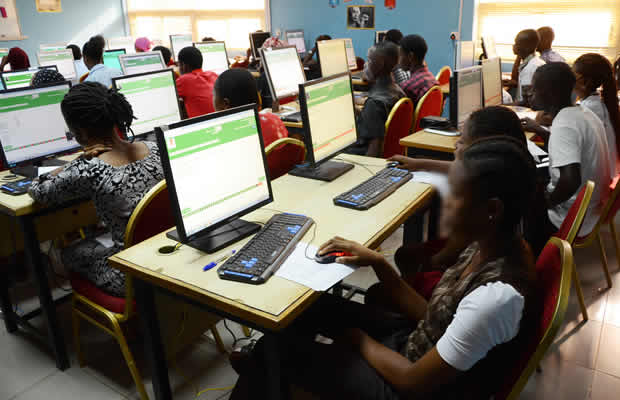
Lecturers nationwide have criticised the newly announced minimum acceptable Joint Admissions and Matriculation Board 140 score as a demeaning threshold that can plunge the education sector into turmoil.

The 140 mark is 30 per cent of the total 400 mark.

On July 18, 2024, JAMB and other stakeholders in the education sector pegged the minimum benchmark score for admission into universities at 140 and 100 for polytechnics and colleges of education.

Also, JAMB in an X message while describing the 140 mark said, “There’s no such thing as ‘cut-off mark’ in the admission process to tertiary institutions in Nigeria, what’s obtainable is minimum tolerable score determinable by individual institutions.”

On the contrary, President, the Academic Staff Union of Universities, Prof. Emmanuel Osodeke in an interview with our correspondent said it was descending admitting students with scores as low as 30 per cent.

“So why are we descending to this level where universities are admitting candidates who scored as low as 30 per cent in their exams? When you look at reputable institutions like the University of Ibadan and Obafemi Awolowo University, they won’t accept anything less than 200. Yet, some universities, especially newer private ones, admit students with scores as low as 140.

This situation is widespread across the country, not just in the north. Many schools are lowering their admission standards.”

He complained about the quality of teachers at the secondary school level, saying,

“My concern isn’t just about JAMB scores. It’s about the quality of education from primary to secondary school. How can we expect quality teaching when teachers are paid as little as N16,000 a month in government schools? This is a national disaster. Nigeria urgently needs to declare a state of emergency in education.

“Back in the day, you couldn’t even dream of getting into a good school with a score below 200. But now, government schools at all levels are struggling, and admissions are increasingly going to private institutions that operate on a cash-and-carry basis. If action isn’t taken soon, our universities will continue to decline.”

Chairman of ASUU at Obafemi Awolowo University, Prof. Tony Odiwe,  emphasised that the 140 mark would have a detrimental impact on both the quality of students and the educational system.

He added, “The national cutoff marks are set, but they are not necessarily followed by most established universities. For instance, at OAU, the cutoff is not less than 200 to even qualify for post-UTME or admission consideration. This discrepancy implies a potential negative effect on student quality and overall educational standards.”

Head of the Department of Mass Communication at the University of Lagos, Prof. Poju Tejumaiye, criticised the 140 mark as indicative of the education system’s failure.

He suggested that JAMB should reconsider its minimum score to 40 per cent, which would equate to 160 out of 400, instead of the current 30 per cent.

He said, “It is distressing and unfortunate. Scoring below 40 percent reflects a significant decline in our educational standards. This decision merely encourages a ‘spoil system’ rather than meritocracy. JAMB should revert to a minimum of 40 percent, aligning with the pass mark in Nigerian higher institutions. The Ministry of Education should prioritize teacher training and encourage professional development courses. School curricula should also be updated to reflect modern perspectives.”

Academic linguist, and writer, University of Ibadan, Prof. Francis Egbokhare, said, “JAMB is not designed as a competency or skills test but as an entrance selection tool for institutions. The minimum score it sets should not be a primary concern; rather, we should focus on the scores from WAEC and NECO. The key issue is ensuring there is a reasonable correlation between these exams and JAMB results, which indicates the credibility of these assessments.

“Secondly, JAMB sets a minimum benchmark that institutions can exceed by setting higher admission standards, as many already do. Thirdly, the actual scores for admission into most courses are often significantly higher than JAMB’s minimum requirements.

Furthermore, high-demand courses typically have very competitive percentile ranges for admission. Therefore, there should be less concern over JAMB’s minimum score.

Finally, it’s important to note that all institutions conduct post-UTME examinations, which serve as a final verification of candidates’ capabilities.”

North faces existential threat over poverty, insecurity – Kaduna gov

0

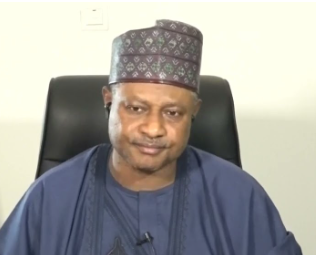
Kaduna State Governor, Uba Sani, on Monday expressed concern over the high rate of poverty, out-of-school children and general insecurity in the North, declaring that the region faces an existential threat.

The development, the governor added, was quite disturbing and must worry all those who still care for the North and Nigeria in general.

Sani highlighted the challenges facing the North, including poverty, insecurity, and poor education, citing statistics from the National Bureau of Statistics and UNICEF.

He spoke on Monday while welcoming  a delegation from the Arewa Consultative Forum,  led by its  Chairman, Mamman Mike Osuman, to Sir Kashim Ibrahim Government House in Kaduna.

Sani noted that the National Bureau of Statistics’  “survey revealed that 63% of persons living within Nigeria (that is about 133 million people) are multi dimensionally poor. 65% of the poor (that is 86 million people) live in the North, while 35% (nearly 47 million) live in the South.

“The North is not faring any better in the area of education. The United Nations Children’s Fund  puts the number of out-of-school children in Nigeria at 18.3 million. Of this outrageous number of out-of-school children, about 70% are in the North of Nigeria.

“This is quite disturbing and must worry all of us who still care for the North and Nigeria in general. Insecurity in the North has retarded developments in the critical sectors, a lot of farmers cannot access their farms.

“Food insecurity now confronts us directly. Child and maternal mortality are on the increase. Our infrastructure have decayed. The moves to address our infrastructural deficits are equally threatened by insecurity.

“From this very disturbing picture, it is clear that northern Nigeria faces an existential threat. This is therefore a time for all hands to be on deck to pull the region back from the brink.

“It is a time when our people must close ranks, fashion a Marshall Plan for the North and move decisively to change these negative.”

Sani emphasised the need for collective action to address these issues, urging the ACF to refocus attention on development rather than politics.

He commended the ACF for promoting and protecting the interests of northern Nigeria, despite the region’s diverse composition.

 He, however, countered the claim that  President Bola Tinubu was against the North, attributing such narratives to political manipulators.

 “The government of President Bola Ahmed Tinubu  has been giving uncommon support to state governments in the North to address their myriad challenges.The narrative that President Tinubu is against the North is false, absurd and unbecoming.

 “It is the handiwork of elements who are experts at political manipulation. They are only interested in feathering their political nests, not the development of Northern Nigeria,” he added.

The governor expressed willingness to partner with ACF on initiatives that benefit the North and  handed  over documents for an office complex donated by the Kaduna State Government.

He emphasized the importance of leadership in uniting the North and mobilizing its people for a brighter future.

Governor Sani encouraged collaboration to develop a “Marshal Plan” for the region’s development, expressing optimism that the North would rise again.

Earlier, the Chairman of the ACF, had highlighted the forum’s commitment to promoting peace, unity, and progress in northern Nigeria, acknowledging the region’s challenges with poverty, insecurity, and poor human development indices.

Five soaps? No! Five bars of soap

0

At an Arepo, Ogun State supermarket on Thursday, I overheard a conversation between a buyer and a cashier. She told the cashier that she had ‘five soaps’, among other items she was paying for. The listener did not have any problem with the expression but I did. With ‘five soaps’, the buyer had made a common mistake by treating ‘soap’ as a countable noun. This is also based on the fact that all the soap she bought was of the same brand. Don’t ask me whether I challenged her. Why did I have to? What if she had a soldier husband who might be waiting for her outside?

Joking apart, the context did not warrant stating my grammatical observation. In any case, the cashier and her customer had no issue understanding each other. Very important too, however, is the fact that language is not meant for informal use alone. We must preserve the rules at least for formal contexts when it could be embarrassing or suicidal to say ‘five soaps’ or ‘five ice creams’. Hear this: ‘I feel uncomfortable because I consumed five ice creams yesterday.’ Five tubs/cups of ice cream or five ice creams?

Measure words

There are many uncountable nouns in English. They are not meant to be pluralised. When you need to show quantity with them, you opt for ‘measure words’ —  in many cases. Measure words or phrases are those used to show quantity especially when used with uncountable nouns, which refer to things seen as a whole or mass. Examples of the noun-count nouns are soap, ice cream, beer, news, rice, water, furniture, homework and traffic. Some of them may be countable in other contexts (like ‘a soap opera’ or when ‘five beers’ refers to five glasses/containers of the drink). To quantify them in the intended situation, we need measure terms such as a bar of, a box of, a bowl of, a bottle of, a carton of, a piece of, a flash of, a series of, a pint of, a drop of and a stroke of etc.

Some examples of normally uncountable nouns are:  water, rice, cement, gold, milk,  advice, information, progress, news, luck, fun, work, weather, thunder, lightning, rain, snow,  furniture, equipment, rubbish, luggage, accommodation, baggage, homework, knowledge, money, permission, research, traffic and travel.

Consider the use of measure terms in the following clauses:

I took five amalas at the restaurant. (Wrong)

I took five wraps of amala at the restaurant. (Correct)

Give me 10 chocolate(s). (Wrong)

Give me 10 bars of chocolate. (Correct)

We need many rice for the party. (Wrong)

We need a lot of/ many bags of rice for the party. (Correct)

I saw some rices on the floor. (Wrong)

I saw some grains of rice on the floor. (Correct)

I don’t know who took three of the toothpastes I bought last week. (Wrong)

I don’t know who took three of the tubes of toothpaste I bought last week. (Correct)

Here are some other measure elements you should appropriately cultivate:

A loaf of bread, a trailer-load of bread

An item of clothing/ expenditure/news

A jar of honey/peanut butter

A piece of advice/furniture/paper/news

A bag of flour/rice/gold dust

A bottle of Pepsi/milk/water/wine

A carton of ice-cream /orange juice/milk

A cup of hot chocolate/coffee

A drop of blood/oil/water

A slice of bread/cheese/meat/toast

A spoonful of sugar/syrup/whisky

A tablespoon of butter/honey/ ketchup

A teaspoon of cinnamon/medicine/salt

A glass of beer/juice/water/wine.

‘Soap’ as a verb

Lastly,  note that ‘soap’ can also be used as a verb, meaning to rub soap over or into or put soap on something.

From Merriam-Webster Dictionary:

I soap my hair first when I take a shower.

He soaped and rinsed the car.

From Oxford Dictionary:

Have you soaped yourself all over, Alice?

Let me soap your back.

Envoy advises Nigerian investors on Grenada investment opportunities

0

The Honorary Consul of Grenada to Nigeria, Abidemi Sonoiki, has highlighted some areas of opportunity for Nigerian investors in the Caribbean country.

Sonoiki, who became the honorary consul in May 2022, stated that during a press briefing at the Honorary Consulate of Grenada in Lagos recently.

He said that from the financial space to real estate, medical tourism, and education, there were opportunities that Nigerians could tap into for profitability.

The honorary consul remarked, “Grenada itself is the pride of the Caribbean. They are positioned for greater heights. They need further exposure, they need help, partnership, and collaboration with Africans. Don’t forget that they are originally from Africa but settled there. The time has come for us to migrate or go there for businesses and integrate.

The current president of Grenada is the one championing the development that is going on in the Caribbean. We only need more of the fintechs and banks to go there and things would change. The five-year vision is for their president and Nigeria to be people who would be championing things across the globe and the resources are in abundance on both ends. Nigerians on their own are big on real estate and tourism is the key thing there.

“In my visits there, there is a shortage of housing, Airbnbs, short-lets and such, so you must book ahead. If Nigerians can look at the opportunities and spread their risk. I think tourism over there through the real estate business will bring Nigerians huge profitability. Another area is medical tourism.”

On education, Sonoiki said that the consulate had made it easier for Nigerians to go study, especially medicine, in the Caribbean nation with the numbers having increased in the last two years.

He stated plans to intensify the synergy between both countries to ensure growth.

“Now, Nigeria is like a big brother, the same way that Grenada is playing big brother in the Caribbean. If you can do a good handshake, we can able to take the partnership to greater heights.

“The stance of the consul aligns with that of the African Export-Import Bank, which has been clamouring for closer ties between African and Caribbean countries,” he noted.

The last annual general meeting of the bank was held in the Bahamas.

Ahead of the meeting, the President of Afreximban, Professor Benedict Oramah, said, “We must rise as Global Africa, armed with our abundant human and natural resources, to pursue our course to economic transformation.”

Forex inflow via IMTOs hits $1.07bn in three months –CBN

0

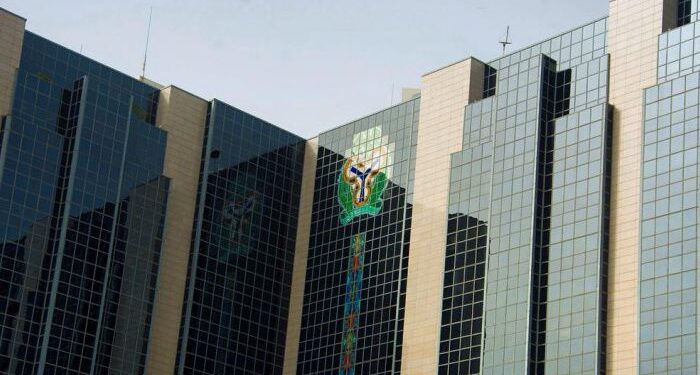
Foreign exchange inflows from International Money Transfer Operators increased by 38.86 per cent to $1.07bn in the first quarter of 2024, from $770.23m recorded in the same period in the previous year.

This was revealed in the Central Bank of Nigeria’s quarterly statistical bulletin for the first quarter of 2024, which was recently published on its website.

According to the data, in January, the IMTOs recorded inflows worth $383.04m, it dropped in February to $322.83m and returned upward in March to $363.70m.

When compared with the last quarter of 2023, the inflows from IMTOs grew by 10.74 per cent.

Recently, the apex bank revealed that it had granted approvals-in-principle to 14 new IMTOs, to help increase the sustained supply of foreign exchange in the official market.

The CBN Governor, Dr Olayemi Cardoso, said that the recent approval of licenses for 14 IMTOs was expected to improve competition and lower the cost of transactions, thus attracting more remittances through formal channels.

“Let me give some context to this. I’m sure over the years; many of you would have read from the World Bank that Nigeria has significant remittances from the diaspora. We have identified that this is a critical element of inflows coming into the country. It is estimated to represent about six per cent of our GDP. We felt from the Central Bank’s perspective that to have a strategy to engage this sector, the entities that seem to play the biggest role in that sector are the IMTOs and so for us, it was important for us to meet them,” he said at the end of the Monetary Policy Committee meeting in May.

Also, the CBN has announced that eligible international money transfer operators will now have access to the official window to sell foreign exchange.

In a circular signed by the acting Director of the Trade and Exchange Department, Dr W.J. Kanya, the apex bank said that the measure, which was effective immediately, would enable IMTOs to access naira liquidity at the official window, thus, enabling the timely settlement of diaspora remittances.

The apex noted, “The bank has implemented measures that will enable eligible International Money Transfer Operators to access NGN liquidity at the CBN window. These measures are aimed at widening access to local currency liquidity for the settlement of diaspora remittances.

“Therefore, eligible IMTO operators will be able to access the CBN window directly or through their authorised dealer banks to execute transactions for the sale of foreign exchange in the market.”

NDDC will approve only value-adding projects – Ogbuku

0

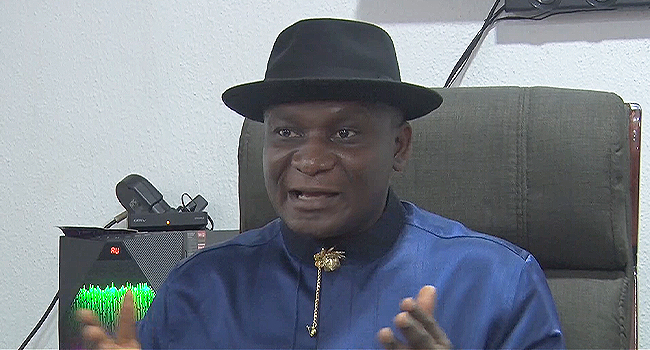
The Managing Director/Chief Executive Officer of the Niger Delta Development Commission, Dr Samuel Ogbuku, has stated that the commission will only approve projects that will add value to the oil-rich region.

This was part of his submissions at the just-concluded Niger Delta Stakeholders Summit held in Port Harcourt, Rivers State.

“We will chart a new course for the region. The summit is a yardstick for feedback and possibly finding ways of improvement in line with the Renewed Hope Agenda of President Bola Tinubu. It will not just be an interaction with individuals, but an open interaction with members of the National Assembly, ministers from the region, and the private sectors, to discuss the Niger Delta and the mechanisms for effective delivery of services and projects.

 “We will explore means of reducing recurrent expenditure. While we focus on completing capital projects, only projects that add value to the Niger Delta region will be approved. Our commitment is to work together towards transforming the region, by the eight Point Presidential Priorities, and the demands of the NDDC Act of 2000,” Ogbuku stated.

He added that the summit was an opportunity to open up the NDDC to accountability.

“We are working very hard to deliver. What we are doing now is to do things differently by positively telling our story. Check the statistics of NDDC projects, and it cannot be said that the commission has done very well. The people believe in government policies. I have confidence in government policies. Make the people believe in you.

“Indeed, a back-of-the-envelope check shows without any scintilla of doubts that the commission has made a clear difference in the Niger Delta region by executing more than 10,945 projects since 2001, comprising 4,151 roads and bridges, 2,323 rural electrification projects, 1,723 building projects, and 642 water projects across the nine mandate states. While most of these have been completed, others are still ongoing,” he mentioned.

Ogbuku explained that the focus of the NDDC in 2024 will be on continuous engagement with various strata of NDDC’s stakeholders, to grasp and understand the needs of the people of the Niger Delta region.

He disclosed that the Ogbia-Nembe Road in Bayelsa State, renewable energy projects and other infrastructural projects had been embarked upon in the hinterland of the entire region.

“The knock-on effect of the projects remains far-reaching. The projects have, in turn, attracted the presence of micro, small and medium-scale businesses by roadside auto mechanics, vulcanizers, kiosks, petty trading, carpenters, welders, and more. The projects have not only opened up such areas, but they have also conferred higher value on real estate. They are also helping to solve the problem of unemployment,” he maintained.

Also, former President Goodluck Jonathan said the NDDC came as a child of necessity, whose strategic role also included improving the environment, providing infrastructure, and enhancing the livelihood of the people in the region.

“With the birth of this current leadership of NDDC, people from the Niger Delta have seen some rays of light. Therefore, I encourage the political class not to overstretch the NDDC for them to be able to perform optimally.

“The political class must not frustrate the Niger Delta Development Commission so that it can optimally perform its duties,” Jonathan remarked at the summit.

 Similarly, the President of the Senate, Senator Godswill Akpabio, stated, “To achieve lasting solutions, we must overcome disunity. Unity among the people of the Niger Delta and the entire nation is not just a choice but a necessity. Through our shared vision, we can overcome the obstacles before us.”

Tantaliser, Livestock Feeds lift equity market to over N16bn gain

0

Profits recorded by Tantaliser, Livestock Feeds, and Neimeth International Pharmaceuticals, spurred the Nigerian Exchange to N16.53bn gain on Monday.

The bourse’s uptick was driven by an 8.89 per cent appreciation in Tantaliser, Livestock Feeds (8.18 per cent), Neimeth International Pharmaceuticals (8.05 per cent).

At the close of trading, the market capitalisation increased by 0.03 per cent to N56.95tn from N56.93tn recorded on Friday.

The All Share Index appreciated by 0.03 per cent, settling at 100,568.60 points from the previous close of 100,539.40 points on Friday.

This brought the year-to-date return to 34.49 per cent.

Investors traded 335,704,787 units of shares valued at N3.72bn in 8,760 deals

Monday’s trading activities were bullish, with 23 gainers compared to 15 losers.

The volume of trade also dipped by 79.89 per cent to 335,704,787 million, while the number of deals executed also reduced to 8,760 from 9,988 deals on Friday.

Leading the losers’ chart were Caverton Offshore Support Group, Royalex Exchange Group, and Veritas Kapital Assurance, which lost 9.68 per cent, 6.94 per cent and 4.72 per cent to close at N 0.15, N0.05, respectively

Ellah Lakes led the charts in terms of volume of trade, with 110.67 million units worth N332.02m traded in 53 deals, followed by Universal Insurance with 21.89 million units valued at N7.48m exchanged in 46 trades.

United Capital led the value chart with N778.61bn worth of shares in 984 deals, followed by Zenith Bank with N377.83bn in 389 deals traded.

Last week, the Nigerian equity market was in the green zone, as investors gained N512bn.

The market capitalization and All-Share Index soared by up 0.87 per cent and 0.86 per cent to close the week at N56.929tn and 100,539.40 points, respectively.

Enamelware suffers N2.6bn loss

0

Nigerian Enamelware PLC has reported a post-tax loss of N2.6bn, a 254 per cent decline from the N1.7bn profit recorded the previous year.

According to the company’s audited financial statements for the year ended April 30, 2024, which was filed with Nigeria Exchange Limited on Friday, the firm’s revenue jumped by 216 per cent to N718.3m compared to N227.3m in 2023.

Nigerian Enamelware engages in the manufacturing, marketing, and sale of enamelware, plastic products, and galvanised buckets in Nigeria.

The cost of sales rose to N530.6m from N254.5m, driven by higher material costs and other production overheads.

Administrative expenses were reduced by 6.4 per cent from N107.7m to N100.8m.

Earnings per share plummeted by 254 per cent from N22.18 to a loss of N34.17.

Similarly, net assets per share fell by 141 per cent from N24.08 to N9.79, reflecting an erosion of shareholder value.

The company faced cash flow challenges, with net cash provided by operating activities dropping to N1.0bn from N1.6bn in the previous year.

Despite those financial difficulties, the number of employees and shareholders remained stable at 91 and 3,268, respectively.

During the period under review, the firm paid N33m, lower than the N885m it paid in the previous year, on the back of deferred tax amounting to N9m.

All rights reserved. This material, and other digital content on this website, may not be reproduced, published, broadcast, rewritten or redistributed in whole or in part without prior express written permission from According.

Contact: [email protected]