Home Blog Page 881

Include domestic workers in minimum wage, Senate tells FG

0

The Senate and the National Council for Women Society, have sought to include domestic servants in the proposed N70,000 National Minimum Wage Scheme.

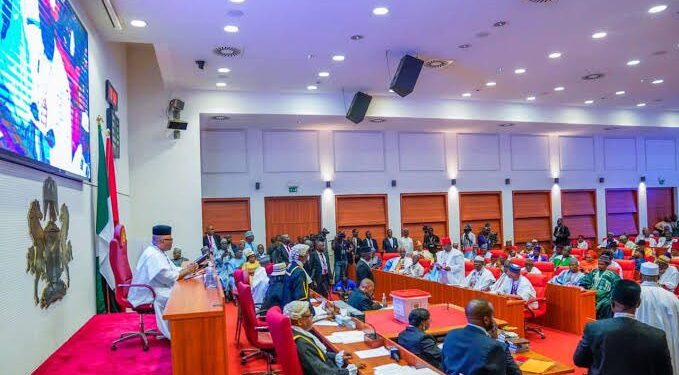
The call for the inclusion of domestic servants in the National Minimum wage came from both institutions at the National Assembly in Abuja during a public hearing on a bill seeking an Act to provide for Domestication and Registration of domestic workers and employers in Nigeria.

The public hearing on the bill sponsored by Senator Babangida Hussaini (APC, Jigawa North West), was organised by the Senate Committee on Employment, Labour and Productivity, chaired by Senator Diket Plang (APC, Plateau Central).

The call for the inclusion of domestic servants in the National Minimum Wage Scheme was spearheaded by Senator Osita Izunaso (APC Imo West), during his remarks at the public hearing.

He said, “As a member of this committee, I feel strongly that part of the provisions to be included in this bill, is to include the domestic workers be it housemaid or servants, in the proposed N70,000 National Minimum wage law.

“As N70,000 is planned to be the lowest wage for the lowest public workers, so should be the case for the least domestic workers.

“We will put it in the bill for implementation by all employers.”

He, however, suggested that instead of domestication and protection of domestic workers and employers, the amendment of the bill should be changed to registration and protection of domestic workers and their employers.

In a similar call, the Acting National President of NCWS, Mrs Geraldeen Etuk, argued for the inclusion of domestic servants in the proposed National Minimum Wage law

However, during an interview with journalists, the sponsor of the bill, Senator Babangida Hussaini said that although he was elated by the general support the bill got from the various stakeholders, from the Minister of Labour to other relevant stakeholders practical implementation of the additional scope of inclusion of domestic workers in the national minimum wage is what is somewhat doubtful.

He said, “There is no point making a law that cannot be implemented but I’m happy that the generality of stakeholders at the public hearing, supported the bill and by extension, the proposed law.”

Earlier in his remarks during the session, the Chairman of the Committee, Senator Diket Plang, said an agency will surely be set up for the implementation of the proposed law, but the Ministry of Labour and Productivity will drive the operation from the onset.
Poverty, insecurity threat to North existence, says Kaduna gov

0

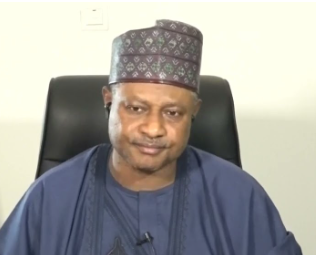
The Kaduna State Governor, Uba Sani, on Monday expressed concern over the high rate of poverty, out-of-school children and general insecurity in the north, declaring that the region faces an existential threat.

The development, the governor added, was quite disturbing and must perturb all those who still care for the North and Nigeria in general.

Sani highlighted the challenges facing the North, including poverty, insecurity, and poor education, citing statistics from the National Bureau of Statistics and UNICEF.

He said the National Bureau of Statistics “survey revealed that 63 per cent of persons living within Nigeria (that is about 133 million people) are multi-dimensionally poor. 65 per cent of the poor (that is 86 million people) live in the North, while 35 per cent (nearly 47 million) live in the South.

“The North is not faring any better in the area of Education. The United Nations Children’s Fund (UNICEF) puts the number of out-of-school children in Nigeria at 18.3 million. Of this outrageous number of out-of-school children, about 70 per cent are in the North of Nigeria.

“This is quite disturbing and must worry all of us who still care for the North and Nigeria in general. Insecurity in the North has retarded developments in the critical sectors. A lot of farmers cannot access their farms.

“Food insecurity now confronts us directly. Child and maternal mortality are on the increase. Our infrastructure has decayed. The moves to address our infrastructural deficits are equally threatened by insecurity.

“From this very disturbing picture, it is clear that Northern Nigeria faces an existential threat. This is therefore a time for all hands to be on deck to pull the region back from the brink.

“It is a time when our people must close ranks, fashion a Marshall Plan for the North and move decisively to change these negative.”

Sani emphasised the need for collective action to address these issues, urging the ACF to refocus attention on development rather than politics.

The governor stated this while welcoming a delegation from the Arewa Consultative Forum,  led by its  Chairman, Mamman Osuman to Kashim Ibrahim House, Kaduna on Monday.

He commended the ACF for promoting and protecting the interests of Northern Nigeria, despite the region’s diverse composition.

Governor Sani also debunked claims that President Bola Tinubu is against the North, attributing such narratives to political manipulation.

“The government of President Bola Ahmed Tinubu has been giving uncommon support to state governments in the North to address their myriad challenges. The narrative that President Tinubu is against the North is false, absurd and unbecoming.

“It is the handiwork of elements who are experts at political manipulation. They are only interested in feathering their political nests, not the development of Northern Nigeria,” he added.

The governor expressed willingness to partner with ACF on initiatives that benefit the North and handed over documents for an office complex donated by the Kaduna State Government.

He emphasised the importance of leadership in uniting the North and mobilising its people for a brighter future.

Sani encouraged collaboration to develop a “Marshall Plan” for the region’s development, expressing optimism that the North would rise again.

Earlier, the Chairman of the ACF had highlighted the forum’s commitment to promoting peace, unity, and progress in Northern Nigeria, acknowledging the region’s challenges with poverty, insecurity, and poor human development indices.

Arrest Fubara’s CTC chairmen, members, Pro-Wike lawmakers tell police

0

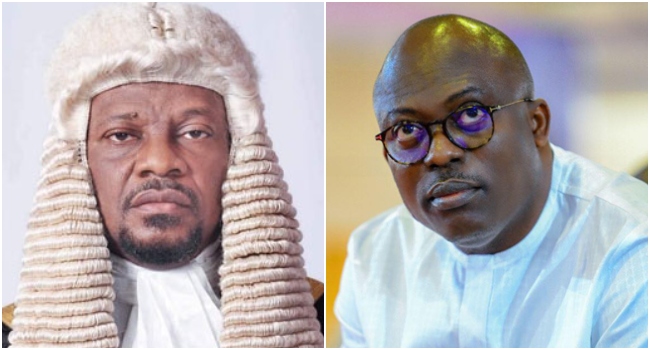
The Rivers State House of Assembly, loyal to the Minister of the Federal Capital Territory, Nyesom Wike, has called on the Nigeria Police Force to arrest anyone parading himself as the Caretaker Committee Chairman or member in the state.

These lawmakers, during Monday’s plenary at the Assembly’s official residence along Aba Road in Port Harcourt, said the continued activities of the CTC put in place by the state Governor, Siminalayi Fubara, is a violation of the recent Supreme Court judgement, which outlaws the use of CTC’s to run the third tier of government.

The call by the pro-Wike lawmakers led by its Speaker, Martin Amaewhule, followed a remark by the House Leader, Major Jack and deliberated by members.

While describing the CTC as impostors, the lawmakers insist that they are not known to the law, expressing worry that they go about posing as local government chairmen to the extent of going to the banks to withdraw monies meant for the LG Councils for wanton squandering in the name of non-existing Caretaker committees.

This was contained in a statement issued in Port Harcourt on Monday by the media aide to the Speaker, Martins Wachukwu, and sent to newsmen.

The statement reads, “The Rivers State House of Assembly, at its 7th Legislative Sitting of the Second Session of the Tenth Assembly, Monday, deliberated on a statement by the House Leader, Hon. Major Jack, wherein he drew the attention of the House to the illegal activities of some persons in the State, masquerading as Chairmen and members of Caretaker Committees.

“These individuals go about imposing and collecting fees, levies and rates from unsuspecting members of the public, in breach of the recent Supreme Court judgement, and the provisions of the Rivers State Local Government (Amendment)Law, 2023 that prohibit Caretaker Committees in whatever guise or nomenclature.”

Debating on the statement by the House Leader, the lawmakers condemned and berated those they described as ‘impostors, and warned all banks, traditional rulers, government at all levels, non-governmental organizations and those doing business in Rivers State not to transact any business with unelected individuals parading as Caretaker Chairmen, as they are threats to the fragile peace in the State.’

Amaewhule averred that more worrisome is the fact that ‘these individuals not known to the law go to the banks and withdraw money meant for the Local Government Councils’ for wanton squandering in the name of non-existing Caretaker committees.

He urged the police and other security agencies to swing into action and arrest the impostors to avoid the breakdown of law and order in the State.

The statement also quoted Amaewhule as saying that “the Tenth Rivers State House of Assembly in accordance with the provisions of Section 7(1) of the 1999 Constitution of the Federal Republic of Nigeria as altered, only democratically elected officials are to manage the Local Government Councils.”

The statement added that Section 64(1) of the Rivers State Local Government Law No. 5 of 2018, further empowers the House to give the directive that only democratically elected officials should pilot the affairs of the Councils.

Reiterating the position of the House, the Speaker stated that the House would not fold its arms and condone the ‘crass disregard to the laws of the State and the judgement of the Supreme Court of the land by some impostors’.

Court rejects Abacha family’s N500m lawsuit against Nigerian govt

0

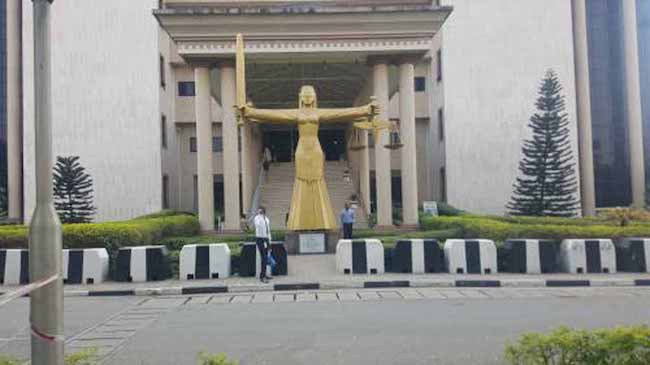
Justice Peter Lifu of the Federal High Court sitting in Abuja has dismissed a lawsuit filed by the family of the late Head of State, General Sani Abacha, challenging the Federal Government’s revocation of one of their properties in the Maitama District of Abuja.
In his judgment on Monday, Justice Lifu dismissed the suit, citing it as statute-barred among other grounds.
“The suit, filed in 2015, was brought nine years after the revocation of the property, making it invalid under the law,” Justice Lifu stated.
This marks the fourth legal defeat for the Abacha family concerning their property claims. Previous attempts in the High Court of the Federal Capital Territory and the Court of Appeal were also unsuccessful on jurisdictional grounds.
“The plaintiffs lacked legal standing to file the suit,” Justice Lifu affirmed, agreeing with arguments presented by the defendants, including Salamed Ventures Limited.
Read also: EFCC apprehends 10 suspected illegal miners in Oyo
The family had sought to nullify the revocation of their Certificate of Occupancy for a property located at Osara Close, Maitama, which they claimed was done unlawfully and without compensation.
“The court also noted breaches of building regulations on the property, which justified the revocation,” Justice Lifu concluded.
The court awarded costs of N500,000 against the plaintiffs, to be paid to Salamed Ventures Limited, the fourth defendant in the suit.
The post Court rejects Abacha family’s N500m lawsuit against Nigerian govt appeared first on Latest Nigeria News | Top Stories from TVN.

Nasarawa lawmakers urge police to flush out illegal miners 

0

The Nasarawa State House of Assembly has called on the state Commissioner of Police, Umar Nadada to ensure that all illegal miners in the state are flushed out to curtail the level of insecurity and other criminalities across its 13 local government areas.

The House also commended the state Governor, Abdullahi Sule, for attracting investors to the state.

To this end, the House urged the state government to ensure that all miners pass through the necessary processes required by the law before being given licences to operate in the state.

Speaker of the House, Danladi Jatau disclosed this during the matters of urgent public importance which were raised by the member representing Kokona East, Daniel Ogazi at the House of Assembly in Lafia, the state capital, on Monday.

Jatau, who lamented the negative impacts of illegal miners in the state, said the House was worried over the growing and increasing rate of illegal mining activities, especially in the Kokona LGA, thus creating tension over the safety of lives and properties of the affected communities.

He said, “Our resolution is to the effect that I want to appreciate His Excellency, Governor Abdullahi Sule for attracting investors to the state, and while he is doing that, we will not allow anybody to destroy such efforts.

“The position of the House is also that the Commissioner of Police should mobilise his men to flush out all illegal miners in the state.

“The issue is beginning to create tension across the state, hence the need for the security agencies to act fast and do the needful.”

Other members who made contributions on the matter include Solomon Akwashiki, Muhammed Omadefu, Onarigu Kana, Musa Ekye, among others.

Ogun communities receive N206m for infrastructure

0

The Ogun State Community and Social Development Agency, OGCSDA, has disbursed N206 million to 23 communities for the implementation of basic social infrastructure.
The communities cut across 17 local governments, including Kajola in Ewekoro, Opo in Ifo, Soseri and Ajebo town in Obafemi Owode, Itesi Ajabe in Odeda, Odo Otu and Idomila in Ijebu North East, Ayepe in Odogbolu, and Irolu in Ikenne local government areas.
Others include Ayila and Alo in Ogun Waterside, Ipara in Remo North, Ewujomo and Soyindo in Sagamu, Ado Odo in Ado-Odo/Ota, Afintedo and Alakuta in Imeko Afon, Ilujoda-Iboro in Yewa North, Ilobi Erinja and Ipake in Yewa South, Terelu in Ijebu East, Ifelodun Olomore in Abeokuta North and Ojowo-Odosenbadejo in Ijebu North LGAs.
The acting general manager of Ogun State Community and Social Development Agency, OGCSDA, AbdurRahman Adelaja, while presenting the cheques to the representatives of the communities, said the money was committed to Phase 1 of the Ogun State COVID-19 Action Recovery Economic Stimulus, OG-CARES programme.
Adelaja explained that the fund is meant for the execution of social infrastructure, ranging from health, education, water and sanitation.
TVN recalls that the programme, funded by the federal and state governments with the support of the World Bank, began in 2021, to cushion the effect of the COVID-19 pandemic among the people, specifically to restore the livelihood of the poor and vulnerable in society.
In his remarks, the Operation Manager of the agency, Olatokunbo Osinowo, urged benefiting communities to be diligent in the implementation of the projects, advising them to cooperate with the Community Project Management Committee and officials of the OGCSDA to achieve success.
Responding on behalf of other benefiting communities, Taiwo Oladele, representing the Ijebu North East Implementation Committee, appreciated the state government, the federal government and the World Bank for the prompt intervention and promised to be prudent while ensuring the proper execution and maintenance of the project.
Ogun communities receive N206m for infrastructure

Goods destroyed as midnight fire razes Anambra market

0

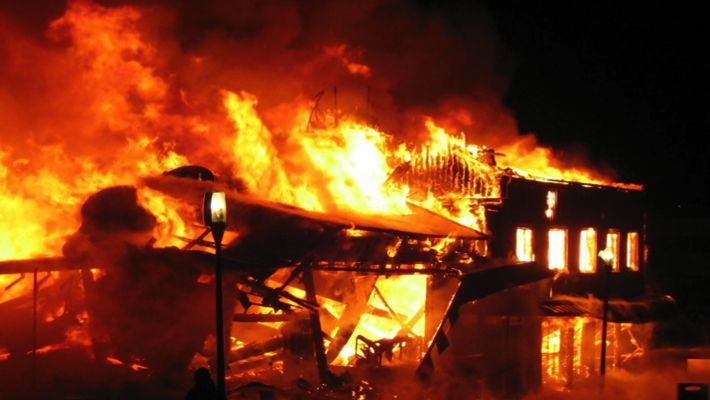
A yet-to-be-ascertained worth of goods and properties have been destroyed in a fire outbreak that occurred at the Kara Quarters Market, along the Atani Road in Ogbaru Local Government Area of Anambra State on Sunday night.

The cause of the fire outbreak is yet to be officially ascertained as of the time of filing this report, but our correspondent gathered from eyewitnesses that it could be a result of a power surge.

Although there was no loss of life, it was gathered that the fire which started at about 11:05 pm, took the intervention of the state fire service team several hours to quench and prevented it from escalating to the nearby church and a factory.

Some of the eyewitnesses present at the scene said the fire started from one of the shops and started escalating before the firefighters were called for intervention.

The source said, “We suddenly observed that thick smoke was coming out from one of the shops and shortly after, it resulted in a fire. We are suspecting it to be a result of a power surge because it occurred shortly after power was restored in the vicinity.

“A distress call was sent to the firefighters and it took them several efforts and interventions before the fire was put out. Although, some shops and properties were burnt in the inferno, some structures including a church and a factory nearby were also saved from being razed down by the sudden fire outbreak.”

A video from the scene of the fire incident also shows parts of the saved structures and factory, as well as eyewitnesses and traders recounting their losses.

The state fire agency confirmed the incident in a statement on Monday, adding that the distress call was received at about 11:14 pm on Sunday, and the firefighters, who were deployed fought the fire to a standstill, preventing it from escalating to other nearby structures.

The statement read, “As of the time of filing this report, the cause of the fire is yet to be ascertained, as none of the dwellers could give account of how the fire started.

“While the cause of the fire outbreak is yet to be ascertained, some properties were destroyed during the incident, although, there was no loss of life.

“The traders and dwellers were advised to always switch off their electrical appliances when not in use, fix wirings and connections to avoid power surges, and monitor cooking gas linkages in their homes, to avoid explosion.

“We consoled those who lost their property during the fire outbreak. There was no loss of life, nor injury recorded. The crew returned back to the station at about 01:30hrs.”

Iraq hangs 10 terrorism convicts

0

Iraq hanged 10 “terror” convicts on Monday, officials said, in the fourth such execution in three months, prompting a rights group to call for an end to the death penalty.

Courts have handed down hundreds of death and life imprisonment sentences in recent years to Iraqis convicted of “terrorism”, in trials rights groups have denounced as hasty.

Under Iraqi law, terrorism and murder offences are punishable by death, and execution decrees must be signed by the president.

A health official said 10 Iraqis “convicted of terrorism crimes and of being members of the Islamic State group were executed by hanging” at Al-Hut prison in the southern city of Nasiriyah.

A security source confirmed the executions.

They were hanged under Article 4 of the anti-terrorism law and the health department had received their bodies, the health official told AFP.

The sources spoke on condition of anonymity due to the sensitivity of the issue.

Al-Hut is a notorious prison in Nasiriyah whose Arabic name means “the whale”, because Iraqis believe those jailed there never walk out alive.

Iraq has been criticised for the trials, with the “terrorism” offence carrying the death penalty regardless of whether the defendant had been an active fighter.

On May 31, Iraq executed eight people convicted of “terrorism”. Eleven people were hanged on April 22 and another such group was executed on May 6, security and health sources said.

In June, UN experts said they were “alarmed by the high number of executions publicly reported since 2016, nearly 400, including 30 this year.”

“When arbitrary executions are on a widespread and systematic basis, they may amount to crimes against humanity,” said the special rapporteurs including the expert on extrajudicial, summary or arbitrary execution.

They added that according to official records, there are 8,000 prisoners on death row in Iraq.

– ‘Halt executions’ –

The experts urged Iraqi authorities to “halt all executions”.

They also said they were “horrified” by the high number of reported deaths in Nasiriyah prison due to “torture and deplorable conditions”.

The experts, who are appointed by the UN Human Rights Council, do not speak on behalf of the United Nations.

Rights groups have also denounced the proceedings as rushed, warning confessions were sometimes believed to have been obtained under torture.

“Iraq’s continuous implementation of the death penalty — despite national and international outcry — means we could be hurdling toward a human catastrophe unfolding on its death row,” said Amnesty International’s Iraq researcher, Razaw Salihy.

She said Iraqi authorities “must halt executions immediately to address the gross injustices that landed thousands on death row and the horrendous conditions they languish in”.

The IS group overran large swathes of Iraq and neighbouring Syria in 2014, proclaiming its “caliphate” and launching a reign of terror.

It was defeated in Iraq in 2017 by Iraqi forces backed by a US-led military coalition, and in 2019 lost the last territory it held in Syria to US-backed Kurdish forces.

But its remnants continue to carry out deadly hit-and-run attacks and ambushes, particularly from remote areas and desert hideouts.

AFP

2024 UTME result slips available for printing — JAMB

0

The Joint Admissions and Matriculation Board, on Monday, announced that the result slips for the 2024 Unified Tertiary Matriculation Examination are now available for printing.

The Board, in a statement signed by its Head of Public Relations, Dr. Fabian Benjamin, said the slips, which feature the candidates’ photographs and advanced security features, can be printed from approved Computer-Based Test centres starting from Monday, 22 July 2024.

“Please note that result slips cannot be printed from cyber cafes or other internet-enabled platforms.”

Benjamin further advised candidates to follow approved channels for printing to “avoid falling victim to fraudulent activities, such as attempted score inflation, perpetrated by individuals seeking to exploit this process.”

“It is important to note that candidates’ scores were previously released via the Board’s sort codes, so this physical copy serves as a secure and verifiable record of their results.”

The Board had earlier delayed the printing of the 2024 UTME result slips.

On 18 July 2024, JAMB disclosed that three candidates scored 367 during the 2024 UTME and emerged as the highest scorers for the examination.

This was revealed at the ongoing 2024 policy meeting by the Joint Admissions and Matriculation Board on Thursday in Abuja.

They are Olowu Joseph from Ondo State, Alayande David from Oyo State, and Orukpe Joel from Edo State.

All rights reserved. This material, and other digital content on this website, may not be reproduced, published, broadcast, rewritten or redistributed in whole or in part without prior express written permission from According.

Contact: [email protected]

Advancing CCS at Olu Tee Engineering Limited, an initiative of Titilola Shawana

0

As concerns about climate change and environmental sustainability grow, innovative solutions are becoming crucial to mitigate the impacts of industrial activities. One such groundbreaking initiative is Carbon Capture and Storage (CCS), a project spearheaded by the Director of Operations at Olu Tee Engineering Limited.
This article aims to demystify CCS, explaining what it is, how it works, and why it is important for reducing greenhouse gas emissions from industrial processes.
What is Carbon Capture and Storage (CCS)?
Carbon Capture and Storage (CCS) is a technology designed to capture carbon dioxide (CO2) emissions produced by industrial activities, such as power generation and manufacturing. The captured CO2 is then transported and securely stored underground, preventing it from entering the atmosphere and contributing to global warming.
How Does CCS Work?
CCS involves three main steps. They include capture, transport, and storage.
Capture: The first step involves capturing CO2 from industrial sources. This can be done using various methods. The steps are as follow:
Post-combustion capture: CO2 is captured after fossil fuels are burned.
Pre-combustion capture: Fossil fuels are converted into a mixture of hydrogen and CO2 before combustion, and the CO2 is separated.
Oxy-fuel combustion: Fossil fuels are burned in oxygen instead of air, resulting in a flue gas that is mostly CO2, making it easier to capture.
Transport: Once captured, the CO2 is compressed and transported to a storage site. This can be done via pipelines, ships, or trucks, depending on the location and distance.
Storage: The final step involves injecting the compressed CO2 into deep underground rock formations, such as depleted oil and gas fields or deep saline aquifers. These geological formations can securely trap the CO2 for thousands of years, preventing it from escaping into the atmosphere.
Why is CCS Important?
CCS is a critical technology for mitigating climate change for several reasons:
Reduces Greenhouse Gas Emissions by capturing and storing CO2 emissions, CCS helps reduce the amount of greenhouse gasses released into the atmosphere, which is essential for slowing global warming.
Supports Industrial Sustainability: Industries that are difficult to decarbonize, such as cement and steel production, can use CCS to reduce their carbon footprint without compromising their operations.
Enhances Energy Transition: CCS can be used in conjunction with renewable energy sources, providing a balanced approach to achieving net-zero emissions.
Promotes technological innovation: Developing and implementing CCS technologies drive innovation and can create new economic opportunities, such as jobs in the engineering and environmental sectors.
Advancing CCS at Olu Tee Engineering Limited
At Titilola Shawana’s Olu Tee Engineering Limited, the Director of Operations has been at the forefront of advancing CCS technology. Their initiative focuses on capturing CO2 emissions from industrial processes and securely storing them underground. By doing so, they aim to significantly reduce the environmental impact of these activities and contribute to a greener, more sustainable future.
The project is not just about implementing CCS technology; it’s also about educating stakeholders and the public on the importance of such initiatives. Through community engagement programs. Olu Tee Engineering Limited is raising awareness about the benefits of CCS and promoting a unique culture.
Advancing CCS at Olu Tee Engineering Limited, an initiative of Titilola Shawana