Home Blog Page 875

OPS opposes fresh interest rate hike as MPC meets today

0

The Organised Private Sector, on Monday, warned against a hike in interest rates as the Central Bank of Nigeria’s Monetary Policy Committee continues its meeting in Abuja today.

This is the fourth MPC meeting of 2024 and at the end of every meeting before now, the committee has increased the benchmark interest rate in a bid to tame the rise in inflation.

The last increase was in May when the Monetary Policy Rate was hiked to 26.25 per cent from 24.75 per cent.

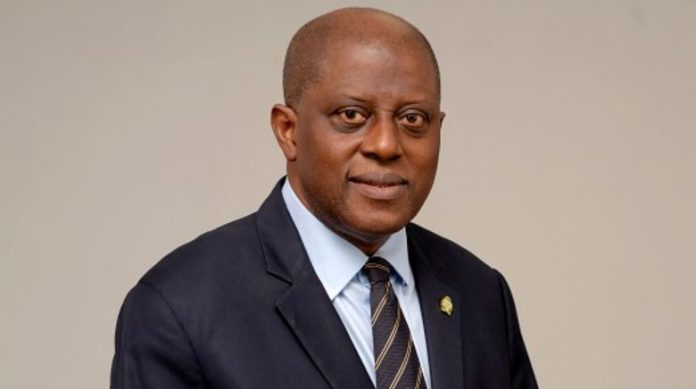
The Governor of CBN, Dr Olayemi Cardoso, had explained at different times that members of the committee were committed to taming inflation.

This came as some analysts stated that Nigeria’s persistent inflation which climbed to 34.19 per cent in June would leave the MPC with no choice but a rate hike at their meeting which commenced on Monday.

However, the Centre for the Promotion of Private Enterprise called on the apex bank to exercise caution in raising interest rates.

The Chief Executive Officer of CPPE, Dr Muda Yusuf, emphasised the need for a restrained approach to interest rate hikes.

While acknowledging the CBN’s efforts to stabilise the economy, Yusuf stressed the importance of minimal increases to avoid further burdening the private sector.

The CBN raised interest rates by 750 basis points in the last three Monetary Policy Committee meetings, increasing the rate from 18.75 per cent to 26.25 per cent.

This aggressive tightening cycle began in February with a 400 basis point hike, followed by additional increases of 200 basis points in March and 150 basis points in May.

Reacting to the ongoing MPC meeting, Yusuf stated, “Knowing the disposition of the Central Bank of Nigeria, given the fact that the bank has repeatedly affirmed its commitment to taming inflation, there is a very high probability that the MPC is likely to hike interest rates, although it may be marginal.

“My wish is that the central bank should put a hold on interest rate hikes for now. I believe that monetary policy instruments have been practically overstretched in this quest to tame inflation.”

Inflation

According to the National Bureau of Statistics, the headline inflation rate increased to 34.19 per cent relative to the May 2024 headline inflation rate, which was 33.95 per cent.

In June 2024, the inflation rate showed an increase of 0.24 per cent points when compared to the May 2024 headline inflation rate. On a year-on-year basis, the headline inflation rate was 11.40 per cent points higher than that of June 2023 (22.79 per cent).

Also, on a month-on-month basis, the headline inflation rate in June 2024 was 2.31 per cent, which was 0.17 per cent higher than the rate recorded in May 2024 (2.14 per cent) meaning that the rate of increase in the average price level was higher in June than in May.

As the MPC holds its meeting, Cowry Asset Management, in its weekly report, stated that while the slow acceleration in the headline inflation over the last four months indicated that the CBN’s tightening measures were permeating the economy, there might be side effects.

“Even as we expect to see a moderation in Nigeria’s inflation in the second half of the year, largely due to high base effects, some downside risks to this expectation exist, as consumer prices may face further pressure from higher minimum wage negotiations, significant depreciation of the naira, and high PMS prices due to ongoing fuel scarcity, which could negatively affect transportation costs.

“Looking ahead to the monetary policy committee of the CBN meeting to decide on various economic indicators while considering the current domestic and international economic outlook, we think the current inflationary pressure leaves the committee with little or no room for a rate tweak in favour of a loosening stance. Thus, a 25 basis points to 50bps hike in interest rates is anticipated,” the analysts projected.

NACCIMA reacts

The National President of the Nigerian Association of Chambers of Commerce, Industry, Mines and Agriculture, Dele Oye, said a hike in the benchmark interest rate (Monetary Policy Rate) by the CBN can have several potential consequences for businesses.

He said, “Higher interest rates mean that loans and lines of credit become more expensive. This can increase the cost of financing for businesses, leading to higher operational costs.

“As borrowing becomes more expensive, businesses may delay or scale back on investments in expansion, new projects, or capital improvements. This can slow down business growth and innovation.

“In addition, higher interest rates can lead to increased borrowing costs for consumers as well, which can reduce their disposable income. This typically results in lower consumer spending, which can negatively impact businesses, particularly those in the retail and service sectors.”

Oye said businesses that rely heavily on debt to manage cash flow may find it more challenging to service their debt, leading to potential liquidity issues.

He added, “Higher interest rates can make bonds and other fixed-income investments more attractive compared to stocks. This may lead to a decline in stock prices, affecting businesses’ market valuations and their ability to raise capital through equity financing.

“An increase in the benchmark interest rate can strengthen the national currency. While this might reduce the cost of imports, it can make exports less competitive, potentially harming businesses that rely on international markets.

“While the primary goal of raising interest rates is often to control inflation, it can have a mixed impact on businesses. On one hand, controlling inflation helps maintain purchasing power and economic stability; on the other hand, the immediate effects of higher rates can strain business operations.”

Speaking on the impact on consumers’ confidence, the NACCIMA boss noted that if consumers perceive rate hikes as a sign of an overheating economy or a response to high inflation, their confidence may be shaken, leading to reduced spending and investment.

He warned, “Tighter monetary policy can lead to stricter lending standards, making it harder for businesses, especially small and medium-sized enterprises, to obtain credit.

“Uncertainty about future interest rate movements can make long-term planning more difficult for businesses. Companies may become more cautious in their strategic decisions, potentially slowing down growth and innovation.

“In summary, while an increase in the benchmark interest rate can help control inflation, it often introduces higher costs and increased uncertainty for businesses, which can have a range of negative impacts on their operations and growth prospects.”

On his part, the National President of the Association of Small Business Owners of Nigeria, Dr Femi Egbesola, said in advanced economies, a hike in interest rate is always a veritable tool to arrest inflation, adding that unfortunately, Nigeria’s economy defies that.

He said, “The consistent hike in MPR since the beginning of this year has not achieved any significant positive impact. Rather, it’s been wholesale negative.

“Yes, there was disinflation at some point, but it doesn’t correlate with the attendant damage done but the hike in interest rate. The OPS community strongly oppose any form of increase in interest rate in totality.

“We have not recovered from the colossal economic damage the recent past hikes have done on businesses, and it will be economically unwise to proceed on another.”

Egbesola called on policymakers and regulators to come to the reality that some policies and measures that work perfectly in some climes most often do not work in Nigeria.

The National Vice President of the Nigerian Association of Small-Scale Industrialists, Segun Kuti-George, said If there is an increase in the MPR, it means the cost of funds would increase and that would adversely affect those in the manufacturing sector.

“With the situation of things, I do not think they have much, I mean any alternative than to increase it. But any increase will spell greater doom for borrowing, for users of funds,” he stated.

Also reacting, a consultant with the Nigerian Economic Summit Group, Dr Ikenna Nwosu, urged the MPC to look for other ways of addressing inflation instead of increasing the interest rate.

“The essence of their increase is to control inflation according to what they said. But the question is, is that the only inflation control tool? It is not. You have to look for other ways to mop up liquidity.

“The CBN should go to the rural traders and do a public sensitisation for people to put their monies in the bank. The former CBN boss said that the amount of money in circulation outside the banking sector is big and that is what is leading to the inflation,” he said.

Ogun communities seek Abiodun’s help over deplorable roads

0

The residents of the Pakuro and Ajumoni communities in Ogun State have expressed their dismay over the deteriorating roads in their areas.

The leaders of the affected communities in separate interviews with our correspondent on Monday lamented the deteriorating conditions of several roads in their environs and made an urgent appeal to Governor Dapo Abiodun to address these issues.

The residents, who spoke with According Metro on Monday, lamented that they were tired of constantly patching the roads themselves as the bad roads were affecting their ability to transport their farm produce to the cities.

The Chairman of the Pakuro Community Development Committee, Olusegun Omolosho, expressed the community’s suffering due to the poor state of the roads and called on the state government for assistance.

He said despite the road’s economic importance to the state, connecting towns and villages since 1843, it had never been properly maintained by the government.

“We are appealing to the government to fix the road in our area. Despite its economic importance, our road, which connects towns and villages that have existed since 1843, has never been properly maintained.”

“Several government agents, including those from the Ministry of Environment and Ministry of Mining, are collecting money from residents without providing any benefits. We urge the government to take action and fix the road, including drainage to prevent erosion, and to improve the lives of the people in our community,” he said.

The Chairman of the Ajumoni area CDC, Jimoh Owolabi, highlighted the community’s efforts to maintain the roads, which he said had cost millions of naira, noting that that the CDC had raised funds through toll collections, contributions from community stakeholders, and businesses. However, these efforts, he said, had not been sufficient to keep the roads in good condition.

“Some government officials, like those from the local government, are collecting revenue from our road, but we are calling on them to come and help us fix it.

“We are tired of taking palliative measures, spending a lot of money every year – at least N10m, which we raise within the community through taxes and contributions from shareholders, business owners, and those with filling stations, cement shops, schools, and other businesses along the road.

“Despite our efforts, the road is still deteriorating due to the heavy traffic of tippers collecting sand and resources,” Owolabi said.

He also mentioned that the community had sent several letters to the House of Assembly, including one last year copied to the governor, but no action had been taken.

All efforts to reach the Commissioner for Works via phone calls and WhatsApp text messages did not yield any response as of the time of filing this report.

Police uncover fake sachet water company in Lagos

0

Operatives of the Federal Capital Territory Police Command have arrested one Hashiru Baku, the mastermind behind the murder of the late Brigadier General Harold Udokwere.

Udokwere, who was the national chairman of the Retired Members of the Nigerian Armed Forces, was murdered by armed robbers who invaded his residence on June 22, 2024, and took away his gun.

The police had arrested and paraded Ibrahim Rabiu, Nafiu Jamil, Aliyu Abdullahi and Mohammed Nuhu in connection with the crime on June 24.

Addressing journalists on Monday while parading arrested suspects, the Commissioner of Police, Bennett Igweh, said Baku was arrested in Kano while trying to run away from the country.

Igweh said the suspect was an escapee from the Kuje correctional centre.

He said, “ I did show you the four killers, kidnappers, and robbers who went and killed Brigadier General Uwe Harrod (retd.) Today, I will show you the organiser of the killing and the robbery.

“As well, we have recovered the General’s gun that was with him. We have recovered the wristwatch of the General and the wife’s jewelry which they stole from his house.

“The organiser is here and we have arrested him… He was in prison and during the Kuje correctional centre attack, he escaped.

“And instead of him to repent, he continued with more audacity. We arrested him in Kano where he was trying to exit the country.”

The CP said the police recovered 79 bottles of 100ml of codeine drugs in his residence saying that was what they took and they would continue to be high.

He also said the trio of  Ibrahim Yakubu, Uguwu Joseph, and  Mukhata Abdullahi were arrested for armed robbery.

He said, “They came to the FCT to rob. This red vehicle is their operational vehicle. So, as they organised to rob, they didn’t know we had the intelligence. So, we apprehended them where they were to rob. And we recovered these two English pistols and ammunition from them. “

He said eight suspects were arrested at the Kabusa Panteka spot and recovered a trailer containing used car parts, armoured cables, one pickup truck, and two buses with one containing burnt cables among others.

He also said  two one-chance operators on the watchlist of the command had been arrested.

The suspects according to him are Saidi Mohammed and Miracle Felix.

Igweh said, “Saidi Mohammed and Miracle Felix, suspected armed robbery suspects who have been on the Command watch list were arrested.

“Suspects confessed to being a gang of one chance operatives who have been operating around Wuse II and Mpape axis for a while now. Suspects will be charged to court after investigation.

AI will impact varsities, others – ABU VC

0

The Vice Chancellor of Ahmadu Bello University, Zaria, Prof. Kabiru Bala, has said the impact of artificial intelligence will continue to manifest in the quality of teaching, learning, and research activities within the Nigerian higher education sub-sector.

Bala said this in Abuja during the national dialogue on AI aimed at guiding the use of AI in Nigerian tertiary institutions recently.

The dialogue was jointly put together by ABU, Zaria, the International Institute of Online Education, and the UNESCO International Centre for Higher Education Innovation.

Bala said, “The impact of AI is expected to continue to manifest in the quality of teaching, learning, and research activities within our higher education ecosystem and in the future workplace.

“According to a UNESCO (2023) report (‘’Harnessing the Era of Artificial Intelligence in Higher Education: A Primer for Higher Education Stakeholders”), “in the immediate future, regardless of location or resource level, is the need for HEI leadership to be equipped to advance in the responsible implementation of AI’’.

“As such, it has become important that capacity is built within policy-making structures to better understand AI, its possibilities, limitations, and risks to create interdisciplinary and cross-sectoral platforms for discussions on AI issues, and actively engage a wide range of stakeholders.”

According to the don, he committed as the president of the IIOE to pursue the development of at least two micro-certification courses for teachers at Ahmadu Bello University Zaria through the IIOE Nigeria National Centre in collaboration with UNESCO-ICHEI.

“I am delighted to report that the domestication of B1 was done in April 2024 with the title ‘Domestication and Production of Micro-Courses’ in which 40 participants, comprising 12 females and 28 males, completed the programme. In addition, the co-development of micro-certification courses A3 titled ‘Design and Produce Presentation’ and T1 titled ‘Conduct Collaborative Instructional Research with Online and Offline Integration has been developed by the Nigeria National Centre and they were reviewed by the IIOE expert team in micro-certification course production. A review meeting took place on June 28, 2024. These two courses are currently under review,” Bala explained.

9mobile plans repositioning amid debt allegations

0

Emerging Markets Telecommunication Services Limited, trading as 9mobile, has announced a business transformation initiative aimed at repositioning the company for long-term success.

The announcement comes amid reports that 9mobile’s minority shareholder, Teleology Nigeria Limited, has been ordered by a court to pay a N55bn debt to Keystone Bank, which 9mobile has denied any liability for.

9mobile highlighted that it is under new ownership, with a 95.5 per cent controlling stake in the business, and has not been found liable for the actions of its minority shareholder in the ongoing legal tussle.

“Our business transformation program has commenced, and we are poised to reclaim our place in the market,” 9mobile assured.

Earlier this month, 9mobile appointed Obafemi Banigbe as its new CEO, succeeding Juergen Peschel.

The operator said the strategic move was designed to initiate a significant business transformation to improve its market position, which has declined to approximately 11.7 million subscribers.

“We are excited about the possibilities that lie ahead and the positive impact that Obafemi will have on shaping the future of 9mobile,” the board stated.

“He brings vision, passion, and years of experience from diverse environments, which will help us provide superior customer experience and sustained network quality.

Obafemi is expected to work closely with the Board of Directors and all stakeholders to develop credible and achievable long-term business plans, addressing the evolving needs of the Nigerian telecommunication market.”

Reacting to the debt allegations, the mobile operator stated, “Our attention has been drawn to a wave of syndicated media publications dated Friday, July 19, 2024, with the misleading headline: ‘Court orders 9mobile to pay N55bn debt to Keystone Bank.

“We wish to inform the concerned public and stakeholders that Emerging Markets Telecommunication Services Limited, trading as 9mobile, was neither a party to any suit nor affected by the order said to have been made against it as an entity.”

The company reiterated that no judgment was made against it and described the attempt to link 9mobile with the transaction of its minority shareholder, Teleology Nigeria Limited, as “false and maliciously misleading”.

Marketers project N700bn monthly subsidy

0

•NNPC mum as dealers insist government still paying subsidy, Reps probe crude shortage

•Dangote eyes foreign markets for refinery products, FG meets Kyari, Dangote over dispute

With a landing cost of N1,117 per litre for Premium Motor Spirit, popularly called petrol, the monthly subsidy on the commodity has increased to about N707bn, oil marketers projected on Monday.

It was also gathered that as the Dangote Petroleum Refinery begins petrol production in August, the company might export the product following the crude oil supply crisis and other regulatory challenges confronting the $21bn firm.

This came as the Minister of State for Petroleum Resources (Oil), Heineken Lokpobiri, met with officials of Dangote refinery, Nigerian National Petroleum Company Limited, Nigerian Upstream Petroleum Regulatory Commission and Nigerian Midstream and Downstream Petroleum Regulatory Authority.

The meeting in Abuja on Monday bordered on the recent concerns between Dangote refinery and oil sector regulators and operators.

Also, the House of Representatives inaugurated an investigative committee to look into the non-availability of crude oil to domestic refineries and allegations of deliberate hike in the cost of the product for profiteering.

Last Wednesday, the Major Energies Marketers Association of Nigeria stated that the landing cost of petrol as of the preceding day was N1,117/litre.

This came as the Independent Petroleum Marketers Association of Nigeria insisted that the Federal Government was still subsidising PMS. IPMAN stressed that this was not sustainable and might lead to an increase in the pump prices of petrol soon.

MEMAN also revealed last week that the landing cost of diesel was N1,157/litre, while that of aviation fuel was N1,127/litre.

While the pump prices of diesel and aviation fuel are considerably higher than their landing costs, the pump price of petrol is way lower than its landing cost.

Although retail outlets operated by the Nigerian National Petroleum Company Limited and some major marketers dispense petrol at between N617/litre and N670/litre, dealers said the ex-depot price of the commodity by NNPC is N585/litre.

Idependent marketers hardly get the product at the N585/litre ex-depot price. They mostly buy from private depot owners at higher rates findings show. This makes their pump prices much higher. Some of them dispense the commodity above N700/litre.

NNPC is Nigeria’s sole importer of petrol. Other dealers stopped importing the commodity due to their inability to access the United States dollar, required for PMS imports.

The difference between the landing cost of N1,117 and an ex-depot price of N585 is N532. This implies that every litre of petrol consumed in Nigeria is subsidised by about N532.

Nigeria consumes tens of millions of litres of petrol daily. There are different petrol consumption figures from various agencies of the Federal Government.

NNPC, Nigerian Midstream and Downstream Petroleum Regulatory Authority, and the Federal Ministry of Petroleum Resources, have stated different figures ranging from 66.8 million litres in September 2022 to 44.3 million litres in October 2023.

When the most recent daily PMS consumption figure of 44.3 million litres is multiplied by the N532 subsidy reportedly paid on each litre of petrol, it gives N23.57bn as the daily subsidy spending.

This means that in 30 days, the petrol subsidy should gulp about N707bn.

The Secretary of IPMAN, Abuja-Suleja, Mohammed Shuaibu, said though the Federal Government and NNPC had claimed that there was no subsidy on petrol, the latest figures by MEMAN proved otherwise.

He said petrol subsidy was over N700bn monthly considering the landing cost of the commodity as revealed by MEMAN.

“Petrol price is determined by the forces of demand and supply in the international market. When there is a global price increase, we should experience it in Nigeria. Therefore the N1,117/litre is not just based on our foreign exchange rate, but also the global PMS cost. The sole importer of this product is NNPC and the company is not telling us the truth.

“But data sourced by our counterparts, the major marketers, showed clearly that the landing cost of petrol is above N1,100/litre. This means that the monthly subsidy has crossed N700bn. That also means we should be prepared so that any time the price of petrol jumps, we should not be surprised because they have already told us,” Shuaibu stated.

The IPMAN official insisted that if government was not subsidising petrol, it should have allowed the full deregulation of the downstream sector.

“Of course, you know NNPC will hide this information from you. Former Kaduna State Governor, Nasir El-Rufai, stated a few months ago that the Nigerian government is not telling Nigerians the truth about fuel subsidies because they are still paying subsidies.

“If they are not paying, why is it that up till now only NNPC is importing petrol when they claim that they have liberalised the market? They should open the market to competition by allowing investors to come in and compete favourably. This will crash the price of the product.

“But where only one entity controls the importation of PMS then the sector has not been deregulated. That is why we feel NNPC is economical with the truth by saying that it is not subsidising petrol,” Shuaibu added.

In April, El-Rufai told journalists in Maiduguri that many citizens were not aware that the government had reintroduced the PMS subsidy.

“The Federal Government is now subsidising fuel; many people don’t know this. It is the right policy. I have always supported the withdrawal of oil subsidies; but in the course of implementing the policy, the government realised that subsidy has to be back; right now, the government is paying a lot of money for subsidy, even more than before.

“You start implementing a policy because you are sure it is the right policy, but in the course of implementation, you come across bottlenecks and you modify.

“The keyword in leadership, in my view, is pragmatism. You should be pragmatic. So, when you make a policy, you start implementing it, and if it doesn’t seem to work well, you should have the humility to stand back and say this is not working, and you modify it,” El-Rufai had stated.

NNPC mum

The Chief Corporate Communications Officer, NNPC, Olufemi Soneye, did not respond to an enquiry on whether the national oil company was subsidising petrol based on the latest revelation of MEMAN.

However, Soneye had earlier insisted that the national oil firm had stopped subsidising petrol.

“We are recovering our full costs from the products we import. It is important to emphasise that the subsidy is no longer in place. Contrary to allegations, the petrol subsidy has not been reinstated,” the NNPC spokesperson had stated.

Before the recent revelation by MEMAN on the N1,117/litre landing cost of petrol, the GCEO of NNPC, Malam Mele Kyari, had told state house correspondents after an audience with the President at the Aso Rock Villa a few months ago that fuel subsidy had not been returned.

“No subsidy whatsoever. We are recovering our full cost from the products that we import. We sell to the market, and we understand why the marketers are unable to import. We hope that they do it very quickly and these are some of the interventions the government is doing. There is no subsidy,” Kyari had stated.

But the Public Relations Officer of IPMAN, Chief Ukadike Chinedu, insisted that petrol prices at the pumps should be over N900/litre if the commodity was not subsidised.

“I’ve said before that the PMS subsidy had been returned, and the government said it was a lie. I said before that the government is subsidising PMS and it is on till this moment. I said before that what the government was doing was quasi-subsidy and that has not changed,” Ukadike stated.

He said the N1,117/litre landing cost for petrol as revealed by MEMAN is a clear indication that subsidy on petrol is still implemented by the government through NNPC.

Petrol export

It was also gathered that as the Dangote refinery begins petrol production in the next couple of weeks, the company might be forced to export the product out of the country.

The According reliably gathered that the company was contemplating selling its product to other countries as it failed to get crude oil from International Oil Companies operating in Nigeria.

Multiple sources within the organisation told one of our correspondents that the cost of importing crude oil from the United States was impacting the cost of production, making the product more expensive than the one imported by NNPC.

Some fuel marketers also stated that because Nigerians may not buy high-priced petrol, the Dangote Group was considering exporting PMS to countries where it would not be seen as too expensive.

Dangote refinery recently disclosed that it had exported about 3.5 billion litres of refined petroleum products, which, according to the firm, constituted about 90 per cent of its total productions so far.

A top official of the refinery, who spoke on condition of anonymity because he wasn’t authorised to speak on the matter, maintained that the much-awaited PMS might go the way of other products being exported to other countries.

“I can confirm that we will supply PMS in August. That is certain. But I don’t know if we will sell to the Nigerian market. The refusal of the IOCs to supply us with crude oil is affecting the cost of production, and that will make the product more expensive compared to what the government is selling. To avoid issues, it is better to send our PMS to other countries. We have the market out there. West Africa alone is a big market for us.

“The main issue we have is crude oil. Importing it from the US is not easy. I guess Nigerians will understand; nobody wants to sell below the cost price. Everybody wants to buy cheaper fuel, but the cost of crude import is high. If we take the product to the market and the government keeps subsidising the imported one, what do you think will happen? There is no way anybody can survive in the face of government subsidy. If we don’t get crude locally, most likely, our PMS won’t be sold in Nigeria.

“If we can stop fuel importation, we will save our dollar and reduce the pressure on the naira, but sadly, this is turning out to be the way it is,” our source stated.

The source further stated that this was why the Dangote refinery had yet to release the price of its PMS.

“We ought to have met with marketers to disclose the price of our product, but we have yet to do so because of this situation and we are not even sure if the product will be sold in Nigeria. The situation is too dicey. Alhaji (Aliko Dangote) wants to end importation of PMS and give Nigerians cheaper access to energy, but there’s a mafia who don’t want that to succeed,” the source stated.

Experts react

Reacting, an energy expert, Prof Wumi Iledare, said the Dangote refinery was in a free trade zone and the export of PMS should not be seen as a problem as long as regulations were not violated.

“Dangote does not necessarily have to sell to the Nigerian market if the Nigerian market does not want it. NNPC could decide to get their petroleum products and decide to sell them in Nigeria. If you look at the regulation, what they call the domestic crude supply obligation, it is willing-seller, willing-buyer; the government cannot dictate the price of crude. It is going to be a negotiation between the two of them. I think people are just being sentimental about this issue,” Iledare stated.

“If Nigerians are willing to pay for whatever other people will pay for PMS, why will Dangote not sell it for them?”

He stated that by selling the product in Nigeria, the refinery would save the cost of transporting the same product, but would not sell the commodity lower than what the Nigerian market can support.

“The gap between the cost of diesel and petrol in Nigeria is much. It’s never like that all over the world. That means something is wrong. Dangote doesn’t mind selling if you are going to pay the subsidy for him to supply to the Nigerian market.

“I don’t know if NNPC is paying subsidies or not, but somebody is absorbing the difference. You can call it under-recovery or subsidy, but the price of petrol today does not reflect the market cost of producing a litre of petrol,” Iledare disclosed.

The $20bn Dangote refinery located in Lekki, Lagos State, is expected to begin the sale of petrol in August.

The President of the Dangote Group, Aliko Dangote, had said his refinery would stop the importation of refined petroleum products into Nigeria and Africa.

However, the company has repeatedly raised concerns over the alleged refusal of International Oil Companies to sell crude to the refinery.

“It’s like the IOCs’ objective is to ensure that our petroleum refinery fails. It is either they are deliberately asking for ridiculous/humongous premium or they simply state that crude is not available. At some point, we paid $6 over and above the market price. This has forced us to reduce our output as well as import crude from countries as far as the US, increasing our cost of production,” Vice President of Oil and Gas at Dangote Industries Limited, Devakumar Edwin, stated recently.

Reps wade in

The Speaker of the House of Representatives, Tajudeen Abbas, said the quality of petroleum products imported into the country must comply with global standards.

He spoke at the National Assembly Complex in Abuja on Monday during the inauguration of the House joint investigative committee assigned to carry out a forensic investigation into the allegations of domestic production and importation of substandard petroleum products into the country.

The investigating panel, made up of the House Committees on Petroleum Resources (Upstream and Midstream), is also looking into the non-availability of crude oil to domestic refineries and allegations of deliberate hike in the cost of the product for profiteering.

Addressing the committee members, Abbas, represented by the Deputy Speaker, Benjamin Kalu, condemned the resurgence of fuel queues at petrol stations, the increasing cost of PMS, and the unavailability of feedstock for the local refineries.

He said, “The quality of petroleum products imported into Nigeria has come under scrutiny, and we must ensure compliance with global standards. The Nigerian Midstream and Downstream Petroleum Regulatory Authority and the Standards Organisation of Nigeria must guarantee that petrol imported into this country is rigorously tested in laboratories to meet the standard sulphur and octane levels.

“It is unacceptable that the petrol imported into the country contains high sulphur levels, and has low octane levels — as we notably experienced in the recent past that even led to socio-economic losses on a national scale including the knocking down of the engines of vehicles of Nigerians in their hundreds.”

In his speech at the event, co-chair of the committee and Chairman of the Committee on Petroleum Resources (Downstream), Ikenga Ugochinyere, listed the tasks before the panel to include “Carrying out a legislative forensic investigation into the resurgence of fuel queues in petrol stations, allegations of high cost of PMS, unavailability of fuel stock for downstream domestic refineries and disruption of distribution of the product.”

He added, “To ensure a thorough and transparent investigation, the committee will undertake detailed laboratory investigations at all local refineries, marketers and importers facilities, regulatory agencies, state oil companies and other players in the sector.

“We will visit various filling stations, depots and tank farms to take samples in line with international standards, verify the quality of imported products and assess the testing capacities of all refineries and all refined product handling outfits.

“The collection of samples will be done transparently and in line with global best practices and would be in specimens for independent testing in different standard, accredited laboratories. This will include that of stakeholders involved in the refining and importation of refined petroleum products.”

Ugochinyere, who represents Ideato North/Ideato South Federal Constituency, Imo State, added that middlemen involved in shady marketing of crude oil as well as indiscriminate issuance of licenses would be traced and brought to book by the committee.

He added, “The committee will also conduct a legislative forensic investigation into the presence of middlemen in crude trading, indiscriminate issuance of licenses, alleged unavailability of international standard laboratories to check adulterated products and the influx of contaminated products into the country,

“There is also the allegation of non-domestication of profits realised from crude marketing sales in local banks, abuse of the Pro Forma Invoice regime, importation of products already being produced in Nigeria and use of international trading companies to resell fuel stock to local refineries at high mark up prices,” he added.

The House of Representatives had at the plenary on July 9 adopted a motion on “Urgent need to carry out a legislative forensic investigation into the challenges affecting the downstream and midstream petroleum sectors in Nigeria and other related matters to find out a lasting solution to all challenges.”

The committee is starting its mandate barely 24 hours after Speaker Abbas led a delegation of the legislative body to Lagos, headquarters of the Dangote refinery, for the spot assessment of controversy on the non-supply of crude to the indigenous company.

Lokpobiri intervenes

The Minister of State for Petroleum Resources (Oil), Heineken Lokpobiri, held a meeting with the leadership of Dangote refinery, NMDPRA, NUPRC and NNPC on Monday in Abuja.

Lokpobiri’s media aide, Nneamaka Okafor, said the minister convened the “high-level meeting with key stakeholders to address and resolve the ongoing issues surrounding the Dangote refinery.”

Present at the meeting, according to a statement by Okafor, were “Mr Aliko Dangote, Chairman and CEO of Dangote Group; Farouk Ahmed, Chief Executive of NMDPRA; Mr Gbenga Komolafe, Chief Executive of NUPRC; and Mr Mele Kyari, Group Chief Executive Officer of NNPC.”

The stakeholders expressed gratitude to the minister for his intervention in facilitating the dialogue.

“The meeting focused on finding a sustainable and lasting solution to the current impasse affecting the Dangote refinery, with all parties demonstrating a commitment to collaborative and proactive problem-solving.

“The minister emphasised the importance of cooperation and synergy among all stakeholders to ensure the success and optimal performance of the oil and gas sector, which is pivotal for Nigeria’s economic growth and energy security.

“This meeting marks a significant step towards resolving the challenges and underscores the minister’s dedication to fostering a conducive environment for Nigeria’s oil and gas sector,” the statement stated.

Why Osimhen may remain at Napoli

0

Victor Osimhen playing one more season at Napoli looks increasingly imminent due to reports of emerging twists in his move to Paris Saint-Germain, According Sports Extra reports.

The Nigeria striker has been the subject of a move away from Napoli this summer, but his €130m release clause has scared off suitors from his preferred destination, the English Premier League.

PSG reignited their interest in the player last week, and this week was expected to be decisive in the transfer.

Osimhen’s agent, Roberto Calenda, was in Paris last week to negotiate with PSG, and the Ligue 1 giants are reportedly willing to include one of their footballers in a player-plus-cash swap deal.

However, the latest reports emerging from Italy have said the Nigeria striker is looking to discuss his potential stay at the club with Antonio Conte amid setbacks to his move to PSG.

Sources in France also report that PSG are now more concerned about filling the gap left by Kylian Mbappe.

According to L’Equipe, the Ligue 1 side will have to sell either Gancalo Ramos or Randal Kolo-Muani before proceeding with the signing of the Napoli ace.

However, neither forward is ready to accept a departure from the Parc des Princes, and therefore the talks for the transfer of Osimhen have stalled.

L’Equipe journalist Loic Tanzi, in particular, reports on X, formerly Twitter, that talks between PSG and Napoli ‘have cooled down’ in recent days given that the Ligue 1 giants must sell Gonçalo Ramos or Randal Kolo Muani.

The journalist claims that Osimhen has even privately discussed the potential permanence of Napoli for one more season but still needs to talk to Antonio Conte about the matter.

Conte had revealed that the Nigerian striker is not in his plans for next season, although he praised his attitude during pre-season training before dropping him from their friendly matches.

Napoli still expect to sell the reigning African Player of the Year this summer, as his move is crucial for the former Italian champions in raising funds for Romelu Lukaku’s signing and Osimhen’s replacement.

Lecturers oppose JAMB’s 140 minimum mark

0

Lecturers nationwide have criticised the newly announced minimum acceptable Joint Admissions and Matriculation Board 140 score as a demeaning threshold that can plunge the education sector into turmoil.

The 140 mark is 30 per cent of the total 400 mark.

On July 18, 2024, JAMB and other stakeholders in the education sector pegged the minimum benchmark score for admission into universities at 140 and 100 for polytechnics and colleges of education.

Also, JAMB in an X message while describing the 140 mark said, “There’s no such thing as ‘cut-off mark’ in the admission process to tertiary institutions in Nigeria, what’s obtainable is minimum tolerable score determinable by individual institutions.”

On the contrary, President, the Academic Staff Union of Universities, Prof. Emmanuel Osodeke in an interview with our correspondent said it was descending admitting students with scores as low as 30 per cent.

“So why are we descending to this level where universities are admitting candidates who scored as low as 30 per cent in their exams? When you look at reputable institutions like the University of Ibadan and Obafemi Awolowo University, they won’t accept anything less than 200. Yet, some universities, especially newer private ones, admit students with scores as low as 140.

This situation is widespread across the country, not just in the north. Many schools are lowering their admission standards.”

He complained about the quality of teachers at the secondary school level, saying,

“My concern isn’t just about JAMB scores. It’s about the quality of education from primary to secondary school. How can we expect quality teaching when teachers are paid as little as N16,000 a month in government schools? This is a national disaster. Nigeria urgently needs to declare a state of emergency in education.

“Back in the day, you couldn’t even dream of getting into a good school with a score below 200. But now, government schools at all levels are struggling, and admissions are increasingly going to private institutions that operate on a cash-and-carry basis. If action isn’t taken soon, our universities will continue to decline.”

Chairman of ASUU at Obafemi Awolowo University, Prof. Tony Odiwe,  emphasised that the 140 mark would have a detrimental impact on both the quality of students and the educational system.

He added, “The national cutoff marks are set, but they are not necessarily followed by most established universities. For instance, at OAU, the cutoff is not less than 200 to even qualify for post-UTME or admission consideration. This discrepancy implies a potential negative effect on student quality and overall educational standards.”

Head of the Department of Mass Communication at the University of Lagos, Prof. Poju Tejumaiye, criticised the 140 mark as indicative of the education system’s failure.

He suggested that JAMB should reconsider its minimum score to 40 per cent, which would equate to 160 out of 400, instead of the current 30 per cent.

He said, “It is distressing and unfortunate. Scoring below 40 percent reflects a significant decline in our educational standards. This decision merely encourages a ‘spoil system’ rather than meritocracy. JAMB should revert to a minimum of 40 percent, aligning with the pass mark in Nigerian higher institutions. The Ministry of Education should prioritize teacher training and encourage professional development courses. School curricula should also be updated to reflect modern perspectives.”

Academic linguist, and writer, University of Ibadan, Prof. Francis Egbokhare, said, “JAMB is not designed as a competency or skills test but as an entrance selection tool for institutions. The minimum score it sets should not be a primary concern; rather, we should focus on the scores from WAEC and NECO. The key issue is ensuring there is a reasonable correlation between these exams and JAMB results, which indicates the credibility of these assessments.

“Secondly, JAMB sets a minimum benchmark that institutions can exceed by setting higher admission standards, as many already do. Thirdly, the actual scores for admission into most courses are often significantly higher than JAMB’s minimum requirements.

Furthermore, high-demand courses typically have very competitive percentile ranges for admission. Therefore, there should be less concern over JAMB’s minimum score.

Finally, it’s important to note that all institutions conduct post-UTME examinations, which serve as a final verification of candidates’ capabilities.”

North faces existential threat over poverty, insecurity – Kaduna gov

0

Kaduna State Governor, Uba Sani, on Monday expressed concern over the high rate of poverty, out-of-school children and general insecurity in the North, declaring that the region faces an existential threat.

The development, the governor added, was quite disturbing and must worry all those who still care for the North and Nigeria in general.

Sani highlighted the challenges facing the North, including poverty, insecurity, and poor education, citing statistics from the National Bureau of Statistics and UNICEF.

He spoke on Monday while welcoming  a delegation from the Arewa Consultative Forum,  led by its  Chairman, Mamman Mike Osuman, to Sir Kashim Ibrahim Government House in Kaduna.

Sani noted that the National Bureau of Statistics’  “survey revealed that 63% of persons living within Nigeria (that is about 133 million people) are multi dimensionally poor. 65% of the poor (that is 86 million people) live in the North, while 35% (nearly 47 million) live in the South.

“The North is not faring any better in the area of education. The United Nations Children’s Fund  puts the number of out-of-school children in Nigeria at 18.3 million. Of this outrageous number of out-of-school children, about 70% are in the North of Nigeria.

“This is quite disturbing and must worry all of us who still care for the North and Nigeria in general. Insecurity in the North has retarded developments in the critical sectors, a lot of farmers cannot access their farms.

“Food insecurity now confronts us directly. Child and maternal mortality are on the increase. Our infrastructure have decayed. The moves to address our infrastructural deficits are equally threatened by insecurity.

“From this very disturbing picture, it is clear that northern Nigeria faces an existential threat. This is therefore a time for all hands to be on deck to pull the region back from the brink.

“It is a time when our people must close ranks, fashion a Marshall Plan for the North and move decisively to change these negative.”

Sani emphasised the need for collective action to address these issues, urging the ACF to refocus attention on development rather than politics.

He commended the ACF for promoting and protecting the interests of northern Nigeria, despite the region’s diverse composition.

 He, however, countered the claim that  President Bola Tinubu was against the North, attributing such narratives to political manipulators.

 “The government of President Bola Ahmed Tinubu  has been giving uncommon support to state governments in the North to address their myriad challenges.The narrative that President Tinubu is against the North is false, absurd and unbecoming.

 “It is the handiwork of elements who are experts at political manipulation. They are only interested in feathering their political nests, not the development of Northern Nigeria,” he added.

The governor expressed willingness to partner with ACF on initiatives that benefit the North and  handed  over documents for an office complex donated by the Kaduna State Government.

He emphasized the importance of leadership in uniting the North and mobilizing its people for a brighter future.

Governor Sani encouraged collaboration to develop a “Marshal Plan” for the region’s development, expressing optimism that the North would rise again.

Earlier, the Chairman of the ACF, had highlighted the forum’s commitment to promoting peace, unity, and progress in northern Nigeria, acknowledging the region’s challenges with poverty, insecurity, and poor human development indices.

Five soaps? No! Five bars of soap

0

At an Arepo, Ogun State supermarket on Thursday, I overheard a conversation between a buyer and a cashier. She told the cashier that she had ‘five soaps’, among other items she was paying for. The listener did not have any problem with the expression but I did. With ‘five soaps’, the buyer had made a common mistake by treating ‘soap’ as a countable noun. This is also based on the fact that all the soap she bought was of the same brand. Don’t ask me whether I challenged her. Why did I have to? What if she had a soldier husband who might be waiting for her outside?

Joking apart, the context did not warrant stating my grammatical observation. In any case, the cashier and her customer had no issue understanding each other. Very important too, however, is the fact that language is not meant for informal use alone. We must preserve the rules at least for formal contexts when it could be embarrassing or suicidal to say ‘five soaps’ or ‘five ice creams’. Hear this: ‘I feel uncomfortable because I consumed five ice creams yesterday.’ Five tubs/cups of ice cream or five ice creams?

Measure words

There are many uncountable nouns in English. They are not meant to be pluralised. When you need to show quantity with them, you opt for ‘measure words’ —  in many cases. Measure words or phrases are those used to show quantity especially when used with uncountable nouns, which refer to things seen as a whole or mass. Examples of the noun-count nouns are soap, ice cream, beer, news, rice, water, furniture, homework and traffic. Some of them may be countable in other contexts (like ‘a soap opera’ or when ‘five beers’ refers to five glasses/containers of the drink). To quantify them in the intended situation, we need measure terms such as a bar of, a box of, a bowl of, a bottle of, a carton of, a piece of, a flash of, a series of, a pint of, a drop of and a stroke of etc.

Some examples of normally uncountable nouns are:  water, rice, cement, gold, milk,  advice, information, progress, news, luck, fun, work, weather, thunder, lightning, rain, snow,  furniture, equipment, rubbish, luggage, accommodation, baggage, homework, knowledge, money, permission, research, traffic and travel.

Consider the use of measure terms in the following clauses:

I took five amalas at the restaurant. (Wrong)

I took five wraps of amala at the restaurant. (Correct)

Give me 10 chocolate(s). (Wrong)

Give me 10 bars of chocolate. (Correct)

We need many rice for the party. (Wrong)

We need a lot of/ many bags of rice for the party. (Correct)

I saw some rices on the floor. (Wrong)

I saw some grains of rice on the floor. (Correct)

I don’t know who took three of the toothpastes I bought last week. (Wrong)

I don’t know who took three of the tubes of toothpaste I bought last week. (Correct)

Here are some other measure elements you should appropriately cultivate:

A loaf of bread, a trailer-load of bread

An item of clothing/ expenditure/news

A jar of honey/peanut butter

A piece of advice/furniture/paper/news

A bag of flour/rice/gold dust

A bottle of Pepsi/milk/water/wine

A carton of ice-cream /orange juice/milk

A cup of hot chocolate/coffee

A drop of blood/oil/water

A slice of bread/cheese/meat/toast

A spoonful of sugar/syrup/whisky

A tablespoon of butter/honey/ ketchup

A teaspoon of cinnamon/medicine/salt

A glass of beer/juice/water/wine.

‘Soap’ as a verb

Lastly,  note that ‘soap’ can also be used as a verb, meaning to rub soap over or into or put soap on something.

From Merriam-Webster Dictionary:

I soap my hair first when I take a shower.

He soaped and rinsed the car.

From Oxford Dictionary:

Have you soaped yourself all over, Alice?

Let me soap your back.