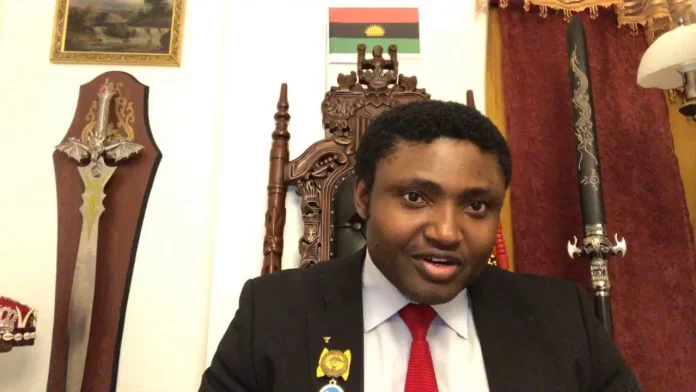
The Simon Ekpa-led Biafra Republic Government In-Exile has claimed that there is no longer a need for Ohanaeze Ndigbo.
Ekpa spoke amid the recent death of Ohanaeze President-General, Chief Emmanuel Iwuanyanwu.
It could be recalled that Iwuanyanwu succeeded Prof George Obiozor, who passed away in December 2022.
The development has been attracting concerns.
Ekpa has now said with the deaths of two successive Ohanaeze presidents, there was no need for a replacement.
He said the people were tired of mourning and crying over Ohanaeze Ndigbo.
In a post on his X handle, the Biafra agitator wrote, “Anything Ohanaeze should cease in Biafraland, following the death of Iwuanyanwu.
“There should be nothing like Ohanaeze nor Ohanaeze election in Biafraland.”
“The time of Ohanaeze sorrow, tears in Biafraland is over,” he claimed.
Meanwhile, recall that Nigeria’s President, Bola Ahmed Tinubu, governors, the presidential candidate of Labour Party, in 2023, Peter Obi, Afenifere and other bigwigs have all expressed sadness over Iwuanyanwu’s demise.
Iwuanyanwu: No need for Ohanaeze – Simon Ekpa-led BRGIE
Iwuanyanwu: No need for Ohanaeze – Simon Ekpa-led BRGIE
I’m honoured, Celine Dion says as she relishes comeback performance at Paris Olympics
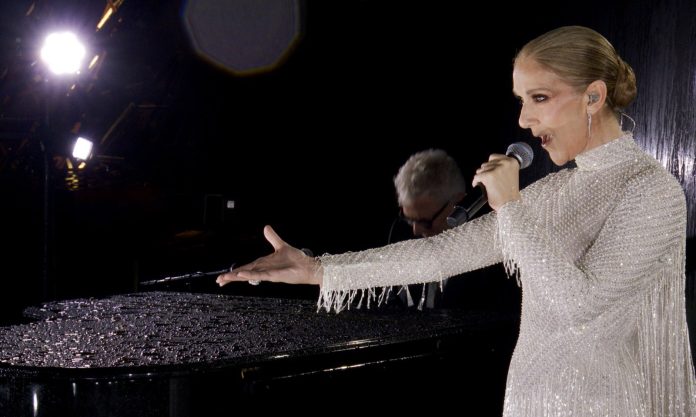
Grammy-winning Canadian singer, Celine Dion, has savored her first performance in four years at the 2024 Olympic Games opening ceremony in Paris, France, on Friday.
The 56-year-old singer delivered a heartfelt rendition of “Hymne à l’amour” by Édith Piaf from the base of the Eiffel Tower, creating an iconic moment.
Dion, who has not performed publicly since 2020 amid her battle with stiff-person’s syndrome, in a statement released after her performance, expressed her joy and gratitude.
She wrote, “I’m honoured to have performed tonight, for the Paris 2024 Opening Ceremony, and so full of joy to be back in one of my very favourite cities!”
Dion also praised the athletes for their dedication and hard work.
She wrote, “Most of all, I’m so happy to be celebrating these amazing athletes, with all their stories of sacrifice and determination, pain and perseverance.
“All of you have been so focused on your dream, and whether or not you take home a medal, I hope that being here means that it has come true for you!
“You should all be so proud, we know how hard you have worked to be the best of the best. Stay focused, keep going, my heart is with you!”
This performance marks Dion’s second appearance at the Olympic Games, having previously performed at the Atlanta 1996 Olympics.
TMZ reports that Dion was paid for her highly anticipated performance at the Paris 2024 Olympic Games.
Dion, in an interview with Hoda Kotb on the Today Show, had vowed that she wouldn’t let her Stiff Person Syndrome battle stop her from performing again.
She vowed that she would resume live performances even if she had to crawl to the stage and talk with her hands.
Ex-NBA president, Agbakoba, urges Tinubu to copy Obasanjo on how to raise funds to run govt
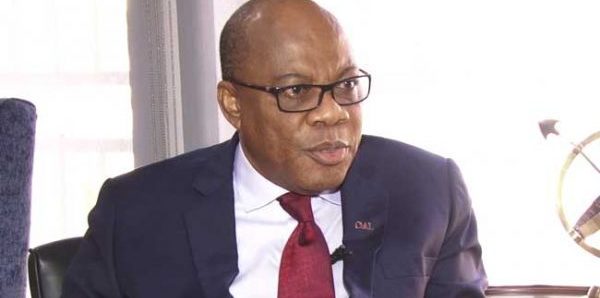
Senior Advocate of Nigeria (SAN), Olisa Agbakoba, has proffered a solution on a way out of the present financial crunch which the current administration of President Bola Tinubu finds itself.
Agbakoba, a former president of the Nigerian Bar Association (NBA) called on the government to take a cue from the strategy adopted by former President Olusegun Obasanjo who had the same issue while he was in power.
Agbakoba further proposed a return to maximum crude oil production as a short-term solution to Nigeria’s economic challenges.
In a statement issued on Friday, the legal practitioner argued that boosting oil output and revenue could provide the much-needed financial lifeline for President Tinubu’s administration.
Citing the Obasanjo era as a reference point, Agbakoba emphasized the importance of maximizing revenue from crude oil sales, and contended that by increasing production to at least 2.4 million barrels per day, the government could significantly bolster its foreign exchange reserves, stabilize the naira, and reduce the nation’s debt burden.
Agbakoba further suggested that the government should take control of its hydrocarbon revenue from international oil companies. He believes this move would enable the government to allocate funds more effectively towards addressing pressing national needs.
The statement reads, “President Tinubu doesn’t have enough money in the treasury to meet the huge National needs of 200m Nigerians. So there is a simple solution.
READ ALSO:Ex-NBA president, Agbakoba, laments Nigeria’s paradox: $1trn earned, yet $91.46bn in debt
“I urge President Tinubu to look at how President Obasanjo resolved his money headaches. First, President Obasanjo tackled Corruption and plugged waste. Nuhu Ribadu saw to that, as the fear of Nuhu was the beginning of wisdom.
“Second and most important was that president Obasanjo understood what is called public sector borrowing requirements and how much was needed to sustain the National system.
“Most important was President Obasanjo’s clear vision of how to raise revenue. This was from optimal production of crude oil. The revenue from crude oil was fully maximized. Crude oil daily production was at maximum capacity.
“Funds from sales of crude propped the Naira value to the dollar. The Government was able to get things done without borrowing but using crude oil revenue. President Tinubu must reverse the trend by maximizing crude oil outputs, removing the international oil companies from control of our hydrocarbons revenue, paying down debts and hedging the Naira against the dollar with crude oil dollars.
“So quite simply president Tinubu should maximize crude oil production to at least 2.4 million barrels a day, pay down debts, apply funds to meet national needs. If this simple fiscal process is sustained, Nigeria will be out of this desperate situation within 6 months.
In the final analysis, optimal crude oil production is our way out.”
The SAN’s proposal comes amidst a challenging economic climate characterized by soaring inflation, currency depreciation, and rising debt levels. As the government grapples with these issues, Agbakoba’s suggestion offers a potential path to economic recovery, albeit one that relies heavily on the oil sector.
Critics may argue that overreliance on oil is unsustainable and could hinder the diversification of the economy. Additionally, the global transition to renewable energy sources poses a long-term threat to oil revenue. Despite these concerns, Agbakoba’s proposal might ignite a debate on the role of the oil sector in Nigeria’s economic revival.
The post Ex-NBA president, Agbakoba, urges Tinubu to copy Obasanjo on how to raise funds to run govt appeared first on Latest Nigeria News | Top Stories from TVN.
NGX WEEKLY ROUND-UP: Investors lose N1.32tr as equities market crumbles

Investors in Nigerian equities market enjoyed a trading week to forget on the floor of the NGX following a loss of N1.32tr in the just ended trading week.
The bourse recorded losses in four of the five trading days gaining on just one trading day as the market suffered the second heaviest loss in 2024 yesterday.
The market capitalisation fell by N1.32tr to N55.61trn from N56.93trn in the previous week.
Similarly, the All-Share Index (ASI) fell by 2.33% to close at 98,201.49 from 100,539.40 points recorded the previous week.
The equities market began the week on a positive note on Monday, July 22, 2024 as investors gained N16bn at the end of trading session.
It went downhill from there.
On Tuesday, July 23, 2024 the equities market reversed the gain made on Monday, July 22, 2024 as investors lost N46bn at the end of trading session
It was the same on Wednesday, July 24, 2024 as investors recorded a loss of N68bn.
On Thursday, July 25, 2024 investors also lost N117bn at the end of trading session.
The equities market closed the week with its second heaviest loss in 2024 on Friday, July 26, 2024 as investors lost N1.1tn at the end of the trading session culminating in a total loss of N1.32tn for the just ended week.
READ ALSO:NGX: Investors lose N117bn as equities market slump continues
A total turnover of 3.557 billion shares worth N47.220 billion in 42,871 deals was traded this week by investors on the floor of the Exchange, in contrast to a total of 2.827 billion shares valued at N42.366 billion that exchanged hands last week in 44,277 deals.
The Financial Services Industry (measured by volume) led the activity chart with 2.011 billion shares valued at N25.783 billion traded in 24,350 deals; thus contributing 56.52% and 54.60% to the total equity turnover volume and value respectively.
The Services Industry followed with 1.020 billion shares worth N3.216 billion in 1,846 deals. The third place was the Agriculture Industry, with a turnover of 168.028 million shares worth N647.859 million in 1,473 deals.
Trading in the top three equities namely Tourist Company of Nigeria Plc, FCMB Group Plc and Abbey Mortgage Bank Plc (measured by volume) accounted for 1.876 billion shares worth N8.511 billion in 935 deals, contributing 52.73% and 18.02% to the total equity turnover volume and value respectively.
SOVEREIGN TRUST INSURANCE PLC recorded the biggest share price increase from N0.49 at the beginning of the week to N0.56 followed by CORONATION INSURANCE PLC which increased its share price from N0.76 to N0.86.
NEIMETH also increased its share price by N0.22 from N1.74 to N1.96.
On the flip side, SECURE ELECTRONIC TECHNOLOGY PLC recorded the biggest decline in share prices losing N0.15 to close the week at N0.42 from the N0.57 it started the week on followed by OMATEK which shed N0.11 and ended the week on N0.63 from N0.74 at the start of the week.
CUTIX also shed N0.84 to close at N5.15 from N5.19 at the beginning of the week.
By: Babajide Okeowo
The post NGX WEEKLY ROUND-UP: Investors lose N1.32tr as equities market crumbles appeared first on Latest Nigeria News | Top Stories from TVN.
G20 nations agree to make super-rich pay tax
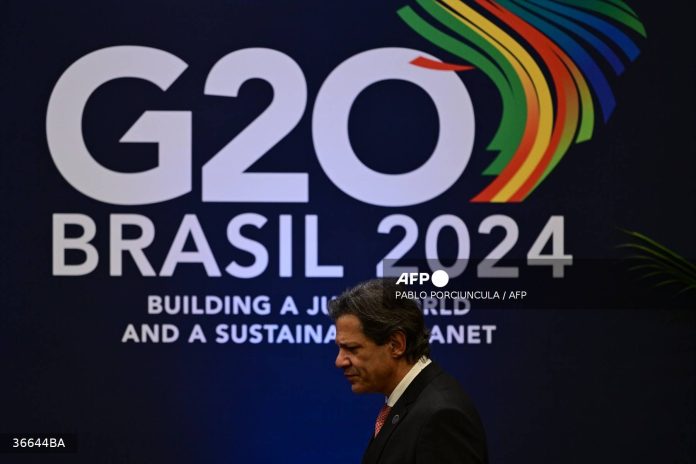

G20 nations have agreed to work together to make the super-rich pay their taxes, but stopped short of a more substantial deal, according to a declaration adopted Friday after a meeting of finance ministers in Rio de Janeiro.
The thorny topic of tackling tax-dodging billionaires dominated the two-day meeting in the Brazilian city, which will host the next G20 summit in November.
The initiative is a key priority for Brazilian President Luiz Inacio Lula da Silva, who heads this year’s grouping, which includes the world’s major economies, the European Union and the African Union.
Lula was hoping for a minimum tax on the moneyed elite, but the final statement represents a compromise on a topic that divided member states.
“With full respect to tax sovereignty, we will seek to engage cooperatively to ensure that ultra-high-net-worth individuals are effectively taxed,” said the statement.
“Wealth and income inequalities are undermining economic growth and social cohesion and aggravating social vulnerabilities.”
Brazil’s Finance Minister Fernando Haddad said that “from a moral point of view it is important that the 20 richest nations consider that we have a problem, which is to have progressive taxation on the poor and not on the rich.”
The United States and Germany dismissed the need for a global deal on taxing billionaires, an initiative which is backed by France, Spain, South Africa, Colombia and the African Union.
• ‘Time to go further’ –
International Monetary Fund chief Kristalina Georgieva hailed the G20’s position on “tax fairness.”
“The shared vision of G20 Ministers on progressive taxation is timely and welcome, as the need to rebuild fiscal buffers while also attending to social and development needs involves difficult decisions in many countries,” she said in a statement.
French economist Gabriel Zucman, who authored a report on taxing the rich, welcomed the fact that “for the first time in history, there is now a consensus among G20 countries that the way we tax the super-rich must be fixed.”
“Now it is time to go further,” said Nobel Prize-winning economist Joseph Stiglitz on Friday, urging heads of state to coordinate minimum standards by November.
“The climate crisis is expected to cost trillions of dollars every year and it is outrageous to expect that the regular taxpayer should pay for it, while the super-rich evade taxes,” said Camila Jardim of Greenpeace Brazil.
On the sidelines of the thorny tax discussions, US Treasury Secretary Janet Yellen and Brazilian Economy Minister Haddad announced on Friday the signing of a partnership on climate protection.
Founded in 1999, the organisation was originally focused on global economic issues but has increasingly taken on other pressing challenges — even though member states do not always agree on what should be on the agenda.
Divisions within the G20, of which Russia is also a member, have made drafting a joint communique at the outcome of meetings a challenge.
Three texts were published by Brazilian authorities: a joint final communique, a document on “international cooperation in tax matters” and a separate communique from Brazil on geopolitical crises.
The final communique makes no mention of the wars in Ukraine and Gaza, but simply refers to “wars and the escalation of conflicts” as risk factors for the global economy.
AFP.
Shelve planned hunger protest, Kwankwaso urges organisers
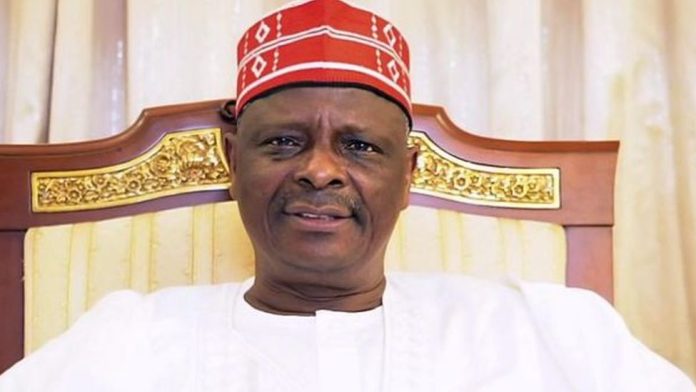

Former Kano State Governor, Rabiu Kwankwaso, has urged organisers of the nationwide protest to shelve the plan and exercise caution while expressing their grievances.
In a statement, he personally signed on Friday night, Kwankwaso called on the organisers of the protest and the citizens to end an incompetent government through the ballot rather than protests
Kwankwaso also called on Nigerian leaders at all levels to urgently address various challenges facing the country by ensuring good governance and adherence to the rule of law.
He said, “It is with a deep sense of responsibility that I share my thoughts on the current situation in Nigeria. We find ourselves in avoidable hardship because our leaders missed some steps since 2007. However, there is always room for correction and setting the country on the right track for economic development, prosperity, and better welfare of citizens.
“Interferences by the Federal Government into the affairs of the chieftaincy matters in Kano State, impeachment of the Deputy Governor of Edo State, political crisis in Rivers State, sabotage to Aliko Dangote refinery, controversies surrounding the SAMOA agreement, the conflict between Sen. Ali Ndume and the APC Leadership, widespread insecurity and other criminal acts are a few examples of avoidable and unnecessary crises.
“We appeal to the leadership of the country at all levels to take necessary steps to address the myriad challenges facing the country.”
Kwankwaso acknowledged the hardship in the country and the yearnings for a better Nigeria but cautioned against protests that could lead to anarchy.
The NNPP national leader urged Nigerians to be patient with the Bola Tinubu government and give it all the necessary support to succeed.
He said, “Today, I speak to you not just as an elder and a concerned citizen but as someone who deeply believes in the power and potential of our great nation. The recent calls for protests against bad governance resonate with me, as they reflect our collective frustration and yearning for a better Nigeria.
“However, I urge Nigerians to put our country first before any other consideration by way of being patient with the government and giving it all the necessary support to succeed. If any government fails to provide the necessary leadership for a better Nigeria, we will have the opportunity as citizens to elect the people who can bring the required change using our votes
“In these trying times, our nation stands at a crossroads. Our collective frustration with bad governance has reached a boiling point, and the urge to protest is strong.
“As an elder and patriotic Nigerian, I share your concerns and your desire for change. However, I urge you to consider the consequences of national protests and to channel your energy into a more effective and peaceful means of transformation through the power of your ballot.”
Kwankwaso noted that protest, while it is a fundamental democratic right, often escalated into violence, leading to loss of lives, destruction of property, and widespread chaos.
He added, “Protests, while a fundamental democratic right, often come with unforeseen and dire consequences. The tragic events of the past have shown us that protests can escalate into violence, leading to loss of lives, destruction of property, and widespread chaos.
“The repercussions of such actions extend far beyond the immediate moment, leaving scars on our communities and deepening divisions among us.”
US defends law forcing sale of TikTok app


The Justice Department late Friday filed its response to TikTok’s civil suit aimed at derailing a law that would force the app to be sold or face a US ban.
TikTok’s suit in a Washington federal court argues that the law violates First Amendment rights of free speech.
The US response counters that the law addresses national security concerns, not speech, and that TikTok’s Chinese parent company ByteDance is not able to claim First Amendment rights here.
The filing details concerns that ByteDance could, and would, comply with Chinese government demands for data about US users or yield to pressure to censor or promote content on the platform, senior justice department officials said in a briefing.
“The goal of this law is to ensure that young people, old people and everyone in between is able to use the platform in a safe manner,” a senior justice department official said.
“And to use it in a way confident that their data is not ultimately going back to the Chinese government and what they’re watching is not being directed by or censored by the Chinese government.”
The response argues that the law’s focus on foreign ownership of TikTok takes it out of the realm of the First Amendment.
US intelligence agencies are concerned that China can “weaponize” mobile apps, justice department officials said.
“It’s clear that the Chinese government has for years been pursuing large, structured datasets of Americans through all sorts of manner, including malicious cyber activity; including efforts to buy that data from data brokers and others, and including efforts to build sophisticated AI models that can utilize that data,” a senior justice department official said.
TikTok has said the demanded divestiture is “simply not possible” — and not on the timeline required.
The bill signed by President Joe Biden early this year set a mid-January 2025 deadline for TikTok to find a non-Chinese buyer or face a US ban.
The White House can extend the deadline by 90 days.
“For the first time in history, Congress has enacted a law that subjects a single, named speech platform to a permanent, nationwide ban, and bars every American from participating in a unique online community with more than one billion people worldwide,” said the suit by TikTok and ByteDance.
– TikTok shutdown? –
ByteDance has said it has no plans to sell TikTok, leaving the lawsuit, which will likely go to the US Supreme Court, as its only option to avoid a ban.
“There is no question: the Act will force a shutdown of TikTok by January 19, 2025,” the lawsuit said, “silencing (those) who use the platform to communicate in ways that cannot be replicated elsewhere.”
TikTok first found itself in the crosshairs of former president Donald Trump’s administration, which tried unsuccessfully to ban it.
That effort got bogged down in the courts when a federal judge temporarily blocked Trump’s attempt, saying the reasons for banning the app were likely overstated and that free speech rights were in jeopardy.
The new effort signed by Biden was designed to overcome the same legal
headaches, and some experts believe the US Supreme Court could be open to allowing national security considerations to outweigh free speech protection.
“We view the statute as a game changer from the arguments that were in play back in 2020,” a senior justice department official said.
There are serious doubts that any buyer could emerge to purchase TikTok even if ByteDance would agree to the request.
Big tech’s usual suspects, such as Facebook parent Meta or YouTube’s Google, will likely be barred from snapping up TikTok over antitrust concerns, and others could not afford one of the world’s most successful apps used by about 170 million people in the United States alone.
AFP.
Celine Dion defies health challenge, performs at 2024 Paris Olympics

Renowned Canadian singer, Celine Dion, took performed at the opening ceremony of the 2024 Olympics in Paris on Friday.
This marked her first live performance in four years, following battle with Stiff Person Syndrome, a rare neurological disorder.
Dion delivered a powerful rendition of Edith Piaf’s timeless classic “Hymne à l’amour” (1950) at the iconic Eiffel Tower, bringing the ceremony to a close.
The 56-year-old singer reportedly charged a fee of $2 million for her performance.
This performance marked Dion’s second appearance at the Olympic Games, having previously performed “The Power of the Dream” at the 1996 Atlanta Olympics.
Click the link below to watch Celine Dion’s performance:
All rights reserved. This material, and other digital content on this website, may not be reproduced, published, broadcast, rewritten or redistributed in whole or in part without prior express written permission from According.
Contact: [email protected]
Katsina appoints new KT-CARES coordinator
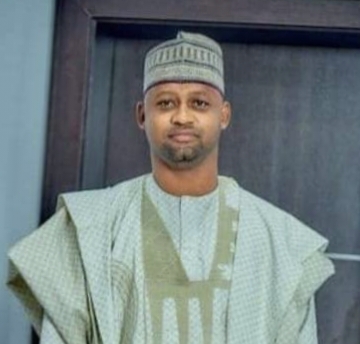

Katsina State Governor, Mallam Dikko Radda has appointed Nafiu Musa as the new Coordinator of Katsina Community Action for Resilience and Economic Stimulus.
According Online learned that the new KT-CARES coordinator’s appointment was to re-energise the outfit for the collective benefit of the good people of Katsina.
Radda prayed that Musa’s extensive background especially managing projects for community organisations, NGOs, development partners, and donor agencies across Nigeria will no doubt underscore the Radda administration’s commitment to enhancing community resilience and stimulating economic growth through capable leadership and expertise.
A statement signed by Governor Radda’s Chief Press Secretary, Ibrahim Kaula Mohammed and issued to newsmen late Friday indicated that the new KT-CARES Coordinator’s career spans roles such as State Team Lead for Helen Keller International, Program Officer for various USAID-funded projects, and Project Coordinator for the Society for Women Development and Empowerment of Nigeria.
He said, “His experience covers critical areas including maternal and child health, nutrition, malaria prevention, and community-driven development initiatives.
“With his diverse experience and numerous training both in Nigeria and abroad, Mallam Musa is expected to bring valuable insights and strategic direction to the KT-CARES programme.”
According Online also learned that Radda had earlier approved the appointment of Musa before embarking on his one-month vacation on July 18, 2024.
An alumnus of Hassan Usman Katsina Polytechnic, Musa is currently pursuing an MBA in Project Management from the National Institute of Business Management, Kerala, India.
Thousands celebrate Niger coup anniversary


Niger’s junta gathered thousands of people in the capital Niamey on Friday to celebrate the first anniversary of its coup.
Dressed in clothes bearing photos of regime members, the crowd chanted the name of junta chief Abdourahamane Tiani.
“We’re celebrating, our dear country will gradually regain its sovereignty,” said Fati Hassane, part of a women’s group formed since the coup, as vuvuzelas blared in the background.
The stadium hosting the anniversary event was under high security, including armoured vehicles around the venue.
Tiani arrived to the beats of a traditional drum to greet attendees, but did not address the crowd.
“Never in our country’s recent history has an event received such great popular support,” said Prime Minister Ali Mahaman Lamine Zeine.
The July 26 coup anniversary was declared a public holiday.
After taking power, the junta expelled French forces last year while the departure of US troops is expected to be finalised in August.
Niger has also distanced itself from some West African nations, severing ties with the regional bloc ECOWAS.
But it has formed a “confederation” with military leaders ruling Burkina Faso and Mali, who sent representatives to the anniversary event.
All three are fighting jihadist groups, with the Niger junta using the security situation as a justification for its coup.
Attacks have continued, however, with dozens of civilians and soldiers killed in recent months.
“I’ve come to support the soldiers, they’re doing a good job so far,” said Ibrahim Niando, carrying a national flag.
Niger has also drawn closer to Turkey, Iran and Russia, whose flags were visible at the stadium.
While the junta celebrated its year in power, ousted president Mohamed Bazoum remains detained in his official residence.
AFP.
