Home Blog Page 8

Yusuf Challenges Jingir Over ‘Infidel’ Comment, Asks What Remi Tinubu and Seyi Would Think

0

Political strategist, Baba Yusuf has wondered how First Lady, Remi Tinubu and her son Seyi would react to the recent remarks made against Christians by an Islamic cleric, Sheikh Jingir.

It was reported that Jingir, while addressing a political gathering attended by about three governors and prominent individuals, had asked those against the Muslim-Muslim ticket to leave Nigeria and labelled Christians as ‘infidels.’

Reacting during an appearance on Arise News, Yusuf noted that while the cleric attempted to promote the Muslim-Muslim presidential ticket of the All Progressives Congress (APC) in Nigeria’s diverse society, he overlooked the fact that both the First Lady and the president’s first son, Seyi, are Christians.

Yusuf, a Muslim, asserted that Jingir’s comments regarding the Muslim-Muslim ticket were solely his own, driven by personal interests, and emphasized that such statements reflected religious intolerance.

He argued that a leader of Jingir’s experience, given his long tenure as an Islamic cleric, should recognize that his words carried significant weight and could potentially harm Nigeria, asserting that such rhetoric was unacceptable.

Read Also: Peter Obi Denies Urging Soldiers to Reject Salary Increase

He said, “As a Muslim, I firmly reject religious extremism. I oppose the hateful narratives propagated by leaders, particularly those in religious positions.

“I must emphasize that Sheikh Jingir’s remarks are his own and stem from self-interest, as this is not the conduct we expect from political leaders, even within political circles; such statements are demagogic.

“They are steeped in religious bigotry, and a leader of his stature, considering his age, societal standing, and extensive experience as an Islamic cleric, should understand that his words can have dire consequences for our nation.

“Thus, I find these remarks entirely unacceptable. I assert, and welcome correction, that the majority of Muslims do not support such irresponsible statements from this Islamic cleric.

“What struck me as most dissonant was my observation of the reactions from the governors, other political figures, and community leaders present. Their facial expressions and overall demeanor conveyed a sense of dismay that, to me, was even more troubling than Jingir’s statement.

“It is particularly disheartening that, even after hours, days, and counting, there has been no response from political leaders to alleviate the concerns of our Muslim brothers and sisters, and indeed, those of all faiths, especially regarding the derogatory term ‘infidel.’

“Furthermore, I find myself questioning the thoughts of the First Lady of the Federal Republic of Nigeria, a Christian, as well as the president, whose eldest son is also a Christian.

“Given that the president leads a diverse household and government, I wonder how he reconciles his position with the remarks made by an individual labeling others as infidels in an attempt to promote a Muslim-Muslim ticket. This, for me, is the crux of the matter.

“If we genuinely aspire for a united Nigeria, we must transcend these divisions. I had not realized the extent of the political decay until I witnessed this situation. I had anticipated a counter-position to be articulated in response to this issue.”

Peter Obi Denies Urging Soldiers to Reject Salary Increase

0

The 2027 Nigeria Democratic Congress, NDC, presidential candidate, Peter Obi, has described as false the report that he asked Nigerian soldiers to reject the salary increase approved by President Bola Tinubu.

Obi said this in a post on his verified X handle on Tuesday, calling on Nigerians and the Armed Forces to disregard the report.

“I wish to address a recent report that falsely attributes a statement to me, suggesting that Nigerian soldiers should refuse any salary increments until after the elections. This assertion is entirely untrue,” he said.

It was recalled that President Tinubu had approved salary increases of between 30 and 80 per cent for personnel of the armed forces, effective September 1, 2026.

The pay package, which is expected to benefit about 250,000 personnel, will raise the annual salary bill for the armed forces from N660bn to N924bn, according to the President’s Special Adviser on Information and Strategy, Bayo Onanuga.

In response, the former Anambra state governor said his respect for members of the security forces remained unwavering, adding that he had consistently advocated adequate equipment, motivation and protection for security personnel.

He equally recalled an incident in which soldiers were killed by insurgents, saying it prompted him to question the protection provided to troops, stressing that the welfare and safety of security personnel would be a priority if he were elected president.

The presidential candidate also pledged that troops would not be left unprotected in dangerous situations under his leadership.

Oyo School Abduction: DSS Releases Carpenter, Pays N3m Compensation

0

The Department of State Services has released a carpenter arrested in connection with the abduction and killing of pupils and teachers in Oriire Local Government Area of Oyo State after investigators found no evidence linking him to the attack.

The carpenter, Mustapha Marwana, was released on the orders of the DSS Director-General, Tosin Ajayi, following an investigation into allegations that he was involved in the incident.

A security source familiar with the case said the DSS investigation established that the Katsina-born artisan was neither a member of a terrorist organisation nor operationally connected to Ansaru.

“Following the review, investigators found no evidence linking the carpenter to membership, financing, logistics or operational activities of the terrorist group,” the source said.

The source added that Ajayi subsequently ordered Marwana’s immediate release and approved an initial ₦3 million compensation to help him meet his immediate needs and restart his livelihood.

“Mustapha was subsequently released to his lawyer, Oghene Forgive, who received him following his discharge from custody,” the source said.

The carpenter reportedly expressed appreciation to the DSS director-general for what he described as a compassionate and humane intervention.

Forgive, who received Marwana after his release, also commended Ajayi for his role in establishing his client’s innocence and approving the compensation.

The source said the payment was part of measures being adopted by the current DSS leadership to support individuals cleared after investigations and facilitate their reintegration into society.

“Since his appointment as DSS DG, Ajayi has been balancing national security responsibilities with respect for the rights and dignity of citizens, resulting in the payment of over N300m as compensation,” the source said.

“There are many more instances where DSS investigations have established innocence and have been followed by efforts to facilitate reintegration. These are the kind of measures through which the Service is strengthening public confidence and building trust,” the source added.

The source also recalled previous cases in which compensation was paid to individuals cleared after security operations or investigations.

The development follows the May 15 attack on Community Grammar School, Baptist Nursery/Primary School and L.A. Primary School in Oriire, where suspected Ansaru terrorists abducted 39 pupils and seven teachers.

Two of the victims were killed before the remaining captives regained their freedom on July 10 following a military operation.

Several suspects have since been arraigned before the Federal High Court in Abuja over the attack. Three have been sentenced to life imprisonment after pleading guilty to terrorism-related charges, while other suspects, including two alleged Ansaru commanders, are standing trial.

Extreme Heat Costs Europe Billions as Record Heatwaves Sweep Region

0

Europe’s record-breaking summer heatwaves are already taking a huge economic toll, highlighting the increasing impact of climate change on the continent.

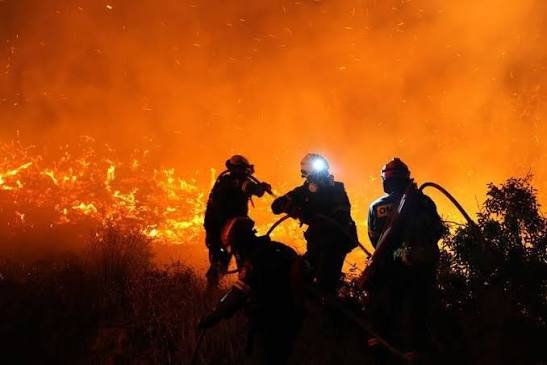
Scientists say global warming has worsened the heat and drought, disrupting power generation, river transport, agriculture and public health. Europe’s wildfire season is on course to be the worst on record.

Economists estimate the total losses are already in the hundreds of billions of euros and expect the economic impact to rise in coming years.

“We have multiple extreme weather events happening all at the same time and 2026 is especially worrying,” warned Sehrish Usman, an economist at the University of Mannheim.

“What makes 2026 particularly worrying from an economic perspective is that there are multiple episodes of extreme events,” he said.

“Take heatwaves, droughts, wildfires… these are happening at the same time and mostly in the same places, compounding their impact.”

June and July’s record heat has disrupted shipping on the Rhine and Danube, forced several nuclear reactors to reduce or stop production due to cooling problems and damaged agricultural output. Heat has also reduced worker productivity and caused tens of thousands of deaths, including more than 10,000 reported in Germany.

Allianz estimates that a two-week heatwave in June alone could reduce GDP in Europe by 0.3 percentage points, while ING estimates that disruptions on the Rhine could reduce GDP in Germany by 0.3 percentage points this year.

Allianz also warns that climate change could cut growth by 5-7% by 2030 in highly exposed economies such as Spain, France and Italy.

“The overall bill will be much bigger this year.

“This figure does not consider the fires, droughts, various floods or the expected El Nino,” said Allianz economist, Hazem.

The economic consequences may continue worsening after the extreme weather itself has passed, Usman said.

Read Also: Ghana Finds Fresh Value in Cashew Apples, Boosting Farmer Incomes

You would expect the damage to be biggest in the year that an extreme event happens and then to fade but we find the opposite,” he said.

“The economic impact builds in the years after because the extreme weather triggered a series of slow economic repercussions.”

Southern Europe is especially at risk, including declines in summer tourism, increases in food prices and crop failures.

Extreme heat could alter traditional holiday patterns, said Carsten Brzeski, ING economist.

“Can you imagine tourists marching thru southern Italy or Spain in 45 degrees? I can not. So I think the nature of tourism will change,” Brzeski said.

Extreme weather is also straining government finances as tax revenues decline and spending increases on emergency responses and climate adaptation. Allianz estimates lost economic output could reduce annual tax revenue by as much as 1.8% in France and 1.3% in Italy and Spain.

The upward fiscal burden could eventually add to pressure on the European Central Bank, particularly as governments face competing needs to finance defense, energy transition and climate resilience.

Ghana Finds Fresh Value in Cashew Apples, Boosting Farmer Incomes

0

Praise across the aisle is rare in politics. More frequently than not, political actors are conditioned to view every policy thru partisan lenses, applauding only what their political parties initiate and dismissing the achievements of others. Hence the recent assessment of President Bola Ahmed Tinubu’s economic reforms by the Governor of Anambra State, Professor Chukwuma Charles Soludo, a governor elected on the platform of the All Progressives Grand Alliance (APGA) deserves serious national reflection.

Governor Soludo is not of the ruling All Progressives Congress (APC). He is a member of the All Progressives Grand Alliance (APGA), a party that has always kept its independent political identity. More importantly, he governs Anambra State in the Southeast, the geopolitical zone where President Tinubu got the least electoral support in the 2023 presidential election. If there was any region in which political incentives would favor criticism instead of commendation of the Federal Government, it would certainly be the Southeast.

But addressing investors and policymakers at the Delta State Economic and Investment Summit, Soludo provided an analysis that transcended political sentiments. He declared that Nigeria’s economy, under the leadership of President Bola Ahmed Tinubu had stabilized and “turned the corner” pointing to stronger macroeconomic fundamentals, rising foreign exchange reserves, greater investor confidence and improved fiscal stability.

This was not the language of a friendly partisan. It was the considered judgment of one of Nigeria’s most distinguished economists. That distinction is important.

Prof. Soludo is not just a sitting governor. A former Governor of the Central Bank of Nigeria (CBN), he is one of Nigeria’s most respected economic technocrats, whose contributions to banking consolidation are part of Nigeria’s modern economic history. When such a person says nice things about macroeconomic reforms, his words are naturally taken more seriously than mere political rhetoric.

His intervention deserves attention not because it suggests Nigeria’s economic journey has been completed, which it clearly has not, but because it recognizes that difficult structural reforms are beginning to yield measurable results.

The economy faced one of its biggest challenges when President Tinubu assumed office in May 2023, with mounting fiscal pressures, declining investor confidence, multiple exchange rate distortions, ballooning subsidy costs, dwindling public revenues and unsustainable debt obligations. State governments faced mounting demands for infrastructure, healthcare, education and security, but many struggled to meet basic obligations.

The warning signs were there. Public finances had become more and more constrained. Recurring obligations and unsustainable subsidy payments were consuming resources that should have been invested in development.

Read Also: Soludo Gives Verdict on Tinubu’s Economic Reforms

The tough choices that followed were never going to be politically popular. Cutting fuel subsidies caused immediate hardship. The reforms of the exchange rate created inflationary pressures at the beginning.

Many Nigerians wrestled with a question: Would the pain ever be transformed into something positive? Such enormous economic reforms seldom bring immediate comfort. They are meant to correct structural distortions that have accumulated over many years. Their benefits come gradually.

There are now increasing signs that those difficult choices are beginning to restore macroeconomic stability. Exactly what Soludo admitted.

His reference to Nigeria’s stronger foreign exchange reserves, reportedly rising to about $52 billion, is more than a numerical upgrade. Healthy reserves build a country’s ability to withstand external shocks and reassure investors, stabilize the currency and improve confidence in the broader economy.

His observation of exchange rate predictability is equally important. Businesses flourish when economic policies are predictable. Investors invest money where uncertainty is less.

Manufacturers are better equipped to plan production when foreign exchange markets become more transparent. Better market confidence is good for importers, exporters and financial institutions.

These developments will not solve all economic challenges immediately. But they are important building blocks. Perhaps the most important part of Soludo’s comments is on the fiscal health of Nigeria’s states.

For decades, many subnational governments relied heavily on monthly allocations from the Federation Account Allocation Committee (FAAC), often having to balance the need to finance infrastructure with the need to pay salaries and pensions.

The Federal Government’s reforms have fundamentally changed this fiscal landscape. The higher revenues accruing to states have created greater fiscal space for them. Governors in Nigeria now have a greater capacity to execute capital projects, improve public services and invest in critical infrastructure across Nigeria.

Road building is underway. Healthcare facilities are being increased. More agricultural investments. Educational infrastructure is getting a second look.

Although governance outcomes will naturally differ from one state to another, the enhanced fiscal environment has certainly bolstered the financial capacity of many state governments.

This is not a partisan assertion. This is reflected in the financial realities facing subnational governments. Notably, Soludo himself cited Anambra as a case study in sound fiscal management, observing that his administration has not resorted to borrowing to pay salaries or meet routine obligations.

He makes a good point there. Opportunities for federal reforms.

The effectiveness with which those opportunities are used is determined by the state governments. The importance of fiscal discipline at the subnational level remains.

Another reason that Soludo’s endorsement has unusual credibility is his professional background. He knows monetary policy, exchange rate dynamics, fiscal sustainability and macroeconomic management far more deeply than the average political commentator, being a former CBN Governor.

President Tinubu’s reforms have created important momentum. The next phase now is turning improved fiscal stability into inclusive economic growth that reaches households in every community.

History shows that good economies are built thru difficult reforms, patient implementation and institutional consistency. Few countries achieve sustainable development without confronting painful structural weaknesses.

Ultimately, the intervention by Governor Soludo offers an important lesson for Nigeria’s political class. Partisan rivalry should never be allowed to become a casualty of national development. Responsible leaders should acknowledge progress when objective evidence shows progress, regardless of political affiliation.

Soludo Gives Verdict on Tinubu’s Economic Reforms

0

Praise across the aisle is rare in politics. More frequently than not, political actors are conditioned to view every policy thru partisan lenses, applauding only what their political parties initiate and dismissing the achievements of others. Hence the recent assessment of President Bola Ahmed Tinubu’s economic reforms by the Governor of Anambra State, Professor Chukwuma Charles Soludo, a governor elected on the platform of the All Progressives Grand Alliance (APGA) deserves serious national reflection.

Governor Soludo is not of the ruling All Progressives Congress (APC). He is a member of the All Progressives Grand Alliance (APGA), a party that has always kept its independent political identity. More importantly, he governs Anambra State in the Southeast, the geopolitical zone where President Tinubu got the least electoral support in the 2023 presidential election. If there was any region in which political incentives would favor criticism instead of commendation of the Federal Government, it would certainly be the Southeast.

But addressing investors and policymakers at the Delta State Economic and Investment Summit, Soludo provided an analysis that transcended political sentiments. He declared that Nigeria’s economy, under the leadership of President Bola Ahmed Tinubu had stabilized and “turned the corner” pointing to stronger macroeconomic fundamentals, rising foreign exchange reserves, greater investor confidence and improved fiscal stability.

This was not the language of a friendly partisan. It was the considered judgment of one of Nigeria’s most distinguished economists. That distinction is important.

Prof. Soludo is not just a sitting governor. A former Governor of the Central Bank of Nigeria (CBN), he is one of Nigeria’s most respected economic technocrats, whose contributions to banking consolidation are part of Nigeria’s modern economic history. When such a person says nice things about macroeconomic reforms, his words are naturally taken more seriously than mere political rhetoric.

His intervention deserves attention not because it suggests Nigeria’s economic journey has been completed, which it clearly has not, but because it recognizes that difficult structural reforms are beginning to yield measurable results.

Read Also: When Our Baby Turned Two, We Separated’ – Bisola Aiyeola Speaks on Relationship

The economy faced one of its biggest challenges when President Tinubu assumed office in May 2023, with mounting fiscal pressures, declining investor confidence, multiple exchange rate distortions, ballooning subsidy costs, dwindling public revenues and unsustainable debt obligations. State governments faced mounting demands for infrastructure, healthcare, education and security, but many struggled to meet basic obligations.

The warning signs were there. Public finances had become more and more constrained. Recurring obligations and unsustainable subsidy payments were consuming resources that should have been invested in development.

The tough choices that followed were never going to be politically popular. Cutting fuel subsidies caused immediate hardship. The reforms of the exchange rate created inflationary pressures at the beginning.

Many Nigerians wrestled with a question: Would the pain ever be transformed into something positive? Such enormous economic reforms seldom bring immediate comfort. They are meant to correct structural distortions that have accumulated over many years. Their benefits come gradually.

There are now increasing signs that those difficult choices are beginning to restore macroeconomic stability. Exactly what Soludo admitted.

His reference to Nigeria’s stronger foreign exchange reserves, reportedly rising to about $52 billion, is more than a numerical upgrade. Healthy reserves build a country’s ability to withstand external shocks and reassure investors, stabilize the currency and improve confidence in the broader economy.

His observation of exchange rate predictability is equally important. Businesses flourish when economic policies are predictable. Investors invest money where uncertainty is less.

Manufacturers are better equipped to plan production when foreign exchange markets become more transparent. Better market confidence is good for importers, exporters and financial institutions.

These developments will not solve all economic challenges immediately. But they are important building blocks. Perhaps the most important part of Soludo’s comments is on the fiscal health of Nigeria’s states.

For decades, many subnational governments relied heavily on monthly allocations from the Federation Account Allocation Committee (FAAC), often having to balance the need to finance infrastructure with the need to pay salaries and pensions.

The Federal Government’s reforms have fundamentally changed this fiscal landscape. The higher revenues accruing to states have created greater fiscal space for them. Governors in Nigeria now have a greater capacity to execute capital projects, improve public services and invest in critical infrastructure across Nigeria.

Road building is underway. Healthcare facilities are being increased. More agricultural investments. Educational infrastructure is getting a second look.

Although governance outcomes will naturally differ from one state to another, the enhanced fiscal environment has certainly bolstered the financial capacity of many state governments.

This is not a partisan assertion. This is reflected in the financial realities facing subnational governments. Notably, Soludo himself cited Anambra as a case study in sound fiscal management, observing that his administration has not resorted to borrowing to pay salaries or meet routine obligations.

He makes a good point there. Opportunities for federal reforms.

The effectiveness with which those opportunities are used is determined by the state governments. The importance of fiscal discipline at the subnational level remains.

Another reason that Soludo’s endorsement has unusual credibility is his professional background. He knows monetary policy, exchange rate dynamics, fiscal sustainability and macroeconomic management far more deeply than the average political commentator, being a former CBN Governor.

President Tinubu’s reforms have created important momentum. The next phase now is turning improved fiscal stability into inclusive economic growth that reaches households in every community.

History shows that good economies are built thru difficult reforms, patient implementation and institutional consistency. Few countries achieve sustainable development without confronting painful structural weaknesses.

Ultimately, the intervention by Governor Soludo offers an important lesson for Nigeria’s political class. Partisan rivalry should never be allowed to become a casualty of national development. Responsible leaders should acknowledge progress when objective evidence shows progress, regardless of political affiliation.
When Our Baby Turned Two, We Separated’ – Bisola Aiyeola Speaks on Relationship

0

Popular Nollywood actress, Bisola Aiyeola has opened up on her former relationship with the father of her child, stating that their relationship went as far as an engagement before they finally went their separate ways.

It was said Aiyeola opened up on some of the changes she experienced in her personal life after featuring on the MTN Project Fame reality show.

The actress announced she got engaged to her baby daddy after departing the reality show.

Their relationship had advanced to the point where they were making plans for the future together.

During their relationship, the pair did have a child together, but their engagement never led to marriage.

“We were together for a while after the birth of our child, but later the relationship had problems,” Aiyeola said.

Read Also: Law Student Dies After Alleged Rooftop Fall at Lagos Hostel

The actress said the turning point was when their child turned two years old. “That’s when the relationship broke up,” she said. “We both decided to go our separate ways.

“After Project Fame we got engaged and things got to a point where We had a child but the relationship did not end up in marriage eventually. When our child became two years old, we chose to separate.

I was afraid of what people would say about me if I left the relationship, and some people compared my situation to what happened in my mother’s life. At some point I realized the relationship was no longer working. “My ex later tried to get back together with me but I decided not to get back”, she said.

Law Student Dies After Alleged Rooftop Fall at Lagos Hostel

0

The Lagos State Police Command has confirmed the death of 23-year-old Nigerian Law School student, Faith Alayande in an incident at the school’s hostel in Victoria Island, Lagos.

The student was allegedly found unconscious inside the hostel premises on Friday, August 7, 2026 after allegedly jumping from the roof of the four-storey building.

The state Police Public Relations Officer, Abimbola Adebisi, confirmed the incident in a telephone conversation, adding that the hostel matron reported the matter to the police.

Adebisi, a hostel mate and relative of the deceased, said they found a note believed to have been written by Alayande and started searching for her.

The officer said the student was allegedly found after she jumped from the roof of the hostel building.

Read Also: Rufai Oseni: Buhari, Emefiele Deserve Credit for Dangote Refinery, Not Tinubu

I can confirm the incident. “The deceased allegedly wrote a suicide note and before her hostel mate and a relative could locate her, she jumped from the rooftop of a four-storey building,” Adebisi said.

Police officers visited the scene after being notified of the report, while the remains of the deceased were later evacuated to a morgue for preservation, she added.

Another student found Alayande’s body in the hostel and reported to the institution’s matron, security analyst Zagazola Makama, who also reported the incident on X.

The incident was reported at Victoria Island Police Division at about 6.30am by the Chief Matron of the Law School, Mrs Igbokwe Juliana, Makama said.

“Later the matron went to the scene, where the deceased was lying on the ground on the hostel premises,” he said.

Makama said preliminary findings indicated that Alayande might have fallen from the roof of the four-storey hostel building.

The police are investigating the circumstances surrounding the incident including the contents and authenticity of the alleged note.

The Lagos State Police Command said it was investigating the incident.

Rufai Oseni: Buhari, Emefiele Deserve Credit for Dangote Refinery, Not Tinubu

0

Arise Television anchor, Rufai Oseni says the credit for the successful establishment of the Dangote Refinery should go to former President Muhammadu Buhari and ex-Central Bank of Nigeria, CBN, governor, Godwin Emefiele and not President Bola Tinubu’s administration.

Oseni said this on Monday in response to claims by the Chairman of the Nigeria Revenue Service, NRS, Zacch Adedeji, about the achievements of the Tinubu administration.

Speaking on Channels Television’s Sunday Politics program on Sunday, Adedeji commented on the administration’s economic performance, pointing to increased government revenue and the growing contribution of the Dangote Refinery to local fuel supply.

Oseni, however, said the refinery was made possible by the policies and economic conditions in the Buhari administration, especially the relative stability of the naira when Emefiele was CBN governor.

“When they are trying to say Dangote Refinery is the product of this administration? “It’s not from this administration,” Oseni said.

Read Also: ‘I Have Never Slept With Another Woman Since I Married My Wife’ – Aregbesola

“It was the same Buhari’s government that kept the Naira stable and the Emefiele they call names today was the one that kept Naira stable so that Dangote would be able to build that refinery,” he said.

Oseni said some of the crude supply commitments made to Dangote Refinery had not been met by the government.

“Do you know Dangote still has to go and buy Nigerian crude on the international market and bring it back?” He inquired.

While the broadcaster said the Tinubu administration had registered some economic successes, the government also needed to explain the impact of its policies on Nigerians and businesses.

“Yes, it had some victories. I mean, we don’t shy away from that, but also the debilitating effect of what was done to the economy is something that we haven’t recovered from.

“The corporate sector alone has about over 3 trillion in forex problems which they are bouncing on their books.

“The GDP shovel is over 100-some billion, but the individual cost on the lives of people that you and I are both paying, can they bring out that cost? “Oseni asked.

‘I Have Never Slept With Another Woman Since I Married My Wife’ – Aregbesola

0

Rauf Aregbesola, the National Secretary of the African Democratic Congress (ADC), has said he has remained faithful to his wife, Sherifat, since their marriage.

Aregbesola was said to have made the statement while speaking to party supporters at a recent ADC rally in Ejigbo Local Government Area of Osun State ahead of the August 15 governorship election.

Speaking in Yoruba, the former Osun State governor linked his claim of marital fidelity to his religious conviction, saying it was part of a personal promise he had made before God.

He said he was devoted to God alone and said very few men could say that.

Aregbesola told supporters that he had based his personal conduct on a prayer on the party’s political ambition in the state.

O Lord my God, if I serve thee, And have not added to it. “I never had any intimacy with another woman since I married my wife, because of your fear,” he said, “what I am about to say, only a few men can say it.

Read Also: Arteta Backs ‘Warrior’ Guimarães to Transform Arsenal’s New Era

The former governor said he was confident about the ADC chances in the election.

“I said to God, ‘Next June, we have to do it at the Government House,’” he added.

The Osun governorship election will hold on Saturday, August 15, 2026. Incumbent Governor Ademola Adeleke of the Accord Party (A) is running for re-election.

He is up against Bola Oyebamiji of the All Progressives Congress (APC) and Najeem Folasayo Salaam of the African Democratic Congress (ADC), among other candidates.

Aregbesola, a former governor of Osun on the APC platform, has been campaigning for the ADC ahead of the poll.