A chieftain of apex Igbo socio-cultural organisation, Ohanaeze Ndigbo, Okechukwu lsiguzoro, has expressed shock over the death of Senator Ifeanyi Ubah.
TVN reported that the serving lawmaker representing Anambra South Senatorial District died on Saturday morning in the United Kingdom.
Reacting, Isiguzoro expressed concern over the death of some prominent Igbo leaders in recent days.
Referring to death of Ohanaeze President-General, Chief Emmanuel Iwuanyanwu, lsiguzoro said it has been a “harvest of deaths” in the South-East.
In a chat with TVN, lsiguzoro, who prayed to God to grant the Ubah family the fortitude to bear the loss, noted that “Ndigbo have lost another big Iroko”.
He said, “It is with a huge shock that we received the sad news, an unfortunate incident concerning the demise of one of the business moguls in the South-East, a High Chief from Nnewi, Senator Ifeanyi Ubah.
“What has Ndigbo done that we are receiving harvest of deaths in the South-East? Today’s news of Ifeanyi Ubah’s death is a rude shock to Igbo nation.
“It is unbelievable that a vibrant young man full of life will just go into the cold hand of death.
“Everyone in the South-East, Anambra State and particularly Nnewi, should take heart. Ndigbo have lost another big Iroko.
“If there is anything we have done that is making us to be receiving all these rude shocks within a short frame of time, we beg God for mercy.
“May God forgive the Senator his shortcomings and give his family the fortitude to hear this loss.”
Ohanaeze chieftain, Isiguzoro mourns Senator Ifeanyi Ubah
Ohanaeze chieftain, Isiguzoro mourns Senator Ifeanyi Ubah
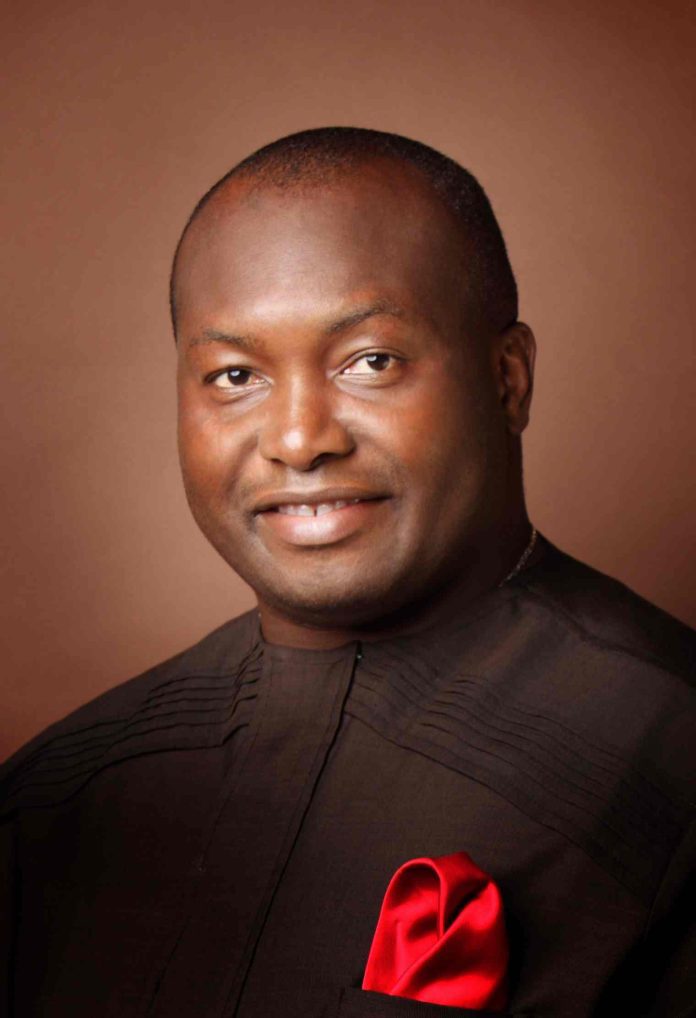
‘Ifeanyi Ubah, a committed public servant,’ Senate mourns Anambra senator
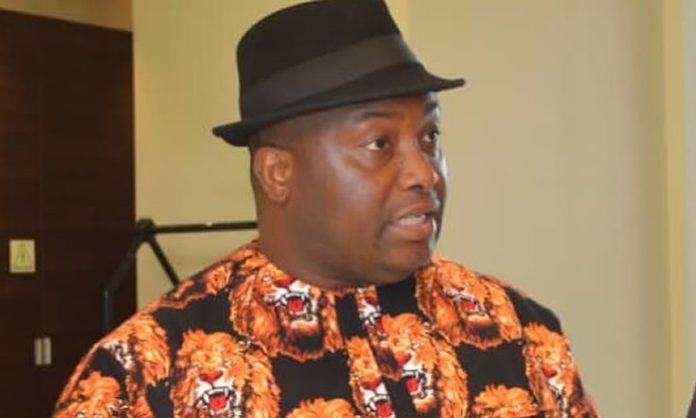

The Senate has mourned the death of one of its members, Ifeanyi Ubah, who died on Saturday in London, United Kingdom.
Ubah, the Chief Executive Officer of Capital Oil, would have turned 53 on September 3.
The Senate spokesperson, Yemi Adaramodu, confirmed Ubah’s death to our correspondent on Saturday.
In a statement issued on behalf of the Senate, Adaramodu described the late Ubah as an exemplary leader and an indefatigable advocate for his constituents.
The statement read, “It is with deep sorrow and profound regret that the Nigerian Senate announces the passing of our esteemed colleague, Senator Ifeanyi Ubah, who, until his passing, represented the Anambra South Senatorial District.
“Senator Ubah was an exemplary leader, a committed public servant, and an indefatigable advocate for his constituents. His untimely departure represents a significant loss to the Senate, his community, and the nation at large.
“Prior to his illustrious career in public service, Senator Ifeanyi Ubah distinguished himself as a prominent businessman and philanthropist. As the founder and CEO of Capital Oil and Gas Industries Limited, he made substantial contributions to Nigeria’s energy sector, fostering economic growth and creating numerous job opportunities.
“Through the Ifeanyi Ubah Foundation, his philanthropic endeavours provided scholarships, healthcare, and vital support to the less privileged, profoundly impacting countless lives.”
Adaramodu hailed Ubah’s unwavering dedication to the progress and development of Anambra and Nigeria as a whole.
He added that the Senate condoled with the family of the late senator.
The statement added, “Throughout his tenure in the Senate, Senator Ubah demonstrated unwavering dedication to the progress and development of Anambra South and Nigeria as a whole.
“He was a beacon of hope, a champion of economic empowerment, and a steadfast supporter of legislative reforms aimed at improving the lives of all Nigerians.
“The Nigerian Senate extends our deepest sympathies to Senator Ubah’s family, friends, and constituents. We also offer our heartfelt condolences to the Government and people of Anambra State.
“We pray that they find strength and solace in the legacy of service and dedication he leaves behind. His memory will forever remain in our hearts, and his contributions to our nation’s progress will continue to inspire us all.”
Expressing his condolences, the Senate President, Godswill Akpabio, remarked, “Senator Ifeanyi Ubah was a dedicated and passionate legislator whose contributions have left an indelible mark on our nation.
“His commitment to his constituents and his work in the Senate were exemplary. He will be greatly missed by all who had the privilege of knowing and working with him.”
Ubah, who was re-elected into the 10th Senate under the Young Peoples Party, had last year defected to the All Progressives Congress.
Protest should have organised leadership — Osun CSOs warn against infiltration by hoodlums
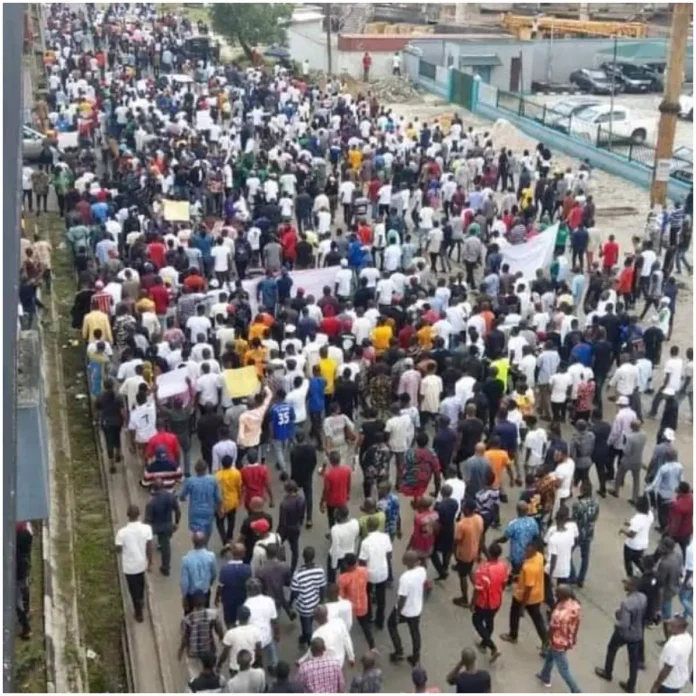
As Nigeria prepares for the #EndBadGovernance protest, civil society organisations have advised the it should be conducted peacefully, with organised leadership, to prevent infiltration by individuals with ulterior motives.
The call was made by The Osun Masterminds, TOM, a coalition of civil society organisations, during the July State of the State address in Osogbo on Saturday.
TOM, speaking through its Executive Director, Prof Wasiu Oyedokun-Alli, maintained that the protest having recognised leadership is crucial in order to avoid further damage to Nigeria’s already strained infrastructure.
Oyedokun-Alli while noting that the state of affairs in Nigeria is truly worrisome, added that the people have a right to voice their disapproval as guaranteed by the Constitution of the Federal Republic of Nigeria for freedom of association, gathering and speech.
The TOM Executive Director while advising that having a protest without leadership is very dangerous, condemned threats by security agencies, groups, and political office holders against any form of protest.
He said, “At a time that the country has not fully recovered from the woes of the #EndSARS, the looting, maiming and destruction of lives and public facilities that were and still being replaced by our common patrimony or lost forever, we CAN’T afford to have a repeat of such as a nation and that is why the note of caution is been sounded to the ears of particularly the youths, than an uncoordinated protest or one that is without leadership is a very dangerous.
“Our democracy as presently enjoyed, was borne out of agitations, therefore, if there is any component of democracy that is germane, it is that of freedom.
“We strongly hold that the right to protest is that of every citizens of this country and no one should attempt to subdue people’s voices whenever they chose to cry out about how they are been governed or misgoverned.
“The state of affairs in Nigeria is truly worrisome and people have a right to voice their disapproval as guaranteed by the constitution of the Federal Republic of Nigeria for freedom of association, gathering, and speech.
“We condemn threats by security agencies, groups, and political office holders against any form of protest. Our democracy as presently enjoyed, was borne out of agitations, therefore, if there is any component of democracy that is germane, it is that of freedom.
“It is in this light that we caution that the protest be conducted peacefully, and no form of infiltration must be allowed by hoodlums and those whose intentions are not patriotic.
“We already are having a shortage in critical infrastructure in the country, and we can not afford to by ourselves destroy the very few functional national assets, in the name of showing grievances against the government.”
Oyedokun-Alli also advised government at all levels to be more proactive and engage the citizens more by being accountable, transparent, and showing empathy in their dealings.
On the issue of rising insecurity, TOM lamented that citizens now live in mortal fear as killings, kidnappings have become common across the country.
Oyedokun-Alli urged the Federal Government and the security agencies to urgently restrategise inorder to arrest the worsening security situation, adding that it was not enough to sympathise with citizens.
“We must ensure that perpetrators of evil are made to face the full wrath of the law to serve as deterrent to others.”
Protest should have organised leadership — Osun CSOs warn against infiltration by hoodlums
Planned Nationwide Protest: Nigeria’s enemies at work – Cleric, Olu-Alo warns
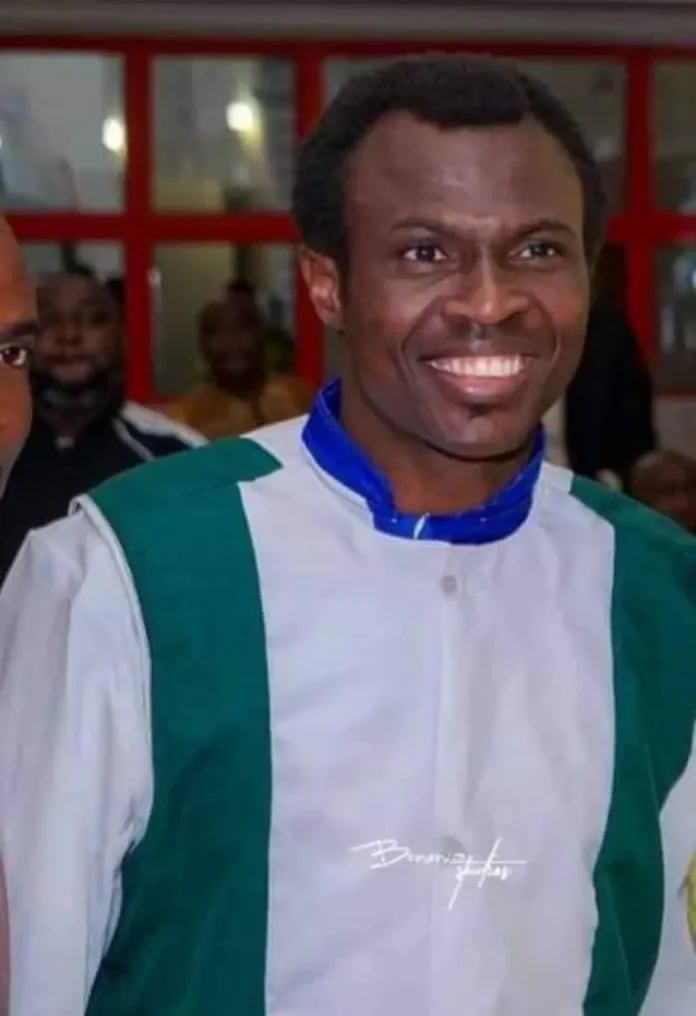
A cleric and planter of Christ Apostolic Church (CAC) Adamimogo Grace Of Mercy Prayer Mountain Worldwide, Prophet Sam Olu Alo, has cautioned Nigerians over the planned nationwide protest, saying enemies of the nation are currently at work.
He urged organisers of the protest to use God’s wisdom in going about the protest, noting that the #EndSARS protest should be an eye opener for all Nigerians.
A statement by Alo said though a peaceful protest can be organized to call the attention of government of a nation where there is hunger and hardship and for people to show their grievances, experience has shown that most times it is hijacked by hoodlums.
He warned organisers of the planned protest not to allow anybody under any guise to hijack the exercise, to avoid setting the nation on fire.
He said, “There is nothing wrong for people to protest to show their grievances, but as a good citizen, we must do whatever we want to do in accordance to the law.
“We should not allow enemy of Nigeria to set the nation on fire and destroy all good things the current administration has done, if enemy of Nigeria is allow to destroy the nation, we are the one that will suffer for it.
“During the #EndSARS protest, many innocent lives were lost, some banks, companies business, and properties were destroyed, some town and community are still suffering for it just because of evil and wicked people used the opportunity to disrupt the peace of the nation.
“All of us should not allow any politicians to use us against Nigeria, we shall suffered for it, i want to urge Nigerians to use God’s wisdom in going about the protest, don’t allow anybody to destroy government properties.
“All nations of the world’s are in hardship, which Nigeria is not in exception, all religious leaders should start preaching peace to their followers.”
The cleric urged President Bola Tinubu to dialogue with organisers of the protest and tell them what government have in mind to ease the burden on Nigerians.
“Talk to them like a father to son, whoever is a leader has become father for all, don’t take the planned protest with levity hands because people are experiencing hardship and satan is at work.
“President Tinubu should address Nigerians, Nigerians have endured a lot. People are feeling the hardship, despite the hardship, yet, God’s mercy is on the nation.
“Our lawmakers at federal and state level should also share in pains of Nigerians by reducing their salaries and allowances, reduce fuel price, and implement new national minimum wage.
“Nigerians are suffering, they want to hear peaceful words this time around, government officials should love their people, Nigeria will be in peace and relief is coming very soon.
“Southwest, Ekiti State, the North and all regions across Nigeria should called themselves to solemn assembly and do thing in accordance with the law, let’s nobody use us against Nigeria because people will suffer for whatever that is destroy, it will be well for Nigeria and people living in it,” he added.
Planned Nationwide Protest: Nigeria’s enemies at work – Cleric, Olu-Alo warns
Lagos mulls school curriculum upgrade with AI

The Permanent Secretary, Lagos State Ministry of Basic and Secondary Education, Mr Abolaji Abayomi has said the state intends to “ensure continuous upgrading of school curriculum” leveraging Artificial Intelligence.
He made this known on Friday at the Education Resource Center Ojodu Lagos, during the award ceremony organised for students-users of a technology-based platform, Darsel App, used for solving mathematics subjects in Lagos State public schools.
Abayomi explained that the essence of the event was to add more value to teaching and learning, specifically on subjects like mathematics.
He enjoined the students and teachers to leverage on the Artificial intelligence platforms to hone their skills.
“The world has provided better platforms through science and technology to achieve future goals. Lagos is happy to partner with such initiatives that will further boost the learning and teaching process,” he said.
The technology-based platform, Darsel App adopted into Lagos public secondary school to solve mathematics problems has recorded over 10,000 students’ usage.
This is as the State Government moves to extend the usage of the App among students to cover Junior Secondary School 1 – 3 from the JSS 3 category which it presently covers.
The implementation partner to Darsel in Nigeria, Mrs Wunmi Tolu-Alalade, said at the event that over 10,000 students across 100 schools in the six educational districts in Lagos have been using the App to solve mathematics questions and getting better learning outcomes in the last 15 months.
Tolu-Alalade explained that within one academic calendar year of 2023/2024, about five million mathematics questions have been solved by the students.
“This is the state award ceremony to appreciate and recognise the students that have utilised the Darsel learning platform and the students were chosen because they answered thousands of maths questions correctly.
“As we all know, with the development in technology now, particularly the artificial intelligence usage, we need something that students can practice with.
“Mathematics being a peculiar subject, we have interests of students, so we look at a way that we can support them so that they can continue to practice and the teachers get feedback every time at their fingertips to observe their weak points and know where they can come in to help the students.
“Over 10,000 students across 100 schools in the six educational districts in Lagos have been using the App to solve mathematics questions and getting better learning outcomes in the last 15 months,” she said.
She added, “We intend to continue to support this initiative and ensure continuous upgrading of the curriculum and before the beginning of the next academic session the App will incorporate all the Junior categories in Lagos State from JSS1 to JSS3.”
She, however, called for more partnerships to reach out to the students towards improving the process of learning mathematics in Lagos state.
The CEO of Darsel, Mr Abdulhamid Haidar, maintained that education technology is the future as he thanked the Lagos State government for the opportunity to use technology in teaching students “with a promise to resolve some challenges experienced during the 15 months”.
He noted that “the learning app would also improve students’ critical thinking in solving societal problems.”
Some of the teachers and students who commended Lagos State for the partnership identified some of their challenges during the period to include the availability of Android phones especially in boarding schools, and lack of knowledge on the part of parents, among others.
Six educational district champions were rewarded, while three outstanding students from Gbara Community Secondary School, Jakande emerged overall in the State.
Darsel App is a unique feature that creates solutions for both teachers and students making learning mathematics, a seemingly difficult subject, easier and simpler to solve.
INVESTIGATION…‘I cured thousands of cancer patients’: How Facebook allows spread of health misinformation with digital ads
Meta, owner of Facebook, is allowing health misinformation and disinformation to run freely on its platform, an investigation has revealed.
The company publicly commits to fighting misinformation and disinformation around the world, but an analysis conducted on some pages on the platform has documented how a huge health misinformation campaign runs on the Facebook platform, being aided by a massive digital advertising system.
This report unravels the prevalent use of Artificial Intelligence (AI)-manipulated content and cloned voices to spread the efficacy of uncertified drugs on the platform.
Platforms use meta advertisements as a key component of their Facebook marketing strategy to reach a large audience. They make their information available to a larger audience through the channel.
Platforms use meta advertisements as a key component of their Facebook marketing strategy to reach a large audience. They make their information available to a larger audience through the channel.
We found two pages, Laut Products and Eco Puzzling, advertising cures for diseases such as high blood pressure, diabetes, arthritis, and joint pains on the Facebook platform.
Screenshots of Laut Products and Eco Puzzling post on December 29, 2023
The two pages appeared to be managed by the same set of people based on the posts pinned to their timelines and the websites that served as landing pages for their sponsored content.
Viewers were advised to click on the call to action button on the sponsored posts (videos), and doing this would take them to websites advertising cures for a variety of diseases.
Our analysis of the Facebook ad libraries on the two pages revealed that the sponsored posts targeted Facebook users in Bangladesh, India, Austria, and Nigeria. Of all the countries, India was found to have the most sponsored posts.
The two pages’ sponsored posts generated millions of views and thousands of comments. Five sponsored posts were discovered on Eco Puzzling, uploaded in German, targeting Austrian Facebook users.
Eco Puzzling Meta ad library
Several pages employed the same tactics as Laut Products and Eco Puzzling pages. They used videos to advertise cures for different diseases, one of which boasted to have cured cancer.
The pages were observed to have been created in January, April, May, and June 2024, deploying the same strategies as Laut Product and Eco Puzzling to promote their messages that they had permanent cures for various diseases.
They also used celebrities to promote their messages. The purpose of using celebrities and professionals to promote the blogs and videos was to give the impression that the items, blogs, and videos were credible.
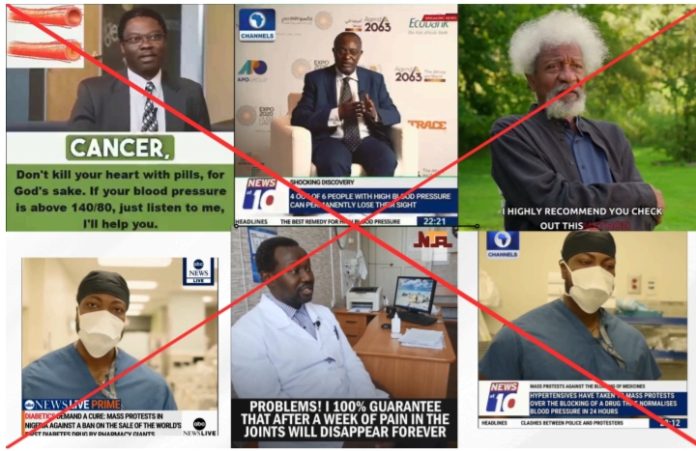
Additionally, we saw that the pages made extensive use of reputable news platforms’ logos and text styles, including those of Channels Television, Arise TV, Al Jazeera, the Nigeria Television Authority (NTA), NBC, BBC, and TV Continental.
AI-generated male and female voices were featured in the videos. Each video employed the same tactics, claiming that the government, medical professionals, and pharmacies were keeping the medications hidden to prevent the public from having access to them so they would not be cured.
Several sponsored posts we came across between December 2023 and June 2024 suggested that Meta’s failure to stop sponsored posts that appeared to violate its rules was a long-standing and ongoing problem.
These pages were taking advantage of people’s frantic search for medications that could help them, as the cost of pharmaceutical drugs are rising beyond the means of most Nigerians due to a galloping inflation.
At the time of this publication, Meta had not responded to detailed questions sent on June 27, 2024, about the activities of the pages on which digitally manipulated posts to mislead users published on Facebook were promoted on Meta Ads Manager.
In one example, Facebook allowed the Laut Product page to sponsor a post in 2023 targeting Nigerian users in which a purported Nigerian doctor named Dr. Rashad Dacus had invented a remedy for joint pains.
The new remedy, according to the video, was designed to solve 100 percent of orthopedic problems, including polyarthritis, osteoarthritis, and osteoporosis.
The video featured Folly Bah of Al Jazeera presenting for 15 seconds in a blue background on
Channels TV “News at Ten” with the headline of a new method of treating diseased joints.
Screenshot from the AI-generated video
After initial 15 seconds, another video featured a male doctor in a lab coat standing in an environment believed to be a hospital, aiming to enhance the credibility of the video’s content.
We conducted an image search on a screenshot captured from the video using Pimeye on the male doctor and found that he was Dr. Antonio J. Webb, a spine surgeon based in San Antonio, United States.
A further search revealed that the part of him appearing on the Laut Product video was cut from a three-minute, 20-second YouTube video uploaded by Webb on his YouTube page about anterior lumbar interbody fusion in 2022.
The male voice in the video urged viewers to click on the website link provided on the call-to-action button to learn more information about the medication. When we clicked on the URL, it led to a scanty website advertising selling a remedy for joint discomfort.
One of the pages we came across during our investigation into Laut Products and Eco Puzzling was Family Tree. The page was also found to have sponsored the same video on January 7, 2024, to a website (archived here) advertising and selling a remedy named Stallion Pain Crusher for joint discomfort.
The second video we found Laut Products had promoted, targeting Nigerian Facebook users, featured a journalist standing with a group of people who appeared to be demonstrators while donning a helmet and protective vest.
The voice in the video alleged the journalist was reporting a protest of hypertensive patients demonstrating against the government for withholding a medication that might help alleviate the disease in a day.
Screenshots of some broadcasters found on digitally manipulated videos on Facebook
Yet another scene appeared wherein a doctor’s face, said to be Dr. Junadis, surfaced and seemed to be speaking.
The doctor said he had developed a drug that could stabilise blood pressure and bring it back to normal in 24 hours with just one round of treatment.
We conducted a reverse image search using Yandex on a screenshot of the journalist captured in the video and found that the journalist was Mayeni Jones, a BBC journalist. The part of the video where she appeared was taken from a broadcast clip that BBC News (1:10pm to 1:30pm) made after protesters of police brutality in Nigeria were confronted by members of the Nigerian Armed Forces at Lekki Tollgate in Lagos in October 2020 (the #EndSARS demonstration).
An analysis of the video also showed that the lip movements of the two speakers in the video did not align with what was being said, which was unusual for a normal video. The video, as usual,encouraged viewers to click on the link on the post, which would lead to a website with an article advertising a remedy as the cure for diabetes.
The third video uploaded by Laut Products, which we found, showed a video with an ABC news logo, which was to authenticate the genuineness of the video of a protest in which the speaker alleged that diabetic patients in Nigeria were protesting due to an unnamed pharmacy company refusing to release a cure for diabetes produced by a doctor. However, we found no such protest had ever happened in Nigeria, and the URL in the sponsored post led to a blog advertising a drug for diabetic patients.
For the Eco Puzzling page, we found a video that had the logo of the Nigeria Television Authority (NTA), wherein the narrator said a cure for arthritis had been found in Nigeria. After initial 15 seconds, another video featured a male doctor in a lab coat sitting in an office environment believed to be a hospital, aiming to enhance the credibility of the video’s content. The video was subjected to the InVid video verification tool, and findings from the video fragmentation were used to conduct a Pimeyes and Yandex reverse image search, which revealed that the presenter in the video was Rachel Scott of ABC and the doctor was Hatim Habib, a Sudanese surgeon at the Verkhneuralsk Hospital in Verkhneuralsky District in Chelyabinsk Oblast, Russia.
Some of the pages design their websites to look like popular media platforms.
His video was picked from a documentary made by 14.ru, a Russian media platform, in 2021. The URL on the sponsored post would lead to a website entitled, “Why do hundreds of Nigerians become disabled? Who will save them from joint disease?”
The website used a Shutterstock image uploaded on November 9, 2020, and passed the individual in the video off as a Nigerian doctor named Maduka Abara, said to have designed a product that would allow the treatment of joint disease called “Fast Active.”
The other pages we came across during our investigation into Laut Product and Eco Puzzling included: The Walking Tall, Family Tree, Dr. Matthew Lee, Fluate, Dr. Emily Johnson, A Medical Mistery, Anwar Rida, Deal Moth 31, Midhawi, Suhileatan Health Good, and Natural Media.
Almost all the pages used various images and videos of a United States-based Nigerian-born scientist and medical researcher, Dr. Samuel Achilefu, as the creator of various drugs and remedies for various diseases.
Dr. Achilefu, in response to one of the videos on his LinkedIn account, denied endorsing any of those products.
Photo of Dr. Samuel Achilefu found on the website of University of Texas at Dallas
The Walking Tall page sponsored a video on January 28, 2024, claiming that a Nigerian doctor had developed a remedy for hypertension.
The sponsored video claimed that normal blood pressure could be restored in a few hours or days with a novel medication created by a Nigerian physician.
The video featured Kayode Okikiolu of Channels Television delivering the “News at 10.” The caption on the video read, “Shocking discovery: 4 out of 6 people with high blood pressure can lose their sight permanently.”
To increase the legitimacy of the video’s content, a second video with a man sitting against the backdrop of “Expo 2020 Dubai” was added after the first 12 seconds. The video had been viewed more than 498,000 times.
An analysis of the video with Kayode Okikiolu appeared to show that lip movement did not align with what was being said in the video, as only the mouth was moving while other parts of his body were static, which was unusual for a typical video. This video may have been manipulated using AI.
The video’s second frame included the supposed doctor explaining how the medication would treat hypertension in less than a week. Upon a closer inspection, it became clear that the voice-over was added to the second video because the man’s lips were moving too quickly to match the words he was purportedly saying.
Upon utilising the INVID verification tool and conducting a reverse image search on the fragmented video, we discovered that the alleged physician was Dr. Ini Urua. At the time, he was the Deputy Director and Head of Country Relations at the Africa Finance Corporation (AFC).
His clip used in the video was cut from Expo 2020 Dubai, which took place in the United Arab Emirates in 2022, which Urua attended. The video was deliberately merged into the other one and used in a misleading context.
We found three videos on Dr. Emily Johnson’s page, two of which were sponsored.
One was a one-minute-long video in which the Arise TV logo and presenter, Ojy Okpe, was shown, and the other video also featured Dr. Achilefu.
Both videos alleged that Dr. Achilefu had produced a cure for hypertension with a proven efficacy of 99 percent. Both videos also had Dr. Achilefu speaking about high blood pressure being a common cause of death in Africa and how the continent couldn’t do anything to address it.
Collage of screenshots captured from Dr. Emily’s sponsored videos
The video alleged that Dr. Achilefu had produced a natural remedy that normalises blood pressure in a couple of weeks and permanently normalises it after the course of treatment.
Both videos had links to the sponsored posts that led to the same website, with the Arise TV logo that had Dr. Achilefu promoting products named Normatone and Cardiovax as the natural remedies mentioned in the videos. However, the display picture used in portraying the purported Dr. Emily Johnson was an istockphoto uploaded on May 6, 2016.
On Dr. Matthew Lee’s page, we found a sponsored post about diabetes that included the CNN logo over an Arise TV backdrop with Ojy Okpe presenting.
Screenshots from Matthew Lee’s page
It introduced a medication claiming to have a 98 percent proven efficacy in returning blood pressure to normal in a few weeks, and it encouraged viewers to visit its website to purchase the medication.
The page used a white man in a lab coat as a profile picture. The image being passed off as Matthew Lee was that of Dr. Robert Kruger, a United States geriatric internal medicine physician in the Air Force.
An analysis of Matthew Lee’s page on Ad Library revealed that 16 posts were launched in June 2024, with 15 in Arabic and one in English, that targeted Nigerian Facebook users.
Meta-ad library of Dr. Matthew Lee’s page
We found two videos on the Fluate page in which one claimed Achilefu had cured thousands of cancer patients and was introducing his newly developed product. One of the videos was uploaded on April 19, 2024, and generated more than 498,000 views, 589 comments, and 379 reshares. The second video was uploaded on May 17 and generated no fewer than 1,300,000 views. Both videos were observed to have been manipulated as the lip movements did not align with the audio.
The voice in the video also urged viewers to do away with Losartan and Enalapril, two drugs that could treat high blood pressure (hypertension), and replace them with Dr Achilefu’s medicines.
The Grigory Shapovalov page also shared one of the same videos promoted by the Fluate page. The video which had been viewed more than 483,000 times, had received 182 comments, and had been shared 239 times.
Another page that used Achilefu in its promotion was a page named in Arabic (رضا أنور(, translated to Anwar Rida in English. The page promoted three videos using Dr. Achilefu’s images on the websites(s) and videos.
The URLs provided by the page-sponsored videos would lead to websites advertising drugs such as Cordis, Normatone, and Cardiovax. According to the website, Cordis protects the heart from attacks as well as other cardiovascular diseases and normalises the blood pressure just after a course of treatment.
Cordis, according to information found on a label online, listed ingredients and other details for an Indonesian company, PT SJA Global Cosmindo.
Screenshot from the website and the label found online showing PT SJA Global Cosmindo
When the company was contacted about the product on Whatsapp, it denied it had manufactured the product, adding that it was a cosmetic company and not a medicine-producing firm.
Additionally, we also came across a page named Natural Media in June 2024. The video featured former General Director of the Nigeria Centre for Disease Control (NCDC), Chikwe Ihekweazu, and Arise TV newsreader, Amaka Udeh.
The video portrayed a scenario in which the Arise TV newsreader was interviewing Dr. Ihekweazu and asking him if he was sacked due to making an innovative discovery in the fight against hypertension.
Screenshots from video uploaded by Natural Media page
The video also urged viewers to click the link provided in the sponsored post, which led to a scanty blog article entitled, “A healthy nation or bureaucracy? Why was the Director General of the Nigeria Centre for Disease Control fired?” advertising a remedy called Cardizoom.
However, Chikwe Ihekweazu was not sacked by the Nigerian government as the Director-General of NCDC but resigned in 2021 after he was appointed by the World Health Organisation (WHO) as an Assistant Director-General in charge of Health Emergency Intelligence at the global health organisation.
Also, during the 54-second video, Udeh and Ihekweazu’s facial characteristics appeared distorted, which was a clear indication of AI manipulation because their lips did not synchronise with the words being spoken.
We further found a June 11, 2024 sponsored two-minute video on Facebook of Nobel Laureate Wole Soyinka, digitally manipulated, wherein Soyinka was speaking about living with high blood pressure for over 15 years after being diagnosed with hyperion at 50 years old.
Screenshot from altered video of Professor Wole Soyinka found on Facebook
Soyinka’s cloned voice in the video urged viewers to go to the link, which would lead to a Legit News-branded website promoting Normatone as a cure.
We conducted a reverse image search on a screenshot captured in the video and found that the Soyinka video was cut from a video uploaded on YouTube on December 23, 2023, by the Louisiana channel.
Techniques and tactics employed by the pages
To gain insight into Laut Product and Eco Puzzling’s Facebook operations, we first examined the pages’ timelines and ad libraries. We then looked into the website URLs that were found on the pages using a variety of paid and open-source intelligence (OSINT) tools that were freely available online. These tools allowed us to see the strategies used by the pages in question.
Both pages were observed to have the same post published on December 29, 2023, on their timelines calling for website visits for medicines for diabetics, blood pressure, and arthritis and prostatitis all written in English, and another in Bangla, the official language of Bangladesh.
We found some of the videos with thousands of views and hundreds of people’s comments asking how they could purchase the drugs being advertised.
We also observed that they deployed the strategy of not allowing their videos to appear on their timelines, as they were uploaded through the Facebook ad manager and promoted. The URL links appearing on the posts served as the landing page for the sponsored content.
We also observed Laut Products and Eco Puzzling strategies of operation on Facebook with the other pages we found on Facebook.
Pages and the date they were created (source: Facebook)
One of the tools we used, DomainTools, revealed that URLs were sub-main to a website, josefinaa.com, which we found is hosted on Cloudflare.
We also discovered that Josefinaa.com had more than 40 sub-domains registered under it in different languages. We found that the URL of sub-domains would lead to blogs posting scanty articles on health-related issues, promoting and advertising cures for different diseases. (Excel documents to Josefinaa subdomains)
Some sub-domains would lead to websites in Swahili, German, Malay, English, Bangla, Hindi, French, and Spanish. We went through all the websites linked to every promoted video and were able to track Laut Products and Eco Puzzling Facebook ad library pages and observed that they were being used to promote unlicensed pharmaceutical products as cures for diseases.
On Josefinaa.com and its subdomains, we discovered promos for products such as GlucoPro, Normatone, Cardioton, Metabon, DiabeCode Stop Diabetics, and Fast Active.
Drugs found on Josefinaa websites
These were the same products advertised in the digitally manipulated videos sponsored on Facebook.
We also found sales websites online where products promoted on Facebook were being sold. An interested buyer would be directed to drop their phone number and name to be contacted for the transaction. We did this with two of the websites and received a call the next day inquiring about our location to send the product. The five websites also had contact email addresses to which we sent messages, but all bounced back.
We shared our findings with the Post-Marketing Surveillance (PMS) Directorate of the National Agency for Food and Drug Administration and Control (NAFDAC), Fraden Bitrus, and asked if the government agency had approved the drugs promoted on Facebook for sale in Nigeria. In response, Bitrus said none had been registered by NAFDAC and therefore should not be on sale.
“Metabon whole body cleanse is under processing for registration but is not registered and should not be on the market for sale,” he said.
Also, a US-trained registered nurse, Peter Gerald, in an interview, said the diseases, which the Facebook pages were advertising cures for, were chronic ailments that could only be managed and improved upon through lifestyle changes and medications depending on the severity of the cases.
An Abuja, Nigeria–based doctor, Kingsley Onwuka, said, “Hypertension is a lifelong condition that can only be well-controlled with lifestyle modification and/or drugs. No one is said to be cured per se.”
Onwuka added, “Whether arthritis is curable depends on the type of arthritis and the age of the patient. As a doctor, I don’t prescribe herbal supplements because their contents, dosages, and side effects have not been proven. They have not undergone clinical trials.”
A further analysis of the Josefinaa.com sub-domains revealed that images of professionals in different fields were being used to promote drugs and supplements as cures for different diseases. We also observed that some of the sub-domains changed content with every refresh.
One example is Sherita Hill Golden, an American physician who is the Hugh P. McCormick Family Professor of Endocrinology and Metabolism at Johns Hopkins University. She was, however, identified in one of the Josefinaa subdomains as a leading Nigerian endocrinologist who made an effective diabetes cure product.
Screenshots from an interview published by Josefinaa with Professor Sherita Hill Golden
Another subdomain with the Channel Television logo had Bennet Ifeakandu Omalu, a Nigerian-American physician, forensic pathologist, and neuropathologist who was the first to discover and publish findings on chronic traumatic encephalopathy. But the website described him in the interview as a cardiovascular surgeon and specialist at the Department of Endocrinology who developed a permanent diabetes cure called GlucoPro. Another blog used his images and name to promote a diabetic drug called DiabeCode.
Screenshots from Josefinaa websites using ChannelsTV logo
Using the Channel Television logo is to portray the interview as credible. We found the same interview and Channels Television logo in four other Josefinaa subdomains.
Another website used a stock image of a black doctor uploaded in 2014 as a Nigerian doctor named Dr. Ibrahim Abdullah, who developed a product called “Stop Diabetics” as a permanent cure for diabetes.
The doctor, who was shown as being interviewed, discouraged the use of metformin, a drug used in treating high blood sugar levels, and instead urged readers to use Stop Diabetics, said to have been developed in 2015 by the Institute of Endocrinology of Nigeria. The interview was to promote the product, GlucoPro, as a drug that could completely cure all types of diabetes.
The same strategy deployed by Laut Products and Eco Puzzling of using images of professionals on websites for promotional purposes was also deployed by the other pages we found during our investigation.
The Natural Media page, which we came across in June 2024, was observed through Facebook page transparency to have been created in July 2022 and was earlier known as কে ন ভাই? (a Bangla language translated to “Why bro” in English using Google Translate) and changed to Natural Media in May 2024.
Analysis of the page on the ad library observed that it mainly sponsored posts about European politics; some were about Euro politicians.
The manufacturer of Stop Diabetics in India, Hanisan Healthcare Private Limited, denied in response to an inquiry, that the company was behind the digitally manipulated videos and that the contract with the manufacturer only had them produce and sell in India.
Hanisan also said that the product was manufactured as a supplement for diabetic patients and not as a drug.
A pack of Stop Diabetic productPhoto Credit: Health Element
The main manufacturer of Stop Diabetics, Nutritionist Pro, which is visible on the drug pack, did not respond to an email inquiry sent to the company on July 1, 2024.
A researcher and head of investigation with HumAngle, Kunle Adebajo, said the videos seemed to work quite well in the promotion of uncertified medical solutions, which not only deprived people of their hard-earned money but also endangered their lives.
“These actors would often use the images of newsreaders or other reputable individuals. And they even promote some of these posts, meaning the content moderation and ad review mechanisms are very weak. Social media platforms need to do more to track such harmful content. They should empower users to easily report them and bolster their capacity to swiftly work on such complaints,” Adebajo said.
Use of a fake location
The information obtained from DomainTools revealed that the website registrant’s name is Aleksandr Kovalenko, the city registrant is in Kiev, and the registrant state or province is Kievskaya.
A comprehensive detail on Josefina (Source: DomainTools)
The information alleged that josefinaa.com website was registered in Ukraine, but the information seems suspicious as Kievskaya is a Russian name and does not refer to any city in Ukraine. It is the name of the Moscow Metro station in the Dorogomilovo District, Western Administrative Okrug, Moscow.
One of the Facebook pages, Eco Puzzling, also sets its location in Ajah, Lagos State, Nigeria, and Laut Products in Delhi, India. However, Facebook uses IP addresses to determine where a page is operating from.
Facebook shows the location of where the pages are being run from
Other pages also set their different locations based on what the Facebook page transparency
section provided about where the pages are being managed.
Screenshots from video uploaded by Natural Media page
These pages continue to operate their fraudulent operations and spread misleading health
information without being discovered by Facebook, despite the red flags that are visible. Many
social media users are suffering and becoming unwitting victims as a result.
In an interview, a legal practitioner, Adedamola Solesi, said Meta cannot be held liable for the videos uploaded on Facebook claiming to have cures for some diseases.
“Meta cannot be held liable for any third-party infringement. Since they have put in mechanisms for any fake news or false news to be reported or flagged, I believe that it is the joint responsibility of not just Facebook alone but also users to report such cases. If we take a cue from the United States, we can see that we have a plethora of court cases vindicating and absolving social media platforms from infringement, crimes, breach of contract, or falsehood that are attributed to third parties,” Solesi said.
However, a human rights activist, Charles Muoneme, disagreed. He said Meta would not absolve itself from the fraud being committed on its platform.
“Meta is liable. If someone perpetrates a crime through a platform you created, you are liable because you have not put sufficient measures in place to curb it. Meta hasn’t done enough to check these deceits on its platform.”
The post INVESTIGATION…‘I cured thousands of cancer patients’: How Facebook allows spread of health misinformation with digital ads appeared first on Latest Nigeria News | Top Stories from TVN.
‘Submit your plans to us’ – Police tell protest organisers in Taraba

The Taraba State Commissioner of Police, David Iloyanomon, has emphasized the importance of maintaining a peaceful demonstration, free from violence or damage to both government and private properties.
Addressing stakeholders on Saturday in Jalingo, the state capital, regarding the upcoming protest scheduled for August 1, 2024, he urged them to ensure that the protest is not hijacked by unruly elements such as hoodlums or thugs.
The commissioner also urged the organizers of the protest to submit detailed plans for the forthcoming national protest.
Among the details requested by the command, are the protest routes, duration, and names of the organizers.
“To facilitate smooth operations, we requested that organizers submit detailed plans, including the protest routes, duration, and names of the organizers, to the police,” he stated.
The commissioner explained that this information will enable the deployment of sufficient and effective security measures to safeguard the event from start to finish.
Recall that operatives of security agencies conducted a show of force on Friday in Jalingo metropolis ahead of the forthcoming nationwide protest.
Echoing the sentiments of the Commissioner of Police, the Commander of the 6 Brigade, Brigadier Kingsley Uwa, told journalists that the ‘show of force’ was aimed at ensuring the safety and security of the residents and people of the state.
“Our duty is to maintain law and order. We want to assure everybody that they can go about their lawful business without the fear of being intimidated,” he stated.
‘Submit your plans to us’ – Police tell protest organisers in Taraba
Israeli army orders new evacuations in southern Gaza


The Israeli military issued new evacuation orders for residents of southern Gaza’s Khan Yunis City on Saturday, after retrieving the bodies of five Israelis and warning of new operations.
The United Nations said more than 180,000 Palestinians have already fled fierce fighting in Khan Yunis since the military began an operation in the area last Monday.
The evacuation orders and “intensified hostilities” have “significantly destabilised aid operations”, the UN said, reporting “dire water, hygiene and sanitation conditions” in the Palestinian territory.
After Israel warned its forces would “forcefully operate” in the Khan Yunis region, including an area previously declared a safe humanitarian zone, the health ministry in Hamas-run Gaza said on Monday that an Israeli operation in Khan Yunis killed 70 people and wounded more than 200.
The military said at the time that it would act to stop rocket fire coming towards Israel from the area, which had already seen heavy fighting early in the year.
On Wednesday the military said forces carried out a rescue operation in Khan Yunis and retrieved the bodies of five Israelis.
They had been killed during the October 7 attack on Israel by Hamas militants, and their bodies were taken back to Gaza, the military said.
On Saturday, it ordered residents from more parts of Khan Yunis “to temporarily evacuate to the adjusted humanitarian area in Al-Mawasi” — the second such adjustment made to the safe zone within a week.
Witnesses and rescuers said heavy battles continued around eastern
Khan Yunis on Friday, and medics at the city’s Nasser Hospital reported at least 16 bodies brought to the facility from different parts of the southern governorate.
The war in Gaza began after Hamas militants attacked southern Israel on October 7, resulting in the deaths of 1,197 people, mostly civilians, according to an AFP tally based on official Israeli figures.
Militants also seized 251 hostages during the attack, 111 of whom are still held captive in Gaza, including 39 the military says are dead.
Israel’s retaliatory military campaign in Gaza has killed at least 39,175 people, according to Gaza’s health ministry, which does not provide details of civilian and militant deaths.
AFP.
Ifeanyi Ubah: Ben Murray-Bruce confirms Anambra Senator’s death
Former lawmaker, Ben Murray-Bruce, has confirmed the death of Senator Ifeanyi Ubah.
Ubah reportedly died in London. The cause of his death is yet to be confirmed.
However, in a post on X, Murray-Bruce paid tribute to the late Anambra lawmaker.
He wrote: “With a heavy heart, I extend my deepest condolences to the family and loved ones of Senator Ifeanyi Ubah.
“His contributions to our nation, both in the oil sector and public service, will never be forgotten.
“May his soul rest in peace, and may his family find strength during this difficult time.”
Ubah died at 52 years.
Ifeanyi Ubah: Ben Murray-Bruce confirms Anambra Senator’s death
6,700 applicants jostle for 380 teaching jobs in Enugu
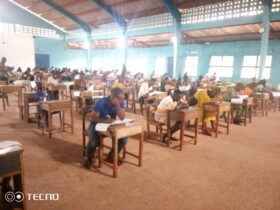

No fewer than 6, 700 applicants were currently jostling to take up 380 teaching jobs at various Secondary Schools in Enugu State.
The News Agency of Nigeria correspondent who monitored the examination on Saturday in some of the designated centres for the examination, reports that the applicants turned out in large numbers.
The Chairman, Enugu State Post Primary School Management Board, Fr. Hilary Mgbodile, told NAN that the board received more than 12,000 applications.
He said that out of the number, 6,700 people were shortlisted for the 380 positions needed to replace those who had retired.
Mgbodile disclosed that five centres namely Union Boys Secondary School, Queen School, Enugu, Holy Rosary College, College of Immaculate Conception and Trans Ekulu Girls Secondary School,
Enugu were selected as the venue for the examinations.
He said that the shortlisted applicants were being tested in English, Information Communication Technology, Mathematics, Physics and Chemistry.
According to him, over 2,000 applied to teach English while in ICT, the board needs only 80 but 1,700 applied for the subject.
“So we are picking the best of the best which is the only consideration and parameter for the selection of the teachers,” he said.
He added that after the test and the needed competent teachers were not found, the board would call for another application, stressing that he was optimistic that with the number of applicants, the board would get the qualified ones.
“We cannot lower the standard because we cannot get what we want.
“The recruitment is being done by PPSMB but in order to reduce pressure and to ensure meritocracy and absolute objectivity, we decided to seek the assistance of an independent recruiting company,” Mgbodile said.
On why they dropped a large number of applicants, he noted that after sorting out the applications, it was noted that some were non-indigenes and some were over-aged as they pegged the age requirement at 45 years.
“While some did not have the requisite qualifications for the subject they intend to teach, those that studied Social Studies may apply to teach English which is not compatible,” he said.
The chairman also said that those people who were awaiting their statements of result and others who could not provide their certificates were excluded from the examination.
Explaining the idea behind the recruitment, the chairman said the board observed upon assumption of office in 2023, that Secondary Schools in Enugu were lacking teachers, especially in the rural areas.
He said that at the instance of Gov. Peter Mbah’s directive, the board posted some teachers from the urban to the rural areas.
“As we were doing that, we discovered that we lacked teachers in some key subjects like sciences and other core subjects.
“We made a recommendation to Gov Mbah on the need to recruit teachers to fill the shortfalls of science teachers which he approved.
“That is why we want to recruit competent professionals who studied Engineering, to teach Chemistry.
“I want to restore the legacy of teaching and learning and make it easier for parents to stop borrowing while taking their children to private and mission schools.
“I want to restore confidence in the public schools and Mbah is a pathfinder in this regard and we want to follow his mantra,” he said.
NAN
