Home Blog Page 758

Police informant paid N100m bounty after cult’s leaders killing

0

The Rivers State Police Command says the state Governor, Siminalayi Fubara, has redeemed the N100m bounty on the head of a notorious cult leader, Gift Okpara, aka 2Baba, who alongside his gang members killed a Divisional Police Officer, Superintendent Bako Angbashin,  in the Oduemude area of the state.

The state Commissioner of Police, Olatunji Disu, confirmed the development during a parade held in honour of the slain DPO at the state police headquarters on Saturday, adding that the corpse of the slain officer had been released to the family.

Disu said, “On March 25, 2024, the police killed the wanted cult leader during a raid in his hideout in the Idu-Ekpeye community in Ahoada, while his body was recovered a few days later in the Ibrass forest, in the Ahoada West Local Government Area of the state.

“I would like to express my deepest appreciation to the Governor of Rivers State, Sir Siminalayi Fubara, who kept his word and redeemed the N100m pledge to those who provided credible information that led to the neutralisation of the suspect, 2Baba, and the recovery of his corpse, which was hidden by his gang members. I also want to thank the Inspector General of Police, Kayode Egbetokun, PhD, NPM, for his encouragement and support throughout the operation.”

“He (Angbashin) was instrumental in arresting the notorious criminal, Boboski, who had terrorised motorists along the Akwa-Ibom section of the East-West Road, and restored order to Bori and its environs by eliminating all forms of cultism when he was the Divisional Police Officer in Bori.”

Disu said  Angbashin’s gallantry and operational expertise led to his transfer to the Ahoada Division, where he was tasked with effecting the arrest of 2Baba.

He said, “He employed all his skills and experience to apprehend 2Baba and his associates alive and was on the verge of a breakthrough when he met the tragic event that resulted in his murder and dismemberment.

“Following the gory incident, the command was initially unable to recover the late SP Bako Angbashim’s remains. However, we are now pleased to announce that we have successfully recovered his remains.”

Receiving the casket containing the remains of the late DPO, the deceased’s elder brother, Dogo, expressed happiness that his brother served the nation meritoriously as a police officer.

He also said late Angbashin bequeathed a legacy of gallantry in the state police command and the force in general.

Dogo stated, “I’m here on behalf of the family and the good people of Nasarawa State to receive the remains of our late brother, SP Bako Angbashin.

“I thank the Rivers State Police Command, the CP in particular, and his men for their efforts to ensure that the killers of my late brother were brought to book and the extra effort to recover his body.”

Porous borders, poverty hindering fight against insecurity – CDS

0

Nigeria’s Chief of Defence Staff, General Christopher Musa, has decried the extreme poverty in Nigeria and the porous state of the country’s borders, attributing them to the rising incidents of banditry, kidnapping, and other related crimes.

Speaking as the Guest Speaker at the Institute of Development Research and Training, Ahmadu Bello University Zaria, Kaduna State, on Friday, the CDS highlighted the significant challenges these issues pose to national security.

General Musa explained that the porous borders facilitate the cross-border movements of criminals into the North. “Nigeria shares 1,600 km of total land border with the Republic of Niger, 1,975 km with the Republic of Cameroon, and a total of 85 km with Chad Republic. Nigeria also shares a total distance of 809 km with Benin, most of which are in the North,” he noted.

He emphasised that the porous nature of these borders encourages the movement of criminal elements, including Boko Haram terrorists, Islamic State of West Africa Province (ISWAP), bandits, kidnappers, armed militias, and violent herdsmen.

He pointed out that many citizens in the North share cultural and tribal ties with border countries, making it challenging to enforce restrictions on unauthorized cross-border movements. The CDS also linked the effects of climate change in the region, such as increased desertification and the shrinking of Lake Chad, to the insecurity in the North.

“This has led to the quest for water and grazing areas, resulting in clashes and killings, especially across the North-West and North Central Regions of the country,” he said.

From a social perspective, General Musa identified illiteracy, ethno-religious factors, hunger, and lack of social infrastructure as key contributors to the problem. These issues have culminated in the emergence of terrorism, armed banditry, and violent militias, kidnappings, and herders-farmers clashes, among other security threats in Northern Nigeria.

The CDS noted that the security challenges in the northern part of the country are influenced by both external and internal factors such as the proliferation of small arms and light weapons, political instability, and socio-economic factors like poverty and inequality.

“Nigeria is of great socio-political importance to Africa and the world at large. Thus, the contemporary security situation in the country and the North is influenced by both external and internal factors. This is largely because Nigeria is a major actor in the sub-region. These, among several other parameters, are testaments to the importance of Nigeria in the continent and across the world,” he stated.

“On the external scene, the situations in our contiguous nations and their other neighbors have also contributed to the insecurity in Northern Nigeria. For example, the political crisis in Libya and other sub-Saharan countries aggravated the security situation in Nigeria through the proliferation of Small Arms and Light Weapons into the country through Chad and Niger,” the CDS added.

S’East cleric, monarchs meet for Kanu’s release

0

The push to get President Bola Tinubu to release the detained leader of the Indigenous People of Biafra, Nnamdi Kanu, has intensified in recent times with the visit of traditional rulers and archbishops of South East extraction to him in his detention facility.

Speaking with Sunday According on Friday, Kanu’s lead counsel, Aloy Ejimako, said the visit which was shrouded in secrecy was at the instance of the region’s governors who had been interfacing with the Federal Government to release Kanu from detention.

He said the meeting was aimed at convincing the detained Biafran agitator to agree to the stringent conditions reeled out by the Federal Government for his release.

Ejimako added that the emissaries were expected to meet with state governors of the region to present details of their meeting with Kanu to them in the days ahead.

The governors are in turn, expected to meet with Tinubu at a later date to present Kanu’s position as received from the emissaries for possible adoption and implementation.

Ejimako said, “With particular reference to the intervention of South-East governors, myself and three high delegates from the Joint Body of Southeast Archbishops and Traditional Rulers met with Mazi Nnamdi Kanu yesterday at the DSS for over two hours.

“The delegation comprised of Archbishop Chibuzor Opoko, Archbishop David Onuoha, and Dr Uju Agomoh. The meeting was highly fruitful because it’s this body that is interfacing with SE governors on the matter of freeing Kanu and other issues pertinent to it.

“So, sequel to this meeting, the body, which is headed by His Royal Majesty, Dr Nnaemeka Achebe (Obi of Onitsha) will revert to South East governors with what Nnamdi Kanu had said to them. It’s from that point that a meeting between President Tinubu and South East governors is expected to materialise.”

Ejimako explained that his public crusade against the continued detention and trial of Kanu was driven by the standing judicial pronouncements and legal principles against his rendition, detention, and trial.

Couple buy baby from Lagos traffickers, arrested during naming ceremony

0

The Lagos State Police Command has rescued a two-month-old baby boy from a couple, Mr and Mrs James Uwam, during the naming ceremony of the child in the state.

The state Police Public Relations Officer, Benjamin Hundeyin, in a statement on Saturday, said the couple paid N2,350,000 to buy the baby from a suspected child trafficker, Loretta Nelson, who bought the baby from a pastor, Peter Udoh, for N1,450,000.

Hundeyin said Udoh bought the baby for N500,000 from another suspected child trafficker, Gloria Sunday, who allegedly stole the baby on July 11, 2024, a situation that prompted the mother of the baby to report the case to the police.

Following the report, Hundeyin said the police swung to action and arrested Sunday, who led them to arrest other suspects linked to the crime by detectives attached to the Oko Oba Division of the command.

The PPRO said, “Detectives swung into action which led to the arrest of Gloria Sunday who during interrogation confessed to selling the baby for N500,000 to one Pastor Peter Udoh.

“Pastor Udoh, who was subsequently arrested in Ikene Town, Ogun State, admitted reselling the child for N1,450,000 to one Loretta Nelson who was then also apprehended in Festac Town, Lagos.”

Hundeyin said Nelson confessed to selling the baby for N2,350,000 to one Mr. and Mrs. James Uwam who were apprehended during the naming ceremony of the stolen child.

Hundeyin noted that investigations have commenced and the suspects will be arraigned at the court after the investigation.

N’Assembly loses five members in one year

0

The unfortunate loss of several members of the National Assembly has marked the last one year.

The 10th Assembly has recorded the death of five members since its inauguration in June 2023.

While the House of Representatives lost four members, the Senate recorded the death of one member.

There are 469 members of the National Assembly, comprising 109 senators and 360 House of Representatives members.

National Assembly members who had died in the last one year are Ekene Adams, Olaide Akinyemi, Isa Dogonyaro, Abdulkadir Danbuga and Senator Ifeanyi Ubah, who died.

Their deaths have left a significant void in the legislative body and impacted the lives of their constituents.

Abdulkadir Danbuga

On October 11, 2023, a member, representing Isa/Sabon Birni Federal constituency of Sokoto State, on the platform of the All Progressives Congress, Abdulkadir Jelani Danbuga, passed on following a brief illness. Danbuga is survived by two wives, many children and grandchildren.

President Bola Tinubu, in a statement by his media aide, Ajuri Ngelale, said the lawmaker’s demise created a void in his immediate family and robbed the people of his constituency of quality and uncompromising representation in the House of Representatives.

“I offer my condolences to his family, constituents, and the people and government of Sokoto State. I also condole with the presiding officers of the House of Representatives and the entire membership over the devastating loss of an eminent colleague,” Tinubu was quoted as saying.

Isa Dogonyaro

Isa Dogonyaro, also a member of the House of Representatives, died on May 10, 2024, in Abuja after undisclosed illness.

Dogonyaro represented Garki/Babura Federal constituency of Jigawa State on the platform of the APC.

He was declared the lawful APC candidate for the House of Representatives in the 2023 general election after a court sacked Aminu Kanta who was declared the winner of the primary election in the constituency.

Until his death, Dogonyaro was the deputy chairperson of the House Committee on HIV/AIDS, Tuberculosis and Malaria Control.

Ekene Adams

A member of the House of Representatives representing Chikun/Kajuru Federal Constituency of Kaduna State, on the platform of the Labour Party, Ekene Adams died on July 16, 2024, at 39 after battling ill health.

Until his demise, Adams was the House Committee on Sports chairman.

Before he was elected a federal lawmaker, Adams worked in the Sports sector. He was at different times the general manager of Kada City Football Club in Kaduna State and Remo Stars in Ogun State.

His demise was announced in a statement by the House spokesman, Akin Rotimi, who described him as “a dedicated public servant, passionate sports administrator, and kind philanthropist”.

Also, the National Chairman of LP, Julius Abure while mourning the death of Adams said the news of his death came to him as a rude shock.

Musiliudeen Akinremi

Still in July, a two-term member of the House of Representatives, Musiliudeen Akinremi, who was representing Ibadan North Federal Constituency, Oyo State, died in Abuja.

Akinremi, popularly called Jagaban, died at 51.

He served as the Chairman of the House Committee on Science Research Institutions.

Akinremi, a member of the APC, was elected in 2019 and won his re-election in 2023.

The lawmaker also reportedly died after battling a brief illness.

Senator Ifeanyi Ubah

The National Assembly was on Saturday thrown into mourning with the death of the lawmaker representing Anambra South, Senator Ifeanyi Ubah.

Ubah, who was the Chief Executive Officer of Capital Oil, was said to have died in London, the United Kingdom.

He would have been 53 on September 3.

Senate spokesperson, Yemi Adaramodu, confirmed Ubah’s death to our correspondent on Saturday.

He was the founder of a Nigerian daily newspaper, The Authority. He also founded the Ifeanyi Ubah FC, a football club in the Nigeria Premier League, following its purchase as Gabros International Football Club. He also founded a foundation named after him; Ifeanyi Ubah Foundation.

In 2014, Ubah contested the 2014 Anambra governorship election on the platform of the Labour Party but lost the race.

On February 24, 2019, Ubah was declared the winner of the Anambra South Senatorial elections on the platform of the Young Progressive Party but defected to APC.

Ubah was married to Uchenna Ubah, a Business Administration graduate of Ahmadu Bello University, with whom he had five children.

My husband abandoned our baby and me because of spinal cord defect – Lagos homeless caterer

0

ANGELA ONWUZOO tells the story of how 36-year-old Lagos homeless caterer, Kehinde Folly and their 18-month-old baby were allegedly abandoned by her husband because he was born with spina bifida. This birth defect affects the spinal cord

life, for 36-year-old Kehinde Folly, has been filled with many troubles after she gave birth to a child on January 23, 2023, with spina bifida, a birth defect in which a developing baby’s spinal cord fails to develop properly.

When Kehinde was pregnant with her only child, Habeeb, she was hale and hearty.

Her husband, Jamal Folly, a furniture maker and Lagos State indigene was super excited having waited for two years after their marriage in 2020 to conceive.

Love gone sour

“I got married to Jamal in 2020 and we were living happily. One year after we got married, he was worried that I had not conceived. By the grace of God in April 2022, I took in and he was so happy and was taking care of me.

“He was always around although he operated his future business in Owerri, the Imo State capital.  But his attitude suddenly changed in 2023 when I gave birth to our baby. He was told by the doctor that our baby was born with spina bifida”, she said.

Before Habeeb was born, Kehinde, by the eighth month, started feeling pain in the lower abdomen, and after a medical examination; the doctor in a private hospital at Mushin that she was using for antenatal care, found out that the baby would be a breech birth.

She was sent for a scan, which further showed that the baby in her womb had water in his brain.

Two weeks after, she successfully delivered her baby through a caesarean section.

The caterer who is also a Lagos State indigene said she was shocked when her son was diagnosed with spinal bifida shortly after birth, being the first time she would hear the medical term, wondering what could be the cause.

Two weeks after Habeeb’s birth, Jamal allegedly abandoned him and his mother when he discovered that the child would be dependent for life.

According to the World Health Organisation, spina bifida is a congenital anomaly (birth defect) in which the spinal column does not develop normally during the first weeks of pregnancy.

This, WHO says, causes permanent damage to the spinal cord and the nervous system and can result in paralysis of the lower limbs or problems with bowel and bladder function.

The UN agency says the risk of neural tube defects such as spina bifida can be reduced by up to 70 percent if the mother takes adequate amounts of folic acid every day before becoming pregnant.

Before her husband allegedly abandoned them, Kehinde said he was behaving as if it was her fault that their son was born with a disability.

The mother of one said she had made several efforts to locate where her husband lives in Owerri and called his phone number but her husband blocked her line.

The young mother, whose catering business was put on hold since the birth of Habeeb, said she and her baby were thrown out of their one-room apartment at Surulere in March by their landlord when their rent expired as she was able to renew it.

 The caterer lamented that it was impossible to make ends meet while providing round-the-clock care for her son.

Many parents unaware of spina bifida

Sharing her experience with According HealthWise, Kehinde said, “I gave birth to him through CS without any complications on January 23, 2023, at a private hospital in Mushin. He is 18 months old now. When I gave birth to him, the doctor told me that he had spina bifida. I asked the doctor, what is spina bifida and he told me that it is a birth defect that affects a baby’s spinal cord. So, he referred my baby to the Federal Medical Centre, Ebute Metta for treatment. My husband said there was no money to take him to FMC for treatment, so I took him home.”

Abandoned two weeks after birth

Two weeks after Habeeb was born, his father returned to his base in Owerri and allegedly refused to take care of the little boy despite being a special child who needs special care to survive.

Kehinde recounted, “My husband travelled back to Owerri two weeks after I gave birth to our son in January 2023 and since then, he has never set his eyes on us again because the child has spina bifida. Before I gave birth to him, he visited regularly; distance was never an issue for him.

“He knows that our baby needs special care but he just decided to abandon us when we needed him most. I have been the one taking care of Habeeb alone since I gave birth to him.

“Although it has not been easy taking care of Habeeb, especially paying for his medication, I am more pained by my husband’s attitude towards him”,  she said, her voice quivering as she fought her emotions.

Lamenting, she said, “Before he travelled back to Owerri, he asked me where I got this type of child from and refused to provide money for his treatment.”

Kehinde, who is begging to take care of her son and place him on treatment, said it was through the help of neighbours that her son was able to undergo surgery in February 2023.

“It was some good -spirited neighbours and relatives that were troubled by the health of my baby and the depression I was battling with that raised money for his surgery and the various tests carried out on him.

“His surgery was carried out at the Lagos University Teaching Hospital in February 2023 one month after his birth. After the surgery, I was told by the doctor to be bringing him for continence treatment.

“Now before the surgery was done, I called his father and he replied that he still did not know where I got the child from. Later, he sent me a little money but still was not bothered about the health of his child.

“After I briefed him about the outcome of Habeeb’s surgery and the treatment required to manage him, he was upset”, she narrated.

The caterer got the shock of her life in February this year when Habeeb fell sick and was admitted to the Mushin General Hospital for two weeks and her husband still did not show up.

Rejected on admission bed

 She shared, “He was sick and suddenly his health worsened. So I rushed him to the Mushin General Hospital and he was admitted for two weeks. He was diagnosed with an infection. When I told my husband that Habeeb was admitted, he only sent N15, 000 out of the N40,000 medical bill.

“After sending that money, he stopped taking my call. It was a Good Samaritan that helped me pay the balance. When I tried to reach him through another number, he dropped the call when he realised I was the one.

“ So, I started sending him text messages, but he did not respond. After I called him further, he blocked my line.

“I have tried to locate where he lives at Owerri, all to no avail. When I complained to his family members, they told me to leave him and find a solution to my son’s problem.”

About 90% of babies with spina bifida develop hydrocephalus —WHO

The WHO says about 80-90 percent of babies with spina bifida also develop hydrocephalus, a condition that causes fluid to build up inside the head, causing pressure to increase and the skull to expand to a larger-than-normal size.

It also states that the condition could cause convulsions, tunnel vision, mental disability, or death.

A Consultant Neurosurgeon at the University of Ilorin Teaching Hospital, Kwara State, Dr. Nurudeen Adeleke, told According HealthWise that the development of spina bifida is a result of the poor formation of the spinal cord, which usually occurs within the first three weeks of pregnancy.

Adeleke said the essence of surgery for children with spina bifida is not really to make them walk but, rather, to make their back look normal and to prevent infections of the central nervous system.

He, however, said that some people with spina bifida can still walk, but that it will only depend on the level of the abnormality.

Further narrating her ordeal, Kenhide whose house rent had expired a month before her son was hospitalised was thrown out of her apartment by the landlord a week after her son was discharged from the hospital.

Thrown out by landlord

She further lamented, “When we came back from the hospital, the landlord put pressure on me to leave his house. He told me that my rent had expired a month ago and unable to renew it and my husband was nowhere to be found.

“When I pleaded with him to give me some time to raise money to pay him, he refused. Instead, he took me to the police station and insisted, I must leave his house. So, I have to leave his house and keep some of my belongings with some neighbours and friends.

“Since February, my son and I have had no roof over our heads. We have been squatting from one place to another.”

The caterer also suffers rejection by some of her siblings owing to her son’s condition.

This, Kehinde said, continues to drive her in and out of depression.

Rejected and injured by siblings

“My mother’s one-room apartment is occupied; some of my siblings are living with her and they don’t even want to set their eyes on my baby. They stigmatise and treat him as if he were an imbecile. Each time I tried to spend a night there, they made life unbearable for us by smoking inside the room.

“Recently, they fought and injured me over a bed space. They refused to let my baby sleep on the bed because of his condition. You can see the injury that I have on my face just because I do not have accommodation.”

Stigma persist despite laws

Despite Nigeria signing into law, the Discrimination Against Persons with Disabilities (Prohibition) Act, 2018, Habeeb suffers discrimination from birth.

According to section (1) of the law, anyone found guilty of discriminating against a person with a disability would be liable to a fine of N100,000 in the case of an individual or N1 million in the case of an institution or a term of six months in jail or both.

The law also allows the Nigerian government to establish institutions that will enhance its implementation such as the Commission for Persons with Disabilities.

Before the creation of that law, Nigeria had ratified the United Nations Convention on the Rights of Persons with Disabilities on March 30,2007, and its Optional Protocol on September 24, 2010, with the Ministry of Women Affairs and Social Development charged with ensuring compliance with the laws and submitting the reports to the international bodies.

Business  crippled

The distressed mother told According Healthwise that her son’s condition had crippled her catering business as she devoted most of her time to caring for the baby even as some clients no longer want to do business with her upon realising that her baby has a disability.

“My catering business was doing very well before I gave birth to my son. But everything changed after his delivery because I had to care for him. I love my son and no amount of rejection and abandonment will make me abandon him. He is the only child that I have”, Kehinde fighting back tears said.

Experts react

Giving further insight into children born with spina bifida, Adeleke said the challenges of raising children with birth defects could be overwhelming for mothers without the support of their partners.

The physician said although the cause of spina bifida was still unknown, it had, however, been linked to poor folic intake during pregnancy.

The consultant neurosurgeon explained, “We don’t really know what the cause of spina bifida is, but we have risk factors.

“One of the risk factors is lack of folic acid in food. Folic acid deficiency in a pregnant woman can lead to giving birth to a child with spina bifida.

“If the spinal cord is not properly formed, that means the function it serves will be affected. Now, whether they operate it or not, that would not affect whether the child is going to walk or not.

“What leads to whether the patient can walk or not depends on how low that spina bifida is. If it is a low spina bifida that is very close to the lowest part of the spinal cord, the child may still be able to walk.

“But if it is higher up, it will affect the function of the lower limb and, therefore, that kind of child will not be able to walk, even after surgery.”

On complications associated with spina bifida, Adeleke said, “Some patients develop hydrocephalus. We have to prevent them from developing hydrocephalus in order not to affect their brain and for them to achieve their full potential.

“They need adequate care and some of them may require walking aids. Some of them may not be able to control their bladder and bowel.”

“Spinal cord controls sensation. So, keeping a child in a particular spot exposes the child to risk of developing soreness.”

He urged pregnant women to take enough folic acid to prevent spina bifida.

The Centres for Disease Control and Prevention urges all women of reproductive age to take 400 micrograms (mcg) of folic acid each day, in addition to consuming food with folate from a varied diet, to help prevent some major birth defects of the baby’s brain (anencephaly) and spine (spina bifida).

Dangers of poor nutrition in pregnancy

The President, Federation of African Nutrition Societies, Prof. Ngozi Nnam, also told our correspondent that inadequate nutrition in pregnancy leads to poor brain development of babies.

Nnam, a professor of Community and Public Health Nutrition at the University of Nigeria, Nsukka, says a pregnant woman is supposed to feed well and have adequate diets at all times for optimal development of the foetus.

Highlighting the dangers of poor nutrition in pregnancy, Nnam warns, “Poor nutrition will cause inadequate development of the baby because nutrients are required for cells of the foetus to develop properly.

“When a pregnant woman stops taking foods rich in iron, she will be deficient in iron and that deficiency will affect the foetus and the cells will not form properly and this will lead to malformation when the baby is born.”

Speaking with According HealthWise, Executive Director, Festus Fajemilo Foundation, Mr. Afolabi Fajemilo, said awareness about spina bifida is still generally low in Nigeria, as people still attach profound cultural and spiritual stigmas to the condition.

He said that there was no available data on the number of people living with spina bifida in the country.

 Fajemilo said, “The fact remains that many of the cases don’t get to the hospital and so are not recorded. Also, there’s no national registry for children with this condition in the country.”

He urged parents with children living with spina bifida to seek help from appropriate quarters and not to allow people to take advantage of their children to swindle them.

N’Assembly postpones minimum wage bill transmission to Monday

0

The National Assembly has delayed the transmission of the minimum wage bill and may send it to President Bola Tinubu by Monday, findings by Sunday According have revealed.

The bill, which underwent second and third readings in both legislative chambers of the National Assembly within minutes of being transmitted by the President, was approved separately by the Senate and the House of Representatives on Tuesday.

The National Assembly had said it would transmit the bill on Thursday, however, the bill had yet to be transmitted to the presidency for assent.

Speaking to our correspondent on Saturday, the Senior Special Assistant on National Assembly Matters, Senator Abdullahi Gumel, confirmed that the bill was yet to be transmitted as earlier planned.

 He said, “Yes, we delayed the transmission of the Minimum Wage bill because the money bills; the N6.2tn 2024 Appropriation bill (Amended), and the Finance bill were not ready.

“The Appropriation committees still had one or two things to tidy up on the money bills, so they were no point transmitting the Minimum Wage bills without sending the bills that will cater to the money required to pay the minimum wage.”

Senator Gumel further noted that the leadership of the National Assembly also wanted to personally deliver the bills to the president.

He added, “Also, the leadership wants to take the bills to the president themselves, so they’d take it to him either this weekend or by Monday.”

The President had through a letter sent the Minimum Wage Bill an executive communication to the National Assembly for consideration and passage.

He separately wrote to the Senate and the House of Representatives, requesting prompt consideration of the bill to amend the National Minimum Wage Act 2019, to reflect the new minimum wage from N30,000 to N70,000.

Additionally, the President requested the lawmakers to reduce the period for periodic review of the national minimum wage from five years to three years.

This followed the agreement reached by Tinubu and labour leaders on N70,000 as the new minimum wage for Nigerian workers after a meeting at the Aso Presidential Villa, Abuja.

APC kicks as opposition tackles DSS, police over arrest threat

0

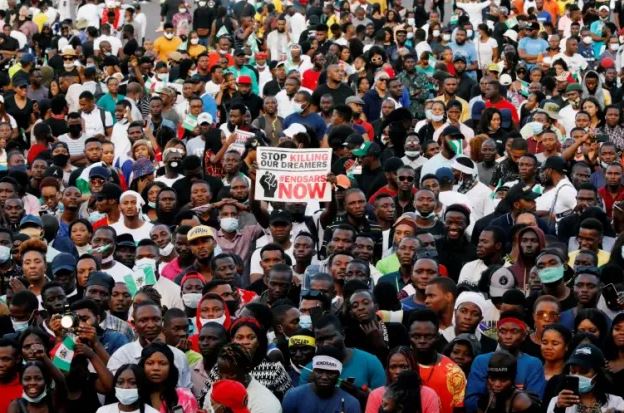
Hours after Inspector General of Police Kayode Egbetokun issued guidelines for the planned nationwide #EndBadGovernance protest scheduled for August 1, opposition parties have kicked against the conditions, saying they are against Nigeria’s constitution.

They insisted that the right to protest is recognised as a fundamental human right in Nigeria and is protected by the constitution.

Egbetokun had in response to requests to protest across the country set guidelines for all organisers and groups planning to participate.

He specifically directed them to submit their details, proposed routes, and assembly points to the Commissioners of Police in their respective states.

The IG also said commissioners of police in states where protests would be held must be provided with details of measures put in place to prevent the demonstration from being hijacked by criminal elements.

The police chief  had earlier raised concerns about the legitimacy of the gathering, adding that arrangements had been made to arrest suspected hoodlums disguising as protesters.

The Department of State Services, on the other hand, claimed it uncovered a plan by some criminal elements to hijack the protest and cause unrest in the country.

In a statement issued on Thursday, the DSS, through its spokesperson, Peter Afunanya, described the motive behind the planned protest as political.

The Nigerian Defence Headquarters also warned intending protesters against any form of violence, stating that the right to protest did not include unleashing terror.

The Director of Defence Media Operations, Major General Edward Buba, who conveyed the message in Abuja, raised concerns that the planned nationwide protest could escalate into chaos based on the military’s analysis and intelligence.

Concentrate on protecting protesters – NNPP

Speaking exclusively with Sunday According, the National Publicity Secretary of the New Nigeria People’s Party, Ladipo Johnson, said going after protesters was a violation of their constitutional right. He said instead of clamping down on those legitimately exercising their civic rights, efforts should be made to protect them.

Johnson said, “I don’t think there is a need to clamp down on protesters. Nigerians have a right to exercise their constitutional right to protest. They should not be harassed in any way. On the other hand, protesters must do their best to ensure that the protest is not hijacked either by hoodlums or by people sent. Hoodlums are one thing, people sent by unscrupulous politicians to cause friction and mayhem are another. These people should be resisted. The police also must secure the protesters in a peaceful atmosphere and ensure they are not infiltrated by people who want to cause chaos and damage properties. That is what they should be doing, not threatening or scaring people.”

PDP not surprised by threats to gag opposition – Spokesman

Also, the Deputy National Publicity Secretary of the People’s Democratic Party, Ibrahim Abdullahi, said it was unfortunate that the presidency would be planning to use the security apparatus to intimidate its citizens.

He said, “What you see the police and the DSS doing is a prepared script. It is quite unfortunate. The attempt by the government to suppress the voices of dissent is not something we are surprised about because they had demonstrated this long before. They made it known before coming into power that they wouldn’t entertain opposition. So, what they first did was to take some persons they believed were going to have a voice and make them part of their team. Now, even after winning the election, they have not stopped. It is clear that the intention of this government is to inflict maximum pain and injury on Nigerians and suppress voices of dissent, who will probably raise objections to their approach. They have inflicted untold hardship on Nigerians. They have also gone further to ensure that fear and intimidation is the only way they would rule this country.”

Tinubu should tread carefully – LP

Similarly, the opposition Labour Party has advised the presidency and security agents to tread carefully, warning that any threat to clamp down on the people may prove counterproductive.

In an exclusive with Sunday According, the National Publicity Secretary of LP, Obiorah Ifoh, said the country should borrow a leaf from what transpired in neighbouring Kenya, and the government’s response to the people.

He said, “As a party, we are not going to support any violent protest. We are not speaking for them (protesters). But a hungry man is an angry man. These people can’t feed, transport freely, can’t even afford to send children to school and receive pittance as wages. Yet, you want them not to talk? I think that is undemocratic. We saw what happened in Kenya a few weeks ago, where people spoke their minds peacefully and the Kenyan government did the right thing. Nobody is asking for violence. Everybody that goes into violent protests should be made to pay the price. But we are insisting on allowing Nigerians to speak up their minds through peaceful means.”

Yunusa Tanko, the campaign spokesman for LP presidential candidate, Peter Obi, on his part, said Nigerians deserved better treatment. The activist emphasized that it would be unfair to threaten people planning to demonstrate with arrest as protest is one of the rights provided for in a democratic setting.

Accusations against opposition insult to Nigerians – Northern CAN

The Christian Association of Nigeria in the 19 Northern states, including Abuja, says the planned nationwide hunger protests are an indication that things have gone really bad in the country. CAN insisted that Nigerians have been “suffering and smiling” for too long and the government showed no concern.

In a statement through its Secretary, Elder Sunday Oibe, in Kaduna on Saturday, the body expressed concern over the planned nationwide protest and urged the President to take concrete steps to address the economic hardship and insecurity plaguing the country. It also admonished Nigerian politicians to be mindful of their actions and inactions.

CAN recalled the ‘Occupy Nigeria’ protest held in 2012, led by President Tinubu, meant to force former President Goodluck Jonathan to retrace his steps over the removal of the petrol subsidy during his administration, and noted that those in government must acknowledge the fact that in a democracy, citizens had the right to embark on peaceful protests over issues affecting their welfare. “Rather than trying to induce and influence some religious and traditional leaders to stop the protest, as it is being speculated in certain quarters, the government should apologise for its ineptitude and failure to address challenges threatening the very foundation of the country and improve the living condition of the people. Since the removal of the subsidy on petrol by President Bola Tinubu over a year ago, Nigerians have yet to enjoy its benefits; insecurity continues to remain undermined by the Nigerian state. We call for prayers for peace, unity, and stability in our country. Pray for God’s intervention in our country,” the Northern CAN stated.

‘Security agencies harassing organisers’

Meanwhile, in a telephone interview with our correspondents, one of the organisers of the protest, Deji Adeyanju, said the IG was trying to rewrite the constitution with his directives.

The human rights activist maintained that Nigeria’s constitution conferred on citizens the right to protest.

He said, “When the constitution was conferring the right to protest on the citizens, did the constitution give conditions for protests? Is the IG trying to rewrite the constitution? Is he trying to donate rights to the citizens or what? He has no such powers. The constitution and other laws of the land do not give the IG the power to dictate how citizens should protest.”

Further speaking, Adeyanju accused security agencies of harassing organisers of the protest and freezing their accounts.

He revealed that some of them had been arrested in states like Kano, Sokoto, and Zamfara, only to be released after widespread condemnation and outcries.

The human rights activist noted that it was a tactic to intimidate them so as not to go ahead with the protest, adding that they remained resolute.

Speaking in the same vein, the Director of Mobilisation, ‘Take It Back Movement’, Damilare Adenola, emphasised that the organisers were not bound by the directives.

He said, “The constitution doesn’t mandate us to get the government’s approval for protests. With or without the minister or President’s approval, the protests will go on. We’re not bound by the dictates of the Inspector General of Police or anyone in government.

“The rule of law and our conscience are our guiding principles, and the Nigerian Constitution (1999 as amended) grants Nigerian citizens the right to peaceful assembly and peaceful demonstrations.”

Adenola alleged that aside from freezing the organisers’ accounts, social media influencers had been engaged to attack activists and those who indicated interest in the protest.

He added, “They’ve blocked the ‘Take It Back Movement’ bank account with UBA. We’ve been informed that they’re now paying social media influencers to discredit human rights activists and peaceful protesters.”

Also making his stance known on the IG directive, the Convener of the Revolution Now Movement, Mr Omoyele Sowore, on X.com, said the police could not dictate to citizens how to go about protests.

He, however, called on all security agencies to submit the names of their officers who would be deployed for the protest.

Sowore stated, “The #EndBadGovernanceInNigeria #DaysOfRage revolt is not subject to any conditions; the @PoliceNG cannot dictate to Nigerians how to organise themselves during a mass action of this magnitude. However, the IG of @Policeng is advised to submit the list of police officers that would be deployed to cover these direct actions to our lawyers so that we’d know who to hold accountable should anything go wrong; the same applies to the @OfficialDSSNG, @HQNigerianArmy, and any security agency(IRS) that may be deployed by the state or federal government of Nigeria.”

Shelve planned protest – Kwankwaso

The presidential candidate of the New Nigeria People’s Party during the 2023 election, Senator Rabiu Musa Kwankwaso, said shelving the planned protest would be in the interest of the country. The one-time former governor of Kano State, in a post on his X handle on Saturday, called on Nigerians to put the country’s interest first before any other consideration. The national leader of NNPP called on Nigerians to remove a non-performing government through the ballot rather than through a protest.

Tinubu’s govt after solution, not protesters – APC

But the ruling All Progressives Congress sees the issue from another perspective.

The National Publicity Director of the APC, Bala Ibrahim, believed the response of the government was being misinterpreted.

Ibrahim stated that unless the organisers of the protest and the opposition had ulterior motives, they would appreciate that the President had even gone the extra mile to assure the citizens that he was working assiduously to address their concerns.

He said, “When you are devilish in your thinking or planning something cynical, you will believe everybody is thinking that way. There is no way a government that is doing everything with civility, and is always at the forefront for human rights, will clamp down on people fighting for their right.

“This is not a government that is brutish or brutal when it comes to lawful protests. The only thing is that a protest must be peaceful, lawful and done in a manner that is democratically accepted. Anything to the contrary will go against the law. A government that is law-abiding will not fold its arms and allow people trample on the law.

“Don’t forget that the President has appealed to the nation to shelve the demonstration, saying whatever their grievances are, it will be looked into with a view to resolving them. It is not a government that has promised to do miracles. No, it is one that seeks to ensure the sufferings of Nigerians are addressed.”

How desperate homes, businesses bypass meters in massive electricity theft

0

With rising electricity tariffs, households and businesses in Nigeria are increasingly turning to illicit means to manage their soaring utility bills. GODFREY GEORGE, in this investigative piece, exposes the hidden world of power theft, exploring the methods used to bypass official systems and the broader implications for Nigeria’s energy sector

Tangled wires crisscrossed haphazardly at Mrs Ufuoma Dominic’s fabric shop in the Ketu-Ikosi area of Lagos State, creating a chaotic and messy electrical setup.

The mess of cables was too visible to be ignored and resembled a macabre dance of wires across the walls.

Two junction boxes stood out; one featured a changeover handle, while the other housed a light bulb and switch.

To the untrained eye, it might seem the switch controlled the shop’s lighting, but it did not. Instead, it served as a discreet indicator that the shop was bypassing its installed prepaid electricity meter, tapping directly from the outside wooden pole.

On that Saturday afternoon in May, Ufuoma seemed agitated, scolding her workers for failing to switch over from the metered connection to the ‘direct’ (illegal) one for three days.

“Do you people want to kill me? I spend N3,000 every day on power alone. What do I have in this shop if not the sewing machines and this small fridge?” she exclaimed, gesturing towards a deep freezer quietly humming in the corner, where she stored her mop stick.

“You people know how I suffered to get this meter so I can escape this NEPA (Disco) people from disturbing me with crazy bills. Now, imagine what you have caused me. The N15,000 that I recharged and meant to manage for one month, you people have finished it in three days because I travelled.”

As our correspondent tried to calm this owner of a well-known fabric and tailoring business in the area, she retorted, “Sir, don’t mind these girls,” rolling her eyes at her employees from a distance.

“They want to kill me. You know how these Band A tariffs are, and how we now pay so much. In my house, we spend nothing less than N5000 in just two days. We are just a compound of two flats.

“My husband is based abroad. I just have two kids. The other family is a single father with his eight-year-old. We are almost never around but, somehow, we magically exhaust N5000 in two days. I had no choice but to get some help.”

Asked who helped her with the illegal connection, she said, “My brother, it was the same NEPA people, too, who did the thing (illegal connection) for us o.

“One of my friends in the area told me of one guy, who came and did the thing for his compound people. He was the one who helped me, but he warned me that if I got caught, I was on my own.

“So, we know how we run things here. Almost all of us in this area, that is how we do it o! If not, where do we have money to buy electricity in this economy?”

According to Ufuoma, not making any sales throughout the day added to her frustration.

Visibly frustrated, she said, “Is it not when someone has eaten that they would think of buying new fabrics or making new outfits? Do you think it is easy? I pay several levies here, especially those from the local government.

“My shop rent was increased from N400,000 per annum to N550,000. That is a N150,000 increment. How am I expected to cope?” she queried as she brought out some fabrics for our correspondent to select from.

On May 24, 2022, a Nairaland User, XWizard, confessed on the microblogging platform to tampering with his meter and getting caught by officials of the Ibadan Electricity Distribution Company.

He wrote, “Yesterday (May 23), I was caught for bypassing. I wasn’t at home, so before I got back, they had cut down my wire.

“My neighbour wouldn’t let them take away the meter and wire.

“As soon as they called and told me, the first thing I did was recharge the meter online, hoping I would have a chance. But when I got home, I saw they had opened the meter.

“I’m sure our people would have taken enough pictures of the tampered meter; some of them might even mix pictures as evidence.

“They left a letter for me, and on the back of the letter, my last recharge was noted as being about eight months ago, along with a phone number.

“I don’t know what to do. I haven’t made any moves yet, but I’ve corrected the bypassed meter.”

Several persons on the thread stated that it was a ‘normal thing’ and asked him to simply call the officials to ‘negotiate’.

Another user who posted anonymously claimed that he was in a similar problem but resolved it by bribing his way out.

“Bro, there is no need to fear. Just call the number behind and speak to him outside work hours. This thing na normal thing! Everybody dey do am. But, next time, try dey buy light, even if na once in three months. These guys monitor these things,” the user posted.

Another user with the name, MadamTuno, wrote, “Yes, ordinarily you’ve committed a crime under the new NERC regulations. Instead of being arraigned in court, I suggest that you visit the Disco office in your area as soon as possible.

“Present yourself, but don’t admit any wrongdoing yet. Let them confront you with the details first. Since you already acknowledged that you made a mistake, maturely ask for the way forward.

“Begin negotiations on how to officially reimburse the Disco in installments. While I personally do not condone giving or accepting bribes, if it’s an option you consider, you might want to explore it.”

Perfecting electricity theft

To understand how electricity theft worked, our correspondent spent two months with a source in his CMD home in the Kosofe Local Government Area.

The source had hinted to this reporter during an online conversation that his compound had agreed to illegally ‘tap’ power from the pole, bypassing their meters. This was after our correspondent asked how he was coping with the increase in the electricity tariff.

On the first day of the meeting, an electrician, one Moses, who claims to work with Ikeja Electric, was contacted.

On arrival, he assessed the situation and with a stern look, immediately gave an estimate of what it would cost.

“Na 50k una go pay. That is the normal money for direct light,” he blurted.

He also noted that the compound was to buy an electricity unit worth at least N35,000 to recharge their meter before the connection would be done.

As an insider, our correspondent watched from a safe distance as the electrician performed his magic.

A ladder was dragged in through the black gate by a lad, as Moses, with precision, opened and tampered with the metre box.

He skillfully climbed up the pole, made some markings and work began.

Minute by minute, he tickled with the wires, squeezed their edges and bound them together with duct tapes, connecting them automatically.

The sight looked scary, as the wires were bare, but that did not seem to matter to any of the men who patiently watched.

After a few minutes, Moses asked that the light be turned off from the junction box.

He reconnected a new changeover switch, with up being ‘direct’ (illegal) and down being the metered connection.

It was meant to be a test-run, first for just a week, and our correspondent watched as the residents used electricity they were not paying for.

After a few days, on Sunday, May 16, 2024, power suddenly went off in the middle of the night.

After several hours of waiting, one of the neighbours (name withheld) posted on the WhatsApp group that it seemed the connection had an issue.

Moses was called but he did not seem to respond to the calls, according to the neighbours.

After two days without power, another neighbour, a mother of three boys, (name withheld), asked that a new electrician be brought in to run a check.

The new electrician, according to the source, found out that the connection was not properly done and that the compound had a debt of N30,000 on one of the meters used for the connection, which he advised that they pay.

“The electrician did not connect this thing well o. See as e do am na. Ko da na! (It is not good!) He is not supposed to open this box. It is the one on the pole that he is supposed to open and adjust from. He adjusted the wrong thing,” he said, asking to be ‘mobilised’ (paid) to carry out another connection.

“Na still N50,0000. That is the same money that you will pay. It is like that everywhere. I will collect N30,000 because of your previous experience.”

The compound of six flats paid N5,000 each and a new connection was done that night.

For three weeks straight as our correspondent was on and off the premises, the residents did not pay for power.

Also, officials of the Ikeja Electric did not suspect foul play when they came. As soon as they arrived, they were directed to the meter, which they opened and after inspecting, left the premises.

Speaking with a female neighbour, whose home doubles as an office, she said, “It is the same thing we did in my family house around the Egbeda area. Even my fiance’s people in Oworonshoki did the same thing. Nobody can pay this high tariff.”

On June 3, 2024, our correspondent tipped off a group of IE officers, who had come for their routine checks, of the illegal connection in that compound and they stormed the area in the morning.

Unfortunately, the residents had left the changeover in the ‘direct’ (illegal) connection.

As the officials checked the metre, there was no indication of power supply but there was light in the compound.

“What light are you using? What light am I seeing?” the official asked angrily, peeping through the closed gate leading to the compound, threatening to seize the meter as evidence.

Our correspondent, watching from a distance in the IE van, saw as one of the neighbours was served a letter and asked to visit the office at the Aladelola Close, Ketu, for questioning and clarification.

One of the officials, who did not want to be named because he was not authorised by his bosses to speak to the press, thanked our reporter, adding that the company was losing a lot of money to energy theft.

“We are tired of complaining. Many Lagosians don’t pay for the electricity consumed. They bypass their meters, sometimes, manipulating their bills. We will not stop until we clamp down on them all,” he said.

Six flats, no bill in nine months 

On Tuesday, July 23, 2024, while about to carry out another round of enforcement, our correspondent was called by one of the officers to join the team in the Alapere area of Lagos State.

A troubling revelation unfurled – A compound of six flats bypassed their meter and had not been paying for power for over nine months.

“From what I can see here, the last time they bought power was around September or so last year. Up until today (Tuesday), these guys have been using free light. How will the system work?” he queried.

One of the residents, who refused to disclose his name when approached for an interview said, “I don’t know what this man is talking about. We don’t use their light. We have our own generators and we use them. We just decided that we won’t recharge their meters again. Is that a crime?”

However, another resident, who said her name was Nnenna, sang another tune, contradicting her neighbour.

She said, “This thing is not supposed to get to this level. Oga journalist, na all of us dey this Nigeria. Help us beg your people. We are together. Make we settle this thing.”

The angry officers served the compound a notice and left in their van with our correspondent.

Privatisation of power sector

The privatisation of the power sector in 2013 brought about the division of Power Holding Company of Nigeria into three, namely; the Generating Companies, Transmission Company of Nigeria and the Distribution Companies.

To understand the extent of the detrimental effect of electricity theft on the power sector, the link between the three and power efficiency must be established.

The GENCOs are responsible for transforming hydro and gas power into electricity and transmitting this electricity to the TCN; the TCN uses its transmission grid to collect bulk electricity from the GENCOs and transmit it to the Discos; and the Discos buy electricity from the TCN for onward distribution to consumers for a price (tariff).

While the GENCOs and Discos are privately owned, the TCN is owned and controlled by the Federal Government.

Privatising the power sector was premised on the need for constant and adequate power, which is a prerequisite for promoting industrialisation and economic growth.

On this basis, the expectations from privatising the power sector included increased efficiency in the generation, transmission, distribution and billing system.

Ultimately, privatisation was expected to reduce the power sector infrastructure deficit and ensure efficient distribution. However, the expected benefits of privatisation have been limited.

The GENCOs average electricity generation stands at about 3,000 to 4,5000 MW compared to Nigeria’s installed generating capacity of 10,396 MW.

Limited access to foreign exchange as well as unfavourable exchange rate, are among the major threats to power generation.

According to latest World Bank figures, Nigeria’s average electricity consumption per inhabitant is only 150 kWh per capita, which is one of the lowest in the world.

High and regular system collapses, inadequate manpower to ensure proper maintenance of transmission equipment, and the continuous vandalisation of transmission equipment have contributed to the low electricity consumption per inhabitant.

Also, the DISCOs are said to be in huge debt and are poorly funded.

This, our correspondent gathered, is due to poor revenue collection framework and inefficient supply from the national grid.

Further, the Federal Government and the National Assembly have asserted that the privatisation process has not worked as expected.

The government also agreed to the need for urgent actions in the power sector, which will involve the review of the privatisation process.

The Federal Government has undoubtedly taken vital steps in resuscitating the electricity sector – from privatisation, intervention funds, meter procurement, and investment in new power plants to mention but a few.

However, experts argue that there is still much-needed improvement in the sector.

Energy theft

As electricity tariffs surge in Nigeria, businesses and households are finding increasingly desperate ways to cut costs.

Amidst the financial strain of rising utility bills, a shadowy economy has emerged, where the quest for cheaper power drives individuals and enterprises to bypass the official channels of electricity distribution.

This underground economy, fueled by widespread power theft, involves illegal connections directly from utility poles and tampering with metering systems.

From scaling electricity poles to hacking meters, the practices not only undermine the financial stability of electricity distribution companies but also compromise the reliability of the national power grid.

While there are other challenges confronting the power sector in Nigeria, electricity theft confronting the Discos poses a much greater challenge.

A safety expert and engineer based in Benin City, Edo State, Mr Miracle Morgan, defines energy theft as the criminal act of using electricity without paying for it.

According to him, it includes but is not limited to rigging an electricity line from the power source by bypassing the meter, unlawful direct connection to the distribution source, tampering with the meter for lower readings, billing irregularities by using employees of electricity companies and unpaid bills.

“The challenge of electricity theft therefore, must be put into consideration to the needed improvements in the power sector as it will boost supply in the nation,” he said.

According to research carried out by four researchers – Augustine Osigwe, Chukwuemeka Onyimadu, Chinedu Ikpeazu, and Adaobi Ofordeme – in their work titled, ‘Electricity theft in Nigeria: How effective are the existing laws?’, there is an overwhelming concern that if electricity theft is not controlled urgently, it will contribute immensely to a continued cycle of mounting debts and inefficiencies for not just the DISCOs but also the GENCOs.

They wrote, “There is an estimated average loss of about N21 billion annually in the power sector to energy theft.”

In 2013, for instance, Sustainable Energy for All ranked Nigeria as the 165th out of 195 countries in terms of electricity supply.

Discos have argued that electricity theft is one of the leading causes of the liquidity crisis in Nigeria’s electricity supply market.

It also claimed that a relatively large number of electricity consumers do not pay for electricity used, resulting in significant financial shortfalls.

Nextier Power’s discussions with DisCos reveal that about 10 to 18 per cent of the aggregate revenue losses are attributable to power theft.

Issues on Electricity Theft in Nigeria Electricity theft is a serious problem for the entire value chain of the power sector.

A safety expert and chief electrical officer in an oil and gas servicing firm in Port Harcourt, Rivers State, Terry Promise, stated that theft of electricity increases prices for customers and reduces safety.

Speaking to our correspondent, he said, “Power or electricity theft leads to misallocation of costs among suppliers, which can distort competition and hamper the efficient functioning of the market. operators.”

The researchers  –   Osigwe, Onyimadu, Ikpeazu and Ofordeme – also added that, when electricity theft occurs, the cost of purchasing electricity from the GENCOs through TCN will be higher than the revenue collected from the sales of electricity to consumers.

This is so because, according to them, electricity theft allows consumers to use electricity without paying for it. Electricity theft leaves the Discos with a huge liability.

“The Discos are unable to pay for electricity transmitted from the Gencos, which makes them reject electricity while remaining indebted to the Gencos.

“In turn, this reduces revenues to the GENCOs while increasing the cost of generating electricity. The GENCOs cannot meet their obligations to gas suppliers, rendering them highly indebted with reduced effectiveness in performing their primary function.

“Electricity theft induces a cycle of indebtedness and ineffectiveness for both the DISCOs and GENCOs.

“The occurrence of electricity theft has become dire. For instance, in 2014, the Ikeja Electricity Distribution Company (now Ikeja Electric) reported that 43,000 prepaid meters out of 134,000 installed by the company had already been tampered with by their owners in five years.

“Similarly, the Port Harcourt Electricity Distribution Company in 2017 reported a loss of about 30 per cent of expected revenue to energy theft. The distribution company noted that energy theft represented a huge revenue leakage to the company.

“Also, the Enugu Electricity Distribution Company reported a loss of about 43 per cent of its expected monthly revenue to energy theft. Further, more recently, the Eko Electricity Distribution Company reported that it was losing over N1.2 billion monthly to energy theft and commercial losses in its network.”

Band-A tariff hike

Earlier in the year, Nigeria witnessed a significant adjustment in its electricity tariff, particularly affecting customers under Band A.

The Nigerian Electricity Regulatory Commission approved an increase, setting the tariff at approximately N225 per kilowatt-hour (kWh) for Band A customers, who are typically households and businesses receiving up to 20 hours of electricity per day.

This decision was part of broader regulatory measures aimed at achieving cost-reflective tariffs in the country.

The increase in tariffs was driven by several factors, including the rising cost of natural gas, a key input in electricity generation.

The Nigerian Midstream and Downstream Petroleum Regulatory Authority raised the base price for natural gas from $2.18 to $2.42 per metric million British thermal unit, reflecting global energy price trends.

This adjustment, alongside other operational costs, necessitated a review of electricity tariffs to ensure the sustainability of the power sector.

For consumers, particularly those in Band A, the tariff hike represents a substantial increase in electricity expenses.

This change comes at a time when Nigeria’s economy is grappling with various challenges, including high inflation rates, fluctuating exchange rates, and general economic instability.

The increased cost of electricity can exacerbate the financial strain on households and businesses, potentially leading to higher operating costs for businesses and increased living expenses for families.

The tariff increase also brings to light the issue of electricity affordability and access.

While the Band A category is often associated with more affluent consumers or businesses, the overall economic environment means that even these groups may feel the financial pinch.

And feeling the pain of this Band A categorisation is the health sector.

The newly implemented tariff hike is crippling essential services in tertiary and private healthcare facilities, leaving them struggling to survive and on the brink of imminent shutdown.

Teaching hospitals and privately-owned healthcare facilities are in a desperate battle to stay afloat in the face of escalating costs, which threatens the very core of patient care.

Recently, hospital administrators decried the huge cost of operations, lamenting that they were struggling to keep essential services running, and that patients were the ones bearing the brunt of the crisis.

Amid this, there is a broader concern that other bands, particularly those with less reliable power supply, might also face tariff hikes in the future, further burdening lower-income households and small scale businesses.

NERC’s addresses concerns

In response to concerns about fairness and service quality, NERC implemented several measures. These include stricter monitoring of service delivery commitments by electricity distribution companies.

Discos are required to maintain a minimum service level for their customers, and failure to do so can lead to penalties or the downgrade of customers to lower tariff bands, which are associated with lower service expectations.

Customers categorised as Band A, now pay over N209 per kilowatt-hour instead of N68/kWh following the removal of electricity subsidies.

Additionally, NERC also mandated the rapid deployment of metering infrastructure to prevent overbilling and ensure transparency. This initiative is crucial as metering has historically been a contentious issue in Nigeria, with many consumers billed on estimated consumption rather than actual usage.

The tariff increase also reflects a broader shift towards market-based pricing in Nigeria’s energy sector. While this approach aims to improve the financial health of the electricity market and attract investment, it poses significant risks for consumers, particularly in a country with a high poverty rate and limited social safety nets.

To mitigate the impact, the Nigerian government and NERC have been exploring various measures, such as subsidies for vulnerable consumers and incentives for energy efficiency.

However, the success of these measures depends on effective implementation and robust regulatory oversight.

An economist and tax expert, Mr Dayo Adedayo, stated that the electricity tariff increase for Band A customers in Nigeria was a significant policy shift aimed at creating a more sustainable energy sector.

However, for him, it also highlights the ongoing challenges of affordability, service delivery, and regulatory compliance in the country’s power market.

He added, “As Nigeria continues to navigate these complex issues, the balance between economic viability for service providers and affordability for consumers will be critical in ensuring a stable and equitable electricity supply.”

Energy theft too much, IKEDC laments

On Saturday, IE lamented the rise in energy theft in the past three months of the Band A tariff increase.

This is even as the DisCo threatened that offenders caught in the act of energy theft would be immediately charged, reiterating that the era of merely imposing loss of revenue penalty alone on offenders was over. The company made this announcement at its July stakeholders forum.

In a statement published on its website, IE’s Head of Corporate Communication, Kingsley Okotie, lamented the increase in energy theft, “especially over the last three months following the implementation of the reviewed tariff on Band A feeders”.

Okotie noted that the company and the entire electricity value chain cannot survive if energy theft goes unchecked.

“The theft is massive and the company cannot guarantee meeting customer expectations if this ugly trend continues.

“Ironically, some perpetrators believe that if they haven’t been caught, there are no consequences. This is false, and we must change the narrative,” he said.

Whistleblowing platform

Speaking on the strategies to curb theft, the company’s spokesman mentioned that a whistle-blowing platform had been created for customers and well-meaning Nigerians to report incidents anonymously.

He added that the platform is managed independently of the business, ensuring customers’ identities remain anonymous and highly confidential.

In 2022, the Executive Director of Research and Advocacy for the Association of Nigerian Electricity Distributors, Chief Sunday Oduntan, highlighted the severe impact of energy theft on service delivery during an interactive session with electricity consumers in Ibadan.

The Eko Electricity Distribution Company, that same year, reported a 21 per cent increase in energy theft cases, with over 21,000 incidents recorded over the past five years, resulting in revenue losses running into billions.

Wola Joseph, EKEDC’s Chief Legal Officer, noted that areas like the Agbara district face an average of 32 energy theft incidents monthly, costing nearly N4m, with total losses exceeding N35m annually.

Similarly, the Jos Electricity Distribution Company, reported significant losses due to energy theft, with CEO Bello Mohammed, indicating that only 59.67 per cent of customers with prepaid meters responded, leaving a 40.33 per cent non-response rate.

This non-compliance, coupled with illegal connections, leads to an estimated loss of N2bn monthly, with 350 cases of bypasses detected each month.

These issues have been noted to continually challenge Nigeria’s electricity sector, hindering revenue generation and service improvement.

Adedayo, further speaking on the matter, stated that Nigerians, knowingly or unknowingly, defraud the electricity supply market through various illegal practices.

He stated that non-payment of electricity bills is a major issue for Discos.

According to him, many consumers fail to pay their bills in full, creating a significant revenue shortfall for the utilities.

He said, “Another prevalent problem is the manipulation of electricity bills, which involves altering the bill amounts through corrupt practices. This typically requires the collusion of utility staff, who may be bribed by customers to adjust their bills fraudulently.

“Meter tampering is also a serious concern. Some customers manipulate their electricity meters to either inaccurately report their consumption or bypass the meter altogether. Reports from Nextier Power indicate that by mid-2019, approximately 50 per cent of meters installed between 2016 and 2018 had been tampered with.”

What the law says

The Nigerian legal system makes provision for the prohibition of electricity theft and also imposes penalties for perpetrators of the offence.

Section 94 (3) of the Electric Power Sector Reform Act (2005) provides that ‘Notwithstanding anything contained in any other law, any person who willfully destroys, injures or removes equipment or apparatus of a licensee commits an offence and is liable on conviction to imprisonment for not less than five years and not more than seven years.’

The Miscellaneous Offences Act also consists of provisions dealing with tampering with electrical equipment.

Section 1(9) of the MOA provides that “any person who unlawfully disconnects, removes, damages, tampers, meddles with or in any way whatsoever interferes with any plant, works, cables, wire or assembly of wires designed or used for transforming or converting electricity shall be guilty of an offence and liable on conviction to be sentenced to imprisonment for life”.

Section 1(10) of the MOA additionally provides that “any person who unlawfully disconnects, removes, damages, tampers, meddles with or in any way whatsoever interferes with any electric fittings, meters or other appliances used for generating, transforming, converting, conveyancing, supplying or selling electricity shall be guilty of an offence and liable on conviction to imprisonment for a term not exceeding 21 years”.

Additionally, under section 96 (2) of the EPSRA (2005) which confers power to make regulations on NERC, the regulator has made several regulations, of particular importance is the regulation to deter the theft of electricity, theft and destruction of electricity supply infrastructure, and penalties for such theft.

The NERC Theft and Other Related Regulations (2014) stipulates in Regulation 1 that “anyone who willfully and unlawfully connects to overhead, underground, or underwater lines, cables, service wires, or facilities of a licensee; or tampers with a meter, uses a tampered meter, install a current reversing transformer, use shorting wires, loop connections, or any device that interferes with accurate metering, or bypass a meter to receive electricity without proper registration” has committed an offence.

It also stated, “Anyone who damages or destroys an electric meter, equipment, wire, or conduit, causing interference with accurate metering or consumption of electricity without authorization will be guilty of an offence under Sections 383 and 400 of the Criminal Code, Section 286 (2) of the Penal Code, and Section 1 of this Regulation”.

Penalties include imprisonment as specified in Section 390 of the Criminal Code, Section 287 of the Penal Code and Section 94 of the EPSR Act.

Smart metering

To curb electricity theft in Nigeria, especially during periods of increased tariffs, Morgan stated that the Discos must deploy advanced metering infrastructure.

He said, “Invest in smart meters with real-time monitoring capabilities to detect tampering or unauthorised usage immediately.

“Use data analytics to identify unusual consumption patterns and schedule regular physical inspections of meters and connections to catch tampering early.”

Stricter enforcement

A lawyer, Mrs. Sodienye Jumbo, also suggested strict enforcement of regulations and collaboration with law enforcement.

She said, “Increase enforcement of the NERC Theft and Other Related Regulations, with regular audits and stricter penalties for offenders.

“Work closely with law enforcement agencies to ensure swift prosecution of theft-related crimes and to deter potential offenders.”

Jumbo also advised Discos to run awareness campaigns to educate consumers about the legal consequences of electricity theft and the importance of paying bills.

Abel Damina didn’t ordain Dr Paul Enenche into ministry – Paul Odola opens up

0

Apostle Paul Odola, the General Overseer of Dominion Power Assembly International, has countered the recent claim by Pastor Abel Damina of Power City International that he (Damina) ordained the Senior Pastor of Dunamis International Gospel Centre, Dr Paul Enenche and gave him direction into ministry.

Recall that Damina had always claimed that he was the one who ordained Dr Enenche into ministry and gave him direction on how to start his now global ministry, a claim many people have faulted.

Damina had also claimed that he ordained both Dr Enenche and Apostle Odola same day into ministries.

Speaking for the first time on the controversy in an interview with newsmen, Apostle Odola faulted Damina’s claim, stressing that Pastor Enenche was already an established minister before his path crossed that of Damina very breifly in 1995.

He said, “I’ve been privileged to know Dr. Abel Damina in 1988 and Dr. Paul Enenche since 1994, and that was the first time Dr. Paul Enenche came into the picture.

“At the time Dr. Paul came into the picture, he was already a man of God in his own right. I have a particular handbill where Dr Paul featured as a guest speaker in 1995.

“In that handbill, there was one pastor called Dr Friday Yanga. Dr Paul came into the picture already as a minister of the gospel, fireful and vibrant. He often attended conferences that Damina organized then.

“There was this Jos Prayer Conference that was going on then that Dr. Paul attended. When the ICMA movement became a church, Dr. Paul came in as an associate minister. Sometimes he went around preaching, so we didn’t get to see him on Sundays. If he was around, he just came in for the service.

“I had the opportunity to invite Dr Paul to minister for us in Bauchi State in 1995. He was then a man of God in his own right. He came to that meeting with Dr Becky, his wife, and their daughter, Deborah, his mother in-law. He was anointed, fireful, a man of God in his own right by all standards.

“We had the opportunity of coming around Dr. Joshua Talena and Dr. Damina, and it was very clear that Dr. Paul was different. He was different from us in so many ways. He was different in his lifestyle, his approach to ministry, and his morality. At one of the conferences we had in Uyo in 1996, Dr Paul also attended. It was obvious that Dr Paul had his own approach, his own lifestyle, and ministry. He only came around as an associate.

“We always knew he had a ministry that was going to be global because of his approach to life and ministry, which was quite different from ours.

“His very strict and high standard of living was different from ours because we were all young men then. The way he is today, I am not surprised.

“If Dr Abel Damina claims to have trained or ordained Dr Paul Enenche into ministry, it is false.

“When a man who had his own ministry and was already in ministry associates with you at one point in time, it does not mean you ordained him into ministry. It is just like saying John the Baptist ordained Jesus into ministry. Today, we can see that Dr Paul Enenche had it and was intentional about it while he was with us.

Asked how long Dr Paul’s association with Damina lasted before he founded his church, Odola said, “The interaction was quite brief because Dr Paul was already in ministry and only associated with us. He realized that the company was not befitting for him and he left.

“On our part, our youthful exuberance was very obvious, so Dr Paul, sensing and understanding that, had to completely dissociate himself from us. That interaction and association were brief. I think it was that lack of principle and youthful exuberance that he observed. When he came around, he didn’t stay too long and today, the difference is clear.”

Speaking on the claim that Damina was part of the inaugural service of Dunamis Church in Abuja, Odola said, “To the best of my memory, Dr Paul had already started the church in Abuja when Dr Damina and I came for one of his conferences. I was part of that conference. The church had already started before Dr Abel Damina was invited to come as a guest minister.

“As a matter of fact, we were all surprised at what the church had grown to be within a short period. Obviously, I don’t think it was the inaugural meeting that we came for because the church had already started and Dr Abel was invited as a guest speaker and we all came together.

“Anyone with us then would know that Dr Paul Enenche knew where he was headed and what he wanted to do. People like Rev Talena could tell that Dr Paul came in with the understanding of ministry and where he was headed.

“When it was time to start his own ministry, we all knew he was going to leave.

“Dr Paul had always shown clearly that he knew where he was going and what he wanted to do in ministry.

“I want to say this with all sincerity. I invited him (Dr Paul) to preach in our church in Bauchi in 1995 because I saw that he was quite different among us. He was the first person that ever came to preach when I answered the call.

“I did it because I saw what he had and who he was. Today, I am not surprised at what the Lord has used him to do. I had the privilege of taking a tour of the Glory Dome recently, and I want to say that people only see the Dome from the outside. They have no idea of the Glory Dome except if they go and visit and experience it like I did. Dr Paul is not just a gift to our nation; he’s a gift to our generation.

“What he has been able to do by the hand of God, no man can claim. No man can claim that he has inspired it. He is a generational gift and consistently remains an inspiration to our generation. I think everyone in their right senses should give this man the honor he deserves and learn from what God is using him to do.

“Dr Paul Enenche, I must say this with all sincerity is one of the greatest voices we have in the body of Christ. He is more or less like the current father of our faith because, whether we like it or not, the older generations are phasing out.

“He is one of the current fathers of faith that my generation of ministers is looking up to. Let’s talk about the lives that he has touched. In every country he has gone to, presidents and leaders of that nation attend his crusades. Such a man should be given the honor he deserves.

“So, Dr Damina’s comments regarding Dr. Paul Enenche are completely unfounded.”