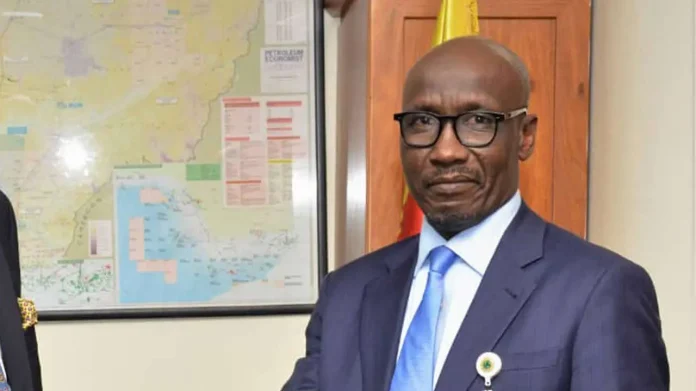
Fifteen lawmakers under the aegis of The Economy Rescue Group, have called on Mele Kyari, the Group Chief Executive Officer (CEO) of the Nigerian National Petroleum Company Limited (NNPCL), to resign.
The group claimed that mismanagement under Kyari’s leadership at the NNPCL was responsible for the woes being recorded by President Bola Ahmed Tinubu’s administration.
In a press statement signed in Abuja on Tuesday by its leader, Honourable Esosa Iyawe, lawmaker representing Oredo Federal Constituency at the House of Representatives, in Abuja, they insists that Kyari should be suspended, pending outcome of House of Representatives’ joint Committee on Petroleum (Downstream and Midstream) forensic investigation into the state of the national oil company and the downstream and midstream sectors as a whole.
The lawmakers accused the NNPCL CEO and other management staff of the corporation of undermining Tinubu’s Renewed Hope Agenda.
The lawmakers declared they must be shown the way out until the forensic investigation embarked upon by the House of Representatives through the Downstream and Midstream joint Committee was concluded, in other to avoid any act of sabotage.
While backing the House’s forensic investigation into the presence of middlemen in trading, indiscriminate issuance of licenses, unavailability of laboratories to check adulterated products, the influx of adulterated products into the country, among others, the group advised President Tinubu to wield the big stick by suspending the NNPCL top echelons till the probe is over.
“We the 15 concerned lawmakers state unequivocally that the woes of the Oil and Gas sector in the President Bola Ahmed- led administration are caused mainly by the failures and mismanagement of the NNPLC under Kyari’s management. Therefore, for this to be fixed, they should honourably resign.
“In an event they fail to step down on their own, the President should not hesitate to suspend them pending the investigation embarked upon the House of Representatives through its joint Committee on Petroleum: Downstream and Midstream.
“The petroleum sector remains the backbone of the nation’s economy and the allegations uncovered by the House which necessitated the forensic investigation are astounding and astonishing.
“They have to do with the presence of middlemen in trading, the indiscriminate issuance of licenses, the unavailability of laboratories to check adulterated products, the influx of adulterated products into the country, the allegation of non-domestication of profits realised from crude marketing sales in local banks, and other anomalies.
“Unfair subsidisation of PMS and other petroleum products which negatively affects competitiveness in the sector, racketeering and favouritism in the Pro Forma Invoice System (PFI) regime, indiscriminate issuance of licenses and importation of refined petroleum products.
“Return of PMS price intervention with its impact on domestic market, product unavailability to marketers from NNPC Retail. Endless shifting of timelines for refinery rehabilitation, the nefarious activities at petrol depot which have affected product distribution and caused scarcity and the use of middlemen in trading which has negatively affected domestic crude supply,” the lawmakers alleged.
According to them, with all these happening under the watch of Kyari, there was no way the economy can grow.
“It is therefore, obvious that the NNPCL management is out to undermine and is already undermining the Tinubu’s Renewed Hope Agenda with incompetence and they must be suspended to give room for unhindered probe,” they added.
It could be recalled that Honourable Esosa Iyawe recently moved a motion in the House, calling on the Federal Government to suspend the CEO of Nigerian Midstream and Downstream Petroleum Regulatory Authority (NMDPRA), Farouk Ahmed, pending investigation into his remark about quality of petroluem products at Dangote Refinery.
Kyari undermining Tinubu’s Renewed Hope Agenda’ – Lawmakers
Kyari undermining Tinubu’s Renewed Hope Agenda’ – Lawmakers
Google unveils 10 startups for Africa accelerator programme


Google has announced the selection of 10 startups for its Africa Accelerator Programme, a three-month virtual program designed to support African startups in leveraging technology to solve some of the continent’s most pressing challenges.
The selected startups, from Ghana, Kenya, Nigeria, South Africa, and Uganda, were selected from nearly 1,000 applications, highlighting the remarkable talent and creativity in the African tech ecosystem.
The search engine giant said in a statement on Wednesday that startups play a pivotal role in driving economic development and technological innovation in Africa.
By addressing local challenges with tailored solutions, these startups are not only creating jobs but also enhancing the quality of life across the continent, Google said.
Despite the current “funding winter” in Sub-Saharan Africa, where investment flows have slowed, the tech company expressed that the resilience and ingenuity of African entrepreneurs continue to shine.
“Since its inception in 2018, the Google for Startups Accelerator Africa program has supported 106 startups from 17 African countries.
“These startups have collectively raised over $263m and created more than 2,800 direct jobs, showcasing the program’s substantial impact on the African tech landscape,” the technology multinational stated.
This year’s cohort places a strong emphasis on artificial intelligence, highlighting the growing importance of advanced technologies in addressing Africa’s most pressing challenges.
The Head of Startups Programs for Google in Africa, Folarin Aiyegbusi, said, “We are thrilled to welcome the 8th cohort of the Google for Startups Accelerator Africa program.
“These startups represent the future of African innovation, harnessing the power of technology to solve real-world problems and uplift their communities. We are committed to supporting these founders by providing them with the resources and mentorship they need to succeed and scale their solutions.”
Meet the Google for Startups Accelerator Africa: Class 8:
CDIAL AI (Nigeria): Transforming multilingual communication across Africa with the power of artificial and collective intelligence.
Earthbond (Nigeria): Lighting up homes and businesses across Africa with affordable, reliable energy solutions, bolstered by carbon accounting and development finance.
Fixxr (South Africa): Putting car owners and businesses in the driver’s seat with transparent and convenient on-location vehicle maintenance and repair services.
Lifesten Health (Rwanda): Innovating health and wellness through cutting-edge screening and incentive-based programs focused on physical, mental, and nutritional health.
MyAIFactchecker (Nigeria): Equipping users with an AI-powered tool to combat misinformation and promote informed decision-making through fact-checking.
Nakili (Kenya): Bringing salons, barbershops, and spas into the digital age with a mobile-based app for streamlined management and enhanced customer experiences.
NextCounsel (Nigeria): Supercharging lawyer productivity with an AI-powered tool for contract management, solicitor engagement, compliance, and more.
Nobuk Africa (Kenya): Simplifying financial management for groups and collectives across Africa with a seamless platform for collecting funds, reconciling payments, and generating reports.
Rana Energy (Nigeria): Providing clean, reliable energy solutions to SMEs and communities through a data-driven ecosystem.
Triply (Kenya): Building Africa’s travel operating system, connecting travellers with seamless booking experiences and travel businesses with powerful management tools.
From July 29th to September 20th, 2024, these ten startups will participate in a structured program designed to support their growth.
Google said these startups will receive direct access to the expertise of mentors and seasoned entrepreneurs who have navigated the startup path.
“They will engage in technical workshops to refine their products, hone their business strategies, and strengthen their leadership skills. The program will also prepare them to secure follow-on funding from Google’s global network of investors,” the statement highlighted.
The participation of these startups in the accelerator program marks a significant step in their journey toward scaling their solutions and increasing their impact.
Kaduna PDP faction cries foul over Jaba congress

The Peoples Democratic Party in the Jaba Local Government Area has alleged a plot to subvert the will of the people by the Federal House of Representatives Member, Representing Zango/Jaba Federal Constituency, Amos Gwamna, and the Jaba State House of Assembly Member, Henry Mara.
The LG Party Chairman, Jonathan Gyam threatened to leave the party if things were not done properly.
Gyam’s threat came on the heels of the ward congress held on Saturday, 27 July 2024.
Speaking at the state party secretariat in Kaduna on Monday at a press briefing, Gyan, said, there was an alleged plan by the two lawmakers to upturn the will of the people long before now.
” My House of Representatives member, and the State Assembly member, Engr. Henry Marah has been intimidating people that they’re the ones in government, saying that even if we vote, they will fill in names and give forms; hence, when we didn’t see them, we concluded what they have been saying.
Gyan warned that if the current modus operandi works without doing the needful, it would be the official end of the PDP as a political party in the LGA.
He added, “We want to unequivocally warn that failure to adhere to the will of the masses will not augur well for the party because we conducted our election, which was free, fair, and credible.
“We were informed that the congress committee would be coming to every Local Government, which we waited and we didn’t see them and we went ahead and conducted the Ward election as directed by our party from the State.
” So, I addressed the congress committee and dispatched them to every Ward, and they conducted the election, which was free, fair, and credible. But up to this morning, we don’t know who and who constituents the congress committee, but it was later that we heard that some groups were conducting elections somewhere.
” If a committee was to come to Jaba, it is expected that they’ll come and report to the Party office, but I didn’t see anybody. Adding, none of the committee members was contacted up to this moment,”.
He explained that, “So, up to the time we finished our congress on Saturday, there were no phone calls. So, we decided to come to the State Party Secretariat with my results so that the State would give me forms to fill out because we had finished our election successfully.
“As we speak, I have not seen any of the congress committee that was sent to Jaba, and I can not fold my hands waiting for them.
“We urged the State Party to respect our result, which was the will of the masses, because the Independent National Electoral Commission (INEC) was there, Dss and the police, which they all signed as witnesses,” he stated.
Gyan maintained that they were at the state party secretariat to ensure that the wishes of the people were respected,
Reacting to the allegations, Mara, denied the allegation, saying that it was a parallel congress that took place.
“Most people have agreed by consensus in the Villages, communities, and in their units on who to go, which is always like that in PDP.
“When the congress committee chairman came and saw the volatile nature of the place he decided to run for his life.
” So, in Jaba, they have this conception that zoning was not constitutional and that anybody can contest anywhere, which was wrong,” Mara stated.
He explained that zoning was brought so that people can live in peace and there should be mutual understanding.
“Places where there should be elections were marred by thuggery and people were beating people.
“The people have already decided on what they want and anybody who’s trying to run a parallel Government outside the zoning that they’ve done was just wasting his time,” He concluded.
Meanwhile, efforts to get Hon. Amos Gwamna Magaji, to comment on the issue proved abortive as his lines were not connecting as of the time of filing this report.
Ex-PDP chairman, Secondus, backs planned hunger protest
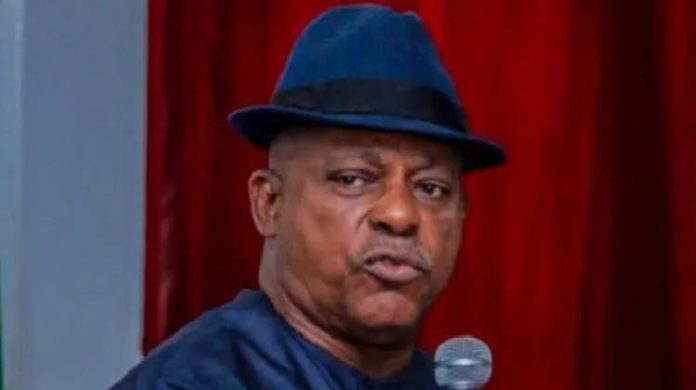

A former National Chairman of the Peoples Democratic Party, Uche Secondus, has voiced his support for the planned #EndBadGovernance protest in Nigeria, while also challenging President Bola Tinubu’s stance on the matter.
Secondus, in a statement released on Tuesday by his media aide, Ike Abonyi, reminded the President of his history with protests, stating, “President Tinubu while in opposition was a notable arrowhead leading protests against the government.”
He questioned why the President should now take a different position on civic action.
Secondus emphasised the importance of peaceful protests in addressing Nigeria’s current challenges.
“The state of anomie where we find ourselves today as a country incrementally worsened because the citizens failed in their duty to hold governments at all levels accountable,” he said.
The former PDP leader described the planned protest as a non-partisan pan-Nigerian and altruistic engagement of the citizens aimed at addressing the malaise in the country.
He said, “This protest should not be discouraged. Protests remain the most potent democratic platform through which the consciousness of nations can be aroused and indeed the consciousness of the leadership elite can be nudged and compelled to act right in the interest of citizens.”
According to the statement, Secondus urged protesters to remain organised and peaceful, while calling on the government and security agencies to provide the necessary security environment to ensure peace and order by international law and the Nigerian Constitution.
“This is not the time to sweep issues under the carpet; it is the time to speak truth to power and awaken our collective conscience so that we can work together to build a better society,” the statement added.
All rights reserved. This material, and other digital content on this website, may not be reproduced, published, broadcast, rewritten or redistributed in whole or in part without prior express written permission from According.
Contact: [email protected]
Hardship: Former IGP Okiro advises protest organisers to shelve plan
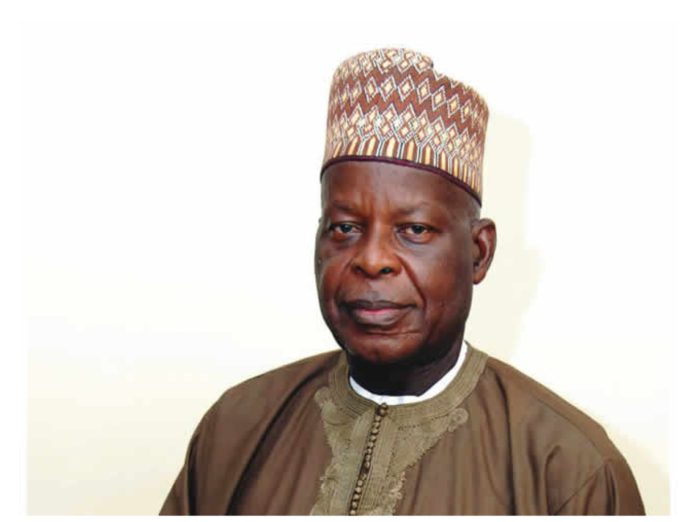
A former Inspector-General of Police (I-G), Mr Mike Okiro, has advised the organisers of the planned nationwide protest to shelve their plan and engage in dialogue with the federal government.
Okiro, who made the call in an interview with NAN on Tuesday in Abuja, said that constitutionally, Nigerians have the right to protest against bad governance and leadership.
He said that no doubt that Nigerians were passing through some challenges; it was easier to destroy but difficult to rebuild.
“The situation we are in now did not come overnight; it came over a period of time. Can we rebuild in one year what has been destroyed over time.
“The problem with protest is that, no matter how the organisers will go about it, there is bound to be loss of lives, destruction of properties and hardship.
“My advice to Nigerians, as much as they have the right to protest, is that they should allow the government some time to ameliorate the hardship.
“What we ought to do is allow the government to put structures in place to alleviate the suffering of the masses. The government should come up with policies that will help develop the country,” he said.
The former chairman of the Police Service Commission (PSC) said that the current government inherited some challenges and it is working towards solving them.
He said that President Bola Tinubu is an achiever, adding that if he is given the time he can turn things around.
“There is a saying that nothing good comes easy. The current government inherited some challenges and needed to take some harsh decisions to solve them.
“Let’s give the government some time to ease this suffering that Nigerians are going through. The protest, if started, may end in violence; it may be hijacked by hoodlums.
“Rather than lead to any positive outcome, the protest may aggravate the living conditions of the people,” he said.
Okiro said that giving palliative measures to the people was not the solution to the economic challenges in the country.
He urged the government to invest more in the productive sector in order to create employment opportunities for the youths and earn foreign exchange for the country.
Okiro advised the Federal Government to encourage local rice farmers to boost production rather than allow importation of the product.
He said that the continued importation of rice, beans and wheat would stifle the country`s weak economy.
Hardship: Former IGP Okiro advises protest organisers to shelve plan
Singer Ayra Starr warns fans against caring about other people’s opinion

Nigerian musician Oyinkansola Sarah Aderibigbe popularly known in music circles as Ayra Starr has warned her fans not to care about other people’s opinions.
The sensational singer who asserted in an interview with Dose of Society stated that people are living their lives as everybody is busy and people are hungry.
The ‘Sability’ crooner also stated that the opinions and perceptions of others are less important than many people believe, claiming that she experienced this herself.
READ ALSO: Ayra Starr fears Afrobeat is getting watered down, losing its originality
“What matters way less than you thought it would?” the interviewer inquired.
In her reply, Ayra Starr said; “What matters less? I feel like it’s opinions and people’s perceptions of you. Trust me, people are living their lives; everybody is busy and people are hungry. Stop caring about what people think about you; people are hungry, people are tired and life is hard.”
“Just do you; sometimes you are there wondering, ‘What does this person think about me?’ and they’re just there, wondering, ‘What’s going to happen today? Am I going to make it home?’. A lot is happening in the world and if you spend your time thinking about what people think about you, you’re just going to waste time,” she added.
The post Singer Ayra Starr warns fans against caring about other people’s opinion appeared first on Latest Nigeria News | Top Stories from TVN.
HARDSHIP: Jide Kosoko defends voting for Tinubu, says nobody should be bullied for their political choice
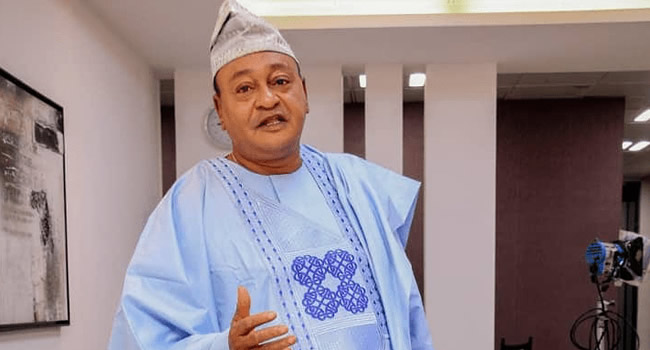
Veteran Nollywood actor Jide Kososko has defended his decision to vote for Bola Tinubu as the President of Nigeria, he also stressed that nobody should be bullied for their political choice.
The thespian who made the remarks during an interview on the latest Curiosity Made Me Ask episode hosted by Isbae U also added that people should be allowed to vote for who they want to vote for.
When asked if individuals should be bullied for their voting choices, Kosoko responded unequivocally, “Nobody should be bullied into voting for anyone, and people should be free to vote for whomever they want.”
“The people who voted for Tinubu, do you think that they should be bullied?” Isbae U probed further.
READ ALSO: Jide Kosoko congratulates Tinubu, says it’s a new dawn for Nigeria
“That’s their own business, their own cup of tea; I am entitled to my own opinion. I love the man I voted for and I know he’s doing well. If only you knew how repairing things are, then you would fully understand that he is doing well,” the actor responded.
When asked why he voted for Tinubu in the general elections, Kosoko emphasized Tinubu’s importance in shaping Nigeria’s democracy and identified him as a key character in Nigeria’s progress over the years.
Kosoko said, “I voted for him because I’ve known him for a long time, and Agbada has nothing to do with it. I have known him and I have seen quite a lot of his contributions to nation-building. You can’t even talk about the present democracy we all enjoy without saying Tinubu’s name among the people who struggled for us to have it.”
The post HARDSHIP: Jide Kosoko defends voting for Tinubu, says nobody should be bullied for their political choice appeared first on Latest Nigeria News | Top Stories from TVN.
Herbalist arrested with 11 human bones in Anambra


Security operatives in Anambra State have arrested a herbalist, identified simply as Ezekiel with about 11 different human bones in his possession.
It was gathered that the suspect, who hails from Ezza in Ebonyi State was arrested over the weekend by security operatives in Neni, Anaocha Local Government Area of Anambra State, where he resides.
According to a video currently trending on social media, the security operatives raided the residence of the suspect, following a tip-off by whistleblowers on the suspicious activities they observed at his residence.
The video also showed bones of different human parts recovered from the suspect’s residence during the raid.
Speaking during interrogation by the security operatives, the suspect, also confirmed that the bones were human bones, but, however, claimed that they were brought to him by a relative from the part of Ebonyi State where there are ongoing communal clashes.
Ezekiel further revealed that he uses the bones to prepare different kinds of ‘high-quality charms’ for people and others.
In the video, one of the interrogators and a member of the security operatives that arrested the suspect was seen warning members of the community to always make inquiries and be very cautious of the kind of persons they rent out their houses to or accommodate in their apartment, as well as what their tenants do in their house.
He commended the whistleblower who gave them the information with which they embarked on the operation to arrest the suspect.
He further urged the people to always be security-conscious and voice out whenever they perceive or see any unusual or suspicious movement, as security is everybody’s business.
The Anambra State Police Public Relations Officer, SP Ikenga Tochukwu, who also confirmed the video, when contacted on Monday, further disclosed that the suspect was intercepted by vigilantes and police operatives from the Neni Division, who were on patrol.
“The suspect is currently in custody and undergoing interrogation. Further details on that will be communicated,” Ikenga added.
August 1: Don’t allow hoodlums hijack your protest – Odogbo cautions Nigerian youths
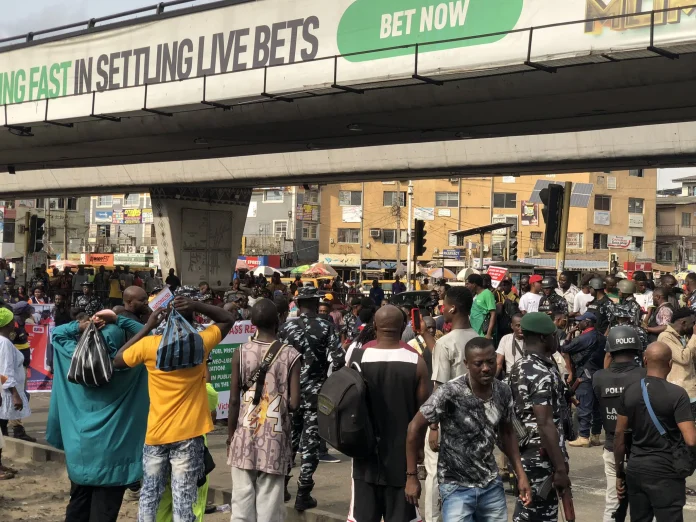
Bishop Pere Egbe-Odogbo, General Overseer of the Shelter of Christ Mission, has cautioned Nigerians planning to protest across the country over hunger, hardship and rising inflation, to conduct their protests peacefully.
The cleric made this call during an interview with TVN in Warri on Tuesday.
Bishop Odogbo attributed the current economic hardship to the removal of the fuel subsidy by the President Bola Ahmed Tinubu-led Federal Government.
He noted that the planned nationwide protest, scheduled from August 1 to 10, 2024, against the Tinubu administration, aims to draw the government’s attention to the severe hunger and suffering faced by the Nigerian masses, and to urge a reduction in inflation and an increase in the economic potential of Nigerians.
Bishop Odogbo emphasized that peaceful protests with clear demands are constructive.
However, he cautioned that such protests could be hijacked by hoodlums, leading to property damage and widespread mayhem.
He said, “We can’t afford to lose any of our children, as violent protests can never lead to positive results, but rather cause destruction, loss of lives, and setbacks.”
Bishop Odogbo pointed out that the protest is being organized by frustrated Nigerian youths dealing with the rising cost of living and economic difficulties. He urged that immediate action be taken to address these issues, including opening all borders for the import of essential goods to significantly reduce food prices.
“President Tinubu should reduce the pump price of petrol and regulate the prices of food items. This will certainly address the rising cost of living and bring smiles to the faces of Nigerians. Once this is done, the protest will likely become unnecessary.”
August 1: Don’t allow hoodlums hijack your protest – Odogbo cautions Nigerian youths
There is hardship in Nigeria but we won’t allow protest in Kaduna – Gov Sani, traditional rulers, others
The Kaduna State Governor, Senator Uba Sani, has criticized the planned protests across Nigeria, while affirming the Federal Government’s commitment to addressing current challenges.
Governor Uba Sani made this statement on his verified Facebook page during a town hall meeting with traditional rulers and other stakeholders in the state.
Although he acknowledged that Nigerians are facing economic difficulties due to years of economic mismanagement, corruption, and lack of accountability, he assured citizens that President Tinubu has the challenging task of cleaning up the mess left by previous administrations and resetting the economy for the benefit of the country and its people.
“The President has introduced policies aimed at reinventing the economy and putting the country back on the path to sustainable growth and development,” he stressed.
He added, “The implementation of some policies, we must admit, has been painful. However, these pains are temporary. The severe economic situation the country faced required a surgical operation.”
“The President has demonstrated courage in undertaking this economic overhaul. We are making steady progress. We must support the President in his patriotic efforts to revitalize the economy and restore smiles to the faces of Nigerians,” he further noted.
According to him, both the federal and state governments have been relentless in addressing the nation’s developmental and security challenges.
“In our current context as a state, we are grappling with security challenges such as banditry, insurgency, and kidnapping. We are acutely aware of the enduring effects of insecurity on the socio-economic life of our citizens—threats to food security, education, healthcare delivery, civic freedom, social cohesion, and especially our rural economy. At this time, our peace and stability are paramount.
“The current times demand deep introspection, sound reasoning, a high sense of patriotism, and sacrifices for the collective good. It is imperative that we follow the path of wisdom and focus on the brighter future ahead,” he said.
“Nobody or group in Kaduna State has approached the Nigeria Police with the intention of organising a protest. The police have the constitutional responsibility for maintaining peace and order. Kaduna State is therefore united in saying NO TO ANY PROTEST.
“We hold our peace dear and are committed to protecting it.”
Speakers at the town hall meeting unanimously opposed any mass action in Kaduna State. They strongly believed that, given the state’s past negative experiences with protests, every effort should be made to prevent any such actions.
They commended the administration’s efforts in securing lives and property, addressing developmental deficits, and fostering citizen engagement through platforms like town hall meetings.
The Emir of Zazzau, His Royal Highness Amb. Nuhu Bamalli, called for caution and urged Kaduna State citizens to heed words of wisdom and embrace peace.
He reminded people of the consequences in some African countries where protests led to mass destruction of lives and property, destabilizing those nations.
There is hardship in Nigeria but we won’t allow protest in Kaduna – Gov Sani, traditional rulers, others
