Home Blog Page 716

GOTV, DSTV price hike: Tribunal grants lawyer’s request to withdraw case

0

In a dramatic development, the Nigerian Competition and Consumer Protection Tribunal has granted the request to withdraw the case against MultiChoice Nigeria concerning a price hike in GOTV and DSTV subscriptions.
This follows the sudden decision of the lawyer who filed the case, Festus Onifade to withdraw his case against the pay TV provider.
Onifade stated that he no longer intends to proceed with the matter, insisting that MultiChoice would leverage the vacation to argue its appeal at the Court of Appeal and frustrate his case.
“I am abandoning this matter. I am withdrawing this case,” he said, explaining he filed the suit to challenge the alleged oppressive attitude of multinationals toward Nigerian consumers.
The Federal Competition and Consumer Protection Commission (FCCPC) lawyer told the tribunal to allow the claimant to withdraw his matter.
Onifade then orally applied to withdraw the suit.
MultiChoice’s lawyer, Moyosore Onigbanjo (SAN) stated he had no objection to the claimant’s request to withdraw.
“The oral application of the claimant to withdraw this suit is hereby granted. No cost is awarded,” the tribunal ruled.
Initially, Onifade had appeared to be on course for a landmark victory for consumers after the tribunal had fined MultiChoice N150 million and mandated a one-month free subscription to customers for violating interim orders, but MultiChoice appealed and filed for a stay of proceedings.
The tribunal had restrained MultiChoice from increasing its subscription rates pending the hearing and determination of a motion on notice filed by Onifade.
A three-member tribunal chaired by Saratu Shafii had ruled in favor of Onifade by temporarily restraining MultiChoice from implementing the impending price increase scheduled to take effect on May 1, 2024, pending the hearing and determination of the motion on notice.
However, MultiChoice’s lawyer, Moyosore J. Onigbanjo (SAN), filed a preliminary objection urging the court to decline jurisdiction over the suit filed by Festus Onifade and to strike it out, arguing that a similar price dispute case had previously been decided in favor of his client.
Onifade argued that the issue before the court was whether MultiChoice Nigeria provided adequate notice regarding the May 1, 2024, TV subscription price increase, not about price regulation or increase.
In its ruling, the three-member panel chaired by Justice Thomas Okosu dismissed MultiChoice’s preliminary objection for disobeying its interim orders and subsequently imposed a 150 million naira administrative penalty on MultiChoice, along with a one-month subscription order against the Pay TV provider.
MultiChoice has filed an appeal against the ruling, arguing that the tribunal erred in its decision.
The company also filed counter-affidavits dated July 12, 2024, providing reasons for its price hike and requesting that the tribunal dismiss the case.
In its affidavits, deposed by Damilola Olatunji, MultiChoice explained that to mitigate the impact of the weakening exchange rate in Nigeria, it was constrained to increase its subscription prices, though it did so to the least affordable extent possible.
The company insisted that it duly notified its customers and regulatory authorities before the increment was effected.
It was stated that the defendant had already filed a notice of appeal dated June 7, 2024, and an application for a stay of execution of the tribunal’s orders made on June 7, 2024, along with a request for all further proceedings before the tribunal to be stayed pending the determination of the appeal.
Onifade urged the court to determine his case in the interest of justice.
At the resumed hearing on Monday, Onibanjo asked the tribunal to adjourn the matter until the Court of Appeal decided on his applications.
He explained that the law dictates that when a tribunal is aware that an application is before the Court of Appeal, it must allow the Court of Appeal to decide.
He argued that Order 6, Rule 4 of the Court of Appeal Rules states that where special circumstances make it impractical for a party to file a suspension of proceedings application at a lower court, the party can apply directly to the Appeal Court for determination.
“The heavens will not fall if the tribunal waits for the Court of Appeal to decide this matter. This tribunal is not an island; it and every court are very powerful but must abide by decided authorities.
“This matter is not personal to anyone. The duty of this tribunal is to do justice according to the law.
“If there is a defect in an appeal, the place to argue is at the Appeal Court and not at the tribunal,” he said, urging the court to adjourn the matter until the Appeal Court decides.
Onifade argued that the call for adjournment by MultiChoice over a pending appeal had been addressed on July 3, 2024, and the tribunal had ruled on it while fixing July 29 for hearing.
Ruling on the applications, the tribunal chair, Thomas Okosu, said while MultiChoice has the right to appeal, the “proper procedures” must be followed by MultiChoice.
He said MultiChoice’s legal team had not shown the special circumstances that restrained it from seeking the tribunal’s leave to suspend its proceedings.
“Whereas we agree that MultiChoice has the right to appeal on a matter before this tribunal, the proper procedures must be followed.
“We have reviewed the positions of Order 6, Rule 4 of the Court of Appeal Rules, and did not see or find any circumstances that prevented MultiChoice from filing a stay of proceedings and execution before this tribunal.
“In the circumstances, this tribunal has nothing to stay and will therefore proceed to hear and determine this matter,” the judge said, overruling MultiChoice’s submission and stating that the mere filing of an appeal does not amount to a stay of proceedings.
MultiChoice’s lawyer then argued that, based on its rules, the tribunal ought to adjourn for vacation between July and September 2024 and can preside only over urgent matters during vacation.
“This matter is by no means urgent,” Onibanjo said, urging the tribunal to adjourn the matter until after its vacation.
But Onifade asked the tribunal to overrule Onibanjo’s fresh application, arguing that MultiChoice cannot dictate the tribunal’s schedule and decline to hear his matter as scheduled.
In a brief ruling, the judge said he could not disobey the tribunal’s own rule on vacation.
“Therefore, this matter shall be adjourned,” Okosu said, rescheduling the hearing of the case to November.
It wasn’t this point that Onifade then stated that he no longer intended to proceed with the matter, insisting that MultiChoice would leverage the vacation to argue its appeal at the Court of Appeal and frustrates his case.
Okosu, therefore, adjourned the case to November.
By: Babajide Okeowo
The post GOTV, DSTV price hike: Tribunal grants lawyer’s request to withdraw case appeared first on Latest Nigeria News | Top Stories from TVN.

PSC invites 10,000 new constables for training Aug 10

0

The Police Service Commission, on Monday, said training would commence for the 10,000 newly recruited constables.

Under its former Chairman, Solomon Arase, the PSC recruited 10,000 constables for the Nigeria Police in June.

However, Inspector-General of Police, Kayode Egbetokun, rejected the recruits, citing corruption in the process.

The police claimed that some qualified candidates were replaced with unqualified ones, a claim the PSC strongly denied.

The PSC insisted that the recruitment would not be cancelled.

In a statement on Monday, the PSC’s

Head of Press and Public Relations, Ikechukwu Ani, urged the successful applicants to visit the recruitment website for details.

He said, “The Police Recruitment Board has approved the 10th of August 2024 for the commencement of training for successful applicants of the 2022 constable recruitment exercise.

“The candidates are expected to confirm their status by logging into the recruitment website to confirm further details on the training.

“Specialist applicants are, however, to resume training two months after that of their General Duty counterparts. Information on dates and venues for their own specialised training will be announced in due course.

“The Police Service Commission wishes to appreciate the applicants for their patience and understanding while efforts were made to ensure that the exercise was inclusive and generally acceptable.”

Ani stated that the commission would ensure recruitment is merit-based.

He said, “The commission also states that it will continue to ensure that recruitment into the Nigeria Police Force is based on merit and respect for the Federal Character principles.

“It enjoins the successful candidates to see their new status as a call to duty for the Nigerian nation stressing  that the commission will monitor their training programmes to ensure that they will come out prepared to join forces in fighting the security challenges facing our nation.”

Naira sheds N2 to begin week at N1,611/$1 at official window

0

The Nigerian currency, the naira, slumped again against the American dollar on Monday, July 29, 2024.
The domestic currency shed N2 to close the week at N1,611/$1, data from the Nigerian Autonomous Foreign Exchange Market (NAFEM) has shown.
This is against the rate of N1,609/$1 it traded on Friday July 26, 2024.
The intra-day high and low recorded during the day were N1,622/$1 and N1,500/$1 respectively, representing a lean spread of N122$1.
The naira sheds N5 against the dollar at the parallel section of the FX market against the dollar to trade N1,600|$1, as against the rate of N1,595/$1 it traded the previous trading day.
The naira also shed N5 against the British Pound to trade at N2,065£1 as against the previous trading day’s rate of N2,060£1 representing a loss of N5 for the local currency.
The Canadian dollar continues to close flat against the naira to trade at N1,200| CA$1 same as the previous trading day rate of N1,200| CA$1.
The naira also lost N80 against the Euro to trade at ₦1,750/€1 as against the previous trading day’s rate of ₦1,670/€1.
By: Babajide Okeowo
The post Naira sheds N2 to begin week at N1,611/$1 at official window appeared first on Latest Nigeria News | Top Stories from TVN.

30 Nigerian Hajj pilgrims died in Saudi Arabia — NAHCON

0

No fewer than 30 Nigerians died during the just-concluded Hajj pilgrimage in Saudi Arabia, the Chairman of the National Hajj Commission of Nigeria, Mallam Jalal Arabi, said on Monday.

Arabi, who disclosed this at a post-Hajj press briefing in Abuja, explained that about four victims passed away as a result of the heat wave recorded during the Hajj exercise.

He said, “It is very true that the 2024 Hajj experienced one of the harshest weathers that had ever been experienced in the past. But the good thing was that we were informed well in advance.

“It was included in the sensitisation we did and we provided the necessary tools to ensure our pilgrims were safeguarded. We provided safety kits, from umbrellas to newly innovated fans and other things that could keep them safe.

“But if anybody’s time is up, it is up, you can’t stop it. We tried the best we could to avert deliberate exposure to the weather. Of course, we lost pilgrims but not all died from the heat wave.

“From the 30 we lost, probably about four or five could be said to have died from the heat wave. We pray Allah to accept their souls.’’

The NAHCON boss also explained the circumstances that led to President Bola Tinubu’s approval of  N90bn subsidy for the pilgrimage exercise on the heels of the increment in Hajj fares that saw pilgrims pay as much as N8m, among other issues with private tour operators.

He said, “Recall that by the final deadline of 12th February 2024, the unforeseen spike in foreign exchange rates had totally complicated matters, necessitating fresh adjustment of the year’s Hajj fare from the initially announced N4.9m.

“The financial projection after the foreign exchange liberalisation was that each pilgrim would have to top up about N3.6m in addition to the initial payment. The situation impelled urgent intervention.

“Recognising the gravity of the situation, NAHCON promptly engaged with the Federal Government to mitigate the effects of the high cost of the foreign currency with an appeal for the government to approve a concessionary rate of N850 as exchange rate for the dollar component of the hajj fare.

“That appeal was further amplified by other reputable stakeholders in the project. We are grateful to President Bola Ahmed Tinubu for his swift approval of N90bn instead.’’

Arabi said NAHCON devised a distribution strategy that played a crucial role in ensuring that all the stakeholders involved in the 2024 Hajj benefited from the government’s support.

“Each pilgrim was supported with N1,637,369.87 from the N90bn except for pilgrims under the Hajj Savings Scheme who enjoyed more.

“Hence, all registered intending pilgrims, except those on HSS, were required to pay a balance of N1,918,094.87 since the N90bn was not sufficient to make up for the balance.

“However, new registrants were asked to pay N8,454,464.74, being exempted from the Federal Government’s intervention. It is on record that eligible officials and stakeholders from all tiers of government enjoyed the subsidy from the N90b,” he stated.

The NAHCON chairman stressed that the Hajj subsidy was transparently utilised and further gave assurances of improving the processes to ensure equitable access to facilities and services for all future pilgrims.

Arabi’s explanation on Monday came weeks after the National Assembly began a probe of the N90bn Hajj subsidy.

According to the federal lawmakers, the handling of the 2024 Hajj was shoddy.

The same verdict was passed by the Governor of Niger State, Mohammed Bago, who questioned the alleged poor welfare of pilgrims despite the N90bn Hajj subsidy.

Vehicle import crashes by 61%, operators blame forex crisis

0

The importation of vehicles into Nigeria dropped from 28,024 units in the first quarter of 2023 to 10,991 units in the same quarter of 2024, representing a 60.8 per cent decrease, a document by the Nigerian Ports Authority stated.

The document titled, ‘Nigerian Ports Authority: Ports Performance Report January to March 2024’, sighted by The According on Monday, also showed that Nigeria’s ports welcomed 251 ships in the first quarter of 2024.

According to the document, the figure represented a 4.3 per cent decrease from the 275 ships that visited the nation’s seaports within the same period in 2023.

“Vehicles importation dropped by 60.8 per cent from 28,024 units in the first quarter of 2023 to just 10,991 units in 2024,” the document stated.

It also showed that the total cargo volumes declined within the period under review, reflecting a contraction in trade activities and potentially signaling underlying economic challenges or shifts in the import-export balance.

It stated that the 4.3 per cent reduction in ship visits could be attributed to a variety of factors including, “changes in global shipping routes, adjustments in shipping line strategies, or the impact of economic policies affecting maritime trade.”

In terms of cargo traffic, the total cargo throughput, excluding crude oil, reached 21,186,348 metric tonnes within the period under review in 2024 as against 18,243,644 metric tonnes handled in the first quarter of 2023, showing an increase an increase of 16.1 per cent.

“Inward cargo traffic reached 13,563,173 metric tonnes, representing 10.5 per cent of the total cargo throughput in 2023, while outward cargo traffic was 7,623,175 metric tonnes, representing 27.7 per cent of the total cargo traffic,” the document explained.

It stated that performance indicators for the period showed some positive trends, despite the decrease in ship traffic as the average turn-around time for vessels improved to 4.6 days from 5.1 days in 2023.

This improvement, according to the data, is partly attributed to the impact of the Lekki Deep Seaport, which achieved an average turn-around time of just one day, showcasing its efficiency.

The berth occupancy rate averaged 29.8 per cent in the first quarter of 2024, a decrease from 34.5 per cent in 2023.

The lower berth occupancy rate indicates reduced congestion at the ports, which may contribute to improved turn-around times and overall efficiency.

“The increase in gross register tonnage despite the drop in the number of vessel calls revealed the berthing of bigger vessels especially, at the Lekki Deep Seaport where the average GRT of vessels is 3, 801, 191.

“This further gives credibility to the importance of a deep sea to Nigeria’s maritime or port development. Therefore, the collective efforts of all the stakeholders are required to ensure that Lekki Deep Seaport does not suffer the fate of Apapa for ease of cargo evacuation,” the document concluded.

Reacting to the development, a chieftain of the Association of Nigerian Licensed Customs Agents, Mr Kayode Farinto, said that the fluctuating exchange rate is killing vehicle importation.

“It is the fluctuating exchange rate that is killing the business. And if you bring in older vehicles now, you are expected to pay higher duty and the exchange rate continues to go up daily and nothing has been done to address that,” Farinto said.

According to him, except the government pegs the exchange rate for cargo clearance to like N1000/$ and increases legitimate vehicles allowed to come in from 12 years to 15 years, “that is when you would see improvement.”

Farinto added that smugglers would continue to bring in the vehicles through unapproved routes if these challenges were not addressed.

The Chairman of the Ports & Terminal Multipurpose Chapter of the National Council of Managing Directors of Licensed Customs Agents, Mr.Abayomi Duyile, blamed levies and duties slammed on imported vehicles as the reason for the decline.

“It has to do with the levy introduced, the cost is too much. For example, if you have a vehicle of 15 or 20 years, you are going to pay the duty as if the vehicle is 10 years old. So it is because of the cost. When you bring them in, how do you sell?” he asked.

FG begins sale of 50kg rice for N40,000

0

The Federal Government on Monday said it had created centres across the country where Nigerians can purchase a 50kg bag of rice for N40,000.

The Minister of Information and National Orientation, Mohammed Idris, revealed this on Monday while briefing correspondents on the outcome of the Federal Executive Council meeting presided over by President Bola Tinubu at the State House, Abuja.

Idris said this was one of several initiatives by the Tinubu administration to ease living conditions for citizens.

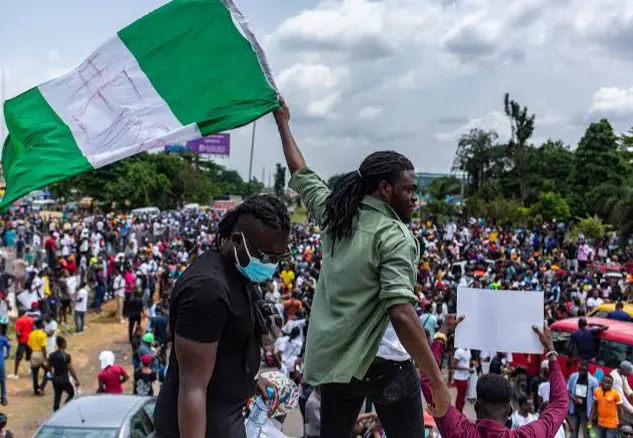
Therefore, he argued that the nationwide protests scheduled to begin on August 1 were unnecessary since “President Tinubu is already protesting on behalf of the people.”

The minister also argued that all the demands of the protest organisers  were being met.

“The position of the FEC is that most of the demands that the protesters are making are actually being addressed by the Federal Government and, therefore, it is the view of the government that there is really no need for the protests again.

“Most of the things that the protesters are putting forward are already being addressed by the government. And like we have said repeatedly, this is a listening government.

“The President has listened to the voices of all planning this protest. And the message is that there is no need for it. Indeed, the President is already protesting on their behalf by doing what they want the government to do,” said Idris.

He enumerated the recent efforts by the FG which distributed 740 trucks of grains to states, announcing that 50kg bags of rice can now be obtained for N40,000 at designated centres nationwide.

Idris said, “For example, at the last Council meeting, we announced that 20 trucks had been given to each state governor for onward distribution to those who actually needed them, to the poorest of the poor in society.

“But the government did not stop. Rice is also being sold at about 50 per cent of its cost; a bag of rice is being sold as we speak. This rice has been taken to various centres across all the states of the federation and is being sold at N40,000. Centres have been created so that those who need this rice can go there and buy this rice at N40,000.

“In the first instance, about 10 trucks have been made available to each of these states; indeed, this is just the beginning. I know that some of the comments you hear is that it is never enough. The government has not pretended that these supplies are indeed enough. But these are necessary first steps that are being made and more of such interventions are being made in the interim.”

He said the FG expects the price of food items to reduce since “the rainy season is here.”

“We expect that the prices of food items will come down as investments are also being made in traditional agricultural production and irrigation activities in many of these states in the federation,” Idris added.

The minister cited the student loan scheme the expected disbursement of CNG kits as part of efforts to ease the cost of living.

However, he blamed unavoidable logistical impediments for the delay in the rollout of the CNG buses.

“Already, some of these buses have been imported. Some of the conversion kits are already available. The conversion centers are already beginning to get active.

“The delays are largely because you don’t just go to the market and get these things off the shelves.

“First, the procurement processes have to be followed. And then, of course, you have to place an order for them. It is envisaged that as we make the transition from fossil fuels to renewables, there is going to be a reduction of over 60 per cent in the cost that people put in transportation,” he explained.

Meanwhile, Minister of Interior Olubunmi Tunji-Ojo argued that the 13-month-old administration has made significant gains for its age.

He emphasised that removing the fuel subsidy is a crucial step in addressing long-term issues in Nigeria’s energy sector.

Tunji-Ojo noted the new policies promoting local trade in crude oil and refined products, which he believes will attract investments, create jobs, and enhance Nigeria’s energy independence.

He also highlighted the unification of exchange rates as a factor in improving economic predictability, fostering foreign direct investment, and supporting local government autonomy, saying it ultimately drives grassroots development.

Senate President Godswill Akpabio who addressed journalists after the signing of the minimum wage bill also warned against anarchy saying the government cannot afford rebuilding damaged infrastructure.

“You have a right to protest. But you don’t have a right to destabilise the country. The right to protest should not be turned into the right to unleash violence. It’s very clear that people who are behind this are very amorphous, very faceless. So what it means is people are preparing to loot and go around and do all sorts of things.

“Where we are today was not caused by one year’s administration. It is the outcome of years of insecurity. So my appeal to the Nigerian youth is do not allow any group to mislead you politically. People who probably do not have their fortunes in 2023 election are thinking they can come through the back door and that will amount to anarchy.

“Any destruction of any property will cause Nigeria money. We don’t have the money. Instead, let’s put the money in developing you and developing your environ instead of going to rebuild,” Akpabio stated.

Spare parts dealers distance members from hunger protest

0

Members of the Auto Spare Parts and Machinery Dealers Association, Trade Fair Complex, Lagos, have dissociated themselves from the planned hunger protest expected to commence on August 1.

Speaking at a press conference in Lagos recently, President of ASPAMDA, Ngozi Emechebe, said the planned protest might end up causing chaos, leading to loss of lives and properties.

According to him, though Nigerians are currently facing some difficulties, there is a need to give President Bola Tinubu some time to make life better for the citizenry.

His words, “It is clear that there are challenges in the country but let us not compound the situation by embarking on protests which may lead to loss of lives and properties. Let us give President Bola Tinubu some more time. He has only spent a little over one year in office.

“ASPMDA identifies that this situation did not start today in Nigeria. With the steps President Tinubu is taking, Nigeria will bounce back very soon. This is a clarion call for all Nigerian citizens to sit up, adjust and work with the president to achieve success for the nation.

“ASPAMDA is too busy for this kind of protest because every member is committed to the progress of the nation. That is why we are nation builders; we keep the nation moving by making sure we supply the needed spare parts to make sure Nigerians go around wherever they want to go with their vehicles.”

He commended Tinubu for deploying Compressed Natural Gas buses through the Presidential CNG Initiative.

All rights reserved. This material, and other digital content on this website, may not be reproduced, published, broadcast, rewritten or redistributed in whole or in part without prior express written permission from According.

Contact: [email protected]

Child trafficking merits tougher measures

0

AS the global community observes the 2024 World Day Against Trafficking in Persons today, there is a need for concerted efforts at the national and international levels to tackle the heinous crime. Indeed, the theme: ‘Leave No Child Behind in the Fight Against Human Trafficking,’ resonates with many victims of trafficking. States must, therefore, prioritise child protection, bolster legislation, and allocate more resources to combat child trafficking.

First observed in 2014, July 30 was proclaimed by the UN General Assembly as the date to renew the move to prevent, suppress and punish trafficking in persons, which includes “the recruitment, transportation, harbouring of persons using threat or use of force, or other forms of coercion, of abduction, fraud, of deception, having control over another person for exploitation.”

A Global Report on Trafficking in Persons by the UNODC estimated that children are twice as likely as adults to face violence during trafficking. These children are subjected to forced labour, crime, street begging, illegal adoption, sexual abuse, and the online dissemination of abusive images, and some are recruited into armed groups or prostitution rings.

The Lagos State Police Public Relations Officer, Benjamin Hundeyin, said detectives from the Oko-Oba Division busted a child trafficking ring at the weekend. Five suspects involved in the crime were arrested and a two-month-baby was rescued.

In June, at least 10 Nigerian girls were filmed narrating how they were trafficked to Ghana for prostitution. According to a viral video clip uploaded on social media, the girls were aged between 15 and 18.

Similarly, in April, the Benin Zonal Command of the National Agency for the Prohibition of Trafficking in Persons confirmed the arrest of a 40-year-old woman who was described as a fake reverend sister, Maryvianney Ikejimba, for allegedly trafficking 38 children in Delta State.

That same month, a four-month-old girl and an 11-year-old boy who were suspected to have been trafficked by their relatives in the North were recovered from Abuja and Lagos, respectively, by NAPTIP officials.

A report by the Women’s Consortium of Nigeria cited that about 12 million Nigerian children are forced into labour, and it could be roughly estimated that about 80 per cent of Nigerian children in forced labour are victims of trafficking.

The report added that many Nigerian children are predominantly recruited from states “such as Akwa Ibom and Cross Rivers and trafficked mostly by sea to Gabon, Cameroon, and Guinea to work on farm plantations. Children are also recruited from Saki in Oyo State and trafficked to Guinea, Mali, and Ivory Coast to work as hawkers and domestic servants.”

Sadly, most of these children are from poor family backgrounds and mostly from rural communities. They are also trafficked to European countries and the Middle East for prostitution and sexual exploitation, with the masterminds of these crimes deploying political connections to evade detection, arrests, and prosecution.

According to the United States Department of State 2023 report on trafficked persons, the Nigerian government “identified 1,634 trafficking victims, including 841 sex trafficking victims, 543 labour trafficking victims, and 250 victims of unspecified forms of trafficking; compared with identifying 935 victims the previous reporting period.” Individuals, the government, and other stakeholders must effectively tackle this alarming menace.

To reduce children’s vulnerability, more efforts should be made to target root causes like poverty and inequality, and child protection systems should be strengthened across the 36 states. Perpetrators need to be held accountable and apprehended regardless of their status.

Civil society organisations, the private sector, and communities have a vital role in raising awareness and strengthening the efforts to identify trafficked children in religious schools, Internally Displaced Persons, and children in domestic service.

States should work with international NGOs to stem the ugly tide, create agencies like NAPTIP and intensify their anti-trafficking drive to investigate and prosecute traffickers.

UTME: 140 benchmark entrenches mediocrity

0

NIGERIA is toying with the future of its tertiary education. This came out in bold relief after the 2024 policy meeting on admissions in Nigeria ridiculously lowered the benchmark again. After their deliberations, the stakeholders announced the minimum benchmark scores for admissions to tertiary institutions. The meeting, hosted by the Joint Admissions and Matriculation Board, was chaired by the Minister of Education, Tahir Mamman. Those in attendance included the heads of education agencies, vice-chancellors, rectors, and provosts.

During the meeting, it was agreed that 140 marks would be the minimum benchmark score for admission into universities and 100 marks for polytechnics and colleges of education. This is shocking, a debasement of merit.

Though it was expressively stated in the meeting that individual institutions had their respective minimum benchmark scores, it is still an elevation of mediocrity.  Among others, the Pan-Atlantic University agreed on 220 as its benchmark score. The University of Lagos and Obafemi Awolowo University chose a 200 minimum score. These marks are not good enough for universities that aim for excellence.

More appalling is that some universities suggested scores below 140.

Candidates are tested in four subjects for an aggregate of 400 marks. One hundred forty marks is, therefore, a gross failure out of 400. This standard is just too low. It can only worsen Nigerian universities’ abysmal ranking compared to global standards.

Though students are free to choose their subject combination in line with their choice of courses of study, the Use of English is compulsory.

JAMB Registrar, Ishaq Oloyede, said while over 1.9 million candidates sat the examination, which took place in all the 36 states of the federation and the Federal Capital Territory between April 19 and 29, only 1,842,464 of the candidates had their results released. Oloyede noted, “8,401 candidates scored 300 and above; 77,070 scored 250 and above; 439,974 scored 200 and above, while 1,402,490 scored below 200.”

With 76 per cent recording less than 200 out of 400 or less than a 50 per cent score, most candidates are not ready or fit for university education. In a competitive world, that is a huge setback for Nigeria. Nigerian universities rank very poorly among their continental and global peers. If these poor candidates are admitted into the institutions next session, their ratings will continue to crash further.

Over the years, tertiary institutions– and probably a society that has lost its values – have lowered the cut-benchmark scores for admissions. In the past, institutions set as high as 240 for admissions. Later, the benchmark was downgraded to 200, then 180, and now 140. This has entrenched mediocrity in the system.

But the university is a place of excellence, where the best gets better, not mass vocational centres. By crashing the cut-off mark below 200, excellence has been compromised. This should be immediately reversed and all those who score below 50 per cent should not be admitted from this exercise.

The country is gradually slipping into a state of moral decadence where young people no longer see education and even hard work as the pathway to successful lives.

The Nigerian society itself must reverse this trend. Institutions must stop compromising standards to allow lazy and incompetent individuals to gain access to established fountains of knowledge.

This debasement of standards gives credibility to the idea that Nigerian universities need autonomy. Universities in the United Kingdom set their standards for admissions; a government does not need to sit in judgment over them because the institutions know where the heart of the issue lies.

Instead of Mamman’s pet policy of barring under 18-year-olds (under 16-year-olds from 2025), Nigeria should wisely concentrate on giving universities autonomy and allowing them to decide.

Budgeting tips for students

0

As many students struggle with their finances, especially in this period of economic challenges, PRINCESS ETUK suggests ways through which students can use budgeting to overcome their financial challenges

The simplest way to budget as a student in a higher learning institution is to understand the true value of your income and how to prioritise your expenses. In addition to tuition fees, you must also account for other essential costs like accommodation and food.

Before diving into how to budget as a university student, it is important to understand the significance of budgeting. Budgeting is not just about covering your expenses; it is about setting financial goals, gaining control over your money, and ultimately achieving financial freedom.

With tuition fees, living costs, and the occasional splurge on necessities, it’s easy to lose track of your spending.

Creating a budget helps you understand your spending patterns, pinpoint areas where you can cut back, and make informed financial choices. Learning to budget can ease financial worries, allowing you to concentrate more on your studies.

To begin your budgeting journey, it is crucial to identify your motivation. Budgeting without a clear purpose can be discouraging, but having a specific reason can inspire you to stay committed, especially during tough times. The following may be helpful:

What are your financial goals? Your motivation might be as straightforward as “getting through to the end of the semester,” or it could involve paying off student loans, or building an emergency fund. Whatever your goal, having a clear sense of purpose will help you adhere to your budget.

What does a typical student budget look like? There isn’t a one-size-fits-all answer, as your budget will vary based on your financial situation. Factors such as financial aid, family support, and part-time work will influence your budget.

As a student, you need a budget plan to enable you to take control of your finances by outlining how much you need to spend based on your monthly income and determining what to do with the remainder. Having a monthly plan increases your financial awareness and helps you make informed decisions about spending and saving.

Budgeting begins with understanding your income and expenses, giving you a clear picture of your financial situation. For a university student, income might come from parents, student loans, scholarships, part-time jobs, or family support.

Income can be categorised into active and passive. Active income involves direct involvement, like a salary or freelance work, where you earn money in exchange for your time and effort.

On the other hand, passive income is generated with minimal ongoing effort, though it often requires initial work or investment. An example includes earnings from a side hustle. Understanding expenses is crucial for managing your finances as a student. You’ll encounter a variety of costs that will affect your bank account.

Variable expenses, such as groceries, textbooks, assignments, and clothing, can fluctuate from month to month. Fixed expenses like rent and utilities, remain consistent over time. Discretionary expenses include non-essential purchases that can enhance your life but aren’t necessary for survival, such as dining out, travelling, and engaging in hobbies.

 Here are ways to save money as a Nigerian student:

Write your monthly income: Begin by noting how much money you have available each month. Simply write this on a piece of paper. This will help your planning.

Understand what you spend your money on: This step is crucial for learning how to budget effectively. Before you can start making cuts or budget-friendly choices, you need to understand your spending habits. Start by listing all your potential expenses, such as tuition; accommodation; utilities like electricity and water bills; transport fares; feeding, textbooks; personal items such as toiletries, clothes, and shoes; entertainment expenses for movies, social outings, and other fun activities; money for emergencies and unexpected events

Divide your list into essentials (tuition, accommodation, food, utilities, books) and non-essential (entertainment).

Do the maths: Subtract your expenses from your income until you reach a near-zero balance, ensuring every penny has a purpose. This doesn’t mean you have to spend everything each month.

The 50/30/20 method divides your income into three main categories: 50 per cent goes to needs such as rent, food, books and utilities; 30 per cent is allocated for wants, which includes non-essential items and activities; and 20 per cent is dedicated to goals like savings and debt repayment.

Alternatively, you could use the 80/20 rule, where you allocate 20 per cent of your income to savings and the remaining 80 per cent to expenses.

Another approach is the 70/20/10 rule, which suggests using 70 per cent of your income for living expenses, 20 per cent for debt repayment, and 10 per cent for savings.

Also, the Pay Yourself First method is a straightforward but effective approach that prioritises saving by automatically allocating a portion of your income to savings before addressing other expenses. Here’s how it works:

First, automate your savings by setting up automatic transfers from your checking account to your savings account as soon as you receive your income. This ensures that you save consistently without relying on willpower, which can make saving more challenging.

Next, establish your savings goals by deciding how much you want to save each month. If necessary, adjust this amount based on your financial needs and goals.

Finally, budget with the remaining funds after your savings have been set aside. Use the leftover money for essential expenses and discretionary spending. By paying yourself first, you avoid the stress of saving at the end of the month when funds might be limited, keeping your savings out of sight and out of mind.

Track Your Spending: With your budget in place, start tracking your expenditures. Note everything you spend throughout the month and compare it to your plan. If you buy a coffee, deduct that from your wants allowance. This helps you observe spending habits and see if you’re exceeding your budget in any area.

Before the start of a new month, adjust your budget plan based on your observations and any changes from the previous month.

After establishing a basic budget, there are some effective strategies to help students save money. Implementing these tips together can lead to significant financial improvement.

Shopping is inevitable, but you can do it wisely to save money. Utilise student discounts at places like public transport, cinemas, and restaurants. Buying second-hand items such as books, clothes, and furniture can also help you save money and benefit the environment. Additionally, you can save money by purchasing items like canned food or toilet paper in bulk.

Cooking at home is a cheaper and healthier alternative to eating out frequently. Numerous easy recipes are available online. If you have roommates, consider cooking larger meals and sharing the costs, which can further reduce expenses and make cooking more enjoyable. Identify and cut back on luxuries you can live without, at least temporarily.

Cancel unnecessary subscriptions: For instance, switch from a premium music streaming service to its free version. Borrow books from the library instead of purchasing them. It will save you money. You may also need to reduce the amount spent on the internet.

Enjoy free activities as a student by attending campus events, which universities often host and where you can meet other students.

 Relax in nature with activities like walking in the park, hiking, or spending a day at the beach, all of which are free and beneficial for your well-being.

Consider cost-effective and eco-friendly alternatives to owning a car. Public transport is better, especially in areas where the government provides mass transit buses. Biking is more affordable than a car and provides daily exercise. Walking is also a free option if your accommodation is close to campus.

Taking up part-time employment can be a beneficial option. There are many student-friendly jobs available, ranging from waitressing to remote work like translating or managing social media accounts. This not only helps financially but also offers valuable work experience and networking opportunities.

Beyond the tips mentioned, consider opening a student bank account, as many banks offer accounts specifically designed for students with minimal or no fees.

Research to find the best option for you. Be prepared for unexpected costs, such as urgent trips home or medical emergencies, by having student insurance and checking what it covers.

A Professor of Business and Applied Economics, Adegbemi Onakoya, emphasised the crucial importance of budgeting for students to ensure financial stability.

Onakoya provided practical advice and insights into managing personal finances effectively.

“You need to budget your money, if not, you will run out of funds,” Onakoya stated.

He highlighted the common issue of students facing financial shortfalls despite receiving funds from their parents.

“Usually, whatever your parents give to you cannot be enough. There are expenses that are unplanned; there are course notes that you didn’t plan for. And you need to manage your budget within those constraints.”

He stressed the reality of limited resources against unpredictable expenses.

“Your resources are limited. Your expenses are not determinable, which you cannot foresee,” he said.

To navigate this, he advised students to systematically track their spending and prioritise their needs, saying, “You need to list all the things that you do based on the pattern of expenditure and then prioritise which one is most important to handle and which one can I forgo for now, which one can I ignore forever.”

He acknowledged that some students might resort to less favourable options to supplement their income.

“Some students go as low as doing menial jobs to augment whatever money is coming from their parents,” he noted, underscoring the lengths to which students might go to balance their finances.

Managing your finances as a student can be challenging, but it’s achievable with the right strategies. By keeping track of your income and expenses, using discounts, cooking at home, enjoying affordable entertainment, and opting for budget-friendly transportation, you can save money and stick to your budget. Working part-time can also provide extra income and valuable experience. With careful planning and smart choices, you can enjoy your studentship without financial stress.