Home Blog Page 686

Hunger protest: Imo NURTW warns members not to participate

0

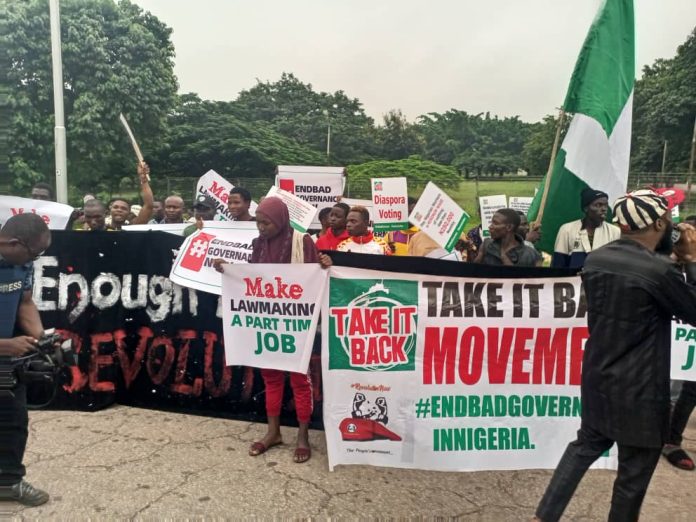
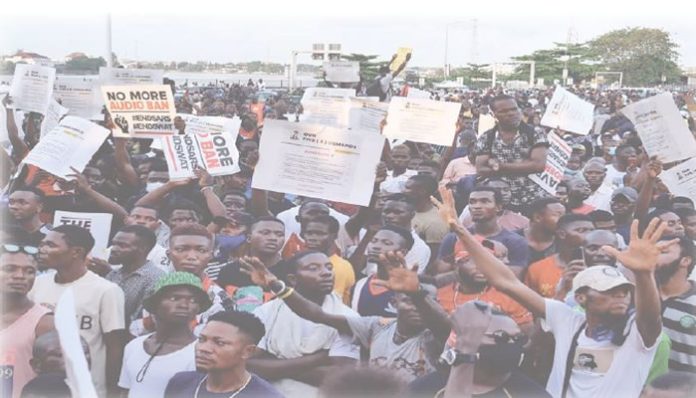
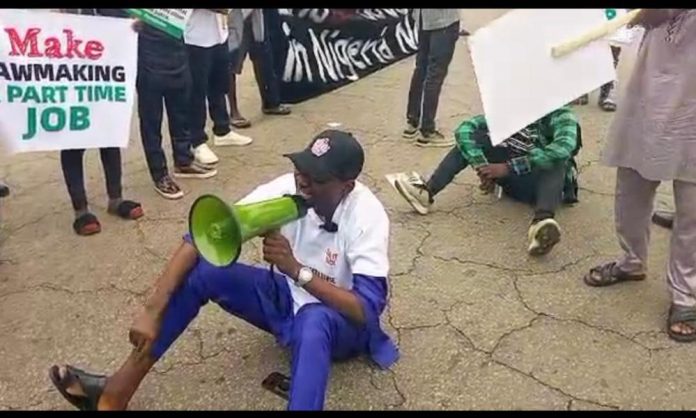
Following the planned nationwide hunger protest scheduled to hold on August 1 across the Federation, the Imo State Chairman of the National Union of Road Transport Workers, NURTW, Samuel Udeh has enjoined members of the union not to join the protest.
He said it would cause more harm than good.
He gave the warning to fellow unionists during an emergency meeting of the State Executive Committee, SEC, of the Union, held on Tuesday in Owerri.
Addressing the executives, Udeh noted that though a peaceful demonstration by citizens to express the unfair treatment being meted out on them by their leaders was a constitutional right, this particular right had been abused and wrongly carried out, which according to him had caused more pains, sorrows and setbacks.
The NURTW boss urged the members to resist the temptation of joining the planned protest.
He believed that dialogue with the leaders remained the best approach of getting things done rightly in the country rather than resorting to protest.
“The risk and possibility of the protest being hijacked by miscreants and hoodlums who may want to use it to perpetrate evil and cause havoc in the process should be a concern to Imo citizens.
“We are not disputing the fact that there is hunger and hardship in the land, but we must be careful not to allow those with evil intentions of destroying lives and property to prevail”, Udeh said.
In their separate speeches, some of the executive members agreed with what the Chairman said and commended him for calling the meeting which they said was timely as it availed the opportunity for the members to know the position of the Union as regards to the protest.
They also acknowledged the Chairman’s effort in fighting for the general good of the members as he always carried members along in the scheme of things.
They generally asserted that the protest would not in any way favour them as drivers, but would rather be to their own detriment and vowed not to be part of it.
Hunger protest: Imo NURTW warns members not to participate

Apologize to Northerners over ‘many children statement’ – Shehu Sani to Fayose

0

The former lawmaker who represented Kaduna Central senatorial district in the National Assembly, Shehu Sani has urged former Ekiti State governor, Ayodele Fayose to tender an apology to Northerners following his comments on people of the region.
Fayose had in an interview on a Channels Television programme on Monday night stirred the hornet’s nest when he said the failure of the federal government to develop Nigeria was because northerners were marrying multiple wives and having many children indiscriminately thereby constituting a huge problem for Nigeria and a burden on the government.
“The reason why it is difficult for Tinubu to develop Nigeria is because Northerners are giving birth to children they can’t cater for,” Fayose said.
Reacting in a post on his official X handle on Tuesday, the former lawmaker said Fayose’s statement was not palatable.
“Even though Fayose spoke as an individual, his reported statement on Northerners is contemptuous and unconscionable.
“I suggest he should humbly withdraw it and tender an apology as a statesman”, Sani stated.
Apologize to Northerners over ‘many children statement’ – Shehu Sani to Fayose

Top 10 stories from across Nigerian Newspapers, Wednesday, July 31, 2024

0

Here are the top 10 stories making headlines across the country.
1. Nigeria declares prisons ‘red zones’ ahead of #EndBadGovernance protests
The Federal Government has declared all the 256 custodial centres across the country as “red zones” ahead of the planned #EndBadGovernance protests to begin on August 1.Read more
2. EFCC grills Hajj commission chairman over alleged mismanagement of N90bn subsidy
The Economic and Financial Crimes Commission (EFCC) on Tuesday grilled the Chairman of the National Hajj Commission of Nigeria (NAHCON), Jalal Arabi, over alleged mismanagement of 2024 Hajj exercise fund.Read more
3. Organisers of #EndBadGovernance protests defy IGP, to proceed with street rallies
Organisers of the #EndBadGovernance protests have rejected the Inspector-General of Police, Kayode Egbetokun’s proposal of confined rallies.Read more
4. Amid attack over line disconnections, MTN shuts offices nationwide
MTN Nigeria has ordered the closure of its offices nationwide due to the violence that broke out over the disconnection of some MTN lines.Read more
5. Former PDP Chairman Secondus says Tinubu lacks moral authority to stop protests
Uche Secondus, a former National Chairman of the Peoples Democratic Party (PDP), has launched a scathing attack on President Bola Tinubu, asserting that he lacks the moral authority to stop the planned #EndBadGovernance protest.Read more
READ ALSO:Top 10 stories from across Nigerian Newspapers, Tuesday, July 30, 2024
6. Shehu Sani tells Fayose to withdraw comment about northern region, apologise
The former lawmaker who represented Kaduna Central senatorial district in the National Assembly, Sen. Shehu Sani has called on former Ekiti State governor, Ayodele Fayose to tender an apology to Northerners following his (Fayose’s) comments on people of the region.Read more
7. Keyamo gives NAMA go-ahead to ground Arik Air planes over $2.5m debt
The Minister of Aviation and Aerospace Development, Festus Keyamo has granted the Nigerian Airspace Management Agency (NAMA) permission to ground some aircraft belonging to Airik Airline over a $2.5m debt owed to Atlas Petroleum International Limited.Read more
8. NGX: Investors lose N171bn in five hours
Investors in the Nigerian capital market lost N171 billion at the close of trading on Tuesday.Read more
9. Woman kills husband, dumps body in uncompleted building in Abuja
A woman simply identified as Rahimat Salaum has allegedly killed her husband in the Federal Capital Territory (FCT).Read more
10. Osimhen’s agent debunks Chelsea loan move rumours
Super Eagles forward Victor Osimhen is yet to make any official move this summer and remains a Napoli player, his agent has said.Read more
The post Top 10 stories from across Nigerian Newspapers, Wednesday, July 31, 2024 appeared first on Latest Nigeria News | Top Stories from TVN.

Hamas political leader, Ismail Haniyeh killed in Iran

0

Hamas political leader, Ismail Haniyeh has been killed in Tehran, Iranian state media, Press TV reported on Wednesday, citing the Islamic Revolutionary Guard Corps (IRGC).
Haniyeh was the exiled political chief of the militant group and had spent much of his time in recent years in Qatar.
He had acted as a negotiator in the ceasefire talks and liaised with Hamas’s main ally, Iran, during the Israel-Gaza war.
A statement issued shortly after by Hamas said Haniyeh was killed alongside his bodyguard in a “Zionist raid” on his residence in Tehran after he participated in the inauguration of the new Iranian president.
CNN reports that it is not clear when Haniyeh was killed, adding that it has reached out to the Israeli military for comment on Hamas’ claim.
TVN recalls that Israeli airstrikes killed three of Haniyeh’s sons and four of his grandchildren in April, according to Hamas.
Hamas political leader, Ismail Haniyeh killed in Iran

How the haves have not

0

Those who wonder why the Dangote refinery has to buy imported petroleum have no clue how much Nigeria’s security system has failed to contain oil bunkering in the upstream sector of the petroleum industry.

Nigeria’s production quota, as approved by the Organisation of Petroleum Exporting Countries, is 1,500,000 barrels per day, out of which it reportedly achieves only 1,250,000 bpd, which some even say is overstated.

Some have suggested that if Nigeria pushes its production quota to anywhere near 2,000,000 bpd, OPEC will look the other way because of Nigeria’s current economic and (especially) foreign exchange challenges.

Imagine the delusion of those who fixed 1,780,000 bpd as the benchmark for Nigeria’s 2024 budget. This expected shortfall will result in inadequate cashback for the ambitious N27.5 trillion budget with its N9.18 trillion deficit.

And, of course, India and The Netherlands, major buyers of Nigeria’s petroleum, won’t ever get the quantity they need; they will get only a portion, and will have to source the shortfall from other suppliers.

The inability of the upstream sub-sector to achieve the OPEC quota caused the Federal Government to hire the security company of a former Niger Delta militant with a mouth-watering deal– which it announced with front-page display adverts to thank President Bola Tinubu for appointing a Niger Delta lady as Head of the Civil Service of the Federation.

With “too much money,” you may be looking for the most pedestrian way to announce that you don’t know what to do with the money. Peter’s Principle suggests that sometimes people are promoted beyond their level of competence!

It’s going to be awful difficult for NNPC Limited to supply enough petroleum to the Dangote refinery, or even its own refineries whose staff members are practically being paid as ghost workers, as they hardly produce a litre of petroleum products.

Here’s the math: Dangote refinery’s installed refining capacity is 650,000 bpd, while the four NNPC Limited refineries can refine 445,000 bpd. That gives you a total production capacity of nearly 1.1 million bpd, without considering the modular refineries.

But the priority supply is to oil bunkerers, the quota of the International Oil Company joint venture partners, Nigeria’s commitment to creditors, like AFREXIM Bank, and what NNPC Limited must sell to earn foreign exchange, which suggests that the 1.1 million bpd needed by NNPC Ltd and Dangote refinery may have to be imported.

You get no prize for correctly guessing the best kept secret of Nigeria’s petroleum sector, that NNPC Ltd and Dangote will not be able to refine enough petroleum unless they import the petroleum. Think of the child of a garment merchant with no clothes to wear.

If NNPC Ltd is able to reverse this trend (that is almost cast in stone) and (at least) supplies the 445,000 barrels due to NNPC Ltd to the Dangote refinery, for naira, as directed by Tinubu, petroleum products should get to Nigerians regularly and without the additional burden of landing and foreign exchange costs.

But it may not quite work out that way. The Chief Executive Officer of Nigerian Upstream Petroleum Regulatory Commission, Gbenga Komolafe, who is either unwilling or unable to check the IOC’s thieving games, coyly gave the wet blanket argument that crude oil, being an international citizen, will be sold in dollars.

What this means, in simple English, is that the proximity of Dangote refinery to Nigeria’s oil fields gives it no advantage in the cost it gets petroleum, especially when the booby-trap of “willing buyer, willing seller.”

When a Yoruba man is alarmed and laments, “Se e ri aye nyin l’ode,” what they are doing, in a sarcastic manner, it is to draw your attention to how pathetic your situation has degenerated. The street would say that you are in deep manure!

Farouk Ahmed, CEO of the Nigerian Midstream and Downstream Regulatory Commission, may have allowed himself to be used to demarket the quality of diesel produced at the Dangote refinery to save the face of the NUPRC that cannot up production on the oil fields.

With the help of the team from the House of Representatives that tested his diesel with the quality they bought off the street, Aliko Dangote was able to prove that his diesel was 80 per cent better than diesel imported by NNPC Ltd.

It is appropriate that the House of Representatives is asking the Federal Government to immediately suspend Ahmed for what appears to be a hoax on the quality of diesel refined by the Dangote refinery.

He may have been saved by the emergency meeting brokered by Heineken Lokpobiri, Minister of State for Petroleum Resources, between him, Aliko Dangote, NNPCL GMD, Mele Kyari; and Komolafe of the NUPRC.

This meeting would have been unnecessary if Nigeria was not suffering from a revenue deficit and pressure on the naira, caused by the alarming failure of the NNPCL to guarantee increased petroleum exploration in its oil fields, in addition to producing enough petroleum products in its refineries.

But people like Ahmed, Komolafe, Kyari and Lokpobiri, should be hiding their faces in shame for being well paid, only to deliver failure to Nigerians who put them in such high positions of responsibility.

Maybe Ahmed will be happy when the Dangote refinery is snapped by President Brice Oligui Nguema, whose country, Gabon, is the seventh largest petroleum producer in Africa. Because he is heckled as a monopolist within the Nigerian economy, Dangote is so frustrated that he is offering his refinery for sale to the NNPC.

This is not to say that he may not be having monopoly issues in his trade in other commodities. But that is for Tunji Bello, just appointed CEO of the Federal Competitive and Consumer Protection Commission, to determine.

Some Dangote critics speculate that he is a beneficiary of crony capitalism. If BUA Group, Dangote’s main competitor in the commodities market, goes beyond complaining and advances its grievances against Dangote to a formal report, maybe more could be revealed.

Perhaps Dangote should mention the names of those NNPC operatives, who find it more convenient to invest in a petroleum blending plant in Malta, instead of ensuring that refineries within Nigeria get enough crude petroleum to produce petroleum products.

That is the only reason the likes of Kyari will not have to be desperately explaining that they have no other personal businesses, except for an agricultural enterprise, located maybe somewhere in his village.

It is unreasonable to think that Tinubu will be fighting himself by engaging in a revenge war against Aliko Dangote, whom he recently appointed as a member of his Presidential Economic Coordination Council.

Tinubu, as the Minister of Petroleum and Gas Resources, must heed the timely warning of illustrious Dr Akinwunmi Adesina, President of Africa Development Bank, who observes, “This whole issue on Dangote is shocking and creating (negative?) waves for Nigeria globally.”

Failure to urgently do so may discourage the foreign direct investors that the President has spent so much financial resources and countless foreign trips wooing to Nigeria. The counsel by billionaire Femi Otedola for the President to create “an enabling environment to ensure (that) businesses thrive” is apt.

If Kyari and his “unworking and unbusy” NNPC Ltd can ramp up production to supply enough petroleum to local refineries, to guarantee a regular supply of petroleum to Nigerians at a good price, Nigerians would surely rejoice.

But if he and his team cannot achieve that modicum, the President should ask them all to go.

More workers losing fight against heat stress – ILO

0

The International Labour Organisation has said that heat stress is a silent killer that threatens the health and lives of a growing number of workers around the world, especially in Africa, Asia and the Arab states.

A new report from the ILO, titled “Heat at Work: Implications for Safety and Health”, warned that more workers were being exposed to heat stress worldwide.

It noted that regions previously unaccustomed to extreme heat would face increased risks, while workers in already hot climates would confront ever more dangerous conditions.

According to ILO, heat stress is an invisible and silent killer that can quickly cause illness, heatstroke or even death, adding that over time it could also lead to serious heart, lung and kidney problems for workers.

The report indicated that workers in Africa, the Arab states, Asia, and the Pacific were most often exposed to excessive heat.

“In these regions, 92.9 per cent, 83.6 per cent and 74.7 per cent of the workforce are affected, respectively. The figures are above the global average of 71 per cent, according to the most recent figures available (2020),” it added.

It stated that those fastest-changing working conditions were seen in Europe and Central Asia, noting that from 2000 to 2020 the region recorded the largest increase in excessive heat exposure, with the proportion of workers affected rising by 17.3 per cent, almost double the global average increase.

Meanwhile, it highlighted that the Americas, Europe and Central Asia were witnessing the largest rise in workplace injuries from heat stress since the year 2000, with increases of 33.3 per cent and 16.4 per cent, respectively.

It explained that this may be due to hotter temperatures in regions where workers are unaccustomed to heat.

Also, the report estimated that 4,200 workers globally lost their lives to heatwaves in 2020, adding that in total, 231 million workers were exposed to heatwaves in 2020, marking a 66 per increase from 2000.

It stated that nine out of 10 workers globally were exposed to excessive heat outside of a heatwave and eight in 10 occupational injuries from extreme heat happened outside of heatwaves.

The ILO Director-General, Gilbert Houngbo, said, “As the world continues to grapple with rising temperatures, we must protect workers from heat stress year-round. Excessive heat is creating unprecedented challenges for workers worldwide year-round, and not only during periods of intense heatwaves.

“Improved safety and health measures to prevent injuries from excessive heat in the workplace could save up to $361bn globally – in lost income and medical treatment expenses – as the heat stress crisis accelerates, affecting global regions differently, emphasises the study.”

The ILO estimate showed that low- and middle-income economies, in particular, were the most affected, as the costs of injuries from excessive heat in the workplace can reach around 1.5 per cent of national GDP.

“This is a human rights issue, a workers’ rights issue, and an economic issue, and middle-income economies are bearing the biggest brunt. We need year-round heat action plans and legislation to protect workers, and stronger global collaboration among experts to harmonise heat stress assessments and interventions at work,” added Houngbo.

“If there is one thing that unites our divided world, it’s that we’re all increasingly feeling the heat. Earth is becoming hotter and more dangerous for everyone, everywhere. We must rise to the challenge of rising temperatures – and step-up protections for workers, grounded in human rights,” explained the UN Secretary-General, Antonio Guterres.

The ILO also looked at the legislative measures in 21 countries worldwide to find common features that can guide the creation of effective workplace heat safety plans.

“The findings build on a previous report, published in April this year, which indicated that climate change was creating a “cocktail” of serious health hazards for an estimated 2.4 billion workers who are exposed to excessive heat. The April report indicated that excessive heat alone causes 22.85 million occupational injuries and the loss of 18,970 lives each year,” the report stated.

Why businesses should consider solar power

0

Business owners have expressed concern about the increasing cost of electricity, which is affecting their investments. In this article, DARE OLAWIN explores the potential of solar energy to address businesses’ power challenges

In a country like Nigeria, electricity is a luxury. Those who have it for a minimum of 20 hours are called Band A customers and they a premium for the energy they consume. The other categories of customers still enjoy government subsidies on electricity, but they may not have for days, and nobody cares about them. These are the set of customers who continue to pay for darkness unless they have prepaid meters installed.

As a business owner, there is no way you can succeed without electricity; even a small business centre by the roadside must run on electricity and this accounts for why many Nigerians have their power generators. With the current prices of petrol and diesel, business owners, and customers not on Band A spend a fortune to generate electricity.

So, whether you are on Band A or not, the cost of electricity will remain a serious headache as you wake up daily to run your business. This is why experts have advised businesses and individuals to consider going solar, a renewable source of energy.

At the recent 2024 Nigerian Oil and Gas conference in Abuja, Adelabu said, “What Nigerians spend on the self-generation of power – on fuelling and servicing their generators – is N16.5tn according to research that was carried out in 2023. Looking at this you will see that what Band A customers pay is still cheaper compared to this, despite having 24 hours uninterrupted supply.”

Adelabu’s comment came amid complaints from members of the Manufacturers Association of Nigeria that the cost of electricity was killing their businesses.

In all sincerity, it appears business owners are in a dilemma. While those in Band A areas are complaining of outrageous tariffs, their colleagues in other places are lamenting the cost of the energy they burn on a daily basis. What is the way out?

It was gathered that the energy costs for many firms surged by a large percentage in 2023, compared to what was expended in 2022. The BUA Cement factory was said to have witnessed 86.5 per cent in its energy cost, from N91bn in 2022 to N123bn in 2023. Also, Dangote Cement’s cost of energy reportedly rose to N399bn billion from N266bn in the same period, while Lafarge spent N75bn on energy instead of N62bn.

The President of the Consumer Protection Network, Kunle Olubiyo, told our correspondent that many factories, like those in plastic production, do not rely on public power supply because an outage in the process of production would spell doom for the factory. He noted that in those organisations there was 100 per cent reliance on diesel as the only source of energy.

JPMorgan Chase, a bank, recently calculated that Alphabet, Amazon’s cloud arm, Meta and Microsoft consumed 90 terawatt-hours of electricity in 2022, being over 89.9TWh than what the most populated country in Africa generated in the same year. This is about 2,500 times the average of 36 gigawatt-hours generated by Nigeria in 2022.

With a population of over 200 million people, Nigeria still grapples with an epileptic power supply, with millions of citizens still wallowing in darkness. According to the Nigerian Bureau of Statistics, there are less than 13 million electricity customers in Nigeria.

However, in a report by the International Energy Agency, Nigeria’s national power grid collapsed 46 times from 2017 to 2023.

According to the report, Nigerians endured more nationwide blackouts in 2023, especially on September 14 when the grid collapsed due to a fire on a major transmission line. About four more collapses have occurred this year.

The IEA said Nigeria had battled recurrent power failures for many years. It stated that Nigeria’s grid continued to face issues due to aged infrastructure and vandalism. Deterioration of power infrastructure, it was learnt, increased dependency on backup generators for 40 per cent of electricity consumption in Nigeria.

“Although the country has a total installed capacity of about 13 GW, average available capacity remained around 4.5 GW in 2023 due to a combination of factors such as deteriorating units, poor maintenance and liquidity constraints.

“Unreliable power supply due to limited grid infrastructure, underinvestment and ineffective regulatory frameworks have resulted in an estimated 40 per cent of all the electricity consumed in the country being produced from backup generators,” the IEA declared.

As the struggle to ramp up power generation drags on with no end in sight, the Kano Electricity Distribution Company has decided to go solar. The Kano Disco is awarded contracts for the construction of solar power grids across 41 locations across Kano, Katsina and Jigawa States. They partnered with 31 renewable companies to build solar mini-grids of 60 megawatts in the locations. This is an attestation that solar is the way to go.

Why solar?

As the world shifts towards a more sustainable and environmentally conscious future, businesses are increasingly looking for ways to reduce their operational costs and carbon footprint. Here are some of the reasons why you should consider solar:

Reduced energy costs

Solar power allows businesses to generate their electricity, reducing their reliance on the grid and resulting in significant cost savings. With solar panels, companies can enjoy lower energy bills, freeing up resources for other vital aspects of their operations.

Environmental benefits

Solar energy is a clean and renewable source of power, producing no harmful emissions or pollution. By adopting solar power, businesses can significantly reduce their carbon footprint, contributing to a more sustainable future and enhancing their reputation among environmentally conscious customers.

Increased energy independence

Solar power enables businesses to generate their own energy, reducing their dependence on the grid and providing a reliable source of power. This is especially crucial for companies with critical operations that require an uninterrupted energy supply. You’re the operator of your power, you decide when you put it on and off.

Enhanced brand reputation

By adopting solar power, businesses demonstrate their commitment to sustainability and environmental responsibility. This can enhance their brand reputation, attracting customers and talent who share similar values. It Is also a way of creating jobs for the installers out there.

Low maintenance costs

Unlike your usual diesel and petrol power generators, solar panels require minimal maintenance and have a long lifespan, typically lasting for years. This means businesses can enjoy reduced maintenance costs and fewer disruptions to their operations. Though there may be a need to change the batteries after some years, the cost is nothing close to buying fuel or paying Band A tariffs.

Cost of installation

Amid the desire for solar power lies the concern of affordability. Our correspondent learned that the costs of solar panels and batteries have been on the rise. Experts have blamed it on Nigeria’s volatile foreign exchange rate. Many who desire to shift to solar power have not been able to do so because of the cost, which they consider too high.

However, solar energy companies now offer monthly payment plans to lessen the burden on interested individuals.

The Chief Executive Officer of Salpha Energy, Sandra Chuckwudozie, said businesses should be in control of their electricity and save the cost of energy.

Chuckwudozie disclosed that a small business would spend at least N6,000 on electricity on each working day. This is about N1.6m a year.

She argued that many businesses overpower their offices, paying for energy not needed.

With solar, she suggested that businesses and individuals must tailor their energy consumption to the capacity of solar to be installed. The solar energy expert also suggested imbibing energy conservation by making appliances like air conditioners, fans, and others energy-efficient.

“If you compare what you will spend on solar with what you currently spend on electricity tariff or fuel, solar is still cheaper,” she said.

 For those who may not be able to pay outright for solar installation, Chuckwudozie explained that there are financing institutions that could help in spreading the payment over a particular period.

She added that the cost of solar installations ranges from N500 to N1.5m or more, depending on the capacity.

 “If your solar system costs N1.6m, you can pay it off in one year. With this, you’re no longer buying diesel or petrol again and you are no more spending on tariffs. I don’t know of others, we can give you a five to eight years guarantee. Multiply the current cost of power by five years and see what you will save. You can use that money to invest and grow your business. Energy cost is around 40 per cent of the production cost. So, we need to educate people on the effects in the long run. Solar is durable,” the Salph Energy boss reiterated.

 The According notes that streetlights and solar bulbs have gained popularity among Nigerians recently. Traders now use solar bulbs to light up their shops instead of spending money on fuel.

 According to the International Energy Agency, solar photovoltaics is expected to grow rapidly, with an average rate of above 50 per cent per year over the next three years” in Nigeria.

In summary, solar power offers numerous benefits for businesses, from reduced energy costs and environmental benefits to increased energy independence and enhanced brand reputation. With low maintenance costs, investing in solar power is a smart decision for companies looking to future-proof their operations and contribute to a sustainable future. So, businesses and individuals should harness the power of the sun and join the growing list of businesses embracing solar energy.

 As Nigeria faces issues such as energy poverty and fluctuating foreign exchange rates, it is evident that solar power could be a sustainable and eco-friendly solution to some of these challenges.

By adopting solar power, individuals and businesses can reduce their dependence on the national grid, and take steps towards energy independence.

Foundation honours Kole Shettima

0

Leaders in Nigeria’s civil society community, representing media, academia, and non-governmental organisations, have described the MacArthur Foundation Director in Nigeria, Kole Shettima, as a blessing for stakeholders working towards a better society.

They said this at an event themed ‘The Impact Series with Kole Shettima.’ It was organised by the Akin Fadeyi Foundation and held virtually recently.

The speakers, including Erelu Bisi Fayemi, Simon Kolawole, Kadaria Ahmed, and others, praised Shettima for using the MacArthur Foundation to support individuals and NGOs in Nigeria, promoting transparency and credibility in governance.

The founder of the Akin Fadeyi Foundation, Akin Fadeyi, said, “The Impact Series with Kole Shettima’ was put together not only to celebrate the anti-corruption investor but to create a forum for members of the civil society community to engage, evaluate and give advice where necessary on good governance and fighting against corruption.”

He described Shettima as one change agent who lived and woke with a thought on how to better Nigeria.

“Today is special for me because we all gather on this platform to speak about one man who has done a lot to change our country’s narrative. Dr Shettima is one man who has created a way to hold Nigerian leaders accountable despite the challenges associated with such an endeavour.

“Shettima has made it possible for us to look power in the face and ask questions where necessary. To me, he is a real hero and we must all begin to learn one or two things from him to further impact our various societies,” Fayemi said.

Also, the media entrepreneur and publisher of TheCable Online, Simon Kolawole, noted, “Beyond Dr Shettima’s contribution to society’s growth, especially his commitment to training journalists in the area of investigative reporting and the provision of equipment and tools for the media. One more thing I have found very exciting about Dr Shettima is his simplicity.”

A priest, who also doubles as the Executive Director of Lux Terra Leadership Foundation, Rev. Fr. George Ehusani, commended Shettima for his contribution to humanity.

The Publisher of Premium Times, Dapo Olorunyomi, added, “Shettima is one of the few people we should appreciate for the growth and development of investigative journalism and media in general in this modern age.”

Reacting to the torrent of tributes in his honour, Shettima commended the organisers and appreciated all for their generous and humbling contributions.

He also applauded the contributions of his team members for the impact he had made, adding that without their support, he couldn’t have done it alone.

“The kind of people you work with always make the difference. Pay attention to the people you work with. I personally always care a lot about people and the foundation has helped me actualise my dreams,” Shettima remarked.

Nile Group promotes gender equity

0

Media and entertainment company, Nile Group, has promoted gender equity with the appointment of a female-led executive team.

According to a statement to The According, each member brings a unique set of skills and experiences, contributing to the strategic decision-making process and driving the company’s growth and success.

The new team is led by group executive directors: Biola Sokenu and Lolu Desalu; General Manager of Distribution & Marketing for Nile Entertainment, Nowekere Alexis Segun-Ojo; Vice President of Productions, Abimbola Craig, and Vice President of Luxury Entertainment at Nile X Bukky George-Taylor.

Nile Group’s CEO, Moses Babatope, expressed his excitement about the female-led executive team, stating, “We are thrilled to have such a talented and diverse group of women leading our organisation. At the Nile Group, we are committed to promoting a diverse and inclusive environment.

“Appointing a female-led executive team reflects our dedication to empowering women in leadership roles and driving innovation through diverse perspectives. Their expertise and passion will drive our company forward and help us achieve our goals. We believe that by breaking barriers and embracing diversity, we can create a stronger and more successful business.”

All rights reserved. This material, and other digital content on this website, may not be reproduced, published, broadcast, rewritten or redistributed in whole or in part without prior express written permission from According.

Contact: [email protected]

FBS Re gets new leadership

0

FBS Re, a fast-growing Nigerian reinsurance company, has appointed a new management team and board members.

A statement from the firm noted that the changes would reflect a new chapter in its repositioning for enhanced services.

It noted that all changes had received no objections or approval from the National Insurance Commission.

The firm appointed Ganiyu Musa as its new managing director/chief executive officer, replacing  Fola Daniel.

It also elevated Shola Ajibade to the position of executive director (technical).

FBS Re expressed its gratitude to Daniel, who is its founding CEO, for his visionary leadership and dedication.

“Under his sterling stewardship, FBS Re earned a gross written premium of over N33bn within only three years of operations. As Fola steps down from his executive role, we are excited to welcome Ganiyu Musa as the new managing director/chief executive officer of FBS Re,” it asserted.

According to the firm, Ganiyu brings his wealth of cognate experience and will introduce a fresh perspective to FBS Re.

“With a proven track record of over several decades in the leadership of insurance, reinsurance, audit, and consulting institutions, he is poised to lead FBS Re to its next phase of innovation and market expansion.

“Musa’s strategic vision aligns perfectly with FBS Re’s commitment to providing exceptional reinsurance solutions to clients in Nigeria and across Africa,” it noted.

It also disclosed the retirement of Steve Kyerematen as its chief operating officer.

It stated that Ajibade had demonstrated exceptional technical expertise and a deep understanding of the Nigerian and African reinsurance markets.

According to the company, in his new role, Ajibade will continue driving operations and business development and helping FBS Re achieve its strategic marketing objectives.

The Chairman of the Board of Directors, Bala Zakariyu, expressed appreciation to Daniel and Kyerematen and welcomed them to their new positions as non-executive directors.