Home Blog Page 629

Business owners worry protests will affect productivity

0

Entrepreneurs are concerned that the August 1 protest could affect productivity and inflict an estimated loss of N400bn on the economy.

Industry stakeholders appear apprehensive of the likely fallout of citizen demonstrations on lives and property, particularly their business holdings.

The National Vice President of the Nigerian Association of Small-Scale Industrialists, Segun Kuti-George, said the fear of arson from the EndSARS protest still haunts Nigerian business owners who almost lost their factories.

“Our factories were nearly torched and we would have been without businesses,” Kuti-George told The According, recounting the joint experiences of business owners in the EndSARS protest.

Also referred to as the Hunger Protest, the demonstrations are scheduled for August 1, 2024, and most of the rallying seems to be done on social media platforms, most notably X, formerly known as Twitter.

In addition to the Nigerian political class, which has appealed to the sensibilities of protesters calling for calm and security agencies, which have warned against violence, business stakeholders have stated their desire for peaceful demonstrations.

According to the NASSI Vice President, more Nigerians would restrict their movements on the day of the planned protests, leading to a drop in foot traffic, which means a slower business day.

“People will want to be cautious. They will be reluctant to come out on that day,” Kuti-George remarked, reckoning that some employers may ask their staff to work from home.

Also, a development economist, Rotimi Oyelere, pointed out that there is a loss of output and income when protests force workers to stop working.

Oyelere said protests of a nationwide magnitude could have a multiplier effect on daily wage earners.

“There will be a micro impact in immediate income loss for households, and businesses, then a macro impact that will affect general output and on a national aspect.

“It could get out of control and lead to indirect loss if there is a need to restore any destroyed property, he added.

The economist recommended more transparency between the people and the state, noting that a deterioration of trust helped ignite the brewing social unrest in the country.

An earlier analysis from the Centre for the Promotion of Private Enterprise predicted that the proposed nationwide protests pose “grave dangers for an economy that is already in a very fragile state”.

In a statement, the CPPE claimed that if the protests are not properly managed, they could affect earnings and incur an estimated daily loss of N400bn.

The Chief Executive Officer of CPPE, Dr Muda Yusuf, suggested that the protesters consider that over 90 per cent of employed Nigerians are in the informal sector.

“Employees in this space (informal sector) depend on daily income and any disruption to their economic activities beyond 24 hours could snowball into major social unrest. This underlines the country’s vulnerability to prolonged protests.

He recommended, among other things, that the duration of the protests possibly be a single day, as “experience has shown that the chances of protests degenerating into chaos and anarchy increase with the duration of the protests,” Yusuf declared.

Tinubu will address Nigeria’s challenges, Oyo APC leaders tell youths

0

A group of prominent leaders in Oyo State has appealed to the youth in the state to reconsider the planned protest against President Bola Tinubu’s administration, scheduled for August 1 to 10.

The leaders, all former federal lawmakers, met with youth leaders of the All Progressives Congress, student leaders, and other critical stakeholders on Wednesday, at the party’s permanent secretariat in Oke-Ado, Ibadan.

Among the leaders were Kolawole Raji, Muraina Ajibola, Dapo Lam Adesina, Sunday Adepoju, and Segun Odebunmi,

The meeting, according to them, was to sensitise members of the APC on the potential ills of the planned protest and to discuss the state of the nation.

Raji, who briefed journalists after the meeting, stressed the dangers of the planned protest and highlighted the significant achievements of Tinubu’s government.

He listed the Local Government autonomy, enabling the LGs to manage funds independently and improve governance and service delivery at the grassroots level.

Raji also listed the introduction of a comprehensive interest-free student loan scheme by the administration, priority to infrastructural development with major projects such as the Lagos-Calabar Coastal Road Project, Badagry-Sokoto Expressway, and many other road projects across the country.

He said the extensive national rail network rehabilitation would enhance connectivity, boost economic activities, and create numerous job opportunities for the youth.

“To address the rising cost of living and improve the standard of living for Nigerian workers, the Tinubu administration has increased the national minimum wage to N70,000. This increment aims to enhance the purchasing power of workers and promote a fairer distribution of wealth.

“Initiatives such as the Youth Farm Initiative and the Agricultural Enhancement Programme have empowered young farmers with training, funding, and resources, contributing to the nation’s agricultural transformation and food security, among others,” he said.

Raji said Tinubu met significant challenges upon taking office but was committed to addressing them methodically.

“We are very sympathetic towards the people and we are very aware that things are tough at this time, but we implore our people to give the president more time to put Nigeria back in shape. These things we complain of didn’t happen at once, it was gradual. We are confident Nigeria would be great under President Bola Tinubu,” Raji said.

The leaders urge the youth to recognise the achievements and the genuine efforts of the current administration to improve the lives of all Nigerians.

They encourage any grievances or suggestions to be communicated through appropriate channels while assuring them that their voices will be heard and addressed.

EndBadGovernance: Nigeria police on red alert as Day-One protest turns bloody

0

Nigeria’s Inspector General of Police, IGP Kayode Egbetokun, Thursday night decried the dimensions of the ongoing EndBadGovernance protest in the country.
TVN reports that Nigerians across many states and the Federal Capital Territory, FCT, Abuja, took to the streets as they commenced an earlier announced 10-day protest against hardship in the country.
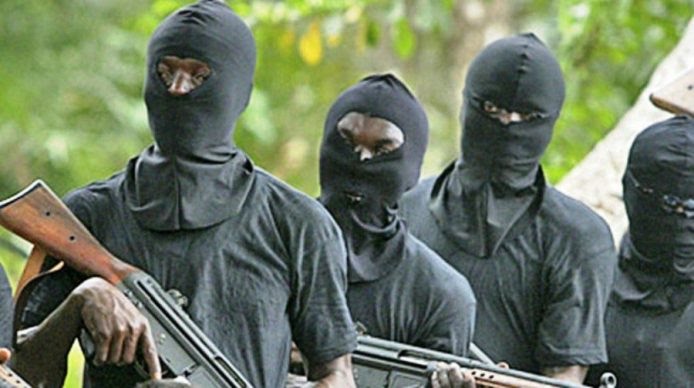
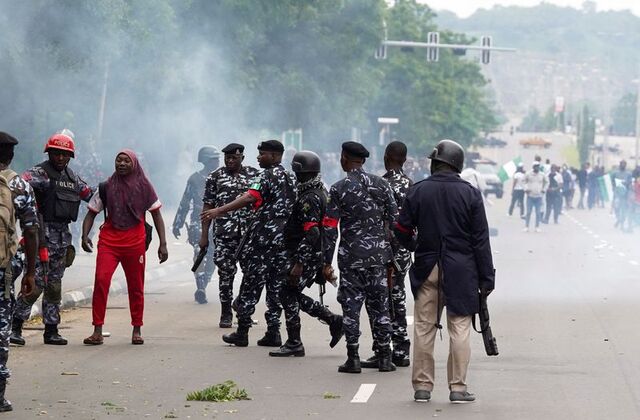
However, the first day of the protest witnessed widespread violence and lootings across major cities, with many protesters reported dead.
The major flashpoints were in Kano, Borno, Yobe, Kaduna, Gombe, Bauchi, FCT Abuja, Niger, Jigawa and Nasarawa States.
Some of the states have already imposed curfew in a bid to contain the situation.
Addressing a press conference, the IGP, who knocked the promoters of the protest for being nowhere around to lead it, urged them to end it.
He said the security agencies had been vindicated in their earlier intelligence that the protest would turn violent.
According to him, “It is with a grave sense of responsibility that I address you this evening. You will recall that upon several indications by various groups of their intent to commence a nationwide protest on 1st August, 2024, we rolled out several warnings based on actionable intelligence at our disposal indicating that some groups were mobilizing our youths for violent protests with intent to create anarchy in the country.
“While some groups claiming to be mobilizing for peaceful protests were doing so with violent undertones, refusing to cooperate with the Police on measures to be taken to guarantee peaceful protest.
“On the basis of this intelligence, the Police advised that the protests should be shelved at the instant time. Where the organizers insisted on going on with the protests, they were advised to stage the protest in confined locations.
“This would have enabled the police provide adequate protection for the protesters and isolate the criminals whose intention was to loot and destroy in the name of a protest.
“This we were doing in furtherance of our duty to protect lives and property and maintaining law and order.
“While we affirmed the constitutional rights of citizens to assemble and express their views on issues of national importance, we were wary about the dangers posed by agitation instigated by some individuals who have shown tendencies to be disloyal to the government of the day.
“Despite our suspicions, we showed good faith through professional conduct by providing security at strategic locations all aimed at ensuring peaceful conduct during the protest as the promoters pledged.
“Our men deployed nationwide went out with a clear brief to ensure that no one is unnecessarily harassed or intimidated. In places where there were court orders, we gave instructions for observance of same.
“Regrettably, events in some major cities today showed that what was being instigated was mass uprising and looting, not protest.
“Those who were in the forefront of promoting the idea of the protest were not around to lead it. Hoodlums have been let loose on innocent Nigerians and their hard-earned businesses and property looted and destroyed.
“The motive of the rioters was basically two; loot and destroy both private and government property. The destruction so far has been mind-boggling.
“There has been destruction in Kano, Borno, Yobe, Kaduna, Gombe, Bauchi, FCT Abuja, Niger, Jigawa. Police stations have been destroyed, there have been attempts to take over government houses, looting of government infrastructures, several warehouses and shops have so far been looted and, in several instances, completely destroyed.”
He decried that “ispite of the refusal of the protesters, for instance in FCT to adhere to a court order requesting that protest in Abuja should be at the National Stadium, they trooped into the streets, and yet the police provided security for them. At no point did we breach their fundamental rights even as they breached court order.
“In places like FCT, Kaduna, Kano and Gombe, among others, we recorded incidents of unprovoked attacks on security personnel, where one policeman has been reported murdered and others seriously injured.
“We alerted earlier on that terror elements may take advantage of the protests to infiltrate the crowd of protesters with suicide bombers. Yesterday in Lagos, our EOD team was informed of a suspected IED on Bank Anthony Way, Ikeja. The team responded swiftly and rendered safe what turned out to be an improvised explosive device (IED).
“Today in Borno State, we recorded one incident of an explosion which occurred in the crowd of protesters killing 4 instantly and severely injuring 34 others, many of whom are presently on danger list.
“We wish to advise law abiding citizens of Nigeria to heed and not dismiss warnings given by the police and other security agencies which were based on credible and actionable security intelligence.
“In the light of the current situation, the Nigeria Police Force has placed all units on red alert. Our officers are fully mobilized and prepared to respond swiftly and decisively to any further threats to public safety and order.
“We remain committed and resolute to protecting lives and property and ensuring that law and order are maintained across the nation.
“Groups who are hiding under the guise of exercise of a right provided in the Constitution to destabilize the country should remember that the same Constitution imposed on them the duty to obey the laws of the land and respect the rights of other citizens.
“The Police are equipped to respond appropriately to the unfolding situation and will get assistance from other security agencies, including the military if the need arises.
“We appeal to all citizens to remain calm and cooperate with the Police and other security agencies during this challenging period.
“Your safety is our top priority, and we will continue to take all necessary measures to ensure continued peace and stability in our country.”
EndBadGovernance: Nigeria police on red alert as Day-One protest turns bloody

Abdallah, others jostle for Pillars coaching job

0

Former Enyimba and Super Eagles assistant coach Usman Abdallah is among the frontrunners to take up the vacant role of Kano Pillars head coach as the former Nigerian champions intensify preparation for the 2024/25 season scheduled to begin on August 31, According Sports Extra reports.

Abdallah, who has worked as an assistant coach with Kano Pillars before, was among those that were interviewed on Wednesday as Pillars hope to replace Paul Offor.

Kano Pillars hired former Sporting Lagos gaffer Offor some weeks ago, but both parties parted ways mutually on Tuesday after a change in the club’s leadership.

Chairman of the club, Ali Umar, said Offor’s contract was terminated based on mutual consent, noting that the coach was hired by the former management that was dissolved by the Kano State Government a few days later.

In a swift move to hire a new coach, the new management interviewed Abdallah, former coach Ibrahim Musa, and their former player and assistant coach Ahmed Garba Yaro Yaro, among others.

According to a statement from the club’s media team on Thursday, a new coach will soon be announced for Pillars.

“In addition to the physical interviews, the management board is meticulously scrutinising the CVs of other applicants who could not attend in person,” the statement read.

“These candidates, hailing from various countries, including France, submitted their credentials during the June application window. The board is committed to conducting a thorough review to ensure the selection of a highly qualified technical adviser who will bring expertise and vision to the club.

The management board will announce the new technical adviser soon, marking a significant step in preparing the team for a successful season ahead.”

Kano Pillars, who won three consecutive NPFL titles between 2012 and 2014, returned to the topflight last season, finishing 11th in the table.

Ahead of the 2024/25 season, they are currently in Enugu, where they will be taking part in the Coal City pre-season tournament.

Waldrum blames Falcons flop on poor preparation

0

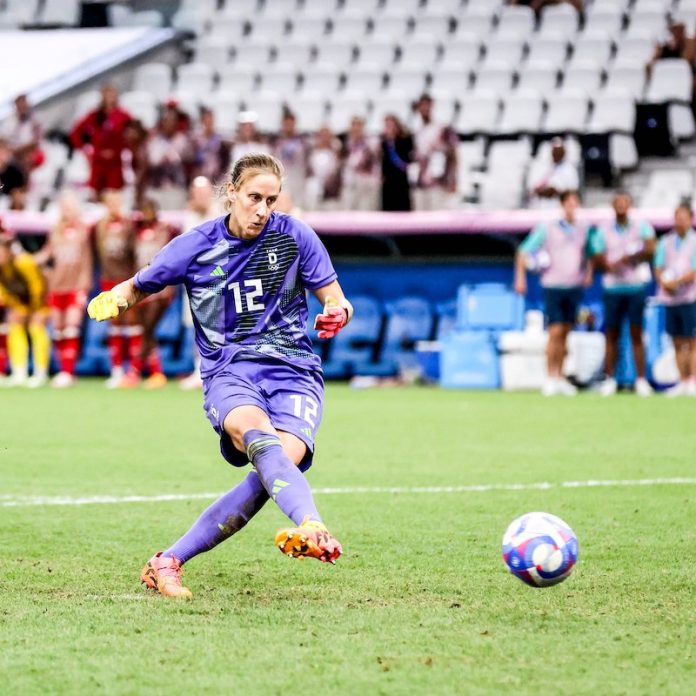
Super Falcons coach Randy Waldrum has blamed the team’s ouster from the women’s football event of the Paris 2024 Olympics on poor preparation, The According reports.

Nigeria were knocked out of the tournament in the group stage on Wednesday after a 3-1 defeat to Japan, ending the phase without a win, having lost their first two matches to Brazil and Spain, 1-0 on both occasions.

Japan raced to a 2-0 lead within 10 minutes, with goals from Maika Hamano and Mina Tanaka before Jennifer Echegini handed the Super Falcons a lifeline with the first half winding down. But there was still enough time for Hikaru Kitagawa to restore Japan’s two-goal lead before halftime with an exquisite free kick.

Nigeria needed to win by at least two goals to have any hopes of reaching the quarterfinals, but they couldn’t do enough against the 2011 World Champions as their performances in the first two games proved to be better.

“We prepared for them (all three opponents) based on the fact that we haven’t had a lot of time,” Waldrum said via ESPN.

“We missed the last window before the Olympics, and so we missed 10 days of good training before the Olympics.”

The Falcon camped for 10 days in Seville, Spain, ahead of the Games, and The According reported how their preparations were hindered by visa issues, which prevented some of the invited players from arriving camp early enough.

Although they were drawn in a tough group, expectations were still high about the chances of Waldrum’s team, following their performance at the 2023 FIFA Women’s World Cup in Australia and New Zealand, where they were eliminated on penalties by England in the round of 16.

The results from the Paris Olympics mirrored those of the 2008 team that lost 1-0 to the Korea Democratic People’s Republic, 1-0 to Germany, and 3-1 to eventual silver medalists Brazil.

Nigeria’s best outing—so far—at the Women’s Olympic football tournament was in Athens 20 years ago, where the Falcons finished in 6th place after exiting the tournament in the quarterfinals.

Opeyori thanks fans for support after exit

0

Nigeria’s badminton star, Anuoluwapo Opeyori, has expressed his heartfelt gratitude to fans who supported him during his Paris Olympics campaign, despite his early exit, According Sports Extra reports.

Opeyori acknowledged the unwavering support he received and emphasised his commitment to showcasing African talent in the sport.

The 27-year-old, ranked 10th in the men’s singles, faced significant competition in both matches he played but remained resolute and determined.

“Thank you, guys, again, for all the support. We showed what Africa has to offer the sport of badminton,” he said in a video posted on social media platform X (formerly Twitter).

“It might not be the result that we wanted, but it was a win for Africa. I will keep working hard, and I will keep striving to become the best player in Africa and in the world. On to the next one.”

Opeyori put up a valiant effort against China’s Li Shi Feng in his second Group N match in the Men’s Singles Badminton event, losing 2-0 (21-17, 21-17). Despite the defeat, he fought fiercely for every point against the world number six.

The match followed his earlier loss to Switzerland’s Tobias Kuenzi, his second defeat that marked his exit from the Olympics.

In his first match, Opeyori faced a challenging opponent in Kuenzi, who had previously lost to Li Shi Feng. Kuenzi secured a closely contested first set 22-20 and went on to win the second set 21-14 for a 2-0 win.

Reflecting on his journey, Opeyori underscored the importance of representing Nigeria and Africa on the global stage.

He pledged to continue his hard work and dedication to achieve greater success in future competitions, maintaining his goal to become one of the best players in Africa and the world.

Falcons unlucky, says Mbachu

0

Former Super Falcons star Stella Mbachu says Nigeria’s senior women’s football team were unlucky to have exited the women’s football event at the Paris 2024 Olympics at the group stage, According Sports Extra reports.

Randy Waldrum’s side suffered a 3-1 defeat to Japan in the final Group C game on Wednesday to crash out of the competition after losing all three games.

Paired alongside Spain, Brazil, and Japan, the Falcons were in for a difficult challenge at the Olympics. Their campaign got off on a bad note, losing their opening game to Brazil 1-0. In their second game against reigning world champions Spain, the Falcons put up a better performance than their opener against the South Americans.

After losing 1-0 to Brazil in their first game, the 11-time Women’s Africa Cup of Nations winners seemed poised to pick up a hard-earned point in their second game against Spain on Sunday, but a late goal from Barcelona star Alexia Putellas ensured the Spaniards snatched all three points.

In their last game against Japan on Wednesday, the Falcons conceded two goals before the half-hour mark before Jeniffer Echegini scored a goal that may be competing for the goal of the tournament to get Nigeria back in the game at 2-1.

However, Tosin Demehin was unlucky to have a decision ruled against her by Venezuelan referee Emikar Calderas, who awarded a free kick to the Asian giants in the last minute of added time.

Left-back Hikaru Kitagawa beat Chiamaka Nnadozie from the resulting set piece to take the game beyond the reach of the Falcons.

In a chat with According Sports Extra, Mbachu, who had 88 caps and scored 20 goals representing Nigeria, said her compatriots were unlucky during their Olympics campaign.

“Despite the defeats, I think they did very well; they were just unlucky,” she said.

“I don’t think they did anything wrong because I believed they did their best.”

Mike Ejeagha and the power of music

0

I grew up hating my name, Isaac, after listening to Fela Anikulapo-Kuti’s song, Upside Down, which he did with his American soulmate, Sandra Isidore, in 1976. Apart from his mother, the king-dethroning Madam Olufunmilayo Ransome-Kuti, Sandra was a major influence in the radicalisation of Fela, burnishing his art and heart with the socio-political wildfires called Blackness and Africanness spreading across the US, Europe and Africa to other parts of the world at the time.

Harnessing the genius of multi-talented designer, artist, painter and illustrator, Lemi Ghariokwu, whose brush drenched the sleeves of Fela’s albums in rainbowy colours, the Afrobeat god granted Ghariokwu the artistic licence to design and write the lyrics of his songs on his album sleeves. Ghariokwu made the best of the opportunity presented by Fela, soaring to world acclaim. The sleeve designs of ‘Yellow Fever’, ‘Zombie’ and ‘Beasts of No Nation’ are still vividly etched in my memory.

Not novel to the Nigerian music industry, the illustrations and lyrics on Fela’s album sleeves made it easy for his lovers and haters to understand the anger in his protest songs. Personally, the illustrations and lyrics made me internalise his gospel, though I was young.

Despite being a consummate Christian, my father, who was his fan, didn’t know he was planting the seeds of Black African consciousness in me by buying Fela’s albums. I remember my mother also bought the 1973 album of St Gregory’s College teenage students’ group, Ofege, titled ‘Try and Love’.

Leader of the group, Melvin Ukachi, revealed that Ofege was an abridged form of ‘O fo gate’, which means ‘he jumped the gate,’ a term used for Army deserters on French leave aka AWOL or students who left the dormitory without permission.

Isaac!? “No, I’m not sick,” I would say – in derision of my name – and would tell whoever cared to listen how wrong it was for me, a Yoruba, to bear a Jewish name when Jews don’t bear Yoruba names. In my fledgling ideological radicalism, I saw reason in Fela and Sandra, who sang in ‘Upside Down’ that, “Englishman get English name, American man get American name, German man get German name, Russian man get Russian name, Chinese man get Chinese name, but African man no dey get African name…everything disorganise, patapata…”

As a youngster, I never plucked up the courage to tell my parents how much I disliked the Isaac name. Who born me? But when I came of age, I did tell my father how kobo-wise and naira-foolish I think it was for anyone to go to Jerusalem or Mecca on pilgrimage in the hope of making it to Paradise. I also told him how illogical I think it was for Nigerians to communicate with God in foreign languages such as Arabic, Italian, Hebrew etc when God understands all languages.

Fela intended his songs as a tool for social change. With the cult following he enjoyed, Fela knew his songs would sprout disciples in many nations. Though I didn’t smoke marijuana, I became a disciple of Fela’s gospel, always leaving my shirt unbuttoned at the chest, a behaviour which often fetched my mother’s swift ‘ifakun’ slap on my flat-screen chest, ‘twai’; ‘it’s not in this house you will become a Fela disciple! Button up, you goat!’

Just 18 when he met Fela, Ghariokwu had done a portrait of the Abami Eda and went to present the work to him. Fela reportedly offered Ghariokwu four times the worth of the painting but the creative turned down the money, thus earning a lifetime ticket to Kalakuta Republic.

As a result of his diligence with Fela, self-taught Ghariokwu achieved international repute, exhibiting in major museums across the globe, granting interviews to global media organisations, including CNN and designing album covers for Bob Marley, Osita Osadebe, Kris Okotie, Lucky Dube, Miriam Makeba etc. Also, he designed album covers for 2Face, Lagbaja, Sound Sultan, Falz, Brymo and record labels such as EMI, CBS and Ivory Music. He also recorded a song, Omolakeji, in 1992, featuring Daniel Wilson aka Mr Ragamuffin.

At 94, folklorist and master guitarist – Gentleman Mike Ejeagha – is at the Departure Lounge of Life International Airport, awaiting his last flight. A soft female voice wafted through the airport’s Public Address System, saying: “Passenger No 01-08-1932, Pa Mike Ejeagha, your attention is needed. You are about to board the wrong flight. Please, go back to the Arrival Lounge, a convoy is waiting to take you back home, courtesy of popular comedian, Brain Jotter.”

And Gentleman Ejeagha burst into tears.

In music, folderol is a refrain with no meaning though it may be rhythmic. ‘Gwo, gwo, gwo, ngwo’ is a folderol, just as ‘Eweku ewele’, the Yoruba version of ‘Gwo, gwo, gwo, ngwo’ is. ‘Gwo, gwo, gwo, ngwo’ and ‘Ewku ewele’ are refrains in the Igbo and Yoruba folktales that showcase how little Tortoise differently tricked the almighty Elephant. ‘A o m’erin j’oba’ is the Yoruba version of the folktale. At best, both refrains signify the footfalls of the Elephant: ‘Gwo, gwo, gwo, ngwo’, ‘Eweku ewele’.

Ejeagha had only been known within the resilient Biafra enclave until fate blew fame his way recently, after his 1983 song, Ka Esi Le Onye Isi Oche, became the 14th most searched song in the world because the song went viral when Brain Jotter created a funny dance step and used the song in his comic skit.

In Igbo land, the name Mike Ejegbha is synonymous with storytelling such that whenever someone is engaging in a long speech, the audience would say, ‘Akuko Mike Ejeagha,’ meaning ‘Storytelling like Mike Ejeagha’.

Ejeagha simply means ‘Safe journey’. As a nonagenarian, one of the prayers of the Imezi Owa-born indigene of Enugu State would include a safe journey back home to his Maker for he had run a good race, fought a good fight and was waiting on his Lord before Brain Jotter appeared in the sky to give him fresh wings to fly, once again, among stars. It’s destined that Ejeagha’s song would be sung by this generation.

You can’t enjoy Ka Esi Le Onye Isi Oche if you play it on mobile devices. Get the music on a stereo and hear the booming ‘udu’ tempering the classic guitar work played on D major scale. It’s crazy.

Over the years, degeneration in moral values has seen Nigerian society abandon didactic musical messages for the current hurricane of irritatingly noisy music full of fury, materialism, sex, ritualism and outright stupidity.

Music is powerful. I should add ‘very’ to the power of music. The walls of Jericho fell to music. David won the heart of God with music. Music is the food of love. It’s also the fuel for war. Music made me hate Isaac till tomorrow. Music is very powerful. Music is making Gentleman Ejeagha float on cottony clouds in the evening of his life, fulfilling the prayer of Everyman – to finish well in life; to not wear rags after donning coats of many colours, to not eat bone after eating choice meat.

By the way, who invented music? Who invented dance? There’s no historical evidence as to who invented music but dance, one of the most expressive physical art forms, evolved from prehistoric times as a celebratory worship form in spiritual rituals, creating family and communal bonds. Egypt and India are believed to be the earliest roots of dance.

There’s an unmistakable affinity between Igbo and Yoruba languages despite the political wedge being driven between the two great peoples. The Igbo call the elephant ‘enyi’ while the Yoruba call it ‘erin’. The mouth is ‘onu’ in Igbo, it’s ‘enu’ in Yoruba just as the ear, called ‘nti’ in Igbo, bears ‘eti’ in Yoruba. The hand is ‘aka’ in Igbo and goes by ‘apa’ in Yoruba while the nose is ‘imi’ in Igbo and ‘imu’ in Yoruba. Torotoro is turkey in Igbo while it’s tolotolo in  Yoruba. Goat, ‘ewu’ in Igbo, is ‘ewure’ in Yoruba. Corn is ‘oka’ in both languages just as fever is ‘iba’ in both.

In 2019, the Ooni of Ife, Oba Enitan Ogunwusi, and Ohaneze Ndigbo agreed that the Igbo once lived in Ife. The Ooni, who said the Yoruba were aborigines of Ile-Ife, added, “We have to say the truth and the truth must set us all free, we (Yoruba and Igbo) are blood brothers.” But the National Deputy Publicity Secretary of Ohanaeze Ndigbo, Chuks Ibegbu, said the Igbo were the original occupants and owners of  Ife before the arrival of the Yoruba. Historians should shed light on the issue.

A retired Associate Professor of English, Obafemi Awolowo University, Bolaji Aremo, whose research affirmed both Igbo and Yoruba languages were from the same parent language, said the similarities suggest that both languages lived in the same community at a time and that both ethnic groups were of the same ancestral stock.

Ejeagha is Igbo, yet the Yoruba dance ‘Gwo, gwo, gwo, ngwo’. The Igbo danced to Sina Peters’ ‘Ace’. Music is the powerful food of love.

Need to secure the prisons

0

AFTER a lengthy waiting game, the Nigerian Correctional Service has released more names and pictures of inmates who escaped from the Medium Security Custodial Centre in Suleja, Niger State. On April 24, rainfall destroyed the walls of the Suleja prison and led to the escape of 118 inmates. With most prisons constructed decades ago, the Federal Government should move post-haste to rebuild the structures.

On June 6, NCoS spokesman, Abubakar Umar, stated that 23 of the fleeing inmates had been recaptured. The NCoS followed this up on June 15 by publishing the names of 18 inmates on its website. Recently, Umar released 13 new names and pictures of the escapees. The post had the names and pictures of 31 persons, including those of the 18 inmates, published on June 15. This is a small step forward.

It is an arduous task to recapture absconders. It is even more complicated in Nigeria, where technology is in scant use. For this reason, the escapees are mocking the system.

Indeed, most of the custodial centres in Nigeria are old and vulnerable to attacks by gunmen, who set criminals and bandits free.

Consequently, jailbreaks have occurred in the recent past in Owerri, Imo State, Kuje in the FCT, Kabba and Koton Karfe in Kogi, Abolongo in Oyo, Jos in Plateau, Mandala in Kwara, Ijebu-Ode, Ogun State, and Agbor in Delta State.

Media reports said 837 inmates fled from the Abolongo centre in October 2021. Earlier that April, the Owerri centre witnessed the escape of 1,844 inmates. It was described as the single largest jailbreak in Nigeria’s history. In the Benin and Oko centres in Edo State, 1,993 inmates escaped in October 2020.

In July 2022, 64 hardened Boko Haram terrorists were part of the horde that escaped from the Medium Security Custodial Centre after a deadly assault by Islamic terrorists in Kuje.

Recently, Isa Muhammed, one of the escapees in Kuje, and his brother, Nasiru Mohammed, also known as ‘Danger,’ were paraded for the murder of a retired Army general in Abuja. That is the costly price being paid for the official laxity at the prisons.

Similarly, most of the escapees of recent jailbreaks are high-end criminals and deadly Boko Haram terrorists.

From physically old and dilapidated infrastructure to understaffing and unhygienic, overcrowded cells unfit for humans, many fundamental problems are dogging Nigeria’s prison system. Most of the reformatories were constructed in colonial times. The cells are narrow. The brittle walls collapse easily when attacked due to age. The heinous criminals exploit this factor whimsically. This cannot be overcome in a day.

Overcrowding is the most noticeable impediment to a virile correctional system in Nigeria. This makes the prisons tough, a major detraction from being a correctional centre.

The awaiting trial inmate crisis hinges on the slow, crooked justice system. The police take a share of the blame for their arbitrary arrests and poor record keeping. The judiciary is sluggish in dispensing with cases before it. State governors aggravate this by refusing to sign death warrants; some condemned inmates remain for decades in prison.

Therefore, the government must do more to ensure that prisons are well-guarded and secure. Justice must be quickly dispensed.

Nigeria should explore the reforms in Europe, where some countries engage in public-private partnerships. In 14 of the 16 states in Germany, prisoners are mandated to work in the daytime and return to the centres at night. To free the prisons from overcrowding, some offences should attract only community work.

The National Assembly should amend the 1999 Constitution to remove prisons from the Exclusive Legislative List to the Concurrent List. This will ensure that states build prisons and reduce overcrowding.

Banks woo customers to digital channels

0

Some banks have started wooing customers to use their digital channels as the hunger protest commenced on Thursday.

The According observed on their social media platforms and via emails sent to their customers on Thursday amid the nationwide protest.

In an email, FirstBank told its customers, “Our alternative channels are available, We are here to ensure you have seamless transactions across all our touch points. To support your financial needs at every point, you can use the following alternative channels available 24/7 for all your transactions.”

United Bank for Africa, via its Instagram page, assured customers, “We are just a tap away! Experience the convenience of managing your finances on the go with our digital banking platforms. Seamless transactions anytime, anywhere.”

FSDH Merchant Bank also, via its Instagram page, said, “Our electronic channels are up and running. All our electronic channels are fully operational to help you transact with ease.”

None of the banks operating in the country announced a closure due to the hunger protest and some bank branches visited by The According on Thursday were open for business.

The Access Bank branch along Old Ojo Road close to First Gate in the Maza-maza area of Lagos was open on Thursday morning and all its ATMs were also dispensing.

The Fidelity Bank branch next to it had its gates locked even though there were security guards and an armed policeman present.

The same scene was at the bank’s branch near the Festa Link Bridge.

Zenith Bank along Old Ojo Road, close to First Gate, was not open, but its ATMs were available to members of the public.

Polaris Bank branch at Festac was open to customers.

The spokespersons of two commercial banks told The According on Wednesday, that they were going to open.

“Yes. The bank is opening…watching the situation,” one of them said, and another said, “Oh yes, we are opening tomorrow, but services will be skeletal as we monitor developments.”

Aside from banks, shopping malls were closed around the Festac area and markets too, like the one at Cele Bus Stop.

A popular grocery store around Apple Junction told its staff members not to wear their customised outfits to work for security reasons and the eatery nearby, which was open, had the presence of armed police in front alongside their security guards.

While there have been concerns about the threat of violence during the protests, the economic impact of the protests has also been highlighted.

The Centre for the Promotion of Private Enterprise had cautioned that the protests could inflict an estimated daily loss of N400bn, with severe consequences for the country and its citizens.

The Director/CEO of CPPE, Dr Muda Yusuf, disclosed this in a statement on Sunday, saying, “The protests could inflict an estimated daily loss of N400bn, if not properly managed. The consequences of such a huge loss for the country and its citizens would be very severe.

“There is a high risk of shutdowns and disruptions in major sectors of the economy. This is in addition to risks to lives and properties of innocent citizens and corporate bodies.”

The protests, organised by various groups in the country, are aimed at drawing attention to the country’s economic woes, including high inflation, production costs, unemployment and hunger.