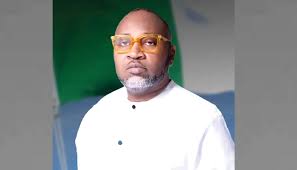
Unknown gunmen have reportedly kidnapped the Caretaker Committee Chairman of Kabba Bunu Local Government Area, Zacheous Dare Michael.
TVN learnt that the incident happened on Friday evening along the Kabba-Okene expressway in Kogi State.
Michael is reportedly contesting for the chairmanship of the ruling All Progressive Congress, APC, in the local government ahead of the Kogi State council polls slated for October 19, 2024.
Sources told TVN Michael attended a meeting in Lokoja, the Kogi State capital, before his abduction.
The kidnappers, who were reportedly heavily armed, shot sporadically at the vehicle of the Caretaker Committee chairman before capturing him and other members of his entourage, a security source in Kogi State confirmed to TVN on Friday evening.
Responding to the development, a WhatsApp platform, Owe Political Platform, posted: “Confirmed report says that the CTC chairman and some of his aides, including Bank Andrew, have been kidnapped by unknown gunmen.
“We, the administrators of the Owe Political Platform, are appealing to all members to join in prayer for their safe release without harm. Anyone with credible information that could assist in their rescue is urged to contact the police May God show His face and touch the hearts of those responsible.”
All efforts to speak with the Police Public Relations Officer of the Kogi State Police Command, SP William Ovye Aya, proved abortive.
At the time of filing this report, calls and messages sent to his phone lines were not responded to.
BREAKING: Kabba Bunu Caretaker Committee chairman allegedly kidnapped in Kogi
Anambra hospital killed my baby because I am disabled – Visually impaired woman

Amarachi Oghaeri, a visually impaired civil servant in Anambra State is still traumatised by her harrowing birth experience. She tells IKENNA OBIANERI how her newborn died due to alleged negligence of health workers in a primary health centre, how she went through remedial surgery after undergoing a caesarean section, and her quest for justice
How has it been working with the Anambra State Govt as a visually impaired civil servant?
It has been good. I work with the Anambra State Ministry of Education. I am 35 years old and hail from the Ihiala Local Government Area of the state. My husband, who is also visually impaired, is from Umuahia in Abia State.
Did you lose your sight at birth or later in life?
I was not born blind. I lost my sight at the age of four to an ill-managed eye problem. When the problem started, a doctor told my parents that my eye needed to be operated on. He initially carried out the surgery on one eye, and within a week, operated on the second one without waiting for the other to heal properly. During the surgery, the doctor made a mistake by cutting an artery, which led to internal haemorrhage and other complications. That was what led to my blindness.
What challenges have you faced since you became visually impaired?
Growing up, it was very difficult to come to terms with the fact that I was not like other children. I still saw myself thinking and doing things sighted children did. If they jumped, I would jump but I kept getting injured until it dawned on me that my sight was a limitation.
It was not easy until my parents took me to a special school for the blind where I learnt to cope both physically and mentally. When I finished the special school, I proceeded to a public secondary school, where I went through lots of challenges among sighted students.
At times, finding someone to assist me in carrying out some chores or activities was difficult.
How did you meet your husband and what are the daily challenges as a visually impaired couple?
We met during our National Youth Service Corps days. At first, I didn’t believe he was serious when he proposed. I felt the union would not work but after he persisted, we got married. It has been challenging both financially but we have been managing to cope and are happy with each other.
You lost your newborn shortly after delivery. What actually transpired?
A few months ago, I lost my baby shortly after childbirth due to the negligence of the doctor and other staff on duty. That was my second child.
I became pregnant in late 2023 and registered for antenatal care at a primary healthcare centre in Okpuno, a community in Awka South Local Government Area.
Due to lack of money, I stayed for some months before registering for ANC. At that time, there was no money to even eat well. It was my mother that gave me money to register for ANC.
What happened next after the registration?
I registered for ANC in December 2023 and continued going for checkups until my due date. At seven months, I was asked to go for a scan and the result showed that my baby was fine.
However, before my due date, I felt uncomfortable and asked the matron if I could go for another scan, but she said no.
On Saturday, April 9, 2024, I went into labour at midnight and was rushed to the PHC by my husband.
We were made to wait until 5 am unattended to before one of the nurses on duty came to inform us that it wouldn’t be possible for me to have my baby at the hospital.
What did the nurse say exactly was the reason?
She said the hospital could not handle my delivery and would have to refer me to another hospital. We were surprised because all the while that I was going for ANC, nobody said anything like that to me.
Confused, my husband called the matron, who said she was coming immediately, but never showed up until late in the evening of that fateful day and referred me to a private hospital, in Isuaniocha, Awka North LGA. The hospital was quite a distance from the PHC.
How did you get there?
Before the matron arrived, my mother and sister had come, and together with my husband, they chartered a tricycle that took me to Isuaniocha that night.
We arrived at the hospital at about midnight and were told to deposit N120,000.
My husband didn’t have the money and had to start calling and asking people for help. We got some money but it was not up to the amount demanded.
What happened thereafter?
Because the money was not enough, the doctor and nurses refused to attend to me. I was in great pain and kept crying.
The few times the doctor came out was to tell me to stop making noise.
After some time, I was given anaesthesia and I became unconscious. I didn’t know when the C/S was carried out but my mother told me that when she walked into the theatre during the surgery, she saw a pool of blood on the floor and had to ask the doctor what was happening.
According to her, the doctor held her hands and said, “Madam, madam! If you want your daughter to be alive, bring N40,000 now so we can buy blood. Either you borrow from the bank or call relatives to bring it.”
My mother had to call my brother and younger sister for more money. They transferred N40,000 into the doctor’s account.
The man in charge of the blood bank had to come that night to supply two pints of blood for transfusion.
Where was your husband when all this was happening?
He was not allowed to come close to the theatre. The health workers and other staff were very rude to him, maybe, because he is visually impaired.
After the operation, the doctor called him and my mother into his office and told them to pay another N100,000 for treatment to continue.
As they were trying to negotiate the payment, he ordered them out of his office.
What about the baby at this point?
I became conscious at about 2 am while still inside the theatre and was in so much pain. The doctor didn’t give me any pain reliever. I experienced excruciating pain till daybreak.
I didn’t see my baby, and when we asked the doctor, he said when the baby, a male, came out, he had complications.
According to him, the placenta ruptured and he blew the uterus, scattered the uterus, and they needed to arrange the uterus, and while trying to arrange the uterus, the baby died.
The doctor later said after some efforts, my baby was brought back to life.
He just kept on coming up with several stories like the baby ate faeces (meconium, the early stool passed by newborns, usually within the first 24 to 48 hours after birth.) in the womb, and it poisoned him.
The doctor also said that my baby had become an imbecile because he stayed too long in the womb due to prolonged labour and that he was better off dead.
What exactly did he say happened to the child?
According to the doctor, my baby stayed for about two days before dying.
But I am unhappy that the hospital did not let us feel or touch him. At least, my mother was there and could have seen him.
His care was not prioritised; he was not placed in an intensive care unit despite the struggle he went through during the labour and delivery process.
The doctor said that due to the extended labour, when the baby came out, he was placed on intravenous fluid for several hours but we later found out that he lied to us.
Based on our findings, they never gave him the medical attention he required and they abandoned him because we were disabled.
How did the doctor explain that to you?
But while the baby was still alive, the same doctor told my husband and mother to bring more money so he could buy the things needed to address the issues he observed.
The doctor collected money from my husband at about 9 am that fateful day and left. We didn’t see him again until about 10 pm.
He came back without buying anything for the treatment he claimed. Instead, he went straight to where my baby was kept and repositioned him.
One hour later, he told my mother and husband that the child was dead.
In the doctor’s absence, what were the nurses doing?
Before leaving, the doctor instructed them to stop attending to me and my baby. Even when the child died, we were not told until two days later.
How did you learn about the death since you were still unconscious?
At first, even my husband and mother did not tell me about it. They were hiding it from me because of my condition at that moment.
Then, I was drifting in and out of consciousness and my mother was watching over me.
During one of the moments I was a bit conscious, my cousin called and I overheard her consoling my mother over the death of my baby. That was when I got to know that my baby was dead.
At that point, I just started praying to leave the hospital alive.
It was when I fully regained consciousness that I was informed but it was not news to me anymore.
How has this affected you?
After my baby was buried, I stayed for one week at the hospital.
Whilst there, complications kept arising. I didn’t eat for four days, had no bowel movements, and was still taking drips.
At a point, the doctor recommended I go for another surgery, which I refused until they finally discharged me.
But then, I was still having health challenges until some colleagues and family members took me to another hospital where I was operated and several errors made by the first doctor were corrected. It took me a while to fully recover.
Who recommended the first hospital to you?
It was the matron at the PHC in Okpuno that recommended the health facility. We got to know that the doctor works at the public health department in the Anambra State Ministry of Health.
We also got to know that he is allegedly not a qualified doctor, but unfortunately, we didn’t know all these facts because we were referred there by someone we felt knew better.
Overall, how much did you spend?
When I was discharged, the doctor gave us a bill of N385,500. My mother, who was tired from crying went to remind the doctor that the baby he was charging so much for his delivery was dead and begged him to reduce the bill.
He only removed N25,000, bringing the bill down to N360,000.
We were able to raise some money after reaching out to people for help.
By the time we had raised a substantial amount of money, my husband met with the doctor again and begged him to release me so I could get better treatment elsewhere as my condition was getting more critical.
He refused and told my husband to charge him to court or do his worst. He insisted that the bill must be paid in full.
Having gone through these ordeals, do you want justice?
What the doctor did was a big damage. His negligence and incompetence led to the death of my son.
He didn’t show any form of remorse for what happened at his hospital.
But sadly, we can’t press for damages or compensation. At the moment, things are difficult. The money we borrowed for my treatment, we are yet to finish paying.
What I want the Anambra State Government and the Ministry of Health to know is that such a hospital is meant to be closed down.
There are many of such hospitals around and they are not qualified to treat human beings because this is human life.
The state government should look into our case and have the doctor’s activities investigated
My husband and I need help. Since I left the hospital, feeding has been a major challenge. The salary I earn is small and can’t offset the bill. My husband, who is a lawyer, is still looking for a job. After youth service, he worked briefly in the civil service.
At this point, we need help to survive and are using this opportunity to call on well-meaning individuals to hear our cry and help us.
Most times, we go to bed on an empty stomach. What happened during my delivery was a setback to us, and we are yet to recover from it.
Though not very strong yet, I have resumed work but the cost of transportation is eating deep into my salary and at the end of the day, nothing is left to cater to our needs. We need help.
I am using this opportunity to call on well-meaning Nigerians to come to our aid.
Some people are using you and your husband’s photographs to solicit funds on social media. Are you aware of this?
We have heard about it but unfortunately, the Android phone I had was stolen when I was pregnant
We did not know what was happening online until some of our friends called my husband to tell him about it. My sister also came across the post.
We are surprised about this because we don’t know those posting about us on social media. It is bad for people to use our situation to enrich themselves while we are here struggling.
As I am talking to you now, we don’t have anything. We don’t even know where and when our next meal will come.
We struggle to eat, and it is with the help of people, yet, some people are using us to solicit help. Those doing that should stop.
FG should address issues raised by protesters – Don

Rights activist and Convener, Country First Movement, Prof. Chris Nwaokobia, shares his thoughts with ISMAEEL UTHMAN, on the nationwide protest, the way out of the challenges confronting the country, among other issues
What critical issues stimulated your declaration that the protest was long overdue in Nigeria?
Nigerian people are facing hunger, unemployment, food scarcity, inflation, and insecurity, to mention a few challenges. Before 2015, insecurity was largely restricted to the North-East, scanty in the North-West with a few acts of terror in Abuja. But since after May 2019, what we have seen is a democratisation of terror. Terror has become a national spectacle; no region is left out of the insecurity challenge.
It is a tragedy of sorts. Currently, there is a new business apart from corruption in the government, which is kidnapping for ransom. With all of these, to keep quiet is strange, though the Nigerian people have been marooned or chained, manacled, and gagged. I think that the young people, the Gen Z generation, have risen up to challenge the status quo and ask for a better deal. Chapter 4 of the Constitution of Nigeria guarantees freedom of assembly, freedom to hold contrary opinions, and freedom to protest, albeit peacefully.
So, I advocate that the government should engage with the people, especially the young ones. The government should stop provoking the young people by threatening them on the protest. The government should stop deploying state resources to compromise young people. If you go around and look at the news media, you will see young boys and girls addressing press conferences, condemning the nationwide protest, and dissociating themselves from it.
Everybody cannot be part of the protest. Have you ever seen any protest in the world where everybody is involved? Why are they trying to lower the moral and ethical bars of this country? I have a big concern about how the government handles these things. We already have kidnapping for ransom as a monstrous, albeit demonic business in Nigeria, very soon young people will begin to threaten the government with protest, knowing that dollars will start rolling in because the government will try to compromise the process.
The people in power are messing up with everything that has to do with our dignity, integrity, credibility, and values as a people. I think that what we must do as a people who truly love Nigeria is to ask the government to address the fundamental issues raised by the protesters. That’s the way to move our country forward.
But insecurity has been with us since the era of former President Goodluck Jonathan. Why blame the All Progressives Congress government alone?
I know there was insecurity from Olusegun Obasanjo down to Goodluck Jonathan’s administration. But it has got worse under the APC governments. We have spent more resources in the name of fighting insurgency and ensuring security under the APC.
They have messed up everything that has to do with the security of lives and property in this country. That’s why several people can’t even travel by road from Abuja or Lagos to some parts of the country. What the government should do is to improve security of lives and property and stop threatening those who are disappointed with how things are.
Things seem to be getting worse with every successive administration. What do you think is responsible for this?
It is simply because of the failure of successive governments, and that is why Nigerians are beginning to ask and demand new margins and leadership. Nigerians are asking for the restructuring of this country because most of our people are losing faith in the Nigerian enterprise and leadership as presently constituted. So, the challenge, more than ever before, is a call for government and leadership to restructure this country and allow true fiscal federalism, devolution of power, and resource control.
When you do that, people will begin to have strong faith in the Nigerian enterprise. People will begin to believe and see that Nigeria does not belong to a few people or a special class of individuals. When you build that faith, patriotism will grow, and Nigerians will begin to have greater love for their country; people will invest in the country and crime will reduce. That is why some of us, who know that President Bola Tinubu was one of those calling for the restructuring of Nigeria, are asking him to begin the process pronto.
If he does not, very clearly, his administration will be worse than that of Muhammadu Buhari, and the circle will continue unbroken until Nigeria is restructured to allow devolution of power and true fiscal federalism, where the component regions of this country will control their wealth, contribute for the upkeep of the centre, fix internal and connecting roads, grow their individual’s economies, and create what you call healthy competition as we had in the First Republic. Except that is done, every successive regime will fail compared to the one before it.
Do you think Atiku Abubakar or Peter Obi would have done something differently and positively?
Anybody who emerged and made restructuring of the country and our economic protocol the chief responsibility of the Federal Government would have done better. Any government that emerged and ensured that we had healthy competition among the states and the component region would have done better. Any government that emerged and believed that the time had come to go back to the Independence Constitution or the Republican Constitution of 1963 would have done better. But had Obi or Atiku come without those fundamental reforms, they would also underperform like Tinubu is underperforming.
How do you respond to critics who say the planned protest is politically motivated?
Every protest that calls for human rights, makes demands for a better deal and asks for reforms is ab initio political. In other climes, such protests are funded and populated by the opposition parties. I don’t know where this wrong intellectual norm came from. What protest is not political? You’re criticising a sitting government; that makes it political.
A protest against hunger when you have a government in place is political. No protest calls for human rights protection, good governance, job creation, and a better deal for the majority of the people that is not political. The question is: is the political protest partisan?
Who says that a party cannot support or sponsor a protest? The time has come for us to learn to think deeply and not let people give us false knowledge or half-truths. What is important is that the Nigerian people are saying no to hunger, no to joblessness, no to poverty, no to bad governance.
What is your reaction to those who rallied against the nationwide protest in Lagos, and others who held press conferences to dissociate themselves from the demonstration?
It shows how badly our moral values, tendencies for due process, integrity, and sane conscience have been dealt with by the present administration. Many of these young people who addressed press conferences; if you look at them and watch their demeanour, language, conviction, and confidence, you will find out that they are people making statements against the dictates of their conscience.
They have perhaps been compromised to do so. Everybody is not expected to join a protest. Unfortunately, they do not know that whatever they do today will stand in judgment against them tomorrow. I have couched a word that is becoming popular in Nigeria, cashtivist; activist becoming cashtivist. Those are the people who collect money from the government and sit in front of cameras, claiming to dissociate themselves from a protest that they did not plan, a popular protest.
It is all hubris. The time has come for us to talk to the souls and consciences of our young people and ask them to keep quiet when they have nothing valid to say, ask them to stay at home when they have nothing constructive to say or do. The time has come for us to put our country first. I want to say boldly that truth is a pristine street in the city called ‘brotherhood’.
I also want to say that opposition is a beautiful boulevard in the city called patriotism. The time has come for our people to learn to put their country first and to love their country and reduce this penchant for quick gain and money. The only thing you can say about those who are jumping up and down to oppose the protest is that they want cheap and quick money.
We now have pro-hunger protesters. They are hungry and they’re happy. That is Stockholm syndrome; they are hungry; and they are praising their oppressors. They are hungry and for a mess of porridge, they are happy with those who have left them hungry; they are saying to those who are saying no to hunger that ‘you’re wrong’. Nothing can be more demeaning; nothing can be more embarrassing. But I think the values will change when we’re able to fix our country.
The 2020 EndSARS experience is a major fear of state and non-state actors in the nationwide protest. What do you think was responsible for the violence that greeted the EndSARS protest and how can the government and youths avoid a recurrence?
Every Nigerian who is sincere in his or her conscience knows that the violence that ended the EndSARS protest was procured by operators of the state. We know how certain thugs were procured; we saw louts who were dropped in security vehicles, we saw hoodlums who were protected by state operators and asked to infiltrate and mess up what otherwise was a peaceful protest for almost 10 days. My appeal to the government is that they should understand that those protesting are not enemies of the government.
Those who are protesting are not stooges of leaders of the other political parties. The time has come for us to make people understand that the fear of the protest degenerating to violence is only valid if the state operators want to provoke violence. But if you leave the protesters to protest the way they have planned it, it will ultimately be very peaceful.
The only thing is that the protest will bother those who have inflicted hunger and poverty on the Nigerian people. The protesters do not intend to destroy their country, they intend to make their country good, and that’s the reason they’re protesting. Those who are scared of violence are those who intend to provoke violence. Those who do not want a peaceful protest are those who ultimately will procure vandals, bandits, and villains to provoke violence. But I think and I pray that the operators of the state understand that the world is watching, and nobody wants the country to go up in flames.
How do you think the government can address the widespread hunger and poverty in the country?
The government needs to rework the system. The first thing the government should do if it wants to succeed is to implement protocols and processes that border on restructuring. The second thing is to allow or declare a state of emergency in agriculture. States must be allowed to run most of what affects them. Then, largely, make Nigeria safe and secure to attract fundamental foreign investments, and very importantly, protect the farmlands against those whose business is kidnapping for ransom, so that people can go to farms to deal with food shortage and food insecurity.
These are fundamental things that we must do. If we fail to do so, no matter how many sweet words we throw up in the political amphitheater, Nigerians will continue to agitate. No matter how much money is thrown into the space to frustrate the protests, agitations will continue to come again and again. The fundamental challenges of government are to ensure a new deal for Nigerians, make government and governance more responsible and responsive to the people, and ensure the people have cause to smile.
How will you address some Nigerians who feel discouraged by the country’s situation?
When poverty, hunger, and disease become pervasive, people will be discouraged. Leadership must show direction. I think that it all borders on leadership. Leadership must build faith and confidence. Leadership must show that it cares about the Nigerian people. Leadership must show a concern for resolving the many contradictions that hold our country down. Except that is done, it will be difficult to inspire faith and confidence, and that is what the young people are trying to do in the name of protestation. My advice is that they must conduct their protest with the highest level of discipline and decorum.
What solutions do you propose to tackle the poor value of naira and its impact on the economy?
I had talked about the need for the government to ensure that anything we produce in Nigeria is procured in naira. The dollar is not our currency. I thought the government would take that advice immediately, but why would they when they steal and loot in dollars? It has become evident that naira will continue to suffer under the dollar.
One of the instances is when they (government officials) buy cars; instead of going for Nigerian-made cars as every other responsible government does, they buy SUVs and imported vehicles, and they pay in foreign currencies. They steal and plummet the naira against the dollar. The time has come for those who superintend over leadership to become responsible and responsive. They must put the country first.
Unless we deepen the frontiers of production rather than consumption, our quest for a currency that can stand against other currencies will be distant. Our search for that republic that fares well in terms of economy and the value of our currency will be like the wait for Godot if we continue to make the wrong decision.
CMD solicits govt support for Plateau hospital

The Chief Medical Director (CMD) of Plateau State Specialist Hospital, Prof. Christopher Yilgwan, has commended Governor Caleb Mutfwang for his continuous intervention in the health sector.
Speaking with journalists in Jos on Friday on the occasion to mark his one year in office, Prof. Yilgwan highlighted the significant progress made under his leadership, attributing much of the success to the support from the state government.
Recounting his achievements over the past year, Yilgwan said, “The improvements we have achieved would not have been possible without the backing of His Excellency, Governor Caleb Mutfwang. His support has been instrumental in addressing some of our most pressing challenges.”
“When I assumed office, the hospital faced severe staffing shortages, with newly recruited staff uncertain about their future due to unpaid salaries. By the grace of God, we were able to stabilize this situation, but challenges remain. We urgently need more nursing staff and specialists to provide comprehensive care.”
“Also, the environment for work was not conducive, with the entire hospital in darkness at night. With the support of the governor, we installed solar floodlights and security cameras, significantly improving safety and working conditions. These improvements have created a more secure and efficient environment for both staff and patients.”
Yilgwan continued “One of the most notable advancements has been the transition from a paper-based system to an e-hospital system. With the support of His Excellency, we have built a server and developed a context-specific platform, which will greatly enhance our operations. This move is expected to streamline data management and improve overall efficiency in patient care, positioning Plateau Specialist Hospital at the forefront of healthcare innovation in the region.
Despite these achievements, Yilgwan underscored the need for continued government support to sustain and expand these improvements. “The support from His Excellency has been instrumental in our achievements so far, but we need ongoing assistance to address remaining challenges and enhance our service delivery,” he stated.
Miyetti Allah seeks support for FG’s livestock ministry

Amid controversy over the Federal Government’s announcement of the creation of the Livestock Ministry, the Miyetti Allah Cattle Breeders Association of Nigeria has revealed that Lagos State consumes about 6,000 cows daily.
MACBAN stated that the volume of consumption highlighted the significance of livestock trade to the region’s economy.
The association also noted that around 8,000 cows were consumed daily across the entire southwestern region of Nigeria, with about 250 truckloads of cattle entering the area each day.
This indicates that Oyo, Ogun, Ekiti, Osun, and Ondo consume approximately 2,000 cows daily.
These statistics were shared amid ongoing debates surrounding the Federal Government’s proposal to create a Ministry of Livestock Development.
In early July, President Bola Tinubu announced the potential creation of a Ministry of Livestock Development at the State House in Abuja.
In an interview with Saturday According, MACBAN National President, Alhaji Baba Othman-Ngelzarma, suggested that the opposition, particularly from the southern regions, was largely sentimental.
He argued that the livestock sector, particularly cattle rearing, was predominantly managed by northerners, adding that its economic benefits were more significantly reaped in the South, especially in Lagos.
“Our statistics show that 6,000 cows are consumed in Lagos daily. Imagine the huge benefits of processing 6,000 cows daily.
“Our statistics also show that 250 truckloads of cows, each carrying between 35 to 40 cows, enter the southwestern part of the country daily.
“This means that the entire Southwest consumes over 8,000 cows daily,” Othman-Ngelzarma stated.
Supporting Othman-Ngelzarma, the National President of the All Farmers Association of Nigeria, Kabiru Ibrahim, said the creation of the ministry was long overdue.
“The ministry is long overdue. From my experience as the President of the Poultry Association of Nigeria, I have seen that the ministry has a lot of potential to boost the economy. I don’t see any reason why anyone will oppose the creation of the ministry.
“The creation is a welcome development, provided it includes a transparent process and the transparent management of resources. For instance, milk has never been sufficient in Nigeria.
“We have always imported milk and we are still importing. If we have such a Livestock ministry, we will be able to boost the production of milk, reduce importation, and our economy will grow faster.”
Obaseki’s candidate will lose to APC at gov poll – Campaign director, Afegbua

As the governorship election draws close in Edo State, the race appears to be between Governor Godwin Obaseki and his estranged reinstated deputy, Philip Shaibu, rather than the candidates of the Peoples Democratic Party and the All Progressives Congress. In this interview with BIODUN BUSARI, the state APC Director of Media, Campaign Council, for the election, Mr Kassim Afegbua, speaks on the conditions of the state, and the struggle to wrestle power from the ruling party, among other issues
What do you make of the reinstated Edo State Deputy Governor, Mr Philip Shaibu’s statement that Governor Godwin Obaseki was why he joined the PDP and is back to the APC?
Philip Shaibu, as the deputy governor of Edo State, was reinstated by the court of law. It is expected that he will enjoy all the office paraphernalia. I expect the governor to extend this to him because he has since become the product of the country’s constitution. He is not the product of the whims and caprices of the governor. We are in a lawful society and it is natural for him to get all the full benefits of his office as the deputy governor irrespective of the fact that he has defected to the APC.
Can you confidently say that Shaibu’s benefits have been restored to him including the security details from the Inspector-General of Police since the court reinstated him as the deputy governor?
There is no doubt that he is the deputy governor of the state and that he is enjoying the full complement of what is due to him in terms of his paraphernalia. But, you know the governor has since become one who does not want to follow the provisions of the constitution and the verdict of the court. If I refer to the governor’s statement that Nigeria will burn and that he will lead it, and where he also alluded to the verdict of the court, that he has to wait for the appeal, I think that explains why the governor has become and behaved like a dictator of some sort.
The IG and other relevant security agencies know that Shaibu is the deputy governor of the state. He travelled to the United States for the Afemai World Congress Annual Summit, and I understand that he will be returning today (Wednesday). I don’t think there is anything to worry about other than to worry about the tyranny of Governor Obaseki, who has become so combative, quarrelsome, and applying the divide-and-rule tactics. He is just imposing his whims and caprices on the Edo people. That is why we will resist him from producing a successor who will behave like him.
Can you tell us what the police and the APC in Edo State have been able to achieve in arresting those who killed a policeman during the attack on the convoy of the Edo APC governorship candidate, Senator Monday Okpebholo?
On that fateful Thursday of the incident, a police inspector lost his life and we marched to the police headquarters in Benin City, where we laid official complaints. The police took witness information from four of our people. But, since then, we have been told that an investigation has commenced.
We were told that the Edo State government quickly asked some of the persons identified as perpetrators to leave the state. The perpetrators have run away from the state, but I think there have been some arrests, and the investigation is still ongoing.
We wouldn’t want to preempt what will be the outcome, because we are talking of a murder case. They ambushed and attacked the convoy, and killed a serving police officer.
We also implicated the state Commissioner of Police, Funsho Adegboye, being complicit because his presence at the airport on that day ought to ordinarily prevent the breakdown of law and order.
But, because he was acting in cahoots with the government of the day. He abandoned his responsibility and let the situation escalate to the point that a police officer was killed in the process. We petitioned the IGP. I was told he’s taking action about it.
We also petitioned the President, Bola Tinubu, and the Attorney-General of the Federation and Minister of Justice. We had also petitioned the Senate President and the Speaker of the House of Representatives. We expect to see what will be the outcome of their investigations, but it will be good for those who murdered the police officer to be apprehended by the police so it will serve as a deterrent to those who have since become militants in Edo.
It should serve as a deterrent to those who want to cause havoc in the state, especially since the election is approaching. We can see desperation from the governor’s side.
We say if this is not properly handled, it will snowball into a concatenation of other crises that may impair the outcome of the elections. In no time we want to see the persons we have identified to be charged to court.
In the 2022 Edo governorship election, Governor Obaseki won without the support of his then-estranged godfather, Senator Adams Oshiomole. Don’t you think he will still win for his candidate Mr Asue Ighodalo?
The scenario of 2020 was different from the scenario of 2024. In 2020, some APC governors and power apparatchiks trying to express sentiment for Obaseki worked against the party. This was because they felt that Obaseki should have been given a soft landing. That was understandable because most of them sabotaged the process.
But this time, we have a different scenario. Governor Obaseki is going. Edo people have seen the beginning and end of his administration in terms of performance and the fact that it has been an abysmal failure.
As I speak to you now, rain is still falling. If you drive down, you will see flooding in GRA, which is supposed to be a reserved area for the elite in the state. Flooding and erosion in Edo, and Benin, the state capital, particularly, have become an eyesore. The governor has failed to work on the drainage; he refused to open up all the flooding and erosion routes that Oshiomole created.
There was one school shown to me yesterday right in the heart of Benin. Students there received lectures on the bare floor. That is happening in the state where Obaseki is shouting ‘Edo Best’. There are schools without teachers.
They use the services of the National Youth Service Corps members to carry out teaching. Secondly, Edo State is very beautiful online but in reality, it has become a rotten and decayed state with nothing to show for all the billions that have been collected.
Don’t forget that Edo State is ranked number six in the hierarchy of the states indebted according to the Debt Management Office to the tune of N539 billion. This is happening at a time when revenue and allocation from the Federal Government, plus internally generated revenue, have quadrupled.
In 2023 alone, Obaseki received N101 billion from the Federation Account. He also received N10 billion for security support, and he also received N7 billion for palliatives from the same Tinubu government. But they will be pointing accusing fingers to score sketchy political points anytime they fail to find answers to the problems bedevilling the state. So, if the state government has collected about N122 billion in one year, the next question for us to ask the governor is what has he done with the funds?
Education is comatose, healthcare services are comatose, road infrastructure is nothing to write home about, and agriculture is abandoned. So, what has he done in terms of legacy projects that he can boast of? The good thing is that the Edo election is going to be a referendum against his candidate. He preached against godfatherism and now he’s practising it.
In 2020, he talked against it; he said people should stone him if he ever tries to be a godfather. Edo people are quite enlightened, they are exposed and informed. The average woman in the market knows that Obaseki has not done much. Their market was burnt, and he promised to fix it but never did up till now. I hear that he is trying to make a last-ditch effort to fix the market but the Edo people cannot be fooled. They are wise and intelligent. And they are so conscientious and mobilised that they cannot be fooled. If he thinks that will work for him, he is making a big mistake.
We can tell the story of Edo having 18 local governments in five minutes. Instead of using the security agents to fish out kidnappers, they are using it against political opponents in the state. Yesterday I cried when I went with the candidate to Obagie, a community around Benin.
Obaseki went and demolished the place, fenced it around, and said he wanted to build a coral city there. He did this without compensation. People were kneeling to beg our candidate, saying, ‘Please, help us; we are homeless.’
I felt so touched because you can see the genuineness in their aspiration. You can see how Obaseki’s government has abandoned them and put them in jeopardy by demolishing their houses without compensation. So, that is why I said this election will be a referendum.
I don’t have any fear at all. He’s the one who is afraid of not being able to produce a credible successor, and he is becoming so desperate. That’s why you heard him speaking in a manner that is unbecoming of a serving governor. He is carrying unemployed youths around and calling them ‘my boys,’ using them as tools.
Is it true that the APC has been planning to manipulate the governorship election in Edo as the PDP alleged?
What do you expect them to say? When the local government elections were conducted in Edo two years ago, did you know what Obaseki did? Why is he afraid of elections being manipulated?
He shouldn’t lament because we are going to beat him hands-down in a free and fair election. After all, his record of performance is nothing to write home about.
Has Shaibu told the APC of his ambition of becoming the governor in the future because he recently said in the US that he is young enough to become a governor in Edo?
There is no need for that now. We have a challenge before us, and that is how to make Edo an APC state so that we can be in sync with the Federal Government in terms of infrastructural development.
There is a part of the road that links Benin City, Ekpoma, Auchi, and Okpella, where I come from, which has been damaged. Instead of Obaseki fixing the road, he went and erected a signboard that said, ‘Bear with us; this is a federal road.’
Instead of going to Abuja to make a case for how the Federal Government can fix the road, he went to put up a signboard. That in itself is leadership failure.
Now, our candidate went to meet Mr President, and the President summoned the Minister of Works, Dave Umahi, who immediately commenced palliative works on that portion of the road. As we started the rehabilitation of the road, the local government chairman in that area started to claim credit. Is that leadership? So, all of us in APC are working for Edo to be in sync with the Federal Government so that the development coming to other APC states will also come to us.
Do you think the Supreme Court ruling on local government autonomy will bring development at the grassroots level?
President Bola Tinubu must be commended for taking the bull by the horns by doing what other presidents have been running away from. The verdicts of the Supreme Court are laws under our constitutional emanations. Let me give you an example: local governments in Edo State are like slaves. They operate a joint account. When allocation comes, they will invite the local government chairmen to go to Sterling Bank and sign that they have received a particular amount of money, but what gets to them is just the salaries of the staff.
In my Local Government Area, Etsako-East, the Local Government Chairman gets millions of naira.
So, what is left for that local government is N1.5 million for the whole month. There is nothing he wants to achieve with that except he can think out of the box to generate IGR.
But with this ruling, if they get like N800 million in a month and pay N53 million as salary, they will still have over N700 million to do projects to bring development.
That is the way to deepen the conversation around governance so that it will percolate from the federal to the state and from there to the local level. And all the crises we are having now will cease if there’s a direct allocation from the Federal Government.
Ribadu’s men yet to return Accordingman’s stolen belongings

The officials from the Office of the National Security Adviser who abducted and stole the camera and phones of The According photojournalist, Kayode Jaiyeola, on Thursday have yet to return them.
Frantic efforts made by Jaiyeola to recover his belongings including going back to the NSA’s office were futile.
Jaiyeola said the security operatives at the gate denied him access despite explaining what transpired to them.
He added that calls to seek the intervention of the ONSA’s spokesperson were not answered.
Jaiyeola said, “I was at the NSA’s office earlier today (Friday) to see how I could retrieve my phones and camera but I was denied access to the building.
“I tried explaining what transpired to them but they didn’t listen. I also called the number of the spokesperson there maybe he could help intervene but he didn’t pick up. I also called the FCT Command; they said the NSA officials didn’t bring them.”
Several calls to the ONSA’s spokesperson, Zakari Mijinyawa were not answered, he has also yet to respond to the message sent to him as of the time of filing this report.
All rights reserved. This material, and other digital content on this website, may not be reproduced, published, broadcast, rewritten or redistributed in whole or in part without prior express written permission from According.
Contact: [email protected]
Perception of greener pastures abroad misleading – Nigerian-born UK councillor, Asumu

Hilaria Asumu is one of the prominent Nigerians making waves in British politics. She was recently elected councillor in Walkden South, United Kingdom, and shares with BIODUN BUSARI what she misses about Nigeria, her passion and her projects
What informed your decision to leave Nigeria?
Marriage. Upon completing my academic pursuits at the University of Benin, I relocated to the United Kingdom with my husband and have been since then.
What year was that?
2000
Can you briefly share your journey into British politics with us?
After my transplant, I volunteered with the NHS Blood and Transplant to promote organ and blood donation and with Kidney Research UK as a peer educator. During my campaigns, I realised that many in the African-Caribbean communities had negative experiences within the system, negatively influencing their decisions about organ donation. Determined to make a difference, I focused on fostering positive engagement between my community and the healthcare system.
This passion led me to establish the UK’s first Black kidney charity, WSH BME Kidney Network. My work gained attention, and I was invited to speak in parliament on several occasions, where I connected with like-minded individuals committed to reducing health inequalities. Encouraged by political figures, I joined mentoring programmes such as Operation Black Vote and the Fabian Women Network and spoke at the Labour Party National Conference. With my experience as a school governor and charity trustee, I met the criteria for further political support. I was encouraged to stand as a councillor. I ran, won, and discovered that hard work yields great rewards.
How did you feel when you won the election?
I was delighted and pleasantly surprised to have achieved such a significant victory in my inaugural campaign. I am grateful for the unexpected support I received from fellow Nigerians who came together to assist me, even though we had no prior acquaintance. This experience reinforced my admiration for the Nigerian spirit of unity and camaraderie. I have continued to maintain these connections and extend the same support to other Nigerians in need, as a way of paying it forward and fostering a sense of community.
How has the experience been?
It has been an incredibly rewarding experience for me to represent the interests of residents in my community and ward, advocating on their behalf and representing their interests.
How do you think Nigerians are doing in British politics?
We are witnessing an increasing number of Nigerians joining political parties of their choosing and some being elected to office. We have successfully integrated into the society that welcomed us, and we want to make a positive impact. To this end, we are leveraging our skills and knowledge to effect meaningful change.
You had a life-changing encounter in 2018 when you received a kidney transplant. Can you share that experience with us?
In 2008, I was pregnant but unfortunately experienced a miscarriage at 22 weeks. This unfortunate event led to a series of complications, including septicaemia, multiple organ failure, and two cardiac arrests. As a result, I fell into a coma and my kidneys were severely affected, requiring me to undergo dialysis.
Despite these challenges, I managed to recover and became pregnant again in 2010. Regrettably, I faced a similar ordeal, and during the process of extubation, my lungs collapsed, necessitating reintubation to save my life.
Given the cultural norms and lack of awareness surrounding organ donation in our society, I had to endure a 10-year wait for a suitable transplant. Finally, in 2018, I received a life-changing opportunity when a compassionate mother, despite the loss of her own son, made the selfless decision to donate his organs. This act of generosity granted me a second chance at life, for which I am eternally grateful.
Do you have projects to help other kidney patients?
I am currently in the process of setting up a free dialysis centre. However, the community is causing significant delays in the completion of the project, making demands for money frequently and confiscating equipment if they meet resistance. Additionally, funding constraints are hindering progress.
Do you have any initiatives currently running in Nigeria?
As the founder of the WSH Kidney Foundation, Nigeria, our mission is to educate Nigerians about kidney disease prevention, organ donation, and the importance of testing for high blood pressure and diabetes. We are looking to set up a comprehensive system that will compile a registry of potential organ donors, provide information on organ preservation, and facilitate a cultural shift in attitudes towards organ donation.
Any plans to move back to Nigeria soon or later?
Unfortunately, due to my chronic kidney condition, I am unable to relocate back to Nigeria at this time. While I would love to do so in the future, I must remain in close proximity to my medical team who are familiar with my long-term health needs. However, I am open to the possibility of visiting Nigeria, after all, it is a country that holds a lot of fond memories for me. There’s no place like home.
What do you miss about Nigeria?
I miss Nigeria so much. I miss the people, the fun, the jokes, and the way Nigerians always find a way to get through tough times. Everyone is so friendly and supportive, and the air is so fresh. Even the honking horns, which can get annoying after a couple of days, are kind of charming. And of course, I miss all the delicious food and fresh fruits. I could go on and on. I miss my family too.
What’s your take on the Japa syndrome?
The perception of greener pastures abroad can be misleading. While immigration may offer opportunities, it is not without challenges. The financial investment required for relocation should be carefully considered, and people should be prepared for potential difficulties in adapting to a new culture and legal system. Some may face the risk of losing child custody or even imprisonment. However, there are also success stories of those who integrate well and thrive in their new communities.
To address these challenges, I have initiated a support group called Africa2UK Integration. This platform connects people with council officers in areas where Africans commonly face difficulties. We provide information, guidance, and early intervention to help newcomers navigate the system and seek assistance when needed.
Military threatens to intervene as police crackdown on protesters, arrest 1,100

The Nigerian military has said it will intervene if violence recorded in some states in the ongoing nationwide protest tagged #EndBadGovernanceInNigeria escalates.
The Chief of Defence Staff, Gen. Christopher Musa, during a press conference in Abuja, said the military would step in to control the looting and violence being witnessed in some parts of the country.
The #EndBadGovernance protest started on Thursday with no fewer than 17 people feared killed as violence erupted in Abuja, Kano, Niger, Borno, Kaduna and Jigawa states. Businesses and banks were shut, while major roads were deserted.
The protest continued Friday as the police and protesters clashed in different parts of the country.
The CDS noted that while he was aware of the “grievances” of the protesters on the challenging economic difficulties in the country, they must show understanding.
He appealed to Nigerians to be united during “these trying times” and cautioned against looting and vandalisation of property. The defence chief decried the destruction of valuables during the nationwide protests, describing it as “crazy.”
He stressed that the military and other security agencies “will not fold” their arms and “allow this country to be destroyed.”
“The Armed Forces and the entire security agencies will not stand by and see that to continue. We want to warn those that are recalcitrant; those that don’t want to listen that we will not fold our arms and allow this country to be destroyed.
“We will take action and the action we will take, we will take it professionally. Anyone that is caught will be taken to court and will be dealt with.
“There are a bunch of people who believe that it is only through this medium that they will be able to loot, steal and destroy. And that is what they tried to do yesterday but we have arrested most of them that broke into places to steal and they will be prosecuted accordingly.
“We are also going behind to ensure that we also identify those that are involved; there are individuals who are sponsoring them, pushing them to do this, we are going after them,” he added.
Police disperse Abuja protesters, shoot hoodlums
Some Nigerians, including journalists who reconvened on Friday for the protest were injured after police made attempts to disperse them in Abuja.
Our correspondents gathered that when the demonstration began at the Moshood Abiola Stadium, protesters refused to be confined to a spot as directed by an FCT High Court order, and also ignored police warnings against holding a procession.
As tension mounted and protesters decided to stage a walk, they were ambushed near the National Hospital area, and dispersed with tear gas and live ammunition.
Five injured protesters said they jumped into the bush when the shooting started.
Saturday According learnt that when other protesters heard about the police harassment, they left the national stadium to reconvene at the Berger Roundabout, but were tear-gassed.
A few minutes after being tear-gassed, the defiant protesters reconvened, vowing not to back down until their demands were met by the Federal Government.
A protester, who gave his name as Tari, criticised the police, saying the group would not be intimidated.
Another protester, Michael Zayi, said if the President had listened to Nigerians earlier, the situation would not have escalated.
He maintained that protesters were committed to demanding better lives for all citizens despite the use of force.
But the Federal Capital Territory Police Command, in a statement on Friday, directed hospitals and medical personnel to report anyone who presented with gunshot wounds to the nearest police station.
The command’s spokesperson, Josephine Adeh, noted that policemen engaged some hoodlums in “a fierce gun duel”, with many escaping with gunshot injuries.
According to him, the hoodlums took advantage of the hunger protest to embark on extortion and assault of innocent citizens along the Lugbe end of the FCT.
Adeh revealed that residents alerted the police to the development.
“Following distress calls about the activities of some hoodlums who took advantage of the ongoing protests, which began on Thursday, 1st August 2024, to block the Lugbe end of the Shehu Musa Yaradua Expressway at about 10pm, embarking on massive robbery and assault of innocent citizens, which led to an exchange of fire with police operatives in the Lugbe area of Abuja, the FCT Command hereby puts all medical personnel in and around the Federal Capital Territory on high alert to the possibility of receiving victims with gunshot wounds,” she said.
Adeh explained that the command was making the request in line with the Compulsory Treatment and Care for Victims of Gunshot Act 2017.
She said the FCT Commissioner of Police, Bennett Igweh, warned against committing crimes under the guise of protest.
Police tear gas demonstrators, journalist in A’Ibom
In Akwa Ibom State, men of the state police command were reported to have fired tear gas canisters at a group of protesters who gathered at the Ibom Plaza to continue the hunger protest for the second day.
A journalist with the New Nigerian Newspapers in Akwa Ibom State was also tear-gassed while interviewing protesters.
One of our correspondents reported that the group was singing solidarity songs when the police opened the canisters on them and marched them to Unity Park, along Udoudoma Avenue, where they had been restricted to.
A protester, who spoke on condition of anonymity at the plaza before the police intervened, said they were protesting because life in Nigeria was becoming increasingly unbearable for the average person.
He said, “We are here to protest against the high cost of fuel. In this country, we can do better as a people. We cannot produce crude oil in Nigeria and buy fuel for N900 per litre. This is unacceptable.
“An average person can no longer feed their family because of the current state of affairs. The Federal Government claims to have increased the minimum wage, but it is worthless as it cannot even buy a bag of rice. If you earn N70,000, you need to borrow N20,000 to buy a bag of rice. We want the price of a bag of rice to be reduced to N10,000 and the price of fuel to drop to N100.”
Security operatives brutalise Bauchi PWD in wheelchair
In Bauchi State, security guards at the Government House gate wrestled with the leader of the Initiative for the Liberalisation of Physically Challenged People, Hamza Waziri.
In a trending video on social media, the security agents can be seen hitting the victim while he sits in his wheelchair.
Waziri stated that he was on the street of the government house alongside other physically challenged persons while exercising their constitutional right of peaceful demonstration when they were attacked by the guards.
He said, “I was doing a live video so one of the policemen came to me and said that I had filmed him and they were trying to grab the phone from me. As they were struggling to grab the phone from my hand, they kept brutalising me. They gave me a couple of punches as you can see from the video.
“There were not more than 10 of us, but I was the only one actually standing in front of the Government House just to raise our placards that said, ‘Employment should be for all’, ‘Everybody should be allowed to be employed’, ‘Inclusive Society’.”
Mukhtar Gidado, the Special Adviser on Media and Publicity to the Bauchi State Governor, Bala Mohammed, said an investigation was ongoing into the incident.
Hoodlums attack Yobe Red Cross office, burn vehicles
In Yobe, hoodlums attacked the office of the Red Cross in Gujba, Maiduguri-Potiskum Road, Damaturu, the state capital, destroying property and setting a vehicle ablaze.
Photos and videos obtained by our correspondents showed the vehicle on fire, as well as another Red Cross-branded Landcuiser and a bus damaged with their windows smashed.
When contacted on Friday, the Coordinator of Communications and Advocacy for the Nigerian Red Cross Society, Chima Nwankwo, confirmed the incident to Saturday According.
“The office was attacked around 1pm this afternoon (Friday). Some of our property, air conditioners, and vehicles were destroyed and they took some away, burnt our cars but there was no casualty,” he said.
He described the assailants as a “mob” with unclear motivations.
“They simply came to vandalise our property,” he said.
Protest organisers disagree with lawyer
The lawyer to the protest organisers, Ebun-Olu Adegboruwa, in a statement on Friday, called for the suspension of the protest, saying it had been hijacked by hoodlums.
He appealed that the protest be stopped immediately to avoid more casualties.
While berating the President for not engaging the organisers at the earlier stage, Adegboruwa warned that no leader should ever take the citizens for granted again.
He said, “Notice of this protest was given many weeks ago, yet nothing was done to engage the organisers of the protests in order to address the issues raised in their charter of demands. It is the same way that the government ignores several strike notices issued by the Labour unions until they eventually snowball into strike actions. This should not be so.”
But reacting, an activist, Omoyele Sowore, said the call for suspension was Adegboruwa’s view and not that of the organisers.
He said, “No, he has made it clear that it is his private opinion. “
The Director of Mobilisation, Take It Back Movement, Damilare Adenola, said the protest would be called off when their demands had been met.
He said, “We don’t agree. He doesn’t speak for us. The protest will be suspended when the government meet our demands. Anything short of that would not pack us out of the streets.”
Kano, Borno, Katsina, Yobe, Jigawa impose curfew
Following breakdown of law and order, at least five northern states – Kano, Borno, Katsina, Yobe and Jigawa – have declared curfew to restrict the movement of residents.
Following the outbreak of violence in Jigawa State on Thursday, Governor Umar Namadi imposed a 24-hour curfew.
The curfew was, however, relaxed on Friday for two and a half hours for Muslims to observe the Juma’at prayers. Namadi said the violent turn of the peaceful protests was unacceptable and vowed to prevent further chaos.
‘Police arrested 1,154 protesters, killed 21’
Meanwhile, the Organised Civil Society of Nigeria says according to data obtained through its Civil Society Protest Monitoring Situation Room, 21 persons had been killed, while 1,154 others were arrested by the police on the first day of the #EndBadGovernance nationwide protests.
In a press release signed by the Head of the Coordinating Secretariat of the United Action Front of Civil Society, Olawale Okunniyi, on Friday, the group stated that 175 persons sustained injuries.
Okunniyi stated that 18 states, including Lagos, Yobe, Zamfara, Borno and the FCT recorded cases of police brutality and violence, while only eight states, namely Plateau, Taraba, Ebonyi, Edo, Benue, Nasarawa and Ogun, recorded peaceful protests.
The group said the data, received from field volunteers, revealed contrary realities to the assurances given by the Inspector General of Police, Kayode Egbetokun, adding that the “reckless” show of force by the Police was “unacceptable.”
However, some of the official figures released by the police showed that more than 500 protesters were arrested in at least six states.
Out of the figure, 320 protesters were arrested in Kano, 18 in Yobe, 50 in Katsina, 81 in Sokoto, five in Abuja, and 25 in Kaduna, as confirmed by the police commands in the states.
Meanwhile, a coalition of lawyers has secured the release of 15 protesters arrested by the police in different parts of Lagos.
A member of the legal team, Festus Ogun, who confirmed this to Saturday According, said two of the protesters were arrested on Thursday in the Oregun area of Lagos, while 12 were picked up around Lekki Toll Gate plaza on Friday.
Efforts to reach the Force Public Relations Officer, Muyiwa Adejobi, for the total number of suspects arrested proved abortive, as he did not respond to multiple phone calls, and Whatsapp messages.
LP, NNPP knock Tinubu over killings, arrest
Meanwhile, opposition parties in the country have criticised President Bola Tinubu for failing to condemn the arrest and alleged killings of protesters.
In an exclusive interview, the National Secretary of the New Nigeria People’s Party, Dipo Olaoyoku, said the President failed to take a fatherly role in addressing the organisers’ demands long before the protest began.
He said, “Let me use an analogy to describe what is going on. As a father, we have children. And the Bible tells us that children should respect their parents. The same Bible goes further to say fathers should not provoke their children. Unfortunately, many people don’t read the Bible. You have children saying ‘Father, we are hungry.’ I think a good father should find a means of sitting them down. That is even from home, not to talk of a country with diverse cultures and diverse people.
“All these things are avoidable. I remember sometime in June before travelling out of the country, I saw something like a protest. By the time I came back, I was still seeing the same message all over. So, it is an action that the people gave him adequate notice about. As a father, I would have done everything humanly possible to ensure the protest didn’t happen. But what did the father do instead? He was busy inviting traditional rulers and governors instead of talking directly to his children. It is still not too late. Unfortunately, when you look at the killing, it is most likely to be from the security agencies.”
Similarly, the National Publicity Secretary of the Labour Party, Obiora Ifoh, said the continued silence of the President over the mayhem that occurred was baffling.
He wondered why the President would watch while his people were being “harassed, maimed, and killed for demanding their constitutional rights.”
- Additional reports: Adebayo Folorunsho-Francis, Nathaniel Shaibu, Animasahun Salman, Faith Awa, Imoleayo Oyedeyi, Olufemi Adeniran, Patrick Odey, Umar Sani, Nathaniel Shaibu, Okiki Adeduyite
Onyekwere living Olympic dreams

Nigerian women’s discus thrower Chioma Onyekwere is having a swell time at the 2024 Paris Olympic Games, sharing her excitement on a daily basis on her social media handles since the commencement of the multi-sports event, According Sports Extra reports.
The mechanical engineer is making her second appearance at the Games but competing for the first time, having been disqualified from doing so at Tokyo 2020 for failing to meet the required number of pre-tournament dope tests.
This dented her excitement in Tokyo, another beautiful city, but the joy of competing in Paris has sent her emotions overboard.
In a video on Friday, she took the time to share what a typical day in her life looks like, from her morning coffee to hitting the practice field after work.
In another video on Thursday, Cici, who made her competitive Olympic debut on Friday in the qualifying rounds, shared her excitement about the top-class accommodation provided Team Nigeria in Paris, highlighting the items in each flat.
”Team Nigeria has their own building with 5 floors of suites for the athletes and coaches. The suite shown comes with 3 bedrooms; each bedroom is for two occupants. The suites have 2 full bathrooms, a common area, and a balcony. Bedroom: cardboard bed, tableside desk with lockable drawer, lamp, extension cable, drying rack. Common area: pink bean bag, quarter couch, 3 cardboard stools.”
The finals for women’s discus are on Monday, August 5 at 2:30 p.m.
All rights reserved. This material, and other digital content on this website, may not be reproduced, published, broadcast, rewritten or redistributed in whole or in part without prior express written permission from According.
Contact: [email protected]