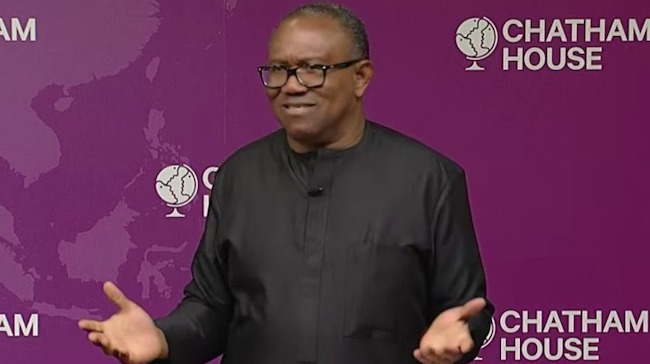
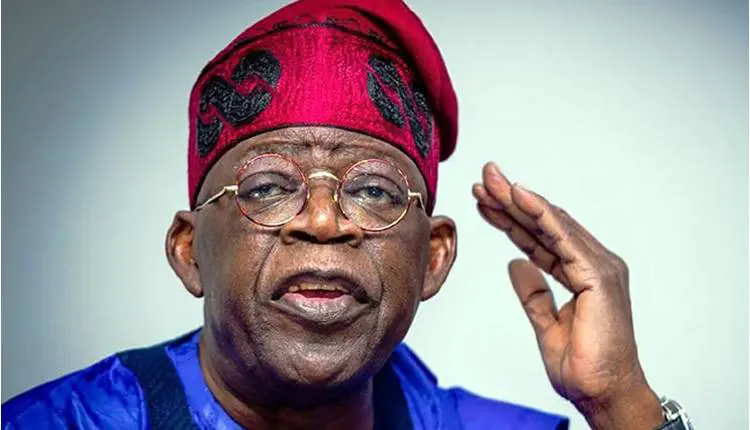
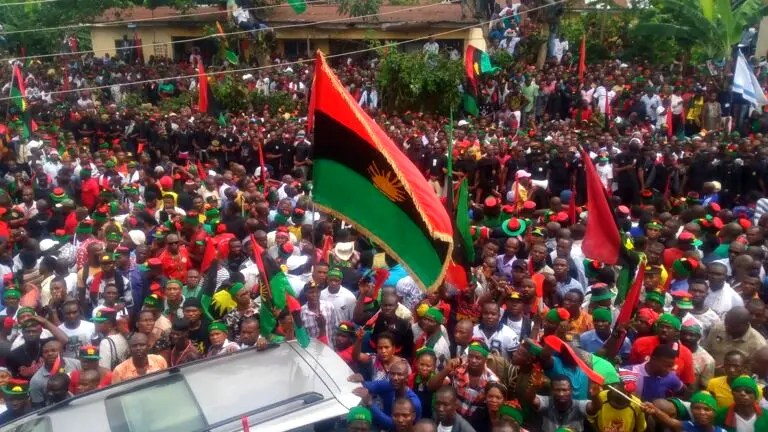
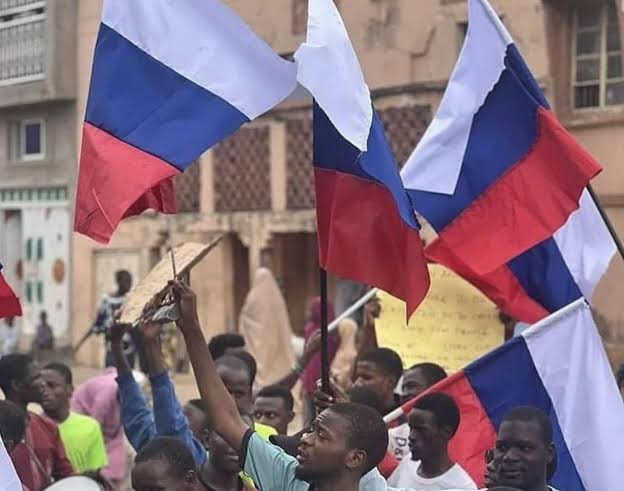
President Bola Tinubu on Sunday addressed Nigerians on the ongoing nationwide protests against hardship.
TVN reports that Nigerians, particularly youths, commenced a nationwide protest from August 1 to demand an end to the lingering food crisis and other economic hardship bedeviling them.
Addressing the situation, Tinubu in his speech, expressed sadness over the development and called for immediate suspension of the demonstration.
Full Speech:
“I speak to you today with a heavy heart and a sense of responsibility, aware of the turmoil and violent protests unleashed in some of our states.
“Notably among the protesters were young Nigerians who desired a better and more progressive country where their dreams, hopes, and personal aspirations would be fulfilled.
“I am especially pained by the loss of lives in Borno, Jigawa, Kano, Kaduna and other states, the destruction of public facilities in some states, and the wanton looting of supermarkets and shops, contrary to the promise of protest organisers that the protest would be peaceful across the country. The destruction of properties sets us back as a nation, as scarce resources will be again used to restore them.
“I commiserate with the families and relations of those who have died in the protests. We must stop further bloodshed, violence and destruction.
“As President of this country, I must ensure public order. In line with my constitutional oath to protect the lives and property of every citizen, our government will not stand idly by and allow a few with a clear political agenda to tear this nation apart.
“Under the circumstances, I hereby enjoin protesters and the organisers to suspend any further protest and create room for dialogue, which I have always acceded to at the slightest opportunity. Nigeria requires all hands on deck and needs us all – regardless of age, party, tribe, religion or other divides, to work together in reshaping our destiny as a nation. To those who have taken undue advantage of this situation to threaten any section of this country, be warned: The law will catch up with you. There is no place for ethnic bigotry or such threats in the Nigeria we seek to build.
“Our democracy progresses when the constitutional rights of every Nigerian are respected and protected. Our law enforcement agencies should continue to ensure the full protection of lives and properties of innocent citizens in a responsible manner.
“My vision for our country is one of a just and prosperous nation where each person may enjoy the peace, freedom, and meaningful livelihood that only democratic good governance can provide – one that is open, transparent and accountable to the Nigerian people.
“For decades, our economy has remained anaemic and taken a dip because of many misalignments that have stunted our growth. Just over a year ago, our dear country, Nigeria, reached a point where we couldn’t afford to continue the use of temporary solutions to solve long-term problems for the sake of now and our unborn generations. I therefore took the painful yet necessary decision to remove fuel subsidies and abolish multiple foreign exchange systems which had constituted a noose around the economic jugular of our Nation and impeded our economic development and progress.
“These actions blocked the greed and the profits that smugglers and rent-seekers made. They also blocked the undue subsidies we had extended to our neighbouring countries to the detriment of our people, rendering our economy prostrate. These decisions I made were necessary if we must reverse the decades of economic mismanagement that didn’t serve us well. Yes, I agree, the buck stops on my table. But I can assure you that I am focused fully on delivering the governance to the people – good governance for that matter.
“In the past 14 months, our government has made significant strides in rebuilding the foundation of our economy to carry us into a future of plenty and abundance. On the fiscal side, aggregate government revenues have more than doubled, hitting over 9.1 trillion Naira in the first half of 2024 compared to the first half of 2023 due to our efforts at blocking leakages, introducing automation, and mobilising funding creatively without additional burden on the people. Productivity is gradually increasing in the non-oil sector, reaching new levels and taking advantage of the opportunities in the current economic ambience
“My dear brothers and sisters, we have come this far. Coming from a place where our country spent 97% of all our revenue on debt service; we have been able to reduce that to 68% in the last 13 months. We have also cleared legitimate outstanding foreign exchange obligations of about $5billion without any adverse impact on our programmes.
“This has given us more financial freedom and the room to spend more money on you, our citizens, to fund essential social services like education and healthcare. It has also led to our State, and Local Governments receiving the highest allocations ever in our country’s history from the Federation Account.
“We have also embarked on major infrastructure projects across the country. We are working to complete inherited projects critical to our economic prosperity, including roads, bridges, railways, power, and oil and gas developments. Notably, the Lagos-Calabar Coastal Highway and Sokoto-Badagry Highway projects will open up 16 connecting states, creating thousands of jobs and boosting economic output through trade, tourism and cultural integration
“Our once-declining oil and gas industry is experiencing a resurgence on the back of the reforms I announced in May 2024 to address the gaps in the Petroleum Industry Act. Last month, we increased our oil production to 1.61million barrels per day, and our gas assets are receiving the attention they deserve. Investors are coming back, and we have already seen two Foreign Direct Investments signed of over half a billion dollars since then.
“Fellow Nigerians, we are a country blessed with both oil and gas resources, but we met a country that had been dependent solely on oil-based petrol, neglecting its gas resources to power the economy. We were also using our hard-earned foreign exchange to pay for, and subsidise its use. To address this, we immediately launched our Compressed Natural Gas Initiative (CNG) to power our transportation economy and bring costs down. This will save over two trillion Naira a month, being used to import PMS and AGO and free up our resources for more investment in healthcare and education.
“To this end, we will be distributing a million kits of extremely low or no cost to commercial vehicles that transport people and goods and who currently consume 80% of the imported PMS and AGO.
“We have started the distribution of conversion kits and setting up of conversion centres across the country in conjunction with the private sector. We believe that this CNG initiative will reduce transportation costs by approximately 60 per cent and help to curb inflation.
“Our administration has shown its commitment to the youth by setting up the student loan scheme. To date, 45.6billion Naira has already been processed for payment to students and their respective institutions
“I encourage more of our vibrant youth population to take advantage of this opportunity. We established the Consumer Credit Corporation with over N200billion to help Nigerians to acquire essential products without the need for immediate cash payments, making life easier for millions of households. This will consequently reduce corruption and eliminate cash and opaque transactions. This week, I ordered the release of an additional N50billion Naira each for NELFUND – the student loan, and Credit Corporation from the proceeds of crime recovered by the EFCC
“Additionally, we have secured $620million under the Digital and Creative Enterprises (IDiCE) – a programme to empower our young people, creating millions of IT and technical jobs that will make them globally competitive. These programmes include the 3Million Technical Talents scheme. Unfortunately, one of the digital centres was vandalised during the protests in Kano. What a shame!
“In addition, we have introduced the Skill-Up Artisans Programme (SUPA); the Nigerian Youth Academy (NIYA); and the National Youth Talent Export Programme (NATEP).
“Also, more than N570 billion has been released to the 36 states to expand livelihood support to their citizens, while 600,000 nano-businesses have benefitted from our nano-grants. An additional 400,000 more nano-businesses are expected to benefit.
“Furthermore, 75,000 beneficiaries have been processed to receive our N1million Micro and Small Business single-digit interest loans, starting this month. We have also built 10 MSME hubs within the past year, created 240,000 jobs through them and 5 more hubs are in progress which will be ready by October this year.
“Payments of N1billion each are also being made to large manufacturers under our single-digit loans to boost manufacturing output and stimulate growth.
“I signed the National Minimum Wage into law last week, and the lowest-earning workers will now earn at least N70,000 a month.
“Six months ago in Karsana, Abuja, I inaugurated the first phase of our ambitious housing initiative, the Renewed Hope City and Estate. This project is the first of six we have planned across the nation’s geopolitical zones. Each of these cities will include a minimum of 1,000 housing units, with Karsana itself set to deliver 3,212 units
“In addition to these city projects, we are also launching the Renewed Hope Estates in every state, each comprising 500 housing units. Our goal is to complete a total of 100,000 housing units over the next three years. This initiative is not only about providing homes but also about creating thousands of jobs across the nation as well as stimulating economic growth.
“We are providing incentives to farmers to increase food production at affordable prices. I have directed that tariffs and other import duties should be removed on rice, wheat, maize, sorghum, drugs, and other pharmaceutical and medical supplies for the next 6 months, in the first instance, to help drive down the prices.
“I have been meeting with our Governors and key Ministers to accelerate food production. We have distributed fertilisers. Our target is to cultivate more than 10 million hectares of land to grow what we eat. The Federal Government will provide all necessary incentives for this initiative, whilst the states provide the land, which will put millions of our people to work and further increase food production. In the past few months, we have also ordered mechanized farming equipment such as tractors and planters, worth billions of Naira from the United States, Belarus, and Brazil. I can confirm to you that the equipment is on the way.
“My dear Nigerians, especially our youth, I have heard you loud and clear. I understand the pain and frustration that drive these protests, and I want to assure you that our government is committed to listening and addressing the concerns of our citizens.
“But we must not let violence and destruction tear our nation apart. We must work together to build a brighter future, where every Nigerian can live with dignity and prosperity.
“The task before us is a collective one, and I am leading the charge as your President. A lot of work has gone into stabilising our economy and I must stay focused on ensuring that the benefits reach every single Nigerian as promised.
“My administration is working very hard to improve and expand our national infrastructure and create more opportunities for our young people.
“Let nobody misinform and miseducate you about your country or tell you that your government does not care about you. Although there have been many dashed hopes in the past, we are in a new era of Renewed Hope. We are working hard for you, and the results will soon be visible and concrete for everyone to see, feel, and enjoy.
“Let us work together to build a brighter future for ourselves and for generations to come. Let us choose hope over fear, unity over division, and progress over stagnation. The economy is recovering; Please, don’t shut out its oxygen. Now that we have been enjoying democratic governance for 25 years, do not let the enemies of democracy use you to promote an unconstitutional agenda that will set us back on our democratic journey. FORWARD EVER, BACKWARD NEVER!
“In conclusion, security operatives should continue to maintain peace, law, and order in our country following the necessary conventions on human rights, to which Nigeria is a signatory. The safety and security of all Nigerians are paramount.
“Thank God — and Thank you for your attention, and may God continue to bless our great Nation. Thank you very much”.
EndBadGovernance: My heart is heavy, end it now – Tinubu orders protesters [FULL SPEECH]
NCC denies approving telecom tariff increase
The Nigerian Communications Commission (NCC) has clarified that it has not approved any increases in telecom tariffs.
Dr. Aminu Maida, Executive Vice-Chairman/CEO of the NCC, issued a statement on his verified X account on Saturday addressing the false information circulating within the telecom sector.
He described the report as “fake news” and stressed that there have been no new tariff hikes for Mobile Network Operators (MNOs) or any increases in telecom services for consumers.
TVN gathered that the confusion results from a document, titled, “Guidance on the Simplification of Tariffs in the Nigerian Communications Sector,” recently posted on the NCC’s website.
An online news had claimed that the NCC approved tariff increases for MTN, Airtel, Glo, and other telecom companies, affecting voice, SMS, data, and other services, adding that the development had resulted in higher costs for Nigerians.
NCC denies approving telecom tariff increase
Healthcare: Create budget line for ISS in 2025 Appropriation – Group to Ebonyi Govt
The Life Transformation for Africa initiative has called on the Ebonyi State government to create a budget line in its 2025 appropriation for adequate Healthcare through the Integrated Supportive Supervision (ISS).
The group said the non-inclusion of private sector partners in funding and supporting activities was robbing the state of valuable resources.
Programme Manager of the group, Mr Chimezie Ezeani, stated this on Saturday while speaking with newsmen in Abakaliki.
Ezeani noted that the program is a USAID-funded 5-year project from October 2020-October-2025, in collaboration with Nigeria Resource Partners (NRPs).
He said that in creating the budget line for lSS in the 2025, it should be captured and released on time for the supervision of the healthcare centres across the state.
He said, “Integrated Supportive Supervision (ISS) is an intervention that facilitates quality improvement by ensuring adequate oversight as well as skills and knowledge transfer to health care service providers.
“ISS has been accepted, tested and proven to enhance the performance and effectiveness of health care workers.
“Strengthening of the health care system enhances quality service delivery, improves performances, encourages two-way communications, enhances team building spirit and problem solving.”
“The current structure and placement of Integrated Supportive Supervision (ISS) is suboptimal and, therefore, limits the capacity of integrated supportive supervision to effectively engage through a sector-wide approach for effective implementation.
“Domestic financing support for Integrated Supportive Supervision is inadequate and there is high dependency on donor funding.
“Over the years, many health programs have been heavily funded by donors supporting integrated supportive supervision activities, tuberculosis (TB), HIV and others.
“Although donor support is important, this is mostly unsustainable and has debilitating effects on ISS continuity,” he added.
Healthcare: Create budget line for ISS in 2025 Appropriation – Group to Ebonyi Govt
Bloodbath in lmo as gunmen murder seven community leaders
Unknown gunmen, on Saturday night, killed seven persons at Umucheke Okwe autonomous community, in Onuimo Local Government Area of Imo State.
TVN gathered that the gunmen opened fire, leading to the killing of the President General of the community, including six village leaders.
A community member, who doesn’t want his name mentioned, said the gunmen struck while the victims were in a weekly meeting.
“Gunmen have just shot dead the President General of Umucheke Okwe and six village heads,” the source said.
The attack took place at the President General’s shop in the community market, where the meeting was being held.
The source further revealed, “Upon their arrival, the gunmen unleashed gunfire, killing all the community leaders before setting the place ablaze. All the community chiefs perished in the assault.”
The motive behind the attack remains unclear, as the source noted, “Nobody understands the reason for the assault. No one knows the purpose of the meeting.”
The community now stands deserted, with villagers fleeing their homes in terror.
As of the time of filing this report, the Imo State Police Command, through the Public Relations officer, ASP Henry Okoye, is yet to respond to the incident when DAlLY POST contacted, as his phone was permanently switched off.
Bloodbath in lmo as gunmen murder seven community leaders
INTERVIEW: Why Ogun’s CNG initiative is such a game changer – Gov. Abiodun
The Ogun State Governor, Dapo Abiodun has explained why the introduction of Compress Natural Gas is a game changer in Ogun State and across the country.
The Governor, in this interview with journalists also explained that the conversion of the state’s buses to CNG buses was helping greatly to cushion the effect of the removal of fuel subsidy and also positively projecting the renewed hope agender of President Bola Ahmed Tinubu.
Excerpts!
Your Excellency, you were one of the governors who led the private sector to meet with President Bola Tinubu after the fuel subsidy removal last year, where the president spoke about the introduction of the CNG alternative. On Wednesday, we saw you riding a CNG bike. Was that for pleasure, or is the CNG initiative here with us?
Yes, you saw me riding the CNG bike, but let us take some steps back. Sometime last year, we launched our CNG Mass Transit Programme, which was basically the conversion of some of our state-owned buses to become CNG powered. This was because we knew that the president was going to deregulate, and this was the posture of all the presidential candidates before the elections. Hence, the state government, as a responsible entity, had to move in that direction; Thus, we started that programme, knowing full well that as soon as the vision became a reality, it would affect the cost of transportation of people, goods, and services.
So, what we did last October was to actualize and domesticate the Renewed Hope Initiative to begin to cushion the effects of fuel subsidy removal. That was our Phase 1, and Wednesday was Phase II, which was our E-Mobility Launch, showcasing electric motorbikes, electric tricycles, CNG tricycles, and electric vehicles.
Yes, you saw me riding a bike; I used to ride one back in the day when I was much younger. More importantly, what we are trying to achieve is to drastically reduce the cost of transportation because when you deregulate, particularly at this period when our people are agitating about food prices, one of the major elements that contribute to inflation is the cost of transportation.
I recall today, Thursday, someone called to say he bought yam in Lagos at a particular price, which was quite higher than what it was at Ikire. You find that the difference between the price in Lagos and that of Ikire was because of the cost of transportation. This is what we set out to achieve, and I can see that we have been very successful in that objective. When we launched our CNG buses, it crashed the cost of transportation for our people within Abeokuta and between Ogun State and Lagos and actually forced down fares from the Mowe-Ibafo corridor to Lagos.
Now, let me give you a practical example so you can properly understand the impact. On Wednesday, we launched the e-bike, and those e-bikes have no engines. All they have is a battery that makes them practically noiseless. The emissions are zero, which means that we are not polluting the environment in terms of environmental impact.
We are now going to reduce the cost of transportation by around 45 per cent. All that these e-bikes need is to have their batteries charged. Once charged, they will power the bikes for about 75 kilometers on a single charge. We have charging stations located around the state where riders can charge within two to three minutes, thereby creating another small economy for those at the sub-stations. In one breath, we are reducing the cost of transportation; in another breath, we are reducing pollution and building a small economy for those who would be managing the substations.
Let me give you another example. We also launched on Wednesday a particular CNG-powered tricycle that previously travelled about 120 kilometres on fuel that would cost about N14,000. The one we launched will travel the same distance on CNG that will cost about N2,000 to power. As I said, all we do in Ogun State is to domesticate the Asiwaju solution, which means that regardless of the level of inflation, this will provide the cushioning effect that will reduce the cost of transportation.
Why is it that it is only Ogun State doing this? It is supposed to be done by all 36 governors and the FCT to ameliorate the effect of the subsidy removal?
Well, for us, we occupy a strategic position in the country. We are the closest to the financial capital of Nigeria. I also enjoy an advantage: I have a large number of gas stations in my state. The gas pipeline that goes all the way to Ibese, passes through my state, leading to the proliferation of industries in Ogun State because of access to power. So, for me, I took advantage of that.
It is not because of any special funding; we have not been given any special funding by the Federal Government. It is just because of the strategic location of my state and proximity to Lagos. I realized that it was important for me to immediately cash in on this initiative and provide an alternative means of transportation that will cushion the effect of the deregulation that was brought to a stop; the monster that consumed N500 billion to N600 billion a month in fuel subsidy as of then.
As far back as about two months ago, there was a report that the Federal Government was going to give N10 billion to each state for CNG mass transit to reduce transportation costs. Are you saying that the money has not been disbursed?
You see, the problem with the average Nigerian is that we are very impatient. From the announcement of a policy to its implementation, it takes a period of time. They are working assiduously to ensure that what we are doing in the state is replicated across the country. But let me tell you something: the CNG case is not like the COVID case, where one size fits all. It takes some time to identify the type, make, and model of vehicles, so it is taking that much time to put a system in place. I know they are working on it, such that they log onto their site and indicate the model of vehicle and where you are. At the appropriate time, they will allocate a time for you to bring your vehicle for conversion to CNG. So, as time goes by, it will become commonplace in Nigeria.
Rest assured that even though I am not trying to speak for them, I have knowledge of what they are working on. You can imagine what we have done in Ogun State, which is a state of about 5,000,000 people, compared to the whole of Nigeria, where we have a population of over 200 million. I am sure that in a few months, we will begin to appreciate the progress in many states. They are working on this CNG conversion, and the president is particularly keen on ensuring that this scheme is successful.
Apart from the CNG buses, we understand that some transport organizations and unions are supposed to receive some subsidy also for CNG-enabled vehicles to help them with their transport businesses, and about three million households are supposed to receive about N50,000 each. What are you doing to reduce the pressure on private individuals? Give us a sense of what is going on, especially with the hunger and the protests today?
What I will say to Nigerians today, boldly, is that President Bola Ahmed Tinubu has only been in office for a year and perhaps three months. It takes more than 15 months to reverse a trend that has permeated for a few years before his assumption of office. He has declared his principles and policies, and as soon as he was inaugurated and assumed office, he began implementing these audacious policies. These are policies that previous administrations were perhaps not bold enough to implement.
These policies have been applauded by development banks and organizations all over the world. It will take time for their impacts to begin to be felt by the common man. He has promised, and on Wednesday, the Minister (of Finance and Coordinating Minister of the Economy) told all Nigerians that the President is aware of the current realities and is working assiduously to ensure that he lives up to the expectations of our people.
When he assumed office and declared that there was no going back to deregulation, he immediately began giving wage awards to all public servants. Only recently, he signed the Minimum Wage Act. That is a serious commitment. He has begun implementing the Students’ Loan Scheme. When last in the history of Nigeria did we see the disbursement of students’ loans to students of tertiary institutions? The FG is also implementing schemes for the elderly across the entire country and wards, and these schemes are ongoing. The president is giving out food palliatives through us governors, knowing that the impacts of the policies are being felt. Now, the FG is removing import restrictions on certain food items, and as of this week, rice should begin to be sold to people at N40,000 per bag. He has provided agricultural inputs, fertilizers, maize, corn, sorghum, all within one year! What more do we expect from a man who has a proven track record? He was governor of Lagos State for eight years. Lagos is the size of many African countries put together.
You will agree that the current issue of inflation is not applicable to Nigeria alone. Yesterday, there was a protest in Ghana, a protest in the UK, and not long ago, in Kenya. Inflation is rising all over the world. As much as I appreciate that elected officials must look out for the well-being and welfare of our people, our President is doing his very best and is committed. I believe that what we must do is allow him time so that we can see the impact of these policies.
The Naira has stabilized, and with the recent intervention of Mr. President in the Dangote/NNPC issue, which was made to appear like a controversy, that crude must be sold to Dangote Refinery and other refineries in Naira, you will see the reduction of pressure on the Naira and Dollar, and I am sure that you will see instant relief. That will reduce the exchange rate, and over time, you will see the multiplier effect on the economy.
The truth is that what we are going through now is like the pain of a woman who is trying to give birth. She will go through a lot of pain, but at the end of the day, when she gives birth, everyone is happy. So, I want to plead with Nigerians to give Mr. President and all of us time as well. He is doing everything he can, knowing that his number one role is to put food on our table. They are the ones who brought him into office, and he has said it so many times that, ‘Look, don’t pity me. I asked for this job. I campaigned for it. I invested to be President, and this is the only job I have.’
There are those who would be asking whether the cost of governance is one of the areas where the people would know that the government is listening to the agitation of the poor. There is this belief that we spend far too much on those who are in power while poverty is high in the country. Is there anything the government of the day will be doing in that respect?
Well, without a doubt, the Bola Ahmed Tinubu administration is a considerate one. This is the first time, and I am glad that my brother, Mr. Femi Falana, SAN, who spoke with you earlier, alluded to such things, even though I do not agree with everything. He said that this government is a responsive one.
This is the first time there would be protests or civil disobedience, and the government would go all out to ensure that they engage with diverse groups, explaining to them what the government is doing, what it has done, and what it intends to do. By doing so, they are providing moral suasion, and different groups came out, dissociating themselves from the protests. That clearly indicated that this administration is responsive to the needs of the people. So, I don’t think I need to say anything other than that.
The voices and cries of our people are being heard from the local governments to the state governments and to the Federal Government, and we are all working together. Last week, we met with Mr. President; we hold the National Economic Council meeting once a month to discuss the economy of the country and review our activities. I can tell you that the Nigeria of our dreams is just on the horizon. So, regarding the cost of governance, we have heard that you, and Mr. President has directed that public servants should buy locally made vehicles, and such vehicles must be powered by CNG. Look, this is the first time we have a president who has his fingers on the button.
INTERVIEW: Why Ogun’s CNG initiative is such a game changer – Gov. Abiodun
CBN may loan over N746bn to FG

The Central Bank of Nigeria may print or wire over N746bn as a loan to the Federal Government based on the Ways and Means provision of the CBN Act.
In the Act, funds that the apex bank should provide to the Federal Government through Ways and Means is five per cent of the Federal Government’s previous year’s revenue.
Last week, the National Assembly raised the maximum borrowing percentage in the Act from five per cent to ten per cent.
Data from the National Bureau of Statistics on Saturday indicated that as of the third quarter of 2023, the Federal Government’s actual aggregate revenue was N7.46tn.
Based on the hike in Ways and Means funding approved by the National Assembly, the Federal Government would get no less than N746bn from the apex bank through the funding scheme.
The Ways and Means Advances are loan facilities used by the CBN to finance the government during periods of temporary budget shortfalls and are subject to limits imposed by law.
According to Section 38 of the CBN Act, 2007, the apex bank may grant temporary advances to the Federal Government with regards to temporary deficiency of budget revenue at such rate of interest as the bank may determine.
The Act read in part, “The total amount of such advances outstanding shall not at any time exceed five per cent of the previous year’s actual revenue of the Federal Government.”
The maximum borrowing percentage in the Act was hiked from five per cent to ten per cent by lawmakers last week, as they also rescinded and re-enacted the 2024 Appropriation Act through an amendment bill sponsored by leaders of both chambers.
In the Senate, the increase in the threshold was achieved through the consideration and passage of a bill sponsored by its Leader, Senator Opeyemi Bamidele (APC Ekiti Central).
In his lead debate, Senator Bamidele explained that the bill seeks to amend the CBN Act to increase the total CBN advances to the Federal Government.
He stated that the bill aims to help the government meet its immediate and future obligations due to the increasing need for funds to finance budget deficits and other expenses.
“The Central Bank of Nigeria’s advances to the Federal Government are essentially loans that the Central Bank of Nigeria provides to the government to help it meet its financial obligations. These advances are typically short-term and are expected to be repaid by the government,” he said.
Senator Bamidele explained that the request to increase the threshold from five per cent to fifteen per cent of the previous year’s revenue was made to provide immediate funds to address budget shortfalls, finance essential government expenditures, maintain financial market stability, inject money into the economy, and support critical sectors like agriculture, healthcare, and infrastructure development.
He said this would also lower government borrowing costs compared to traditional borrowing methods.
During the debate, many Senators supported the amendment but argued that the 15 per cent should be reduced to ten per cent.
However, the Federal Government had in the past taken excessive advantage of Ways and Means loans.
The administration of former President, Major General Muhammadu Buhari (retd.), had come under heavy criticism for abusing the Ways and Means.
From 2014 to 2023, the Federal Government collected N30tn through Ways and Means from the CBN without National Assembly appropriation.
Following this, the Senate set up an Ad-hoc committee led by Senator Isah Jibrin (APC, Kogi East), to carry out investigations.
Commenting on the development, financial analysts said the CBN would have to print more cash to meet the demands for increased funds through the Ways and Means advances, pointing out that this could further raise inflation.
An economist, Paul Alaje, expressed concern over the increase in Ways and Means advances to the Federal Government from five to ten per cent.
He said the move would lead to increased pressure on the CBN to print more money, potentially affecting the economy adversely.
Another economist at Lotus Beta Analytics, Shadrach Israel, also expressed concern over the recent increase, noting that it could lead to an increase in money supply and, subsequently, inflation.
He, however, acknowledged that the current upward trend in interest rates might mitigate the effects of the increase.
Recall that the Minister of Finance and Coordinating Minister of Economy, Wale Edun, said the N22.7tn printed by the CBN through Ways and Means overdraft for the Federal Government from 2015 to 2023, under former President Buhari, threw the country into the current inflation.
Nnadozie inspires youths with Olympic story

Super Falcons goalkeeper Chiamaka Nnnadozie has advised youth not to give up on their dreams, recounting her story of growing up in Akwakuma, Owerri, and Imo State to becoming an Olympian, According Sports Extra reports.
The 23-year-old kept goal for the team at the Paris 2024 Olympics, but counting her blessings for gracing the multi-sport event despite the team losing all three group matches, scoring one and conceding five goals in the Women’s Football Tournament.
She shared her excitement in a statement on Instagram on Saturday, urging the younger ones not to think anything is impossible.
“A girl from Orlu who grew up in the street of Aakwakuma, Owerri became an Olympian. Boys, girls from the street, ghetto, listen, nothing is impossible. I give god all the glory,” wrote the Paris FC shotstopper.
Nnadozie began her football career in 2016 with Rivers Angels, where she played until 2020, when she joined Paris FC.
In eight years, the goalkeeper, who started out as an outfield player, has a string of top awards and trophies to show for her effort, including being named CAF Women’s Goalkeeper of the Year (2024), one Nigeria Women’s Football League (2016), three women’s Federation Cups with Rivers Angels (2016, 2017, 2018), one Women’s Africa Cup of Nations (2018), and African Games gold (2019).
Her individual awards include CAF Goalkeeper of the Year (Women) 2023, D1 Arkema Goalkeeper of the Season 2023/24, IFFHS Africa’s Best Woman Goalkeeper 2019, African Women’s Footballer of the Year 2019 (nominee), NFF Awards Young Player of the Year 2018, and EaglesTracker Goalkeeper of the Season 2022, 2023, 2024.
Nnadozie represented Nigeria at U17 and U20 levels before she graduated to the senior team, making 22 appearances since 2018.
Finding love is hard for people with disabilities – Polio survivor

Oluwayemisi Adekunle, a marketing communications professional, speaks with TEMITOPE ADETUNJI about her lifelong battle with polio, coping with the disability, the obstacles she overcame in her marriage and moments of triumphs as a professional
How has life been for you as a marketing executive living with disability?
I am a marketing communications professional and currently serve as the Government Relations and External Affairs Lead for West Africa in the organization I work for.
I studied English at the University of Ilorin and belong to several professional bodies, including the Nigerian Institute of Public Relations, the National Institute of Marketing in Nigeria, and the Advertising Regulatory Council of Nigeria. Additionally, I am a member of the Chartered Institute of Marketing, UK, and the Chartered Institute of Public Relations, UK. I am a life member of Women In Management, Business, and Public Service, known as WIMBIZ.
As an advocate for people living with disabilities, I speak about issues affecting us, drawing from my personal experience of contracting polio at the age of two. Throughout my life, I have navigated the various challenges associated with living with a disability in our society and this has also helped me cope professionally.
You mentioned contracting polio infection at the age of two, can you recount what happened as told by your parents?
With polio, there is limited mobility; can’t like others, and can’t walk as fast because I walk with a limp. But I must give it to my parents. Whatever I am today, I owe it to them. They were star parents. Both of them are late now. I remember while growing up, they took turns taking me to every appointment to see a physiotherapist and every available doctor I needed to see to get better. I’m sure it might have been worse if they hadn’t pursued all those medical interventions.
And of course, their moral support was also sterling. They were always encouraging me. They never made me feel as if I was lesser than any other child in the family. My siblings and I were raised with love, affection, and total devotion from my parents.
They didn’t make me feel as if, oh, your brothers are better than you because their legs are perfectly okay, or your sisters are better than you. My parents never made me feel that way. The only time I felt different was when people outside, maybe in school or among peers, referred to me as “that one-legged girl”, which made me feel bad. Whenever I came home from school and told my parents about it, they would tell me to check my legs and tell them how many feet I had, and each time, I would answer, “Two.” I was made to understand that I am like every other human being. They made me realize there’s nothing anybody can aspire to be that I can’t be. My parents always encouraged me never to feel down or downcast because of my disability but to challenge myself to be the best I could be. Their love and support helped me to see that I can be anything and achieve anything as long as I set my heart on it.
What were some of the key challenges you faced growing up with a disability, and how did you overcome them?
I faced stigmatization. I was referred to one-legged person and always excluded from parties and activities.
However, my parents ensured I attended one of the best secondary schools, which was instrumental to my development psychologically, emotionally, and physically.
Their efforts and that of some teachers significantly boosted my confidence as a young teenage girl. I always went for challenges no matter how tough they were.
You hinted at being divorced. Was it as a result of your disability?
I would say it contributed to it because I got married into a family that referred to me as the “one-legged woman” who came to marry their brother.
I was married for 14 years and have a daughter from the union.
They never accepted me, and I was treated poorly. I didn’t find love in that relationship. Finding love for people with disabilities comes with its special challenges because you need to be sure that your vulnerability will not be exploited, or betrayed by the people you open up to.
That was my journey and experience. It’s great to be loved by someone who understands and supports you, rather than those who think you are not deserving of their love.
They may show a little affection when they feel like but in their heart, they believe you don’t deserve to be loved or have a say in how you want to be loved.
They want to determine how best they can love you. These are the circumstances people living with disabilities face, and you need to be able to hold your head high and demand what you deserve and desire.
Would you give love and marriage another try?
If I find someone who would love me the way I desire to be loved.
Meanwhile, my daughter is the best gift from God in the failed union. I don’t regret having her. I can’t thank God enough for having a beautiful, empathetic, considerate, loving, and supportive daughter in every sense of the word.
Can you share a particular milestone that you are especially proud of?
Okay, I would say being bold enough to leave the union was a significant milestone for me. Many people say even those without disabilities try to patch up their relationships and if I think I will find another person to marry me with my disability? Despite everything, being brave enough to leave and face my life is the greatest milestone so far.
Has living with disability shaped your perspectives on inclusivity and accessibility in society?
There are several things that people take for granted like being able to get on a plane, come down from the plane, go anywhere, and do whatever everything with ease. Unfortunately, we live in a society where people living with disabilities are not key decision-makers. Some of those who are in key decision-making bodies don’t feel the need to advocate for people with disabilities, or they are too preoccupied with the office to really push for what they should be advocating for.
I don’t see any reason why we should have events without adequate arrangements for people living with disabilities. I don’t see why people with disabilities should still be struggling and forgotten inside the plane because the necessary arrangements weren’t made.
The system should be so seamless that no one needs to prompt you to make these accommodations. These things are often overlooked by decision-makers. So, you know, we are far from creating an inclusive society for everyone. We still need to eliminate the stigmatization associated with people living with disabilities.
Some people still believe that having a disability or disorder is a curse from God.
When you walk into a place, people stare at you as if you are an object of ridicule.
Some people even think you are a medium for their prayers to be answered, so they throw money at you, thinking they are helping.
You still go to places and find no designated parking lot for people with disabilities. There are also no proper toilet facilities for people with disabilities.
Many churches don’t have ramps or nearby restrooms for people with disabilities. This issue extends to all worship centres, including mosques.
Despite people with disabilities attending these places, they are not given adequate thought or consideration. We have a very long way to go to get it right.
What do you think are the most significant barriers that people with disabilities face in West Africa or Africa in general today?
I would say that economic barrier is the major one. Many people living with disabilities still find it very difficult to make ends meet because the necessary support to become economically empowered is not there. Some organisations are still against employing people with disabilities, while some business owners will never give a job or business opportunity to people with disabilities. So the economic barrier is still there.
Additionally, there are barriers to accessing training or educational facilities that would allow people with disabilities to support themselves.
These barriers prevent them from accessing such facilities, and nobody is giving it a thought.
When they are not economically empowered, they remain at the lowest rung of society, unable to feed themselves or do basic things that everyone else can do.
Even when they are willing, they are still despised or looked down upon.
They are seen as beggars, who should be pitied rather than empowered. Various facilities need to be improved across Africa.
In your opinion, how can well-thought-out government policies better support individuals with disabilities?
The government has to start considering PLWDs in its policies, especially regarding accessibility.
What kind of access are they providing in public spaces for people with disabilities? What employment opportunities are available to people with disabilities?
What initiatives or policies do you think have been effective in promoting accessibility and inclusivity?
With the Disability Act, Project Enable Africa is trying to implement various policies one day at a time. Many multinationals and corporate organisations now have facilities marked for people with disabilities.
However, when a person with a disability wants to use these facilities, they often find people without disabilities using them. There is a need for more orientation and enlightenment to keep people informed on why these places are designated for specific uses.
How do you balance your professional responsibilities with advocating for disability rights?
When you are passionate about something, you can juggle all your responsibilities. I am a communications professional, and I believe a lot can change and improve through communication.
I use all my social media platforms as much as possible to advocate, speak about these issues, and share my personal experiences.
What role do you think businesses and corporations should play in fostering a more inclusive environment?
Businesses and corporations should start by providing access, in terms of facilities and employment opportunities. They should also consider what they can do to support advocacy for people with disabilities.
What are your ugly experiences as a person living with disability?
A few times, I’ve been forgotten inside a plane in Nigeria. However, when I travel to other parts of the world, this doesn’t happen. And when I complain, the usual excuse is, “Oh, they didn’t tell us they have a wheelchair passenger.” Anytime this happens, I am left wondering how and why.
Can you talk about a time when you had to advocate for your own accessibility needs in a professional setting?
I used to work in an organisation that had a toilet facility for people living with disabilities, but unfortunately, each time I went to use it, it was always occupied. I remember I was the only physically challenged person working on that floor of the building.
So, I had to take it up with the facility management team, explaining that it was the challenge I was facing and that they needed to look into it. Initially, they said they would address the issue, but nothing was done. I kept insisting until something was finally done about it.
How has technology impacted your life and the lives of other people with disabilities?
I’ll say technology is one of the best gifts that touched the lives of people with disabilities because we now have assistive technology in terms of wheelchairs. I was watching a particular guy, a Paralympian at the current Olympics on TV over the weekend.
That is someone, who has lost his mobility and has now been able to move like a dream come true. Those are things that technology is doing.
I move about with a walking stick but growing up, I used calipers to assist my mobility.
So many things are now possible for people living with a disability that was never possible or were never thought could be possible before now.
What I always tell people living with disabilities, and who are still trying to shy away from being their best selves is to know that they have everything needed to be who they desire to be.
While some of you might not have been lucky enough to come from families or homes where they were adequately supportive, now that you are at this point, I don’t think you should let anything stop you.
Can you discuss any collaborations or partnerships you are currently involved in to promote disability rights?
I sit on the board of Project Enable Africa, which is instrumental in providing opportunities for people with disabilities in Nigeria.
We advocate for the rights and empowerment of people with disabilities. We don’t just talk about advocacy; we come up with various economic empowerment initiatives to allow them to work and earn a living that will take them from being despised and looked down upon to be able to do something meaningful for themselves.
And we also, in the form of advocacy, are always willing and ready to work with various corporate organisations and various bodies to provide opportunities for them to know what all this advocacy about people living with disabilities is all about.
Enlightenment programmes create policies that help to create an inclusive society and organisation. So, yes, these are the things that we do at Project Enable Africa and it’s such a great opportunity as currently, we have some funds.
We work through grants and donations from the United States Embassy and various other multinational bodies and we’re able to move across the country, creating economic empowerment initiatives.
How do you see the future of inclusivity and accessibility in West Africa and other parts of African countries?
With these various advocates, the various issues we’re always raising are about what’s going on and how we can make things better.
I see a future where people are educated and we treat people living with disabilities with dignity and respect. People living with disabilities don’t live from hand to mouth but are able to cater to themselves and their families.
They should be able to employ people who might not be living with disabilities and also create employment opportunities for those living with disabilities as well.
I see a future where people living with disabilities are not stigmatized and I know it will happen in my lifetime.
What message would you like to convey to policymakers about the importance of accessibility and inclusivity among people living with disabilities?
There’s a saying that the face might not reveal the potential of the person. You don’t know what potential you are disregarding when you don’t create an opportunity for everyone to show what they carry.
Let’s create a place where everybody is able to bring to the table what they have to offer.
They say two heads are better than one. Many heads putting it all together are better than one head figuring it all out.
Let everyone bring their great potential to the table and let’s see whether things will not get better than they are. We need to create an opportunity for people living with disabilities to be able to come into meetings, to access opportunities, and to showcase what they have to offer so that at the end of the day, everyone can play their part and our society becomes better for all.
Looking back at your journey, what are the key lessons you’ve learned and that you would like to share with others?
Number one, never say never because when you say no, you don’t know what you are putting away.
When you believe in yourself and believe that no mountain is too high for you to climb, you can go further than you can even imagine or envisage.
Another thing is that I don’t believe that the word impossibility exists. I’m the one that can do it because I need to spread my wings and fly. The sky is just a stepping stone for me to fly, to keep flying.