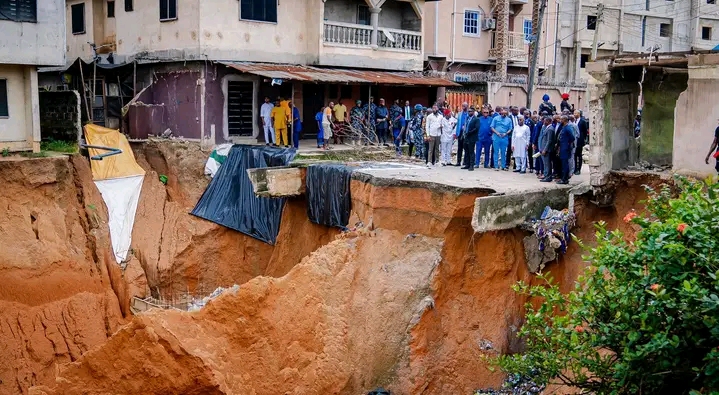
Many residents of Ovom street in Aba, Abia State, have either been evacuated by the Abia state government or fled the area themselves, as gully erosion worsened in the area.
The deadly erosion, which started in small proportions some years ago, has now cut the road into two and resulted in the collapse of many buildings and destruction of other landed property in the area.
Addressing the press on Sunday after visiting the devastated area, Abia State Governor, Alex Otti described the situation as unfortunate, lamenting that that erosion challenge has dealt a deadly blow to the area.
He expressed worry that if not controlled immediately, the rampant erosion will not only affect all buildings around the area but may affect the opposite side of the road where an ongoing road project is presently being executed by his administration.
Otti instructed the General Manager of Greater Aba Development Agency (GASA), Mr Uche Ukeje to immediately bring solutions to the problem in a few weeks’ time.
He assured the people that the job of tackling the problem would not be done through direct labour but by engineers and contractors who understand what to do.
On the conditions of residents of the affected area, Otti explained that he had instructed GASA to evacuate those living around there.
“I had asked him to evacuate everybody that is living around here.
“So, if you look around these houses, there is nobody in there. Those who are very close here, I had already gotten them evacuated.
“So, I hope nobody goes back to some of these buildings because it’s very dangerous”, he stated.
Residents evacuated as gully erosion threatens buildings, lands in Aba
Residents evacuated as gully erosion threatens buildings, lands in Aba
D’Tigress brace for American challenge in Olympics quarterfinal


Nigeria’s D’Tigress have been drawn against the United States in the quarter-finals of the women’s basketball event at the 2024 Paris Olympics.
The Nigerian ladies made history by securing Nigeria’s first-ever berth in the last eight of the Olympic basketball tournament.
This followed their impressive 79-70 victory over Canada in their final group game on Sunday.
The team accumulated five classification points and initially topped Group B.
However, their standing shifted when Australia triumphed over France 79-72 in the other group match, pushing Nigeria down to third place in the group rankings.
The team is now set to face the defending champions, USA on August 7 at 9:30 pm.
The encounter is the second Olympic face-off between the two teams.
At the Tokyo Games, D’Tigress suffered a narrow nine-point defeat to the Americans in their opening group game. They were also beaten in the 2024 Olympics qualifiers.
Elsewhere in other quarter-finals clashes, Serbia will clash with Australia, Spain will go up against Belgium, and France will face Germany.
All rights reserved. This material, and other digital content on this website, may not be reproduced, published, broadcast, rewritten or redistributed in whole or in part without prior express written permission from According.
Contact: [email protected]
Protests responsible for long fuel queues – IPMAN

The Independent Petroleum Marketers Association of Nigeria, IPMAN, has said the ongoing hunger protest is responsible for the resurgence of long fuel queues in filling stations in major cities across the country.
Recall that since Thursday last week, Nigerians have continued to demonstrate on the streets, tagged #EndBadGovernance.
Part of the demand is the return of fuel subsidies.
The protests had led to the death of at least fifteen persons and properties destroyed in Kano, Niger, Jigawa, Yobe, and the Federal Capital Territory, Abuja.
The protests had prompted President Bola Ahmed Tinubu Sunday’s broadcast, where he appealed for protesters to suspend the demonstration and dialogue with the government.
While there are uncertainties on how things will pan out in the next few days, oil marketers have blamed the long queues being witnessed across cities on the protests.
The National Public Relations Officer of the Independent Petroleum Marketers Association of Nigeria, Chief Chinedu Ukadike, in a statement, said that there was no movement of trucks during the protests, especially on Thursday and Friday.
“…Now that the trucks are no longer moving due to this protest, the depots are not working, the truck drivers are not driving, particularly during the first and second days of the protest, these issues have disrupted the supply of petroleum products. So it will result in scarcity at the filling stations,” Ukadike stated.
Earlier, the Nigerian National Petroleum Company Limited blamed the resurgence of long fuel queues on a “hitch in the discharge operations of a couple of vessels.”
Protests responsible for long fuel queues – IPMAN
Foreigners asked to leave Lebanon as war fears surge


Urgent calls grew for foreign nationals to leave Lebanon, which would be on the front line of a regional war, as Iran and its allies readied their response to high-profile killings blamed on Israel.
While diplomats worked to avert a feared conflagration, France’s Emmanuel Macron and Jordan’s King Abdullah II said Sunday a regional military escalation must be avoided “at all costs”, the French presidency said after they held a telephone call.
With major military action from Lebanon’s Iran-backed Hezbollah movement and others widely expected, Israeli Defence Minister Yoav Gallant said: “If they dare to attack us, they will pay a heavy price.”
The nearly 10-month-old war in Gaza between Israel and Hamas has already led to a violent fallout which has become routine around the region.
In the deadliest incident on Sunday in Gaza, the Civil Defence agency said an Israeli strike hit two Gaza City schools housing displaced people, killing at least 30.
This brings to at least 11 the number of schools hit in Gaza since July 6.
Israel’s army confirmed the latest strike, saying Hamas was using the schools.
Near the Israeli commercial hub of Tel Aviv, medics and police said two people were killed in a stabbing attack.
The assailant, a Palestinian from the Israeli-occupied West Bank, was “neutralised” by police and taken to hospital, where he was pronounced dead.
• ‘Highly volatile’ –
Hezbollah, which has traded near-daily fire with Israeli forces since the Gaza war broke out in October, announced the deaths of two of its fighters without specifying where.
The Lebanese health ministry said an Israeli strike on the southern border village of Hula killed two people.
Lebanon’s official National News Agency had reported Israeli strikes on various areas of south Lebanon, after Hezbollah said it had fired a fresh barrage of rockets at northern Israel.
The Israeli military said most of the 30 projectiles launched from Lebanon were intercepted.
Sirens sounded again early Monday in northern Israel’s Upper Galilee region after “numerous suspicious aerial targets were identified crossing from Lebanon”, the Israeli military said.
The attack triggered a fire and an officer and a soldier were “moderately injured”, it said on Telegram.
The cross-border violence since October has killed some 547 people in Lebanon, mostly fighters but also including 115 civilians, according to an AFP tally.
\
Saudi Arabia and France became the latest of several countries calling on their citizens to leave Lebanon.
“In a highly volatile security context”, the foreign ministry in Paris “urgently asked” its nationals to avoid travelling to Lebanon and suggested those already in the country leave “as soon as possible”.
France also urged its nationals living in Iran to “temporarily leave”.
Several Western airlines have suspended flights to Lebanon and other airports in the region.
Qatar Airways said the Doha-Beirut route would “operate exclusively during daylight hours” at least until Monday.
• Ceasefire hopes dimmed –
Wednesday’s assassination of Hamas political leader Ismail Haniyeh in Tehran, hours after the Israeli killing of Hezbollah’s military chief Fuad Shukr in Beirut, has triggered vows of vengeance from Iran and the “axis of resistance” of Tehran-backed armed groups.
Israel, accused by Hamas, Iran and others of killing Haniyeh, has not directly commented on the attack.
Israel has vowed to destroy Hamas in retaliation for its unprecedented October 7 attack on Israel which resulted in the deaths of 1,197 people, mostly civilians, according to an AFP tally based on Israeli official figures.
Militants also seized 251 hostages, 111 of whom are still held captive in Gaza, including 39 the military says are dead.
Israel’s retaliatory campaign has killed at least 39,583 people in Gaza, according to the territory’s health ministry, which does not give details of civilian and militant deaths.
Haniyeh was Hamas’s lead negotiator in efforts to end the war. His killing, and that of Shukr, “does not suggest Israel is sincerely interested in a ceasefire”, said Middle East expert Andreas Krieg.
Qatari, Egyptian and US mediators have for months tried to broker a truce and hostage-release deal.
• ‘Greatest peril’ –
Analysts have told AFP that a joint but measured action from Iran and its allies was likely, while Tehran said it expects Hezbollah to hit deeper inside Israel and no longer be confined to military targets.
Israel’s ally the United States said it was moving additional warships and fighter jets to the region.
In an interview with ABC News, White House deputy national security adviser Jon Finer said the United States was “doing everything possible to make sure that this situation does not boil over”.
As part of those efforts it is “so urgent” that a Gaza ceasefire deal be reached, Finer said.
Secretary of State Antony Blinken emphasised the need to calm regional tensions in a call with Prime Minister Mohamed Shia al-Sudani of Iraq, where some Iran-aligned groups targeted US troops earlier in the Gaza war.
Jordanian Foreign Minister Ayman Safadi held “consultations” with Iran’s acting top diplomat Ali Bagheri and met President Masoud Pezeshkian in a rare visit to Tehran, local media reported.
The G7 group of democracies convened by videoconference to discuss the Middle East and expressed “strong concern” over the threat of escalation, Italy’s Foreign Minister Antonio Tajani said.
Haniyeh’s killing “has brought the Middle East to its moment of greatest peril in years”, the International Crisis Group (ICG) think tank said in a report.
The ICG said that securing “a long overdue ceasefire” in Gaza was “the best way of meaningfully reducing tensions in the region”.
Hamas officials but also some analysts as well as protesters in Israel have accused Netanyahu of prolonging the war.
“Peace is made with the strong not with the weak,” Netanyahu said Sunday at a ceremony in Jerusalem.
AFP.
North Korea deploys 250 missile launchers to southern border


North Korea has deployed 250 ballistic missile launchers to its southern border, with leader Kim Jong Un describing the weapons as a “powerful treasured sword” to defend its sovereignty, state media said Monday.
The olive green mobile launchers were displayed during a special “transferring” ceremony in the capital Pyongyang on Sunday, the official Korean Central News Agency reported.
The missile launchers were an “up-to-date tactical attack weapon”, Kim was quoted as saying in a speech.
It was the first time North Korea had publicised the scale of an arms transfer to its border units, Han Kwon-hee of the Korea Association of Defence Industry Studies told AFP.
Each launcher was designed to hold four missiles, Han said, adding that Pyongyang’s supply of arms to Moscow might have “interfered with the North’s capacity to actually produce 1,000 missiles”.
Relations between the two Koreas are at one of their lowest points in years, with the North ramping up weapons testing and bombarding the South with balloons full of trash.
South Korea has responded by resuming propaganda broadcasts along the border, suspending a tension-reducing military deal and restarting live-fire drills near the border.
This year, Pyongyang declared South Korea its “principal enemy”, jettisoned agencies dedicated to reunification and outreach, and threatened war over “even 0.001 mm” of territorial infringement.
Kim noted that presenting the new weapons at a time when the country was reeling from flood damage was a “manifestation of the firm will of our
Party to push ahead with the bolstering of defence capabilities”.
Heavy rainfall hit the nuclear-armed country’s northern regions in late July, with a South Korean media report claiming up to 1,500 people could have died.
Kim has lashed out at the reports, dismissing them as a “smear campaign to bring disgrace upon us and tarnish” the North’s image.
The North has said there were no casualties at all in the Sinuiju area, the region Pyongyang said had suffered the “greatest flood damage”.
It claimed North Korea’s Air Force rescued over 5,000 people, with around 4,200 of them saved by helicopter “within a few hours”.
• Effective stage –
Kim said in his speech that the country was facing a “significant and strategic shift due to the transformation of US-led alliances into nuclear-based military blocs”, a trend he said required an upgrade in war deterrence, according to a KCNA transcript.
“The strength of our armed forces… must continue to accelerate,” Kim said.
Photos released by KCNA showed rows of mobile launchers positioned before a podium where Kim spoke.
Banners flown from a balloon painted with the North Korean flag read:
“Let’s open the golden age of defence industry development under the leadership of the great comrade Kim!”
While it was possible that Pyongyang had previously deployed ballistic missile launchers to its southern border, Han said it was the first time he had “seen such official reports detailing the scale of arms transfers” to military units in the area.
Producing such a large number of weapons and displaying them together indicates the event had been “planned months in advance”, Hong Min, a senior analyst at the Korea Institute for National Unification, told AFP.
“Producing 250 mobile launchers requires massive manpower and capital, which shows that the event on Sunday was not staged on a short notice,” he said.
“Pyongyang appears to have judged that staging such a performance-like event would be an effective message to the United States.”
Among the event attendees was Kim’s teenage daughter, Ju Ae, who Seoul’s spy agency said last week was being groomed as Kim’s heir.
Ju Ae, whose exact age has not been confirmed, was seen clapping
behind her father in one KCNA photo.
While Kim claimed that the new weapon system was designed by himself, it is likely that they copied the raw technology from overseas, Hong added.
“It is possible that Kim directed the modification using the original technology.”
AFP.
Ohanaeze faults Tinubu’s speech, says fuel subsidy reversal would’ve ended protests

Apex Igbo socio-cultural Organization, Ohanaeze Ndigbo, has faulted the nationwide broadcast by President Bola Tinubu, saying that reversal of fuel price would have ended the nationwide #EndBadGovernance protests.
It, however, commended him for addressing the economic challenges facing Nigeria.
In a statement issued on Sunday by Ohanaeze’s factional Secretary-general, Okechukwu lsiguzoro, he said the economic policies outlined in the speech were promising and could potentially address the long-term economic hardship in the country.
The lgbo Organisation stated that Ndigbo were concerned about the ongoing hunger protests and the heightened tension across the country.
The statement reads in part, “The anticipation of the resumption of protests from August 5th to 10th, 2024, is a cause for worry, as the protesters are demanding immediate action from the government.
“President Bola Ahmed Tinubu’s speech had the potential to sway the protesters off the streets if there had been a pronouncement of the reversal of fuel prices or any of the demands put forward by the organizers of the protests.
“The economic policies outlined are commendable, but the immediate challenge is how to address the protesters’ demands and prevent further chaos.
“We are aware that there are local sponsors, in conjunction with international conspirators, who may be waiting for an opportunity to escalate the protests into violence.
“The Southeast region is not a target for protests, but the North, Southwest, and Niger Delta regions are vulnerable to further unrest.
“President Bola Ahmed Tinubu has the opportunity to address the demands of the protesters through other means and prevent the situation from escalating.
“While the implementation of the economic policies may take time, immediate action is needed to quell the protests and prevent any further destabilization of the country.
“Ohanaeze Ndigbo calls on President Bola Ahmed Tinubu to consider making a pronouncement, through his media aides, to address the demands of the protesters.
“A reversal of fuel prices or any other gesture of goodwill towards the protesters could go a long way in restoring peace and stability in the country.
“President Bola Ahmed Tinubu has the chance to demonstrate his leadership and resolve in addressing the concerns of the people.
“It is not too late to act and prevent any further escalation of the protests. We urge him to take swift and decisive action to save our democracy and give the government the opportunity to implement the promising economic policies outlined in his speech.”
Ohanaeze faults Tinubu’s speech, says fuel subsidy reversal would’ve ended protests
‘Governors will organise execution of President if state police is created’ – Seyi Law

Popular comedian, Oluwaseyitan Aletile, also known as Seyi Law, has claimed that Nigerian governors can go as far as organising the execution of the President if state police is created.
TVN reports that there have been calls for the creation of state police in Nigeria.
While reacting to reports that the 33 Local Government Chairmen in Oyo State have jointly decided to break away from the Association of Local Governments of Nigeria, ALGON, Seyi Law insinuated that Nigerian governors abuse power and would also abuse state police if created.
On his X handle on Sunday, he wrote: “Imagine State Police in the hands of some Governors. They will personally organise the execution of the President.”
‘Governors will organise execution of President if state police is created’ – Seyi Law
DSS arrests #EndBadGovernanceInNigeria protest leader in Abuja


Operatives of the Department of State Services have arrested one of the leaders of the ongoing Endbadgovernance protests in the Federal Capital Territory, Micheal Lenin.
Lenin was picked up by the DSS around 2 am on Monday at his residence in the Apo area of the FCT.
Speaking with our correspondent, the Director of Mobilisation, Take It Back Movement, Damilare Adenola, said Lenin’s house was raided by the DSS.
He alleged that the DSS also assaulted him during his arrest.
Adenola said, “ Lenin has been arrested by the DSS. He was picked up during a raid on his house around 2am.
“He was arrested and tortured in the presence of his family. We are demanding his immediate and unconditional release.“
The DSS spokesperson, Peter Afunanya, could not be reached as of the time of filing this report.
He has yet to respond to a message sent to him.
Lenin, who is the National Coordinator, of the Youth Rights Campaign, was one of the organisers who spoke at a press briefing expressing disappointment with President Bola Tinubu’s broadcast on Sunday.
At the briefing, he said the President’s broadcast demonstrated that he is out of touch with reality in the country.
He said, “We wish to express our sadness and deep disappointment at the latest broadcast by President Tinubu which is his first address to the nation on the #EndBadGovernance protests, after over three weeks since Nigerians started mobilising to take to the streets and after scores of dead protesters and assaulted journalists from the first three days of the protests.
“ Many had requested that the President should just address the nation when the protest was being mobilised and when it started to escalate, but most of us did not know that the President would only justify state violence on protesters and journalists while dismissing the demands of the protesters whenever he decides to speak.
“This, plus the failed attempt to co-opt the progressive and radical language of the protests only shows how much President Tinubu is out of touch with the masses.“
Lenin, however, said the protest would continue massively on Monday, calling on the citizens to come out in large numbers.
He said, “We, therefore, call on Nigerians to come out in large numbers to continue these protests on Monday until our demands are met. The two-pronged approach of violence and propaganda has failed.
“The violence and repressions are just attempts to silence and control us, and the propaganda cannot sway or fool us.”
Dangote diesel sulphur triggers concern, marketers fault rejection report
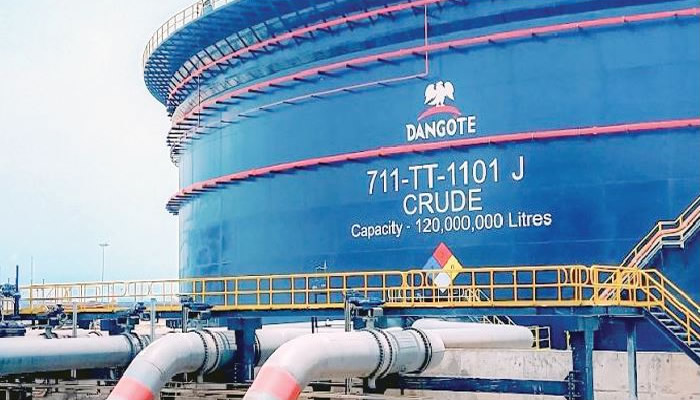

The controversy surrounding the sulphur content in the Automotive Gas Oil, popularly called diesel, produced by the Dangote Petroleum Refinery, has yet to abate, The According reports.
Over the weekend, there were online reports alleging that the diesel recently supplied by the $20bn refinery contained high sulphur.
This came as oil marketers stated that despite the allegations of high sulphur in Dangote diesel, no motorist or industrial consumer had registered any complaint against the product.
“We don’t want to be involved in the politics or claims and counter-claims about Dangote diesel, but what I going to tell you is that no transporter, motorist, or industrial consumer has complained about the diesel since we started distributing it,” the National President of the Independent Petroleum Marketers Association of Nigeria, Abubakar Maigandi, stated.
A top official of the Dangote Group said the recent report on high sulphur content in Dangote diesel emanated from individuals who were hellbent on destroying the refinery, describing the report as fake.
The According recalls that the President of the Dangote Group, Aliko Dangote, and some officials of the company had earlier accused the Nigerian Midstream and Downstream Petroleum Authority of importing dirty fuel into Nigeria.
While accusing the international oil companies of plans to frustrate the refinery, the Vice President of Oil and Gas at Dangote Industries Limited, Devakumar Edwin, also accused the NMDPRA of granting licences indiscriminately to marketers to import dirty refined products into the country.
According to Edwin, the Federal Government issued 25 licences for the construction of refineries in Nigeria, but only the Dangote Group delivered on its promise.
“The Federal Government issued 25 licences to build refineries and we are the only one that delivered on our promise. In effect, we deserve every support from the government. It is good to note that from the start of production, more than 3.5 billion litres, which represents 90 per cent of our production, have been exported. We are calling on the Federal Government and regulators to give us the necessary support to create jobs and prosperity for the nation,” Edwin had stated.
He alleged that even though Dangote was producing and bringing diesel into the market, complying with the regulations of the Economic Community of West African States, “licences are being issued, in large quantities, to traders who are buying the extremely high sulphur diesel from Russia and dumping it in the Nigerian market.”
Edwin had lamented, “The decision of the Nigerian Midstream and Downstream Petroleum Regulatory Authority in granting licenses indiscriminately for the importation of dirty diesel and aviation fuel has made the Dangote refinery expand into foreign markets. The refinery has recently exported diesel and aviation fuel to Europe and other parts of the world. The same industry players fought us for crashing the price of diesel and aviation fuel, but our aim, as I have said earlier, is to grow our economy.”
He argued that because the refinery met the international standard as well as complied with stringent guidelines and regulations to protect the local environment, it had been able to export its products to Europe and other parts of the world.
“It is regrettable that in Nigeria, import licences are granted despite knowing that we can produce nearly double the amount of products needed in Nigeria and even export the surplus. Since January 2021, ECOWAS regulations have prohibited the import of highly contaminated diesel into the region,” Edwin stated.
But while the NMDPRA Chief Executive, Farouk Ahmed, was reacting to Dangote, he denied all allegations of sabotage, stating that it was the Dangote diesel that had higher sulphur content than the imported ones.
Ahmed had revealed that the refinery, which had been selling diesel and aviation fuel in Nigeria for months, had not been licensed, stating that it was still at the pre-commissioning stage with 45 per cent completion.
The NMDPRA boss warned that Nigeria could not rely heavily on the Dangote refinery for its fuel supply.
According to him, the refinery had requested the regulator to stop giving import licences to other marketers so as to be the only fuel supplier in Nigeria.
Speaking about quality, Ahmed alleged, “So, in terms of quality, currently the AGO quality in terms of sulphur is the lowest as far as the West African requirement of 50 ppm is concerned.
“Dangote refinery and some modular refineries, like Waltersmith refinery and Aradel refinery, are producing between 650 to 1,200ppm (parts per million). So, in terms of quality, their product is much inferior to the imported quality.”
Reacting during a tour of the refinery by members of the House of Representatives led by the Speaker, Tajudeen Abbas, recently, Dangote asserted that products refined at the world’s largest single train refinery are of superior quality compared to imported equivalents and meet international standards.
The speaker and other members had observed the testing of Automotive Gas Oil from two petrol stations alongside the same taken from the Dangote refinery.
The diesel samples were procured from two filling stations near Eleko junction along the Lekki-Epe Expressway, Lagos, by the lawmakers.
The Dangote laboratory tests were said to have revealed that Dangote’s diesel had a sulphur content of 87.6 ppm while the other two samples showed sulphur levels exceeding 1,800 ppm and 2,000 ppm respectively.
Speaking, Dangote emphasised that the findings had debunked claims made by Ahmed that imported diesel surpasses domestically refined products.
“We produce the best diesel in Nigeria. It is disheartening that instead of safeguarding the market, the regulator is undermining it. Our doors are open for the regulator to conduct tests on our products anytime; transparency is paramount to us. It would be beneficial for the regulator to showcase its laboratory to the world so Nigerians can compare. Our interest is Nigeria first because if Nigeria doesn’t grow, we have limited capacity for growth.
Dangote argued that the imported products being encouraged by Ahmed have failed in tests, saying most of the importers have fake certificates because the owners of the laboratories have been told what to write.
Speaking about the sulphur content, he added, “I am actually surprised for somebody to come and mention that we have a bad quality; we and other modular refineries. I can’t talk of the quality of the modular refineries, but our own today is 87ppm and by Monday (July 23), we will be at 50ppm, by the beginning of August, we will be at 10ppm.
“All the test certificates people are busy flaunting around today are fake certificates. The demarketing of a company by a regulator that he is supposed to protect is very very unfortunate. We produce the best diesel in Nigeria and if the regulator wants, he can come any time to conduct a test.”
During an interview with The According, the NMDPRA spokesperson, George Ene-Ita told our correspondent that there are about 15 engineers and scientists of the NMDPRA embedded in the refinery whose reports would get to the agency to confirm the current sulphur content of Dangote’s diesel.
The regulator has yet to make known the report from its men since two weeks ago, especially as the comments from the NMDPRA boss were greeted with backlashes.
However, different laboratory results surfaced online during the weekend, alleging that diesel supplied to retailers between April and July, revealed that the sulphur content in Dangote diesel went up to as high as 1200 ppm.
The online reports said that the fuel, delivered in 32 batches, was supplied to different depots of Rain Oil, AA Rano, TMDK Oil, Kashton, NIPCO, Sobaz, and other retail companies.
It was also alleged that two days after the lawmakers’ visit, the Dangote refinery delivered a shipment of diesel containing 950 ppm of sulphur to AA Rano’s depot in Ijegun, Lagos, saying the certificate of quality, dated July 21 was authorised by an independent laboratory name Intertek.
While reacting to this, an official of the Dangote Group said some individuals were trying to pull down the refinery.
The official, who pleaded anonymity because he was not authorised to speak with the press, described the report as falsehood.
“But you should know where this is coming from. It is false,” the official said
He added further, “They are intentionally circulating the falsehood. They are bent on destroying us. All these are fake documents. They are intentionally circulating it to spoil our good name.”
The source refused to mention names, saying Nigerians know the faces behind the online report.
The NMDPRA spokesperson could not be reached at the time of filing this report.
Dangote refinery, which is supposed to start the sale of petrol in one week, has got the support of President Bola Tinubu, who has ordered the Nigerian National Petroleum Company Limited to sell crude to it in naira.
CSOs speak
In a similar development, a coalition of Civil Society Organisations has said it would set up a situation room to monitor the compliance of NNPCL to the presidential directive to sell crude oil to Dangote refinery in naira.
Leaders of the 28 CSOs who were on a facility tour of the 650,000 bpd world’s largest single train refinery in Lagos said the disposition of NNPC and the regulatory agencies was a clear indication that they deliberately held down the nation’s refineries so that they could continue importing petroleum products.
Speaking on behalf of others, Solomon Adodo, of the Rise Up for A United Nigeria, said what his group had seen was a world class facility and wondered how a regulatory agency of the government could take sides with importers of petroleum products when a local refinery now produces the petroleum products.
He said the CSOs have concluded to petition the Presidency on the need to adopt the Dangote refinery as a national asset that should be used to liberate the country from the shackles of importation of fuel while it exports crude.
In a statement issued on Sunday by the refinery, Adodo said, “Having gone round to see this world class project, we are at a loss as to why the government could decide to turn against Nigerians in this manner. But we are not too surprised given our past experiences. Those who are profiting from our collective misfortune will not want the Dangote refinery to work.
“We are ready to defend this facility with everything as civil society organizations. We are not speaking on our behalf but on behalf of all Nigerians and on behalf of our fatherland. It leaves much to be desired how an agency of government with oversight function to guide to grow such a project as this would now be disparaging the same project. This is too bad.
“We have seen for ourselves and we have cleared all doubt as to the completion of this refinery and the readiness to supply all our domestic needs. We will expose them all. Anyone who is not ready to ensure that Nigeria has a new lease of life must give way. Now it is a fight to finish.
“Going forward, we are going to set up a situation room to monitor the compliance of NNPC with the directive of Mr President that Dangote refinery would be supplied with crude in naira because we know that the enemies of the people would want to adopt another strategy to sabotage the presidential directive.”
Foreign nations invite Dangote
Speaking while welcoming the group, Edwin described Dangote refinery as a value adding facility as it would stop the exportation of Nigeria’s crude and importation of finished products and wondered why the government would be against such a vision for Nigeria.
According to him, many African countries have minerals but they are not adding value to their economies because those minerals are exported raw and the finished products are imported back into the country whereas vice versa should have been the order of the day.
“This is what Dangote refinery seeks to correct, we did the same in the cement and sugar sectors where Nigeria was a leading importer of those products, and with the coming of Dangote leading the backward integration programme of the government, others came into the sector and together Nigeria now exports cement to other countries.
“What we want to do in the refinery, we have done it in other businesses, Nigeria used to be the biggest importer of sugar, we came in and changed the narrative. We led the backward integration scheme of the Federal Government, and we now produce sugar locally for domestic consumption and others have joined us. We did the same in cement by opening up the production plant and today Nigeria exports cement to other countries,” he stated.
On crude supply challenges, the Dangote official said, “We didn’t ask for any favour other than that we want to buy crude to produce. First they said there was no crude, later they said we would have to pay some dollars above the prevailing crude market price. And this is a global market where you can track crude prices anytime. We resorted to buying crude from Brazil and the United States. Later they said we should not be announcing the price of the products.
“Even the US, the leading proponent of a free market economy, protects its local industries by imposing huge duties on from foreign imports just to protect local industries. This is a man that Saudi Aramco once approached to come and cite his refinery in Saudi Arabia, promising steady supply of crude. Abu Dahbi also invited him to do the same on their soil but he rejected it, insisting he would build at home. Now he did that, a facility that is supposed to add value to Nigeria’s economy is being frustrated.”
According to him, Nigeria can only consume 45 per cent of the capacity of the refinery while the remaining 55 per cent will be exported and will bring foreign exchange into the country.
EndBadGovernance: Stakeholders knock Tinubu’s speech, as organizers intensify protest
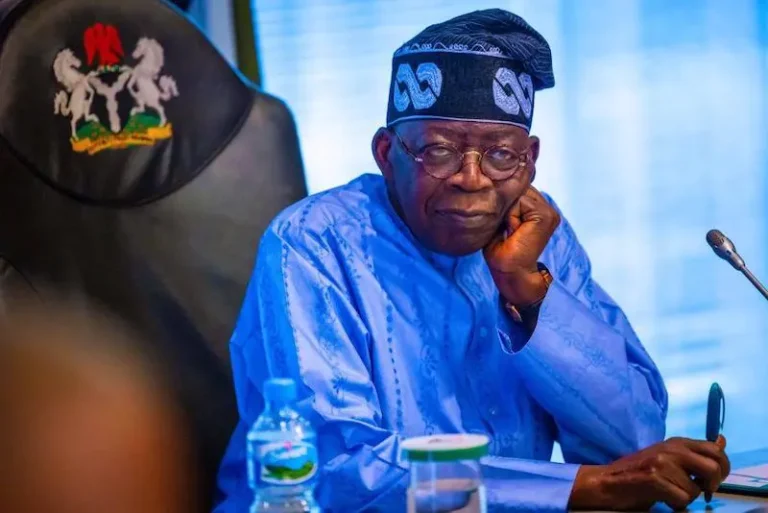
Stakeholders have knocked President Bola Tinubu over his failure to address key demands of the EndBadGovernance protesters in his nationwide broadcast on Sunday.
Tinubu had on Sunday waded into the issues emanating from the ongoing nationwide protests against hunger and high cost of living in Nigeria.
TVN reports that Nigerian youths who are irked by the unfavourable prevailing economic conditions in the country are in the streets across the nation demanding solutions to the hardship.
The action, which commenced on August 1 and expected to last for ten days, is aimed at drawing the attention of the government to the hardship bedeviling citizens.
The protests in Kano, Borno, Yobe, Kaduna, Gombe, Bauchi, FCT, Niger and Jigawa, turned bloody with scores of unsuspecting citizens killed, while an unspecified number of persons were critically injured.
Although different reports from states suggested that about 19 persons paid the supreme price during the first day of the protest, Amnesty International claimed that 13 persons were killed.
In some states, hoodlums vandalized and looted properties belonging to both the government and private individuals.
In a quest to quell further breakdown of law and order in the country, President Tinubu on Sunday addressed Nigerians on the matter, appealing to the aggrieved Nigerian youths to rather embrace dialogue.
In his speech, Tinubu who commiserated with victims’ families over the death of their loved ones, called on the protesters to suspend the exercise.
Reeling out steps taken by the government to address the hunger crisis, Tinubu said about N570bn has been released to states for livelihoods support.
The president also pointed out that 600,000 nano businesses have so far benefitted from the nano grants, stating that additional 400,000 businesses would still benefit.
Although the president vehemently rejected the call for reinstatement of fuel subsidy, he noted that the Compress Natural Gas, CNG, initiative was to reduce transport cost by 60%, assuring that about one million conversion kits would be distributed at little or no cost.
Tinubu failed to address key demands
TVN reports that among other things, the organizers of the protest had asked the FG to “Toss the Senate arm of the Nigerian legislative system. Keep the House of Representatives and make lawmaking a part-time endeavour.
“Pay Nigerian workers a minimum wage of nothing less than N250,000 monthly.
“Release Mazi Nnamdi Kanu unconditionally and demilitarize the South East. All EndSARS and political detainees must also be released and compensated.
“End banditry, terrorism and violent crimes. Reform security agencies to stop continuous human rights violations.
“Massive shake-ups in the Nigerian judiciary to remove cabals of corrupt generations of judges and judicial officers that continue denying citizens access to real justice.
“Diaspora voting.
“Probe past and present Nigerian leaders, who have looted the treasury, recover their loot and deposit it in a special account to fund education, healthcare and infrastructure”.
According to stakeholders, who spoke to TVN on Sunday, President Tinubu’s speech failed to address those demands.
We expect Tinubu to address issues of insecurity in North, cutting cost of governance – Area Youths
President General of the Arewa Youths Consultative Forum, AYCF, Yerima Shettima told TVN on Sunday that Tinubu failed to address the security crisis in the North.
Shettima also expressed disappointment in the president for ignoring the call for his administration to cut the cost of governance in the country.
He said, “there is an outcry everywhere that Nigerians expected more from the president.
“For me, there are two angles to it from the north here. If there is anything he has not touched, it is the fact that he would have looked at what is the specific challenge of the Northerners.
“What is our problem? Our problem is the issue of insecurity. I would have wanted him to declare a state of emergency on insecurity, especially in the northern part of the country.
“He can even be specific by mentioning at least five states in the North. States like Niger, Kaduna, Zamfara, Borno and probably Katsina State. Declare a state of emergency and let us see that you are hard on this issue. Declare a state of emergency and put the security chiefs on their feet.
“Give them some months to bring lasting solutions to the problems. This is what we expected from the president and this is where I can say that he has not done enough”.
Shettima, however, backed the president in his position on fuel subsidy, saying “even Tinubu himself can’t bring back this subsidy that people are crying about everywhere. It is not possible. This is a global problem.
“Even as things are, and from the analysis we have gathered, Nigerians were supposed to pay more than N1000 for a liter but the president went far to overstretch the government and gave subsidy behind the knowledge of so many Nigerians”.
Shettima blamed the immediate past administration led by former president, Muhammadu Buhari for the current economic reality.
According to him, “It was the last government that put us into this mess. They went out of the way and acquired so much money that they can’t even account for it.
“I am shocked to see that none of those ministers that squandered our money has been brought books.
“For me, Tinubu has communicated. Some of us know that there are certain policies that have been put on ground. The policies may likely not have impacted positively at the moment, but gradually, those things will come to pass.
“Yes we all can feel the heat but we shouldn’t be in a hurry. We are suffering. Look at the size of the government. Tinubu failed to address the demands that he should cut the cost of governance”.
Tinubu’s speech only contains grammar, no actionable solutions – Peter Obi’s spokesman
Yunusa Tanko, spokesman to the Presidential candidate of the Labour Party in the last election, Mr Peter Obi, told TVN that President Tinubu failed to address issues raised by the angry Nigerian youths.
According to Tanko, Tinubu failed to show Nigerians actionable solutions to the prevailing economic hardship ravaging the nation.
He said, “I don’t think he has addressed the issues raised by the protesters. President Tinubu ought to have responded to each and every demand that is already made in the fliers.
“For example, the issue of price of petroleum, bringing it down from N850 to at least N200.
“This is the major thing that is affecting every aspect of the economy across the country.
“Or he talks about how to bring the cost of commodities down to appreciable levels or he even ought to have talked about how to secure the lives and properties with practical examples.
“He should have also talked about how to enhance the production of agricultural products, especially in northern Nigeria where we have land and even the issue of the protest is even more severe.
“People want to hear him say something like ‘we are bringing in tractors, fertilizers, seedlings and everything needed so that people can return to their farm’. These are practical examples that you can show to make people believe that you are dealing with this matter not to continue to speak grammar with no actionable solutions to the problems. I don’t think he has addressed the issues to be honest”.
EndBadGovernance: I was shocked by Tinubu’s broadcast – Dele Momodu
In a similar vein, the publisher of Ovation Magazine, Dele Momodu, knocked the president over the broadcast, saying he was left shocked by the content of the speech.
In a post on his X handle shortly after the speech, Momodu said the president totally failed to address the demands of the protesters.
He said, “After the long-awaited speech of President Bola Tinubu eventually came this morning, I’m sure most of you would be as stupefied as me.
“I must confess that I had little hope of Tinubu granting some concessions to the aggrieved Nigerians. As a man who has held an iron grip on Lagos State for the last 25 years, it would be difficult for him to change a winning formula that has worked for him ever since.
“Also, what did we expect his advisers to be telling him when most of them have been his most fanatical cronies from Lagos who have learnt never to challenge the master?
“So it was merely wishful thinking on the part of incurable optimists like me to think he was going to have mercy on hapless and seemingly helpless Nigerians.”
On his part, Comrade Jare Ajayi, the National Publicity Secretary of the pan-Yoruba socio-cultural and socio-political organization, Afenifere told TVN that the organization is currently studying the speech and would make its position known to the public soon.
Protest continues – Organizers threaten to extend demonstration beyond ten days
Despite President Tinubu’s appeal and concerns raised by security agencies, organizers of the EndBadGovernance protests have vowed to continue the exercise across the country.
In a chat with TVN on Sunday, the presidential candidate of the African Action Congress in the 2023 election, Omoleye Sowore said, “Protest continues tomorrow”.
Sowore, who is unsatisfied with President Tinubu’s broadcast, threatened that if the demands of the protesters were not met after ten days of the protest, the exercise may continue indefinitely.
Asked when the protest would end, Sowore simply said “In 10 days, but it would continue if the issues on the charter of demands are not adhered to”.
Meanwhile, the Nigerian military on Saturday said it will intervene if violence recorded in some states in the ongoing nationwide protest escalates.
The Chief of Defence Staff, Gen. Christopher Musa, during a press conference in Abuja, said the military would step in to control the looting and violence being witnessed in some parts of the country.
The CDS noted that while he was aware of the “grievances” of the protesters on the challenging economic difficulties in the country, they must show understanding.
He appealed to Nigerians to be united during “these trying times” and cautioned against looting and vandalization of property.
The defence chief decried the destruction of valuables during the nationwide protests, describing it as “crazy.”
EndBadGovernance: Stakeholders knock Tinubu’s speech, as organizers intensify protest