Home Blog Page 54

Dalung Throws Support Behind ‘Occupy NASS’, Slams Senate Over Electoral Act

0

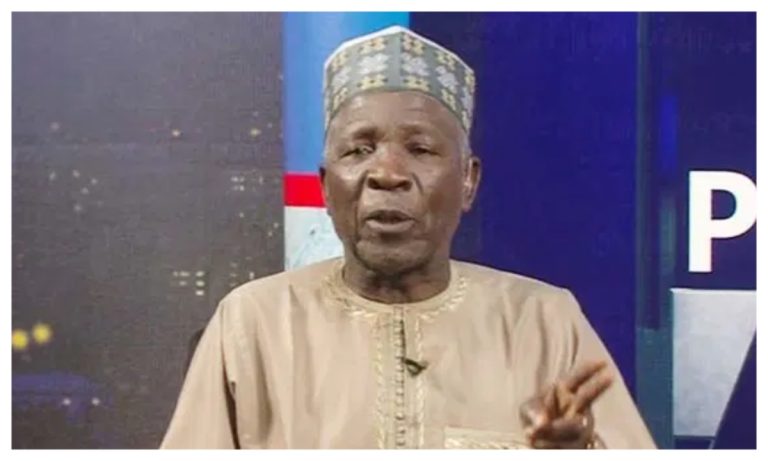
The planned demonstration by well-known activists, labor unions, and elder statesmen before the National Assembly on Monday has the support of Solomon Dalung, a former minister of youth and sports development.

According to a report, prominent figures such as human rights attorney Femi Falana (SAN), former Education Minister Oby Ezekwesili, renowned economist Prof. Pat Utomi, former Nigeria Labour Congress president Ayuba Wabba, political activist Usman Bugaje, Senator Shehu Sani, and members of the Obidient Movement are anticipated to take part in the planned protest known as “Occupy NASS.”

During an appearance on Channels Television, Dalung claimed that the planned protest was a valid reaction to the Senate’s deterioration of democratic norms and public trust.

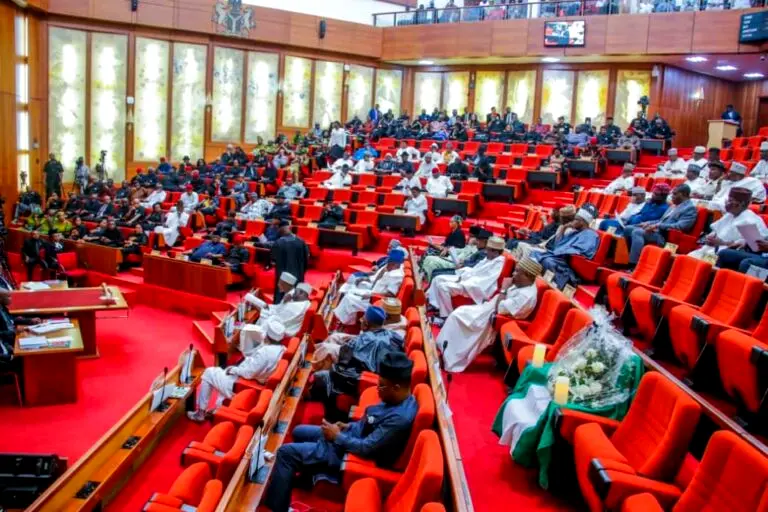
Growing indignation over the Senate’s decision to eliminate the Electoral Act Amendment Bill 2026’s requirement for electronic transmission of election results coincided with Dalung’s endorsement.

The former minister responded by criticizing the 10th Senate’s decisions to eliminate mandatory electronic transmission of election results and its handling of the Electoral Act Amendment Bill.

The Senate’s repute is zero. Nigerians cannot therefore expect a credible or honest election as a result. He stated that the integrity of the survey determines public behavior and how people respond to what the Senate President deems to be ongoing.

The current legislature, he claimed, has failed in its fundamental democratic duty to reflect the will of Nigerians, especially on matters that are essential to the legitimacy of elections.

Beyond a reasonable doubt, the 10th Senate has demonstrated that it does not represent the Nigerian people. “The Senate is understood to represent the people in a democracy,” he said.

Emphasizing that election laws are the foundation of democratic administration and should not be taken lightly, the minister criticized parliamentarians for moving forward with changes to the election Act without extensive public input.

Dalung warned that any attempt to impose measures that might compromise the integrity of upcoming elections should be met with resistance from Nigerians, expressing a profound suspicion of the Senate’s motives.

Therefore, it was believed that the Senate, which represents the people, would include the people in this particular electoral act issue. It is a crucial and delicate aspect of our democracy. However, as is common and typical of these individuals, they simply departed alone.

“This Senate is not trustworthy. We will not permit them to complete their current plans so that, in the end, we will be left with what Prof. Mahmood (Yakubu) accomplished following the 2023 election,” he said.

With all due respect, he added, “And the Senate President’s explanation has further underlined the fact that the 10th Senate “His explanation was rather exposed to their agenda, which reinforces the agitation for the planned Occupy National Assembly,” he continued.

AGF: Being a SAN Is an Honour, Not Permission to Misbehave

0

Justice Minister and Attorney General of the Federation Lateef Fagbemi (SAN) has cautioned that the Senior Advocate of Nigeria (SAN) title is a privilege that should not be misused, emphasizing that it is not an unalienable right and that it can be revoked if holders fail to meet expectations.

At a dinner hosted by the Body of Senior Advocates of Nigeria (BOSAN) on Saturday in Lagos to celebrate the 50th anniversary of the esteemed position, Fagbemi reportedly made the comments.

Special Adviser to the President (Communication and Publicity) in the Office of the AGF and Minister of Justice Kamarudeen Ogundele released a statement on Sunday that included his remarks.

Some of us seem to view the rank as a license for misbehavior and lack of discipline, believing that once it is granted, it cannot be taken away,” Fagbemi stated. That is obviously incorrect.

“The rank is a privilege, and it can be revoked, like any other privilege, if the recipient denigrates or lives below the privilege’s standards.”

The AGF restated that the Legal Practitioners Privileges Committee (LPPC) had explicitly stated that the SAN title was revocable and may be taken away from recipients who didn’t follow the rules.

Discipline should start within the body itself, according to Fagbemi, who also serves as BOSAN’s chair, rather than depending just on outside regulatory bodies.

Discipline must be enforced within, beginning with our bodies. In reality, it is preferable for us as a Body to govern ourselves rather than entrusting the LPPC or, worse, the Legal Practitioners Disciplinary Committee (LPDC) with the full responsibility for regulating the rank,” he stated.

As he admonished Senior Advocates to maintain high ethical standards, he also warned junior attorneys not to treat SANs disrespectfully and urged them to respect the rank.

The dinner event marked the official induction of 134 new SANs into BOSAN, including 87 from the 2024 set and 57 from the 2025 set.

Five legal students from Nigerian universities were also awarded scholarships at the event.

As the special guest of honor, Fagbemi also commended Justice Kudirat Kekere-Ekun, the Chief Justice of Nigeria. He said the SAN rank and the legal profession as a whole have been strengthened by the continued cooperation between BOSAN and the LPPC.

Mixed Reactions as Kwankwaso, Yusuf Prepare for Kano 2027 Showdown

0

In an effort to survive the general elections in 2027, Governor Abba Yusuf joined a number of other state governors in losing the sole state under the leadership of the New Nigerian Peoples Party (NNPP) to the All Progressives Congress (APC) last month.

Governor Yusuf reportedly broke with Dr. Rabiu Kwankwaso and sided with Kwankwaso’s longtime rival, or what some have referred to as political enemy, Abdullahi Ganduje, causing Kano to experience the largest political defection in recent memory.

The governor put survival over structure, power over bloodline, and refuge over devotion in the eyes of NNPP followers.

As a result of a similar decision made by Ganduje during his tenure as governor, Kwankwaso has also been accused of being bossy.

Yusuf stated in his letter of resignation from the party that put him in power that he could no longer remain in the NNPP due to ongoing internal strife, unresolved leadership disputes at the state and national levels, protracted legal proceedings involving party leadership, member disenfranchisement and deep divisions, and a belief that the party’s divisions had become irreconcilable. He also added that he believed that staying in the party would no longer be in Kano State’s best interests.

Former governor and defense minister Kwankwaso, who led the NNPP and Kwankwasiyya group, was unable to contain his emotions in the face of Yusuf’s defection.

Monday, January 26, 2026, the day Abba Yusuf, also called Abba Gida-Gida, formally joined the APC, should be remembered globally as a day of “betrayal,” according to the former governor.

“As the leader of this movement, I declared the 23rd of January as Betrayal Day today,” the NNPP’s 2023 presidential candidate stated in a statement following the governor’s departure.

“We think that day should be forever documented in history to guarantee that betrayal and breach of trust are recognized on a worldwide scale.”

By permitting Ganduje to publicly raise his hand, Kwankwaso stated in a another interview with the BBC Hausa that Abba Yusuf will lose the 2027 governorship race.

He stated, “I knew right away that Abba would lose any election when I saw Ganduje raise Abba’s hand.” Kano residents don’t back Gandujiyya. Ganduje’s candidacy lost in 2023, and he lost the 2019 election. Therefore, Abba won’t prevail in 2027.

“Ganduje has raised the hands of many governorship candidates, and they have emerged victorious,” the state’s APC responded right away, through Bala Ibrahim, its director of publicity.

His support has continuously resulted in victories for the governors of Imo, Kogi, Osun, and other places. Kwankwaso should look at the number of hands raised by Ganduje and himself, as well as the triumphs that followed. Abba can’t be an outlier.

In actuality, Ganduje’s hands are those of triumph. Victoria ascerta. In Kano, our party is well-liked and supported by the populace due to its remarkable accomplishments under the Renewed Hope Agenda. Our party and its candidates will therefore undoubtedly win in 2027.

Kwankwaso has run against the APC before and lost. It is therefore not a recent development to lose to the APC. No amount of bluster can alter the course of events, and it is evident that Kwankwaso and the opposition party in Kano State have not won.

Additionally, the governor switched to the APC for personal reasons rather than Kano’s, according to Buba Galadima, the secretary of the NNPP Board of Trustees, who spoke to Arise News.

“If Governor Yusuf had switched from the NNPP to a different party except the APC, I would have said he did a good job. In this instance, however, it is really a question of survival; he did not want us to accept the peace in Kano or the Kano people.

It is important to note that this betrayal is the third in global history, after Judas’s betrayal of Jesus and Brutus’ betrayal of the Caesars. Governor Yusuf of Kano has announced the third one that should be added to the Guinness Book of Records.

Consequently, our commander requested that we designate January 23rd as the world’s greatest betrayal day. Since I don’t give in to emotions like that, anything that could make me cry must have moved me beyond words. I’m well over 75.

NNPP National Youth Leader Amb. Auwal Musa Muhammad responded to a question about Kwankwaso’s future by saying, “The NNPP structure across the federation—at national, state, LGA, ward, and grassroots levels—remains firmly loyal to Kwankwaso.” Trust, philosophy, consistency, and shown leadership over the years serve as the foundation for this allegiance.

The NNPP cannot be undermined by political choices motivated by convenience or self-interest. It is no coincidence that Senator Rabiu Musa Kwankwaso is a politician.

His political experience encompasses decades of service, sacrifice, and people-focused governance, making him a tried-and-true, reliable, and results-driven leader. As Kano State’s governor, his accomplishments are still evident and substantiated.

“We congratulate His Excellency, Abba Kabir Yusuf, the governor of Kano State, well in his personal political decision to join the APC. It’s political.

But this ruling has no bearing whatsoever on Senator Rabiu Musa Kwankwaso, the NNPP’s organizational framework, or its political clout—in Kano State or nationally.

Defectors are not a rival of Senator Kwankwaso. He functions from a position of ideology, legacy, and a strong political foundation that has been established over time. Service, stability, and public trust are the keys to political relevance; shifting political platforms is not.

The NNPP is still functional, cohesive, disciplined, and steadfastly devoted to Senator Rabiu Musa Kwankwaso. Instead of being based on convenience, this party is based on organization, doctrine, and grassroots power.

Defection cannot change the past. No single choice has the power to destroy structure. The NNPP is resilient, cohesive, and devoted.

According to Chief Peter Ameh, a former presidential candidate and activist, Governor Yusuf will not be able to regain power following the 2027 governorship election.

“I believe that people who are assuming Kwankwaso has fallen are misinterpreting the facts. They are obstinate, and the facts are extremely plain.

“The fact that Kwankwaso put Yusuf in the running for governor in 2019.” He wasn’t the governor. They won the election, but it was manipulated. They worked hard to try to overthrow the APC’s authority and power of state, relying on the Kwankwasiyya’s structure.

“There was no surrender, but there was a retreat. In 2023, they returned. They used all of the federal government’s power, including the federal structure and all of the state’s power, to challenge Ganduje in the election and prevail.

Because no one in Nigeria knew Abba Yusuf, Kwankwaso became governor. His appointment as governor was a result of the Kwankwasiyya movement.

Additionally, Yusuf should be wary of the repercussions of his actions as long as Kwankwaso stays in the NNPP and does not join the APC, as Kwankwaso is the one driving the discourse.

As a result, I am certain that Abba Yusuf will be disciplined in 2027 because Kano residents are politically opposed to what is happening in other regions of the nation, and I am furious about this.

“The nature of our election has evolved. People no longer stuff ballot boxes, rig elections, rewrite outcomes without a vote, or steal electoral mandates democratically.

With or without Kwankwaso, the Kano State Government has insisted that Abba Yusuf will easily win the general election in 2027.

Insisting that Yusuf’s chances of winning reelection depend on his performance and the support of the public, the administration denied allegations that he cannot win a second term without the help of political godfathers.

In a statement, Ibrahim Waiya, the Commissioner for Information and Internal Affairs, responded to statements ascribed to Galadima by saying that supporters of the governor should close their eyes because victory is certain.

Kano functions according to its own historical cadence, political awareness, and civic memory.

In the end, he observed, “the electorate holds the power in the state, and their loyalty has always been contingent on performance, character, trust, and credibility.”

However, the NNPP warned the Governor of approaching disaster and reminded him that “this is not the first time such a betrayal has occurred in the political history of Kano” through Ladipo Johnson, its national publicity secretary.

Around 120 out of 126 members of the Kano State House of Assembly, the majority of Kano representatives in the National Assembly, and almost all local government chairmen and council members joined Alhaji Abubakar Rimi when he defected from the People’s Redemption Party (PRP) to the Nigerian People’s Party (NPP) in the early 1980s.

However, the people gave a clear and decisive vote: Mallam Aliyu Sabo Bakin Zuwo of the PRP defeated Rimi in the 1983 gubernatorial election, placing him in second place. Even more telling is the fact that only one of the 120 state assembly members who defected with Rimi was re-elected; this should serve as a harsh reminder to any politician who is considering such a course.

People who sacrifice loyalty for convenience and honor for dishonesty are rarely exempt from public condemnation, as history has often demonstrated. In the end, the masses of Kano will remain loyal to principled leadership because the truth never fades.

On Thursday, Kwankwaso and Yusuf put their popularity to the test at Kano’s Singer Market when they both made separate presentations to show support for traders following a horrific fire event.

When Kwankwaso arrived at the market first, he was greeted by a mob of supporters. A few hours later, Governor Yusuf visited and was also greeted by a crowd.

In addition to promising financial assistance and prompt government action to the impacted traders, Kwankwaso’s arrival and reception served as a reminder that the godfather’s power is still felt throughout the state.

Kenneth Okonkwo Labels Akpabio Enemy of Democracy Over Electoral Act, Demands Ouster

0

One African Democratic Congress (ADC) chieftain has called Senate President Godswill Akpabio a democratic adversary.

This was stated by Okonkwo on Sunday during an interview with Laolu Akande on “Inside Sources.”

The attorney stated that if the Senate President does not leave the position in an honorable manner, he should be dismissed.

Following the Senate’s rejection of real-time electronic transmission of election results, the Nollywood veteran turned politician was responding.

A proposed amendment to Clause 60, sub-section 3 of the Electoral Amendment Bill that aimed to mandate the electronic transmission of election results was reportedly rejected by the Senate on Wednesday.

Okonkwo responded by saying, “Let me tell you about the stunning and noteworthy statement made by Supreme Court Justice Abba Aji. We cannot reverse the passage of time, he claimed, and modernism and technology astonish us.

“To oppose the use of technology and electronic transmission and transfer of election results in this high-tech era and period is to be an enemy of democracy and to adhere to the vicious cycle of election rigging, manipulation, and falsification,” he stated.

Why would the legislature hesitate on a matter when the Supreme Court has said that it promotes electoral manipulation and tampering and renders you an adversary of democracy?

Senator Godswill Akpabio has turned into an enemy of democracy and is continuing the cycle of election tampering, manipulation, falsification, and deception by attempting to uphold the same clause that the Supreme Court has declared to be an enemy of democracy if it is violated.

“If he doesn’t resign, that man should be removed because he is an enemy of democracy.”

Inside the Senate’s Storm Over Electoral Amendment and Real-Time Voting

0

Due to the controversy surrounding the electronic transmission of election results, the Nigerian Senate is taking action to quell growing political tension and public cynicism around the Electoral Amendment Bill. An emergency meeting is planned for Tuesday.

The main question is whether the Senate changed rules pertaining to the real-time electronic transmission of results, weakening a crucial transparency safeguard, or if lawmakers are being misled about what Senate President Godswill Akpabio called “deliberate misrepresentation of proceedings in the Red Chamber of the National Assembly.”

Akpabio stressed that the Senate never opposed the electronic transmission of election results during any phase of proceedings, despite growing criticism.

The Senate President stated, “The Senate never opposed the electronic transmission of election results.” “We looked at how to handle real-time transmission in the context of Nigeria’s uneven network coverage, especially in rural and difficult-to-reach communities.”

It was anticipated that the Electoral Amendment Bill, which was intended to improve the 2022 Electoral Act, would pass with reasonably ease. Instead, it has sparked a national discussion about trust, intent, and the future of Nigeria’s electoral openness. Allegations that parliamentarians were reversing hard-won election changes quickly arose as reports circulated that the Senate had eliminated the bill’s requirement for real-time electronic transmission. Opposition parties accused the Senate of reopening loopholes for manipulating results, while civil society organizations (CSOs) cautioned of a risky retreat.

The Senate leadership was compelled to act due to the swiftness and severity of the backlash, and as a result, an emergency meeting was scheduled for next Tuesday. Akpabio believes that narrative distortion is the problem.

He insisted that electronic transmission is still a fundamental component of the modified statute, saying, “What was discussed was how to avoid creating legal problems where network coverage is unavailable.”

Even though opposition senators have frequently voiced their disapproval of the Senate leadership, this time they mostly agreed with Akpabio’s explanation, albeit with a more nuanced focus. Opposition members, led by Senator Abba Moro, Senate Minority Leader, stated that the Senate had agreed on real-time electronic transmission of results, but they advised against interpreting it in strict legal terms that may render elections automatically void in the event of a network outage.

An opposition lawmaker who was familiar with the discussion stated, “Real-time transmission was agreed upon, but the worry was that the law should not become a trap where elections are annulled simply because of technical limitations beyond the control of voters or the Independent National Electoral Commission (INEC).”

Legislators wanted to increase the use of technology in elections without creating a scenario where voter choice is overshadowed by infrastructure failure, according to Moro. Although it hasn’t completely reassured a cynical public, this unusual meeting between the Senate President and opposition lawmakers highlights the complexity of the situation.

Lawmakers defend the Senate’s stance, saying it strikes a balance between embracing technology and preventing procedural challenges to elections. A strict legislative requirement for real-time broadcasting, without consideration for extraordinary circumstances, might exacerbate post-election litigation, they warn, citing Nigeria’s varied topography, ongoing infrastructural deficiencies, and security issues.

In prior election cycles, judges have been requested to declare results void on the grounds of purported procedural errors rather than proof of election tampering. Senators say they’re committed to preventing a situation in which voter intent is overruled by a technical glitch. Akpabio has stated time and time again that the Senate is still completely dedicated to holding legitimate elections and using technology to increase transparency, but that it would not pass laws that give network providers control over election results instead of voters.

Public mistrust has not decreased in spite of these guarantees. Real-time electronic transmission has transcended from a technological feature to a symbol of electoral integrity for many Nigerians. Long considered the most vulnerable phase of the voting process, it serves as a barrier against meddling between polling places and collation centers.

Samson Itodo, the Executive Director of Yiaga Africa and an election observer, has cautioned that vague electoral laws tend to exacerbate post-election conflicts rather than settle them. He points out that when laws are imprecise, interpretation becomes politicized and public trust starts to decline.

According to Prof. Jibrin Ibrahim, a political scientist and election observer, time itself has becoming political in Nigeria. He pointed out that any delay, regardless of the reason, creates mistrust after the results leave the polling station.

Senate explanations, no matter how thorough, have had difficulty regaining the public’s faith because of this ingrained skepticism.

Clarifying misunderstandings and laying the foundation for harmonization with the House of Representatives are the official goals of the emergency meeting.

Lawmakers unofficially admit it’s also a damage-control effort. Failure to settle the dispute might make harmonization more difficult, lead to fresh pressure from civil society, or even cast doubt on the president’s decision to sign the measure.

Sebastine Hon, a Nigerian constitutional lawyer and Senior Advocate, cautioned that the dispute has transcended legislative drafting and now involves institutional legitimacy. He asserts that Nigerians are more interested in whether electoral reforms are being discreetly negotiated or reinforced than they are in technical explanations.

The impression of weakened electoral safeguards carries significant political consequences for a Senate already beset by public mistrust regarding elite consensus politics.

Similar objections regarding electronic transmission almost caused the 2022 Electoral Act to stall during its approval, and the current dispute is reminiscent of those battles. Legislators then, as now, pointed to network issues. Clearer pledges were pushed then, as they are now, by public pressure. The political climate has altered. Legislative activities are being scrutinized in real time, and technical amendments are rarely left technical for long due to increased opposition monitoring, changing coalitions, and a more technologically savvy voter.

Dr. Tunji Olaopa, a public policy analyst, said that Nigerians are now questioning every provision for possible flaws because they have learnt from the past and believe that election reform is no longer an elite discussion.

The Independent National Electoral Commission is caught up in the debate. INEC has made significant investments in electronic transmission infrastructure and has stated time and time again that it is prepared to use technology to improve transparency. However, it has also issued warnings about operating difficulties in isolated, unsecure, or inadequately linked locations.

The commission is under tremendous pressure to provide speed, transparency, and uniformity across wildly disparate terrains because of a regulation that acknowledges network constraints while affirming real-time transmission.

Legal scholars warn that courts may be left to interpret what “real time” actually means if the final, harmonised version of the bill is not clear, which could turn technical discussions into legal battlegrounds.

Beyond the phrasing of a single sentence, the dispute raises a larger question: to what extent is Nigeria’s political elite prepared to cede their discretion to open, technologically advanced election processes? Any ambiguity, in the opinion of detractors, undermines deterrence. Rigid drafting puts legislators at danger of injustice due to technical failure. Voters have a more straightforward fear: once a loophole is established, it is rarely used.

The Senate’s subsequent actions will indicate if electoral reform is still a steadfast democratic commitment or a compromise that can be worked out as it gets ready for Tuesday’s extraordinary session and eventual harmonization with the House of Representatives. Clarity is a must in a nation where elections are frequently decided in courtrooms as well as voting places. It’s the money of confidence.

APC in Rivers Gives Reasons for Delay in Receiving Fubara

0

The All Progressives Congress’s national chairman, Professor Nentawe Goshwe Yilwatda, has provided an explanation for the postponement of Rivers State Governor Siminalayi Fubara’s official admission into the ruling party.

Yilwatda claimed in an appearance on TVC Politics that the postponement was a calculated action related to regional and religious factors, especially the approaching Ramadan fast.

“We decided to clear the North first because Ramadan is coming, and the majority of people in the North are Muslims,” he reportedly said.

“We begged that we complete the work with the northern governors who defected before moving to the South because Ramadan is a very delicate time.”

Yilwatda denied rumors that the delay was caused by internal party dynamics or the residual influence of Nyesom Wike, the former governor of Rivers State, on party matters in the state.

Sim’s lack of control is unrelated to this. “It’s about strategy and knowing each community’s sensitivities,” he stated.

The APC chairman promised party members that after the ongoing operations in the North are over, Governor Fubara will be formally welcomed into the party.

As the party works to integrate new members, Yilwatda emphasized that it is making a conscious effort to respect cultural and religious diversity throughout Nigeria.

FG Earmarks N6bn for Construction of Three Mega Schools in Gombe

0

The construction of three mega schools in Gombe State will cost six billion naira, according to approval from the federal government.

This was announced by Alhaji Uba Ahmadu, the Minister of Regional Development, in Kumo, the Akko Local Government Area headquarters, during the opening of a hostel with 250 beds built by the North East Development Commission (NEDC).

According to the minister, the NEDC is responsible for building the three schools.

Dadin Kowa (Gombe Central Senatorial District), Dukku (Gombe North Senatorial District), and Kaltungo (Gombe South Senatorial District) are the three big schools, according to the News Agency of Nigeria, or NAN.

The initiative, according to the minister, is a component of a larger plan to improve the appeal, accessibility, and competitiveness of education, especially in areas that have had years of developmental difficulties.

Education is still essential for catching up to national standards and closing the educational divide between the Northeast and other regions of the nation, he emphasized.

“Providing contemporary learning environments that motivate students and enhance academic results is the federal government’s main goal,” Ahmadu stated.

The minister stated that the convenient and encouraging environment at the mega schools will greatly improve students’ focus and academic performance. NAN also reports that the schools have all the necessary amenities and facilities, including good student housing.

Ahmadu also commended the Gombe State Government for its cooperation with the NEDC and the efforts it has made to keep education in the state accessible and appealing to all prospective students.

The cooperation, he said, is a paradigm for regional growth and sustainable educational development.

Mega schools, according to NAN, are state-led projects in Nigeria that aim to construct sizable, contemporary, and fully furnished educational facilities. These facilities frequently include ICT labs, libraries, and classrooms intended to improve the infrastructure and quality of education.

With a focus on Northern Nigeria, these projects seek to give thousands of students—including IDPs and orphans—safe learning environments.

Obasanjo Throws Weight Behind Peter Obi as Obi–Kwankwaso Alliance Gains Momentum in ADC

0

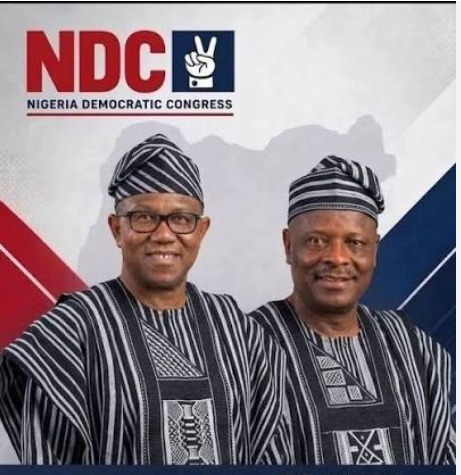
Amid efforts by some stakeholders inside and outside the African Democratic Congress (ADC) to advance a joint presidential ticket of him and former Kano State governor Rabiu Musa Kwankwaso ahead of the general elections in 2027, former President Olusegun Obasanjo is reportedly supporting Peter Obi, the 2023 presidential candidate of the Labour Party (LP).

According to information gathered, Obasanjo is generally seen as not only favorable to the concept but also as the main advocate for Peter Obi’s aspirations and in favor of larger initiatives to form a respectable opposition alliance.

Numerous people who spoke to Daily Trust about the issue claimed that the effort is cross-party and involves some retired military officers, major opposition politicians, and power brokers.

Obasanjo is allegedly supporting the joint ticket because the two of them offer a more competitive alternative to the All Progressives Congress (APC) than any single candidate. The renewed push follows the 2023 election, in which both Peter Obi and Kwankwaso recorded primarily regional performances.

Obasanjo continues to support Peter Obi
Speaking about the incident, Obasanjo’s media assistant, Kehinde Akinyemi, affirmed that the former president still backs Peter Obi’s bid for president, just as he did in the 2023 election.

“Yes, I can confirm that one,” he responded. I can attest to his endorsement of Obi’s bid for president.

Akinyemi denied knowing of any meeting or instruction Obasanjo gave ADC leaders over the production of the Peter Obi–Kwankwaso ticket.

“How do I know if they gave a mandate when I am not aware that there was a meeting?” he continued.

It’s not on the ADC agenda.
While the Peter Obi–Kwankwaso plan is being discussed extensively among opposition stakeholders and party members, it has not been formally accepted or considered within the party’s decision-making organs, according to a senior ADC member who talked with Daily Trust about the development.

The problem of matching Obi with Kwankwaso has existed since the previous election, he stated. Many leaders think they might have won if Obi and Kwankwaso had run together in 2023. They consider it to be a lost chance.

As far as I’m aware, this is being addressed in a number of opposition forums, but the ADC as a party has not made it a party agenda item. The main focus is on party leaders and members considering out loud which ticket has the highest chance of overthrowing the APC.

The ADC leader responded to allegations that retired generals are spearheading the effort by stating that Obasanjo’s longstanding backing of Peter Obi was well known.

“You know that former President Obasanjo is an Obi fan,” the insider continued. He is supporting the Obi ticket. I can’t say for sure, but it’s probable that he has spoken with other former generals.

According to a different party insider, Peter Obi’s supporters’ steadfastness might be related to guarantees made behind closed doors.

The source further stated that elements of the Peoples Democratic Party (PDP) as well as other opposition groups have expressed interest in the ADC due to its growing prominence.

The insider claimed that Obi’s fans must have been promised something if they were insistent on “Obi or nothing.” As far as I’m aware, there are still gatherings, conversations, and exchanges of ideas.

“A scenario in which members split up following the primaries is what the ADC wishes to prevent. Therefore, there is a strong belief that before reaching that point, the party must reach a consensus on a direction.

“The ADC is of interest to prominent Nigerians. It has therefore turned into a focal point. “When the time comes, even the PDP you see today might cooperate with the ADC,” the person stated.

“As you are aware, the Wike group is collaborating with the APC, and the Turaki-led leadership currently leans more toward the ADC than the APC. They will side with the ADC if they are unable to achieve their goals.

Therefore, people who are discussing retired generals are not far from the reality. Since Atiku will still be burdened by zoning disputes and age-related worries, many ADC leaders and others think an Obi–Kwankwaso ticket will sell better.

Kaduna Attack: Three Dead, Catholic Priest and 10 Others Abducted by Bandits

0

After the Karku community in Kauru Local Government Area, Kaduna State, was violently attacked, ten people, including a Catholic priest named Rev. Fr. Nathaniel Asuwaye, were kidnapped by suspected bandits.

According to reports, the event happened early on Saturday morning.

Residents of the Catholic Diocese of Kafanchan described the perpetrators as terrorists who executed a concerted operation, according to a statement released on Saturday by Jacob Shanet, the Chancellor of the Diocese.

The statement claims that three people were killed in the assault. Their names were Alhaji Kusari, Mr. Maitala Kaura, and Mr. Jacob Dan’azumi.

The attack took place at the priest’s home at approximately 3:20 a.m. (WAT), according to the statement.

“Rev. Fr. The statement further said that Asuwaye is the parish priest of Holy Trinity Catholic Church in Karku, which is part of the Catholic Diocese of Kafanchan.

Deeply saddened by the event, the diocese urged priests, Christians, and good-willed individuals to pray for the safe and prompt return of the kidnapped victims.

The souls of those slain in the incident were also prayed for to rest in peace.

Amid what it called a worsening security situation in portions of Kaduna State, the statement also called for ongoing solidarity and dedicated the abducted victims to the prayer of the Blessed Virgin Mary.

Wike Fires at Opponents, Predicts Collapse and Betrayal

0

Nyesom Wike, the Minister of the Federal Capital Territory (FCT), has criticized lawmakers who support those who are betraying him.

“These politicians will also be betrayed,” Wike said at the launching of the Rivers State chapter of the Renewed Hope Ambassadors’ office in Port Harcourt.

“If you are a senator, member of the House of Representatives, minister, or governor and you condone betrayals, people will continue to betray you in life,” Wike stated. Your share is betrayal.

“You won’t be able to speak on the day you are betrayed. There, you will pass out and they will declare that a certain person has passed away.

“You have sown that seed, and you will harvest whatever you sow. Betrayal will follow you everywhere because you are sowing it.

“You won’t make it through your second term as governor if you want to install a successor and encourage treachery.”

The Renewed Hope Ambassadors’ Rivers State chapter, headed by Wike, has said that political figures in the state can rally support for President Bola Ahmed Tinubu without a governor’s endorsement.

Wike reportedly made the claim on Saturday at the opening of the organization’s Port Harcourt branch.

The FCT minister, who spoke at the event, emphasized that Rivers leaders have the political clout and clout to independently mobilize support for the President.

“We are working for President Tinubu,” Wike stated. A governor is not required to organize us. We are capable of working on our own. There are senators, members of the Assembly, chairman of local governments, members of the National Assembly, and party chairmen from the APC and PDP.

Real political support, he continued, comes from inside conviction rather than outside guidance.

He said, “We have mobilized ourselves to demonstrate our commitment because true support doesn’t need to be brought by someone – you have to make the commitment yourself.”

Wike went on to say that the move was a sign of solidarity among Rivers State’s political players, pointing out that local leaders had actively sworn loyalty to the President.

Siminalayi Fubara, the governor of Rivers State, and Wike have been at odds over who controls the South-South state’s political system.