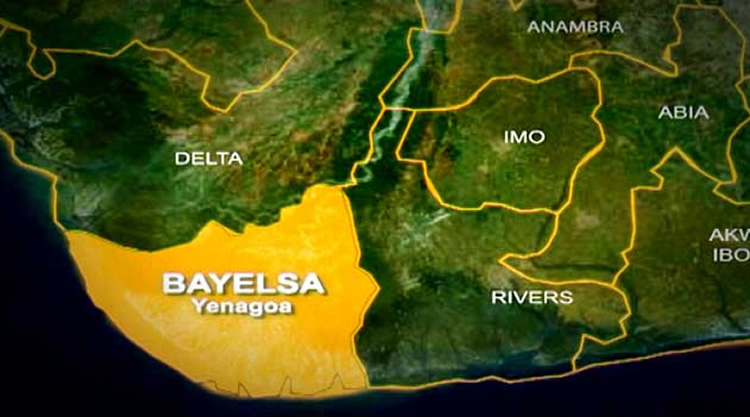
The ongoing protest in the country, which was codenamed #EndBadGovernance, geared at making the leadership of the country intervene in the skyrocketing prices of food items, has been totally boycotted by all the South-East states.
However, though there were no physical meetings and movement of large numbers of people in the various cities in the Southeast, there are many who believed that South easterners joined the protest, but in a totally different way.
Days before the protest, there had been warnings by various Igbo leaders and groups, calling on the Igbo not to join the protest.
The likes of Ohanaeze Ndigbo, the apex Igbo socio-political group, made press releases dissuading the Igbo at home and in the diaspora from participating in the protest.
Rt Hon Benjamin Kalu, the deputy speaker of the House of Representatives joined in the call when he made a video calling on the Igbo to boycott the protest.
He warned that if the Igbo joined in the protest, especially in other towns outside their area, the tendency was that people of other regions may skew the protest against them, and accuse Igbo of being the masterminds of the protest, with the intention to vandalize their properties and also loot them.
Heeding to some of these calls, the first three days of the protest witnessed a total boycott by Ndigbo, and has remained so.
TVN correspondent who monitored trends across the South East noticed that there was no protest anywhere in the South East.
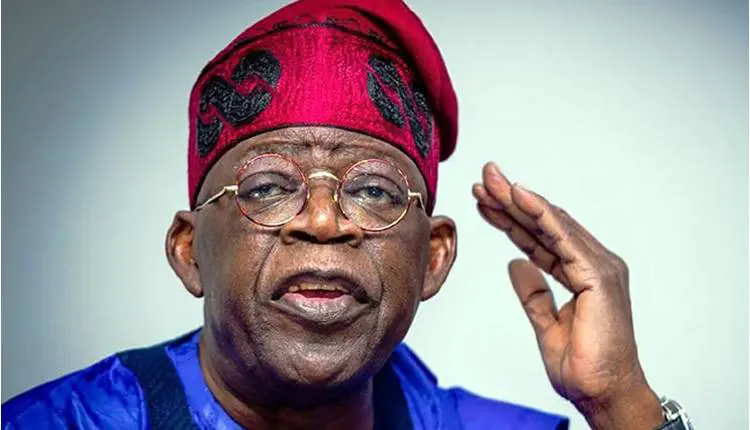
In Lagos and Abuja, and other parts of the country, Igbo traders also failed to join a herd of protesters who stormed the streets to ask the president of Nigeria, Asiwaju Bola Tinubu to reduce the cost of living and end hunger in the country.
In Awka, it was observed that Dr Alex Ekwueme Square, a public square which serves as a meeting point for protesters was deserted on August 1, and other preceding dates, when the protest was held in all parts of the country.
Meanwhile, what looked like a different kind of protest was witnessed in several parts of the South East.
Though the atmosphere of the country was tense, leading to low vehicular activities in the zone, with markets, motor parks, banks and schools closed, on the morning of August 1, youths formed football teams in various streets in most towns and played soccer as their own kind of protest.
Others were also seen in beer parlours drinking, eating and making merry as their own protests.
Very early on the first day of the protest, it was almost a funny kind of greeting as people asked each other where they were going for their own protest.
Some youths who spoke to TVN in Awka while playing football on the popular Majuo Street in Awka said it was their own way of protesting.
One of the youths, who gave his name as Ejike said: “I own a shop at Eke Awka.
“We are here to do our own protest since they said today is set aside for protest.
“Market did not open, so we have to do our own protest here. We heard that people are burning properties already for the protest, but here, our own protest is to play football on this deserted main road.”
“When they are done with their own protest destroying things, we will now go back to our markets.
“We are not joining anyone in their destructive protest,” the youth said.
What looked like a more funny protest was the gathering of people in videos circulated on social media, both in Enugu, Onitsha and Awka, where able bodied men gathered at drinking joints, treating themselves to drinks and chicken as their own kind of protest.
In Awka, at Aroma Junction where some youths gathered drinking and eating and chanting songs, one of the youths, a printer, Mr John Nze said: “This is our own kind of protest. We are here to eat and drink and protest along with our northern and western brothers.
“We want to say that we are happy with the leadership of President Bola Tinubu. We did not vote for him, but we know that our northern and western brothers voted for him.”
“So this is the time to reap the reward of their support to Tinubu, and we are here to urge our president to keep up the good work,” he said sarcastically.
Reacting to the decision of the people, both the Governor of Enugu State, Dr. Peter Mbah and the Minister of Works, Engr. Dave Umahi commended the South East zone for heeding the call not to join in the protests.
Both leaders spoke on Sunday in Enugu, noting that the action prevented needless loss of Igbo lives, businesses, and property, while also showing good faith to the President Bola Tinubu administration.
“I also want to take the opportunity to commend our people greatly for heeding our call to shun the protests and go about their business. We commend them highly because they understand the value of hard-work.
“Sometimes, you may not be able to appreciate the effect of government policies immediately, but I tell you that some of these policies are well-intentioned. With time, if we can just exercise a little more patience with the Federal Government, we are going to begin to see the values of these reforms.
“We want to continue to call on our people to go about their business and know that if they destroy our assets, we are still going to use the wealth of our common patrimony to fix those assets. So, we must remain focused and continue to do our work,” Mbah stated.
In the same vein, the Minister of Works said the people of South East and the Igbo community all over Nigeria had made a loud statement by not protesting.
“We are not going to protest. We want proper integration in the affairs of this country. Bola Ahmed Tinubu, Mr President, started it by giving an Igbo man the Minister of Works, appointing an Igbo Man as a service chief, among others.
“We have been excluded from governance and development in the past. But now, you can see infrastructural developments in the South-East. So, why should we protest against a man who has given to us what was never given to us before?” Umahi queried.
Similarly, the National President of the Ohanaeze Ndigbo Youth Council, Worldwide, Mazi Okwu Nnabuike, told TVN on Tuesday that Ndigbo had sent a clear message by not participating in the protest.
Okwu noted that, “our people have suffered so much in the past and have also borne the brunt of all the protests in the country.
“So, it would have been fool-hardy for any Igbo person to join in the protest. What are we protesting for? We have been marginalized for decades of years and nobody protested on our behalf.
“Now, simply because some people are not comfortable with the government, they want to drag all of us into it; never again shall we be made scapegoats in this country.
“The President is doing well and we shall continue to support him.
“So, Ndigbo not participating is another form of protest. Our message is loud and clear. President Bola Tinubu should be allowed to govern the country.”
Meanwhile, on a day when the country was protesting against hunger in the land, the governor of Anambra State was at Amansea, a boundary community in the state, flagging off a project.
Press Secretary to the governor, Mr Christian Aburime said: “The pertinent question on the mind of Governor Soludo seems to be: how can a nation, a people, so enviably blessed with fertile, arable land mass and clement weather conditions be struggling with hunger?
“This has spurred the governor to swing into action with his new initiative, unveiled at Amansea, in order to galvanise Anambra’s citizens into embracing agriculture on personal and family levels.”
He said: “Of course, Nigerians cannot afford to be waiting for Manna from heaven or from Abuja. As much as the government must take certain steps to address the rampant food inflation in the country, it is Governor Soludo’s belief that the long-term solution to our food crisis lies in the rich soil beneath our feet and the strength of our own hands.
“The timing of Governor Soludo’s initiative could not be more critical. As galloping inflation ravages the Nigerian economy, food prices have become the most visible and painful indicators of the nation’s economic challenges.
“Individuals and families across the country are grappling with impossible choices, forced to decide between putting food on the table and meeting other basic needs. There is, indeed, no easy choice.”
Meanwhile, the convener of Youths Earnestly Support Soludo (YESS), a political pressure group, Dr Nelson Omenugha who is a special adviser to the governor on youth Empowerment said the protest failed woefully in Anambra because Governor Soludo intentionally lined up empowerment programmes which have kept youths of the state busy.
“That is the reason there is no protest in Anambra.
“When I was SUG president of Unizik, I dissuaded protest because if you protest and other nefarious elements take advantage and destroy things, you will still be the one to pay and at the same time, you will be worse off than you were before the protest.
“That was why we intentionally met with youths before the commencement of the protest to tell them all these.”
EndBadGovernance: South-East holds different kind of protest
Tinubu appoints heads of NSIPA, other agencies under Humanitarian Ministry [Full Names]
President Bola Tinubu has approved the appointment of seven persons to head agencies and programs under the Federal Ministry of Humanitarian Affairs, Disaster Management and Social Development.
Ajuei Ngelale, Tinubu’s spokesperson disclosed this in a statement on Tuesday.
The appointments include: Chief Executive Officers for the National Social Investment Programme Agency, Badamasi Lawal, National Agency for the Prohibition of Trafficking in Persons, Lami Bello, Programme Manager, National Social Safety-Net Coordinating Office, Funmilola Olotu.
Others are Programme Manager, Grant for Vulnerable Groups, Aishat Alubankudi, Programme Manager, Home Grown School Feeding, Aderemi Adebowale, Programme Manager, National Cash Transfer Office, Abdullahi Imam and Executive Secretary, National Commission for People with Disabilities, Ayuba Gufwan.
The president tasked the new appointees to “facilitate the needed relief to Nigerians and ensure the effectiveness of humanitarian and social development programs.”
This comes after the suspension of Dr. Betta Edu as minister eight months ago over the scandal surrounding the transfer of N585.189 million to a private account.
Edu’s suspension came after Halima Shehu was also suspended as the National Coordinator of the National Social Investment Programme Agency over the alleged misappropriation of N40 billion.
Meanwhile, the public is yet to know the outcome of an investigation by the anti-graft agencies on Edu and Shehu.
Tinubu appoints heads of NSIPA, other agencies under Humanitarian Ministry [Full Names]
Troops capture terrorists’ commanders, arrest logistic suppliers
The Nigerian Army says its troops have captured two suspected Boko Haram terrorists’ commanders in the North Eastern part of Nigeria.
The troops also apprehended two logistic suppliers and collaborators, while 50 Boko Haram terrorists and their families surrendered.
In a post on its official X microblogging platform on Tuesday, the army said the troops also rescued kidnap victims from various locations and recovered looted items from hoodlums posing as protesters in the region.
It said the troops had on August 4, while acting on credible intelligence, arrested the two terrorists’ commanders, who infiltrated the Damasak Internally Displaced Persons (IDPs) camp in Mobbar Local Government Area of Borno.
According to the post, the suspects, Bana Yamode and Babagana Usman, who claimed to be visiting their families in the camp, have previously led attacks on troops in the area.
“The troops also apprehended two suspected Boko Haram logistic suppliers, Malam Mustapha Ismaila (49) and Abdulmudalabi Haruna (30) and rescued two minors during the operations.
“Meanwhile, 50 Boko Haram suspects and their families have surrendered to troops stationed in Bama, Gwoza, and Dikwa Local Government Areas.
“The surrender came at the heels of up scaled operations against the terrorists,” it said.
The post also revealed that three Boko Haram collaborators were apprehended on Aug. 4 at Gubio Market in Gubio Local Government Area.
Troops capture terrorists’ commanders, arrest logistic suppliers
Pastor jailed eight years for raping member’s wife in Imo

Justice T. N . Nzeukwu of the Imo State High Court has convicted and sentenced a pastor, Desmond Eke, to eight years imprisonment for raping his church member’s wife.
Eke, the founder of Deliverance Ministry of the Good Shepherd, Umuehieta Avu, Owerri West Local Government Area of Imo State was found guilty of taking advantage of the woman who had vested so much trust in him.
The convict was tried on three counts that bordered on raping the victim who is also a member of his church and administering a stupefying substance on his victim which made her dizzy and weak.
According to the prosecution counsel, Chioma Emuka, it was while in the dizzy state that Eke took advantage of the woman who woke up to consciousness while he was still inside her.
Emuka said, “On inquiry on why he had to violate her, the pastor told the 25-year-old woman that his semen is holy enough to deliver her of the marine spirit that was disturbing her.”
While delivering the judgment, Justice Nzeukwu held that Eke was guilty of the offences preferred against him.
The judge convicted Eke on count two of the charge of breaching trust and raping the woman but discharged him on the third count which bordered on inflicting injuries during the rape.
“Since the woman was not completely conscious during the incident, there was no way injuries could result since there was no resistance,“ Justice Nzeukwu held.
Before the sentence, the defence counsel pleaded with the court to temper justice with mercy that his client had been of good behaviour having been present in court throughout the trial without jumping bail.
He pleaded that instead of a full sentence, his client should be put on probation.
According Metro observes that this is the first case to be prosecuted under the Violence Against Persons Prohibition Act in the state.
A civil society organisation, Onurube, reported the matter and followed it up to its logical end.
Speaking on the case, the convener of Onurube, Marjorie Ezihe, lauded the court for convicting the pastor.
She believed the conviction would serve as a deterrent to those intending to indulge in such inhuman acts of seeking to have carnal knowledge of women without their consent.
Partnering with financial institutions enhances access to FX – Blaaiz boss

Founder and Chief Executive Officer of Blaaiz, an early-stage cross-border payments firm, Ifelade Ayodele tells FELIX OLOYEDE the impact of the closure of Nigerian accounts by Mercury on local startups
How has the closure of Nigerian accounts by Mercury impacted startups and the broader tech ecosystem in Nigeria?
The abrupt closure of Nigerian accounts by Mercury has undoubtedly caused a significant degree of consternation, particularly due to the short notice provided. Founders, especially those not residing in the United States, have been compelled to rapidly seek alternative banking solutions. While from Mercury Bank’s perspective, the aggregate deposits from Nigerian accounts might constitute merely one per cent of its total deposit base, these funds are indeed the lifeblood of the burgeoning African tech ecosystem. This ecosystem harbours the potential to birth the next wave of unicorns and mid-sized corporations that will drive economic growth in Nigeria and the wider continent.
Currently, the full extent of the impact remains to be seen. There have been opportunistic moves by other financial players to capture this market and provide safe havens for these displaced deposits. Founders must conduct thorough due diligence on the alternatives available to them, ensuring they partner with credible firms. This due diligence, while potentially distracting, is crucial for safeguarding the future financial stability and growth of their ventures.
In response to Mercury account closures, how is Blaaiz positioning itself to support affected Nigerian businesses?
Interestingly, our Blaaiz Business offering was launched just a few weeks prior to this announcement and has already seen encouraging traction. We are well-positioned to support Nigerian businesses and founders by providing the essential account infrastructure needed to manage their financial obligations. This includes the ability to receive investment funds and receivables from trade partners, thereby, ensuring that their economic activities resonate across continents, irrespective of the geographical distances involved.
What are the key benefits of having financial solutions developed by local Nigerian founders who are familiar with the market’s specific needs?
The primary benefit of financial solutions developed by local Nigerian founders lies in the accurate and objective assessment of risks, as opposed to an unfounded and exaggerated perception of risk. Local founders possess a nuanced understanding of market dynamics and the specific challenges faced by businesses within the region. This insight enables them to implement appropriate, fit-for-purpose risk treatments, either at the inception of the business relationship or on an ongoing basis. Consequently, these solutions incorporate a well-informed perception of risk into their controls and measures without stifling the commercial drive or aspirations of the businesses they serve. This alignment of risk management with commercial objectives is largely achievable when the solutions are crafted by those intimately familiar with the local market.
What are the primary obstacles Nigerian businesses encounter with cross-border payments and what strategies can be adopted to address these issues effectively?
The principal challenges faced by Nigerian businesses in the realm of cross-border payments include speed, compliance, digitisation of processes, transaction costs, and access to foreign exchange.
To address these issues effectively, the following strategies can be adopted:
Leveraging credible fintechs: Utilizing fintech solutions that offer digitised channels can optimise transaction speed and reduce costs. These fintechs often have streamlined processes that facilitate quicker and more efficient transactions.
Investment in compliance: Businesses must invest in compliance measures relevant to their operations. This not only eases collaboration with fintech partners but also enhances the overall perception of the Nigerian financial ecosystem.
Enhanced access to foreign exchange: Developing partnerships with multiple financial institutions can improve access to foreign exchange. Additionally, participating in government forex allocation programmes can be beneficial.
In what ways can local fintech firms like Blaaiz enhance the resilience of the financial ecosystem for startups in Nigeria?
Local fintech firms can significantly bolster the resilience of the financial ecosystem for startups in Nigeria through several strategic initiatives. At Blaaiz, we focus on three core areas with the potential for multiplier effects:
Seamless cross-border payment infrastructure: providing reliable and efficient cross-border payment solutions that facilitate smooth international transactions.
Regulatory compliance solutions: offering automated compliance solutions to help startups navigate the complex regulatory landscape with ease.
Facilitating ecosystem collaboration: encouraging collaboration among players in different or similar sectors to foster a supportive and innovative startup community.
By addressing these areas, Blaaiz aims to create a robust and resilient financial environment conducive to the growth and success of Nigerian startups.
How do you view the impact of regulatory environments on banking relationships for Nigerian startups?
The regulatory environment plays a crucial role in shaping banking relationships for Nigerian startups. The primary objective of regulatory frameworks is to ensure stability within the financial system and protect end users, including both consumers and businesses. Given this mandate, any setbacks or challenges in the relationships between banks and startups are, to a considerable extent, understandable and navigable. Banks are obligated to comply with stringent regulations, which can sometimes create friction in their interactions with startups. However, these regulations are essential for maintaining the integrity and stability of the financial system.
What changes would improve the current situation?
To improve the current situation, greater participation and involvement of startups, particularly fintech startups, in the development of regulatory guidelines and policies is essential. This inclusive approach can ensure that the policies governing the relationships between banks and fintech startups are well-informed and conducive to innovation. Fintech startups extend the influence of banks and regulators, playing a pivotal role in enhancing financial inclusion and driving economic growth. By actively involving these startups in policy development, regulators can create a more favourable environment that supports innovation while maintaining financial stability.
What emerging trends or innovations in cross-border payments could offer advantages to startups in Nigeria and Africa?
Several emerging trends and innovations in cross-border payments hold significant promise for startups in Nigeria and Africa:
Real-time payment systems: The adoption of real-time payment systems, such as the Single Euro Payments Area in Europe, can facilitate instant settlement of cross-border transactions, improving cash flow and reducing transaction times for startups.
Open banking: Open banking initiatives enable the sharing of financial data through APIs, allowing fintech companies to develop innovative payment solutions. This can lead to enhanced service offerings for startups.
Artificial intelligence and machine learning: These technologies are increasingly being used for fraud detection and predictive analytics, providing startups with tools to enhance security and make informed financial decisions.
By leveraging these trends, Nigerian and African startups can overcome traditional barriers to cross-border payments, enhancing their operational efficiency and expanding their market reach.
What motivated Blaaiz’s transition from serving individual clients to focusing on business clients?
It is important to clarify that Blaaiz did not transition from serving individual clients to focusing solely on business clients. Our strategy has always encompassed both segments. We commenced operations by serving individuals to gain a thorough understanding of the market, allowing us to optimise our services for this segment. As planned, we subsequently introduced services for business clients. Our individual clientele base has grown significantly across our operating countries, and we remain committed to serving them while also expanding our offerings to support businesses.
In the context of the startup ecosystem, at what stage should a startup consider itself to have broken even?
In the context of the startup ecosystem, a startup can be considered to have broken even when its total revenues equal or are greater than its total costs, meaning it can sustain itself without relying on external funding for operational expenses.
With a decline in equity funding within Nigeria’s startup scene, what are the alternative funding opportunities available to Nigerian startups?
In light of the decline in equity funding within Nigeria’s startup scene, several alternative funding opportunities can be explored:
Debt financing: With a sound business model, startups can explore debt financing options, including bank loans and venture debt, which can provide the necessary capital for growth without diluting ownership.
Grants and competitions: Participating in local and international grant programmes and startup competitions can provide non-dilutive funding and valuable exposure.
Crowdfunding: Utilising crowdfunding platforms to raise funds from a broad base of individual investors can be an effective way to secure capital.
Aside from the $1.5m pre-seed funding, what additional financial support has Blaaiz received?
Aside from our pre-seed funding, Blaaiz has not received any other additional financing. We have focused on effectively utilising the initial funding to scale our operations and achieve our strategic objectives.
What strategies can Nigeria adopt to become a leading startup hub, similar to India or China?
To position Nigeria as a leading startup hub, several strategic initiatives can be adopted, some of which include:
Improving infrastructure: Investing in both digital and physical infrastructure is crucial. This includes enhancing internet connectivity, power supply, and transportation networks.
Ease of doing business: Simplifying business registration processes, and ensuring a stable regulatory environment can attract more startups and investors.
Entrepreneurship education and skills development: Integrating entrepreneurship education into school curricula and providing specialised training programs can foster a culture of innovation and entrepreneurship.
Focus on key sectors: Identifying and prioritising key sectors with high growth potential, such as fintech, agritech, healthtech, and edtech, can concentrate resources and support for these industries.
By adopting these strategies, Nigeria can create a vibrant and dynamic startup, positioning itself alongside the likes of India.
At 58, God has given me a second chance

Perhaps I should not be alive. But I am, despite the odds. I am still frail and fragile. But now, I can stand on my feet again, bearing testimony to those sacred words of the Almighty Allah himself that, “No soul can ever die except by Allah’s leave and at a term appointed (Quran 3: 145).”
It all started on February 19 when I drove myself into a government hospital in Abuja for an elective surgery. The surgery itself was meant to last for a few minutes and I should return home not later than two days thereafter. That was what I was told. But that was not what happened.
Since that fateful Monday morning, I have gone into and out of the surgical theatre nine times for six major operations and three minor procedures. I have spent six days in the Intensive Care Unit, surviving on oxygen and relieving myself through catheters. I have become totally dependent on others for the performance of even such personal functions as cleaning myself. I have lost 20 kilogrammes in five months and was reduced to a mere sack of bones. I have lost the use of my limbs and, like a toddler, I had to learn to walk again. I have spent millions of naira and thousands of dollars of my own and other people’s money. I have travelled hundreds of kilometres to find help. I have reached the very bottom of despair itself; and I had made plans for my own burial. But somehow, I am still alive.
I am someone you could describe as a hands-on person, or even a keep-fit buff, careful about what I eat or drink and what I do with my body. Therefore, I seldom had any need for a hospital. However, since my dad died of prostate cancer 23 years ago, the doctor had warned me that male children of prostate cancer victims are predisposed to suffering the same fate. Since my 40th birthday, I had therefore ensured that a comprehensive medical check-up was a part of my annual ritual. In the course of one of those routine check-ups, I was alerted a few years ago of an enlargement of my prostate. Following this discovery, I enrolled in a public medical facility in Abuja and made sure to see the urologist every three months. At one point, I was also advised to see a nephrologist once in a while.
All these visits, I understood, were merely precautionary. But I was beginning to spend too much time on the waiting line in the hospital than I could afford. Before long, I changed to another hospital closer to my house. Even though it is also a government hospital, it has a private wing that charges higher fees for quicker consultations and services. I thought this arrangement served me better. I was assigned a consultant urologist of my own. And I also saw a nephrologist in the hospital. However, while the nephrologist kept assuring me that everything was fine, the urologist started to raise the alarm. At a point, he told me that if we didn’t act fast, my enlarged prostate might begin to affect my kidney. The only solution, he said, was surgical intervention.
He was the expert, so I yielded to his pressure and agreed to do the surgery. That turned out to be a major mistake. But I only became wiser by way of a horrifying hindsight. My result from the prostate test showed that I was, in fact, in a much better place than several of my friends, who all were surprised that I chose to go under the knife for an ailment that, more often than not, offers a little more than just mere discomfort, as long as it is not cancerous. They were right. The only prostate-related complaint I had was that I urinated twice or thrice at night. I did not have any pains or difficulty in urinating, or any symptom beyond the ordinary. It turned out that all I needed was a slight change in lifestyle, not drinking or eating late into the night, and to continue to take the drugs that were prescribed for management purpose, which, by the way, my urologist had asked me to stop taking.
Although it did not mean much to me at the time, but in this hospital, patients do not have access to the results of their laboratory tests. The doctor electronically sends requests to the laboratory and once the patient has made payment, the laboratory will conduct the test and send the results in the same manner back to the doctor. The doctor would access the results on his computer and based on this, make pronouncements on what the patient needs to do next. In my case, the verdict was surgery.
This was why I drove myself to the government hospital on February 19 and spent the night preparing for the surgery the next day. A week before, I had gone through a cystoscopy procedure. That was my first time ever in a hospital surgical theatre. But since February 20, I have been in several theatres, more than an average person would in a single lifetime. It happened that during the first surgery, the surgeons had ruptured my bladder. In panic, they had to abandon the prostate operation that brought me in, hurriedly placed a catheter inside my urethra, and returned me to the hospital ward. It so happened also that the catheter was not properly placed, so urine was not going into the bag. I was returned to the theatre to remedy the situation. When I came out this time around, the urine was reverting to my genitals, which had by now become grotesquely engorged with fluid.
Three trips back to the theatre did not change anything. And this was enough to send everyone into panic. I was wheeled into the ICU, where I passed out and had to be placed on oxygen. At this point, it had become obvious that the medical team had reached its wit’s end. It had lost control. One of them had, in fact, quietly told my family that my chance of survival was 50-50. They were already thinking of moving to the next patient. After all, they had “tried their best.”
But then, to paraphrase Shakespeare, heaven has no fury like a woman about to be widowed. My wife, Odunayo, rose to the occasion. She thought that what was needed to save my life at that point were some ‘muscles’ that would compel the doctors to give me proper attention. She told my children, their friends, and my colleague, Akintoba Fatigun, who was already weeping after seeing how helpless I was, to stay strong. She picked up my phone and called my Oga, the Chairman of THISDAY and Arise TV, Mr Nduka Obaigbena, to inform him about my condition. All she needed were calls to people in top places on the need for the hospital management not to abandon me. Mr Obaigbena immediately called the Minister of Health, who in turn called the head of the hospital. He also promptly dispatched one of his top managers, Mr Israel Iwegbu, to move over to the hospital and report back to him.
Akintoba also called my boss, Dr Abubakar Bukola Saraki, who was then in the United States. The former Senate President immediately directed Akintoba to get some money across to my wife and also promised to speak with the health minister. My wife also sent an urgent message to my brother, the Senator representing my Senatorial District, Ogun Central, Shuaib Salis. The senator immediately came over to the hospital to meet the Chief Medical Director.
With all these influential forces breathing down their neck, the hospital realised that this was one patient they could not afford to trifle with. I was returned to the theatre where they had to open me up – yet again – to properly adjust the catheter and ensure that I hadn’t suffered any internal damage. I ended up spending six days in the ICU and later returned to the private room. In the ICU, the traffic and calibre of people who came to see me surprised the hospital management. One evening, Dr Saraki himself led a very long and powerful delegation to the hospital such that when he said: “Yusuph, get well fast, look at the whole troops turning out to wish you well,” I could not but agree with him. In the same way, there were the visits of Senator Salis and his son, Kamal, who was always travelling down from Kaduna to see me, just as Senator Tokunbo Afikuyomi once led his wife, children, and friends to check up on me.
After two weeks, I was discharged and went home. It was Ramadan. For the first time in over 45 years, I could not participate in the Ramadan fast. While in the hospital, I said my prayers most times lying on the bed. Although I had lost so much weight, it looked as if I was set on my way to recovery. Until something happened that would change everything, kick-starting another wave of anguish, fear and relentless pain.
It was the second day after Eid-el-Fitri. My son, Oladapo, had persuaded me to take a small pack of Lucozade Boost juice on Sallah day, believing this might stimulate my appetite. This was on April 10. The next day, my wife observed that my urine was the same colour of the Lucozade Boost that I had taken the previous day. She felt something was wrong. However, Oladapo and I thought it could be the effect of the Lucozade Boost drink.
For some reason, my wife then brought out her blood pressure monitor to check my ‘vitals’. She found out that though I was hypertensive, my blood pressure was low, while my pulse rate was unduly high. Then, I started having this electric shock sensation once I moved my head back, even a little. She became alarmed and kept on repeating the blood pressure and pulse rate monitoring. At one point, I suggested the machine could have malfunctioned. But when she used it on herself and Oladapo, the figures appeared normal. At about 7 pm., we all agreed to visit a nearby pharmacy to use their BP monitor to double-check, so we wouldn’t raise a false alarm. But we got the same reading from the pharmacy. The alarm was then real.
Immediately, we called a urologist working in another government hospital, who after listening to us promptly declared an emergency. He then directed that we should go to the emergency ward of the public hospital where he works and he would get a consultant to attend to us. We did as he directed. But one hour after, we were still waiting. No one was in sight to attend to us. After a quick deliberation, we decided to go to the private hospital where we were normally registered. It was at the private hospital that the doctor on duty alerted us that I had a septic infection and that I could go into shock anytime. This was the second episode for me. I had suffered from sepsis during my earlier surgical rounds in the hospital. Sepsis is a condition in which the infection-fighting processes turn on the body, causing the organs to malfunction. In other words, my body was beginning to poison itself.
The doctor at the private hospital urged me to hasten to the public hospital where I was recently treated. We called the urologist again. He directed that we report to the Accident and Emergency Ward. We did. Yet again, the doctor that was meant to receive us was nowhere to be found. Several panicked calls to her number, and there was no response. After what seemed like an eternity, she suddenly materialised. She had gone to eat, she said, casual and indifferent as nature itself. This time, I was to spend nine days in the hospital.
But at this point, we had lost confidence in my urologist and we had started to make arrangements to find a hospital in Egypt to continue the treatment. One night, my family insisted that I should be discharged, even if against medical advice, so that I could make a scheduled trip to Egypt. My wife already signed the Discharge Against Medical Advice form before Senator Salis phoned me and said we should hold all actions until he arrived, as he had invited a leading expert in urology from one of the universities in Lagos to review my case that same night. The professor came in with the senator and took us through an hour-long lecture on the issues. He concluded that the case was not beyond what could be handled in the hospital. But “things could have been done differently during the surgery.” He also enlightened us that with sepsis not properly treated, it was doubtful if I could make a five-hour journey in an airplane to Egypt. He had come with a more senior urologist in the same hospital, who had been his student. We all agreed that I would stay if he could guarantee that the more senior surgeon would take over my case and report progress to him and the senator.
Again, I returned home. This time I even felt better and was confident that my recuperation had started. But it turned out to be the calm before the storm; the biggest storm of all. We found out that as the days went by, I started to lose control of my limbs. As usual, my wife was the first to raise the question one morning. She asked why I staggered each time I tried to walk. I said it could be because I just woke up. I tried to allay her fears, but I could not hide for long. Soon, I was not able to raise my hand. My initial thought was that this was because I had stopped my morning exercise. I then resumed some guided workout sessions where one of my sons and Kamal Salis, my senator’s son, would guide me through. But instead of any improvement, things continued to degenerate, and they were happening so fast.
In no time, I began to depend on my wife to brush my teeth, clean myself in the bathroom, put food in my mouth, perform ablution, and do any chore that involved the use of my right hand. Then my right leg soon followed. It was like something was switching off my limbs one by one. Then at night, the pains descended on my neck and shoulder like a boulder. Sleep became impossible. Turning became a torture. To find a position of relief, that small posture that would grant me respite from this oppressive pain, no matter how fleeting, became impossible. All through this ordeal, I had tried to be brave. Now, I could no longer hold back. I cried. The pain was just too much. And it came in the night. Therefore each night approached with terror because I knew what lay in wait for me in the dark. Maybe if I stayed up. I told my wife that perhaps, I should try to sleep in a sitting position. But nothing I tried helped. The name given to this one, this latest harbinger of pains, is cervical spondylosis. But little did we know that it was much worse than that. One Saturday, we decided to go to a private hospital that specialised in orthopaedics. We were told to come back the following week’s Wednesday. But the pain would not relent. Whatever I did, wherever I turned, it flogged me like an errant child. The hospital later called to make a change from Wednesday to Friday. But by then, we had already sought a more urgent alternative. At 9 pm that same night, we met the orthopaedic surgeon. He recommended some drugs and a neck collar, which I must now wear on like a shackle. That night, after a long time, I had a strange sleep without pains. But it was like shooing off a wild dog with a stick. It may back off for the moment, but it would come back. By the next day, the pain returned, ferocious, as if angry to be disrupted for one night.
Before our next appointment with the orthopaedic surgeon, we took the initiative to do an MRI test. But by then, my case had become a desperate emergency. All my limbs have packed up. Throughout these ordeals, I had never missed my prayers and supplications to Allah. But that morning, I could not move even one finger to press the electronic counter or hold the tasbih.
“Is this illness also going to separate me from my God in my last days?” I lamented to my wife. She said it was only temporary and everything would be fine. But I learnt she later went into the bathroom to cry. She is a brave woman. But I am sure by this time, even she would also have started to contemplate the worst.
When the orthopaedic surgeon saw the result of the MRI test, he took us to see a neurologist in a private hospital as well. The neurologist explained that some bones had ruptured in my neck, which had disorganised the nerve supply system from the brain down to the limbs. Again, I had to go in for a surgery to restore the functioning of the nerves. The operation was to be carried out on May 13. While waiting for the appointed date, my colleague, Akintoba Fatigun, came to see me. He thought I was getting better. Many of my friends who were speaking to me on the phone thought the same, because, despite all that I had suffered, my voice had remained strong and clear. I told Akintoba that in fact, the situation had gotten worse since the last time he visited and that I was actually waiting for another surgery.
When Akintoba left the house, he went straight to Dr Saraki’s residence and told him of my situation. The former Senate President immediately started to make calls to different hospitals in Saudi Arabia, the United Kingdom, and the US. I did not have a valid US visa and we had no time to apply for one. The Saudi hospital, after studying the MRI, later replied that they could not deal with the situation. Then, someone suggested Egypt. Contacts and appointments were made. To enter Egypt, one only needed a valid UK visa to obtain the Egyptian visa at the point of entry. By Monday, May 13, I was set to travel. Dr Saraki had purchased business-class tickets for my wife and me. He also provided money to pay for the surgery and living expenses for a month. A day before my departure, the house was full with several family friends, despite our best efforts to keep the trip as confidential as possible. They were people from different parts of the country and people of different religious persuasions. At that point, I was not Yoruba or Muslim to them. I was just another human being. Even as I lay helplessly in bed, contemplating the motley crowd that had gathered in my room, I wondered if they thought they were saying a final goodbye to me.
It was time to go. My wife and second son, Oladipo, had already packed the bags. Then we realised that there was yet another important challenge. My room was on the second floor. How do I get down and into the car? We could only think of two options. Oladipo would have to carry me on his back and take me downstairs or I would have to crawl down the staircase. But even these two options were fraught with risks. Yes, I had lost so much weight and Dipo is a burly young man, but he is only 23. The thought of having my son carry me on his back because I could not walk was a distinct trauma on its own. But what if he slipped, and we both crashed to the ground? There could only be one outcome. How would the young man forgive himself? But none of these happened. Dipo successfully carried me downstairs and got me safely into the car.
On the way to the airport, I told my wife what my Plan B was, if Oladipo had been unable to carry me, to crawl downstairs. “That would have broken me,” she said. I responded with a joke that I needed her to remain unbroken because a broken man could not depend on a broken woman. In the last five months, she had become my in-house nurse, minder, and caregiver.
Five hours later, we landed in Cairo. My hospital, Neuro Espitalia, is located in a city called 6th of October, which is about an hour’s drive from the Cairo International Airport. I learnt that the city got its name in commemoration of the day one of the Arab-Israeli wars broke out. We were joined at the airport by my third son, Oladepo, who had arranged a two-week leave from his London office and another two weeks to work from the Cairo office of his company. He was to provide an additional hand to me in Egypt for the next one month. Our guide was a Nigerian gentleman called Rabiu Hamza, a PhD student at one of the Egyptian universities. We arrived at the Neuro Espitalia at about midnight on that Monday. For the second time in almost a month, I had another sound sleep. Tuesday was devoted to various laboratory tests and to getting my medical history. On Wednesday morning, I had the surgery, which, as they explained, was to “clean an abscess in the cervical vertebrae, stabilise the cervical vertebrae and expand the neural canal.” I didn’t understand everything, but I just wanted to get well. The surgical operation was led by Prof. Ibrahim Lotfy, an elderly but friendly surgeon, and Prof. Dalia Rushdi.
After the successful operation, the surgical team decided to culture fragments of bones and tissues extracted from my back to determine what went wrong in the first place. It was an investigation that took days and a lot of blood tests. What they found was, to say the least, shocking. It was described in medical terms as “necrotizing Granulomatous Inflammation Compatible With Tuberculosis of the Vertebrae. No malignancy.” In short, it is called tuberculosis of the vertebrae. This was the stealthy thief that had been stealing my limbs, one by one. But even the surgery could not return everything this disease had stolen from me. I had to recover them myself by re-learning the use of my legs and hands again.
This was when I realised how much grateful humans should be to their creator for even the most simple things we take for granted everyday. I realised that even the mere ability to scratch one’s face when it itches, what we do countless times everyday without even thinking about it, is indeed a big deal. When my face itched, I would need my son or my wife to scratch it. To change my sleeping posture, I would need them. To change the position of my hands, or clean the sputum that come sometimes when I coughed, I needed them to do these and everything else for me.
At a point, I could no longer fold my fingers to form a fist in order to allow nurses take blood samples or fix the cannula for intravenous infusion. Over the past five months, my arms had been covered in needle marks like a dedicated drug user; to administer some injections, to take blood or to fix the cannula for intravenous medication.
A few days after the surgery, I began physiotherapy sessions in the hospital. Several physiotherapists came to work on me. But a particular one stood out for me. His name is Ahmed El-Sanadidy, the man from Alexandria. Even after I left the hospital for a rented apartment close by, we contracted El Sanadidy to continue my rehabilitation therapy. He got paid per session. He was such an effective, devoted, passionate, friendly, hardworking, and creative professional. He was also in hot demand in his hometown, Alexandria, and in the city of the 6th of October. In the early part of our sessions, he would form a protective ring around me with his arms to guard me from falling. He taught me to walk all over again, to climb the stairs, to use my arms, to strengthen my fingers, and to regain some level of physical fitness. I called him ‘my boss’. He was the reason I extended my stay in Egypt to two months. He was making some very good progress with my rehabilitation and I did not want to terminate it abruptly.
But there was yet another challenge. The hospital had tried in vain to get me to go to the toilet. For almost two weeks, even after two sessions of enema, nothing came out. After we moved to the apartment, I thought the privacy of a home would help, but nothing. I would feel pressed to use the toilet and spend time sitting and groaning in pain, but nothing would come out. It was later realised that the muscles around my waist had become so weak they could not exert sufficient pressure to push out the waste. This became another source of agonising pain. My stomach felt as solid as if I had been fed concrete cement. This became another major prayer point for me.
“You should be saying ‘Alhamdulilahi Rabbil alaamin’ because we should let our gratitude to God be more than our requests to Him,” my wife said one day as I was petitioning God over the agony of my plumbing problem. It was a test of faith. But it was also a lesson never to forget. One morning, the plumbing problem resolved itself, not in the most dignifying manner. Since then, it has been easier than ever doing my ‘toileting business’. For more than four months, I was carrying a catheter around. At a point, they became two. But now, I am free of both of them.
Now, I am a bit stable. I can walk unaided. At a time I could not even move a finger, but now I can sit down and type this piece on my iPad. I can perform my salat, the ablution, ruku (bowing), and the sujud (prostration), all on my own. There was a time in the past when I had to rely on people to do ablution for me and I had to pray lying down. I could not even turn my head to the left or right. I stared at the ceiling all the time and developed a system that enabled me use marks on the POP on the ceiling as counter for my supplications. I have learnt not to take anything for granted and to thank my maker for enabling any physical move that I am able to make.
I have written this piece to celebrate the fact that I am alive, despite my ordeal in the past five months. But I have also written it to share my experience of the Nigerian medical system. Even before I travelled to Egypt, I realised that so much is wrong with our medical system, for which I nearly paid with my life. But my experience in Egyptian hospitals and with Egyptian doctors made me realise this even more. Why do our doctors behave as if they are being forced to be doctors; as if there is no minimum standard to which they must comply; as if they can do anything and get away with it; as if it was enough for them to just claim that they tried their best? The Egyptian hospital was replete with stories of Nigerians coming there to correct surgical operations that had been performed in Nigeria, some from glamorous hospitals in Abuja where they charge exorbitantly.
At the government hospital in which I was almost killed, a night’s stay in the ICU costs N150,000. I doubt that many hotels charge that much for a standard room. Yet, patients are still made to pay what they call “utility fees,” calculated by the number of days a patient has spent in the hospital. We are not even talking about the cost of medication and drugs. The same hospital sold Tavanic 500mg, an antibiotic used for the treatment of infections, for N42,000, while a pharmacy located only a few metres away from the hospital sold the same drug for N20,000. In Egypt, we bought the drug for 124 Egyptian Pounds which is about N4,092, at the exchange rate of ₦33 to one. How did we find ourselves in a situation where government hospitals have become the most expensive and the most inefficient in Nigeria? Health workers, doctors, nurses, etc., in private hospitals, may not be any better, but at least they appear committed to their jobs. Public health workers in Nigeria behave as if they would rather be somewhere else, as if they are actually doing the patients a favour. The painful truth is that they don’t care whether you live or die. There is work here for everyone – the government, professional bodies and training institutions.
I was lucky to have powerful people who could muscle them. What about the millions of Nigerians who don’t know anybody? If I were in their situation, I would have long been forgotten. Why would a Nigerian need tonnes of money and powerful friends to stand a chance of surviving a medical challenge in our country?
My last words are for those of us whose work demands long sitting hours. We need to be mindful of our sitting postures and be sure to get up intermittently. Please don’t ignore any pain. A regular check-up can make a difference between life and death. Today I am alive. I give thanks to the Almighty Allah who has given me a second lease of life out of his infinite mercy, not necessarily because I deserve it. All glory be to Him.
Olaniyonu, a former Commissioner for Information in Ogun State, wrote from Abuja
How Brume, Usoro, Ochonogor made long jump history

Nigeria’s long jump trio Ese Brume, Prestina Ochonogor, and Ruth Usoro will all compete for places on the podium in the final of the women’s long jump event of the Paris 2024 Olympics on Thursday, The According reports.
This makes them the first Nigerian trio to make the final of an individual event at the Olympics. The last time Nigeria had more than one athlete in an athletics Olympic final was in Atlanta in 1996 when Falilat Ogunkoya and Fatimat Yusuf both made the women’s 400m final.
The three jumpers made the final as part of the top 12 athletes in the event on Tuesday, with Brume and Usoro qualifying from the qualifying Group A, while Ochonogor qualified from Group B.
Brume, a bronze medallist in the event at Tokyo 2020, powered to a mark of 6.76m in her third attempt to finish second in her group behind USA’s Tara Davis-Woodhall. She started the rounds by landing some 6.44m and 6.40m in her first two attempts, which were way below the qualifying mark of 6.75m.
Usoro, who won gold in the triple jump at the African Games, was also on song. She started with a huge foul in the region of 7m before delivering 6.68m to finish third in the group behind Brume.
African Games bronze medallist Ochonogor finished third in her group with a mark of 6.65m in her second attempt.
Overall, Brume finished fourth in the qualifying round, followed by Usoro in fifth, while the 18-year-old Ochonogor was seventh.
Renowned as Nigeria’s most consistent athlete, Brume will lead Usoro and Ochonogor into the final on Thursday with the hope of delivering another medal for Team Nigeria.
Despite not having the best of seasons in the run-up to the Games, Brume is regarded as one of Nigeria’s medal prospects in Paris.
The 28-year-old is a four-time African champion and won bronze in the event during the last Olympic Games with a jump of 6.97 m in the final.
Grandma, son, two others die after eating amala in Kwara

The Kwara State Government has placed the Healthcare on Outbreak Response Mode after confirmation of the death of a 70-year-old grandmother, her son and two other family members in the Eruda community, Ilorin in Ilorin West Local Government Area of the state after eating an Amala meal said to have been poisoned.
The state Commissioner of Health, Dr Amina El-Imam, said the victims’ death was from the consumption of Amala believed to contain poison.
El-Imam, at a press conference addressed in Ilorin, the state capital, on Tuesday, also disclosed that one death was recorded from gastroenteritis.
According to her, the entire health team of the ministry visited the community after the report of a family who lost a number of their relatives, after consumption of Lafun-Amala made from cassava flour.
“On getting there, the claim was that there was an instance of food poisoning where the 70-year-old woman fell ill and died after consuming Amala.
“Unfortunately, her son and grandchildren also consumed the same food, fell ill and died. They were taken to the University of Ilorin Teaching Hospital where they passed away,” she said.
El-Imam stated that the Amala made from Lafun could have been responsible for the death, explaining that the people who consumed the yam flour without Lafun were fine.
As she put it, “Those who consumed the mixture of both Lafun and Amala mixture fell ill and eventually, some of them died.”
The commissioner disclosed that several others were making a good recovery in the hospitals where they were receiving treatment.
“Some are doing well and hopefully, following intensive medical treatment, should be able to recover fully. It was observed that the residence was in a location where personal and environmental hygiene was not optimal,” she said.
El-Imam stated that this is a case of chemical food poisoning, potentially due to under-processed cassava used in the production of the Lafun.
“We have another four cases recovering at the moment, in addition, of course, to the four that we unfortunately lost,” she lamented.
Similarly, the commissioner disclosed that an Initial Rapid Diagnostic Test was conducted on the suspected case of cholera, which turned out to be gastroenteritis.
She explained that one death was recorded at Osin Gada, in Ilorin West Local Government Area of Kwara as a result of gastroenteritis.
“The community had a few cases of stooling and vomiting, predominantly among children, of which, unfortunately, one life was lost.
“The vomiting and stooling drew the attention of the state’s disease reporting structure.
“On getting there, treatment was immediately commenced and all the affected patients have received immediate standard treatments to stop the symptoms and treat them and restore them to health,” she said.
El-Imam disclosed that the deceased is the index case who demonstrated this illness before it spread to others.
According to her, the disease was characterised by vomiting, diarrhea, and general abdominal pain among the patients.
She pointed out that personal and environmental hygiene of the area was not optimal, adding that all efforts had been made to ensure the disease was contained to the currently treated patients.
“We are looking into providing them with more and better sources of potable water,” she said.