A United States-based researcher in the department of Kinesiology and Integrative physiology, Michigan Technological University, USA, Oluwatosin Oyeniran has urged the Nigerian government to institute policies that will promote awareness on health benefits of physical activities and outdoor exercise.
In his paper entitled, “Exercise as a Novel form of Medicine”, Oyeniran noted that physical activity and exercise was one of the most effective forms of medicine in promoting good health, preventing diseases such as cardiovascular problems, Obesity and diabetes and bolstering the immune function of the people.
Oyeniran explained that physical activity does not have to be intensed or time-consuming to be beneficial, noting that even moderate activities like brisk walking for 30 minutes a day, five days a week, can significantly improve health outcomes.
He regretted that despite the numerous benefits of physical activity and exercise, a greater number of Nigerians are not getting enough of it as most people engage in a sedentary lifestyle, with many adults spending long hours sitting at work or engaging in screen-based activities especially among city dwellers.
He said Nigeria has an alarming rate of 32.68% burden of physical inactivity prominently in the urban area, noting that such lifestyle had taken a toll on public health.
He, therefore, advocated for a change in the trend, especially in the present post-COVID era where a more active lifestyle is embraced for the benefit of the bodies, minds, and communities.
His words, “For Nigerians specifically, there’s a need for policies that promote awareness on the health benefits of physical activity and outdoor exercise. Studies have shown that active individuals have better heart rate recovery and blood pressure regulation after exercise compared to inactive individuals.
“Only 6.45% of Nigerian adults report engaging in outdoor leisure-time physical exercise at least once a week.
“Physical activity and exercise is one of the most effective forms of medicine to promote good health, prevent disease, and bolster immune function of Nigerians and Africans at large.
“Through this campaign, I hope to consolidate the gains already recorded by the Exercise is Medicine (EIM) Nigeria National Center which is currently hosted at the Nigerian Heart Foundation (NHF).”
Oyeniran, who is a member of the American College of Sports Medicine (ACSM) and other physiological Associations said his primary research interest centers on understanding the impact of physical activity and exercise on human health and general wellbeing, especially among young and older adults in Nigeria and the United States, using techniques such as lower body negative pressure, exercise, and simulated hemorrhage.
Speaking on how more Nigerians can be encouraged to engage in physical activity, Oyeniran suggested the need to raise awareness and educate more people about the health benefits of exercise and the risks of a sedentary lifestyle.
He said the government can also make it more accessible by creating more public spaces for physical activity, such as parks, walking trails, community sports facilities and the promotion of workplace wellness and community initiatives via organizing group activities like community walks or sports leagues to make exercise more social and enjoyable.
“Most importantly, he emphasized the need to start young by promoting physical education in schools and encouraging children to participate in sports and outdoor activities.
“Through this campaign, I hope to consolidate the gains already recorded by the Exercise is Medicine (EIM) Nigeria National Center which is currently hosted at the Nigerian Heart Foundation (NHF),” he stated.
Expert calls for policies promoting benefits of physical exercise in Nigeria
Expert calls for policies promoting benefits of physical exercise in Nigeria

Botswana declares holiday to honour Olympics gold medalist, Letsile Tebogo


Botswana’s President, Mokgweetsi Masisi, has declared an afternoon day-off today, August 9, 2024, to honour Letsile Tebogo, the country’s first-ever Olympics Gold medalist in the 200m.
This recognition celebrates Tebogo’s achievement as both the first Motswana and the first African to secure gold in this event.
The President’s proclamation reflects the nation’s respect for Tebogo’s success and is a tribute to his late mother, marking this occasion in Botswana’s sporting history.
A Friday statement from the president’s X account issued by his Permanent Secretary disclosed this.
The press release was from the office of the president, Republic of Botswana, Gaborone.
It read, “His Excellency, Dr. Mokgweetsi Eric Keabetswe Masisi, President of the Republic of Botswana, has announced an afternoon day-off for all Batswana and residents today, Friday, August 9, 2024, to honour Letsile Tebogo. Known as ‘Botswana’s Sensation,’ Tebogo made history as the first Motswana and African to win a gold medal in the 200m at the Olympics.
“President Masisi’s decision reflects the nation’s recognition of Tebogo’s remarkable achievement and the desire to celebrate this historic moment in Botswana’s history. The President’s announcement is a tribute to Tebogo’s outstanding performance and a mark of respect to his late mother.”
Masisi congratulated Tebogo and called for a celebration of his historic achievement.
It concluded, “President Masisi extends his heartfelt congratulations to Letsile Tebogo and encourages all citizens to celebrate this significant milestone with pride and joy.
“A pula e lo nele ka masubelele, Batswana!”
According Online reports that African nations are far behind on the Olympics 2024 medal table, with none ranking in the from first to 39th.
The closest the continent comes is 40th and 41st, having Kenya and South Africa boasting five and four medals, respectively.
Both nations have one gold and one silver each.
Meanwhile, Nigeria has yet to register its name on the medal table and ranks 80th alongside five other nations in the same position.
The Paris 2024 Olympics commenced on July 26 and will end on August 11, 2024.
Cross-dresser James Brown advises colleagues following murder of Abuja Area Mama

Following the gruesome murder of an Abuja-based cross-dresser who was popularly known as “Abuja Area Mama,” his senior colleague, James Brown has come out to advise those in the business to stop doing ‘runs’ when they become popular.
James Brown who gave the advice in a post on his X handle on Friday, insinuated that despite the deceased attaining some level of popularity in the FCT, he was still hanging out in streets at night, which could have led to his murder by unknown persons.
READ ALSO:Popular cross dresser James Brown speaks on battling depression
“All Cross-Dressers in Nigeria, stay safe out there. What happened to Area Mama is sad, she was supposed to reduce her night work now that she was popular,” he wrote.
“Me I don’t have the mind to wear my cross dressing outfits out in public and stand by the roadside.
“Mine is for Instagram content, movie and inside my house o, it’s very risky to be doing runs as a popular cross dresser”, he stated.
The post Cross-dresser James Brown advises colleagues following murder of Abuja Area Mama appeared first on Latest Nigeria News | Top Stories from TVN.
Israeli defence minister warns Lebanon amid tensions
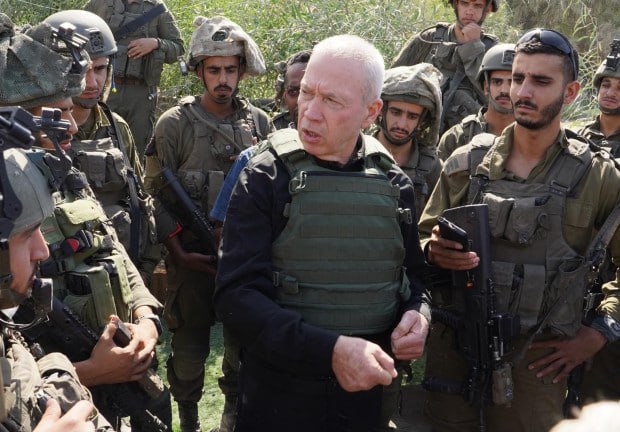

Israeli Defence Minister, Yoav Gallant, on Thursday issued a stern warning to neighbouring Lebanon, stating that if the Hezbollah militia continued its aggression, Israel will fight with all its might.
Israel was striving “for peace, prosperity and stability on both sides of the northern border,’’ Gallant said in an unusual message addressing the Lebanese population directly.
“We will not allow the Hezbollah militia to destabilise the border and the region,” Gallant said.
“If Hezbollah continues its aggression, Israel will fight it with all its might,’’ Gallant said,
“Those who play with fire must expect destruction,’’ he warned.
This is as a result of the killing in Tehran of Palestinian militant organisation Hamas leader, Ismail Haniyeh and Fuad Shukr, a top military commander with the Iranian-allied Hezbollah.
The danger of a major war in the Middle East has continued to grow.
Iran, Hezbollah and Hamas have threatened retaliation against Israel.
Hezbollah has traded near-daily fire with Israel in support of its ally Hamas since the Palestinian militant group’s Oct. 7; attack on Israel triggered the Gaza war.
Clashes have resulted in numerous civilian casualties in Lebanon and Israel.
More than 350 Hezbollah members as well as Israeli soldiers had been killed.
Tens of thousands of residents on both sides of the border have fled their homes.
(NAN)
All rights reserved. This material, and other digital content on this website, may not be reproduced, published, broadcast, rewritten or redistributed in whole or in part without prior express written permission from According.
Contact: [email protected]
FG suspends registration for N40,000 rice


The Federal Government has withdrawn the circular directing civil servants to register for the purchase of N50kg bag of rice at a subsidised rate of N40,000.
The withdrawal of the circular was communicated in another circular by the Director of Human Resources at the Ministry of Special Duties and Inter-Governmental Affairs, Aderonke Jaiyesimi.
The internal circular, dated August 2, 2024 and sighted by our correspondent on Thursday, was addressed to all directors and heads of departments.
Jaiyesimi said, “I am directed to refer to our internal circular in the Ministry (Federal Ministry of Special Duties and Inter-Governmental Affairs) of late August 2024 on the above subject matter and to inform you that the internal circular is hereby withdrawn. Further details will be communicated in due course.
“Please bring the contents of this internal circular to the attention of staff in your respective departments and units for their information and proper guidance.”
Earlier, the ministry had invited all civil servants interested in purchasing the Federal Government’s subsidised rice to register by completing a Google form on the OHCSF website and submit it to the director of human resources for endorsement.
It noted that payment for and the distribution of the rice would be coordinated by designated offices while the Chairman, Joint Union Council of the ministry, would serve as an observer for transparency in the course of the exercise.
The Federal Government had recently said it had created centres across the country where Nigerians could purchase 50kg bags of rice for N40,000.
The Minister of Information and National Orientation, Muhammed Idris, said the initiative was one of several initiatives by the Tinubu administration to ease living conditions for citizens.
All rights reserved. This material, and other digital content on this website, may not be reproduced, published, broadcast, rewritten or redistributed in whole or in part without prior express written permission from According.
Contact: [email protected]
Israeli defence minister issues warning to Lebanon amid tensions

Israeli Defence Minister, Yoav Gallant on Thursday issued a stern warning to neighbouring Lebanon, stating that if the Hezbollah militia continued its aggression, Israel would fight with all its might.
Israel was striving “for peace, prosperity and stability on both sides of the northern border,’’ Gallant said in an unusual message addressing the Lebanese population directly.
“We will not allow the Hezbollah militia to destabilise the border and the region,” Gallant said.
“If Hezbollah continues its aggression, Israel will fight it with all its might,’’ Gallant said,
“Those who play with fire must expect destruction,’’ he warned.
This is due to the killing in Tehran of Palestinian militant organisation Hamas leader, Ismail Haniyeh and Fuad Shukr, a top military commander with the Iranian-allied Hezbollah.
The danger of a major war in the Middle East has continued to grow.
Iran, Hezbollah and Hamas have threatened retaliation against Israel.
Hezbollah has traded near-daily fire with Israel in support of its ally Hamas since the Palestinian militant group’s Oct. 7; attack on Israel triggered the Gaza war.
Clashes have resulted in numerous civilian casualties in Lebanon and Israel.
More than 350 Hezbollah members, as well as Israeli soldiers, had been killed.
Tens of thousands of residents on both sides of the border have fled their homes.
Israeli defence minister issues warning to Lebanon amid tensions
Dangote refinery designed to process Nigerian crude – CEO


The President and Chief Executive of Dangote Group, Alhaji Aliko Dangote, has stated that his $20bn Dangote Petroleum Refinery was built to use Nigerian crude and add value to it within the country.
Dangote, who stated this in a statement issued by the refinery on Thursday, asked why should the plant deviate from this focus, as he admitted that the refinery had also been refining crude oil grades from Europe, the United States, and other countries.
Africa’s wealthiest man further noted that the domestic crude oil supply issues in Nigeria were being resolved by the parties involved.
The statement said the refinery has already affected crude flows, with dozens of Nigerian cargoes remaining in-country and US WTI Midland, a comparable light, sweet grade, being imported. It said the mega-refinery could therefore tighten the light, sweet crude market.
“Its diet is WTI and the lighter Nigerian (crudes) so if you were chasing those barrels you’d probably feel it quite keenly,” the statement stated that a West African crude trader told Commodity Insights.
It said WTI Midland crude initially emerged as the favoured feedstock to supplement Nigerian supply, with the refinery signing long-term supply contracts for the US grade and noting its competitive pricing.
It stated that crude flows in and out of the Dangote refinery have been felt in other markets, especially in Europe, the largest consumer of light, sweet Nigerian crude.
“The US grade has accounted for 30 per cent of crude delivered to Dangote, through 18 cargoes,” the multi-billion dollar company stated in the statement.
It said Dangote stated that the facility would broaden the refinery’s feedstock sources with Libyan, Angolan, and Brazilian crude.
“The refinery was built to use Nigerian crude and add value to it within Nigeria. Why should we deviate from that focus?” Dangote stated, adding that the crude supply issues were “getting resolved”, but that the refinery remained open to all opportunities “to supplement it”.
“Dangote refinery is designed to process a range of light and medium grades of crude oil, including Nigerian grades,” said Rasool Barouni, Associate Director and head of Refining at S&P Global Commodity Insights. “Other similar grades including other WAF grades could be an option.”
Nigeria is sub-Saharan Africa’s largest oil producer, pumping 1.5 million barrels per day in June, according to the Platts OPEC Survey from S&P Global Commodity Insights.
Until this year, all of its oil was exported due to the lack of refining capacity, with gasoline, diesel, and jet fuel imported for domestic use.
The statement also noted that the Organisation of Petroleum Exporting Countries said supplies from Dangote Refinery and Petrochemicals would put pressure on the performance of Europe’s oil industry, especially the Northwest Europe gasoil.
It stated that OPEC in its monthly Oil Market Report for June 2024 listed Dangote refinery among the top diesel and jet fuel suppliers that would disrupt Europe’s oil and gas Industry, a development experts forecasted would positively impact the Nigerian economy.
Recall that Standard & Poor Global quoting trading and the ship tracking sources had earlier predicted that Nigeria’s $20bn Dangote refinery would shake up international crude flows when it reaches full capacity, having already made an impact since coming online in January, trading sources and ship tracking data show.
In another development, the Dangote refinery clarified its stand on crude supply to the plant.
“Our attention has been drawn to media reports alleging that the Dangote refinery has backtracked by acknowledging that NNPC supplied about 60 per cent of the 50 million barrels we lifted.
“To clarify, we have never accused NNPC of not supplying us with crude. Our concern has always been NUPRC’s reluctance to enforce the domestic crude supply obligation and ensure that we receive our full crude requirement from NNPC and the IOCs.
“For September, our requirement is 15 cargoes, of which NNPC allocated six. Despite appealing to NUPRC, we’ve been unable to secure the remaining cargoes. When we approached IOCs producing in Nigeria, they redirected us to their international trading arms or responded that their cargoes were committed.
“Consequently, we often purchase the same Nigerian crude from international traders at an additional $3-$4 premium per barrel which translates to $3-$4 million per cargo,” the refinery stated in a statement issued on Thursday.
It still insisted that “we are unable to secure our full crude requirement from domestic production and urge NUPRC (Nigerian Upstream Petroleum Regulatory Commission) to fully enforce the domestic crude supply obligation as mandated by the PIA.”
I’m alive – Nwoko denies death rumour
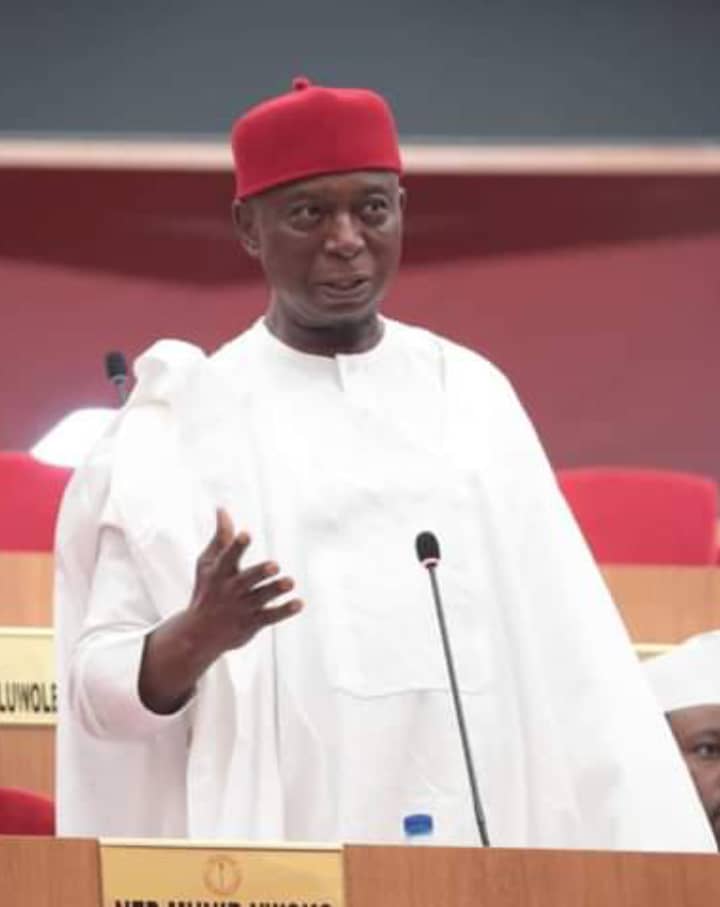
Senator Ned Nwoko has denied reports claiming that he died in Switzerland.
Nwoko, representing Delta North Senatorial District, in a statement on Friday in Abuja, said that the reports were entirely false and malicious.
”In recent weeks, I have also been subjected to unwarranted insults and accusations regarding the purchase of a car for a little content creator.
“These claims are baseless and misleading. Whether this is a misguided joke or a deliberate act of malice, it has gone too far and will not be tolerated.
“I am taking immediate legal action against those spreading these falsehoods. Arrests will be made, and anyone involved should be prepared to face the consequences.
“This is not a matter of influence; it is about holding those responsible accountable for their harmful actions.
”I will not tolerate any attempts to malign my character or to downplay the seriousness of this situation.
“If you are involved in these activities, expect to face legal repercussions without delay,” Nwoko warned.
I’m alive – Nwoko denies death rumour
Victims, families recount ordeals, demand bailout
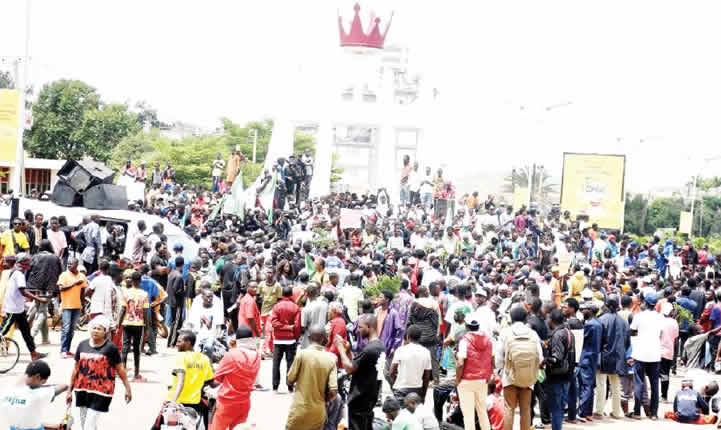

As the #EndBadGovernance nationwide protest fizzles out, many Nigerians, especially in the north, will live with the wounds, scars and financial losses for a long time to come.
The protests against economic hardship, which started August 1, continued even after President Bola Tinubu called for an end to the demonstrations that faced a crackdown from security forces, who reportedly shot at the protesters in various states in the northern part.
The cost-of-living crisis was fueled by surging inflation, at a 28-year high, and government economic policies that pushed the naira to record lows against the dollar.
At least 17 persons were reportedly killed in Abuja, Kano, Niger, Borno, Kaduna and Jigawa, with several others injured on the opening day of the protest against the nation’s worst cost-of-living crisis in a generation and against the corruption and alleged bad governance that have stifled its development.
In Suleja, a major town in Niger State, six people were feared killed when the protesters reportedly attempted to invade a police station. Four people allegedly died on the spot while others who sustained gunshot wounds were rushed to the Gwagwalada General Hospital. Two of the wounded died on the way to the hospital.
The country’s security forces have been accused of using excessive force in the nationwide protests and even though Muyiwa Adejobi, the Nigeria Police Force spokesman, admitted instances of killings during the protests, he claimed none were carried out by the police.
However, the Nigerian Army, through its spokesman, Major-General Onyema Nwachukwu, admitted on Wednesday that one of its soldiers killed a teenager Ismail Muhammad in Zaria, Kaduna State, thus admitting that security agencies deployed to monitor the activities of the #EndBadGovernance protesters across the country used live bullets on protesters.
The confirmation of the use of ammunition by the military immediately contradicted the Inspector-General of Police, Kayode Egbetokun’s claim that none of the nation’s security agencies applied excessive force, including the use of live bullets on the protesters.
Amnesty International condemned the use of deadly action against the protesters, accusing the security operative of killing at least 21 protesters during a week of rallies against economic hardship.
The global body stated, “Our findings, so far, show that security personnel at the locations where lives were lost deliberately used tactics designed to kill while dealing with gatherings of people protesting hunger and deep poverty.”
In a statement, Nobel Laureate Professor Wole Soyinka also slammed the government for the use of live bullets against unarmed protesters.
“Live bullets as state response to civic protest – that becomes the core issue. Even tear gas remains questionable in most circumstances, certainly an abuse in situations of clearly peaceful protest. Hunger marches constitute a universal S.O.S, not peculiar to the Nigerian nation,” Soyinka wrote.
Aside the dead, the protest recorded other casualties who barely survived to recount their near-death experiences as the nationwide demonstrations fizzled out.
A cameraman with the African Independent Television cameraman, Femi Kuku, narrowly escaped being shot by security operatives, who reportedly opened fire on journalists covering the protest at the Moshood Abiola National Stadium, Abuja last Saturday.
Kuku noted that the security operatives knew that they were all journalists yet opened fire on them.
While Kuku ran for his dear life, he fell into an uncovered manhole and suffered a dislocation on his left leg.
“It was my colleagues who picked me up and pushed me inside the Toyota Sienna vehicle we came with because I could not walk at that point,” he said. “When we moved forward a bit, we stopped to check if everybody was okay, and that was when we saw them coming towards us again with their vehicles. They came down and started shooting again, so we sped off into town.
“From that point, we went to the office, and I was taken to the hospital to check my leg. I had no bruises but the left leg and ankle are swollen, it’s very painful, so I leap walk now.”
Gombe victims
On Saturday, officials at the Federal Teaching Hospital Gombe said no fewer than eight persons were brought in for medical attention following the demonstrations, with six still receiving treatment.
“Five of the patients are in Accident and Emergency (ward) with multiple fractures, lacerations and another is in Intensive Care Unit,” an official of the hospital told The According.
It was learnt that the patient in ICU had two bullet wounds and was on life support.
One of the patients, Mohammed Abdulrawuf, 18, who had his right leg heavily bandaged, sobbed as he recounted how he was shot at by security personnel in Gombe.
The teenager, who denied being among the protesters, said he was hit by a bullet as security personnel chased irate youths who looted shops in Gombe.
He added that his dream of becoming a military officer might be dashed if he didn’t receive adequate medical attention.
He said, “I was at my uncle’s house when area boys (hoodlums) attacked people, burgled shops, and caused chaos. As I left for my house, police and soldiers started pursuing everyone, including me, despite not being part of the protest.
“In the midst of the chaos, I fell into a gutter. One of them shot me in the leg. He wants to end my lifetime ambition of serving in the Nigerian Army. I don’t have a father and I’m the only one fending for my family,” he added.
He begged the Federal Government to come to his aid, saying he is still hopeful of becoming an army officer in the future.
“I pray can walk properly after treatment, which will still make me eligible to join the army, so, I’m calling on the government to financially support the victims of the protest in our time of need,” he said.
The patient at the Accident and Emergency ward, Rabiu Ibrahim, a 27-year-old commercial motorcyclist, was visibly helpless following a fracture and several cuts he sustained.
“I need emergency assistance. As you can see I have a fracture on one hand and on the other is a tendon injury and multiple lacerations,” the native of Balanga Local Government Area, told The According.
He claimed he was not part of the protest.
“I had just returned from my grandfather’s house, and I was in front of my house around Central Primary School when men of the PMF 99 accosted me and beat me up, giving me multiple fractures, lacerations and a tendon injury.”
Also, Hassan Haruna, 18, a fish seller, recounted how he found himself at the Federal Teaching Hospital, Gombe.
“I went to the peaceful protest but police shot teargas around the roundabout. As I tried to escape I was cut by an abandoned glass that pierced my leg, which led to excessive bleeding, I lost a lot of blood and became very weak.”
No fewer than 205 church chairs, musical instruments and other equipment worth millions of naira were reportedly stolen by hoodlums, who invaded a Living Faith Church in Daura Local Government Area of the Katsina State, on the first day of the nationwide protest against hardship.
“They packed everything inside the church auditorium, including the digital wall clock, musical instruments, pastor’s chairs, plastic chairs and a desktop computer at the reception, as well as a scoreboard where the accountant usually kept church documents. They scattered everything,” the church pastor, David Jato, said.
“The protest began around 10am and the hoodlums, many of them in Keke Napep (tricycle), just diverted to the church, destroyed the door and glasses and penetrated the church auditorium.
“Three churches were their target and while they succeeded in invading the Living Faith Church and Deeper Life, they couldn’t gain access into the third, the Anglican Church.”
A viral video showed policemen wrestling with Hamza Waziri, a physically challenged person, on his wheelchair in front of the Bauchi State Government House.
Waziri, who relies on a wheelchair for mobility, was peacefully exercising his constitutional right to protest when he was attacked by the police officers.
Leader of the Initiative for the Liberalisation of Physically Challenged People Waziri said he was with other physically challenged persons exercising their constitutional rights of peaceful demonstration when they were attacked by the security personnel.
He told The According, “I decided to organise this protest to show my displeasure with the current economic situation of the country. In the process, I was doing a live video and one of the policemen came to me and said that I had filmed him and they were trying to grab the phone from me. And they were hustling me to grab the phone from my hand and that is how they kept brutalising me. They gave me a couple of punches as you could see from the video.
“So, basically I was very peaceful. We were not more than 10, just to raise our placards which read ‘Employment should be for all’ and ‘Inclusive Society.’”
Special Adviser on Media and Publicity to the Bauchi State Governor, Mukhtar Gidado, said Governor Bala Mohammed had ordered a “thorough investigation into the incident involving a person with a disability and security personnel at the Government House.”
Gidado stated, “Governor Bala Mohammed has made it clear that the welfare and rights of all citizens, especially vulnerable groups, remain his top priority. He directed a thorough investigation to ascertain the facts surrounding the incident and ensure that justice is served.”
The National Commission for Persons with Disabilities demanded justice following the assault.
“The actions of the police officers involved are a clear violation of the Discrimination Against Persons with Disabilities (prohibition) Act of 2018 and the fundamental human rights enshrined in our constitution,” executive secretary, NCPWD, James Lalu, said.
“This reprehensible act, captured in a video currently circulating on social media, shows Mr. Waziri being brutally battered while exercising his constitutional right to peaceful protest in front of the Bauchi State Government House.
“Hamza Waziri is not only a person with a disability but also a respected member of the CODE Board of Trustees, a Mandela Washington Fellow, a Chevening Fellow, and the founder of the Initiative for the Liberalisation of Physically Challenged People in Nigeria.”
Meanwhile, pan-Yoruba socio-political organisation, Afenifere, has called on the Federal Government to investigate the killings of some protesters in some parts of the country.
The body stated this in a communiqué issued at the end of its meeting held at the residence of its leader, Pa Ayo Adebanjo, at Ogbo Ijebu, Ogun State on Thursday.
The communiqué, which was signed by Adebanjo and the National Publicity Secretary of the organisation, Justice Faloye, read, “The Federal Government should investigate deliberate violation of rights, particularly the circumstances of the killing of those who died in the protests and bring to book those – including security agents – proven to be culpable in these regard.”
The group urged President Bola Tinubu “to see the nationwide protest, the diversity of its prosecution and outcome in different regions, as a clear verdict for the restructuring of the Nigerian federation in tandem with the well-considered foundational covenant of true federalism and in honest demonstration of statesmanship immediately set in motion irreversible machineries, in this regard as the panacea for the unity, peaceful coexistence and development of a nation where no man, woman or tribe is oppressed.”
Also on Thursday, Kaduna State Governor, Senator Uba Sani, pledged to ensure justice for Ismail Muhammad, the 16-year-old who was killed by a soldier during a protest in Samaru, Zaria.
Sani stated on X.com, “Today (Thursday), I dispatched a high-powered delegation made up of top government officials and heads of security agencies to condole with the family of the teenager, Ismail Muhammad, who was killed when troops of the Nigerian Army mobilised to disperse a mob in Samaru area of Sabon Gari LGA during the last protest.
“The team was led by the Overseeing Commissioner for Internal Security, Samuel Aruwan. While the team was with the family, I spoke on the phone with the father of the deceased, Muhammad Hussaini, and expressed our deepest condolences.
“I told him that we are deeply pained by the unfortunate incident and will leave no stone unturned to ensure that justice is served. A full and thorough investigation will be conducted and the culprit will be brought to book.
“I will stay in close contact with the family of the deceased in these trying times.”
Barakat N5bn loss
In Kano, several public and private facilities, including the Nigerian Communications Commission, Kano State High Court and a number of vehicles parked within the court’s premises were vandalised and looted, as well as the Kano State Printing Press among several others.
Popular supermarket in the city, Barakat Stores, was among the worst hit with a reported loss of over N5bn to hoodlums during the anti-hunger protest in Kano.
The General Manager of the supermarket, Alhaji Muhammad Sani, made the disclosure in a telephone interview with The According on Wednesday.
He said the hoodlums, who stormed their warehouse located along State Road, near Government House, vandalised and looted the warehouse, including three containers of items that were imported from China and Turkey.
“Just a few days into the protest we imported two containers of items we deal in from China and a container of King’s Oil (vegetable oil) from Turkey and we have not even paid for them,” he said.
The General Manager, who lamented the colossal loss, called on the government for assistance.
“We have already lost our investment to the hoodlums, but any assistance from the government will be appreciated.”
Similarly, another victim and proprietor of She-She Supermarket located along Hadeja Road, Ammar Khalil, said he lost over N30m to the hoodlums.
According to him, items stolen from the pharmacy and supermarket include computers, machines for testing ailments, as well as drugs and other essential commodities.
“I have never witnessed such in Kano. These are youths who don’t have anything doing in the town. I think the government has to do something about youth unemployment in Kano otherwise in the next 10 years even the state governor will not escape from their attacks,” Khalil said.
He called on the Federal Government to help victims who suffered huge losses as a result of the protest in the state and other parts of the country.
One of our correspondents reported that the Gombe State Bureau of Public Service Reforms, Bima Lodge, Kumbiya-Kumbiya Primary Healthcare Centre, Gombe Main Market and Blue Jay Motor Park – a commercial motor company where six Sienna vehicles were destroyed – were all vandalised, among others in Gombe city.
Papa Ejinma, an Igbo trader, had his shop destroyed in Gombe and is still counting his financial losses.
“What I lost is over N10m, they swept all my goods. I’m pleading with the Gombe State Government and the Federal Government to intervene.”
Anambra State-born Ekene Ihechuoha, who deals in spare parts for vehicles, told our correspondent that he lost his goods on Friday to hoodlums following the protest.
“I’m at Michika House BCG, Gombe. Many thought I had passed because of the injuries I sustained. They inflicted cuts on my head, back and neck.
“They made away with the spare parts outside my shop, things like two wind shafts; bearing and they took my phone. I lost over N210, 000, my phone amount not inclusive.”
In Maiduguri, the Borno State capital, Boko Haram extremists killed four protesters but sources told The According others suffered varying injuries after protesters clashed with the police, which led to sporadic shootings and alleged use of grenade by the security operatives.
One of the victims, Mohammed Dauda, was allegedly shot at in a mechanic workshop in Maiduguri.
Dauda’s sister, Fatima, said he was currently being treated at an undisclosed location.
She said, “My junior brother Mohammed was out for work on Thursday. Our elder brother, who works in the same place with him, said he witnessed the incident live. He told us that Mohammed wanted to cross the road, but police stopped him from crossing. He insisted and in the process of crossing the road, police shot at his leg.”
A crying Halima Ali, mother to one of the victims, Habila, added, “I was at home in Bulumkutu Kasuwa on the protest day when Habila said he was going out. I warned him to stay indoors because of the situation that very day. He insisted that he was only going to see his friend.
“When they (him and his friends) were outside, I didn’t know what happened, but his friends said there was chaos and police unleashed grenade and everybody ran for cover; it was in the process that the friends said police shot my son.”
Halima added that the Federal Government should treat the victims of the protest, as well as compensate them and their families.
“People came out to protest against hunger and poverty, so, where do you expect them to get the money to treat themselves? Government should set up emergency centres to treat those injured and also compensate families of the ones killed,” she said.
Despite the use of lethal force against protesters and the arrest of over a thousand of them, which many believed led to the gradual withdrawal of the demonstrators, Damilare Adenola, Director of Mobilisation, Take It Back Movement, one of the organisers of the protest, said they had not backed out of the protest, adding that the issue was the government clampdown on activists and protesters.
“The protest has not died down. We should be talking about how the government continually cracks down on free speech, making it unsafe for activists and citizens to express their human rights,” Adenola stated.
•Additional reports: Katsina Tukur Muntari, Isah Ojo Peter Dada, Godwin Isenyo, Lara Adejoro
APC, opposition clash over NLC secretariat invasion
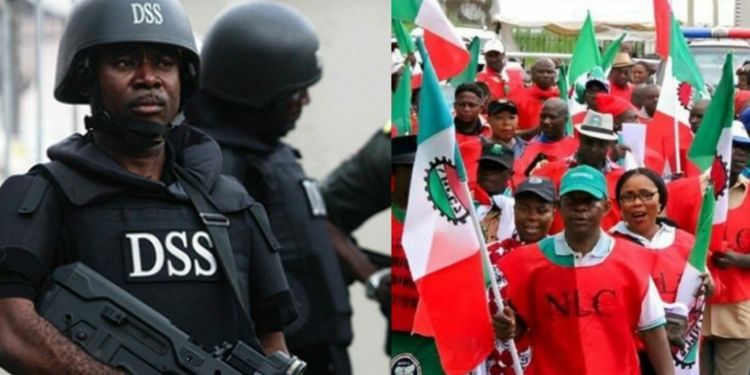

Opposition parties in the country, on Thursday, condemned Wednesday’s raid on the Nigeria Labour Congress national headquarters in Abuja by security agents.
The According reports that the armed men, allegedly from the DSS, invaded the NLC office and carted away several documents.
According to the congress, the raid took place around 8:30 pm, with operatives reportedly breaking into the Labour House.
NLC’s Head of Media and Public Relations, Benson Upah, said the attackers ransacked the bookshop on the second floor, confiscating hundreds of books and other publications.
“The invading team claimed that they were searching for seditious materials allegedly used during the #EndBad Governance protests,” Upah said.
But the DSS spokesman, Peter Afunanya, denied the allegation.
“Please, kindly note that the Service (DSS) did not carry out any operation at the NLC office in Abuja,”Afunanya told The According.
Opposition parties, in separate interviews with The According, condemned the action,
But the ruling All Progressives Congress urged for restraint, saying it was too early to rush to a conclusion and start casting aspersions.
The PDP Deputy National Publicity Secretary, Ibrahim Abdullahi, characterised the action as an attempt to suppress the labour union.
“What happened yesterday is condemnable. As a party, we do not subscribe to that approach. Security agencies shouldn’t be deployed to go to institutions of the state, like the labour office, to ransack them and then suspect or blackmail them into sponsoring what you call a protest. Nigerians are entitled to their rights. Nigerians can see through them and through the government, and they have decided that they will go on the street.
“It is condemnable. As a party, we do not support it, and we see it as a further attempt to coerce the citizens and get them into silence. That is just the attempt or the decision of the APC,” the PDP chieftain said.
Similarly, the chief spokesman for the Labour Party presidential candidate, Yunusa Tanko, also condemned the action.
Tanko said, “The action of the security agencies is totally condemnable. No one needs to come into the NLC office in a commando style. These are people who are accessible to you. At any point in time, you can easily walk into the NLC office and issue them a warrant and say you suspect something is going on and you want to charge them if you find anything incriminating. So what is all this showmanship of barging into the NLC office unannounced and saying you are investigating some documents? These are respected union leaders, not criminals.”
Also condemning the invasion, the National Publicity Secretary of New Nigeria People’s Party, Ladipo Johnson, “One begins to wonder whether they are going back to the military days. One begins to wonder about their propensity to tolerate constructive criticism or protests, which is an aspect of democracy for that matter. It would seem that from Mr. President’s speech, he feels that the people do not understand. He hasn’t expressed that he will look again at some of his major policies that people believe have brought the economy to the stage it is at.”
Also, human rights lawyer, Femi Falana (SAN), described the invasion as a “shameful reminder” of the dark days of military dictatorship in a statement he personally signed on Thursday.
“For genuine democrats, it’s utterly regrettable that official actions in a democratic dispensation could be reminiscent of the atrocities that defined the dark days of military dictatorship.
“It is incontestable that it is illegal for security forces to invade the homes and offices of law-abiding citizens and corporate bodies under a democratic dispensation,” Falana said.
Also, the Civil Liberties Organisation described the invasion as “an egregious abuse of democratic principles,” in a statement by its Executive Director, Ibuchukwu Ezike.
“We demand that the police return carted NLC property without delay and tender an apology to them for this flagrant and heinous act,” the CLO said.
However, the ruling APC called for calm, saying it was too early to start trading blame over the alleged invasion.
In an exclusive phone call, the National Publicity Director of the party, Bala Ibrahim, said, “It is something that can be multidirectional and one thing leads to another. Unless and until you are able to get information from those who are investigating as to what prompted their action, you cannot just pre-empt and jump to a conclusion by saying a particular action is wrong.
“You don’t know from the angle they are coming. It might be some information given to them and, in their course of investigation and in an attempt to leave no stone unturned, they will invade premises, with a view to getting clues. One thing about crime is that no matter how smart you are, you always must leave behind something that will give clue to it. So that is the ugly side of crime.
“I think for now, it will be too early to jump to a conclusion and say action A or action B is wrong. It has to be after the investigators have been debriefed and got information with regard to what led to their action. Let’s not begin to paint political pictures, based on emotions and sentiments. We will be one-sided and wrong.”