Home Blog Page 5

NAFDAC Confirms 48 Deaths Linked To Ondo Herbal Mixture Incident

0

The National Agency for Food and Drug Administration and Control (NAFDAC) has confirmed the deaths of 48 people following the consumption of suspected contaminated traditional medicine and alcohol mixtures in Ondo State.

The Director-General of NAFDAC, Professor Mojisola Adeyeye, disclosed this in a statement issued to journalists.

According to her, the incident affected several communities in Odigbo Local Government Area, including New Town, Odole, Okele, Orita Odigbo, Araromi-Obu and Oniparaga.

Adeyeye said the incident was first reported in early September 2026 after several residents suddenly fell ill, with some dying after consuming what was suspected to be a traditional herbal concoction.

Read Also: Bauchi Police Arrest Three Suspects Over Alleged Homicide And Foeticide

She said preliminary reports from investigating officials initially recorded 31 deaths, comprising 20 in Odigbo town and 11 in Araromi-Obu.

The NAFDAC boss added that several other victims were admitted to hospitals or placed under intensive medical observation.

She said further investigations by health authorities and other relevant agencies showed that the number of affected persons had increased, with 48 deaths confirmed and 182 others in critical condition.

Adeyeye expressed condolences to the families of the victims and prayed for the repose of those who died.

She added that laboratory tests and investigations were ongoing to identify the toxic substances that may have been present in the substances consumed by the victims.

Bauchi Police Arrest Three Suspects Over Alleged Homicide And Foeticide

0

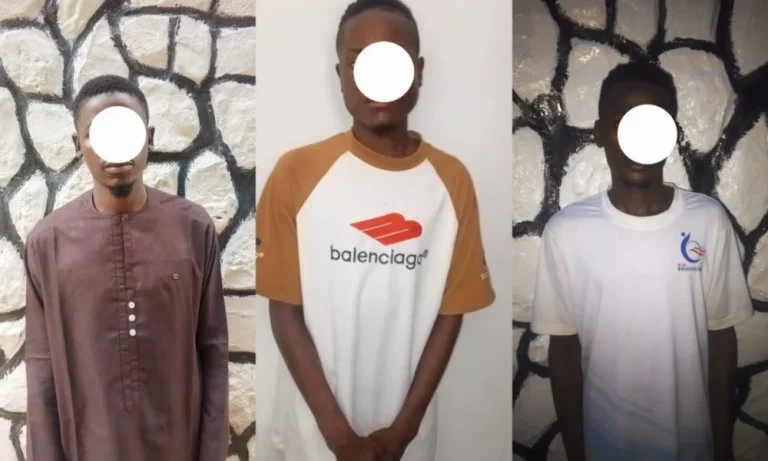
The Bauchi Police Command has arrested three suspects over separate cases of alleged culpable homicide in Bauchi metropolis and Kirfi, as well as criminal conspiracy and foeticide in Ningi Local Government Area.

The command said the arrests followed separate incidents recorded between Thursday and Friday in the affected areas.

In Bauchi metropolis, a 19-year-old man, Abubakar Hudu, was arrested after a fight with Hassan Adamu at Gida Dubu, Bauchi.

The police said the two men had a misunderstanding at about 5:15pm on Thursday which later degenerated into a fight.

According to the command, Adamu was separated from Hudu and left the scene but later collapsed and became unconscious.

He was rushed to the Specialist Hospital, Bauchi, where he was pronounced dead.

The police said detectives attached to the ‘C’ Division visited the scene and the hospital before arresting Hudu after he was traced.

In a similar incident in Kirfi, 22-year-old Audu Babangida was arrested for allegedly stabbing 25-year-old Haruna Bala to death during a dispute over farmland.

Read Also: Adamawa: Son Accused Of Plotting Midnight Robbery Against Mother

The incident occurred at Kafin Sarkin Yaki village on Thursday night.

The police said the dispute between the two men turned violent, during which Babangida allegedly stabbed Bala in the neck with a knife.

Bala was taken to the General Hospital, Kirfi, where he was confirmed dead.

The suspect reportedly fled after the incident but was arrested around 11am on Friday at River Kafin Iya while allegedly trying to cross into Gombe State.

Police said the knife allegedly used in the attack was also recovered.

Meanwhile, two men, Aminu Jibrin and Salihu Mohammed, were arrested in Ningi over alleged criminal conspiracy and foeticide.

The command said the two allegedly conspired to administer substances to 22-year-old Hauwa’u Yakubu, resulting in the termination of her pregnancy.

Jibrin is from Burra District, while Mohammed, 25, operates a chemist shop at Sabuwar Tiffi, Ningi.

Their arrest followed information reportedly provided by a human rights activist in the area.

The Commissioner of Police, Sani-Omolori Aliyu in a statement issued by the Spokesman of the Command, SP Nafiu Habib, directed that the cases be transferred to the State Criminal Investigation Department, Bauchi, for further investigation and prosecution.

The CP also warned residents against jungle justice, urging them to report disputes and criminal activities to the police rather than resorting to self-help.

Adamawa: Son Accused Of Plotting Midnight Robbery Against Mother

0

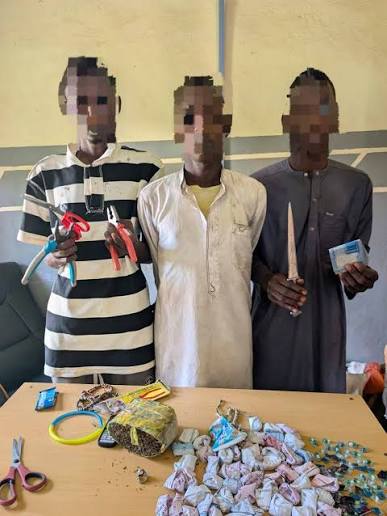
A man in Adamawa State has been accused of conspiring with two other men to attack his mother at midnight and rob her of N200,000 and other valuables.

The Adamawa State Police Command said on Friday that it had arrested the three suspects in connection with the robbery, which took place at Wuro Kuturu, a community in the Jimeta axis of Yola.

The command said the incident occurred on Tuesday, September 15, 2026, at about midnight, when the victim’s son allegedly conspired with two others, armed themselves with dangerous weapons and gained entry into the family residence, where they robbed his mother and siblings of N200,000, two phones and a power bank.

The Command’s Public Relations Officer, SP Sulaiman Nguroje, identified the suspects as Aminu Adamu, 20; Adamu Mamman, 22; and Nuhu Umar, 22, all of Wuro-Kuturu.

Read Also: Mambilla Dispute: Presidency Accuses Atiku Of Taking Nigerians For Granted

Nguroje said the suspects were arrested by operatives attached to the Karewa Area Command on Thursday, September 17, 2026, following a report lodged by the victim.

Items recovered from the suspects include a knife, pliers, scissors, various suspected hard drugs and some quantities of Indian hemp.

“During interrogation, the suspects confessed to the crime,” Nguroje stated.

He added that the state Commissioner of Police, CP Kabir Umar Hassan, had directed that a thorough investigation be conducted and the suspects diligently prosecuted.

Mambilla Dispute: Presidency Accuses Atiku Of Taking Nigerians For Granted

0

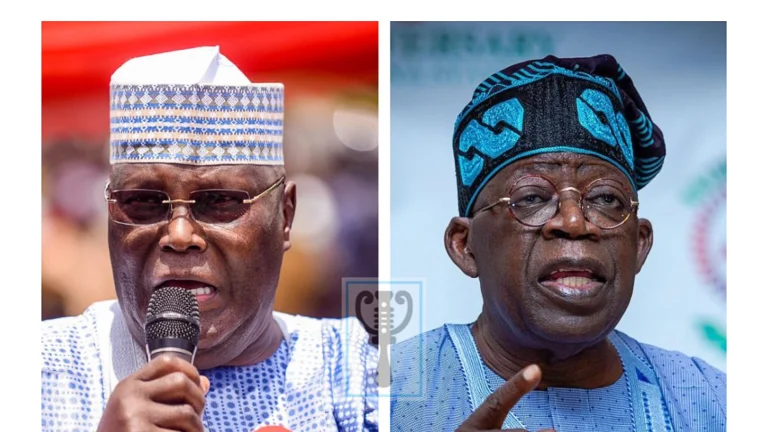
The Presidency has accused the presidential candidate of the African Democratic Congress (ADC), Atiku Abubakar, of taking Nigerians for buffoons and failing to address questions about his integrity.
It was reported that the special adviser to President Bola Tinubu on Information and Strategy, Bayo Onanuga, said this on Friday while reacting to Atiku’s alleged $500,000 Mambilla project bribe.Latest News Updates

He branded Atiku Abubakar, ‘Diverter-in-Chief’ for dodging journalists’ questions on the alleged bribe.

He stated that Atiku was avoiding comment on his indictment in Paris by the International Chamber of Commerce (ICC) over the alleged illegal Mambilla Hydro Power Project contract.
The Presidency claimed that Atiku and former Minister of Power, Olu Agunloye, awarded the contract to Sunrise Power without authorisation from the Federal Executive Council (FEC) and President Olusegun Obasanjo.

The statement alleged that during the hearings at the Tribunal, Atiku collected a $500,000 bribe from Sunrise and Leno Adesanya, the company’s CEO, to approve the contract.

“A man who cares about his integrity and wants to offer himself for leadership ought to address the integrity issue first, but instead, he used his so-called world press conference to speak about his newfound campaign mantra, his pro-petrol subsidy stance.

“He also attacked the Tinubu administration, claiming it plans to withdraw electricity subsidies. The Power Minister, Joseph Tegbe, has already debunked that lie. But Atiku doesn’t care a hoot. He must weaponise everything in his desperation for power.

“Atiku, the diverter-in-chief, takes Nigerians for buffoons, thinking that his crimes against the Nigerian people do not matter. Nigerians should not be deceived: Atiku does not have the people’s interests at heart. He cares more about himself.

“Nigerians should also consider what was at stake for the public treasury if Atiku’s allies succeeded in Paris.

“Sunrise and Leno Adesanya would have walked away in Paris with $3.38 billion, including the $680 million settlement sum and interest, plus a claim of $2.7 billion as compensation and interest associated with the non-development of the Mambilla Hydro Power Project.

“A politician who aspires to lead Nigeria must be willing to answer questions about his integrity. Atiku should respond to the $500,000 bribe directly rather than divert public attention with unsupported allegations against the government,” the Presidency said in the statement.Join Diaspora Networks

2027: PDP Announces Sani Abacha’s Son As Kano Guber Candidate

0

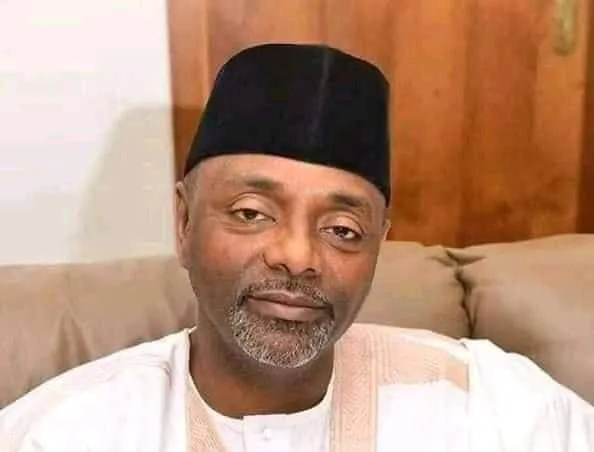
The Peoples Democratic Party (PDP) in Kano State North West Nigeria has named Alhaji Muhammad Sani Abacha, son of former Head of State, General Sani Abacha, as its candidate for the 2027 governorship election.

Abacha emerged as the party’s candidate following the withdrawal of its earlier candidate, Muhammad Bello Dalha.

His emergence was ratified at an expanded meeting of the Kano State PDP Executive Committee, where the party conducted a replacement primary in line with its constitution and relevant electoral laws.

The state PDP Chairman, Dr Bello Gambo Bichi, said the exercise became necessary following Dalha’s withdrawal from the race.

He explained that the law requires political parties to conduct a replacement primary whenever a duly nominated candidate withdraws.

Bichi said, “The law says that as a result of withdrawal, a replacement primary must be held. That is what brought us here today. We have affirmed Muhammad Sani Abacha as the gubernatorial candidate of our great party in Kano State.”

Read Also:I didn’t reject APC council list because of trolls – Toyin Abraham

Dalha had earlier emerged as the PDP governorship candidate after winning the party’s primary election but subsequently withdrew following consultations with party stakeholders in Kano and Abuja.

The chairman of the electoral panel, Dr Abba Abdullahi, formally declared Abacha winner of the replacement primary, saying the process complied with the party’s guidelines and applicable electoral regulations.

He said that Abacha fulfilled the requirements for nomination.

In a related development, the PDP, as part of efforts to reconcile its various factions, allocated the deputy governorship slot to the group led by Kabiru Tanimu Turaki.

The party subsequently nominated former factional chairman and former Commissioner for Land and Agriculture, Alhaji Yusuf Ado Kibiya, as Abacha’s running mate.

According to Bichi, the decision followed consultations among the different groups as part of efforts to resolve internal disagreements and strengthen the party ahead of the 2027 elections.

He also said that some National and State Assembly candidates were replaced as part of the reconciliation process, adding that representatives of the Independent National Electoral Commission (INEC) witnessed the exercise.

The development adds a new dimension to preparations for the 2027 governorship election in Kano, as political parties continue to select candidates and address internal differences ahead of the polls.

I didn’t reject APC council list because of trolls – Toyin Abraham

0

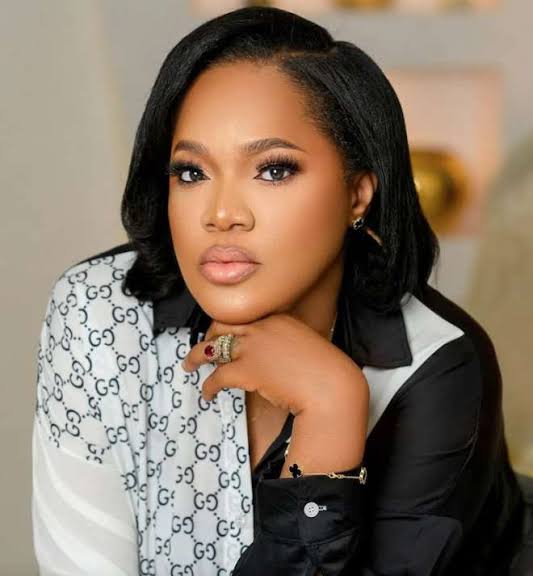
Toyin Abraham has clarified that her decision to reject her reported inclusion in the Lagos APC Campaign Council was based on her lack of prior knowledge and her stated decision to stay away from politics.

The actress and filmmaker made the clarification on X after a social media user suggested that her decision was aimed at preventing further bullying.

Abraham said that was not the case, explaining that she woke up to find her name on a campaign council list she knew nothing about.

She also reiterated that she had previously stated that she was not interested in politics.

Her statement followed an earlier clarification on Instagram after the Lagos APC campaign council released its list.

The actress said she was not a member of any campaign council and urged the public to disregard her reported inclusion in any campaign committee.

Read Also: Libya Restarts Dialogue On Unifying Divided State Institutions

Abraham had been listed under the Entertainment and Creative Economy Directorate alongside several entertainment personalities.

Among those listed were Jide Kosoko, Eniola Badmus, Bimbo Akintola, Adebayo Salami, Saheed Balogun, Bukky Wright, Pasuma, Obesere and Adewale Ayuba.

The directorate has Toke Benson-Awoyinka as Director, Jide Kosoko as Co-Director and Eniola Badmus as Deputy Director.

The campaign council was scheduled to be inaugurated on Friday, September 18, at the APC Secretariat on ACME Road, Ikeja.

Despite Abraham’s public rejection, reports indicated that her name remained in the published council document.

For now, Abraham’s stated position is that she is not part of the campaign council and intends to remain out of politics.

Libya Restarts Dialogue On Unifying Divided State Institutions

0

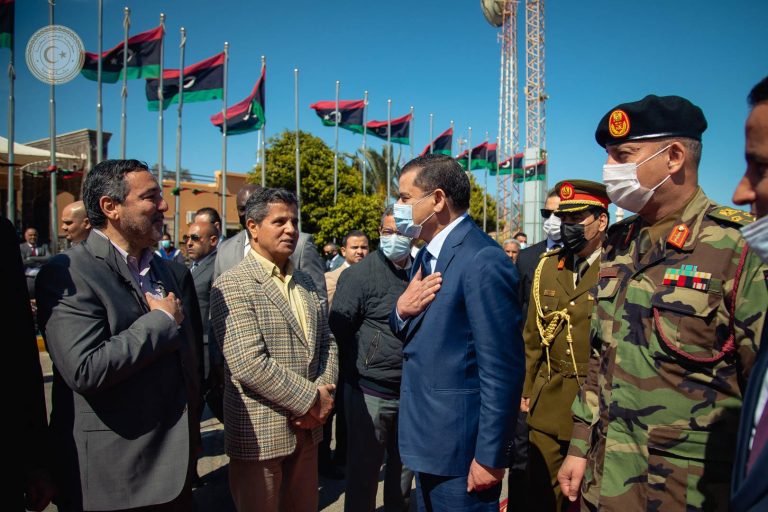
Authorities in Tripoli and Benghazi have resumed talks on the gradual reunification of Libya’s state institutions amid persistent political divisions in the country.

The discussions are focusing on the organisation of state structures, security coordination and preparations for upcoming political milestones, according to the African Press Agency (APA).

The renewed dialogue comes after years of institutional division, during which rival administrations have exercised authority over different parts of Libya.

The parties are examining ways to bring some public institutions closer together and harmonise administrative mechanisms between the two sides.

The talks are also considering a common framework that could support the organisation of national elections and contribute to the gradual reunification of state institutions.

Security coordination is another key issue under discussion, with the parties seeking greater cooperation amid continuing differences over the exercise of political authority and the organisation of state institutions.

The renewed talks come as Libya’s political process gains fresh momentum through a United Nations-facilitated roadmap.

Read Also: Wike’s Rainbow Coalition Raises Questions Over Tinubu’s Political Base

On August 30, Libyan parties signed an agreement addressing the reconstitution of the Board of Commissioners of the High National Elections Commission and outstanding issues in the legal framework for presidential and legislative elections. The agreement commits the parties to work towards holding the elections within a period not exceeding 24 months.

The UN Support Mission in Libya (UNSMIL) said the agreement was intended to advance the political process, overcome the country’s political deadlock, unify and strengthen national institutions, and create conditions for inclusive and credible parliamentary and presidential elections.

The UN Security Council has also welcomed the agreement, describing it as an important step towards elections and the unification of Libya’s institutions.

However, several differences remain unresolved, and the progress of the renewed dialogue will depend on the ability of the parties to reach common arrangements on public institutions, security coordination and the country’s future political process.

Wike’s Rainbow Coalition Raises Questions Over Tinubu’s Political Base

0

Two strategies, one presidency: Minister of the Federal Capital Territory, Nyesom Wike is widening the political net, while the governors are tightening the ruling All Progressives Congress structure. The question is whether both approaches can coexist without pulling the coalition apart. Jonathan Eze writes.

The political temperature surrounding President Bola Tinubu’s 2027 re-election bid appears to be rising, not because of an open confrontation between the President and his allies, but because of an increasingly consequential disagreement over who should control the machinery of political mobilisation around him.

At the centre of the emerging contest are FCT Minister, Nyesom Wike and the Progressive Governors’ Forum, led by Imo State Governor, Senator Hope Uzodinma. What began as a disagreement over the character and purpose of Wike’s proposed “Rainbow Coalition” has now developed into a broader argument about party loyalty, political autonomy, electoral strategy and the architecture through which Tinubu’s re-election should be pursued.

The latest confrontation became public after the APC governors resolved that they would not participate in or endorse any alliance capable of weakening the APC or undermining its candidates at any level. Uzodinma, speaking for the governors, said their campaign commitment was to APC candidates across the electoral spectrum.

Wike, however, has drawn a distinction between supporting Tinubu for president and supporting APC candidates in every other election. He insists that the Rainbow Coalition is designed principally to mobilise support across political parties for Tinubu, while allowing those parties to field candidates in governorship and legislative contests. That distinction is at the heart of the dispute.

The fault line: Tinubu versus the APC structure?

Wike’s argument is essentially that presidential politics and sub-national politics are not necessarily the same enterprise. His position is that politicians from different parties can support Tinubu for president while retaining their partisan identities and contesting against APC candidates in other elections.

He has pointed to the 2023 elections as evidence that Nigerian voters can differentiate between presidential and legislative choices. Wike specifically cited states such as Imo, Abia, Ebonyi and Enugu, where voters made different choices in presidential and National Assembly elections.

The APC governors see the matter differently.

From their perspective, a presidential campaign cannot be completely divorced from the political structures through which the president’s party seeks votes. If politicians are encouraged to mobilise for Tinubu while simultaneously campaigning against APC governorship, senatorial or House of Representatives candidates, the possibility exists for competing campaign messages and organisational structures to emerge on the same political terrain.

The governors are not merely defending the APC as a political party; they are defending the principle that the party’s candidates should not be weakened by a parallel political architecture operating under the umbrella of support for the President.

The governors’ concern therefore goes beyond Wike personally. It touches the fundamental question of whether Tinubu’s 2027 campaign should be built primarily around the APC machinery or around a wider coalition of politicians cutting across party lines.

Wike’s political calculation

Wike occupies an unusual position in Nigerian politics. He remains formally associated with the PDP but serves as a prominent minister in an APC-led Federal Government and has repeatedly declared his support for Tinubu’s second-term bid. That political configuration gives him an unusual degree of freedom, but it also places him in an increasingly delicate relationship with the APC establishment.

His political philosophy has historically been rooted in personal networks, direct mobilisation and an ability to negotiate across party boundaries. His support for Tinubu in 2023, alongside the other members of the G-5 governors’ bloc, demonstrated the influence that political actors outside the eventual governing party could exercise over the presidential contest.

The Rainbow Coalition appears to be an attempt to reproduce that broader political architecture in 2027.

Its potential advantage for Wike is clear: it allows him to retain relationships with politicians outside the APC while simultaneously positioning himself as a mobiliser for Tinubu. Rather than becoming entirely dependent on the APC’s internal structures, he can operate through a broader network.

But there is an equally obvious disadvantage. The more aggressively the Rainbow Coalition is perceived to challenge APC candidates, the more difficult it becomes for Wike to present his political activities as completely complementary to the ruling party’s electoral interests.

That tension explains why his statement that he supports Tinubu but does not necessarily support every APC candidate has attracted such a strong response from the governors.

Why Gov Uzodinma cannot afford to ignore the issue

For Uzodimma, the matter is also about institutional authority. As chairman of the Progressive Governors’ Forum, his responsibility is to articulate the collective position of APC governors. The governors are the most important elected political actors within the APC structure outside the presidency and the National Assembly. They control state-level political machinery, influence party structures and possess considerable capacity for grassroots mobilisation.

Consequently, the governors are unlikely to welcome the emergence of another political network capable of competing for influence within their respective states.

The confrontation becomes even more politically sensitive because Wike has accused Uzodimma and Kwara State Governor, AbdulRahman AbdulRazaq of working against him. Wike has linked his disagreements with them to political developments affecting his interests.

Uzodimma, meanwhile, has consistently argued that politicians who genuinely support Tinubu and his Renewed Hope agenda should align with the APC rather than operate through arrangements that could weaken the party. Earlier statements attributed to him have reflected that preference.

The result is a contest between two different models of political organisation: Wike’s cross-party coalition model and the governors’ party-centred model.

Advantages of Wike’s approach

There is a political logic to Wike’s position.

Nigeria’s electoral history demonstrates that political loyalties are not always perfectly aligned across different levels of an election. Voters can support one party for president and another for governor or the legislature.

A broad coalition can therefore potentially widen Tinubu’s support base beyond the conventional APC constituency.

It may also enable the President to benefit from politicians who, for one reason or another, do not wish to join the APC but are prepared to support his presidential ambition.

For Wike, the approach also preserves political independence. He does not have to surrender his relationships with PDP politicians merely because he is supporting Tinubu.

In a highly fluid political environment, such networks can be valuable.

Disadvantages of the Rainbow Coalition

The principal vulnerability is organisational contradiction. If a politician campaigns for Tinubu while simultaneously campaigning against an APC governorship candidate, voters and party members could receive conflicting signals.

The APC governors have already identified precisely this concern. Their argument is that the President’s re-election cannot be treated as an isolated contest while candidates of the President’s party are being weakened elsewhere.

There is also the question of coordination. A presidential campaign requires an enormous network of polling-unit structures, local government coordinators, state organisers, volunteers and party officials. Running a parallel coalition alongside the APC could produce overlapping command structures.

The political danger is not necessarily that voters cannot distinguish between candidates. Rather, the danger is that political actors within the same broad presidential camp may spend more energy competing with one another than consolidating the presidential vote.

Governors’ strength, and their vulnerability

The governors possess institutional advantages Wike cannot easily replicate.

They control state governments, have access to established APC structures and can coordinate directly with party officials and other elected representatives. Collectively, the Progressive Governors’ Forum represents a formidable political bloc. Yet the governors also have a potential vulnerability: their political interests are not necessarily identical.

Every governor has state-specific priorities, rivalries and succession calculations.

A governor concerned about retaining power or determining a successor may have a different electoral priority from another governor focused exclusively on the presidential race.

This means that the APC governors’ collective position can be powerful at the national level while still encountering complexities at state level.

The Wike controversy therefore exposes a deeper reality of Nigerian politics: political alliances are often coalitions of overlapping interests rather than permanent ideological unions.

The bigger question: what does Tinubu want? Ultimately, the dispute may require political arbitration at the highest level.

President Tinubu has benefited from support by politicians who were not members of the APC. Wike himself is one of the most prominent examples. That history makes the President’s relationship with the former Rivers governor politically significant.

At the same time, Tinubu cannot afford to disregard the APC governors. They are central to the party’s electoral machinery and control governments across a substantial number of states.

The President therefore occupies a delicate position between two forms of political capital: the established APC structure and the broader coalition of political actors outside the APC who may support him.

How that balance is managed could determine whether the current disagreement remains a manageable tactical dispute or becomes a larger struggle over the direction of the 2027 campaign.

What could happen next?

One plausible scenario is political accommodation. Wike could continue mobilising for Tinubu through his coalition while the APC governors maintain their own party campaign structures, with an understanding that both sides have different organisational responsibilities.

A second possibility is greater confrontation at the state level. If Rainbow Coalition-backed politicians begin openly challenging APC candidates in several states, the governors could intensify their resistance. The disagreement would then move from rhetoric into direct electoral competition.

A third scenario is greater presidential coordination. The Presidency could establish clearer boundaries between the official APC campaign structure and external support groups, thereby reducing friction while retaining the advantages of a broad coalition.

Another possibility is selective cooperation. Political actors could cooperate in the presidential contest while remaining competitors in state and legislative elections. This would essentially institutionalise Wike’s argument that presidential and sub-national contests can operate independently.

None of these scenarios is predetermined. The configuration can change significantly as party primaries, candidate selection, campaign structures and local political negotiations develop.

Beyond Wike and Uzodinma

The deeper significance of the dispute lies in what it reveals about Nigerian political organisation ahead of 2027.

Wike’s political proposition is that support for a president can transcend party boundaries. The APC governors’ proposition is that the strength of a president’s re-election effort should ultimately reinforce the party that produced him.

Both positions have political logic.

The first seeks to maximise the breadth of Tinubu’s coalition. The second seeks to maximise organisational coherence within the APC. FollowFederal Policy

The difficulty arises when the two objectives collide at the level of governorship and legislative elections.

For now, the Wike-Uzodinma confrontation should therefore not be viewed simply as a personality clash. It is a contest over political architecture, loyalty, electoral strategy and control of mobilisation networks.

Its significance extends beyond the two men. If managed constructively, competing mobilisation structures could broaden the President’s reach without necessarily dismantling the APC’s organisational base. If allowed to deteriorate into open intra-camp rivalry, however, the dispute could create competing centres of political authority within the same presidential coalition.

The central question heading into 2027 is consequently not merely whether Wike will prevail over the APC governors, or whether Uzodinma will prevail over Wike.

The more consequential question is whether the different political networks supporting Tinubu can operate within a sufficiently coherent framework to pursue their separate interests without undermining one another.

That, ultimately, may be the real test of the emerging political architecture around the 2027 presidential election.
Cross Reveals He Was Offered N500m, $200k To Sleep With A Ma

0

Former Big Brother Naija housemate Cross has alleged that he rejected two major financial offers from men who wanted to have sex with him.

The reality TV personality made the claim while reacting to the recent social media controversy involving Whitemoney.

Whitemoney had reportedly shared an unsolicited message he received from a man who called him “papi” and indicated that he was interested in him.

The post attracted reactions from social media users, prompting Cross to come to Whitemoney’s defence.

Cross argued that being feminine in appearance or manner does not automatically mean that a man is attracted to other men.

He said sexual orientation should not be determined by a person’s perceived energy, mannerisms or outward appearance.

Read Also: ‘Not Even My Husband’ – Nancy Isime On Discussing Her Finances With Men

While making his point, Cross revealed that he had allegedly been approached by men with substantial financial offers.

He claimed that he was once offered N500 million and on another occasion $200,000 to have sex with a man.

According to Cross, he rejected both offers because of the principles he was taught by his mother while growing up.

He said his values were more important to him than money or material possessions, making it impossible for the alleged offers to change his decision.

Cross also expressed concern over unsolicited messages sent through social media.

He questioned whether people would react differently if he publicly displayed some of the private messages he allegedly receives.

The reality star urged people to be more cautious when communicating with others online and to recognise that not every person would welcome their advances.

His remarks came amid a broader online discussion following Whitemoney’s decision to publicly address the alleged message.

Cross’s comments have since generated further conversation about personal boundaries, gender expression and assumptions about sexual orientation.

He maintained that a person’s mannerisms or personality should not be treated as sufficient evidence to determine who they are attracted to.

‘Not Even My Husband’ – Nancy Isime On Discussing Her Finances With Men

0

Nollywood actress and media personality Nancy Isime has revealed that she would not discuss her finances with a man she is in a relationship with, including her husband.

Isime made the disclosure while speaking during an episode of the Thanks for Coming podcast, where she explained her personal approach to financial privacy in romantic relationships.

According to the actress, she does not believe there is a need to disclose how much she earns or how much money she has in her bank account to her partner.

Read Also: Insecurity Will Soon Be Defeated, Akpabio Assures Nigerians

Isime stressed that she would also not expect a man she is dating or married to to reveal details of his finances to her.

“I will never discuss three things: my money, my money, my money. I would never discuss how much I have in my account or earn with my man. For what? He shouldn’t discuss his either with me,” she said.

The media personality also revealed that she would never go through her partner’s phone, explaining that she does not consider it necessary.

Isime advised women who regularly check their partners’ phones to stop putting themselves under unnecessary pressure.

She encouraged them to avoid becoming overly concerned about monitoring their partners, stressing the importance of maintaining personal boundaries and peace of mind in relationships.