Thirteen senators from the opposition’s front line denied claims that the Senate had abandoned the requirement for electronic transmission of election results during the Electoral Act 2022 (Repeal and Re-enactment) Amendment Bill, 2026, which caused a rift in the upper house on Thursday.
The Senate’s reported decision on Wednesday, which many Nigerians perceived as a rejection of real-time electronic transmission of election results, sparked considerable uproar.
The lawmakers, however, argued that the provision was still in place and that the Senate had not finished its discussions on the subject. They were led by Senator Enyinnaya Abaribe.
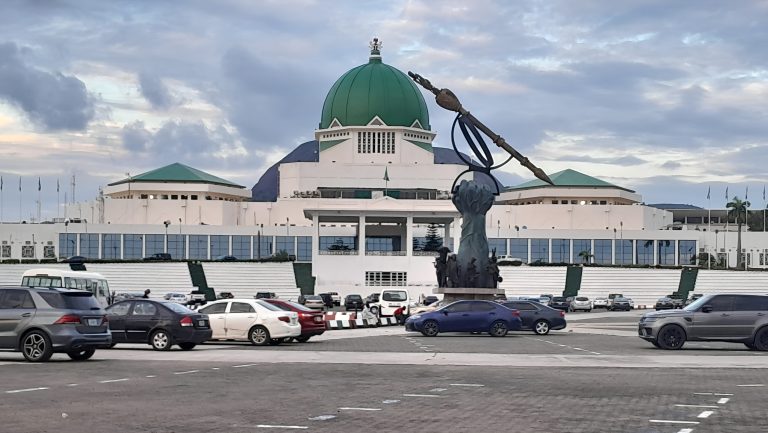
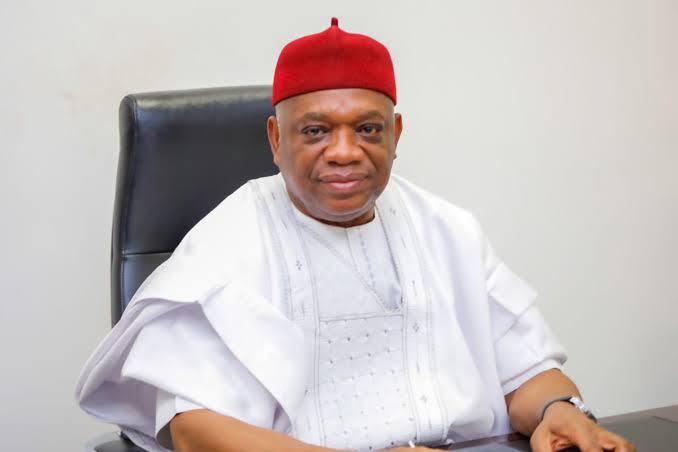
Speaking to reporters in Abuja, Abaribe, together with Senators Victor Umeh, Abdul Ningi, and ten others, declared their unwavering support for the bill’s proposed change to Clause 60, Subsection 3, which aims to require the transmission of election results electronically.
They promised to keep an eye on the clause when it passed the legislature and was sent to the president for approval.
The MPs emphasized that the matter had not yet been resolved, claiming that over two-thirds of the Senate was in favor of real-time electronic transmission of election results.
“Real-time Transmission Was Accepted by the Senate”
Abaribe explained that the Senate did not reject the electronic transfer of results, despite what the media had reported.
To be clear, the Senate did not, I repeat, approve the transfer of results that was part of the 2022 Act yesterday (Wednesday). Vanguard described the Senate President as saying, “What we passed is electronic transmission of results, which he himself stated while doing a clarification, sitting on his chair.”
In order to dispel misunderstandings and reassure Nigerians of their dedication to election openness, the MPs organized the briefing, Abaribe continued.
“I can guarantee you that the Senate’s Electoral Committee, the Senate’s Ad Hoc Committee, and the Executive Session all agreed on Section 60(3), which is electronic transmission of votes or electronic transmission of results,” he stated.
The senators emphasized that the legislative process was still ongoing by pointing out that the Senate had not yet reconvened to approve the votes and proceedings of the plenary session.
Concerning Section 60(3) of the bill, which requires the Independent National Electoral Commission to electronically transmit polling unit results in real time, they also voiced concern about the response that followed Wednesday’s proceedings.
“The Presiding Officer shall electronically transmit the results from each polling unit to the IREV portal in real time,” the provision reads. “This transmission shall be made after the Presiding Officer has signed and stamped the prescribed Form EC8A and/or the candidates or polling agents present at the polling unit have countersigned it.”
Akpabio’s Declaration Caused Disputation
Senate President Godswill Akpabio declared during the bill’s clause-by-clause review on Wednesday that Clause 60 was approved “as amended,” rather than as the committee had initially suggested. This announcement led to numerous rumors that the real-time transmission clause had been rejected.
The opposition senators, however, insisted that discussions were still underway and that the interpretation was incorrect.
Joint Committees Concurred on Electronic Transmission
“A joint committee of the electoral committees from both chambers had worked extensively on the amendment bill and came to an agreement on electronic transmission,” Abaribe added.
Everyone concluded that electronic delivery of results was the best option after the joint committees held multiple retreats. And the reports from the House and the Senate both reflected that,” he stated.
“And when we entered a secret session, we took into consideration the Senate ad hoc committee’s report in order to clean it up. And we will pass it without any rancour when we return to the plenary to do so.
Political figures and civil society organizations reportedly reacted to the incident.
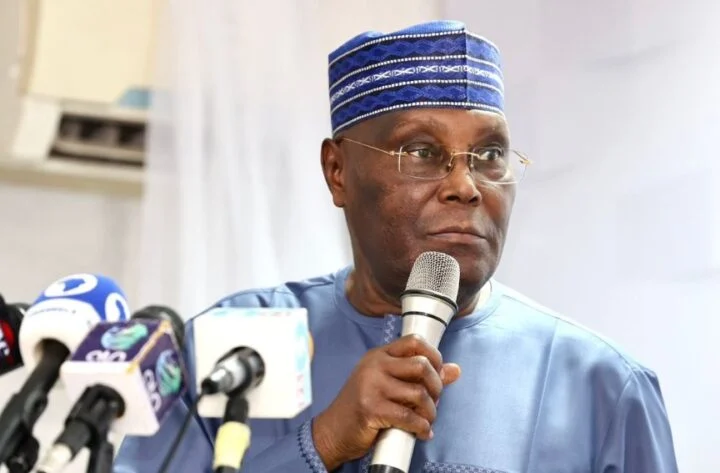
The Labour Party’s 2023 presidential candidate, Peter Obi, former vice president Atiku Abubakar, opposition parties, and civil society organizations denounced the reported denial of required electronic transmission, cautioning that it could damage elections credibility.
But before the final draft of the law is forwarded to the president for approval, the senators assured Nigerians that they will make sure the clause is safeguarded.
Senate Blasted by Opposition
The Senate’s rejection of the requirement that polling places transmit election results electronically in real time as part of the current Electoral Act revision has drawn criticism from major opposition parties, who fear that the action could damage the legitimacy of the general elections in 2027.
The judgment may erode public trust in Nigeria’s democratic process, the parties warned.
The opposition said in a joint statement released by Ini Ememobong, National Publicity Secretary of the Peoples Democratic Party; Mallam Bolaji Abdullahi, National Publicity Secretary of the African Democratic Congress; and Bamofin Johnson, National Publicity Secretary of the New Nigeria Peoples Party, that the development caused grave national concern and forced them to speak to Nigerians as a group.
A retrogressive act that has the potential to undermine democracy
“As representatives of the main opposition political parties, we have been forced to work together to confront this issue, which has the potential to undermine our hard-won democracy, due to the grave consequences of this retrogressive decision by the Senate.
“We don’t understand why a party that is currently using technology to conduct a nationwide e-registration of its members is reluctant to use technology to transmit results,” the parties stated.
They said that the All Progressives Congress, which is in power and controls both chambers of the National Assembly, was attempting to maintain electoral system flaws that could be used against candidates.
“They are aware that Nigerians are tired of them. When the polls come around, they know they will be rejected. Thus, they now face a challenge from a free and fair election. For this reason, they must maintain and safeguard any weaknesses that might allow them to manipulate the voting process to their benefit.
But we would have expected the senators, irrespective of their party affiliation, to put democracy’s interests ahead of their own, for which the legislature continues to be its most significant symbol. However, they failed the people they are meant to represent as usual, they continued.
Using earlier court decisions as support, the parties pointed out that the Electoral Act of 2022 did not specifically require the electronic transmission of results.
They characterized the current amendment process as a chance to close the disparity and improve election openness.
The Senate has thrown Nigeria back to the drawing board with its denial. The conference committee now has the final say, and we implore its members to support the Nigerian people by endorsing the House of Representatives’ stance on the requirement that election results be transmitted electronically in real time,” they said.
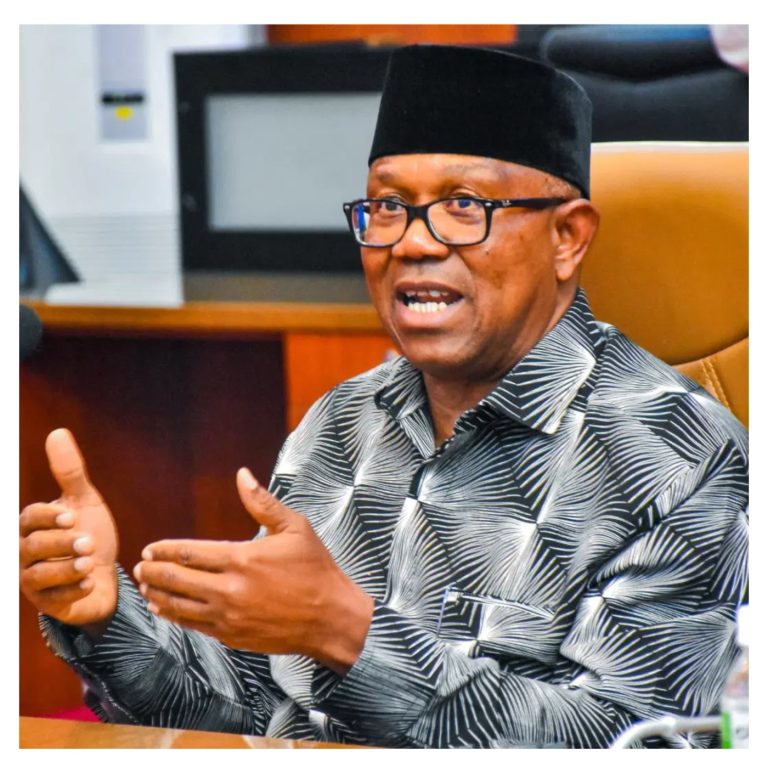
Peter Obi, the Labour Party’s 2023 presidential candidate, denounced the move as well, seeing it as an attempt to rig the election in advance of the 2027 polls.
Obi said that his response to what he described as “the outrageous and shameful news surrounding our electoral system” was postponed due to the deaths of over 150 people in Kwara on Wednesday.
The former governor of Anambra State declared that the Senate’s flagrant denial of the requirement that election results be transmitted electronically is an unacceptable act of electoral manipulation in front of 2027.
“This purposeful attack on Nigeria’s democracy is nothing less than the failure to pass a clear safeguard. They are undermining the entire basis of legitimate elections by opposing these crucial transparency requirements. One must wonder if the government’s purpose is to institutionalize disorder or to maintain justice and order. Is its goal to fulfill the evil aspirations of a few or to serve the general public?
“The failure to fully implement electronic transmission of results was linked to the controversies and disputes that trailed previous elections, especially the general election in 2023,” Obi continued.
The failure to completely adopt electronic transmission was a direct cause of the chaos, disagreements, and manipulations that beset previous elections, particularly the general election in 2023. Nigerians were given pretexts about a fictitious “glitch” that never occurred. Nigeria, the purported behemoth of Africa, blatantly falls behind and pushes the continent backward as many African countries embrace electronic transmission to strengthen democracy.
“The true problem is us, the leaders and elite, and we are spending time organizing conferences and writing papers about Nigeria’s issues. The nation is being pulled backwards and toward a primitive condition of governance by our willful reluctance to reform.
“We are creating chaos with the intention of sustaining confusion in accordance with the desires of a small clique by refusing mandated electronic transmission, a crucial protection for voting integrity. Doesn’t the time have come for us to take our nation’s and our children’s futures seriously?
Soyinka Faults Nigerian Leaders for Adopting Colonial Mindsets
Following Nigeria’s independence in 1960, government officials were keen to take on the roles of the colonizers, according to Nobel laureate Prof. Wole Soyinka.
Speaking as a guest at “A Conversation with the Nobel Laureate” at the Yoruba Tennis Club in Onikan, Lagos, as part of events commemorating the socio-cultural club’s 100th anniversary, Soyinka bemoaned the fact that, despite the happiness that followed Nigeria’s independence in 1960, the new government officials turned into yet another group of colonial overlords.
Soyinka emphasized the historical viewpoint of the play, pointing out in particular that it was inspired by events in the independence era, when asked about other of his plays, such as “A Dance of the Forests,” and what it would be like to revisit the themes behind the work.
The 91-year-old Nobel winner told the assembly, which included members of the Yoruba Tennis Club, secondary school students, and invited visitors, that the play would be more “cruel” if he had to rewrite it.
We were thrilled about the possibility of independence when we were studying overseas. We eagerly anticipated it and were eager to leave our studies and head home. We saw ourselves as the Renaissance, the individuals who would demonstrate to the colonists that we were aware of their secret and that we could surpass what they attempted to teach us. We were therefore thrilled.
However, we were also concerned about the liberation representatives’ words, demeanor, behavior during the apparent period of independence, and interactions with the general public. We came to the conclusion that, in the majority of cases, they were all too willing to take on the role of our colonizers.
“A Dance of the Forests” was about the idea that “the white man goes, the black man returns,” he explained.
“It was saying let’s not glamorize our past, lest we fall into the pitfall which the departing colonists had dug for us,” he continued. We were happy, thrilled, and eager to return home, but we shouldn’t be tempted to put ourselves in the position of our estranged conquerors.
“We warned you that if I had to redo that now, I would emphasize that part even more. However, you slipped into the hole despite seeing it. Therefore, compared to the original version, it would be significantly more severe.
In addition to denouncing the US intervention in Venezuela and Russia’s actions in Ukraine, Soyinka, an outspoken opponent of US President Donald Trump, cautioned the world audience against allowing tyranny to continue to grow in the name of rescue operations by international powers.
“What we are currently facing is nothing new. “You have the ability to deplete other people’s petroleum resources, which is a revelation of mammoth, not just theft, but robbery of other countries or coups by external powers, at the bottom of which is oil,” he stated.
He clarified that this did not imply that he felt sympathy for Nicolas Maduro, the US-captured leader of Venezuela, or “other enemies of humanity, who get their common match sooner or later, whether by what we call positive forces or opportunistic forces.”
However, he emphasized that eventually the people will be able to make their own decisions. He advised people, particularly young people, to use democratized technology, communications, and other accessible tools to organize themselves.