Home Blog Page 43

Anambra Tragedy: Tanker Blast Claims Two Lives

0

In Ihiala Local Government Area of Anambra, a tanker exploded on the Ihiala-Onitsha Road on Sunday, killing two people in front of the Federal Road Safety Corps (FRSC) headquarters.

Journalists in Awka were given confirmation of the occurrence by Mrs. Bridget Asekhauno, Sector Commander (FRSC) in Anambra.

Asekhauno stated that a motorcycle without a registration number and a commercial tanker carrying flammable material were involved in the event.

Witnesses reported that the speeding tanker driver lost control and collided with a roadside barricade before an explosion occurred, affecting a motorcycle that was following.

The motorbike rider was hurt and saved, but the tanker driver and his conductor were killed in the explosion.

Three male adults were engaged in the collision; two of them were reported dead, and one of the injured was sent to Our Lady of Lourdes Hospital in Ihiala for medical attention.

According to the sector commander, FRSC rescue workers and fire department personnel were on the scene quickly and put out the fire.

She expressed her condolences to the relatives of the dead and advised drivers to drive carefully and attentively in order to avoid preventable collisions.

Akpabio Summons Emergency Sitting on Electoral Act, Sparks Backlash from NLC, Others

0

Chuks Okocha, Sunday Aborisade, Onyebuchi Ezigbo, and Folalumi Alaran in Abuja

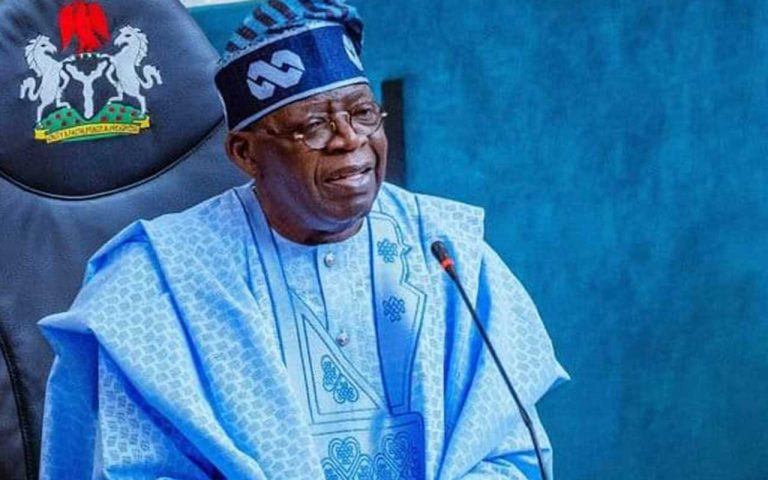
In order to expedite legislative action on the contentious Electoral Act Amendments Bill, Senate President Godswill Akpabio has called an emergency session for tomorrow, Tuesday, February 10, in response to the outcry that followed the recent change to the Electoral Act.

The Senate’s purported rejection of electronic results transmission sparked a backlash from well-known Nigerians. Ambassador Nkoyo Toyo, Comrade Shehu Sanni, Comrade Ene Obi, Professor Pat Utomi, Comrade Ayuba Wabba, Comrade Usman Bugaje, Comrade Bilikisu Magoro, former Senate President David Mark, Mr. Femi Falana, SAN, and Dr. Oby Ezekwesili were among them.

The Nigeria Labour Congress (NLC) also urged the Senate to make sure that the Independent National Electoral Commission (INEC) was given a clear mandate in the updated Electoral Act to electronically transmit and compile polling station results in real-time.

In a statement released yesterday, Senate Clerk Emmanuel Odo instructed all senators to meet again for the emergency session, which is set to start at noon.

It was discovered that the emergency plenary was intended to approve the votes and proceedings of the Senate’s most recent sitting, even though the official notice did not specify the reason for the abrupt recall.

To enable the conference committee on Electoral Act modifications to start working, it is a necessary procedural step.

The development was confirmed by a senior senator who served as a principle officer, who stated that the presiding officer had previously sent a circular to parliamentarians.

“We have been formally asked to reconvene on Tuesday to approve the Votes and Proceedings of our last legislative sitting,” the senator, who spoke on condition of anonymity, stated.

“The conference committee must do this in order to start working on the Electoral Act Amendments Bill.”

Given the growing political tension surrounding restrictions on the electronic transmission of election results, the senator also made a suggestion that the emergency session might start behind closed doors.

Before the day’s primary business, there will probably be an executive session. Serious tension has already been created both inside and outside the National Assembly on the issue of results transmission via electronic means,” he continued.

The abrupt recall occurred in the midst of intensive public scrutiny and growing criticism from election observers, civil society organizations, and opposition parties who said the National Assembly was trying to weaken important measures in preparation for the general election in 2027.

Lawmakers are anticipated to consult with ministries, divisions, and agencies (MDAs) regarding the execution of the 2026 budget during the two weeks that the Senate and House of Representatives are now on recess.

However, the decision to break up the retreat highlights how urgently the leadership of the upper chamber wants to settle any unresolved legislative issues regarding the Electoral Act, the law that will determine the integrity, credibility, and conduct of Nigeria’s future elections.

According to political analysts, Tuesday’s emergency session could be crucial because it could decide the ultimate course of electoral reforms and establish the tone for the upcoming round of talks between the National Assembly, the executive branch, and Nigerian voters, particularly regarding the electronic transmission of election results.

Other Kickers: Mark, Bugaje, Utomi, Falana, Wabba, Ezekwesili, Magori, and Sanni

Ahead of the general election in 2027, prominent Nigerians criticized the Senate yesterday for allegedly rejecting the electronic transmission of results.

Senator David Mark, the National Chairman of the African Democratic Congress (ADC) and a former Senate President, said that the ADC had a clear and uncompromising stance on the issue.

Mark oversaw the public presentation of “The Burden of Legislators in Nigeria,” which took place at the NAF Conference Centre in Abuja.

In his speech, Akpabio emphasized that the Senate has not yet finished working on the Electoral Act modification and encouraged ADC and other opponents of the amendment process to not rush the process.

He claimed that demands for the electronic transmission of election results in real time did not account for Nigeria’s infrastructure issues, pointing out that many rural towns lacked internet connectivity and energy.

He says that permitting such a clause in the legislation may have a detrimental impact on election results.

Mark replied that the senate president was unable to speak for the ADC and that the party’s demand, as well as that of many Nigerians, is simple.

Mark emphasized that ADC only requested that the National Assembly approve the amendment with provisions for real-time results transmission and let the Independent National Electoral Commission (INEC) assess its viability. He said that there was no need for long explanations or justifications.

As neither INEC nor Nigerians are protesting about real-time transmission, Mark stated, “The National Assembly should pass the law and let INEC complain if there is a problem.” Instead, he added, the commission and Nigerians in general were calling for increased election legitimacy and transparency.

He insisted that election laws should be created to preserve the integrity of the vote, not to preemptively restrict it, and claimed that bringing up infrastructure justifications during the legislative stage simply served to erode public trust in the reform process.

The National Assembly’s decision to remove and reject the mandatory electronic transmission of election results in the Electoral Act Amendment Bill 2026 was also rejected by the Movement for Credible Elections (MCE), a recently formed coalition of prominent political activists in Nigeria.

Comrade Ayuba Wabba, Dr. Usman Bugaje, Barrister Femi Falana, SAN, Dr. Oby Ezekwesili, Professor Pat Utomi, Dr. Bilikisu Magoro, Amb Nkoyo Toyo, Comrade Shehu Sanni, Comrade Ene Obi, and Olawale Okunniyi were among the distinguished activists who called the meeting. They decided not to be bound by any political party or politician. They claimed that MCE belonged to Nigerian citizens whose votes had been stolen and manipulated since 1999.

“By this medium, we are calling on our teaming partners and allies not to accept any attempt to roll back the planned Occupy NASS mass protest but to mobilize and proceed peacefully on a mass civic action to defend the popular yearnings of Nigerians in resisting any attempt to return Nigeria to the dark days of manual manipulation and backroom results arising from the distortions occasioned by glitches and interferences with the will of the electorate,” the group said.

They claimed that the parliamentarians’ behavior constituted a clear attack by the National Assembly on Nigerians’ freedom to select their own leaders.

The group claimed that the National Assembly had chosen opacity over transparency, manipulation over credibility, and elite conspiracy over the people’s sovereign choice by rejecting the required broadcast of election results from the polling places and other crucial provisions.

“This is not lawmaking—it is deliberate democratic sabotage against the aspiration of the people of our country as mandatory electronic transmission of results is not controversial,” the group claimed in a statement signed by Comrade James Ezema.

It serves as a bare minimum of protection against ballot rewriting, post-election fraud, and result tampering. Any legislature that opposes it is blatantly supporting a system that depends on rigged elections, stolen mandates, and electoral corruption.

MCE stated it wanted to be clear that the only legitimate reason to oppose obligatory broadcasting was to be afraid of the actual votes and the electorate’s mandate.

“The current situation, wherein results are susceptible to manipulation between polling stations and collation centers, will persist and be abused in 2027,” the organization declared.Apathy will increase if we are unable to provide Nigerians with the transparency they want, which would erode public trust in elections as voters will turn to other means of casting their ballots.The lack of transparent election results has not only rewarded electoral fraud and impunity, but it has also made it possible for the courts to become an executive branch appendage and a weapon of mandate buying by the highest bidders, rather than functioning independently to uphold the rule of law.

It stated, “While elite state capture has become the norm in Nigeria, where oppression and impunity are rampant, the lawmakers’ anti-democratic actions demonstrate a desperate attempt to gain access to the corrupt systems that have been in place since 1999.”The Nigerian political elite’s fear of technical transparency, which reveals their dubious and corrupt practices during elections, is confirmed by this ruling.

The group demanded that the Electoral Act Amendment Bill 2026 immediately reinstate and pass the requirement for results to be transmitted electronically.

“Publicly account for those members who opposed this clause, so they do not use the cover of the senate or house of representatives to avoid public scrutiny and explanation of their positions to Nigerians,” the statement read.In the 26 years since Nigeria became a democratic state, make sure they are held accountable for the use of legislative powers as a system that has benefited them.

The ADC Diaspora Roundtable also charged yesterday that the Senate was disregarding the wishes of Nigerians by not requiring the electronic transmission of election results.

The diaspora-based group criticized the red chamber’s decision to remove the word “real-time” from clauses pertaining to electronic results transmission in a statement released in Abuja.

Ahead of the general election in 2027, the group said that the action weakened public trust in the political process.

The ADC Diaspora Roundtable’s declaration, which Yusuf Midala signed, referred to electronic results transmission as “a basic safeguard against manipulation.”

Weakening the clause, according to the statement, runs the potential of reviving historical scars related to contentious elections, including the controversies that followed the 2023 polls.

The statement said, in part, that “Nigerian citizens’ unmistakable demand for transparency and credibility in elections is directly contradicted by the refusal to make electronic transmission mandatory.” This choice raises concerns that the lessons learned in 2023 have not yet been fully applied.

The Youth-led Electoral Reform Project (YERP-Naija) Consortium also voiced their profound dissatisfaction with the situation.

Bukola Idowu, the YERP_Naija National Coordinator and Executive Director of the Kimpact Development Initiative, spoke on behalf of the YERP-Naija Consortium in a statement, characterizing the Senate’s action as a blow to public trust in democratic integrity.

According to the group, the Senate’s decision to keep the current structure in place, which permits INEC to decide how results are transmitted administratively, undermines the clarity of the statute and reduces accountability.

The statement claims that requiring electronic transmission would have offered a transparent and binding legal protection to increase openness and restore confidence, especially among Nigeria’s youth voters who view technology as essential to reestablishing the system’s legitimacy.

Notwithstanding the loss, YERP-Naija emphasized that there was still time for reconsideration given the upcoming Senate-House of Representatives harmonization procedure.

Ahead of the general election in 2027, the consortium asked the conference committee to work out disagreements and implement reforms that matched the expectations of the populace and the needs of the youth.

NLC Issues a Mass Action Threat

The Senate was encouraged by the Nigeria Labour Congress (NLC) to make sure that the new Electoral Act gave INEC a clear mandate to electronically transmit and compile polling station results in real-time.

The path to the 2027 elections must be based on certainty rather than uncertainty, according to the NLC, which stated that the modified Act must guarantee clarity in the mandate to INEC with relation to electronic transmission of election results.

The labor movement issued a warning in a statement by NLC President Joe Ajaero that if electronic transmission is not included in real-time, there would be widespread protests before, during, and after the election or a complete boycott.

According to the statement, “NLC is extremely concerned about the ambiguity and conflicting statements coming out of the Senate about the 2022 Electoral Act amendment, especially with regard to electronic results transmission.” This ambiguity seriously jeopardizes our democracy and erodes public confidence.

We urge the Senate to make sure that its procedures are open and its conclusions are unambiguous in order to rebuild parliamentary trust.

“The amended Act must clearly require INEC to electronically transmit and compile polling station results in real-time.” Confusion must give way to certainty as the foundation for the 2027 elections.

Nigerians, according to the NLC, should have a transparent electoral process where their votes will be counted and perceived as such.

We implore the Senate to give a prompt, official, and clear explanation of its actions and conclusions,” it said.

According to public records, the current discretionary provision was kept in place, and the suggested modification to require INEC to submit results electronically in real-time was not enacted.

This has caused anxiety across the country, and further clarifications have only made matters more confusing. Such legal uncertainty mirrors previous disputes that have caused national pain and runs the risk of institutionalizing doubt at the core of our democratic integrity at a crucial juncture following the 2023 elections.

As a result, the NLC calls for prompt transparency and clarity. The Senate must make a final announcement outlining the precise provisions that were passed, elaborating on their final language and justification.

Food Convoy Attacked, Vehicles Torched by Boko Haram Near Maiduguri

0

The trucks carrying food to Maiduguri, Borno State, were stopped by suspected Boko Haram/Islamic State West African Province (ISWAP) fighters.

The rebels halted three dump trucks and two trailers transporting beans to Maiduguri, according to Daily Trust.

Between the villages of Burmari and Garin Kashim in the Guzamala Local Government Area, the incident is said to have happened on Saturday along the Monnguno–Guzamala axis.

Before escaping into surrounding bushes, the rebels allegedly lit the trailer heads on fire.

One of the drivers claimed that as the attack started, he fled into the jungle after abandoning his car.

He said the attackers were thought to be the same group that roughly five days prior had targeted trucks in the vicinity that were transporting building materials and maize.

Another witness claimed that before burning the cars on fire, the militants first deflated their tires. He further said that the drivers were able to escape safely because locals helped extinguish the fire before it spread to the trailer bodies.

Since soldiers are not positioned strategically along the axis like they are on other problematic roads in the state, drivers on the route expressed dissatisfaction over the lack of security patrols.

According to reports, a number of truck owners have pulled their cars from the route due to frequent attacks.

Remi Tinubu Comments on Christmas Bombing, Calls for Strengthened U.S.-Nigeria Ties

0

According to Nigeria’s First Lady, Remi Tinubu, the country is amenable to further military and security cooperation with the United States in the fight against terrorist organizations and bandits in the country’s north.

She reportedly said that the U.S. strikes on Christmas Day were a boon to Nigeria and that she hoped additional cooperation between the two countries would be possible.

The airstrikes targeted terrorist targets in Sokoto, and Mrs. Tinubu discussed the strikes during a visit to the United States.

Along with former U.S. President Donald Trump, who had ordered the strikes, she also went to the National Prayer Breakfast.

Nigeria is still experiencing attacks that have killed many people, but the government is addressing the problems, Mrs. Tinubu said, adding that the efforts provided respite to the country.

The United States’ intervention was a very positive advance.

“Nigeria looks forward to collaboration” with the United States on matters of security. When Tinubu visited Washington, D.C., for a week, he told Fox News Digital, “We are expecting that there will be more.”

The strikes on Christmas Day were the United States’ first direct military intervention in Nigeria.

If terrorists did not stop attacks on Christians, President Trump has previously threatened to resume bombing.

The United States would not permit extremist organizations to flourish under his leadership, he reaffirmed, calling the operations a gift to the nation.

Prioritizing Citizens: A People-Centered Approach to Policy Execution

0

Since the formal opening of the loan application platform for Nigerian students on May 24, 2024, postsecondary education in Nigeria has undergone significant change, as evidenced by an increase in admission rates and a broader interest among applicants.

The loan is intended to give impoverished students at colleges of education, universities, and polytechnics access to high-quality education.

As a result of this access, students at postsecondary institutions now have to comprehend how the system functions to create such cash for their usage and the associated responsibilities.

Even though they are aware that the facility is there to support their education, it is still crucial that they grasp how it was designed and derived in order to eliminate any doubt about how it operates.

Thankfully, Mr. Zach Adelabu Adedeji, the National Revenue Service (NRS) chairman, is aware of

By encouraging grassroots ownership of Nigeria’s new tax laws through direct public participation and education, President Bola Ahmed Tinubu’s Renewed Hope Agenda—which focuses on economic reform, budgetary restraint, and inclusive governance—has been meeting expectations in that area.

He has been invited as a guest lecturer at the Federal Polytechnic, Ayede, Oyo State’s Maiden Combined Convocation address, which presents an opportunity to further develop that story and dissect the New Tax Laws.

As the country’s future, students must comprehend that tax reforms are essential to restoring Nigeria’s revenue base and lowering reliance on borrowing, and that public trust and comprehension are crucial to their success.

Since thousands of students will be there to hear his message, Adedeji’s acceptance to teach at the Federal Polytechnic, Ayede, is precisely the kind of people-centered approach to policy implementation that is needed.

He is giving students—who will go on to become future professionals, entrepreneurs, and public servants—the knowledge they need to understand taxes as a weapon for national growth by simplifying complicated tax laws in an academic context.

Graduating students, parents, and recipients of the NELFUND students’ support program are already beginning to show their gratitude to President Bola Ahmed Tinubu for his groundbreaking initiatives that are opening up new educational opportunities for underprivileged youngsters.

The chairman would delve into the subject of “The Role of Technology in Implementing Nigeria’s New Tax Law: Challenges, Prospects, and Implications for National Development” as a lecturer at the Federal Polytechnic, Ayede’s first mixed convocation.

This involvement is very much in line with the Renewed Hope Agenda’s focus on involving the public in the reform process.

Instead of limiting the discussion of taxes to high-level policy circles, Adedeji is encouraging informed engagement at the local level.

Students who are exposed to this real-world knowledge go on to become truthful information providers in their communities, assisting in the fight against disinformation and mistrust.

The Federal Polytechnic Ayede, Permanent Site, Ogo-Oluwa LGA, Oyo State, is scheduled to have the first inaugural lecture on Wednesday, February 11th, 2026, and the first combined convocation on February 12th, 2026.

In a symbolic sense, the NRS chairman’s presence in the academic setting reduces the distance between the governed and the government. It supports the notion that tax reform is a developmental rather than a punitive measure.

Adedeji is putting the Renewed Hope Agenda into practice by emphasizing inclusivity and education, bolstering Nigeria’s financial future through willing and knowledgeable compliance.

For a successful outing, the Governing Board members, the Registrar and Board Secretary, Mr. Akin Odesola, the Rector, Dr. T.A. Abdul-Hamid, and the Management are working with the Chairman of the Governing Council, Hon. Yakubu Dati.

Zach Adedeji’s involvement has already started construction on the permanent location, allowing for the start of academic activities by creating accessibility.

The founding fathers’ goal of an institution becoming self-sustaining is just a few steps away from becoming a reality.

The Federal Polytechnic in Ayede, Oyo State, has Hon. Dati FNIPR as its Council Chairman.

Dalung Throws Support Behind ‘Occupy NASS’, Slams Senate Over Electoral Act

0

The planned demonstration by well-known activists, labor unions, and elder statesmen before the National Assembly on Monday has the support of Solomon Dalung, a former minister of youth and sports development.

According to a report, prominent figures such as human rights attorney Femi Falana (SAN), former Education Minister Oby Ezekwesili, renowned economist Prof. Pat Utomi, former Nigeria Labour Congress president Ayuba Wabba, political activist Usman Bugaje, Senator Shehu Sani, and members of the Obidient Movement are anticipated to take part in the planned protest known as “Occupy NASS.”

During an appearance on Channels Television, Dalung claimed that the planned protest was a valid reaction to the Senate’s deterioration of democratic norms and public trust.

Growing indignation over the Senate’s decision to eliminate the Electoral Act Amendment Bill 2026’s requirement for electronic transmission of election results coincided with Dalung’s endorsement.

The former minister responded by criticizing the 10th Senate’s decisions to eliminate mandatory electronic transmission of election results and its handling of the Electoral Act Amendment Bill.

The Senate’s repute is zero. Nigerians cannot therefore expect a credible or honest election as a result. He stated that the integrity of the survey determines public behavior and how people respond to what the Senate President deems to be ongoing.

The current legislature, he claimed, has failed in its fundamental democratic duty to reflect the will of Nigerians, especially on matters that are essential to the legitimacy of elections.

Beyond a reasonable doubt, the 10th Senate has demonstrated that it does not represent the Nigerian people. “The Senate is understood to represent the people in a democracy,” he said.

Emphasizing that election laws are the foundation of democratic administration and should not be taken lightly, the minister criticized parliamentarians for moving forward with changes to the election Act without extensive public input.

Dalung warned that any attempt to impose measures that might compromise the integrity of upcoming elections should be met with resistance from Nigerians, expressing a profound suspicion of the Senate’s motives.

Therefore, it was believed that the Senate, which represents the people, would include the people in this particular electoral act issue. It is a crucial and delicate aspect of our democracy. However, as is common and typical of these individuals, they simply departed alone.

“This Senate is not trustworthy. We will not permit them to complete their current plans so that, in the end, we will be left with what Prof. Mahmood (Yakubu) accomplished following the 2023 election,” he said.

With all due respect, he added, “And the Senate President’s explanation has further underlined the fact that the 10th Senate “His explanation was rather exposed to their agenda, which reinforces the agitation for the planned Occupy National Assembly,” he continued.

AGF: Being a SAN Is an Honour, Not Permission to Misbehave

0

Justice Minister and Attorney General of the Federation Lateef Fagbemi (SAN) has cautioned that the Senior Advocate of Nigeria (SAN) title is a privilege that should not be misused, emphasizing that it is not an unalienable right and that it can be revoked if holders fail to meet expectations.

At a dinner hosted by the Body of Senior Advocates of Nigeria (BOSAN) on Saturday in Lagos to celebrate the 50th anniversary of the esteemed position, Fagbemi reportedly made the comments.

Special Adviser to the President (Communication and Publicity) in the Office of the AGF and Minister of Justice Kamarudeen Ogundele released a statement on Sunday that included his remarks.

Some of us seem to view the rank as a license for misbehavior and lack of discipline, believing that once it is granted, it cannot be taken away,” Fagbemi stated. That is obviously incorrect.

“The rank is a privilege, and it can be revoked, like any other privilege, if the recipient denigrates or lives below the privilege’s standards.”

The AGF restated that the Legal Practitioners Privileges Committee (LPPC) had explicitly stated that the SAN title was revocable and may be taken away from recipients who didn’t follow the rules.

Discipline should start within the body itself, according to Fagbemi, who also serves as BOSAN’s chair, rather than depending just on outside regulatory bodies.

Discipline must be enforced within, beginning with our bodies. In reality, it is preferable for us as a Body to govern ourselves rather than entrusting the LPPC or, worse, the Legal Practitioners Disciplinary Committee (LPDC) with the full responsibility for regulating the rank,” he stated.

As he admonished Senior Advocates to maintain high ethical standards, he also warned junior attorneys not to treat SANs disrespectfully and urged them to respect the rank.

The dinner event marked the official induction of 134 new SANs into BOSAN, including 87 from the 2024 set and 57 from the 2025 set.

Five legal students from Nigerian universities were also awarded scholarships at the event.

As the special guest of honor, Fagbemi also commended Justice Kudirat Kekere-Ekun, the Chief Justice of Nigeria. He said the SAN rank and the legal profession as a whole have been strengthened by the continued cooperation between BOSAN and the LPPC.

Mixed Reactions as Kwankwaso, Yusuf Prepare for Kano 2027 Showdown

0

In an effort to survive the general elections in 2027, Governor Abba Yusuf joined a number of other state governors in losing the sole state under the leadership of the New Nigerian Peoples Party (NNPP) to the All Progressives Congress (APC) last month.

Governor Yusuf reportedly broke with Dr. Rabiu Kwankwaso and sided with Kwankwaso’s longtime rival, or what some have referred to as political enemy, Abdullahi Ganduje, causing Kano to experience the largest political defection in recent memory.

The governor put survival over structure, power over bloodline, and refuge over devotion in the eyes of NNPP followers.

As a result of a similar decision made by Ganduje during his tenure as governor, Kwankwaso has also been accused of being bossy.

Yusuf stated in his letter of resignation from the party that put him in power that he could no longer remain in the NNPP due to ongoing internal strife, unresolved leadership disputes at the state and national levels, protracted legal proceedings involving party leadership, member disenfranchisement and deep divisions, and a belief that the party’s divisions had become irreconcilable. He also added that he believed that staying in the party would no longer be in Kano State’s best interests.

Former governor and defense minister Kwankwaso, who led the NNPP and Kwankwasiyya group, was unable to contain his emotions in the face of Yusuf’s defection.

Monday, January 26, 2026, the day Abba Yusuf, also called Abba Gida-Gida, formally joined the APC, should be remembered globally as a day of “betrayal,” according to the former governor.

“As the leader of this movement, I declared the 23rd of January as Betrayal Day today,” the NNPP’s 2023 presidential candidate stated in a statement following the governor’s departure.

“We think that day should be forever documented in history to guarantee that betrayal and breach of trust are recognized on a worldwide scale.”

By permitting Ganduje to publicly raise his hand, Kwankwaso stated in a another interview with the BBC Hausa that Abba Yusuf will lose the 2027 governorship race.

He stated, “I knew right away that Abba would lose any election when I saw Ganduje raise Abba’s hand.” Kano residents don’t back Gandujiyya. Ganduje’s candidacy lost in 2023, and he lost the 2019 election. Therefore, Abba won’t prevail in 2027.

“Ganduje has raised the hands of many governorship candidates, and they have emerged victorious,” the state’s APC responded right away, through Bala Ibrahim, its director of publicity.

His support has continuously resulted in victories for the governors of Imo, Kogi, Osun, and other places. Kwankwaso should look at the number of hands raised by Ganduje and himself, as well as the triumphs that followed. Abba can’t be an outlier.

In actuality, Ganduje’s hands are those of triumph. Victoria ascerta. In Kano, our party is well-liked and supported by the populace due to its remarkable accomplishments under the Renewed Hope Agenda. Our party and its candidates will therefore undoubtedly win in 2027.

Kwankwaso has run against the APC before and lost. It is therefore not a recent development to lose to the APC. No amount of bluster can alter the course of events, and it is evident that Kwankwaso and the opposition party in Kano State have not won.

Additionally, the governor switched to the APC for personal reasons rather than Kano’s, according to Buba Galadima, the secretary of the NNPP Board of Trustees, who spoke to Arise News.

“If Governor Yusuf had switched from the NNPP to a different party except the APC, I would have said he did a good job. In this instance, however, it is really a question of survival; he did not want us to accept the peace in Kano or the Kano people.

It is important to note that this betrayal is the third in global history, after Judas’s betrayal of Jesus and Brutus’ betrayal of the Caesars. Governor Yusuf of Kano has announced the third one that should be added to the Guinness Book of Records.

Consequently, our commander requested that we designate January 23rd as the world’s greatest betrayal day. Since I don’t give in to emotions like that, anything that could make me cry must have moved me beyond words. I’m well over 75.

NNPP National Youth Leader Amb. Auwal Musa Muhammad responded to a question about Kwankwaso’s future by saying, “The NNPP structure across the federation—at national, state, LGA, ward, and grassroots levels—remains firmly loyal to Kwankwaso.” Trust, philosophy, consistency, and shown leadership over the years serve as the foundation for this allegiance.

The NNPP cannot be undermined by political choices motivated by convenience or self-interest. It is no coincidence that Senator Rabiu Musa Kwankwaso is a politician.

His political experience encompasses decades of service, sacrifice, and people-focused governance, making him a tried-and-true, reliable, and results-driven leader. As Kano State’s governor, his accomplishments are still evident and substantiated.

“We congratulate His Excellency, Abba Kabir Yusuf, the governor of Kano State, well in his personal political decision to join the APC. It’s political.

But this ruling has no bearing whatsoever on Senator Rabiu Musa Kwankwaso, the NNPP’s organizational framework, or its political clout—in Kano State or nationally.

Defectors are not a rival of Senator Kwankwaso. He functions from a position of ideology, legacy, and a strong political foundation that has been established over time. Service, stability, and public trust are the keys to political relevance; shifting political platforms is not.

The NNPP is still functional, cohesive, disciplined, and steadfastly devoted to Senator Rabiu Musa Kwankwaso. Instead of being based on convenience, this party is based on organization, doctrine, and grassroots power.

Defection cannot change the past. No single choice has the power to destroy structure. The NNPP is resilient, cohesive, and devoted.

According to Chief Peter Ameh, a former presidential candidate and activist, Governor Yusuf will not be able to regain power following the 2027 governorship election.

“I believe that people who are assuming Kwankwaso has fallen are misinterpreting the facts. They are obstinate, and the facts are extremely plain.

“The fact that Kwankwaso put Yusuf in the running for governor in 2019.” He wasn’t the governor. They won the election, but it was manipulated. They worked hard to try to overthrow the APC’s authority and power of state, relying on the Kwankwasiyya’s structure.

“There was no surrender, but there was a retreat. In 2023, they returned. They used all of the federal government’s power, including the federal structure and all of the state’s power, to challenge Ganduje in the election and prevail.

Because no one in Nigeria knew Abba Yusuf, Kwankwaso became governor. His appointment as governor was a result of the Kwankwasiyya movement.

Additionally, Yusuf should be wary of the repercussions of his actions as long as Kwankwaso stays in the NNPP and does not join the APC, as Kwankwaso is the one driving the discourse.

As a result, I am certain that Abba Yusuf will be disciplined in 2027 because Kano residents are politically opposed to what is happening in other regions of the nation, and I am furious about this.

“The nature of our election has evolved. People no longer stuff ballot boxes, rig elections, rewrite outcomes without a vote, or steal electoral mandates democratically.

With or without Kwankwaso, the Kano State Government has insisted that Abba Yusuf will easily win the general election in 2027.

Insisting that Yusuf’s chances of winning reelection depend on his performance and the support of the public, the administration denied allegations that he cannot win a second term without the help of political godfathers.

In a statement, Ibrahim Waiya, the Commissioner for Information and Internal Affairs, responded to statements ascribed to Galadima by saying that supporters of the governor should close their eyes because victory is certain.

Kano functions according to its own historical cadence, political awareness, and civic memory.

In the end, he observed, “the electorate holds the power in the state, and their loyalty has always been contingent on performance, character, trust, and credibility.”

However, the NNPP warned the Governor of approaching disaster and reminded him that “this is not the first time such a betrayal has occurred in the political history of Kano” through Ladipo Johnson, its national publicity secretary.

Around 120 out of 126 members of the Kano State House of Assembly, the majority of Kano representatives in the National Assembly, and almost all local government chairmen and council members joined Alhaji Abubakar Rimi when he defected from the People’s Redemption Party (PRP) to the Nigerian People’s Party (NPP) in the early 1980s.

However, the people gave a clear and decisive vote: Mallam Aliyu Sabo Bakin Zuwo of the PRP defeated Rimi in the 1983 gubernatorial election, placing him in second place. Even more telling is the fact that only one of the 120 state assembly members who defected with Rimi was re-elected; this should serve as a harsh reminder to any politician who is considering such a course.

People who sacrifice loyalty for convenience and honor for dishonesty are rarely exempt from public condemnation, as history has often demonstrated. In the end, the masses of Kano will remain loyal to principled leadership because the truth never fades.

On Thursday, Kwankwaso and Yusuf put their popularity to the test at Kano’s Singer Market when they both made separate presentations to show support for traders following a horrific fire event.

When Kwankwaso arrived at the market first, he was greeted by a mob of supporters. A few hours later, Governor Yusuf visited and was also greeted by a crowd.

In addition to promising financial assistance and prompt government action to the impacted traders, Kwankwaso’s arrival and reception served as a reminder that the godfather’s power is still felt throughout the state.

Kenneth Okonkwo Labels Akpabio Enemy of Democracy Over Electoral Act, Demands Ouster

0

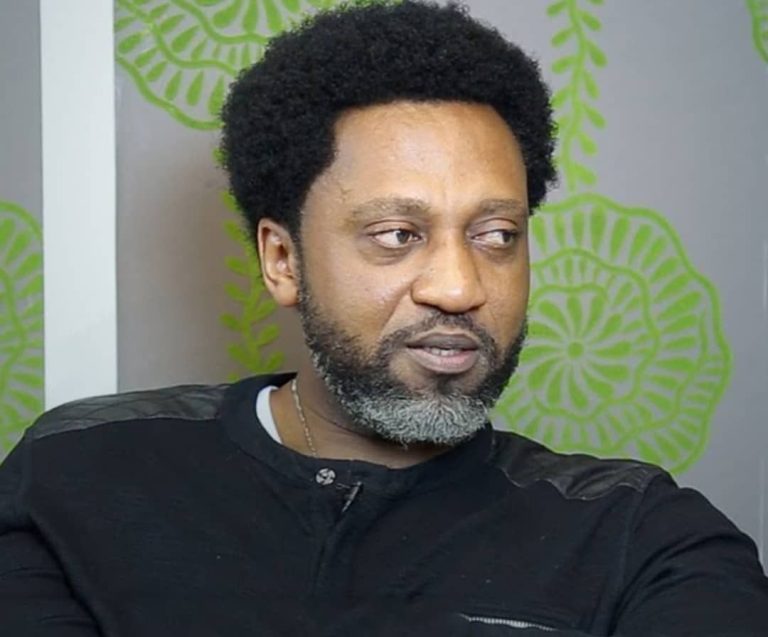
One African Democratic Congress (ADC) chieftain has called Senate President Godswill Akpabio a democratic adversary.

This was stated by Okonkwo on Sunday during an interview with Laolu Akande on “Inside Sources.”

The attorney stated that if the Senate President does not leave the position in an honorable manner, he should be dismissed.

Following the Senate’s rejection of real-time electronic transmission of election results, the Nollywood veteran turned politician was responding.

A proposed amendment to Clause 60, sub-section 3 of the Electoral Amendment Bill that aimed to mandate the electronic transmission of election results was reportedly rejected by the Senate on Wednesday.

Okonkwo responded by saying, “Let me tell you about the stunning and noteworthy statement made by Supreme Court Justice Abba Aji. We cannot reverse the passage of time, he claimed, and modernism and technology astonish us.

“To oppose the use of technology and electronic transmission and transfer of election results in this high-tech era and period is to be an enemy of democracy and to adhere to the vicious cycle of election rigging, manipulation, and falsification,” he stated.

Why would the legislature hesitate on a matter when the Supreme Court has said that it promotes electoral manipulation and tampering and renders you an adversary of democracy?

Senator Godswill Akpabio has turned into an enemy of democracy and is continuing the cycle of election tampering, manipulation, falsification, and deception by attempting to uphold the same clause that the Supreme Court has declared to be an enemy of democracy if it is violated.

“If he doesn’t resign, that man should be removed because he is an enemy of democracy.”

Inside the Senate’s Storm Over Electoral Amendment and Real-Time Voting

0

Due to the controversy surrounding the electronic transmission of election results, the Nigerian Senate is taking action to quell growing political tension and public cynicism around the Electoral Amendment Bill. An emergency meeting is planned for Tuesday.

The main question is whether the Senate changed rules pertaining to the real-time electronic transmission of results, weakening a crucial transparency safeguard, or if lawmakers are being misled about what Senate President Godswill Akpabio called “deliberate misrepresentation of proceedings in the Red Chamber of the National Assembly.”

Akpabio stressed that the Senate never opposed the electronic transmission of election results during any phase of proceedings, despite growing criticism.

The Senate President stated, “The Senate never opposed the electronic transmission of election results.” “We looked at how to handle real-time transmission in the context of Nigeria’s uneven network coverage, especially in rural and difficult-to-reach communities.”

It was anticipated that the Electoral Amendment Bill, which was intended to improve the 2022 Electoral Act, would pass with reasonably ease. Instead, it has sparked a national discussion about trust, intent, and the future of Nigeria’s electoral openness. Allegations that parliamentarians were reversing hard-won election changes quickly arose as reports circulated that the Senate had eliminated the bill’s requirement for real-time electronic transmission. Opposition parties accused the Senate of reopening loopholes for manipulating results, while civil society organizations (CSOs) cautioned of a risky retreat.

The Senate leadership was compelled to act due to the swiftness and severity of the backlash, and as a result, an emergency meeting was scheduled for next Tuesday. Akpabio believes that narrative distortion is the problem.

He insisted that electronic transmission is still a fundamental component of the modified statute, saying, “What was discussed was how to avoid creating legal problems where network coverage is unavailable.”

Even though opposition senators have frequently voiced their disapproval of the Senate leadership, this time they mostly agreed with Akpabio’s explanation, albeit with a more nuanced focus. Opposition members, led by Senator Abba Moro, Senate Minority Leader, stated that the Senate had agreed on real-time electronic transmission of results, but they advised against interpreting it in strict legal terms that may render elections automatically void in the event of a network outage.

An opposition lawmaker who was familiar with the discussion stated, “Real-time transmission was agreed upon, but the worry was that the law should not become a trap where elections are annulled simply because of technical limitations beyond the control of voters or the Independent National Electoral Commission (INEC).”

Legislators wanted to increase the use of technology in elections without creating a scenario where voter choice is overshadowed by infrastructure failure, according to Moro. Although it hasn’t completely reassured a cynical public, this unusual meeting between the Senate President and opposition lawmakers highlights the complexity of the situation.

Lawmakers defend the Senate’s stance, saying it strikes a balance between embracing technology and preventing procedural challenges to elections. A strict legislative requirement for real-time broadcasting, without consideration for extraordinary circumstances, might exacerbate post-election litigation, they warn, citing Nigeria’s varied topography, ongoing infrastructural deficiencies, and security issues.

In prior election cycles, judges have been requested to declare results void on the grounds of purported procedural errors rather than proof of election tampering. Senators say they’re committed to preventing a situation in which voter intent is overruled by a technical glitch. Akpabio has stated time and time again that the Senate is still completely dedicated to holding legitimate elections and using technology to increase transparency, but that it would not pass laws that give network providers control over election results instead of voters.

Public mistrust has not decreased in spite of these guarantees. Real-time electronic transmission has transcended from a technological feature to a symbol of electoral integrity for many Nigerians. Long considered the most vulnerable phase of the voting process, it serves as a barrier against meddling between polling places and collation centers.

Samson Itodo, the Executive Director of Yiaga Africa and an election observer, has cautioned that vague electoral laws tend to exacerbate post-election conflicts rather than settle them. He points out that when laws are imprecise, interpretation becomes politicized and public trust starts to decline.

According to Prof. Jibrin Ibrahim, a political scientist and election observer, time itself has becoming political in Nigeria. He pointed out that any delay, regardless of the reason, creates mistrust after the results leave the polling station.

Senate explanations, no matter how thorough, have had difficulty regaining the public’s faith because of this ingrained skepticism.

Clarifying misunderstandings and laying the foundation for harmonization with the House of Representatives are the official goals of the emergency meeting.

Lawmakers unofficially admit it’s also a damage-control effort. Failure to settle the dispute might make harmonization more difficult, lead to fresh pressure from civil society, or even cast doubt on the president’s decision to sign the measure.

Sebastine Hon, a Nigerian constitutional lawyer and Senior Advocate, cautioned that the dispute has transcended legislative drafting and now involves institutional legitimacy. He asserts that Nigerians are more interested in whether electoral reforms are being discreetly negotiated or reinforced than they are in technical explanations.

The impression of weakened electoral safeguards carries significant political consequences for a Senate already beset by public mistrust regarding elite consensus politics.

Similar objections regarding electronic transmission almost caused the 2022 Electoral Act to stall during its approval, and the current dispute is reminiscent of those battles. Legislators then, as now, pointed to network issues. Clearer pledges were pushed then, as they are now, by public pressure. The political climate has altered. Legislative activities are being scrutinized in real time, and technical amendments are rarely left technical for long due to increased opposition monitoring, changing coalitions, and a more technologically savvy voter.

Dr. Tunji Olaopa, a public policy analyst, said that Nigerians are now questioning every provision for possible flaws because they have learnt from the past and believe that election reform is no longer an elite discussion.

The Independent National Electoral Commission is caught up in the debate. INEC has made significant investments in electronic transmission infrastructure and has stated time and time again that it is prepared to use technology to improve transparency. However, it has also issued warnings about operating difficulties in isolated, unsecure, or inadequately linked locations.

The commission is under tremendous pressure to provide speed, transparency, and uniformity across wildly disparate terrains because of a regulation that acknowledges network constraints while affirming real-time transmission.

Legal scholars warn that courts may be left to interpret what “real time” actually means if the final, harmonised version of the bill is not clear, which could turn technical discussions into legal battlegrounds.

Beyond the phrasing of a single sentence, the dispute raises a larger question: to what extent is Nigeria’s political elite prepared to cede their discretion to open, technologically advanced election processes? Any ambiguity, in the opinion of detractors, undermines deterrence. Rigid drafting puts legislators at danger of injustice due to technical failure. Voters have a more straightforward fear: once a loophole is established, it is rarely used.

The Senate’s subsequent actions will indicate if electoral reform is still a steadfast democratic commitment or a compromise that can be worked out as it gets ready for Tuesday’s extraordinary session and eventual harmonization with the House of Representatives. Clarity is a must in a nation where elections are frequently decided in courtrooms as well as voting places. It’s the money of confidence.