Home Blog Page 362

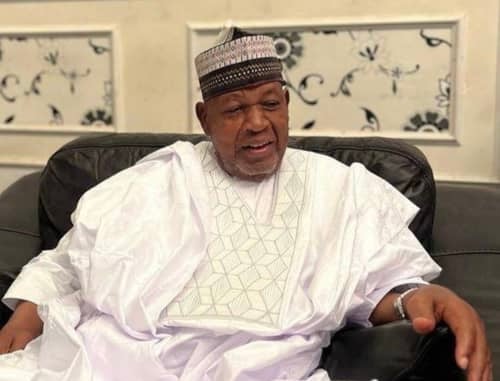
Kano Politician Senator Aminu Inuwa Passes Away at 79

0

Aminu Inuwa, a well-liked Kano politician during the disastrous Third Republic, passed away on Friday at the age of 79.

During the failed Third Republic, Aminu Inuwa gained notoriety by running for governor on the Social Democratic Party’s (SDP) ticket.

Despite losing the governorship ticket to Magaji Abdullahi, he ran for and was elected senator for Kano Central.

Aminu Inuwa was born on December 15, 1945, and attended Gidan Makama Primary School before going on to the esteemed Rumfa College in Kano and Barewa College in Zaria.

Read Also:FAAC: Fubara challenges court order halting Rivers state allocations

After graduating from Ahmadu Bello University in Zaria with a degree, he continued his studies at the esteemed Johns Hopkins University in Washington, DC, where he earned an MBA in Public Administration, demonstrating his insatiable curiosity.
Before his political exploits, Aminu Inuwa was a respected public servant and businessman. He served as the Chief of Protocol to the Military Administrator of Kano State Col Sani Bello between 1975 and 1978.

He later became the Managing Director of Fiat Nigeria and Nigerian Telecommunications, NITEL, where his ingenuity earned him accolades for revitalising these critical institutions.

He also served on the National Cereals Research Institute’s (NCRI) Bida Governing Council, where he was instrumental in directing policies meant to advance agricultural innovation and research in Nigeria.

The deceased politician also broadened his business and administrative horizons by joining Sure-P as a director and serving as the CEO of Tiga Farms and Kandama Construction.

Family, friends, and fans gathered to pray for his soul’s rest as he was laid to rest at Kano’s Dandolo Cemetery.

Aminu Inuwa’s spouses, kids, and grandkids survive him.

Senate’s Move to Oust CCT Chairman Faces Constitutional Hurdle — Report

0

The Senate’s attempt to remove the CCT Chairman was judged to be a basic mistake that stemmed from a faulty interpretation of the constitution. The Senate’s reliance on Section 157 of the Constitution, which relates to the Code of Conduct Bureau (CCB) rather than the Code of Conduct Tribunal (CCT), is at the core of the problem.

According to a thorough fact-check by PRNigeria, the misunderstanding has sparked questions about the Senate’s understanding of the functional and legal differences between the two chambers. In addition, the Senate’s activities have come under fire for compromising constitutional integrity and distorting the functions of appointees.

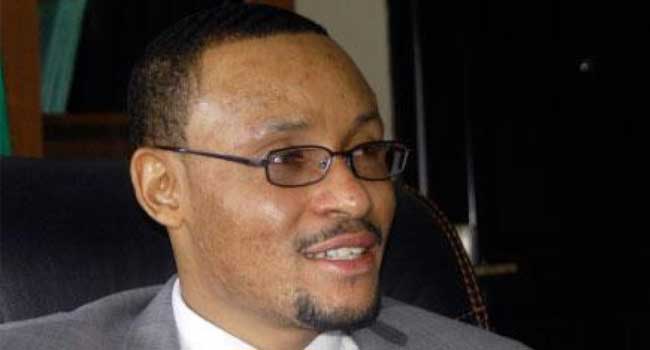
The Nigerian Senate, led by Senator Godswill Akpabio, recently passed a resolution to remove the Chairman of the Code of Conduct Tribunal, CCT, Danladi Umar, claiming reliance on Section 157(1) of the 1999 Constitution (as amended). The motion, titled “Invocation of the Provision of Section 157(1) for the Removal of the Chairman of the Code of Conduct Tribunal,” was sponsored by Senate Leader Senator Bamidele Opeyemi (APC-Ekiti).

In addition to pointing out that President Bola Tinubu had sent Mr. Abdullahi Usman Bello’s name to the Senate for confirmation as the new CCT Chairman, Senator Opeyemi accused Mr. Umar of a number of corruption and misbehavior charges. Bello’s appointment was confirmed by the Senate on July 4, 2024, ostensibly requiring Umar’s dismissal.

Chief Whip Mohammed Tahir Monguno revealed that the resolution received support from 72 senators at plenary and 10 more during committee sessions, exceeding the two-thirds majority needed for such acts in the Senate’s 109 members.

Constitutional Misunderstanding

But a closer look at the Constitution shows that the Senate’s interpretation and actions have serious faults. Only certain executive agencies, such as the Federal Civil Service Commission, Independent National Electoral Commission, and Code of Conduct Bureau (CCB), are covered by Section 157(1) of the Constitution. The Code of Conduct Tribunal (CCT), a court, is expressly exempt from it.

The Fifth Schedule to the Constitution’s Paragraph 17(3), which reads as follows: “A person holding the office of Chairman or member of the Code of Conduct Tribunal shall not be removed from his office or appointment by the President except upon an address supported by a two-thirds majority of each House of the National Assembly.” This clause instead governs the removal of the CCT Chairman.
PRNigeria reports that this provision requires a two-thirds majority from both the Senate and the House of Representatives, clearly distinguishing the CCT’s governance from that of the CCB.

Appointment Confusion
The Senate also made a mistake by recommending that Mr. Abdullahi Usman Bello take Mr. Danladi Umar’s place as CCT Chairman, according to PRNigeria Factcheck. Bello’s credentials as a forensic accountant led to his appointment as Chairman of the CCB rather than the CCT. Bello does not meet the Constitution’s requirement that the CCT Chairman be eligible to serve as a judge of a superior court of record.

Claims of Corruption and Their Resolution

Similarly, in letters dated March 5, 2015, and April 20, 2016, the Economic and Financial Crimes Commission (EFCC) exonerated Mr. Umar of bribery charges, despite assertions of unresolved corruption allegations. Former EFCC chairmen Ibrahim Lamorde and Ibrahim Magu oversaw the issuance of the approvals.
In 2018, the Attorney-General of the Federation further criticized the EFCC for attempting to revive charges against Mr. Umar without justification.

Senate Investigation Misstep

The 9th Senate’s investigation into Mr. Umar stemmed from an alleged assault at Banex Plaza, not corruption allegations. According to Senator Patrick Ayo Akinyelure, the then Chairman of the Senate Committee on Ethics, Privileges, and Public Petitions, the investigation involved a complaint filed by a security guard, Clement Sargwak.

Read Also: FAAC: Fubara challenges court order halting Rivers state allocations

Legal Expert Reactions

Prominent legal practitioners have criticized the Senate’s actions. Prof. Yemi Akinseye George, SAN, and Dr. Wahab Shittu, SAN, called the resolution unconstitutional, emphasizing that the Senate lacks authority to remove a judicial officer like the CCT Chairman. They urged the Attorney-General of the Federation to address the anomaly and advise the President accordingly.

Speaking to PRNigeria, legal expert Yunus AbdulSalam, SAN, described the Senate’s actions as deeply troubling: “The misinterpretation of Section 157(2) by lawmakers reflects poorly on our constitutional democracy. This lack of diligence and scrutiny in legislative activities is alarming. The purported removal of the CCT Chairman violates the Constitution’s spirit and intent, raising serious concerns about the damage such impudence inflicts on our democratic processes.”

Findings and Conclusion

The Senate’s reliance on Section 157 of the Constitution to justify the removal of the CCT Chairman is a fundamental error. Section 157 applies to the CCB, not the CCT. Furthermore, the Senate failed to recognize the legal and functional distinctions between the two bodies and misrepresented the roles of appointees.

PRNigeria concludes that the Senate’s actions, led by Senate Leader Bamidele Opeyemi, are based on a flawed understanding of constitutional provisions. These errors highlight a worrying lack of legal comprehension and due diligence within the legislative process.

The Senate’s actions undermine constitutional integrity and damage public confidence in governmental oversight. Legislative bodies must adhere strictly to the Constitution, ensuring that their decisions align with the principles of the rule of law and good governance.

Justice Umar has presided over several high-profile cases involving national assembly leadership, governors, top judicial officers, and other public officials. They included the then-opposition leader, Asiwaju Bola Ahmed Tinubu, former Senate President Bukola Saraki and Chief Justice of the Federation, Walter Onnoghen.
Labour Party denies any agreement with Tinubu ahead of 2027

0

The social media video claiming that the Labour Party’s leadership was working with President Bola Tinubu in advance of the general elections in 2027 has been rejected by the party.

This was said in a statement released in Abuja on Friday by Obiora Ifoh, the National Publicity Secretary for LP.

Mr. Ifoh claims that the party has often refuted claims that it had a deal with the ruling All Progressives Congress, or APC, to work together in the general election of 2027.
In actuality, the Labour Party is currently the most well-known opposition party, and Barrister Abure, our National Chairman, is the main opposition figure who has been the most critical of the current administration.

‘”After the 2023 general election, it continued to interrogate the system’s failure and has been very visible playing the role of the opposition, continuously critiquing the policies, proffering solutions and advising the government.

“Recently, the party under the able leadership of Mr Julius Abure came up with series of programmes, including the creation of the Electoral Reform Committee.

“With it we hope to enthrone a credible, fair and transparent processes, leading to the selection of leadership in the country, Labour Party being a major victim in the 2023 general election,” he stated.

Mr Ifoh said the party had created a Political Education Committee for reorienting citizens on the need to have a positive behavioral changes towards politics in Nigeria.

He also saidthe party had become the first party in Nigeria attempting to deepen participatory democracy by the introduction of e-membership registration with thousands of people already subscribing.

Read Also: FAAC: Fubara challenges court order halting Rivers state allocations

”All these efforts to reposition the party, for someone to be demarketing such a party in such an unguarded and callous manner, is most ridiculous and unfortunate.

“We are, therefore. challenging Deji Adeyanju and any other person to come up with facts and proofs that either the party leadership or Mr. Abure intends to work for President Bola Tinubu or his party, the APC in the 2027.
The Labour Party has suffered greatly as a result of Adeyanju’s statement, which is currently trending worldwide, and we are requesting that he stop hurting the party any more.

Our political party considers Deji Adeyanju’s now-viral remarks to be criminal defamation and a blatant attempt to disparage our well-earned reputation.

Therefore, we are urging Mr. Adeyanju to promptly present facts and proof demonstrating that President Tinubu has “bought” the Labour Party.

“He also has the option to take back his false claims and express regret to the leadership and millions of Labour Party members for the significant damage he has caused to the party,” he said.

In Abuja, Police recover stolen SUV after gun battle with robbers

0

A black Toyota SUV that was taken by armed robbers has been found by the Federal Capital Territory, or FCT, Police Command’s officers.

The vehicle was stolen on Thursday in the vicinity of the Lugbe sector of the territory, according to a statement released by SP Josephine Adeh, the FCT Police Public Relations Officer, on Friday.

She clarified that on Thursday night, a good Samaritan called the Command in panic to report a carjacking that had occurred nearby.

According to the PPRO, six armed men approached one Kemi H. Adidiru when she was stopped suddenly while she was traveling from Lugbe to the city center under a pedestrian bridge on Alieta Road in Lugbe.

The PPRO claims that the owners of the 2012 black Toyota Land Cruiser Prado (Reg. No. ABJ 670 EY) and her driver were forcibly removed by the criminals, who then fled with the vehicle and her possessions.

Alarmed by the robbery, the witness immediately alerted the Command Control Room, giving vital details regarding the car and the perpetrators’ escape route, the statement continued.

“The police moved swiftly, sending patrol teams throughout the FCT and warning strategic checkpoints.

“The stolen vehicle was discovered by police officers at a checkpoint along Dantata Bridge, Galadimawa Road, at around 11:35 p.m.

Read Also: Bank of Industry secures $5bn, earmarks N120bn for MSME support

The suspects fled as officers tried to stop them, starting a fast-paced pursuit that ended at Airport Junction. The suspects engaged the police in a heavy gunfight after they started fire upon arriving at another police checkpoint near the Airport Junction.

The criminals fled into the nearby bushes after abandoning the car and their gun due to the police’s superior firepower.

“The car and a bag containing Halimat Adediru’s international passport, money, and other valuables were successfully recovered.”

According to the PPRO, the seized objects have subsequently been given back to their original owner, who has expressed sincere appreciation for the police’s professionalism and quick response.

FAAC: Fubara challenges court order halting Rivers state allocations

0

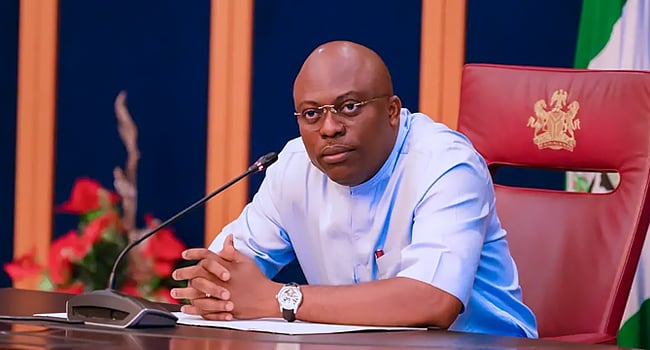
The Court of Appeal in Abuja has been urged by Governor Siminalayi Fubara to reverse a Federal High Court decision that prohibited the Central Bank of Nigeria (CBN) from giving Rivers State its monthly allotment payments.

The governor, backed by his legal team led by Yusuf Ali, SAN, asked the Court of Appeal’s three-member panel, presided over by Justice Hamma Barka, to revoke the High Court’s ruling, claiming it was made in bad faith.

He requested that the court allow his lawsuit, CA/ABJ/CV/1303/2024, and overturn the negative rulings issued by Federal High Court Justice Joyce Abdulmalik in her October 30 ruling.
The plea was made at the same time that the panel chaired by Justice Barka consolidated five other appeals based on the same High Court decision.

The Rivers State Government, the Rivers State Accountant-General, and Zenith Bank Plc are additional appellants in the case besides Fubara.

Recall that on October 30, 2024, Justice Abdulmalik of the Federal High Court prohibited the Nigerian government and CBN from giving the Rivers State government monthly allocations.

Read Also:Bank of Industry secures $5bn, earmarks N120bn for MSME support

A section of the Rivers State Assembly led by Martin Amaewhule filed the original summons, which sparked the drama.

The Assembly led by Amaewhule had said that the Rivers State administration, led by Simi Fubara, had not yet complied with a Federal High Court ruling for it to resubmit the 2024 Appropriations Bill to the legislature.

In light of the ongoing dispute between Governor Simi Fubara and Minister of the Federal Capital Territory Nyesom Wike, the Federal Government stated on Friday that it has halted the October monthly Federation Account Allocation Committee, or FAAC, revenue transfer to Rivers State.

Top Graduate Receives N2.7m from PCI Foundation

0

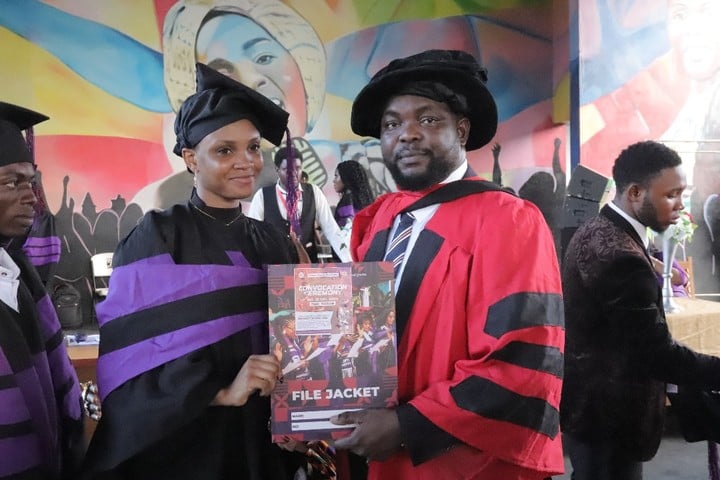
One million CFA in cash has been offered by the Prof. Chris Imumolen (PCI) Foundation to the top graduating students of the esteemed Global Wealth University in Lome, Togo.

Amaobi Precious was one of the students who attended the school’s recent 2024 convocation event.

Amaobi Precious, who received a scholarship that did not require tuition, responded by saying that the financial prize was unexpected and a surprise.

She commended Prof. Imumolen and the university administration for their dedication to developing leaders who can face the difficulties of society and referred to the chance to attend the school as a pleasure.

She also urged students who aspire to achieve academic success to be dedicated, focused, and diligent without losing sight of their goals.

Convocations in Ghana and Togo were held concurrently at the same university, and the Nigerian one is scheduled for next week.
In his speech, Prof. Chris Imumolen, the university’s vice-chancellor and the founder of the PCI Foundation, reaffirmed the school’s commitment to developing leaders who are capable of taking on global issues and coming up with solutions for issues that touch on development.

Read Also: DSS detains protester opposing NNPC policies

“The world is facing economic, engineering, and technological challenges, and many nations are progressing toward the fourth industrial revolution,” he stated.

“We need leaders in Africa who are physically strong. We at Global Wealth University are fostering and training our students to excel academically and possess exceptional talents that will complement their academic curriculum.

“We have made professional training mandatory for all students, which is not part of the curriculum, because we believe it is necessary to develop them into solution providers rather than merely job seekers,” he said.

He also disclosed the university’s strategy for guaranteeing its graduates’ access to capital to support their entrepreneurial endeavors.

Atiku on Tinubu’s Loans: Why It’s a Cause for Concern

0

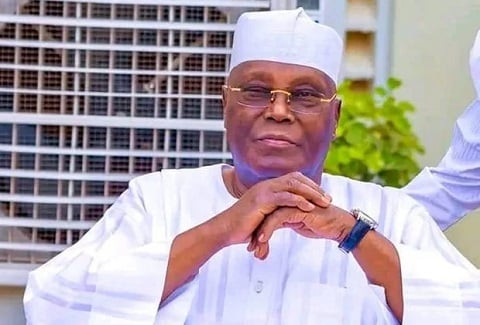
According to former Vice President Atiku Abubakar, corruption, not infrastructure or development needs, is the driving force behind the loans that the President Bola Tinubu administration has obtained.
In a letter to the National Assembly on Tuesday, Tinubu requested their approval of a new external borrowing plan in the 2024 Budget (Appropriation Act) worth N1.767 trillion ($2.209 billion).

Nevertheless, the National Assembly granted Tinubu’s request less than 48 hours later, in spite of the objections expressed by experts and civil society.

The loan will be used to partially pay the N9.7 trillion budget shortfall for the 2024 budget if it is authorized.

Read Also: FCTA Relocates 11,000 Apo mechanic traders to Wasa

Former PDP presidential candidate Atiku, however, stated that this loan proposal is more worrisome because it is benchmarked at the exchange rate of 1 USD to N800, but the Central Bank of Nigeria’s current exchange rate is more than N1,600 to 1 USD.

In a statement, Atiku said that the National Assembly has once again turned into an accomplice as Nigeria’s debt continues to grow, presumably alluding to its approval of loan requests during the most recent Muhammadu Buhari administration.

Nigeria’s public debt stock, which includes both domestic and foreign debt, increased by 75.27% on a quarter-over-quarter basis from N49.85 trillion (US$108.30 billion) in Q1 2023 to N87.38 trillion (US$113.42 billion) in Q2, according to the Nigerian Bureau of Statistics (NBS).

“Total domestic debt was N54.13 trillion (US$70.26 billion) in Q2 2023, while total external debt was N33.25 trillion (US$43.16 billion),” the NBS added.

However, Atiku said, “It is extremely alarming that the World Bank recently released a report indicating that Nigeria is the third most indebted nation to the International Development Association (IDA).”

This report comes right after the administration issued a proposal to the National Assembly indicating that it intends to use Euro Bonds to borrow an additional N1.7 trillion to cover the 2024 budget shortfall.

The benchmark for this specific loan request is 1 USD to N800, which is even more worrisome given that the Central Bank of Nigeria’s current exchange rate is more than N1,600 to 1 USD.

“The National Assembly has once again turned into an accomplice as Nigeria’s debt continues to grow. In July of this year, Tinubu boasted that the Customs and FIRS under his control had brought in record-breaking amounts of money to fund the budget. So why do they continue to borrow? Even if their lending rackets and failed trial-and-error strategies are crushing Nigerians, there is something they are not telling them.

Read Also: Bank of Industry secures $5bn, earmarks N120bn for MSME support

“These Tinubu loans are crushing Nigerians’ bones and putting unbearable strain on the economy, particularly when they are not properly utilized and negotiated.”

It is alarming that corruption, rather than infrastructure and development needs, is driving the avaricious thirst for these enormous loans. The amount of pork in the 2024 budget has made it a shambles, according to a report by budget watchdog Budgit.

“Seeing that we are back at the top of the same dilemma just a few years after President Obasanjo’s administration pulled our nation out of foreign debt causes me personal anguish.”

He declared, “It’s time we exercise greater prudence and apply math to the loan frenzy.”

DSS detains protester opposing NNPC policies

0

The Department of State Service (DSS) has arrested Kennedy Tabuko, a self-described leader of the Niger Delta Development Initiative, for interrogation about his efforts to stir the populace against government policy.

According to a high security source, Tabuko was asked to be questioned by the secret police because of repeated attempts to organize gullible young people to demonstrate against federal government policies.

According to the source, Tabuko’s most recent endeavor was planning a protest against NNPC regulations on Thursday, November 21, 2024, in the National Assembly. But before the demonstration could happen, security personnel stopped him.
To learn more about Tabuko’s intentions and find any accomplices, the DSS is looking into his actions. This comes after several Nigerians stormed the National Assembly on Thursday to protest and demand transparency in the ongoing investigation into the alleged importation of tainted fuel into Nigeria.

Read Also: Bank of Industry secures $5bn, earmarks N120bn for MSME support

Since the Senate and House of Representatives joint committee was established, the demonstrators have questioned how the national parliament has handled the investigation. To increase transparency in the ongoing investigation, they are calling for the investigative panel to include professionals, civil society organizations, and other interested parties.

Bank of Industry secures $5bn, earmarks N120bn for MSME support

0

Since 2017, the Bank of Industry, or BoI, has raised more than $5 billion from global capital markets through Eurobonds, loan syndications, and green finance instruments, according to Olasupo Olusi, Managing Director.

At the news conference for the BoI’s 65th anniversary in Lagos on Thursday, Mr. Olusi said this.

He emphasized how the bank changed from being founded in 1959 as the Investment Company of Nigeria, or ICON, to becoming the Bank of Industry in 2001.
According to Mr. Olusi, the bank also completed a global loan syndication in November that raised at least two billion euros, which is the biggest fundraising in BoI’s history as well as the largest syndication in African DFls’ history.

He explained that the bank was able to achieve the milestones through the years due to its partners.

Read Also: Customs Seize N3bn Worth of Contraband in Four Months – Controller

According to him, BoI has established strategic partnerships with key local public and private institutions as well as global financial and multilateral institutions to enable the bank to fulfill its mandate, effectively.

“BoI has partnerships with state governments, and foundations to establish the ‘Matching Fund’ scheme.

“We also have partnerships with trade associations, such as the National Association of Small and Medium Enterprises (NASME), Nigerian Association of Small Scale Industrialists (NASSI), and Manufacturers Association of Nigeria (MAN), to deepen real sector financing.

“BoI recently signed a partnership agreement with SMEDAN to provide Nano and Micro Enterprises in Nigeria with a one billion dollar fund at a single digit interest rate.

“We have partnerships with several other public agencies like NCDMB, to support specific sectors,” he said.
Mr. Olusi further mentioned that the bank was designated as the executing agency for the $200 billion FGN MSME Intervention Fund by the Federal Government in November 2023.

These comprised a N75 billion Manufacturing Sector Fund, a N75 billion MSME Intervention Sector Fund, a 50 billion Presidential Conditional Grant Scheme, and PCGS.

Read Also: PDP secretariat in Edo state attacked by armed thugs targeting election documents

“We also have strategic partnerships with many organizations, including the African Development Bank (AfDB), the African Finance Corporation (AFC), the African Guarantee Fund (AGF), and the Investment Climate Reform (ICR) program.

Other organizations include the International Finance Corporation (IFC), the United States Export Import Bank (USEXIM), and the Multilateral Investment Guarantee Agency (MIGA), according to Olusi.

According to him, the bank, in the last 12 months, has also revised its strategy to focus on impact and introduced various strategic initiatives in alignment with President Bola Tinubu’s ‘Renewed Hope Agenda’ and in response to emerging macroeconomic issues.
By the end of the year, the bank intends to distribute N120 billion to two million micro, small, and medium-sized businesses (MSMEs), according to Shekarau Omar, Executive Director, MSMEs at the Bank of India.

According to Mr. Omar, the bank has already exceeded its initial objective of N103 billion in 2024 disbursements to 1.5 million MSMEs.

He said that as of October, the bank has paid out N107 billion to more MSMEs than anticipated.

Mr. Omar emphasized the potential of Nigeria’s MSME sector, stating that there are an estimated 39 to 40 million enterprises in this area.

FCTA Relocates 11,000 Apo mechanic traders to Wasa

0

11,000 merchants and craftspeople in Apo Mechanic Village have been registered by the Federal Capital Territory Administration (FCTA) to move to the permanent location in Wasa District, Abuja.

At a meeting with stakeholders in Abuja on Thursday, Chief Felix Obuah, Coordinator, Abuja Metropolitan Management Council, or AMMC, made this statement.

The purpose of the meeting, according to Mr. Obuah, was to give updates on the current count of traders and craftspeople in Apo Mechanic Village who will be moving to Wasa.

He noted that among other things, the purpose of the meeting was to talk about the site plans and design.

According to him, 11,000 people have already received the form and paid for it, and the registration fee for the Wasa space allotment is N300,000.

However, he voiced concern that some suspicious people were exploiting the situation to blackmail unwary dealers.

He clarified that, in contrast to the N300,000 that FCTA had authorized, the unnamed individuals—among them, certain union leaders of the traders and artisans—were taking N650,000 from the traders.

“I came here to tell people that this is what we are doing because they are in a critical situation.

“I will carry every stakeholder along in every process, and at the end, whoever is allocated a shop in the permanent site, his or her name will be published,” he said.

whatsApp
The coordinator warned that anyone caught collecting money from unsuspecting traders, including those not on the road corridor and promising them land, would be arrested and prosecuted.

While acknowledging the difficulties faced in dealing with the traders, Obuah noted that over 45,000 names were submitted initially by different unions.

Describing the lists as “inflated”, the coordinator said that the blotted names, among other false claims, have made the council to conduct physical enumeration of the affected traders.

Read Also: Nigerian groups in Americas settle dispute, unite

“We have extended an invitation to Apo merchants’ stakeholders, primarily all association leaders, to update them on our progress in the relocation procedures.

The coordinator went on to say, “We told them the main points of the enumeration, the main points of the form, the number of people who have paid, and our future plans.”

He clarified that the relocation was primarily for traders in the buffer zones and on the road corridor.

He claimed that the conference was required after it was discovered that the majority of union leaders had taken money from Apo mechanic village residents who had no business there.

Before the end of November, Mr. Obuah promised, the registration and enumeration process would be completed.