Home Blog Page 361

Former FCT Minister, Jeremiah Useni, Dies at 82 Following Prolonged Illness

0

At the age of 82, Lt. Gen. Jeremiah Useni (retd.), a respected military commander and former Federal Capital Territory (FCT) Minister, passed away.

In a statement sent through his Director of Press and Public Affairs, Gyang Bere, Plateau State Governor Caleb Mutfwang confirmed Useni’s death on Thursday following a protracted illness.

“Useni’s passing is a monumental loss to his family, Plateau State, the Nigerian Armed Forces, and the nation,” Governor Mutfwang said, expressing profound sadness at the loss.

The statement stated, “The passing of the former minister is deeply regretted by the Executive Governor of Plateau State, Barr. Caleb Manasseh Mutfwang, to the people of Plateau State and all patriotic Nigerians.”

The governor highlighted Useni’s dedication to public service, peace, and security, especially in northern Nigeria and Plateau State, and commended his excellent leadership.

Useni served Nigeria in a number of roles over his career, including Minister of the Federal Capital Territory, Minister of Transportation, and Quarter-Master General of the Nigerian Army.

Read Also: Ganduje Receives New Appointment as Tinubu Unveils Fresh CEOs

Following his military retirement, he entered politics and held important positions, including deputy chairman of the All Nigeria Peoples Party and, in 2015, senator for the Plateau South Senatorial District of the Peoples Democratic Party.

Governor Mutfwang praised Useni for his unselfish service throughout his life, highlighting his services to the community, government, and military.

“Future generations will be inspired by the late General’s legacy of compassion, generosity, and dedication,” he said.

“I offer my sincere condolences to the President, the Nigerian Armed Forces, the immediate family, and everyone grieving the loss of this great elder statesman on behalf of my family, the government, and the peace-loving people of Plateau State,” Mutfwang stated.

Ganduje Receives New Appointment as Tinubu Unveils Fresh CEOs

0

Abdullahi Ganduje, the national chairman of the All Progressives Congress (APC), has been appointed to a new position with the Nigerian Federal Government.

Ganduje, a former Kano State governor, has been named the Federal Airport Authority of Nigeria (FAAN) board chairperson.

Bola Tinubu, the president, authorized the selection of the APC leader on Friday, January 24, 2025.

Bayo Onanuga, the Special Adviser to the President on Information and Strategy, made the announcement of this new appointment in a statement.

Read Also: Breaking: Federal Government Names Najomo as Substantive DG of NCAA

Along with Ganduje, a number of other people were introduced, including Felix Morka, an APC spokesperson who was named chairman of the Federal Medical Center in Yenagoa, Bayelsa State.

Breaking: Federal Government Names Najomo as Substantive DG of NCAA

0

As the substantive Director-General Civil Aviation (DGCA), Capt. Chris Najomo has been nominated by the Federal Government.

Najomo’s name was forwarded to the Senate for verification and screening over the week, according to a source close to the National Assembly who spoke to our correspondent on Friday.

Read Also:Why Nigeria Doesn’t Require IMF Loans – Wale Edun

On December 13, 2023, President Bola Tinubu appointed Najomo to an acting position in the Nigeria Civil Aviation Authority (NCAA).

Details to come.

Why Nigeria Doesn’t Require IMF Loans – Wale Edun

0

Nume Ekeghe and Esther Oluku in Lagos and Emmanuel Addeh and James Emejo in Abuja

Wale Edun, Nigeria’s Minister of Finance and Coordinating Minister of the Economy, clarified yesterday why, despite rumors that the nation might soon turn to the Bretton Woods institution for assistance, Nigeria has no reason to apply for any loans from the international lender, the International Monetary Fund (IMF).

In addition, Mr. Olayemi Cardoso, the governor of the Central Bank of Nigeria (CBN), revealed yesterday that the bank plans to create a compliance department by February in order to resolve previous issues, bring the financial sector into line with international norms, and create a more robust and transparent industry.

These occurred on the same day that PricewaterhouseCoopers (PwC), a multinational consulting firm, predicted that Nigeria’s GDP will grow by 3.3% in 2025 as a result of ongoing policy improvements.

Additionally, the company forecasted a comparatively stable economy with stable currency rates bolstered by CBN reforms in the foreign exchange market, which are anticipated to increase capital inflows.

However, Edun clarified to Arise Television during the ongoing World Economic Forum (WEF) in Davos, Switzerland, that Nigeria is now depending on the World Bank and the African Development Bank (AfDB) for comparatively cheaper borrowing sources.

Furthermore, he contended that Nigeria will not require the international bank’s short-term funding intervention because it does not have a balance of payments issue.

“If you saw a scenario where you were saying that Nigeria approaches the IMF for funding, I can imagine the headlines.” However, the truth is that, as a developing nation, we do, of course, need money. The government needs money to invest in important infrastructure that will improve the business-friendly environment. We also need to borrow money.

“The entire range of funds has been utilized, including comparatively inexpensive money from the World Bank, AFDB, and the multilaterals. By persuading Nigerians of the president’s macroeconomic strategy and its potential for commercial and economic expansion as well as for enhancing the business environment, we have been able to rely on their savings.

Naturally, the commercial end of funding is the Euro bond market, which we have now approached. We have thus covered the entire spectrum. Generally speaking, IMF money is intended to assist with short-term crises and balance of payments problems.

We have a favorable trade balance when it comes to Nigeria. Our current account balance is positive. We are increasing our reserves. The Central Bank Governor recently declared that we have improved and increased the reserves by more over $10 billion.

Funding from the IMF is not the right source in this situation. At this point, we must maximize our assets after making the most use of concessional and multilateral financing strategies.

Equity must be used. In particular, the private sector in Nigeria and the private sector globally must rely on crowding in the savings through foreign direct investment. We must keep in mind that we have made great progress in enhancing the economic climate thus far,” Edun said.

He acknowledged that food inflation and living expenses are still excessive, but he clarified that in addition to limiting demand, the supply side must also be strengthened in order to reduce inflation.

But we also acknowledge and face head-on the reality of rather significant inflation. Living expenses are considerable. Food is expensive. And that is the main emphasis of Mr. President’s decision regarding the future course of action. Naturally, the Central Bank, which controls monetary tools, including interest rates, is to blame for the high rate of inflation. Furthermore, inflation affects more than simply the economy.

We are all fighting inflation. Additionally, there is much work to be done to increase the supply from a fiscal standpoint. There is more to lowering a good’s price than only limiting competition.

Increasing supply is another issue. And specifically, as has occurred during this dry season harvest in Nigeria, with coordinated efforts to supply the various inputs, herbicides, fertilizer, and seeds to smallholders in particular, we are having a decent crop, but more work needs to be done there.

In addition to expanding the economy overall, Edun noted that there is a commitment to boosting food production, which would result in reduced food prices and greater availability and affordability for Nigerians.

The minister made the case that Nigeria was progressively improving, emphasizing that the economy of this year differs from that of previous year since the necessary changes have been mainly carried out and are starting to show results.

“The economy is expanding once more. Foreign reserves are increasing. Both the deficit and the debt servicing as a proportion of GDP are declining, as is the debt servicing as a percentage of revenue. Therefore, in terms of the investment climate, we’re in a much better spot,” the minister continued.

He claims that the Nigerian delegation to Davos, headed by the vice president, has discussed business issues that will lead to billions of dollars in investments in Nigeria, particularly from those in the fast-moving consumer goods, financial payments, and large international corporations sectors.

Additionally, they have previously stated that they are prepared and eager to make these investments right away given the better foreign exchange system and investment climate.

In addition, the minister noted, “we have several other bilateral meetings scheduled to speak with investors who we hope will be making their decisions to invest in the Nigerian economy, create jobs, grow the economy, and help reduce poverty in our country.”

In addition, he said that President Bola Tinubu is currently receiving a lot of praise and respect for having guided Nigeria’s economy and society away from what he called disastrous, unnecessary, and extremely expensive spending on various subsidies.

After achieving that, he emphasized that investors would soon begin flooding into Nigeria and gave his word that Tinubu was committed to continuing on the path of economic improvement.

Once more, in the context of Africa, Nigeria is drawing the greatest amount of investment in the oil and gas industry. It had previously lagged behind. It has returned to the forefront. Additionally, I believe that other sectors of the Nigerian economy are experiencing the same issue. Every one of the 19 main subsectors is expanding. They’re getting better.

And it is important to stress that investors, both Nigerian investors as well as foreign direct investors, are waiting in line and prepared to enter. The outlook, in my opinion, is for an ongoing improvement in the investment climate, which would raise the Nigerian economy’s competitiveness and productivity. The economy will expand, jobs will be created, and poverty will be decreased.

When it comes to lowering poverty, there is a shared commitment to preserving the social safety net and enhancing the provision of assistance, especially to the most vulnerable and impoverished, through direct benefit transfers and other measures that lower living expenses. Thus, the future is promising. He asserted, “The outlook is very positive.”

He said that the recent approval of a 50% increase in phone charges will help the telecoms run more efficiently and that it will be reviewed further.

“Well, I agree with you that it’s important to take into account the fact that, over the course of a 12-year period, costs have increased and inflation has occurred. This must naturally be reflected in the competition for business among the telcos, which, of course, have regulated their pricing to some degree. They are not simply allowed to impose any tariff they choose.

Therefore, it is necessary to represent the recent increase in the cost of living. However, I believe that fifty percent is a good place to start. It all comes down to compromise and the order and timing of some of these adjustments, which are already required. In this instance, we want the telecoms, which are an essential part of the Nigerian economy and the infrastructure that is a part of the Nigerian business environment, to function well.

“We want them to end calls quickly.” We do not want calls to be dropped. We want them to provide high-quality services. Additionally, we want them to expand, create jobs, and essentially raise the nation’s GDP.

And for that reason, this fifty percent increase has occurred. And as we move forward, I think that this is a scenario that will be examined from a forward perspective. In this area, study, conversation, and discussion will continue,” he continued.

By February, the Central Bank of Nigeria (CBN) would have a compliance department, according to Cardoso, the bank’s governor. According to him, the action was taken to rectify previous issues, bring the financial sector into compliance with international norms, and create a more resilient and transparent industry that might propel the nation’s progress.

The Nigerian Economic Summit Group (NESG) released its 2025 Macroeconomic Outlook Report in Lagos, and Cardoso was a speaker at the event.

He added that the department will be operational by the end of February and will have both an internal and external focus.

According to him, the government would improve market oversight by keeping an eye on participants to make sure best practices are followed, and those who don’t would face consequences.

It is anticipated that this approach will increase investor trust and build a more reliable and effective financial system.

Building on the 3.36 percent growth anticipated in 2024, the CBN also estimates a 4.17 percent GDP growth for the nation in 2025.

According to Cardoso, the continued execution of governmental reforms, steady crude oil prices, higher domestic oil output, and improved refining capabilities will be the main drivers of the positive growth trajectory.

Additionally, it forecasted a 3.3% growth rate for the Nigerian economy in 2025, fueled by ongoing policy reforms. It also predicted a comparatively stable economy with stable exchange rates, bolstered by the apex bank’s FX reforms, which are anticipated to increase capital inflows.

The tax and advisory services organization also predicted that tighter monetary policies and improvements in the nation’s foreign exchange market dynamics would cause inflation to drop to 26%.

In collaboration with BusinessDay, the company organized an executive roundtable on Nigeria’s 2025 Budget and Economic Outlook, where it shared its forecasts.

But according to Cardoso, “GDP growth is projected to rise from 3.36 percent in 2024 to 4.17 percent in 2025.” Stable crude oil prices, the Dangote refinery’s expansion of refining capacity, and the revival of the Port Harcourt and Warri refineries serve as the foundation for this growth. Maintaining this upward trajectory will also depend heavily on a steady exchange rate.

He also revealed that, thanks to $6 billion in foreign capital inflows and higher oil output, Nigeria’s foreign exchange reserves had surpassed $40 billion by the end of 2024. By the middle of 2025, the nation’s oil production is expected to exceed 2.3 million barrels per day, which would further propel economic expansion.

Read Also: Direct Fund Transfer to Local Governments Fails; FG Allocates January Funds to States

He emphasized the effects of the CBN’s foreign exchange policy, pointing out that programs like the Electronic Foreign Exchange Matching System (EFEMS) and the Foreign Exchange (FX) Code have increased market transparency and efficiency.

The foreign exchange matching system and the foreign currency disclosure repatriation and investment scheme will improve market efficiency and transparency, lessen the discrepancy between official and Bureau de Change (BDC) exchange rates, and promote market stability, the CBN governor stated. As of right now, our market is showing the fruits of many of those initiatives,” he said.

Additionally, the CBN started the non-resident BVN program and gave new International Money Transfer Operators (IMTOs) preliminary clearance in order to boost diaspora remittances. By giving Nigerians residing overseas access to banking services in their nation of residence, this action seeks to promote greater involvement with the financial system.

“The foreign currency disclosure repatriation and investment scheme and the foreign exchange matching system will improve market efficiency and transparency,” he stated. and promote market stability by lessening the difference between the official and BDC exchange rates. The outcome of many of those initiatives is currently seen in our market.

“We will undoubtedly fortify our systems to continuously monitor market players, guarantee that everyone operating in that market is subjected to best practices, and treat those who do not comply with them appropriately.”

“The bank recently introduced the nonresident BVN to allow Nigerians living abroad to access banking services in their birthplace and approved new IMTOs in principle to increase diaspora remittances through official channels.”

“This is a clear example of recent initiatives and products that we have launched in response to the dialogue we have had with many people overseas, understanding their problems and opportunities they are looking for in Nigeria and being able to make life much easier for them,” he said.

“I have no doubt that the outcome will be extremely favorable. The effects are already beginning to become apparent. Both the international remittances and the IMTOs are noteworthy.

With more than $6 billion in foreign capital inflow into Nigeria’s external reserves surpassing $40 billion in 2024—a major milestone that reflects increased investor confidence—our efforts have paid off. We stress once more that reserves are increasing in both quantity and quality.

He went on, “As we move forward through 2025, we want to make sure that the market-oriented policies and reforms will support a more competitive business environment.” Businesses operating in Nigeria will need to adjust to a changing economic environment as a result of these developments.

There is a lot to say about the fact that we are now in a position where the foreign exchange rate has changed. This has drawbacks, particularly for people who rely heavily on imports, but it has also created opportunities, and I see many foreign investors stepping in to seize those opportunities.

In order to adjust to the changing economic realities, “our currency is much more competitive at this stage, and the implications for exports and productive activity are significant.”

Dr. Olusegun Omisakin, the Chief Economist and Director of Research and Development at NESG, said that with consistent policy changes, Nigeria’s economy might develop at a 5.5% GDP rate. He underlined that specific actions could unleash the nation’s economic potential.

Christian Ebeke, the International Monetary Fund’s (IMF) Resident Representative for Nigeria, praised the CBN for failing to give the Federal Government Ways & Means advances in 2024, calling it a positive step. He asked decision-makers to mitigate the effects of economic reforms on marginalized populations.

However, PwC voiced fears that the nation’s growth potential might be severely hampered by ongoing economic challenges, pointing out that the CBN was probably going to stick to its monetary tightening policy throughout the year, which would result in higher interest rates in order to ensure long-term price stability.

Mr. Olusegun Zaccheaus, a partner and lead for PwC Strategy and Practice in West Africa, stated that this would affect companies by raising borrowing costs.

PwC specifically expressed worry that because of large budget deficits and high debt payment costs, fiscal sustainability may continue to be somewhat elevated.

Zaccheaus also found ways for companies to improve certain value chains, take advantage of export markets in Africa and around the world, and adjust to industry consolidation.

According to him, the National Bureau of Statistics’ (NBS) ongoing attempts to rebase the nation’s GDP might boost economic growth and lower the debt-to-GDP and tax-to-GDP ratios.

However, he warned that underlying fiscal issues including income shortfalls and growing debt servicing costs would continue, further eroding prospects for development.

An updated consumption basket, according to PwC, would give monetary authorities a more precise gauge of changes in the cost of living, allowing them to set interest rates and carry out focused interventions.

Zaccheaus added that although moderate revenue growth was projected, production and operating costs could increase due to high energy costs and infrastructure issues.

He added that FX reforms are expected to boost exports and raise Nigeria’s standing internationally.

Increased capacity for refining crude oil would lower fuel imports, he continued, while population growth and demographic changes might create chances for 5G adoption, youth-oriented businesses, energy-efficient data centers, broadband expansion, and digital innovation.

“Businesses can explore new markets and increase exports through the African Continental Free Trade Area (AfCFTA) and other regional initiatives,” he said.

“Businesses can take advantage of the growing interest in value addition for processed agricultural products.”

Businesses should get ready for such developments, he said, noting that regulatory capital needs may force mergers in the banking and insurance industries.

According to him, higher borrowing costs could reduce demand for expensive goods and have an impact on discretionary expenditure.

Kenneth Erikume, a PwC partner, also outlined important elements that are anticipated to influence the county’s industrial growth over the medium term, specifically taxation, special agro-industrial processing zones, and agricultural policy reforms.

In order to promote growth, Erikume emphasized the significance of encouraging the use of compressed natural gas (CNG), small and medium-sized businesses (SMEs), and tourism. In order to draw in investments and promote economic growth, he also emphasized the necessity of efforts that make conducting business easier.

Erikume found that mining and quarrying, especially the production and export of gemstones, were important sectors for sector-specific growth. He suggested spending money on surveillance technology to stop illicit mining.

In order to boost connection and ease trade, he also recommended building roads, hospitals, security facilities, and schools in addition to extending the country’s fiber optic network by 90,000 kilometers.
Direct Fund Transfer to Local Governments Fails; FG Allocates January Funds to States

0

Local governments are anticipated to get N361.754 billion of the N860.252 billion that the federal government, through the Federation Account Allocation Committee (FAAC), has given to state governments for January.

Due to their failure to provide account details by the deadline, the councils will not be directly given their allocations.

An FAAC official stated that the Universal Basic Education Commission (UBEC) and Primary Health Center (PHC) will get direct funding from the Federation Account, while the councils’ January monies will be distributed through the states.

According to the FAAC official, the councils did not fulfill the administrative procedures for the disbursement of cash, thus the commission shifted the January allocations to state governments.

“The January allocation went to their state accounts instead of the local governments,” he stated.

“They will receive their February allocations if they have begun submitting their accounts.

“The state accounts have already received payment for the January allocation. This indicates that they failed to submit their information on time.

“The councils will receive their funding immediately starting next month if they can act quickly and take care of any outstanding issues beforehand.

“That will mark the beginning of their autonomy, as the Bola Tinubu administration has desired.”

I discovered that while the account creation process is the main obstacle, the federal government is committed to ensuring that local government autonomy is realized. Another FAAC official stated, “I can guarantee you that things are going in the right direction.”

The change follows the Supreme Court’s July 2024 decision to provide local government councils financial autonomy, holding that they should receive their Federation Account payments directly from the court instead of via state governments.

In order to carry out the ruling, the Federal Government instructed all local governments to register special bank accounts with the Central Bank of Nigeria (CBN) so that their monthly allotments could be sent directly.

Read Also: Governor Bala Slams Wike, Tags Him a ‘Transactional Politician’

However, it is acknowledged that the continuing budget defense and other urgent engagements involving important government leaders have slowed down the process.

Governor Bala Slams Wike, Tags Him a ‘Transactional Politician’

0

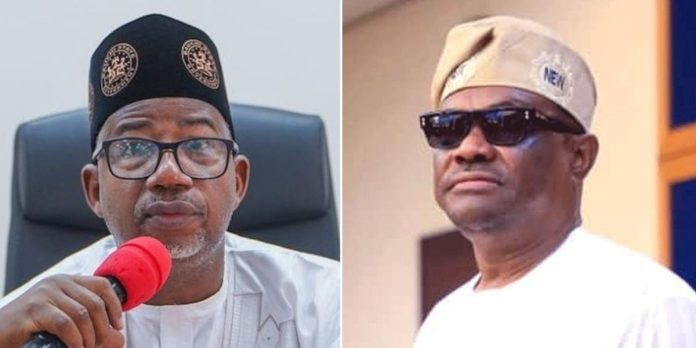
Nyesom Wike, the Minister of the Federal Capital Territory, has come under fire from Bala Mohammed, the governor of Bauchi State, who calls him a “transactional politician” whose allegiances change according to desire.

Mukhtar Gidado, Governor Mohammed’s Special Adviser for Media and Publicity, released a press statement on Thursday that included the attack in reaction to Wike’s criticism of Mohammed’s resistance to President Bola Tinubu’s Tax Reform Bills.

Gidado criticized Wike’s comments as “baseless” and “hypocritical,” charging the former governor of Rivers State of opportunism and political inconsistency.

Even though Wike accuses others of being dishonest, he has moved from being a self-described PDP stalwart to a staunch advocate of the APC government with ease.

He continues to identify as a PDP member while endorsing the reelection of the same APC government in 2027. The statement added, “Wike’s credibility and moral compass are seriously called into question by this chameleonic behavior.”

Additionally, Gidado maintained that Nigerians are not duped by Wike’s antics, accusing him of putting ambition above of ideals and weakening his party for personal benefit.

Wike’s political career, according to Gidado, was based on the PDP’s opportunities.

Now, however, he happily attacks the exact thing that raised him.

Gidado stated, “It is disheartening that a man who owes so much to a party that supported him throughout his political journey has chosen to be a willing tool in its denigration.”

Gidado responded by calling Wike’s assertion that he is not friends with Mohammed “irrelevant and puerile.”

He asserted that competence, vision, and the capacity to produce outcomes are the foundations of effective governance rather than personal friendships.

“If Wike ever had a moment of introspection and wanted to align himself with real leadership, Senator Bala Mohammed would be more than happy to accommodate him.

Read Also: Tinubu: Ensuring Better Welfare for Military Officers and Troops

The statement ended, “Until then, Wike’s friendship—or lack thereof—has no bearing on Bauchi State’s development or the fortification of Nigeria’s democracy.”

Tinubu: Ensuring Better Welfare for Military Officers and Troops

0

According to President Bola Tinubu, improving the well-being of Nigerian military personnel is a top priority for his administration.

Tinubu gave a speech yesterday in Abuja during the groundbreaking of a new defense complex and the opening of an army barracks bearing his name. Under the direction of General Christopher Musa, Chief of Defence Staff, he thanked the military personnel and praised their work.

“This ceremony starts a construction project and lays the groundwork for a renewed commitment to our military and the values we hold dear as a democracy,” the president stated.

“With this event, we begin a new chapter in our country’s dedication to protecting our citizens’ safety and security. I promise to stand for our troops and their families in my capacity as your Commander-in-Chief.

“I reaffirm my commitment to creating a well-equipped, genuinely professional military that embodies our nation’s pride under our Renewed Hope Administration.”

“With the help of the CDS, General CG Musa, who stands watch alongside the service chiefs and men against the evil forces that seek to impede our beloved peace and development, I would like to personally commend the outstanding efforts of our armed forces,” Tinubu continued.

“Your commitment, bravery, and tenacity defend our liberties and preserve the fundamental values upon which our country was established.”

“As we break ground on this Armed Forces Complex, let it symbolize our nation’s respect and admiration for your unwavering service and our dedication to providing the resources you need to function better,” Tinubu said in reference to the importance of the Defense Complex.

When finished, this structure will serve as a national landmark of which all Nigerians can be proud in addition to serving as a center of allegiance. It will serve as a center of excellence, revitalizing capable leaders dedicated to our citizens’ protection.

The president also emphasized how crucial locally made military hardware is to bolstering defense capabilities at home.

Read Also: Multiplatforms Hosting: Free SSL and Data Migration with Every Hosting Package

He said, “I am very pleased to report that we are starting to see some success with our attempts to build a military-industrial complex.

“These efforts have improved our domestic defense capabilities, thanks to substantial research and development conducted by the Nigerian Army’s Command Engineering Depot, the Defence Industries Corporation of Nigeria, and private companies like EPAIL and ProForce.

Therefore, I am proud to announce the assembly of these Nigerian-made armored personnel carriers (APC) and tactical mine resistant ambush protected (MRAP) vehicles.

They serve as evidence of the progress made in our defense industry. These vehicles will improve our economy in addition to increasing the operational effectiveness of our military forces.

Tinubu urged Nigerians to unite and strive for a more promising future for their nation. He claimed that the historic occasion, which followed Armed Forces Remembrance Day, was a lasting tribute, particularly to those who had lost their lives or suffered injuries in defense of Nigeria’s peace and security.

He pledged that the complex’s initial phase will be finished during his term.

Earlier, Musa stated that the Garki headquarters, which was originally intended to be a temporary office, had grown insufficient for the armed forces’ operations and that a new, state-of-the-art building was now necessary.

According to him, the new facility would be a symbol of the Nigerian military forces’ modernization and commitment to greatness.

Lieutenant General Olufemi Oluyede, Chief of Army Staff, assured the president of the army’s and the armed services’ commitment to the country and thanked him for his continuing support.

Speaker of the House of Representatives Hon. Tajuddeen Abbas, Senator Ahmad Lawan, Minister of Defense Alhaji Abubakar Badaru, and Deputy Senate President Senator Jibrin Barau, who represented the Senate president, were equally present at the activities.

In addition, there were the service chiefs, senior military officials, Mohammed Idris Malagi, Minister of Information and National Orientation; Mallam Nuhu Ribadu, National Security Advisor; and Hon. Femi Gbajabiamila, Chief of Staff to the President.

Multiplatforms Hosting: Free SSL and Data Migration with Every Hosting Package

0

The Importance of SSL Certificates in Web Hosting: A Focus on Multiplatforms Web Hosting

An SSL (Secure Sockets Layer) certificate is crucial for any website, and when it comes to web hosting, it plays a significant role in ensuring the safety, trustworthiness, and efficiency of the service. For Multiplatforms web hosting, implementing SSL certificates is vital for both security and business success. Here’s why:

  1. Data Encryption
    SSL certificates encrypt the data exchanged between the web server and the user’s browser, ensuring sensitive information like passwords, payment details, and personal data is protected. Multiplatforms web hosting ensures your website visitors’ data is shielded from eavesdropping and cyberattacks, offering an additional layer of security that’s critical for any website.
  2. Building Trust with Visitors
    With SSL enabled, your website’s URL will begin with “HTTPS” rather than “HTTP,” and the padlock icon appears next to the address bar. For visitors on websites hosted by Multiplatforms, this reassures them that the site is secure. This is particularly important for e-commerce platforms and financial sites, where customer trust is paramount.
  3. Improved SEO Rankings
    Google ranks SSL-secured websites higher, prioritizing them over non-secure sites. For websites hosted on Multiplatforms, this can result in improved SEO rankings, leading to better visibility and more organic traffic. Multiplatforms web hosting’s integration of SSL certificates aligns with this SEO benefit, boosting your website’s search engine performance.
  4. Data Integrity
    SSL ensures that the data exchanged hasn’t been tampered with during transmission. Multiplatforms web hosting guarantees the integrity of the data being transferred, preventing “man-in-the-middle” attacks where attackers alter content or inject malware. It’s a proactive step in safeguarding both user data and your website’s reputation.
  5. Compliance with Regulations
    For websites that deal with user data, having an SSL certificate is often a legal requirement. For platforms hosted with Multiplatforms, this includes compliance with privacy regulations like GDPR, PCI DSS for e-commerce, and others. Ensuring SSL is enabled helps you stay legally compliant and avoid potential fines.
  6. Customer Confidence and Conversion
    A website with an SSL certificate is essential for gaining customer confidence, especially for businesses handling sensitive information. Multiplatforms web hosting ensures that your site’s security is in place, reducing the likelihood of cart abandonment and increasing conversion rates. SSL not only secures transactions but also enhances your brand’s reputation.
  7. Protection from Phishing
    SSL certificates provide protection from phishing attacks, which cybercriminals use to create fake websites to steal data. Websites hosted by Multiplatforms with SSL certificates are flagged as secure by browsers, reducing the likelihood of your site being impersonated in phishing scams. This protection builds further trust with your users.
  8. Better Website Performance
    Modern SSL protocols, such as TLS (Transport Layer Security), enhance security and can improve website performance by enabling faster data transmission with HTTP/2. With Multiplatforms web hosting, SSL implementation also leads to improved load times and a better overall user experience, making your website faster and more responsive.

Click to order now!


Conclusion
In summary, SSL certificates are essential for securing user data, enhancing SEO, improving customer trust, and complying with legal standards. Websites hosted by Multiplatforms web hosting benefit from these advantages, ensuring both security and performance are top-notch. As SSL is a fundamental part of modern web hosting, partnering with a reliable provider like Multiplatforms guarantees your website remains secure, fast, and trusted by visitors.

Ex-Kogi Governor Yahaya Bello Meets Wike in Abuja Amid Embattlement

0

On Thursday afternoon, Nyesom Wike, the FCT Minister, received a visit from Yahaya Bello, the immediate former governor of Kogi State, at his home in Abuja.

Bello was accompanied by his successor, incumbent Governor Ahmed Usman Ododo, who is currently facing numerous fraud cases worth billions of Naira.

It is believed that the former governor is looking to create new partnerships with powerful members of President Bola Tinubu’s cabinet. This comes after he became estranged from the main initiatives of the ruling All Progressives Congress (APC).

Read Also: NAPTIP Rescues Nine Expectant Women from Abuja Baby Factory

According to reports, Bello is the target of many proceedings brought by the Economic and Financial Crimes Commission (EFCC) before both an FCT High Court and a Federal High Court in Abuja.

As soon as Bello’s term as governor of Kano ended, his ordeal started.

He lost the support of President Bola Tinubu. After leaving office, the former governor blamed his bad luck on influential APC figures.

NAPTIP Rescues Nine Expectant Women from Abuja Baby Factory

0

According to the National Agency for the Prohibition of Trafficking in Persons (NAPTIP), nine pregnant women were saved by its agents from an Abuja baby factory.

Mr. Vincent Adekoye, the NAPTIP Press Officer, made this announcement on Thursday in Abuja.

According to Adekoye, the baby factory is located on one of the expansive estates in the Federal Capital Territory’s (FCT) Ushafa neighborhood.

He also said that a concerned citizen’s tip led to the facility’s raid.

He claimed that after being enlisted via an internet platform, the victims were imprisoned in an apartment within the estate by an unnamed suspected trafficking agent.

Adekoye added that Hajia Binta Adamu-Bello, the agency’s director-general, has praised the judiciary for the historic decision to convict and sentence Bishop Kenneth Duke.

According to reports, Duke sexually assaulted a 12-year-old girl who was a member of his Abuja church.

While cautioning that the agency would not spare anyone who violates any of its laws, the DG stated that the ruling will act as a deterrence to others.

As I mentioned a few weeks ago, NAPTIP will not spare anyone who is proven to have broken any laws, regardless of their status, including those pertaining to violence against people or human trafficking.

“Rape is a severe crime that causes trauma and long-lasting psychological effects on the victim. To stop this horrible crime and safeguard our children, we must all stand up.

How is it possible to envision a 52-year-old guy abusing a 12-year-old girl? It is both criminal and painful. “I am glad that the convicted person has received the appropriate amount of punishment from the legal system,” she stated.