Home Blog Page 36

Betonred Casino : Votre Adresse de Divertissement Premium en Ligne sur Internet

0

mainphoto18

Sommaire

Une Plateforme de Divertissement Moderne et Sécurisée

Chez BetonRed Connexion, nous avons développé une structure technologique de haute qualité pour offrir à nos joueurs une session fluide et sécurisée. Notre plateforme fonctionne sous permis officielle accordée par Curaçao eGaming (licence n°8048/JAZ), ce qui constitue une garantie réelle de notre conformité aux règles internationales du secteur des jeux de casino en ligne.

Nous utilisons un chiffrement SSL 256 bits pour sécuriser l’ensemble des informations personnelles et financières de nos membres. Cette technologie de niveau militaire assure que l’ensemble de vos informations sont confidentielles et inaccessibles aux parties tierces malveillants. L’ équipe IT surveille en temps réel notre plateforme pour repérer toute opération suspecte et conserver l’intégrité de notre environnement de divertissement.

Notre Catalogue de Titres Exhaustif

Nous-mêmes proposons une ludothèque impressionnante qui excède les 7000 titres, constamment mise à jour avec les nouvelles sorties des développeurs les plus reconnus. Notre sélection englobe tous les types pour combler les préférences variées de notre communauté de membres.

Slots à Sous et Titres de Table

Nos machines à jackpot constituent le centre de notre catalogue avec des milliers de variantes à thèmes, des rétro aux vidéo jeux sophistiqués avec caractéristiques bonus originales. Nous collaborons avec des développeurs prestigieux comme NetEnt Studios, Pragmatic Play Studios, Evolution Gaming Group et Microgaming pour vous offrir des visuels époustouflants et des mécaniques de jeu immersives.

  • Roulette classique : Versions européenne, américaine, française et versions en direct avec croupières professionnels
  • Blackjack : Multiple tables avec limites adaptées aux petits et gros parieurs
  • Baccara : Divertissement classique accessible en version RNG et tables en temps réel
  • Poker de casino : Caribbean Poker Stud, Texas Hold’em Poker et variantes vidéo poker poker
  • Titres de dés : Craps classique et Sic Bo pour les passionnés de probabilités

Casino live en Direct

Cette section gaming en direct simule l’atmosphère réelle des établissements physiques directement sur ton écran. Des dealers réels gèrent les parties en direct réel depuis des studios professionnels dotés de caméras haute définition. L’interaction devient réalisable grâce au système de chat en direct, apportant une dimension interactive à votre expérience de jeu.

Les Avantages Destinés à Nos Clients

Nous avons créé un programme de fidélité structuré en plusieurs paliers pour valoriser l’engagement de nos joueurs réguliers. Chacune des mise réalisée sur notre site génère des crédits de fidélité échangeables en crédits promotionnels ou en privilèges exclusifs.

Rang
Unités Requis
Remise
Avantages Exclusifs
Bronze Initial 0 – 999 3 pourcent Promotions hebdomadaires
Argent 1 K – 4 mille neuf cent quatre-vingt-dix-neuf 5% Retraits prioritaires + Tours gratuits
Gold 5 mille – 14 K 8 pourcent Gestionnaire personnel + Limites augmentées
Platinum 15 mille – 49 K dix pourcent Accès événements VIP + Récompenses personnalisés
Diamond 50 K+ 15 pourcent Package sur mesure + Escapades de luxe

Le package de démarrage s’étend sur les quatre tout premiers dépôts avec des offres pouvant atteindre des montants conséquents accompagnés de rotations gratuits sur une gamme de machines à jackpot populaires. Ces conditions de wager restent claires et clairement indiquées dans nos règles et conditions.

Opérations Rapides et Protégées

Nous acceptons une gamme étendue de méthodes de paiement pour faciliter vos opérations bancaires. Les cartes de crédit et débit traditionnelles côtoient les porte-monnaies électroniques modernes et des solutions de cryptomonnaies pour les membres recherchant la confidentialité et la vitesse.

  1. Crédits instantanés : Visa, MC, Skrill, Net+, Much Better, et crypto-monnaies (Bitcoin, Ethereum, Lite Coin) avec créditation immédiate sur ton compte utilisateur
  2. Retraits accélérés : Processus des demandes sous 24 heures pour nos portefeuilles digitaux et cryptomonnaies, trois à cinq jours de travail pour les transferts bancaires classiques

Nous-mêmes n’imposons aucun frais sur ces transactions, qu’il s’agisse de ce soit pour ces dépôts ou nos retraits. Nos limites correspondent à tous ces profils, des joueurs occasionnels aux high rollers avec des limites mensuels généreux pour les paliers VIP supérieurs.

Le Support Consacré à Votre Contentement

Notre service d’assistance fonctionne 24 heures sur 24, 7 jours sur 7 sur 7 pour satisfaire à vos interrogations et résoudre toutes vos préoccupations. Plusieurs canaux de dialogue restent ouverts selon votre choix et la priorité de votre question.

Ce chat en temps réel constitue le canal le plus véloce d’obtenir une assistance immédiate. Les agents multilingues maîtrisent totalement le français et peuvent traiter la grande partie des requêtes en certaines minutes. Concernant les questions encore plus complexes requérant une investigation approfondie, le service par email garantit une réponse détaillée sous 6 heures maximum maximum.

Nous maintenons de même une section Foire aux questions exhaustive couvrant les questions récurrentes comme ces vérifications de profil, les promotions, les options de paiement et ces règles des divertissements. Une telle ressource documentaire permet aux joueurs autonomes de dénicher rapidement des réponses sans attendre l’intervention d’un conseiller.

Le casino place constamment dans l’amélioration de nos offres et l’agrandissement de notre collection pour demeurer à la tête de le secteur du jeu en direct. Intégrez notre communauté grandissante de joueurs satisfaits et constatez pourquoi nous représentons devenus une autorité incontournable dans ce secteur.
Senate Stands by 2026 Electoral Act, Highlights Inclusiveness

0

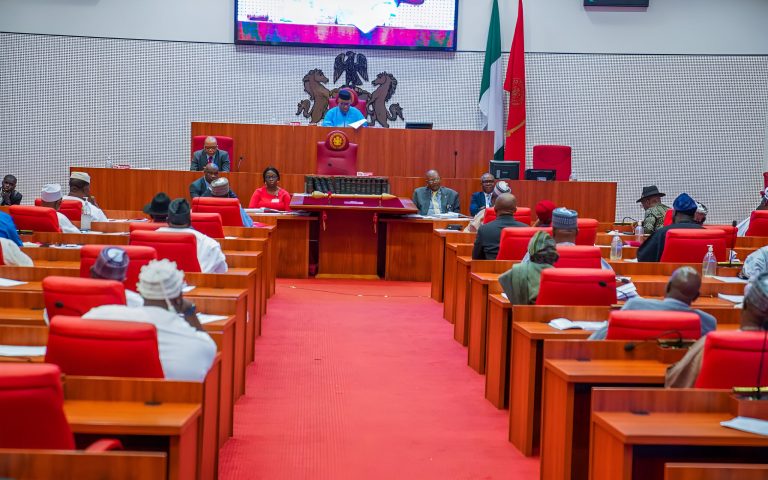
Yesterday, the Senate emphasized the extensive changes included in the recently passed Electoral Act, 2026, characterizing it as a comprehensive framework intended to improve Nigeria’s electoral system’s accountability, transparency, and institutional autonomy.

In an announcement sent by his office’s Directorate of Media and Public Affairs, Senate Leader Opeyemi Bamidele revealed the highlights.

Bamidele stated that the new law was the result of two years of intensive deliberations with development partners, civil society organizations (CSOs), the Office of the Attorney-General of the Federation (OAGF), and the Independent National Electoral Commission (INEC).

In contrast to what some have implied, he clarified, the legislative process was inclusive and cooperative, including the opinions of all parties involved into the final text before sending it to President Bola Ahmed Tinubu for approval.

Within 24 hours after it was transmitted, Tinubu signed the Electoral Bill 2026 into law, concluding what lawmakers said was a two-year redrafting process meant to avoid constitutional ambiguities before the general election in 2027.

One of the main improvements, according to Bamidele, is the creation of a special fund for INEC under Section 3 of the Act, which is meant to ensure the commission’s operational stability, administrative continuity, and financial independence.

According to him, the law also requires that election funds be released at least half a year prior to general elections.

He underlined that the implementation of the Bimodal Voter Accreditation System (BVAS) or any other INEC-recommended technology is now required for voter accreditation under Section 47.

According to him, Section 60(3) mandates that election results be sent electronically to the INEC Result Viewing Portal (IReV), and Section 60(6) stipulates that any presiding officer who willfully obstructs the electronic transmission of results faces a six-month jail sentence, a fine of ₦500,000, or both.

Nonetheless, he stated that in situations when communication failure has been demonstrated, the Act allows for the conditional use of Form EC8A for manual transmission.

Additionally, the law imposes severe penalties for electoral malfeasance. Resident Electoral Commissioners (RECs) are required by Section 74(1) to release certified true copies of documents within 24 hours after payment. Failure to do so may result in a minimum two-year prison sentence without the possibility of a fine.

“Vote buying, impersonation, and result manipulation are now punishable by up to two years in prison or fines of ₦500,000 to ₦2 million, or both, under Section 125,” Bamidele stated.

Bamidele claimed that the 2026 law essentially phases out indirect primaries by allowing only direct and consensus primaries, which is a significant change from the repealed 2022 Act.

Political parties are required by Section 77 to keep a digital membership record, provide membership cards, and submit the register to INEC at least 21 days before to primaries, congresses, or conventions, he said.

He also stated that a party will not be allowed to field candidates in the upcoming election if they do not comply.

In addition, the Act raises the campaign spending caps for all elected posts. The governorship limit climbed from ₦1 billion to ₦3 billion, and the presidential expenditure limitation was raised from ₦5 billion to ₦10 billion. Positions in the National Assembly, state assemblies, and local governments were also adjusted.

Other noteworthy clauses, he said, include elements to improve diversity, such guidelines allowing gender-based queue separation in places where cultural customs demand it and assistance systems for people with visual impairments.

Nigeria’s electoral governance structure has been consolidated and improved, according to Bamidele, with the new Electoral Act.

He added that the Act places a strong emphasis on INEC’s operational and financial independence, technological integration with safeguards, greater regulation of political parties, and harsher penalties for violations. “The Act seeks to enhance electoral credibility, reduce disputes, and strengthen democratic governance in Nigeria,” he said.

Atiku Raises Alarm Over Voter Apathy in FCT Elections

0

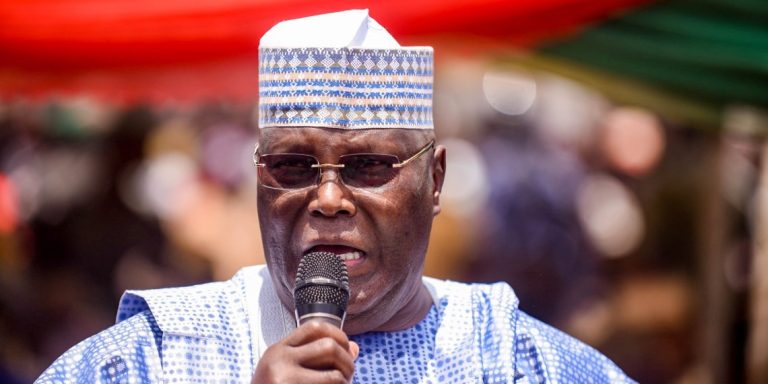
The Federal Capital Territory (FCT) Area Council elections on Saturday saw a startlingly low voter participation, according to former vice president Atiku Abubakar**, who warned that Nigeria’s democracy is seriously threatened.
The head of the African Democratic Congress (ADC) said in a statement released by the Atiku Media Office on Sunday that the turnout, which he said averaged less than 20% and that the Abuja Municipal Area Council recorded roughly 7.8%, is a concerning sign of waning public trust in the electoral process.

Atiku contended that the poor turnout in the country’s capital was a foreseeable outcome of what he described as a political environment characterized by intolerance, intimidation, and the weakening of alternative voices.

Through alleged harassment of dissenters and coercion of political players, the Waziri Adamawa accused the ruling All Progressives Congress (APC) and President Bola Tinubu’s administration of purposefully reducing the democratic space.

Atiku warned that the nation is seeing more than just ordinary voter indifference, saying that “democracy begins to die when citizens lose faith that their votes matter.”

He warned that if the ongoing deterioration of participatory governance is not immediately addressed, it may cause long-term harm to Nigeria’s democratic foundations.

The former vice president emphasized that the situation goes beyond partisanship and urged opposition parties and pro-democracy organizations to unify and present a united front.

Party lines are no longer important in this situation; maintaining the Republic is. “Now is the time to unite in order to rescue and rebuild Nigeria,” the statement continued.

Sustained Political Harassment Against Deputy Speaker Kalu Decried by Group

0

A civil society group called the Igbo Mandate Movement Group has denounced a petition against Rt. Hon. Benjamin Kalu, the Deputy Speaker of the House of Representatives, calling it “frivolous, mischievous, and politically motivated.”

The group claimed the action is the most recent in a long-running campaign to damage the public image and political career of one of the most well-known politicians in the South-East.
Written by Mr. John Aikpokpo-Martins, a former First Vice President of the Nigerian Bar Association, the petition was sent to the National Youth Service Corps and the Legal Practitioners’ Disciplinary Committee, asking for a review of documents pertaining to Kalu’s national service history and professional credentials.

Igbo Mandate Movement Group claimed in a press release issued by its National Coordinator, Igboeli Arinze Napoleon, that the petition is part of a pattern of credential problems that have followed Kalu throughout his career. Opponents claimed he had never graduated from the University of Calabar when he was nominated as a Commissioner in Abia State. This was refuted when Kalu later earned an LL.M. and a Ph.D. from the same university and gave its 50th Anniversary Convocation Lecture. When he ran for office to represent the Bende Federal Constituency, it was initially claimed that he had completely avoided NYSC service. After that was refuted, the accusations changed to allegations that his NYSC certificate was a fake, which needed to be officially refuted with a letter from Brigadier General Y.D. Ahmed, the NYSC Director-General at the time. The group declared that “the same forces of retrogression have returned with yet another iteration of the same discredited narrative.”

The organization presented the facts of Kalu’s 2010 service year in order to address the main points of the current petition. Although he received his degree from the University of Calabar in 1998, the Nigerian Law School, which at the time had just two campuses in Lagos and Abuja, was unable to quickly accommodate the large number of eligible graduates. Many law grads had to wait years for admittance due to the ensuing backlog. While waiting to obtain additional credentials, Kalu took a trip overseas. He served at the Chairman’s office after being mobilized for NYSC in 2010 and assigned to the Enugu North Local Government Area. He was awarded the Citizenship and Leadership Award, became a Platoon Leader, and engaged enthusiastically in camp activities.

By a stunning coincidence, he received his long-awaited admission to law school at the same time, which put him at the Enugu Campus in Agbani, only thirty minutes from his NYSC position. When given the option to either postpone admission and wait an additional three to four years or to terminate his NYSC service in violation of the NYSC Act, he decided to fulfill both duties at the same time. His main task timetable was set up so that he could complete his LGA responsibilities before going to law school. He was one of only three students chosen to be a member of the research team of the then-Director-General of the Nigerian Law School, the distinguished Professor Ernest Ojukwu, because he was so academically exceptional, met all weekly and monthly NYSC clearance requirements, and exceeded the required 70% Law School attendance threshold.

On the legal issue, the group contended that any NYSC rulings that critics attempt to use are of a prospective character; they specify what “shall not” be done in the future and cannot be applied retroactively to Kalu’s 2010 service. The statement stated, “Laws are not retroactive in nature.”

“Such statements are not legally binding and would not withstand examination in an affidavit taken under oath.” The group went on to say that a call to the bar is a professional qualification and that, with complete NYSC knowledge, corps members all throughout Nigeria often obtain professional certifications in project management, management, cybersecurity, and accounting during their service year.

In addition to supporting Kalu, the organization called for immediate policy changes in the statement. Years still pass between graduation and admission to law school for thousands of Nigerian law graduates. The group maintained that Kalu’s experience, both in 2010 and now, when it is being used against him, reveals a systemic flaw that necessitates a legislative solution. This response should guarantee that law graduates can enroll in the Law School on time and that legal profession corps members are not penalized for acting pro-actively and in good faith while navigating a dysfunctional system.

The message closed by saying, “Rt. Hon. Benjamin Kalu deserves commendation — not condemnation.”

The organization urged the NYSC and LPDC to show the petition the disdain it merits.

Chaos Erupts in Delta APC Ward Congresses, Several Injured

0

In order to present the All Progressives Congress (APC) as a cohesive party deserving of election and reelection at all levels in 2027, it was intended to be a Congress of Unity and Reconciliation.

However, the outcomes of the party’s congresses demonstrated that the actors have not yet learned from their past election manipulation and crisis management.

Allegations of rigging and outright hijacking of party machinery by various factions in almost all of the state’s 500 wards were reported during the state’s most recent Congress.

Up to four factions allegedly held parallel congresses, each claiming to be the legitimate group in each of Delta State’s 25 local governments.

As they rallied supporters to guarantee their supporters’ victory, the incumbent governor’s power loomed enormous.

Some factions, however, rejected them because they believed the development was the first step in the governor’s plan to prevent his alleged political rivals from seizing power in 2027.

Senator Ovie Omo Agege, the country’s former Senate deputy president, resides in the Ughelli North Local Government area, which has become the most volatile location for blatant displays of power.

In the same Federal constituency, Governor Sheriff Oborevbore reportedly produced his own list of loyalists, while Senator Ovie Omo Agege reportedly had a list of supporters whom he attempted to install as executives.

While the former deputy Senate President’s supporters worked from hotels, the governor’s supporters, who were dispersed around the state, functioned from government house in Asaba.

It was thought that the degree of resistance to the governor in some of the state’s municipal governments added to his anxiety.

After a reported attack on the supporters of the former governor’s daughter, Mrs. Ibori Suenu, who represents the Ethiopia Federal constituency in the National Assembly, Congress at the residence of former Governor James Onanefe Ibori in Ethiope West Local Government was brutal.

The Congress had hardly begun when heavily armed gunmen with a variety of weaponry, including double barrel guns, AK-47s, pump action, and combat axes, entered the arena, according to an eyewitness.
According to the article, more than twenty party faithful may have suffered significant injuries, while the exact number of casualties was unknown at the time of publication.

The Congress had just begun at the IKA Federal Constituency, the home of former Governor Ifeanyi Okowa, when a few miscreants who were thought to be loyal to one of the groups tried to disrupt it. However, they were thwarted by civil defense corps members who had been called to the Congress site.

The congresses were peaceful at Koko, Warri North Local Government area, where Evangelist Michael Diden, Chief Solomon Areyinka, Hon. Alfred Martins, and Festus Ashima, the local government chairman, reside.
The overall prediction for the voting pattern remained unchanged.

While security guards sent to the location were essentially inactive, Mr. Festus Ashima, the chairman of the local government council, made sure there was peace and order.

FCT Elections: INEC Denies Reports of Voter Relocation

0

Although turnout improved, the Independent National Electoral Commission (INEC) has expressed worry about voter apathy and rejected allegations that voters were moved to different polling places during the February 21, 2026 Area Council elections in the Federal Capital Territory (FCT).

The commission emphasized that no voter was moved from their original voting place in a press release signed by Wilfred Ifogah, Acting Director of Voter Education and Publicity. In order to ease traffic, INEC only established split polling stations in busy areas with over 1,250 registered voters. The extra units were situated within the same building, barely a few meters from the original polling places.

The commission highlighted that the voter registration had been posted at specified polling places four days prior to the election to allow for verification, even though it conceded that some voters had trouble finding their assigned polling places. It further stated that between February 18 and 21, impacted voters received emails and text messages reminding them of the locations of their split polling units.

While acknowledging a notable improvement over the 2022 Area Council elections, INEC stated that it was still concerned about voter indifference. The commission claims that more than 239,210 people, or around 15% of the 1,680,315 registered voters in the FCT, cast ballots in the 2026 elections, up from 148,685 voters (9.4%) in the 2022 elections.

The electoral body affirmed that it had successfully held elections for 62 councillor seats and chairmanships in the six Area Councils. Except for Kuje Area Council, which was declared at around 3:30 p.m. on Sunday due to collation difficulties, results were revealed late Saturday.

On election day, all polling places were completely functioning by 10:00 a.m., according to INEC’s Election Operations Dashboard, with roughly 45% of them opening by 8:30 a.m.

Additionally, the commission revealed that 93% of polling unit results had been posted for public viewing on the INEC Result Viewing (IReV) portal as of 2:00 p.m. on Sunday.

INEC praised the peaceful behavior of the FCT people during the exercise and ascribed the delay in announcing the Kuje Area Council result to the challenging topography in Kabi Ward, which hindered the final collation process.


Obi Defends Students, Says They Must Not Suffer for JAMB Glitches

0

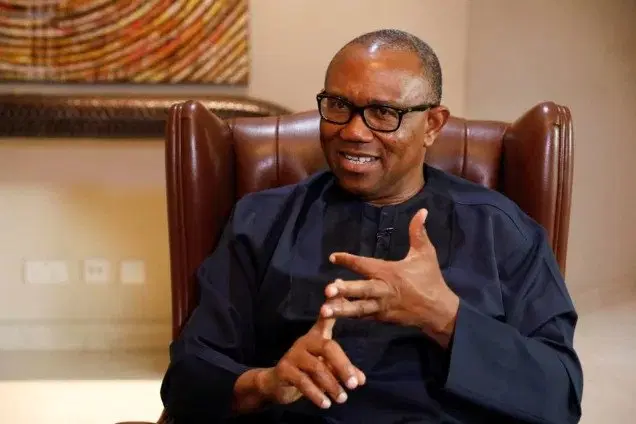
Nigerian students shouldn’t be made to pay for system malfunctions, according to Peter Obi, a former presidential candidate for the Labour Party.

This was said by Obi in a statement that was published on his verified X handle on Monday.

Concerns on the difficulties faced by students at different centers throughout the nation prompted him to respond.

The former governor of Anambra State was particular about the experience of students at the Joint Admissions and Matriculation Board’s (JAMB) Amawbia office after multiple CBT centers were banned due to alleged violations.

According to him, “corrective measures were expected to follow.”

Unfortunately, I encountered the same congestion and chaos last Friday as I went by there once more. I learned that there are comparable circumstances in a few other Nigerian states after doing more research.

“A more impartial and compassionate approach is feasible, even though authorities may have good reasons for approving centers.

“In order to prevent further lapses, centers under investigation may be permitted to continue providing limited services under close supervision.”

To reduce the strain on state agencies, authorities might nevertheless temporarily use already approved centers under strict monitoring if it is difficult to approve new centers promptly.

There will be severe repercussions because registration closes on the 26th. Many applicants come from far-off areas, and some even spend the night in Awka in order to gain entry. If quick action is not taken, some people will miss the test—not because they were unprepared, but rather because the system let them down.

The shortcomings of a system that we have all contributed to in one way or another cannot be forced upon students.

In order to guarantee that no young person’s future is endangered by preventable administrative bottlenecks, prompt and compassionate assistance is needed instead of placing blame.

APC Crisis in Benue as Alia, Akume Factions Announce Parallel LG Executives

0

Parallel local government party excos have been established by rival factions of the All Progressives Congress (APC) in Benue State, which are commanded by Governor Hyacinth Alia and Secretary to the Government of the Federation (SGF), George Akume.

This came after the state’s weekend’s parallel APC Local Government Congresses.

Every camp claimed to be an actual member of the faction during the Saturday exercise, which was held in Benue state’s 23 local government areas.

Remember how last Wednesday’s distinct ward congresses generated parallel excos for the camps loyal to the state’s two APC leaders?

However, our correspondent learned that President Bola Tinubu and Prof. Nentawe Yilwatda, the party’s national chairman, will now have to make a decision in the battle for the APC’s survival in Benue State.

According to supporters of the two APC camps in the state, President Tinubu and Prof. Yilwatda, the party’s national chairman, will make the final decision about the Benue congresses and parallel exco lists.

APC State Organising Secretary James Ornguga, who is loyal to Governor Alia, commented on the local government congresses. He said that any congress held in Benue State without the support and approval of the party’s national working committee (NWC) was pointless and a waste of time, and that their own congress was “equally peaceful and credible.”

In a statement released over the weekend, Akume-aligned APC State Publicity Secretary Dan-Morgan Ihomun said that the non-elective congresses were peaceful, transparent, and well-organized. “The Benue State Chapter of the All Progressives Congress (APC) would like to thank party members in all 23 Local Government Areas for the outstanding attendance at the Local Government Congresses on Saturday, February 21, 2026.”

“The great degree of discipline, unity, and organizational capacity inside the party was reflected in the calm, peaceful, and transparent conduct of the Non-elective Congresses throughout the state. The large number of participants demonstrates their ongoing faith in the APC’s principles and leadership in Benue State.

We congratulate all current Local Government Party Executives who were lawfully confirmed by their respective Congresses to serve another four-year term in office,” the statement continued.

This reaffirmation is a resounding validation of your leadership and the faith that party members have placed in you. You are urged to continue being open, honest, and dedicated to bolstering the party’s grassroots infrastructure in accordance with the party’s constitution and core values as you take on this renewed mandate.

“Sen. Dr. George Akume, CON, Secretary to the Government of the Federation and Leader of the APC in Benue State and the North Central Zone, is greatly appreciated by the party for his steady leadership, direction, and stabilizing role. His dedication and experience continue to give the state party direction and unity.

Senate Demands Answers from Tinubu’s Economic Team Over N58.47trn Proposal

0

A high-stakes battle that could change the country’s fiscal direction and political accountability has been sparked by Nigeria’s N58.47 trillion 2026 budget, which has deepened tensions between the Senate and the federal government’s economic team over assumptions about oil revenue, mounting debt, and persistent capital implementation failures. Aborisade reports on Sundays.

The yearly allocation ceremony is frequently cloaked in hope amid Nigeria’s unstable fiscal environment. Forecasts of growth shine. Benchmarks for oil look boldly to the future. Rather of being presented as goals, revenue objectives are presented as inevitable. However, the script suffered a severe setback at the National Assembly on Thursday.

An ordinary meeting between the Senate Committee on Appropriations and the federal government’s economic managers descended into a heated argument on political accountability, realism, and legitimacy.

The N58.472 trillion 2026 Appropriations Bill, the biggest in the nation’s history, was at issue.

The committee chairman, Senator Olamilekan Adeola, spearheaded the legislative effort. Wale Edun, the Minister of Finance and Coordinating Minister of the Economy, was seated across from Atiku Bagudu, the Minister of Budget and Economic Planning; Doris Uzoka-Anite, the Minister of State for Finance; Zacch Adedeji, the Chairman of the Nigeria Revenue Service; and Shamsedeen Babatunde Ogunjimi, the Federation’s Accountant General.

President Bola Tinubu’s economic reform plan and the question of whether the administration’s lofty fiscal estimates are based on sound or optimistic math loomed large over the exchange.

The Senate made a clear and uncompromising complaint: Nigeria cannot keep passing large budgets based on revenue estimates that consistently fall short of expectations.

Adeola reminded the economic team that the government, not the legislature, was the original author of the 2026 budget proposal. Since the oil benchmarks, income projections, and assumptions were executive proposals, they must stand up to scrutiny.

He brought up concerning discrepancies in recent fiscal cycles’ performance. The performance of oil revenue fell to roughly 18 percent in a single year.

It was 36.5% in another, well below the estimates that had supported preparations for large expenditures. For legislators, these figures were more than just numbers. They were proof of systematic overestimation.

“How do we account for such poor performance?” Adeola posed a pointed question. “Should we cut this budget or keep it in place?”

The question echoed around the room. It was not theater of rhetoric. If the government cannot offer more robust assurances of revenue realities, the Senate is actively considering cutting the N58.47 trillion budget.

The benchmark of 1.84 million barrels of oil per day, which is part of the 2026 proposal, is at the heart of the disagreement. Edun called it a “stretch target,” contending that challenging standards promote greater achievement as opposed to complacency. He insisted that fiscal stability would be maintained as long as the government did not spend more than it brought in.

“It is a stretch target so that authorities do not settle for lower output, but as long as we do not spend what we do not have, we are within safe limits,” Edun stated.

Senators, however, are still cautious. Theft, pipeline vandalism, inefficient operations, and fluctuations in world oil prices have all been problems for Nigeria’s oil industry. Without matching structural guarantees, a stretch objective could become a financial mirage for lawmakers.

The Senate focused on a more politically sensitive topic—implementation failures—than estimates.

Budgets are passed each year with large capital expenditure components intended to finance development, social services, and infrastructure. Capital releases to Ministries, Departments, and Agencies have not been sufficient year after year.

Adeola asked the economic team what would happen to the capital components for 2024 and 2025. What caused initiatives to stall? What caused the contractors to be delayed? Why did releases not match the allocations?

The committee was not entirely satisfied with Edun’s initial statement, which said that funding for the capital components was continuing. Uzoka-Anite provided stronger guarantees. She announced that MDAs had been instructed to upload their funding plans for 2025 in order to facilitate timely disbursement, and that payments for unfinished 2024 capital projects were starting right away.

“The financial management system is operational again. The MDAs need to finish their documentation requirements, but we are prepared to begin,” she promised.

She made a firm promise that the 2024 and 2025 capital components would be fully implemented by March 31, 2026.

The commitment was appreciated by a legislature weary of constant delays, but it will be evaluated based on implementation rather than intent.

An intriguing development was that Adedeji, the head of the NRS, agreed in general with the Senate’s concerns over revenue realism. “Effective budgeting is about what can be done, not how big the appropriation is,” he remarked.

“If we plan with 100 naira in mind and think we have 10 naira, we will cause ourselves problems,” he cautioned.

His actions highlighted a fundamental change in Nigeria’s system of oil revenue.

He clarified that the Nigerian National Petroleum Company is currently a limited liability company in accordance with the Petroleum Industry Act.

He asserts that taxes and royalties, not direct crude sales, are the main sources of government revenue from oil production, and that the government’s net take decreases if production costs increase or operational efficiency falls.

According to forecasts, roughly 47% of oil firm output is converted into government revenue under the current arrangements, Adedeji revealed.

Lawmakers pointed out that ratio highlights the necessity of strict expense control and realistic income forecasts.

Spending on security introduced an additional level of complication. Edun maintained that the 2026 plan had made security a top priority and that emergency funds had been regularly made available for important military purchases, including those made abroad. He clarified that while some of these expenses might not be readily apparent under traditional categories, they were nonetheless within authorized Federation Account limitations.

Such expenditure is politically inevitable in a country that is struggling with insurgency and pervasive insecurity. However, it competes for limited financial resources with social welfare, health, education, and infrastructure.

Senators understand that trade-offs become more severe when debt servicing increases.

Adeola estimated Nigeria’s debt stock at over N152 trillion and made the audacious suggestion to sell off assets in order to reduce the debt portfolio and future borrowing expenses.

He contended that lowering the principal might lessen long-term financial strain.

Edun retorted that the high cost of debt on global markets, rather than Nigeria’s debt-to-GDP ratio, is the country’s main problem.

He maintained that high interest rates disproportionately increase borrowing costs in developing nations. He revealed that Nigeria is now serving as the chair of a G24 technical group meeting where the main topics of conversation are pricing distortions and debt sustainability.

However, senators seemed skeptical that domestic fiscal difficulty can be explained solely by global injustices. To prevent repeating cycles of poor performance, they are advocating for stricter budgetary restraint and more cautious forecasts.

Edun gave a cautiously upbeat assessment of the economy. According to him, growth is about 4%. The tendency for inflation is declining. Foreign reserves are increasing. The stability of the exchange rate is growing. He referenced a reported $20 billion contribution from Shell and restored investor confidence as proof of reform progress.

The administration’s overarching goal is to increase investment to 30% of GDP and accelerate yearly growth to 7%, which could significantly lower poverty and increase opportunity.

Edun stated that increased private sector involvement in infrastructure would relieve strain on governmental borrowing.

Legislative skepticism is still present, though. Senators argue that macroeconomic metrics need to be translated into real improvements, such as finished roads, completed projects, paid salaries, and low household market inflation.

The interaction moved behind closed doors after over two hours of public discussions. The ultimate structure of the 2026 Appropriations Bill may be influenced by what happened there.

Will the executive reevaluate its benchmarks for oil? Will estimates of revenue be tempered? Will there be stricter oversight and ring-fencing of capital implementation? Or will the Senate finally approve the stretch goals while enforcing more stringent oversight procedures?

One thing is for sure: the National Assembly is resolutely claiming its constitutional jurisdiction over the purse power.

In addition to being a financial document, the 2026 budget serves as a political yardstick for the legitimacy of the Tinubu administration’s reforms.

Nigeria finds itself at a precarious financial juncture. Despite uncertainty, oil is still crucial. Although substantial, debt is controllable with self-control. The reform process is under progress but not yet complete.

Can ambition outstrip arithmetic? This fundamental challenge was crystallized by the showdown in the Senate chamber.

The N58.47 trillion proposal will either be strengthened and refined, or it will be reduced in the interest of realism, when parliamentarians examine the figures in the coming weeks. Nigeria’s fiscal destiny and the fate of a budget are both at stake in that choice.

Dangote Cement Boosts Community Safety with New Security Posts in Kogi

0

Two security outposts in Iwaa and Apata communities have been opened by Dangote Cement Plc, Obajana Plant in Kogi State, as part of its dedication to improving security and bolstering efficient community policing in its host communities.

A statement released by the Corporate Affairs Unit and handed to reporters in Lokoja yesterday included this information.

Azad Nawabuddin, the Obajana Plant Director of Dangote Cement Plc, stated during the inauguration event that the improvements were carried out as part of the company’s dedication to community development and enhancing security in the host and affected communities.

The community of Iwaa has a special place in the company’s priorities, despite its geographical distance from the plant, Nawabuddin said, adding that the company is still careful to make sure that security interventions and development projects reach beyond the communities closest to the plant.

He emphasized that “a community that is not secure is deprived of meaningful progress and development,” underscoring the continued importance of security as a basis for growth and sustainable development.

Nawabuddin added that the recently announced security infrastructure strengthens the security architecture management partnership between Dangote Cement Plc and the communities while also marking an important milestone in efforts to protect lives and property.

Traditional leader Oba Fredrick Balogun, the Olu of Apata, thanked the firm for providing the village with what he called “impressive structures and other amenities,” adding that the town was one among many who benefited from Dangote Security’s assistance.

He said that Alhaji Aliko Dangote was a God-sent individual with a good heart.

The Elesho of Iwaa, HRH Obafemi Abel Alade Alaofin, thanked Dangote Cement Plc in his own message for what he described as a “demonstration of love.”

The monarch expressed his community’s deep gratitude for the new security facility and pledged their unwavering support for the company and the Plant Director.

According to him, Iwaa has benefited much from Dangote Cement and Obajana Plant, and the partnership is friendly and advantageous to both parties.

A requirements assessment carried out in 2024 also showed that security infrastructure was a key need in both the Apata and Iwaa communities, according to Prince Adeyemi Ademola, General Manager, Social Performance.

As a socially conscious company, Dangote Cement Plc started and finished the security post projects in response to this pressing community need, according to Prince Ademola.

Through ongoing involvement and priority-based initiatives, he reiterated the company’s dedication to sustainable community development.