Home Blog Page 36

Inside the 1976 Coup: How Murtala Muhammed Was Killed

0

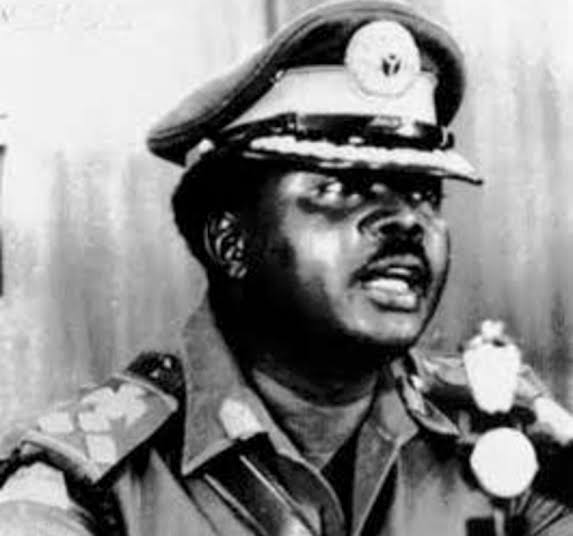
Michael Otuwe (retd.), a former orderly who witnessed the failed 1976 coup firsthand, has brought back new recollections of the assassination of former Head of State Murtala Muhammed fifty years later.

In a rare interview that was re-examined to commemorate the anniversary ten years ago, the retired soldier talks about his experiences during the civil war, how the charismatic leader nearly escaped his assailants, and the personal sacrifices that characterized years of close service to one of Nigeria’s most admired military leaders.

“I am an Igala man from Olamoboro Local Government of Kogi State,” Otuwe recounted in the interview with Daily Trust, recalling his entry into the military. I went to Ankpa Primary School and Ankpa Model Secondary School prior to enlisting in the army, which is the career I most loved.

He claims that on September 11, 1967, he joined the Nigerian Army at the Ikeja Military Cantonment in Lagos, where he received six months of training just before the start of the Nigerian Civil War.

“Incidentally, Murtala Ramat Mohammed was a Colonel and the Inspector of Signals at the time I was assigned to the Nigerian Army Signal Corps following the training,” he continued.

Otuwe claimed that Muhammad personally picked him due to his neatness and discipline.

“He told me that at our master parade, he saw how well-groomed I was in my army uniform. He remarked, “When I was a Lance Corporal, he chose me to be his orderly.

He clarified that he had worked closely with Muhammad in a number of positions, including during the civil war, when the late General was appointed the first General Officer Commanding of the Nigerian Army’s Second Division.

The General had three children during that time: Aisha, Zakari, and Fatima. Otuwe stated, “I worked with him till he was killed, and that was 11 years.”

Otuwe characterized Muhammad as a military leader who was both strategic and disciplined.

He was an organizer for the welfare of men. He was intelligent and diligent, and he put Nigeria first,” he remarked.

He recounted an instance in which they were surrounded by Biafran soldiers.

He made an amazing tactical move and withdrew, leaving even those of us with him perplexed. When many wanted to give up, he set out to fight and win so that Nigeria might remain a single nation.

Overcoming Ambushes
The former soldier described a number of ambushes he had come across throughout the conflict. We had a lot of ambushes and attacks, but one of the more memorable ones was when we were surrounded at Ukpo Junction in Abbagana, he stated. Many towns and cities were taken as a result of Murtala’s tactical move to withdraw and get ready for a defensive onslaught.

Following several actions, Otuwe continued, troops marched through Asaba and then to Idah in modern-day Kogi State in order to get ready for more offensives.

After a reorganization in 1968, General Murtala returned to Lagos as the Minister of Communications and the Inspector of Signals. In other words, he was working two jobs at once,” he said.

Otuwe talked about how his work had impacted his family, stating that his wife had become used to life in the military.

She was married to a soldier and had integrated herself into the system. He explained, “She knew we were off duty when she saw us at home.”

Because of his hectic schedule, he noted, his kids hardly ever saw him.

“I left home at dawn and returned late at night, so most of my kids almost forgot me,” Otuwe wrote.

Price monitoring and covert visits
Otuwe also described how Muhammad concealed himself in order to keep an eye on Lagos’s market rates.

He claimed that at one point, he was followed to evaluate prices and the growing cost of things by his ADC, Lieutenant Akintunde Akinterinwa.

Wearing a tracksuit, a face cap, and dark goggles, he rode a horse to a filling station, got off, tied it, and went into the marketplaces of Sangross (Lagos Island), Ajegunle, and then Agege. I was posing as a window shopper while the ADC acted as though we were not together and that they were writing the prices. People were more disciplined back then, and everyone waited for their turn, so a market woman advised him to give other purchasers a chance. Meat and commodities arrived in ships after two weeks. The flesh was labeled “Murtala Meat” by others.

Orderly, Murtala Muhammad, and Michael Otuwe

Assassination Day
When questioned about what transpired on the day of Murtala’s murder, Otuwe recounted, “He was killed on July 29, 1976 (begins to cry).” He held power from July 29, 1975, to February 13, 1976, for a total of six months. Before General Gowon left Dodan Barracks, he allowed the residence to be repaired and his personal belongings to be carefully removed rather than thrown out, demonstrating his great character. His absence of pilot cars, motorbike outriders, armed military personnel, and security escorts was the reason he was commuting from Ikoyi. He only drove the official Mercedes-Benz, which was flying two flags: the military flag on the right and the national flag on the left. That fateful day, we went by the Federal Secretariat in Ikoyi, which was coated in zinc and undergoing renovations.

When we arrived at Alagbgon Junction, the traffic cop failed to see the flags and would have let the cars heading our way continue, but instead he stopped the five or six cars ahead of us. I then noticed some people in Agbada (Babanriga), and when they raised them, they brandished AK-47 rifles and opened fire on us. A man wearing a mask had already struck Sergeant Adamu Michika, the driver, in the head and felt the armrest where the suit bag with the General’s mufti was located. I landed on the driver after taking cover.

Additionally, the General and the ADC sought refuge. As the assassins departed and made their way to the National Broadcasting Corporation, Radio House, to declare the takeover, one of the Majors noticed that the Major shouted and informed his colleagues that they were still alive when the ADC opened the door to assist the General. As a result, they turned, hurried back, and fired at us. After being shot in the arm and hip, I was the only one who survived.

The soldiers were pursued by General Murtala’s loyalist troops, who led us to the mortuary. I came out of my coma when the discomfort and the air conditioner’s breeze roused me up. I raised my hand, and a mortuary attendant saw it. He called a doctor, who confirmed that I was still alive. I was then taken to Dodan Barracks and a hospital on Awolowo Road in Ikoyi.

Otuwe spoke of his recuperation from the incident, saying, “I returned to work with the Nigerian Army Signal Corps after six months of recuperation. There I collaborated with Generals Tanko Ayuba, Raji Rasaki, and Adenaju.

When asked if he had ever been honored, the former soldier said, “No, not at all.”

Otuwe disclosed his living arrangement during the interview, saying, “I currently reside in a rented two-bedroom house in Maraba, Nasarawa State. Not to mention a home number, the street is nameless. However, I work in Maitama at Riskua Murtala Muhammad’s office.

Otuwe remembered that on December 31, 1999, he retired as a Master Warrant Officer.

Otuwe responded, “No, no, no, not at all,” when asked if he ever regretted serving in the Nigerian Army.
Reps’ Proposal for Statutory Funding of Traditional Councils Explained

0

It is now appropriate to strengthen the established institutions and increase their efficiency in carrying out their mandate.

Keep in mind that there have been worries about the historic institution becoming politicized, and many believe that many palaces have become political playgrounds.

They claim that contract-seekers and sycophants have taken over the hallways that were once famed for community justice and sound guidance.

One of our informants claims that political survival and patronage have come at the expense of the stool’s dignity.

States like Kano, Adamawa, and Katsina are the places where this unsettling tendency is most noticeable.

We saw the ruthless politicization of the emirate in Kano, when a centuries-old institution was purposefully destroyed in the name of control and retribution.

Traditional unity in Adamawa has been undermined by polarizing politics. Creeping interference poses a threat to the voices of moral fortitude and tradition in Katsina.

Two former ministers, Professors Tunde Adeniran and Taoheed Adedoja, are at odds over a proposed constitutional amendment that would create a formal and stable funding system for traditional institutions.

After the House Committee on Constitution Review, led by Deputy Speaker Benjamin Kalu, adopted a report, the bill is now before the House of Representatives.

In order to provide a specific financing source for traditional councils nationwide, the committee is recommending a change to Section 162 of the 1999 Constitution (as amended).

Funds standing to the credit of local government councils in a state “shall be distributed among the local government councils of that state on such terms and in such manner as may be prescribed by the House of Assembly of the state,” according to Section 162 of the Constitution, which regulates the Distributable Pool Account.

The committee suggests that a new proviso be included after Subsection (8) of the proposed amendment, requiring state legislatures to pass legislation requiring the direct funding of traditional councils.

In particular, the new clause mandates that a House of Assembly “adopt legislation for the direct payment to the head of the traditional council in that state of not less than five percent of the amount standing to the credit of the local government councils in that state.”

If approved, the amendment would eliminate traditional institutions’ reliance on state and municipal governments’ discretionary subventions by providing them with a constitutionally guaranteed source of revenue for the first time.

In an exclusive interview, former Education Minister Prof. Adeniran warned against the perils of forcing traditional institutions to adopt a standardized national model.

He maintained that, given their unique histories and requirements, subnational governments are in a better position to decide how such organizations should be run.

“The importance of traditional institutions varies from state to state,” he stated. They shouldn’t be subjected to national homogeneity and politicized. States should deal with these matters, and constitutional guarantees protecting conventional institutions shouldn’t make matters worse at the federal level.

The stance of Prof. Adedoja, a former Minister of Sports and Special Duties, who has endorsed the proposed modification, stands in stark contrast to Adeniran’s.

Adedoja praised parliamentarians for bringing about the constitutional reform and urged widespread support, emphasizing the significance of traditional rulers in grassroots governance and dispute resolution.

“In all local governments in Nigeria, traditional institutions are closest to the people at the community level,” he stated. They are essential in keeping peace, resolving family and land issues, and mediating conflicts through culturally appropriate means.

“They can react quickly to these local disputes thanks to budgetary backing, which eases the burden on formal courts that are overburdened with cases. “In local government areas, traditional institutions help maintain peace and order,” he informed our correspondent.

Adedoja asserts that the constitutional support for traditional council funding is justified solely by the maintenance of cultural and social values.

“Traditional rulers are stewards of indigenous culture, history, and moral values,” the speaker stated. Funding is used to assist cultural festivals, local history documentation, and the dissemination of ideals that foster civic identity, harmony, and respect.

“This cultural stability enhances social cohesiveness and supports community development initiatives by local governments.”

The former minister also used community mobilization for security and development as justification for the proposed bill.

He went on to say, “Traditional institutions are good ways to get people involved in development projects like public health campaigns, education enrollment, cleanliness, and local security.

“Budgetary allocations improve their ability to work with local governments to implement policies at the grassroots level, support vigilante and early-warning systems, and engage stakeholders.”

Since Nigeria returned to democratic governance in 1999, the fight for constitutional funding and recognition of traditional institutions has taken center stage in constitutional discussions.

Under the current Constitution, traditional rulers are not given any official position in the governance structure, despite their impact on grassroots mobilization, cultural preservation, dispute resolution, and community governance.

Despite their continued significance, reformers contend that this exclusion has undermined conventional institutions, especially in rural areas where they frequently serve as the closest authority to the populace. Traditional leaders, according to supporters, are essential allies in addressing security issues, resolving intercommunal conflicts, assisting with public health initiatives, and fostering local development.

Proponents of the proposed amendment argue that constitutional funding will improve conventional institutions’ efficacy, independence, and dignity. They contend that the current funding structure, which is mostly reliant on the cooperation of governors or chairmen of local governments, leaves traditional leaders vulnerable to political pressure and compromises their objectivity.

They contend that a statutory funding structure would boost administrative capacity, provide predictability and transparency, and enhance traditional councils’ power to assist grassroots government. While nominally acknowledging the historical and social relevance of traditional authority inside Nigeria’s federal structure, they nevertheless maintain that distributing a small portion of local government monies will not disturb fiscal balances.

Legislative discussions on the plan are anticipated to center on accountability and the lack of clearly defined constitutional roles for traditional rulers, which are concerns expressed by opponents.

INEC’s Proposed N873bn Budget for 2027 Not Excessive — Osaze-Uzzi

0

According to Oluwole Osaze-Uzzi, a former director of the Independent National Electoral Commission (INEC), the Commission’s planned N873 billion budget for 2027 is not excessive.

During an interview on Channels Television’s Politics Today on Thursday, Osaze-Uzzi stated this.

According to reports, INEC has put out a N873.78 billion budget for the general elections that will take place in 2027.

“When we look back at the budget for the 2023 elections, I don’t think there has been an exponential growth in what is being presented to the Assembly now,” Osaze-Uzzi noted in response.

“To make sure that resources are used and allocated effectively, I anticipate that the National Assembly will examine it carefully, consider the inflation rate, and examine the breakdown.

“Hopefully, we’ll figure out the logistics properly. Appropriate funding for trading, logistics, and system advances in technology. These all need to be taken into account.

Anthony Joshua’s Career in Doubt Following Deadly Accident in Nigeria — Eddie Hearn

0

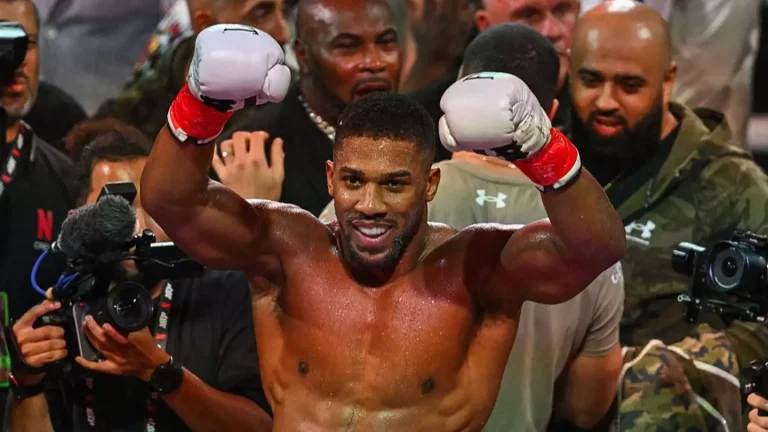
After two of his close friends died in a vehicle accident in Nigeria, Anthony Joshua’s promoter Eddie Hearn said Joshua might give up boxing.

As he continues his physical and psychological recuperation from the December accident in Ogun State, Hearn stated that there are no assurances the former heavyweight champion will make a comeback to the ring.

After stopping Jake Paul with a single blow in his last fight, Joshua reportedly traveled to Nigeria to see family. But catastrophe came on December 29, 2025, when the car he was riding in met a halted truck on the Lagos-Ibadan Expressway.

One of Joshua’s trainers, Latif “Latz” Ayodele, and his strength and conditioning coach, Sina Ghami, perished in the collision. After surviving, Joshua was treated in a hospital and then sent back to the UK. He later went to both men’s funerals.

Hearn acknowledged that there is still uncertainty around Joshua’s future in the sport in an interview with First Round TV.

Although there are no promises that he would fight again, I do expect him to do so because he enjoys it. But he can also bring those individuals along, and he wants to do it,” Hearn stated.

He went on to say that the crash’s effects extended beyond psychological distress.

Physically, it wasn’t easy for him either, from a boxing perspective. Most likely, people are unaware of the depth of his experiences. Although he has been training, the boxing promoter pointed out that he is not yet ready and won’t be for some time.

Hearn revealed that Joshua was getting ready for a fight in March and that a fight against fellow Brit Tyson Fury was being considered. Those plans are currently on hold.

“We were getting ready for him to face Tyson Fury in March.” That won’t happen now, of course. I doubt it will ever occur. He will increase his workout intensity over the next few months to assess his progress, Hearn stated.

After more than a year away from the ring, Fury is expected to make his comeback in April against Arslanbek Makhmudov.

Joshua, meanwhile, has tattooed the names of his departed buddies on his body as an homage. Photographs of the artwork were posted on Instagram by London-based company Fulham Tattoo, which said the two-time world champion stopped by unexpectedly for his first session.

“A huge thank you to Anthony Joshua, the two-time heavyweight champion of the world, for coming in the door a few weeks ago for his first visit with us at Fulham Tattoo London … what a walk in,” the post said.

Regarding his future in boxing, Joshua has not yet made any public remarks.

Bisi Ilaka, Former Chief of Staff to Makinde, Quits PDP

0

Former Oyo State Governor Seyi Makinde’s chief of staff, Bisi Ilaka, a prominent member of the Peoples Democratic Party (PDP), has formally resigned from the party.

In his letter of resignation dated February 10th, which was made public to reporters in Ibadan on Thursday, Ilaka expressed gratitude to the PDP for providing him with the chance to serve in a variety of roles at the state and federal levels.

On May 29, 2019, not long after taking office, Governor Makinde named Ilaka his first Chief of Staff.

Following the general elections in 2023, Ilaka was reappointed after Segun Ogunwuyi assumed the office in 2021.

“The Chairman, Ward 5, Oyi East LG: Re: Resignation of Party Membership,” was the title of the letter Ilaka wrote.

“I respectfully submit my resignation as a member of the PDP.”

“The party has offered me opportunities and unwavering support over the years, for which I will always be thankful. Till we cross paths again.

His departure follows the departure of another well-known PDP member in Oyo State, Senator Agboola Ayoola, widely known as Alleluyah, who was the Senate’s former Deputy Chief Whip who ended his long-standing association with the party in October 2025.

From 2003 to 2011, Ayoola, who hails from Itesiwaju Local Government Area, worked as the Commissioner for Local Government and Chieftaincy Affairs under former governors Rashidi Ladoja and the late Adebayo Alao-Akala.

Additionally, from 2011 to 2015, he was the only PDP senator elected from the South-West, making history.

Continuity Fails Benue, Byuan Faults System, Advocates Reform Agenda

0

A candidate for governor and a candidate in the 2023 Benue governorship contest, Dr. Mathias Byuan, has stated that the state’s current governance structure is no longer viable.

Speaking in an exclusive interview at his home yesterday, Byuan claimed that Benue State is struggling with a seriously defective government structure that has grown reactive, over-centralized, and estranged from the people it is supposed to represent, rather than a few isolated policy errors. “Benue governance has fundamentally collapsed,” Byuan stated.

“Political survival, not long-term planning, is what drives decisions. Spending public funds has little discernible effect on fundamental services, livelihoods, or security.

To stay in this system is to put up with institutional weakness and stagnation. Instead of just replacing political actors, Byuan, who ran for governor in 2023 and is putting himself in a position to win the next election, stated that his fresh ambition is motivated by the need to rethink how government functions.

He says that the fact that insecurity has persisted despite years of significant public spending, the steady collapse of productive industries like agriculture, and the degradation of the civil service are the best indicators that Benue needs a new direction.

He questioned, “After years of massive security budgets, how do you explain ongoing killings and displacement?” “How do you defend a civil service that is politicized, underpaid, and demoralized, or an agricultural state where farming hardly succeeds beyond subsistence?”

When a government consistently fails to provide fundamental services, boost the economy, and safeguard lives, Byuan contended that poor execution is no longer the only cause of the issue. “That’s systemic failure,” he said.

Byuan vehemently denied that his aim stems from personal gain, insisting that his goal is institutional transformation, not running for politics. He stated, “This is not about taking over Government House.”

Rebuilding institutions, establishing performance standards, and holding the government responsible for outcomes are all important. Previous governments prioritized short-term projects and individuals. Systems are my main emphasis.

He identified three fundamental structural flaws that have contributed to Benue’s governance issues over the past 10 years: a political culture that values loyalty over ability, planning and budgeting procedures that aren’t linked to results, and institutions that rely more on people than on regulations.
The political climate in Benue is not new to Byuan.

He previously stood for office and was one of the candidates for governor in the 2023 election. He contributes what he calls a technical background formed by academic training and public service, which goes beyond partisan politics.

As the Executive Director, Housing (Finance and Accounts) at the Federal Housing Authority, Byuan, who holds a PhD in Business Administration (Finance), has experience overseeing institutional systems and public finance at the federal level.

He claimed that his background in public administration strengthened his conviction that, in the absence of robust institutions, leadership cannot bring about long-lasting change. He stated, “If the system is weak, you can have good intentions and still fail.”

Byuan expanded on these findings and described the institutional changes he would like to see if elected.

He stressed that policies cannot be successful without the structures that support them and declared that institutional transformation would be the cornerstone of his government.

He declared, “Policies fail without strong institutions.” “Only when systems reward appropriate behavior do mindsets change.”

He revealed intentions to digitalize public finance, decentralize service delivery, fortify local governments, and implement transparent procurement and monitoring mechanisms that let the public keep tabs on government initiatives and expenditures.

He claims that his proposed governance model is performance-driven and people-centered, with public officials being regularly evaluated and budgets linked to quantifiable results.

In response to questions regarding the sustainability of reforms, Byuan stated that significant change needs to be ingrained in institutional structures, legislation, and technology.

He claimed that once procedures and performance standards are established, they become permanent.

He also stated that public scorecards, independent audits, clear performance indicators for ministries and agencies, and penalties for non-performance would all be used to ensure accountability. Regarding deeply ingrained political interests, he argued that vested interests would inevitably be weakened by systemic reform rather than individual targeting.

“Vested interests naturally lose influence when budgeting, hiring, and procurement become transparent and rule-based,” he stated.

According to Byuan, the effects of reform should be noticeable during the first two years of a government, especially in the areas of public service delivery, agriculture, and security.

“Farmers ought to feel more secure and have access to markets and extension services.” Better welfare and merit-based promotions should be provided to civil officials. “Better infrastructure and less harassment should benefit traders,” he said.

He continued by saying that timely grievance procedures, frequent town hall meetings, and institutionalized citizen feedback mechanisms will all help to restore public trust.

He stated, “When the government is honest, controls expectations, produces results, and owns up to its mistakes, trust grows.”

When Byuan considered how he wanted his time to be remembered, he stated that Benue needed to transition from administration driven by politics to leadership driven by purpose, from weak institutions to strong ones, and from broken promises to quantifiable progress.

He said that the people must henceforth be served by the government, not the other way around.

Judicial Reforms Deepen in Taraba as New Court Rules Are Introduced

0

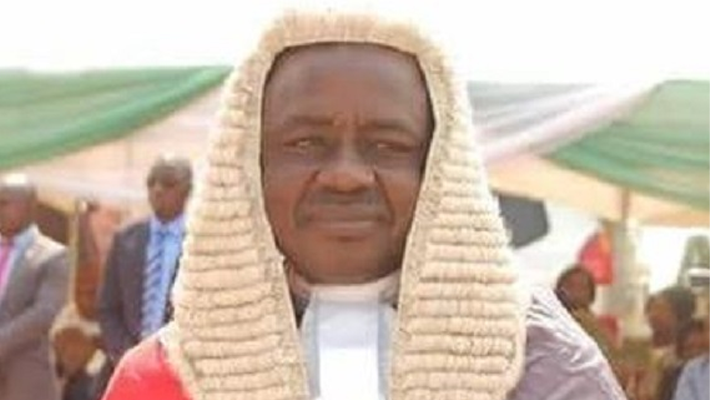
The Taraba State Area Courts (Civil Procedure) Rules 2026 and the Taraba State District Courts Rule 2026 were signed into law on Thursday by Justice Joel Agya, Taraba State’s Chief Judge.

During his signing of the regulations at the Taraba State High Court Complex in Jalingo, Agya stated that the judiciary has expanded its reforms to include the core of the institution.

He stated that the purpose of those tools was to modernize the High Court’s process and encourage uniformity, openness, and equity in sentencing.

“With today’s signature of the Taraba State District Courts Rules, 2026 and the Taraba State Area Courts (Civil Procedure) Rules, 2026, we have expanded this reform to the courts that are closest to the people, who represent the cornerstone of our justice delivery system.

“For many of our citizens, their first and occasionally only interaction with the legal system occurs at Area Courts and District Courts.” As a result, their processes must be straightforward, effective, easily available, and sensitive to modern environments. The new regulations show this dedication. They first modernize and streamline the processes’ method of service by specifically allowing for digital and electronic means of service. This reform is intended to minimize delays, cut expenses, and guarantee that parties are immediately informed of proceedings that impact them. It acknowledges the communication realities of today.

The Rules also improve and make clearer the provisions concerning Area Court Inspectors. Ensuring responsibility, upholding standards, and bolstering public trust in our subordinate courts all depend on efficient oversight and inspection.

Third, the District Court and Area Court filing fees have been examined. With careful thought, this evaluation was conducted to guarantee the long-term viability of court operations while keeping in mind the average citizen’s right to access justice.

Fourth, and most importantly, the Rules now include provisions on case management that are lucid and consistent.

He stated that the goal is to create a culture of efficiency and accountability in our courts by implementing organized processes for managing cases, preventing needless postponements, and promoting prompt resolution.

The revisions, Agya emphasized, were a larger goal rather than just technical tweaks. an accessible, humane, disciplined, and modern judiciary that is open to everyone. I applaud the Rules Committee, judges, court officials, and all other participants who helped establish and improve these rules. This transformation is achievable because of their commitment and knowledge,” he continued.

Additionally, the chief judge emphasized that accurate application of the new rules would be just as important to their success as their wording.”

He called on all District Court judges, Area Court judges, court employees, bar members, and other stakeholders in the justice system to thoroughly understand those requirements and to vigorously and sincerely implement them.

The administration of justice is a sacred trust, he said. Our commitment to delivering justice that is prompt, equitable, transparent, and responsive to the needs of our people is reaffirmed by these improvements.

“Everything I Have Is My Sweat” — Kemity Refutes Sex-for-Roles Claims

0

The Nollywood actress Oluwakemisola Apesin, better known by her stage name Kemity, has responded to reports that she used sexual favors to rise in the business.

She reportedly emphasized that hard effort is the reason behind her success in a post on her Instagram page.

Kemity shared old pictures and reminisced about her early career as she looked back on her time in Nollywood.

She said that she has always made her way on her own and has never traded her body for opportunities or movie parts.

She supported herself while following her acting love by working as a receptionist at the Masters Hotel in Ayobo and owning two wine shops prior to entering the film industry.

Kemity noted that in order to finance productions and maintain her financial stability, she had to acquire a variety of skills for her work, such as acting and makeup artistry.

She emphasized that her background and strong family values have guided her in her work and dedication, which has led to every professional accomplishment.

The actress, who is also a mother to two girls, cautioned aspiring actors against falling for industry short cuts or deceptive claims.

She stressed that hard effort, skill, discipline, and consistency are sufficient for success.

“Turn back Thursday,” she wrote. I have to politely clarify things. No one should allow social media noise to fool them. I have never collected a movie role with my body. I have never slept with someone in order to be in a movie.

“I have never traded opportunity for sex. I sold wine in two different stores before I even met my employer.

“I’ve always earned my money via hard labor. A mother is what I am. I’m bringing up and training my two daughters with honor and moral principles. I can’t base their future on anything shady. My sweat is everything I am now. By God’s grace and hard labor, I have accomplished everything.

Fresh Turmoil in Osun PDP as Bisi Dismisses Ouster

0

Before the upcoming governorship race, different voices inside the Peoples Democratic Party (PDP) officially reaffirmed their viewpoints on the party’s structure and political direction, bringing new details to light regarding the leadership crisis roiling the PDP’s Osun State chapter.

The state chairman, Sunday Bisi, has denied allegations that he has been removed from office, and his standing is at the heart of the conflict.

According to Bisi, the stakeholders’ forum’s announcement of his alleged expulsion was unlawful and ineffective.

Bisi insisted that his term as the state’s legitimately elected party chairman is still in effect while speaking to reporters in Osogbo on Thursday.

“The forum is not authorized by law to alter or dismantle the party’s elected structures. He declared, “I am still the chairman.”

He maintained that decisions impacting elected officials could only be made by the party’s duly constitutionally formed organs.

The PDP in Osun, Bisi revealed, had endorsed Governor Ademola Adeleke for reelection rather than fielding a candidate for the August governorship election.

Governor Ademola Adeleke has been endorsed by the PDP for reelection because the party does not have a candidate for the August gubernatorial election. It’s the reality of the situation,” he said.

Bisi acknowledged the party’s internal conflicts but stated that the majority of the state’s elected officials were still PDP members.

“The governor and deputy governor are the only members of our elected authorities who are still in the PDP. We have endorsed Governor Adeleke since our party does not have a candidate,” he continued.

The chairman also reacted to statements ascribed to Prince Olagunsoye Oyinlola, the former governor, saying that they fell short of the stance of what he called the mainstream structure of the Osun party.

According to Bisi, the comment attributed to former Governor Olagunsoye Oyinlola is a clear betrayal and a continuation of an unsuccessful attempt to stop Governor Adeleke in 2022.

He clarified that certain strategic choices had been prompted by the uncertainty surrounding the governor’s political future caused by internal PDP disputes at the national level.

The PDP national leadership’s rift posed a threat to our governor’s campaign. Seeking a platform for re-election was the governor’s appropriate move. According to him, Prince Oyinlola was even the first to propose this idea.

Bisi said that the Osun party’s core leadership and membership base continued to support the existing state executive and its policies.

“The Osun PDP’s mainstream supports the governor, our leadership, and our elected mandate as state officers, all of which cannot be curtailed by any unelected, unlawful, or unauthorized group,” he said.

Earlier, Prince Oyinlola had insisted that the PDP was still a strong political force in the state in spite of Governor Adeleke’s alleged defection to the Accord Party at a separate stakeholders’ meeting in Osogbo.

The purpose of the meeting, he said, was to explain party developments at the state and national levels.

“There have been some confusing narratives being pushed out about the status of PDP, especially in Osun State. What we did today is to narrate situations as they are to our members, so that the entire wards and local governments in Osun will know exactly where PDP stands today in Osun State,” Oyinlola stated.

In response to allegations that the state’s PDP structure had been dismantled to create the Accord Party in order to help Adeleke win reelection, Oyinlola denied the allegations.

The PDP is a party that has representatives in every corner of the nation. He declared, “We will not let it die in our own time.”

He went on to say, “We are holding on to PDP,” adding that the party was still open to new developments. Our governor is welcome to return to the PDP tomorrow to be with his family, but for the time being, the party is firmly established in Osun State.

Are You Under the Influence Of A 40-Year-Old Whiskey? — Atiku’s Camp Slams Fayose

0

Former Ekiti Governor Ayodele Fayose has been made fun of by Paul Ibe, the media adviser to former vice president Atiku Abubakar, for giving him a 48-hour ultimatum to take down a comment that was made about him.

According to reports, if his assistant didn’t take back a statement criticizing Atiku, Fayose threatened to reveal more details about their encounter in Minna.

In contrast, Ibe questioned whether the 48-hour ultimatum was excessive in a statement on 𝕏.

He was disappointed by Fayose’s unable to distinguish between himself and Phrank Shaibu.

“It only proves that Fayose’s stories are genuinely inspired by some aged beverages,” Ibe retorted.

Ibe went on to say that he doesn’t require the services of a witch doctor in order to speculate on the source of his aged beverage supply.

In an attempt to show sympathy for Fayose, Atiku’s spokesperson asked the former governor to get back to him if he regains his sanity before the 48-hour recovery period.

For failing to distinguish between Ambassador Phrank Shaibu and my modest self (Paul Ibe), I am not dissatisfied with Peter Ayodele Fayose.

“Sir, if you had actually read the statement titled “Peter Ayodele Fayose’s Beer Parlour Tales Of Infamy,” you would have noticed that Amb. Shuaibu, not Ibe, was the author. Did you read it while intoxicated?

“Haba, is forty-eight hours too long? “Is it the 40-year-old whiskey or did you drink a more mature one that takes longer than 48 hours to “clean” from your eyes?” he inquired mockingly.