Home Blog Page 320

FG Felicitates with Trump on His Inauguration as 47th President

0

Donald Trump was congratulated by the federal government on becoming the 47th president of the United States of America.

Kimiebi Ebienfa, the spokeswoman for the Ministry of Foreign Affairs, delivered the warning in a statement on Tuesday.

The federal government emphasized the two countries’ close and long-standing relationship, emphasizing their mutual collaboration in fields like sustainable development, good governance, and combating violent extremism and terrorism.

In order to further the interests and welfare of the people of both countries, the statement reaffirmed Nigeria’s commitment to deepening its strategic partnership with the United States under President Trump’s direction.
Nigeria is eager to continue working with the United States to address global issues and promote mutual development, according to FG.
Following his successful inauguration as the 47th President of the United States of America, President Donald Trump received congratulations from the Federal Republic of Nigeria, according to the statement.

The United States of America and Nigeria have collaborated in a number of areas of shared interest, particularly in the fight against violent extremism and terrorism, sustainable development, and the advancement of good governance.

Therefore, “for the benefit of all our people, Nigeria looks forward to further strengthening our historic, strong, and vibrant strategic partnership.”

Read Also: Breaking: NCC Grants Approval for Tariff Increase, Sets 50% Cap

Due to bad weather, Trump’s historic inaugural ceremony was place inside the Capitol Rotunda on Monday, marking his inauguration as the 47th president of the United States.

CNN reports that Trump swore to uphold, defend, and defend the Constitution when he took the oath of office delivered by Chief Justice John Roberts of the Supreme Court.

Breaking: NCC Grants Approval for Tariff Increase, Sets 50% Cap

0

This is in accordance with its authority to control and authorize tariff rates and charges by telecommunications providers under Section 108 of the Nigerian Communications Act, 2003 (NCA).

Reuben Muoka, the NCC’s Director of Public Affairs, said in a statement that the adjustment, which is limited to no more than 50% of current tariffs and is less than the 100% that some network operators have demanded, was made while taking into consideration ongoing industry reforms that will have a positive impact on sustainability.
“As is the Commission’s regular procedure for tariff reviews, requests will be examined on an individual basis, and these modifications will stay within the tariff bands outlined in the 2013 NCC Cost Study. Strict adherence to the recently released NCC Guidance on Tariff Simplification, 2024, shall govern its implementation.

Despite the rising operating costs that telecom operators must contend with, tariff rates have not changed since 2013. According to the statement, the authorized modification aims to close the large discrepancy between operating costs and current prices without compromising service delivery to customers.

Read Also: Philip Agbese: The Bridge to Enone’s Future

The NCC claims that these changes will let operators continue to invest in innovation and infrastructure, which will eventually benefit customers by improving connectivity and services like higher coverage, better network quality, and improved customer service.

Finding a balance between safeguarding telecom customers and maintaining the industry’s viability—including the thousands of local suppliers and vendors that are an essential component of the telecommunications ecosystem—has been a top priority for the NCC.

“The NCC continues to have a great deal of empathy for the effects of tariff modifications and acknowledges the financial strains that Nigerian homes and companies are under. In light of this, the Commission has ordered operators to make these changes in a way that is fair to customers and transparent. Operators must also show quantifiable gains in service delivery while educating and informing the public about the new charges.

Furthermore, the NCC reiterates its commitment to developing a robust, inventive, and inclusive telecommunications industry. In addition to safeguarding consumers, the Commission’s initiatives aim to encourage local suppliers and vendors, guarantee the industry’s long-term viability, and foster the expansion of Nigeria’s digital economy as a whole.

In order to establish a telecommunications environment that benefits all parties—one that safeguards customers, assists operators, and maintains the ecosystem that powers connection throughout the country—the NCC will keep interacting with stakeholders in its capacity as a regulator, the statement continued.

Philip Agbese: The Bridge to Enone’s Future

0

TheNigerian News Report on Okanga: The Bridge to Contemporary Leadership

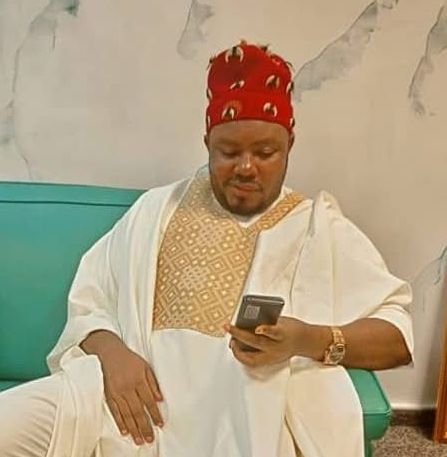
The Enone people have long faced difficulties that mirror the struggles of the Israelites, as depicted in ancient texts. Yet, amid these challenges, Chief Philip Agbese, known as Okanga, has emerged as a transformative leader, offering hope and renewal to his people. With a legacy of commitment to uplifting lives, Okanga represents more than just a messenger of change; he embodies the very principles of leadership that bring hope and restoration.

Okanga’s leadership is marked by his unwavering dedication to resolving the issues that affect his community. Through his actions, he has demonstrated a deep understanding of the struggles faced by his people. His vision is clear: to guide Enone towards a prosperous future, driven by unity and collective progress. The people, under his guidance, are encouraged to remain steadfast and supportive of his mission. As the Okanga project unfolds, it is evident that he is not just leading; he is shaping a future where every citizen thrives. The message is simple—unite for the common good, and a bright future will follow. The importance of unity is underscored by the saying, “A child with two mothers may go hungry despite double expectations,” illustrating how cooperation and harmony are key to success.

As Okanga continues his journey, he is being compared to a soaring plane in the world of leadership. While many leaders may be likened to a slow-moving train, dependable yet constrained by its tracks, Okanga’s approach is like that of a flying plane—swift, unencumbered, and soaring to new heights. His leadership style is defined by agility, speed, and the ability to adapt to new challenges. Always looking toward the future, Okanga is a visionary who navigates the complexities of today’s fast-paced world with confidence. His rapid decision-making and willingness to embrace innovation have established him as a bold and forward-thinking leader, capable of leading his people through turbulent times.

In today’s world, where the pace of change is unrelenting, Okanga’s leadership provides a crucial lesson. It shows that success demands agility and the ability to act decisively, even when the path forward is unclear. With his motto “Continuity and Progress” and his mission symbolized by “4+4=8,” Okanga demonstrates that true leadership is not just about maintaining the status quo but pushing the boundaries of possibility. Under his leadership, the Enone people are not just surviving—they are thriving, driven by a shared vision of progress and unity.

The future looks bright for Okanga and his people. As the Governor of Enone continues to empower the youth, the region stands on the brink of a new era. The strength of Okanga’s leadership promises to propel Enone to greater heights, and with his disciples—dedicated individuals supporting his mission—his movement is poised for continued success. As the story of Okanga unfolds, TheNigerian News will remain committed to documenting the ongoing journey of a leader whose vision and determination are reshaping the future of the Enone people.

The Governor of ENONE is here to empower Enone Youth again.
Details will out shortly…….
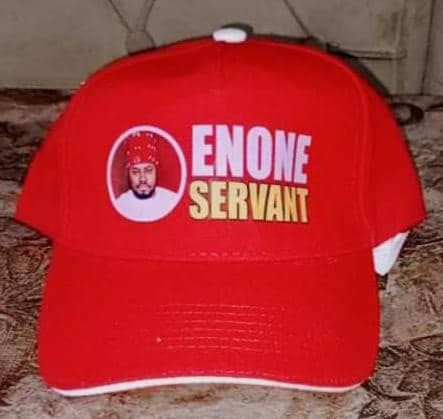
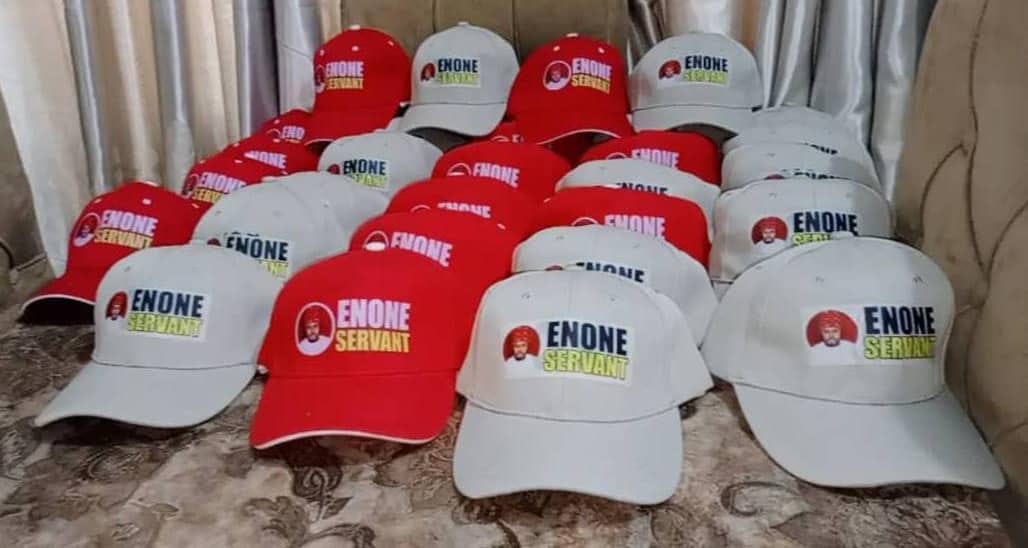
The sarvant of ENONE we know as our Governor chief Dr Hon Phillip Agbese aka Okanga of our time.

TheNigerian News reporter.

FG Announces Youth Employment for Building of 8,800 New Health Facilities

0

Plans have been announced by the federal government to hire young Nigerians to assist in overseeing the anticipated construction of 8,800 new healthcare facilities spread across the nation’s 774 local government units.

Prof. Muhammad Ali Pate, the Coordinating Minister of Health and Social Welfare, announced this yesterday in Abuja. He said that the Presidential Health Fellows Program, which was recently approved by President Bola Ahmed Tinubu, will involve a mass recruitment effort for young Nigerians in all local government areas.

Pate encouraged all eligible young Nigerians to apply online at www.healthfellows.ng by on or before January 27, 2025.

According to the minister, selecting those to be involved will involve a multi-screening process at the state level in each local government region of the federation.

In addition, the minister said that the successful candidates who are chosen as fellows will be accountability officers who will supervise the construction of 8,800 new primary health facilities across the country over the course of the ensuing years, making sure that each facility operates with operational excellence and fiduciary integrity within their responsible areas.

Concurrently, the National Health Fellows Program has been formally launched, and potential candidates are being asked to start applying. Its goal is to improve primary healthcare delivery across the country by transforming Nigeria’s public health sector and producing the next generation of healthcare leaders.

A statement claims that a group of up-and-coming experts from a variety of disciplines, including the social sciences, information technology, and health and allied professions, will be brought together by this esteemed program. Through leadership opportunities, mentorship, and intense training, the chosen fellows will learn about the best practices in Nigeria’s healthcare industry.

This initiative gives our young people an unmatched chance to develop their leadership skills and develop significant, meaningful, and results-driven healthcare solutions. It is based on their boundless talent, intelligence, and patriotism. In order to shape the future of our country’s health sector, we urge young Nigerians to step up as strong change agents and claim their rightful role,” Pate said.

The statement gave an example of how the fellowship’s main goal is to develop a group of highly qualified and driven health executives who can spearhead significant innovation and change in our healthcare system.

Read Also: Ohanaeze Ndigbo, Ikwerre People, Politics of Identity – Jideofor Adibe

A newly issued announcement also described the program’s eligibility requirements.

“Applicants must have relevant experience and skills, be between the ages of 25 and 35, and hold a bachelor’s degree in health-related fields, IT, or social sciences.”

Candidates should also exhibit an interest in or background in primary healthcare, community service, or non-governmental organizations that deal with health issues.

Due to the program’s requirement for a full-time commitment, among other things, applicants must also have high analytical abilities, entrepreneurial drive, and leadership potential. They must also not be currently employed full-time or part-time.

It is recommended that interested candidates apply by January 27, 2025, via the official website at www.healthfellows.ng. Multiple screening steps, such as eligibility verification and interviews, are part of the selection process, according to the statement.

Ohanaeze Ndigbo, Ikwerre People, Politics of Identity – Jideofor Adibe

0

Ogbakor Ikwerre Cultural Organization Worldwide’s assertion that it is the only entity that preserves the aspirations of the Ikwerre people over their choice of ethnic identity would be called into question by the fact that three Ikwerre sons ran active campaigns for the position of president-general of Ohanaeze. In actuality, these discussions are rarely resolved definitively and frequently change depending on the circumstances of the ethnic group at issue.

Interesting questions concerning identity construction have been brought up by the Ohanaeze Ndigbo’s decision to cede the presidency to the Igbo-speaking people of Rivers State and the subsequent rise of three Ikwerre sons, each of whom claims to be the new president-general of the top Igbo sociocultural group. Recall that in separate conventions, Jackson Omenazu, Uche Okwukwu, and Senator Azuta Mbata—three sons of Ikwerre—claimed to have been chosen the association’s president-general. Other Igbo-speaking communities in Rivers State include Etche, Ekpeye, Ogba, Egbema, Ndoni, Ndoki, Asa, Bonny, and Opobo, in addition to the largest group, Ikwerre.

Several notable Nigerians, including former Vice President Atiku Abubakar, Governor Peter Mbah of Enugu State, senators from the South-East, Northern Christian Youth Professionals, and Governor Siminalayi Fubara of Rivers State’s chief of staff, Dr. Ehie Edison, have congratulated Senator Azuta Mbata, who was declared elected at a convention held at the Old Government Lodge in Enugu on January 10. This gives him an extra layer of legitimacy. However, there was a swift reaction: he was disowned by the Ogbakor Ikwerre Cultural Organization Worldwide, which says it speaks for the Ikwerre ethnic identity globally. The party contended that he had voluntarily and freely surrendered his membership and identity as an Ikwerre man by agreeing to serve as president of Ohanaeze Ndigbo, which it acknowledged was his constitutional prerogative. Senator Azuta Mbata’s choice to identify as Igbo, they added, “does not represent the collective view, will, position, or thinking of the Eneka community, Apara Kingdom, or the entire Ikwerre Ethnic Nationality.”There have been hints that the Igbo agenda of territorial ambitions was a factor in Ohanaeze Ndigbo’s decision to zone its presidency to the Igbos of Rivers State. Such suggestions, in my opinion, stem from either ignorance or malice. In actuality, like many other regions of the nation, the South-East Igbos are also having discussions over who they are. Discussing how to interact with their “cousins” outside of the South-East who speak the same or a related language to them is just as important as deciding whether they should establish their identity in Nigeria as it is now or in a different nation.

For example, some contend that, despite speaking the same or a similar language, Ohanaeze Ndigbo should only be used by Igbos in the South-East. This is partially to prevent accusations of fostering territorial aspirations or pursuing individuals who do not choose to identify with them. Others, on the other hand, think that restricting Ohanaeze’s leadership to the Igbos of the South-East would be unfair to their “cousins” in Delta and Rivers states, who are proud of their Igbo identity and wish to be recognized as such. The latter side, in my opinion, prevailed in the debate, which is why the Ohanaeze Presidency was assigned to Delta State in 2008 and Ogwashiuku native Ambassador Ralph Uwechue became the organization’s president-general.

Read Also: Tinubu Strengthens Grip on Power as Opposition Weakens Ahead of 2027

It’s crucial to remember that, even in the Southeast, some regions have myths or histories that place them outside of Igboland, and they occasionally object to being referred to as Igbo. For example, the residents of Onitsha, Anambra State, would refer to non-Onitsha Igbos as “Nwa Onye Igbo,” which translates to “son or daughter of an Igbo person.” The fact that the ethnic group that another group wishes to claim as its place of origin—typically one that has some historical prestige—would also have its own myth of where its people migrated from is one of the drawbacks of depending solely on origin myths to create one’s ethnic identity. This implies that it is not a huge concern that certain Ikwerre people do not wish to be recognized as Igbo.

Of course, there are other reasons why some Igbo “cousins” outside of the South-East may be against tying their ethnic identity to the Igbo, such as a sincere belief that they share no ancestry with the Igbos and that their shared language is merely a historical coincidence. On the other hand, Igbo “cousins” who wish to tie their ethnic identification to their Igboness may have their own beliefs, such as the possible advantages of belonging to one of the nation’s major ethnic groupings.

The same is true of Delta’s Igbo-speaking population: some prefer to identify as Igbo, while others do not. For example, there are discussions and debates in Benue and Plateau states on whether it is preferable for them to establish their own identity as the Middle Belt or to root it in Northern Nigeria. The same is true in Yorubaland, where Yoruba nation activists believe that an Oduduwa Republic would be preferable, even if Bola Tinubu, the president of the country, is a Yoruba guy.

Nigeria is not alone in this trend. For example, Somalia joined the Arab League on February 14, 1974, just 14 years after gaining independence, as part of the country’s leadership’s attempts to change Somalis’ perception of themselves from Africans to Arabs. It is crucial to emphasize that there was no awareness of being Igbo, Yoruba, or Hausa/Fulani before to colonization. Therefore, using ethnicity as a marker of identity is a relatively new practice that originated in colonial metropolitan centers.

Ogbakor Ikwerre Cultural Organization Worldwide’s assertion that it is the only entity that preserves the aspirations of the Ikwerre people over their choice of ethnic identity would be called into question by the fact that three Ikwerre sons ran active campaigns for the position of president-general of Ohanaeze. In actuality, these discussions are rarely resolved definitively and frequently change depending on the circumstances of the ethnic group at issue.

For example, during a period of discrimination against Italians and Irish in the United States, some of them hid their racial and ethnic identities, but as Italy and Ireland achieved economic success, they started to publicly display them. Some of our Igbo “cousins” may be afraid that tying their ethnic identification to Igbo will ruin their careers in the current Igbophobic atmosphere. Denying or hiding your ethnic or linguistic identity to prevent it from impeding your professional advancement is known as the “bloaching complex” elsewhere.

Of course, there are other reasons why some Igbo “cousins” outside of the South-East may be against tying their ethnic identity to the Igbo, such as a sincere belief that they share no ancestry with the Igbos and that their shared language is merely a historical coincidence. Instead of concentrating solely on the current situation of the Igbos in the nation, Igbo “cousins” who wish to tie their ethnic identity to their Igboness may have their own beliefs, such as the possible advantages of belonging to one of the dominant ethnic groups in the nation.

The commotion surrounding the appointment of an Ikwerre as Ohanaeze’s president-general poses several significant issues from the standpoint of identity: The Ikwerres are who? Who do they claim to be? Who are they hoping to become? And why?

It makes sense that the Ogbakor Ikwerre Cultural Organization Worldwide chose to take harsh measures against Senator Azuta Mbata, including literally expelling him from the Ikwerre society and voiding any chieftaincy title that any Ikwerre community had bestowed upon him. Does the organization actually possess such authority over any Ikwerre individual? I highly doubt it.

My well-received edited book on identity, Who is an African?, was published in 2009. Citizenship, Identity, and the Formation of the African Nation. Several well-known Africanists, including the late Professor Ali Mazrui, Professor Kwesi Prah, Professor Mammo Muchie, and Gamal Nkrumah, the son of the late Kwame Nkrumah, contributed to the book. I gave the book an introduction like this:

“Who is an African? On the surface, the solution appears to be clear. It would appear that everyone is aware of the identity of the African. However, adding more inquisitive qualifiers to the query makes the answer less clear. Given the diversity of identities held by persons of African descent both inside and outside the continent, how is the African identity created? Do people who identify as African or who have African ancestry think of themselves as African? Are those who identify as Africans accepted for who they are? Are some people more African than others, and are there different degrees of “Africanness”? What relationships exist between African identity and other tiers of citizenship and identity in Africa? What effects does the controversial nature of African citizenship and identity have for pan-Africanism initiatives, the formation of the Africa-nation, and the continent’s development paths?

In light of the aforementioned, we should consider the following aspects of identity construction: One is that each person or group represents a variety of identities rather than simply one. Despite having different ethnic and religious identities, some people may have a number of other identities in common, such as belonging to the same political party, sports team, occupation, gender, etc. In essence, if a person feels sufficiently rooted to both identities, they can be both Igbo and Ikwerre.

Two, the most vocally defended identities are frequently those that are seen as being in danger. We all have multiple identities, but if your identity as an Igbo, Yoruba, Ikwerre, Christian, Muslim, scholar, and so forth is threatened, your other identities will be buried as you protect the identity that is perceived as being in danger. For example, when a White person calls a Black person “Black Monkey,” many Black people worldwide may react strongly, if not violently. However, a White person who is referred to as a “White monkey” might not get the same reaction from other White people.

As a result, it makes sense that the Ogbakor Ikwerre Cultural Organization Worldwide chose to take harsh measures against Senator Azuta Mbata, including literally expelling him from the Ikwerre community and voiding any chieftaincy title that any Ikwerre community had bestowed upon him. Does the organization actually possess such authority over any Ikwerre individual? I highly doubt it. The Ogbakor Ikwerre Cultural Organization Worldwide’s hard-line stance may serve as a reminder that, even with Senator Azuta Mbata’s election as Ohanaeze Ndigbo’s president general, there is still disagreement over where the Ikwerres should base their ethnic identity.

Third, identities exist in both space and time. Both the Ikwerres and the Igbos shared the identity of being from the Eastern region until Gowon created the 12 states in 1967. Similarly, if the Ikwerres were in a far-off country with people from various racial and ethnic backgrounds, such as the Igbos of the South-East, they would probably feel more kinship with the latter than with other groups in the imagined country just because of their shared (or comparable) language and culture.

Tinubu Strengthens Grip on Power as Opposition Weakens Ahead of 2027

0

President Bola Ahmed Tinubu has solidified his hold on power ahead of the next elections in 2027, according to recent political activity in the nation.

The ruling All Progressives Congress (APC) seems to have weakened, divided, and increasingly appropriated the opposition.

According to experts, the Peoples Democratic Party’s (PDP) hegemony under Obasanjo is reminiscent of the consolidation of power under Tinubu.

In Nigeria’s political history, the 2003 elections under the Obasanjo-led government marked a turning point.

Opposition parties were reduced to a ghost of their former selves when the PDP won the majority of state governorships and an overwhelming majority in the national legislature.

Tinubu’s APC seems to be playing by the same rules ahead of 2027. The promise of patronage, financial incentives, and political importance are all luring opposition figures to defect in large numbers.

Many opposition leaders are under pressure from their supporters, who view joining the ruling party as a means of gaining access to opportunities and money.

Political observers claim that although Tinubu’s consolidation of power demonstrates his political savvy, it also highlights the structural flaws in Nigeria’s democratic institutions.

As the 2027 elections draw near, opposition parties face the difficult task of not just surviving but also redefining themselves as respectable substitutes that may regain the trust of a disillusioned populace.

“There is a lot at risk. Nigeria runs the risk of reverting to a one-party dominating system, similar to that of the early 2000s, where electoral competition only exists in name, if the opposition is unable to come together and put up a united front.

Read Also: World Bank Sanctions Two Nigerian Companies and CEO for Alleged Fraud

According to Professor Omo Omoruyi of the renowned Centre for Democratic Studies, “the opposition must find a way to resist co-optation, rebuild its grassroots support, and challenge the pervasive culture of patronage that continues to shape Nigerian politics” if democracy is to flourish.

World Bank Sanctions Two Nigerian Companies and CEO for Alleged Fraud

0

The World Bank has banned two Nigerian firms, Viva Atlantic Limited and Technology House Limited, as well as their CEO and managing director, Norman Didam, for 30 months due to suspected corruption.

Viva Atlantic Limited, Technology House Limited, and Didam are prohibited from taking part in World Bank Group-financed projects and activities for a period of 30 months.

The Washington-based bank stated in a statement that the suspension comes after it was discovered that the National Social Safety Nets Project (NSSNP) in Nigeria was involved in corrupt, collusive, and fraudulent activities.

According to the statement: “Today, the World Bank Group announced that two Nigerian firms, Viva Atlantic Limited and Technology House Limited, as well as their managing director and chief executive officer, Mr. Norman Bwuruk Didam, had been debarred for 30 months.

“The debarment relates to alleged collusive, fraudulent, and corrupt practices as part of Nigeria’s National Social Safety Nets Project.”

The NSSNP was created to improve Nigeria’s social safety net services by giving vulnerable and impoverished households targeted financial transfers.

However, the bank stated that inquiries into the 2018 procurement and following contract procedures involving Didam, Viva Atlantic Limited, and Technology House Limited showed significant violations of its Anti-Corruption Framework.

The World Bank claims that the firms and Didam engaged in fraudulent and collusive acts by inappropriately accessing private tender information from public authorities and misrepresenting a conflict of interest in their Letter of Bids.

Additionally, it was alleged that Didam and Viva Atlantic Limited submitted fake manufacturer’s authorization letters and fabricated the company’s experience records. Additionally, they engaged in fraudulent tactics by offering incentives to public officials working on the project.

The sanctions, according to the bank, were a direct result of these violations of the World Bank’s Anticorruption Framework.

“According to the facts of the case and the general principles of the World Bank’s Anticorruption Framework, in connection with a 2018 procurement and subsequent contract, Viva Atlantic Limited, Technology House Limited, and Mr. Didam received confidential tender information from public officials and misrepresented a conflict of interest in their Letter of Bids, which constituted collusive practices and fraudulent practices, respectively,” the statement reads.

Read Also: Enone’s Mandate: A Resounding Endorsement for Okanga in 2027

Additionally, Viva Atlantic Limited and Mr. Didam filed forged manufacturer’s authorization letters, offered and supplied valuable items to project public officials, and misrepresented Viva Atlantic Limited’s experience. These were, respectively, dishonest and corrupt practices.

According to the statement, as part of settlement agreements with the World Bank, all three parties admitted their fault and committed to strict integrity compliance requirements before being exempted from debarment.

Enone’s Mandate: A Resounding Endorsement for Okanga in 2027

0

As the 2027 election approaches near, the citizens of Enone are preparing to reaffirm their commitment to Hon. Chief Dr. Philip Agbese, Okanga

cementing his mandate for another term. This powerful message of endorsement will not only mark a momentous occasion in the region’s history but also send a clear signal to the nation about the people’s trust in Okanga’s leadership. The accord among the people of Enone is unmistakable: they are resolved to continue the progress began by Okanga, ensuring stability and development in the region.

Okanga’s dedication to the care of Enone has been steadfast. His leadership has been defined by real achievement in several sectors, from infrastructural development to social welfare measures. Over the years, Okanga’s commitment to the people has been obvious in every element of his work, with the impact of his efforts felt by all locals. The inhabitants of Enone have seen firsthand how his leadership has contributed to the community’s growth and are anxious to honor him with another term in office.

The 2027 election is expected to be a key period in Enone’s history, with numerous political hopefuls fighting for the top seat. Despite the competition, the citizens of Enone are certain in their choice: Okanga is the leader they trust, and they will do everything in their ability to reinforce his mandate. For them, the election is not simply about choosing a leader, but about insuring the continuity of the improvements they have enjoyed under his supervision. The need for stability and progress is great, and Okanga’s leadership exemplifies these objectives.

As political combinations are being established and campaign ideas are taking shape, it is apparent that Enone’s mandate will play a key role in the 2027 election. The support for Okanga in the region is evident, and his opponents would be wise to take note of the people’s devotion. Enone’s voice is strong and distinct, and when it talks, it is apparent that it is shouting for a future of progress and stability under Okanga’s leadership.

In the face of political instability and opposing interests, Enone shines as a light of hope and optimism. The people’s commitment to Okanga is a testimonial to the influence of his leadership and the trust they have in him to continue their community’s progress. With his leadership, they feel assured of a prosperous future, where growth is not just a vision, but a reality.

As the election approaches, the message from Enone is clear: they will reinforce Okanga’s mandate, expressing their support in his leadership and ensuring that continuity and progress remain the guiding principles for the region. Okanga’s tagline, “4+4=8,” signifies the promise of more progress and stability in the years to come, and the people of Enone are eager to stand behind him as he continues to lead them into a brighter future.

How Governors’ Support for Tax Bills Prevented a Tinubu-Shettima Rift, Sources Reveal

0

It is thought that a tense relationship between President Bola Tinubu and Vice President Kashim Shettima, which was reportedly on the verge of developing into a full-blown fallout, was avoided when the 36 state governors endorsed the tax reform bills that President Tinubu brought before the National Assembly.

According to sources close to the presidency, the initial rejection of the bills by the governors had created tension between Tinubu and Shettima.

It is understood that the open involvement of Borno State Governor Babagana Zulum in a media campaign against the bills was seen as a direct challenge to the president.

Zulum had said that the bills are likely to have devastating consequences for the Northern region.

The Northern governor added that only Lagos State would gain if the legislation were signed into law.

At first, the governors had rejected the measures because they believed that Lagos State, which receives more than half of the nation’s VAT revenue, would unfairly benefit from the proposed 60% derivation concept. However, the derivation principle was cut to 30% in the governors’ approved revision.

He scowled at how quickly the bills were moving through the legislature.

“What’s the rush? It took nearly two decades for the Petroleum Industry Bill to be passed. But this tax reform bill is being transmitted and receiving legislative attention within a week. It should be treated carefully and with caution so that even after our exit, our children will reap its benefits,” Zulum had said.

It should be noted that the National Economic Council (NEC), chaired by Vice President Shettima, had in 2024 rejected the bills.

Tinubu’s kitchen cabinet is understood to have considered Zulum’s action an affront to the president.

Although the president and his close allies did not publicly respond to Zulum’s criticisms, sources at the presidential villa reportedly revealed that the governor’s actions caused tension between the president and the vice president.

“Nigerians know the relationship between the Borno State governor and vice president just as they know the relationship between the Lagos State governor and the president. The voice of the governor of Lagos State might be taken for that of the president, who is his political godfather.

Read Also: CBN to Open New Accounts for 774 Councils Under LG Autonomy Initiative

“It’s in the same way Zulum’s action could be seen as signifying Shettima’s position on any issue, rightly or wrongly. So people may not be too wrong if they say it’s a case of Esau’s hand, Jacob’s voice,” a presidential source said.

“That was why the governors, on the platform of the Nigeria Governors Forum, had to review their initial position on the bills and endorse an amended version of the documents,” the source added.

CBN to Open New Accounts for 774 Councils Under LG Autonomy Initiative

0

All councils have been encouraged to register special accounts with the Central Bank of Nigeria in response to the Federal Government’s plan to transfer funds directly from federal revenue allocations to the Local Government Area.

On Sunday, January 19, 2025, Bello Yandaki, the national president of the Association of Local Governments (ALGON), made this announcement.
According to Yandaki, it has become crucial for the 774 LGs to establish a special account with the apex bank since the Supreme Court’s decision upholding the councils’ autonomy.

According to him, the new accounts for the councils will aid in the successful execution of the Supreme Court’s ruling on LG autonomy.
Additionally, he promised the public that the Nigerian Financial Intelligence Unit (NFIU) will monitor the money given to the council chairmen.

Additionally, he advised the people to ignore rumors that money to regional councils across the country have been delayed.

According to him, the CBN is currently awaiting orders from the federal government to open local government accounts for each state, which may take anywhere from 24 to 48 hours.

Read Also: Otudeko’s Lawyer Challenges Alleged N12.3bn Fraud in Court

Yandaki stated, “I am a member of the subcommittee that was established to eliminate controversial grey areas, and we have already met with pertinent stakeholders, such as labor unions, chairmen of local governments, NULGE, and so on.”