Home Blog Page 319

Enone’s Mandate: A Resounding Endorsement for Okanga in 2027

0

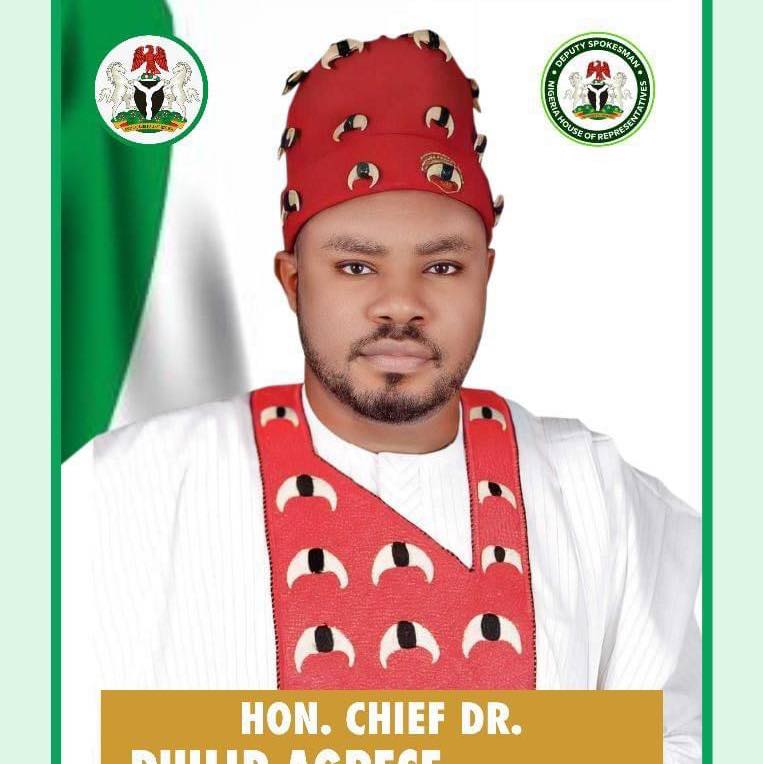
As the 2027 election approaches near, the citizens of Enone are preparing to reaffirm their commitment to Hon. Chief Dr. Philip Agbese, Okanga

cementing his mandate for another term. This powerful message of endorsement will not only mark a momentous occasion in the region’s history but also send a clear signal to the nation about the people’s trust in Okanga’s leadership. The accord among the people of Enone is unmistakable: they are resolved to continue the progress began by Okanga, ensuring stability and development in the region.

Okanga’s dedication to the care of Enone has been steadfast. His leadership has been defined by real achievement in several sectors, from infrastructural development to social welfare measures. Over the years, Okanga’s commitment to the people has been obvious in every element of his work, with the impact of his efforts felt by all locals. The inhabitants of Enone have seen firsthand how his leadership has contributed to the community’s growth and are anxious to honor him with another term in office.

The 2027 election is expected to be a key period in Enone’s history, with numerous political hopefuls fighting for the top seat. Despite the competition, the citizens of Enone are certain in their choice: Okanga is the leader they trust, and they will do everything in their ability to reinforce his mandate. For them, the election is not simply about choosing a leader, but about insuring the continuity of the improvements they have enjoyed under his supervision. The need for stability and progress is great, and Okanga’s leadership exemplifies these objectives.

As political combinations are being established and campaign ideas are taking shape, it is apparent that Enone’s mandate will play a key role in the 2027 election. The support for Okanga in the region is evident, and his opponents would be wise to take note of the people’s devotion. Enone’s voice is strong and distinct, and when it talks, it is apparent that it is shouting for a future of progress and stability under Okanga’s leadership.

In the face of political instability and opposing interests, Enone shines as a light of hope and optimism. The people’s commitment to Okanga is a testimonial to the influence of his leadership and the trust they have in him to continue their community’s progress. With his leadership, they feel assured of a prosperous future, where growth is not just a vision, but a reality.

As the election approaches, the message from Enone is clear: they will reinforce Okanga’s mandate, expressing their support in his leadership and ensuring that continuity and progress remain the guiding principles for the region. Okanga’s tagline, “4+4=8,” signifies the promise of more progress and stability in the years to come, and the people of Enone are eager to stand behind him as he continues to lead them into a brighter future.

How Governors’ Support for Tax Bills Prevented a Tinubu-Shettima Rift, Sources Reveal

0

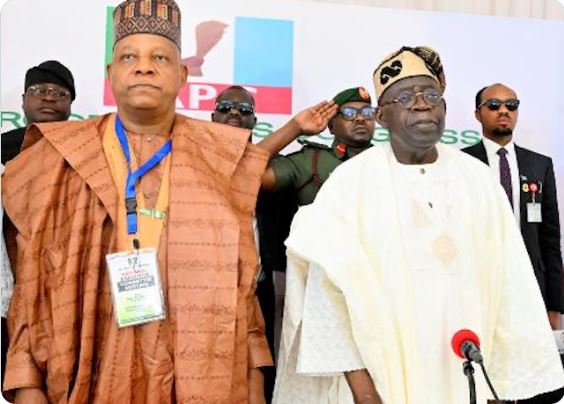
It is thought that a tense relationship between President Bola Tinubu and Vice President Kashim Shettima, which was reportedly on the verge of developing into a full-blown fallout, was avoided when the 36 state governors endorsed the tax reform bills that President Tinubu brought before the National Assembly.

According to sources close to the presidency, the initial rejection of the bills by the governors had created tension between Tinubu and Shettima.

It is understood that the open involvement of Borno State Governor Babagana Zulum in a media campaign against the bills was seen as a direct challenge to the president.

Zulum had said that the bills are likely to have devastating consequences for the Northern region.

The Northern governor added that only Lagos State would gain if the legislation were signed into law.

At first, the governors had rejected the measures because they believed that Lagos State, which receives more than half of the nation’s VAT revenue, would unfairly benefit from the proposed 60% derivation concept. However, the derivation principle was cut to 30% in the governors’ approved revision.

He scowled at how quickly the bills were moving through the legislature.

“What’s the rush? It took nearly two decades for the Petroleum Industry Bill to be passed. But this tax reform bill is being transmitted and receiving legislative attention within a week. It should be treated carefully and with caution so that even after our exit, our children will reap its benefits,” Zulum had said.

It should be noted that the National Economic Council (NEC), chaired by Vice President Shettima, had in 2024 rejected the bills.

Tinubu’s kitchen cabinet is understood to have considered Zulum’s action an affront to the president.

Although the president and his close allies did not publicly respond to Zulum’s criticisms, sources at the presidential villa reportedly revealed that the governor’s actions caused tension between the president and the vice president.

“Nigerians know the relationship between the Borno State governor and vice president just as they know the relationship between the Lagos State governor and the president. The voice of the governor of Lagos State might be taken for that of the president, who is his political godfather.

Read Also: CBN to Open New Accounts for 774 Councils Under LG Autonomy Initiative

“It’s in the same way Zulum’s action could be seen as signifying Shettima’s position on any issue, rightly or wrongly. So people may not be too wrong if they say it’s a case of Esau’s hand, Jacob’s voice,” a presidential source said.

“That was why the governors, on the platform of the Nigeria Governors Forum, had to review their initial position on the bills and endorse an amended version of the documents,” the source added.

CBN to Open New Accounts for 774 Councils Under LG Autonomy Initiative

0

All councils have been encouraged to register special accounts with the Central Bank of Nigeria in response to the Federal Government’s plan to transfer funds directly from federal revenue allocations to the Local Government Area.

On Sunday, January 19, 2025, Bello Yandaki, the national president of the Association of Local Governments (ALGON), made this announcement.
According to Yandaki, it has become crucial for the 774 LGs to establish a special account with the apex bank since the Supreme Court’s decision upholding the councils’ autonomy.

According to him, the new accounts for the councils will aid in the successful execution of the Supreme Court’s ruling on LG autonomy.
Additionally, he promised the public that the Nigerian Financial Intelligence Unit (NFIU) will monitor the money given to the council chairmen.

Additionally, he advised the people to ignore rumors that money to regional councils across the country have been delayed.

According to him, the CBN is currently awaiting orders from the federal government to open local government accounts for each state, which may take anywhere from 24 to 48 hours.

Read Also: Otudeko’s Lawyer Challenges Alleged N12.3bn Fraud in Court

Yandaki stated, “I am a member of the subcommittee that was established to eliminate controversial grey areas, and we have already met with pertinent stakeholders, such as labor unions, chairmen of local governments, NULGE, and so on.”

Otudeko’s Lawyer Challenges Alleged N12.3bn Fraud in Court

0

In a protest of the N12.3 billion fraud accusation, Oba Otudeko, the chairman of the Honeywell Group and his attorney, appeared before a Federal High Court in Lagos on Monday.

Mr. Bode Olanipekun (SAN) informed the court that he was protesting because Otudeko had not received the charge, and two other people were also charged.

The three defendants’ council is Olanipekun.

The Economic and Financial Crimes Commission (EFCC) filed the 13-count indictment against Otudeko, Olabisi Onasanya, a former managing director of First Bank Plc, and Soji Akintayo, a former board member of Honeywell.

Read Also: Nigeria Secures Historic First U-19 Women’s Cricket World Cup Victory

Alongside them was a company called Anchorage Leisure Ltd.

The accused allegedly received the amount through deceptive means, according to the EFCC.

Nigeria Secures Historic First U-19 Women’s Cricket World Cup Victory

0

With a two-run victory over test-playing New Zealand on Monday, Nigeria’s Junior Female Yellow Greens finally got a taste of the action at the 2025 ICC U-19 Women’s T20 World Cup in Malaysia.

Similar to what happened against Samoa on Saturday, Sarawak’s rain caused the game to be postponed. However, the Nigerian team’s brilliance was not to be dampened, as the action started more than two hours later than planned and with fewer overs.

The Nigerian hitters were forced into the crease as New Zealand decided to field first.

The Junior Yellow Greens finished with 65 runs for the cost of six wickets in 13 overs, led by captain Lucky Piety, who smashed Nigeria’s maiden six in a steady innings at a Women’s World Cup.

Knowing that their bowling had to join the celebration, Sarah Bakhita’s squad proceeded cautiously in the second innings before dismissing the fourth-ranked country for 63 runs at a cost of six wickets.

U.S. TikTok Fans Celebrate App’s Return, Hoping for the ‘Magic’ to Reignite

0

For the first time in five years, millions of TikTok users in the United States received a surprise notification on Saturday night that their favorite app had been shut down and banned.

Following the announcement by President-elect Donald Trump, who assumes office on Monday, that he would restore U.S. access, the restriction was lifted on Sunday after less than twenty-four hours.

However, since TikTok has captured the attention of over half of all Americans, many users had already begun to think about life without it by the time the app went back online.

Upon their return, some users took to social networking platform X to praise Trump or share heartfelt farewells in response to the sudden shutdown. Some wondered if the TikTok experience would ever be the same again.

“We’ve returned, but at what price?” On the platform, one person pondered.

Trump’s decision to save ByteDance-owned TikTok is a reversal of his first term in office.

He sought to outlaw the short-video app in 2020 due to worries that the business might provide the Chinese government access to Americans’ private information.

Trump has recently claimed to have “a warm spot in my heart for TikTok,” attributing his success in the 2024 election to the app’s role in attracting younger people.

Late on Saturday, TikTok ceased operations for American users, and on Sunday, a statute that shut it down for national security reasons went into effect.

In order to reach an agreement to safeguard our national security, Trump promised to “extend the period of time before the law’s prohibitions take effect.”

On his Truth Social platform, he posted, “I would like the United States to have a 50% ownership position in a joint venture.”

Despite their relief, some users question whether the TikTok experience would ultimately change as a result of the company’s ownership structure change.

“I recall how Elon’s acquisition of Twitter fundamentally changed public opinion and user behavior on the platform.

“So that gives me a lot of concern,” said Kelly Sites, 38, referring to billionaire Elon Musk’s purchase of the social media site now known as X.

“I don’t want the magic of the algorithm to change,” said Sites, a part-time content creator based in Kansas City, Kansas.

The algorithms TikTok relies on for its operations are deemed core to the overall operations of ByteDance, which would make a sale of the app with algorithms highly unlikely, Reuters reported in April.

Even if there are still concerns about TikTok’s future, some users, especially those who make a career off of it, complain that their faith in the government will never be the same.

“I think that this is a very sad time in history,” said Richard “Chuck” Fasulo, 37, a mechanic and auto-influencer from Duchess County, New York.

Fasulo told Reuters that the app helped him dig his way out of debt, more than double his income and take his family on vacation for the first time last summer.

It was unpleasant to face the possibility of losing the business potential the app offered.

“I think that myself, like many others, have gained a lot of disdain for the U.S. government,” said Fasulo, who has about 400,000 followers.

For others, however, relief is the important thing, no matter its source.

“I would choose a political stunt over losing TikTok forever,” Charlotte Warren, 31, a dating and relationships content creator based in Austin, Texas, told Reuters.

Without TikTok, she said she could lose up to 60,000 dollars in annual income, over 200,000 followers and was unsure if she would continue posting content to other platforms.

“I just wanted my app back.”

NAHCON Sets 2025 Hajj Fare at Over N8 Million

0

According to the National Hajj Commission of Nigeria (NAHCON), Nigerians planning to travel to Saudi Arabia for the Hajj in 2025 will have to pay fares ranging from N8.3 million to N8.7 million, depending on their region.

Expectant pilgrims from Southern States will pay N8.7 million, while those from Borno and Adamawa Zone will pay N8.3 million, according to a statement released by NAHCON on Monday.

Prof. Abdullahi Usman, the Executive Chairman of NAHCON, explained that the Hajj fare was the outcome of careful coordination with all pertinent parties.

Usman made this claim in a statement released in Abuja on Monday by Mrs. Fatima Usara, the organization’s assistant director of information and publications.

Usman added that N8.4 million would be needed for Northern Zone pilgrims planning to travel to the Kingdom of Saudi Arabia for the Hajj in 2025.

He thanked the Forum of Executive Secretaries of State Pilgrims Welfare Boards, Agencies, and Commissions as well as the Presidency for their assistance.

Under the direction of its Chairman, Prof. Abdullahi Usman, the National Hajj Commission of Nigeria (NAHCON) is pleased to announce the hajj fee for the 2025 season, he said.

After receiving clearance from the Federal Republic of Nigeria’s Office of the Vice President, the fare was made public.

For pilgrims planning to travel to Borno and Adamawa, the 2025 Hajj fee is N8.33 million.

Read Also: Nigeria Seeks International Collaboration in Mining to Strengthen Economy

Similarly, anticipated pilgrims from the Southern states would pay N8.78 million for the 2025 Hajj, while those from the Northern zone will pay N8.46 million.

He claimed that the NAHCON leadership tried their best to keep the hajj fare within the same range as before, working with Malam Ameen Amshi, Special Assistant to the President, Special Duties, as a representative of the Presidency.

After lengthy conversations to guarantee inclusivity in this crucial decision-making process, a minimal effort on the fare was accomplished.

Nigeria Seeks International Collaboration in Mining to Strengthen Economy

0

The federal government has stated that it is committed to developing strategic international mining alliances that will stimulate innovation, investment, and economic growth.
Leading the drive at the Future Minerals Forum (FMF) in Riyadh, Saudi Arabia, was Dr. Doris Uzoka-Anite, Minister of State Finance, who highlighted Nigeria’s abundance of natural resources and its willingness to work with international partners.
“With our rich resource base and a renewed focus on innovation, sustainability, and investment,” the minister said in a statement released by Mohammed Manga, Director of Press and Public Relations.

“We invite international investors to join us as we unlock the immense opportunities in these sectors.” “We are positioning Nigeria as a leader in the global minerals and energy landscape.”
“The Future Minerals Forum is a demonstration that Nigeria is open for business,” said Doris Uzoka-Anite, who is attending the Minerals Forum with Mr. Dele Alake, Minister of Solid Minerals.
Over 14,000 people from 178 nations attended the forum, which is the premier platform for influencing the future of minerals. Among them were entrepreneurs, industry professionals, and government leaders.
The participation of the Nigerian delegation demonstrated the nation’s abundant resource wealth and the administration of President Bola Ahmed Tinubu’s willingness to work with international partners to promote growth in mining, energy, and other sectors in order to strengthen the nation’s economy in accordance with its Renewed Hope Agenda.
Uzoka-Anite presented Nigeria’s mining industry as a top investment destination during the forum by holding fruitful meetings with business leaders at the Federation of Saudi Chambers of Commerce, having strategic talks with the Saudi Governor for the General Authority for Foreign Trade, and paying a courtesy visit to the Saudi Vice Minister for Finance.
The Forum highlighted Nigeria’s status as a preferred partner by holding a collaborative session with the Saudi Ministry of Energy and prominent stakeholders, such as Mr. Wale Tinubu, the CEO of Oando Plc, that explored collaboration potential in the mining and energy sectors.
With an emphasis on mining and energy collaboration potential, the interactions gave Nigeria and Saudi Arabia a platform for further economic ties.

Read Also:NUPENG Extends Sympathy to Those Affected by Niger Tanker Blast

The unrealized potential of Nigeria’s resources was highlighted, underscoring the country’s status as a preferred partner.
An important turning point in Nigeria’s attempts to promote economic growth through mining partnerships is the Future Minerals Forum.

NUPENG Extends Sympathy to Those Affected by Niger Tanker Blast

0

On Sunday, the Nigeria Union of Petroleum and Natural Gas Workers (NUPENG) expressed their condolences to the victims, their loved ones, and the communities impacted by the terrible petroleum truck accident that occurred over the weekend at Dikko Junction in Gurara Local Government, Niger State.

In a joint statement issued by General Secretary Comrade Olawale Afolabi and President Comrade Williams Akporeha, NUPENG expressed its profound sadness over the deaths, property damage, and injuries suffered by numerous individuals in this tragic event.

“During this difficult and traumatic time, our thoughts and prayers are with the victims and their loved ones.”
The Union also urged the federal government to act quickly to fix the nation’s highways, pointing out that they were in poor condition.

Additionally, it directed the federal government to direct its pertinent agencies to take the lead in educating Nigerians about the risks associated with collecting fuel at the scene of gasoline tanker accidents.

“The Union takes this opportunity to urgently appeal to the federal government to repair bad roads to prevent such incidents and to intensify efforts in sensitizing the public about the dangers of scooping fuel from accidental situations of petroleum trucks on highways.

“As a responsible organization, NUPENG collaborates annually with relevant agencies, including the Federal Road Safety Corps, the Police, and State Traffic Management agencies, to train our drivers on road safety.

Read Also: Fuel Tanker Blast Prompts NMDPRA to Review Safety Protocols

“The Union is committed to continuously training and retraining our members on best driving and safety practices.

“The entire Dikko community in Niger State and the impacted families have our undying support.” We commend the emergency responders who bravely extinguished the fire and rescued many injured victims.

“We urge all relevant authorities to provide the necessary support and medical care to those injured and to take measures to prevent future tragedies.

NUPENG remarked, “May the families of the deceased find the fortitude to endure these irreversible losses, and may their souls rest in peace.”

Tax Reforms in Nigeria: President’s Approval, Governors’ Backing, Public Concerns

0

Political and Economic Developments in Nigeria:

Nigeria has recently witnessed significant political and economic developments, particularly with the revision of tax reforms and the nation’s inclusion in global geopolitics. The revised tax reform bills, currently under discussion in the National Assembly, have received strong support from the Nigerian Governors’ Forum (NGF). President Bola Tinubu commended the forum’s endorsement, recognizing the bold leadership and commitment of the governors in advancing national unity. The proposal includes a shift to a derivation-based Value Added Tax (VAT) model, a point of contention, particularly with lawmakers such as Ali Ndume who have expressed concerns about the 30% derivation sharing formula.

A crucial component of the tax reforms is the introduction of a more optimized tax system, with increased revenue generation potential without hiking taxes. This addresses challenges such as the multiplicity of taxes and the lack of technology adoption in tax administration. Experts argue that the reforms are essential for correcting the “window-dressed economy” inherited before President Tinubu’s tenure. The tax reform bills are expected to be passed into law by the first quarter of 2025, with implementation slated for July 1, 2025.

Additionally, Nigeria’s political and economic focus has expanded to include global partnerships, as the country officially joined the BRICS group as a partner nation. This inclusion in the group, alongside countries like Belarus, Bolivia, and Malaysia, raises questions about Nigeria’s global standing. Critics argue that the country, as a regional power in Africa, should have secured full membership. Nevertheless, joining BRICS marks a significant step in Nigeria’s engagement with the evolving international economic landscape, opening avenues for trade, investment, and diplomacy.

2. Tax Reforms in Nigeria:

Tax reform in Nigeria has become a central issue, with ongoing debates regarding the best approach to modernize the tax system. President Tinubu’s administration is pushing for a comprehensive overhaul of the existing tax framework, which has been criticized for inefficiency and the low rate of tax compliance. A central feature of the proposed reform is a shift to a derivation-based VAT system, which would redistribute tax revenue according to regional economic contributions. The NGF’s endorsement of the revised tax proposals, despite initial reservations, highlights a significant political consensus across the nation.

Experts have emphasized the importance of leveraging technology to streamline tax collection and administration. With a large portion of Nigeria’s economy operating informally, there are concerns about the ability to capture tax revenue from this sector. The proposed reforms aim to address this issue by simplifying tax collection processes and offering incentives for small and medium enterprises (SMEs). However, challenges remain, such as determining the appropriate thresholds for tax exemptions and addressing concerns raised by groups like ASU regarding the future of educational funds (T-Fund).

The NGF’s involvement has been instrumental in pushing the reforms forward, overcoming political obstacles related to revenue allocation, which has been a point of contention between the federal and state governments. With substantial input from stakeholders, the reforms are expected to pass in 2025, bringing much-needed modernization to Nigeria’s tax system. The success of these reforms will ultimately depend on continued political cooperation and a balanced approach to revenue distribution.

3. Nigeria’s Role in BRICS and Global Geopolitics:

Nigeria’s inclusion as a partner nation in the BRICS group marks a pivotal moment in the country’s geopolitical trajectory. The BRICS coalition, which includes Brazil, Russia, India, China, and South Africa, has evolved into a significant global bloc that seeks to challenge the Western-dominated financial and political systems. Nigeria’s new status within this group signals a shift toward greater global engagement, although some experts question whether being a partner nation rather than a full member is sufficient for Nigeria’s aspirations.

Nigeria’s strategic position in Africa and its growing economic potential make it an important partner for BRICS, even if it is not yet a full member. This partnership provides Nigeria with opportunities to access new markets, engage in cross-border trade, and build diplomatic ties with countries seeking alternatives to the Western financial system. Nigeria’s membership in BRICS could also enhance its influence in international forums and provide a platform for collaboration in areas such as energy, infrastructure, and technology.

However, critics of Nigeria’s BRICS involvement express concern that the country’s alliance with both the West and BRICS might lead to a delicate balancing act in its foreign policy. The growing competition between Western powers and BRICS nations, including Russia and China, poses challenges for Nigeria in maintaining positive relationships with all sides. Despite these concerns, Nigeria’s participation in BRICS is viewed as a positive step toward diversifying its international partnerships and asserting its role in global geopolitics.

4. Impact of Fuel Price Changes in Nigeria:

The fluctuation of fuel prices in Nigeria has far-reaching implications for the country’s economy and its citizens. Recent changes, driven by global oil market conditions, have resulted in an increase in fuel prices, pushing the cost of petrol above 1,000 Naira per liter. This surge in prices follows a decline in pump prices, when Dangote Refinery reduced fuel prices. However, the global rise in crude oil prices, particularly Brent Crude, has led to an adjustment in the refinery’s depot price, causing a ripple effect on retail prices across the country.

The increase in fuel prices has a profound impact on the private sector, particularly small businesses that rely on transportation and energy to conduct operations. Higher fuel prices inflate the cost of logistics and production, leading to higher consumer prices. The informal sector, which constitutes a significant portion of Nigeria’s economy, is especially vulnerable as many businesses operate with limited access to subsidies or formal financial support.

Despite the operational challenges for businesses, the situation has prompted renewed discussions about the role of Nigeria’s refineries. The government’s push for domestic refining capacity, symbolized by Dangote Refinery’s operations, holds promise for long-term solutions. However, with fuel prices continuing to rise due to global pressures, Nigeria’s dependence on international oil markets remains a critical issue for policymakers. The government will need to balance the needs of consumers, businesses, and the oil industry while exploring alternative energy sources and refining solutions to stabilize fuel prices in the future.