Home Blog Page 313

2025 AFCON Draw: Super Eagles Dodge Morocco, Senegal, Egypt, Algeria, and Côte d’Ivoire

0

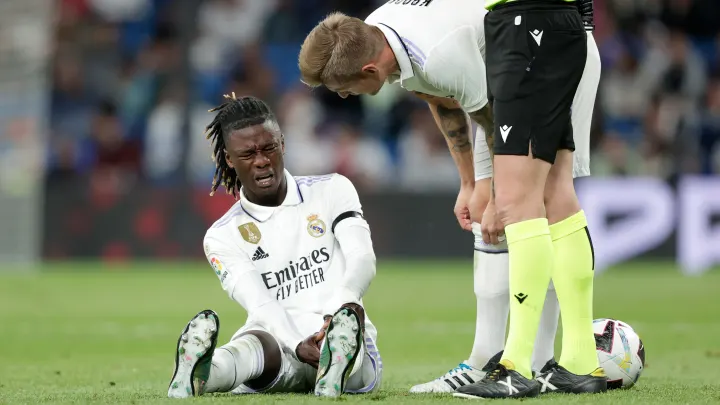
The Mohamed V National Theatre in Rabat, Casablanca, will host the eagerly awaited draw ceremony for the 35th Africa Cup of Nations (AFCON) finals on Monday night, January 27.
Three-time African champions Nigeria’s Super Eagles have been assigned to Pot 1. In order to prevent formidable teams like Morocco, Senegal, Egypt, Algeria, and Cote d’Ivoire, they will be positioned strategically.

The Super Eagles will be represented during the ceremony in Morocco’s administrative capital by Head Coach Éric Sékou Chelle, Team Administrator Dayo Enebi Achor, and Chairman of the NFF Technical and Development Committee Alhaji Sharif Rabiu Inuwa.

This competition, which runs from December 21 to January 18, is unique in that it is the first AFCON to continue from one year to the next. Morocco, which previously hosted the tournament in 1988 when Cameroon won, is scheduled to host it again. Due to worries about the Ebola outbreak, the country that had previously been granted hosting rights for the 2015 finals withdrew.

Read Also: Edo State at Center of Federal Allocation Dispute

Pot Assignments:

Pot 1: Algeria, Nigeria, Egypt, Senegal, Morocco, and Cote d’Ivoire

Pot 2: Burkina Faso, DR Congo, South Africa, Mali, Cameroon, and Tunisia

Pot 3: Equatorial Guinea, Gabon, Angola, Zambia, Uganda, and the Benin Republic

Pot 4: Tanzania, Sudan, Zimbabwe, Botswana, Comoros, and Mozambique

Edo State at Center of Federal Allocation Dispute

0

Another crucial phase in the conflict between the Edo State administration and the elected local government executives over control of the state’s 18 LGCs’ economic authority has just begun.

This phase comes after the Central Bank of Nigeria (CBN) issued a new national directive requiring the 774 local governments to register special accounts in order to receive allocations directly from the Federation Account.

Since the elected council chairmen and their deputies have been suspended for two months, the CBN further mandated that each local government chairman attach their certificate of return as elected chairman to the indicated signature in order to open this dedicated account. Failing to do so would prevent the account details from being accepted.

This crisis started on December 17, 2024, when the governor wrote to the state house of assembly, requesting that the council chairs be suspended following an investigation into third-tier government funds because of alleged institutional failures. This could have been brought on by a bitter fight with addiction and clandestine intrigues that follow the course of history.

Governor Monday Okpebholo’s obsession with this matter stemmed from purportedly strong evidence of shortcomings in the third tier of government, which is regarded as an essential part of the professed commitment to delivering dividends for the public good.

With a daring forecast that signals a sea change and helps commentators grasp the current situation, the state government is upending the status quo.

In a more profound letter to the State House of Assembly, the governor requested that elected chairmen and their deputies be removed by suspension in accordance with Section 10, sub-section (1) of the Edo State Local Government Law 2000 as modified in 2022. This resulted in wild dogs sunbathing with a new perspective.

Unexpectedly, while considering the governor’s letter, the State House of Assembly, which is led by the Peoples Democratic Party (PDP), struck down the section of the law and changed Edo Local Government Administration’s daily operations in an attempt to clean up the allegedly depressing legacy left by the previous administration of Governor Godwin Obaseki.

Nevertheless, the House of Assembly requested relief under Section 10 (20) of the same law, which addresses the Legislative Arm’s authority to suspend Local Government chairmen. On December 17, 2024, the House of Assembly declared the 18 Local Government chairmen and their Deputies suspended for two months due to alleged serious misconduct and insubordination.

The governor got what he wanted after the legislators’ voices against the suspension were silenced by the gavel. When the petition was debated at plenary, many interest groups began to perceive danger, a memory that will undoubtedly become tough to erase in Edo State’s democratic adventure.

It’s interesting to note that when Obaseki was in power as governor of the state, the same House of Assembly, led by the present Speaker, Blessing Agbebaku, passed the Edo State Local Government Law in 2000 (2022 as amended).

Governor Okpebholo, acting through State Deputy Governor Dennis Idahosa, had called the Council chairmen to a meeting in Government House, Benin City, prior to the Assembly’s resolution, and instructed them to submit their financial accounts and Council receipts to the government.

In the midst of controversy, this daring journey summarized the terms of some Local Government Council chairs and their deputies who were impeached by their respective legislative assemblies.

The situation prompts people to wonder if the governor’s goal is to potentially increase his authority and break apart coalitions formed by leaders of the several Local Government Councils with the PDP, the state’s main opposition party.

Once more, there are worries that political actors’ use of subtle coercion and power plays threatens the rule of law with a strong feeling of accountability rather than merely postponing the arrival of the truth.

Does the House of Assembly’s reliance on the Local Government Law conflict with the 1999 Constitution of Nigeria as amended?

Does the governor have the constitutional authority to interfere in local government issues as we have witnessed it in Edo, and what may be the motivation for his request that the various administrators of the Local Government Councils open their records for inspection?

Some of the questions that beg for answers are these ones. The inability of certain Council employees to get their 13th month’s wage from their Internally Generated Revenue (IGR) at the end of 2024, as agreed by the State government, has created its own difficulties as a result of these developing circumstances.

Some would contend that grassroots governance is deteriorating daily as a result of the ongoing family conflict, which is fueled by hazy political boundaries between the hunter and the hunted.

Suspected political thugs with ties to the government violently eject suspended chairmen who tried to retake their seats after receiving a judicial reprieve, while their supporters and translators, including party loyalists, persist in spreading false information about griots on social media.

In an attempt to gather support for his harsh stance, Governor Okpebholo feels that drastic steps must be done to address certain abnormalities. He asks for understanding from those who are impacted, either directly or indirectly.

As a result, he decides to avoid outside distractions while simultaneously taking note of the reasonable criticism aimed at him.

Similarly, the state’s civil society organizations tried to play the role of Ombudsman, a voluntary watchdog that aims to steer the state toward peace, and urged the governor to reinstate the suspended local government chairmen.

In order to promote development at the local level, they urged the governor to honor President Bola Tinubu’s recent advice to Nigerian governors to work with the 774 Local Government Administration.

In their own delusions, the majority of council chairmen who are falsely or correctly accused of embezzling public monies ignore the alleged governor’s order, while others view it as a ridiculous pursuit by “the Governor.”

Furthermore, it is thought that the escalating crisis stems from a solidarity visit made by some suspended Council chairmen two weeks ago to Asue Ighodalo, the Peoples Democratic Party candidate for the September 21, 2024, Edo State governorship election. This visit was likely intended to cause political upheaval.

The officials used the meeting—which the APC called cynical—as a launching pad to question its legitimacy and consider their legal options.

Governor Okpebholo would concur that the haze of pretense has prevented them from seeing the obvious: on a balanced political chess board, financial autonomy for the third tier of government does not imply or ensure a preference for financial irresponsibility by transactional leaders.

Unfortunately, their respective Councilors and acting chairmen have impeached the majority of the troubled chairs, replacing them.

Some of them who have managed to speak up have maintained that the Governor and the State Assembly lack the authority to remove duly elected Local Government officials from their positions in the Councils.

However, in an effort to reshape the new order, Tony Aziegbemi, the irate Chairman of the Edo PDP Caretaker Committee, and other stakeholders are expressing their confidence and solidarity with those who are being impeached.

By pushing back the other telling indictment against the removal of elected chairmen, especially in Oredo Local Government Council where Dr. Tom Obaseki’s impeachment was a difficult nut to crack after the initial uncompromising posture of most of the Councilors in the LGA, Aziegbemi said at a press briefing that he believes no one will be silenced by fear in the pursuit of justice.

The chairman of the State PDP caretaker committee also blasted the government, which is run by the All Progressives Congress, for its conscious efforts to wrest victory from the mouths of Council officials in the never-ending wave of misfortune.

However, Aziegbemi remained silent when the Economic and Financial Crimes Commission (EFCC) invited some of the suspended Council executives to discuss the finances of Local Government Councils.

“What you see in Nollywood movies is what is happening in Edo State,” he said. First and foremost, it must be stated that the Governor’s letter to the House of Assembly is unlawful.

“The Governor shouldn’t have ordered that letter to be written,” he stated.

“What did he do? He posed a rhetorical question.

“At the time he wrote that letter, the Chief Judge of the State had ruled that the Supreme Court’s decision, which gave the Local Government Councils financial autonomy, had revoked and annulled Section 10, sub-section (1) of the 2000 Edo State Local Government Law (2022 as amended).”

The chairman of the PDP further charged that the Assembly’s leadership was gullible for giving in to the whims and fancies of the executive branch.

Additionally, he agrees that Governor Okpebholo is responsible for the anti-democratic actions in the Edo Local Government Administration.

He questioned the Governor’s decision to disregard a ruling by Justice Efe Ikpomwonba of the Edo High Court, which invalidated the resolution passed by the State House of Assembly suspending the chairmen of the Council.

However, the PDP chairman’s assertions were pierced by Barrister Andrew Adaze Emwanta, the State’s former Commissioner for Communication and Orientation during Goodwin Obaseki’s government.

Emwanta, who is currently Governor Okpebholo’s ally, acknowledged in a conversation with this correspondent that “we operate a Constitutional democracy in Nigeria.” And the governor’s actions were, in a sense, directed.

The second section of the 1999 Constitution, as amended, served as the governor’s guide. Naturally, the first section states that this Constitution guarantees the term of the democratically elected Local Government Councils.

The second section states that the House of Assembly, on behalf of the State Government, must guarantee the existence of local government and enact legislation that addresses its formation, composition, structure, and funding.

“The Edo State House of Assembly passed the Edo State Local Government Law in 2000 in accordance with those provisions of the 1999 Constitution,” he said.

Additionally, he referred to Edo State Local Government Law section 20 sub-part (e), which states that “a Governor in consultation with the House of Assembly may suspend an erring Local Government chairman for two months.”

“That is for a maximum of two months.” Additionally, the elected Local Government House Leader serves as the interim chairman of the Local Government Council during the time that the Governor is required under sub-section (c) of that statute to establish an inquiry, in lieu of the chairman or a chairman and his Vice (Deputy) being suspended.

The constitutional lawyer and law professor, who takes satisfaction in being one of the talent-development centers in Governor Okpebholo’s government, which prioritizes growth and enhanced production, asserts that “and the Governor of Edo State followed these procedures as stipulated by the law.”

Hon. Damian Lawani, the chairman of the Edo State Local Government Service Commission, has also offered his thoughts on the dispute.

Lawani, a former Edo State Commissioner and member of the State House of Assembly, justified the 18 Local Govt Council Chairmen’s suspension by pointing to the importance of openness and accountability. Lawani emphasized that no one can keep the Edo State Government hostage, but he also pointed out that the suspended chairmen did not respond to demands, especially when it came to suspected misappropriation of funds.

Read Also: EFCC Drops Arrest Warrant for Mercy Chinwo’s Manager, Mr. Eezee

According to Lawani, the governor first requested a family meeting with the chairmen. However, when the chairmen refused to accept the cordial invitation and take the required steps, the governor decided to involve the State Assembly and EFCC.

Lawani emphasized the legality and constitutionality of the suspension, stating that parliamentary leaders filling in as acting chairs is a constitutional provision and that the law forbids power vacuums. The governor reportedly acted on reports from the State Accountant-General, who accused the 18 local government council chairs of wasting approximately 12 billion naira in 15 months on a phony item they call the “environmental security fund” and receiving 83 billion allocations in the same time period without any real progress, according to the chairman of the local government Service Commission.

Lawani went on to say that the Chairmen were suspended by the State House of Assembly, not the Governor.

Until the outcome of the substantive challenge by the resentful suspended Local Government Council chairmen, a Federal High Court has ordered the parties to the issue maintain the status quo and placed an injunction on Edo Local Councils’ finances while the crisis continues.

For local government employees and pensioners, as well as institutions that receive funding from local government allocations, the law imposed on the Councils’ accounts by the court order has had far-reaching consequences. As a result, they will not receive their December 2024 salaries and other benefits that are due from local government funds.

Now, it is up to the constitutional interpreter and the Supreme Court to make a final decision and find a long-term solution to the Edo State dilemma. Until further notice, the decent people of Edo State will have to endure the suspension of federally allocated cash.

A Nigerian Millionaire Explains How to Make Money with Bitcoin Without Purchasing It

EFCC Drops Arrest Warrant for Mercy Chinwo’s Manager, Mr. Eezee

0

Ezekiel Onyedikachukwu (Thankgod), the manager of well-known Nigerian gospel singer Mercy Chinwo, has had the arrest order for him formally revoked by the Economic and Financial Crimes Commission (EFCC).
Recall that in response to an ex parte motion filed by the EFCC, Justice Alexander Owoeye issued a bench warrant for the music producer last week.
However, the commission requested the warrant’s revocation on Friday through its lawyer, Bilikisu Buhari.

As you may remember, ThankGod had previously been the subject of an arrest warrant issued by the Federal High Court in Lagos.

In response to a motion submitted by the Economic and Financial Crimes Commission (EFCC), Justice Alexander Owoeye issued the order on Thursday.

In accordance with Section 35(1)(c) of the 1999 Constitution and Sections 35 to 39 of the Administration of Criminal Justice Act, 2015, EFCC attorney Bilikisu Buhari filed the motion during the court session.

She maintained that the arrest warrant was required in order to force Onyedikachukwu to appear in court on allegations of financial impropriety.

Read Also: Rivers Police Apprehend Two ‘Pastors’ Over Fetish Materials

Buhari further warned the court that if the manager was not captured, a public summons would be issued to declare him wanted.

The application was granted by Justice Owoeye, who also scheduled Onyedikachukwu’s arraignment for January 24.

It was understood that Mercy Chinwo’s plea to the EFCC was the cause of the case.

Michael Idoko, an EFCC investigator, deposed an affidavit in which the gospel singer accused her manager of failing to disclose earnings from her events and internet platforms.

Chinwo further claimed that Onyedikachukwu had embezzled $345,000 on her behalf, which is why she sought legal action.

Rivers Police Apprehend Two ‘Pastors’ Over Fetish Materials

0

The Nigeria Police Force’s Rivers State Command has detained two self-described pastors after they were allegedly discovered in possession of occult objects in the Rumuduru community of the state’s Obio/Akpor Local Government Area.

In a statement released Friday in Port Harcourt, SP Grace Iringe-Koko, the command spokesman, confirmed their detention.
According to the police spokeswoman, the Rumuduru locals gave over the suspects to the authorities.

According to her statement, the two were operating several churches in the neighborhood. On January 20, Rumuduru teenagers, under the leadership of their president, Henry Worlu, turned up the phony pastors to the police.

Bassey and Elijah were taken into custody by the young people during their raid on their respective churches.

Bassey acknowledged utilizing spiritual substances like water and oil to cure people with spiritual ailments while being questioned.

He also disclosed that he prayed for those suffering from mental illnesses using a tiny coffin and “miracle life oil,” saying that they would get better in three months, according to Iringe-Koko.

According to her, Bassey has spent the last 17 years residing and working in the Rumuduru village.

Items recovered from the suspects include a fake Nigerian Navy identification card, a sword, tiny wooden boxes, a rifle cartridge, and multiple pictures.

A police lanyard, a variety of crosses and religious objects, and children’s shoes were also seized by the authorities.

Iringe-Koko said that a comprehensive investigation is in progress and that the suspects and the recovered objects are currently in police custody.

Former FCT Minister, Jeremiah Useni, Dies at 82 Following Prolonged Illness

0

At the age of 82, Lt. Gen. Jeremiah Useni (retd.), a respected military commander and former Federal Capital Territory (FCT) Minister, passed away.

In a statement sent through his Director of Press and Public Affairs, Gyang Bere, Plateau State Governor Caleb Mutfwang confirmed Useni’s death on Thursday following a protracted illness.

“Useni’s passing is a monumental loss to his family, Plateau State, the Nigerian Armed Forces, and the nation,” Governor Mutfwang said, expressing profound sadness at the loss.

The statement stated, “The passing of the former minister is deeply regretted by the Executive Governor of Plateau State, Barr. Caleb Manasseh Mutfwang, to the people of Plateau State and all patriotic Nigerians.”

The governor highlighted Useni’s dedication to public service, peace, and security, especially in northern Nigeria and Plateau State, and commended his excellent leadership.

Useni served Nigeria in a number of roles over his career, including Minister of the Federal Capital Territory, Minister of Transportation, and Quarter-Master General of the Nigerian Army.

Read Also: Ganduje Receives New Appointment as Tinubu Unveils Fresh CEOs

Following his military retirement, he entered politics and held important positions, including deputy chairman of the All Nigeria Peoples Party and, in 2015, senator for the Plateau South Senatorial District of the Peoples Democratic Party.

Governor Mutfwang praised Useni for his unselfish service throughout his life, highlighting his services to the community, government, and military.

“Future generations will be inspired by the late General’s legacy of compassion, generosity, and dedication,” he said.

“I offer my sincere condolences to the President, the Nigerian Armed Forces, the immediate family, and everyone grieving the loss of this great elder statesman on behalf of my family, the government, and the peace-loving people of Plateau State,” Mutfwang stated.

Ganduje Receives New Appointment as Tinubu Unveils Fresh CEOs

0

Abdullahi Ganduje, the national chairman of the All Progressives Congress (APC), has been appointed to a new position with the Nigerian Federal Government.

Ganduje, a former Kano State governor, has been named the Federal Airport Authority of Nigeria (FAAN) board chairperson.

Bola Tinubu, the president, authorized the selection of the APC leader on Friday, January 24, 2025.

Bayo Onanuga, the Special Adviser to the President on Information and Strategy, made the announcement of this new appointment in a statement.

Read Also: Breaking: Federal Government Names Najomo as Substantive DG of NCAA

Along with Ganduje, a number of other people were introduced, including Felix Morka, an APC spokesperson who was named chairman of the Federal Medical Center in Yenagoa, Bayelsa State.

Breaking: Federal Government Names Najomo as Substantive DG of NCAA

0

As the substantive Director-General Civil Aviation (DGCA), Capt. Chris Najomo has been nominated by the Federal Government.

Najomo’s name was forwarded to the Senate for verification and screening over the week, according to a source close to the National Assembly who spoke to our correspondent on Friday.

Read Also:Why Nigeria Doesn’t Require IMF Loans – Wale Edun

On December 13, 2023, President Bola Tinubu appointed Najomo to an acting position in the Nigeria Civil Aviation Authority (NCAA).

Details to come.

Why Nigeria Doesn’t Require IMF Loans – Wale Edun

0

Nume Ekeghe and Esther Oluku in Lagos and Emmanuel Addeh and James Emejo in Abuja

Wale Edun, Nigeria’s Minister of Finance and Coordinating Minister of the Economy, clarified yesterday why, despite rumors that the nation might soon turn to the Bretton Woods institution for assistance, Nigeria has no reason to apply for any loans from the international lender, the International Monetary Fund (IMF).

In addition, Mr. Olayemi Cardoso, the governor of the Central Bank of Nigeria (CBN), revealed yesterday that the bank plans to create a compliance department by February in order to resolve previous issues, bring the financial sector into line with international norms, and create a more robust and transparent industry.

These occurred on the same day that PricewaterhouseCoopers (PwC), a multinational consulting firm, predicted that Nigeria’s GDP will grow by 3.3% in 2025 as a result of ongoing policy improvements.

Additionally, the company forecasted a comparatively stable economy with stable currency rates bolstered by CBN reforms in the foreign exchange market, which are anticipated to increase capital inflows.

However, Edun clarified to Arise Television during the ongoing World Economic Forum (WEF) in Davos, Switzerland, that Nigeria is now depending on the World Bank and the African Development Bank (AfDB) for comparatively cheaper borrowing sources.

Furthermore, he contended that Nigeria will not require the international bank’s short-term funding intervention because it does not have a balance of payments issue.

“If you saw a scenario where you were saying that Nigeria approaches the IMF for funding, I can imagine the headlines.” However, the truth is that, as a developing nation, we do, of course, need money. The government needs money to invest in important infrastructure that will improve the business-friendly environment. We also need to borrow money.

“The entire range of funds has been utilized, including comparatively inexpensive money from the World Bank, AFDB, and the multilaterals. By persuading Nigerians of the president’s macroeconomic strategy and its potential for commercial and economic expansion as well as for enhancing the business environment, we have been able to rely on their savings.

Naturally, the commercial end of funding is the Euro bond market, which we have now approached. We have thus covered the entire spectrum. Generally speaking, IMF money is intended to assist with short-term crises and balance of payments problems.

We have a favorable trade balance when it comes to Nigeria. Our current account balance is positive. We are increasing our reserves. The Central Bank Governor recently declared that we have improved and increased the reserves by more over $10 billion.

Funding from the IMF is not the right source in this situation. At this point, we must maximize our assets after making the most use of concessional and multilateral financing strategies.

Equity must be used. In particular, the private sector in Nigeria and the private sector globally must rely on crowding in the savings through foreign direct investment. We must keep in mind that we have made great progress in enhancing the economic climate thus far,” Edun said.

He acknowledged that food inflation and living expenses are still excessive, but he clarified that in addition to limiting demand, the supply side must also be strengthened in order to reduce inflation.

But we also acknowledge and face head-on the reality of rather significant inflation. Living expenses are considerable. Food is expensive. And that is the main emphasis of Mr. President’s decision regarding the future course of action. Naturally, the Central Bank, which controls monetary tools, including interest rates, is to blame for the high rate of inflation. Furthermore, inflation affects more than simply the economy.

We are all fighting inflation. Additionally, there is much work to be done to increase the supply from a fiscal standpoint. There is more to lowering a good’s price than only limiting competition.

Increasing supply is another issue. And specifically, as has occurred during this dry season harvest in Nigeria, with coordinated efforts to supply the various inputs, herbicides, fertilizer, and seeds to smallholders in particular, we are having a decent crop, but more work needs to be done there.

In addition to expanding the economy overall, Edun noted that there is a commitment to boosting food production, which would result in reduced food prices and greater availability and affordability for Nigerians.

The minister made the case that Nigeria was progressively improving, emphasizing that the economy of this year differs from that of previous year since the necessary changes have been mainly carried out and are starting to show results.

“The economy is expanding once more. Foreign reserves are increasing. Both the deficit and the debt servicing as a proportion of GDP are declining, as is the debt servicing as a percentage of revenue. Therefore, in terms of the investment climate, we’re in a much better spot,” the minister continued.

He claims that the Nigerian delegation to Davos, headed by the vice president, has discussed business issues that will lead to billions of dollars in investments in Nigeria, particularly from those in the fast-moving consumer goods, financial payments, and large international corporations sectors.

Additionally, they have previously stated that they are prepared and eager to make these investments right away given the better foreign exchange system and investment climate.

In addition, the minister noted, “we have several other bilateral meetings scheduled to speak with investors who we hope will be making their decisions to invest in the Nigerian economy, create jobs, grow the economy, and help reduce poverty in our country.”

In addition, he said that President Bola Tinubu is currently receiving a lot of praise and respect for having guided Nigeria’s economy and society away from what he called disastrous, unnecessary, and extremely expensive spending on various subsidies.

After achieving that, he emphasized that investors would soon begin flooding into Nigeria and gave his word that Tinubu was committed to continuing on the path of economic improvement.

Once more, in the context of Africa, Nigeria is drawing the greatest amount of investment in the oil and gas industry. It had previously lagged behind. It has returned to the forefront. Additionally, I believe that other sectors of the Nigerian economy are experiencing the same issue. Every one of the 19 main subsectors is expanding. They’re getting better.

And it is important to stress that investors, both Nigerian investors as well as foreign direct investors, are waiting in line and prepared to enter. The outlook, in my opinion, is for an ongoing improvement in the investment climate, which would raise the Nigerian economy’s competitiveness and productivity. The economy will expand, jobs will be created, and poverty will be decreased.

When it comes to lowering poverty, there is a shared commitment to preserving the social safety net and enhancing the provision of assistance, especially to the most vulnerable and impoverished, through direct benefit transfers and other measures that lower living expenses. Thus, the future is promising. He asserted, “The outlook is very positive.”

He said that the recent approval of a 50% increase in phone charges will help the telecoms run more efficiently and that it will be reviewed further.

“Well, I agree with you that it’s important to take into account the fact that, over the course of a 12-year period, costs have increased and inflation has occurred. This must naturally be reflected in the competition for business among the telcos, which, of course, have regulated their pricing to some degree. They are not simply allowed to impose any tariff they choose.

Therefore, it is necessary to represent the recent increase in the cost of living. However, I believe that fifty percent is a good place to start. It all comes down to compromise and the order and timing of some of these adjustments, which are already required. In this instance, we want the telecoms, which are an essential part of the Nigerian economy and the infrastructure that is a part of the Nigerian business environment, to function well.

“We want them to end calls quickly.” We do not want calls to be dropped. We want them to provide high-quality services. Additionally, we want them to expand, create jobs, and essentially raise the nation’s GDP.

And for that reason, this fifty percent increase has occurred. And as we move forward, I think that this is a scenario that will be examined from a forward perspective. In this area, study, conversation, and discussion will continue,” he continued.

By February, the Central Bank of Nigeria (CBN) would have a compliance department, according to Cardoso, the bank’s governor. According to him, the action was taken to rectify previous issues, bring the financial sector into compliance with international norms, and create a more resilient and transparent industry that might propel the nation’s progress.

The Nigerian Economic Summit Group (NESG) released its 2025 Macroeconomic Outlook Report in Lagos, and Cardoso was a speaker at the event.

He added that the department will be operational by the end of February and will have both an internal and external focus.

According to him, the government would improve market oversight by keeping an eye on participants to make sure best practices are followed, and those who don’t would face consequences.

It is anticipated that this approach will increase investor trust and build a more reliable and effective financial system.

Building on the 3.36 percent growth anticipated in 2024, the CBN also estimates a 4.17 percent GDP growth for the nation in 2025.

According to Cardoso, the continued execution of governmental reforms, steady crude oil prices, higher domestic oil output, and improved refining capabilities will be the main drivers of the positive growth trajectory.

Additionally, it forecasted a 3.3% growth rate for the Nigerian economy in 2025, fueled by ongoing policy reforms. It also predicted a comparatively stable economy with stable exchange rates, bolstered by the apex bank’s FX reforms, which are anticipated to increase capital inflows.

The tax and advisory services organization also predicted that tighter monetary policies and improvements in the nation’s foreign exchange market dynamics would cause inflation to drop to 26%.

In collaboration with BusinessDay, the company organized an executive roundtable on Nigeria’s 2025 Budget and Economic Outlook, where it shared its forecasts.

But according to Cardoso, “GDP growth is projected to rise from 3.36 percent in 2024 to 4.17 percent in 2025.” Stable crude oil prices, the Dangote refinery’s expansion of refining capacity, and the revival of the Port Harcourt and Warri refineries serve as the foundation for this growth. Maintaining this upward trajectory will also depend heavily on a steady exchange rate.

He also revealed that, thanks to $6 billion in foreign capital inflows and higher oil output, Nigeria’s foreign exchange reserves had surpassed $40 billion by the end of 2024. By the middle of 2025, the nation’s oil production is expected to exceed 2.3 million barrels per day, which would further propel economic expansion.

Read Also: Direct Fund Transfer to Local Governments Fails; FG Allocates January Funds to States

He emphasized the effects of the CBN’s foreign exchange policy, pointing out that programs like the Electronic Foreign Exchange Matching System (EFEMS) and the Foreign Exchange (FX) Code have increased market transparency and efficiency.

The foreign exchange matching system and the foreign currency disclosure repatriation and investment scheme will improve market efficiency and transparency, lessen the discrepancy between official and Bureau de Change (BDC) exchange rates, and promote market stability, the CBN governor stated. As of right now, our market is showing the fruits of many of those initiatives,” he said.

Additionally, the CBN started the non-resident BVN program and gave new International Money Transfer Operators (IMTOs) preliminary clearance in order to boost diaspora remittances. By giving Nigerians residing overseas access to banking services in their nation of residence, this action seeks to promote greater involvement with the financial system.

“The foreign currency disclosure repatriation and investment scheme and the foreign exchange matching system will improve market efficiency and transparency,” he stated. and promote market stability by lessening the difference between the official and BDC exchange rates. The outcome of many of those initiatives is currently seen in our market.

“We will undoubtedly fortify our systems to continuously monitor market players, guarantee that everyone operating in that market is subjected to best practices, and treat those who do not comply with them appropriately.”

“The bank recently introduced the nonresident BVN to allow Nigerians living abroad to access banking services in their birthplace and approved new IMTOs in principle to increase diaspora remittances through official channels.”

“This is a clear example of recent initiatives and products that we have launched in response to the dialogue we have had with many people overseas, understanding their problems and opportunities they are looking for in Nigeria and being able to make life much easier for them,” he said.

“I have no doubt that the outcome will be extremely favorable. The effects are already beginning to become apparent. Both the international remittances and the IMTOs are noteworthy.

With more than $6 billion in foreign capital inflow into Nigeria’s external reserves surpassing $40 billion in 2024—a major milestone that reflects increased investor confidence—our efforts have paid off. We stress once more that reserves are increasing in both quantity and quality.

He went on, “As we move forward through 2025, we want to make sure that the market-oriented policies and reforms will support a more competitive business environment.” Businesses operating in Nigeria will need to adjust to a changing economic environment as a result of these developments.

There is a lot to say about the fact that we are now in a position where the foreign exchange rate has changed. This has drawbacks, particularly for people who rely heavily on imports, but it has also created opportunities, and I see many foreign investors stepping in to seize those opportunities.

In order to adjust to the changing economic realities, “our currency is much more competitive at this stage, and the implications for exports and productive activity are significant.”

Dr. Olusegun Omisakin, the Chief Economist and Director of Research and Development at NESG, said that with consistent policy changes, Nigeria’s economy might develop at a 5.5% GDP rate. He underlined that specific actions could unleash the nation’s economic potential.

Christian Ebeke, the International Monetary Fund’s (IMF) Resident Representative for Nigeria, praised the CBN for failing to give the Federal Government Ways & Means advances in 2024, calling it a positive step. He asked decision-makers to mitigate the effects of economic reforms on marginalized populations.

However, PwC voiced fears that the nation’s growth potential might be severely hampered by ongoing economic challenges, pointing out that the CBN was probably going to stick to its monetary tightening policy throughout the year, which would result in higher interest rates in order to ensure long-term price stability.

Mr. Olusegun Zaccheaus, a partner and lead for PwC Strategy and Practice in West Africa, stated that this would affect companies by raising borrowing costs.

PwC specifically expressed worry that because of large budget deficits and high debt payment costs, fiscal sustainability may continue to be somewhat elevated.

Zaccheaus also found ways for companies to improve certain value chains, take advantage of export markets in Africa and around the world, and adjust to industry consolidation.

According to him, the National Bureau of Statistics’ (NBS) ongoing attempts to rebase the nation’s GDP might boost economic growth and lower the debt-to-GDP and tax-to-GDP ratios.

However, he warned that underlying fiscal issues including income shortfalls and growing debt servicing costs would continue, further eroding prospects for development.

An updated consumption basket, according to PwC, would give monetary authorities a more precise gauge of changes in the cost of living, allowing them to set interest rates and carry out focused interventions.

Zaccheaus added that although moderate revenue growth was projected, production and operating costs could increase due to high energy costs and infrastructure issues.

He added that FX reforms are expected to boost exports and raise Nigeria’s standing internationally.

Increased capacity for refining crude oil would lower fuel imports, he continued, while population growth and demographic changes might create chances for 5G adoption, youth-oriented businesses, energy-efficient data centers, broadband expansion, and digital innovation.

“Businesses can explore new markets and increase exports through the African Continental Free Trade Area (AfCFTA) and other regional initiatives,” he said.

“Businesses can take advantage of the growing interest in value addition for processed agricultural products.”

Businesses should get ready for such developments, he said, noting that regulatory capital needs may force mergers in the banking and insurance industries.

According to him, higher borrowing costs could reduce demand for expensive goods and have an impact on discretionary expenditure.

Kenneth Erikume, a PwC partner, also outlined important elements that are anticipated to influence the county’s industrial growth over the medium term, specifically taxation, special agro-industrial processing zones, and agricultural policy reforms.

In order to promote growth, Erikume emphasized the significance of encouraging the use of compressed natural gas (CNG), small and medium-sized businesses (SMEs), and tourism. In order to draw in investments and promote economic growth, he also emphasized the necessity of efforts that make conducting business easier.

Erikume found that mining and quarrying, especially the production and export of gemstones, were important sectors for sector-specific growth. He suggested spending money on surveillance technology to stop illicit mining.

In order to boost connection and ease trade, he also recommended building roads, hospitals, security facilities, and schools in addition to extending the country’s fiber optic network by 90,000 kilometers.

Direct Fund Transfer to Local Governments Fails; FG Allocates January Funds to States

0

Local governments are anticipated to get N361.754 billion of the N860.252 billion that the federal government, through the Federation Account Allocation Committee (FAAC), has given to state governments for January.

Due to their failure to provide account details by the deadline, the councils will not be directly given their allocations.

An FAAC official stated that the Universal Basic Education Commission (UBEC) and Primary Health Center (PHC) will get direct funding from the Federation Account, while the councils’ January monies will be distributed through the states.

According to the FAAC official, the councils did not fulfill the administrative procedures for the disbursement of cash, thus the commission shifted the January allocations to state governments.

“The January allocation went to their state accounts instead of the local governments,” he stated.

“They will receive their February allocations if they have begun submitting their accounts.

“The state accounts have already received payment for the January allocation. This indicates that they failed to submit their information on time.

“The councils will receive their funding immediately starting next month if they can act quickly and take care of any outstanding issues beforehand.

“That will mark the beginning of their autonomy, as the Bola Tinubu administration has desired.”

I discovered that while the account creation process is the main obstacle, the federal government is committed to ensuring that local government autonomy is realized. Another FAAC official stated, “I can guarantee you that things are going in the right direction.”

The change follows the Supreme Court’s July 2024 decision to provide local government councils financial autonomy, holding that they should receive their Federation Account payments directly from the court instead of via state governments.

In order to carry out the ruling, the Federal Government instructed all local governments to register special bank accounts with the Central Bank of Nigeria (CBN) so that their monthly allotments could be sent directly.

Read Also: Governor Bala Slams Wike, Tags Him a ‘Transactional Politician’

However, it is acknowledged that the continuing budget defense and other urgent engagements involving important government leaders have slowed down the process.

Governor Bala Slams Wike, Tags Him a ‘Transactional Politician’

0

Nyesom Wike, the Minister of the Federal Capital Territory, has come under fire from Bala Mohammed, the governor of Bauchi State, who calls him a “transactional politician” whose allegiances change according to desire.

Mukhtar Gidado, Governor Mohammed’s Special Adviser for Media and Publicity, released a press statement on Thursday that included the attack in reaction to Wike’s criticism of Mohammed’s resistance to President Bola Tinubu’s Tax Reform Bills.

Gidado criticized Wike’s comments as “baseless” and “hypocritical,” charging the former governor of Rivers State of opportunism and political inconsistency.

Even though Wike accuses others of being dishonest, he has moved from being a self-described PDP stalwart to a staunch advocate of the APC government with ease.

He continues to identify as a PDP member while endorsing the reelection of the same APC government in 2027. The statement added, “Wike’s credibility and moral compass are seriously called into question by this chameleonic behavior.”

Additionally, Gidado maintained that Nigerians are not duped by Wike’s antics, accusing him of putting ambition above of ideals and weakening his party for personal benefit.

Wike’s political career, according to Gidado, was based on the PDP’s opportunities.

Now, however, he happily attacks the exact thing that raised him.

Gidado stated, “It is disheartening that a man who owes so much to a party that supported him throughout his political journey has chosen to be a willing tool in its denigration.”

Gidado responded by calling Wike’s assertion that he is not friends with Mohammed “irrelevant and puerile.”

He asserted that competence, vision, and the capacity to produce outcomes are the foundations of effective governance rather than personal friendships.

“If Wike ever had a moment of introspection and wanted to align himself with real leadership, Senator Bala Mohammed would be more than happy to accommodate him.

Read Also: Tinubu: Ensuring Better Welfare for Military Officers and Troops

The statement ended, “Until then, Wike’s friendship—or lack thereof—has no bearing on Bauchi State’s development or the fortification of Nigeria’s democracy.”