Home Blog Page 28

Two Killed in Bloody APC Congress in Ondo

0

Two individuals were killed and numerous others were injured in Idanre Local Government Area on Wednesday as the All Progressives Congress ward congress in Ondo State descended into violence.

Just 24 hours had passed since political thugs stormed the APC Secretariat in Akure, interrupting a stakeholders’ meeting that state chairman Ade Adetimehin was presiding over.

Numerous party members were hurt in the incident, which also included the chairman and other leaders being attacked.

According to reports on Wednesday, the congress was unable to convene in several Idanre wards due to attacks on party members by alleged thugs. It has been alleged that amid the crisis, cars were set on fire.
The reason of the issue was still unknown when this report was filed.

The brother of APC chairman Raphael Adetimehin is among the casualties; he was viciously attacked at his Idanre ward by the alleged political thugs.

According to Adetimehin, the chairman of the APC, who verified the occurrence, the thugs attacked his brother.

In addition to reportedly burning his car, he claimed that his brother was shot and macheted by the assailants.

“Because of our striking resemblance, people who attacked my brother believed I was the one.

They left him after shooting and stabbing him, believing him dead. Adetimehin said, “I don’t understand why we are pushing politics so far.

Two individuals were killed and three others were injured at Idanre, according to a statement released by DSP Abayomi Jimoh, the public relations officer for the Ondo State Police.

According to the statement, the attack happened at approximately eleven in the morning, and a car was set on fire.

The Nigeria Security and Civil Defence Corps State Commandant, CC Oluyemi Ibiloye, and the Commissioner of Police then personally led a team of security personnel to the scene.

The statement said, “The restoration of peace and order in the affected area was ensured by their prompt intervention.”

Two victims were pronounced dead at the hospital, while three others suffered various degrees of injuries and are presently undergoing treatment, Jimoh continued.
“The investigation is still in progress to determine the facts of the attack and to capture the perpetrators of this horrible act.”

With the assurance that more tactical teams had been sent in to protect the area and stop more violence, the police asked the public to maintain their composure.

Additional tactical teams were ordered to be deployed immediately to secure the area and its surroundings in order to safeguard people and property and prevent any further breakdown of law and order.

Elders of the APC denounce attack

The attack on the party secretariat in Akure on Tuesday was denounced by Ondo State APC elders in the PBAT Mandate Elders Forum. According to reports, 15 elderly people were hurt during the attack and are currently being treated at the hospital.

Democratic values, party discipline, and the rule of law were all violated, according to the elders.

Pa Erastus Akeju, the forum’s chairman, signed a statement stating, “The public humiliation and violent attack on the Ondo State APC Chairman, Engr. It is completely disgusting that Ade Adetimehin, along with esteemed party leaders and stakeholders, were targeted by thugs posing as political actors.

“In a democratic society, such lawlessness is unacceptable, especially within a party that prides itself on respect for established authority, internal democracy, and progressive values.”

President Bola Tinubu was urged to step in by Akeju, who said, “The President’s lifelong commitment to democracy, justice, and institutional order must now find expression in restoring sanity, ensuring accountability, and reaffirming that violence will never be rewarded in our party.”

He also encouraged the National Working Committee and APC National Chairman Prof. Nentawe Yilwatda to move quickly, stressing the necessity for a comprehensive investigation, suitable penalties, and unambiguous instructions to strengthen discipline and security across party institutions across the country.

“I want to be very clear and unequivocal: physical violence, thuggery, and intimidation have no place in politics.

The APC was established by the combined will of Nigerians who support democratic administration, ideas, and discourse rather than by brigandage.

“The basic basis of political order is under attack when leaders are assaulted and elders are humiliated inside the confines of a party secretariat.

“On behalf of the Ondo State PBAT Mandate Elders Forum, I vehemently denounce this incident.

It’s an attack on the integrity of the All Progressives Congress as a whole, not just on individuals. In the face of such cruelty, remaining silent or showing no concern would encourage impunity and spark more unrest, the statement continued.

CJN Charges New Judges to Honor Appointments with Fairness and Discipline

0

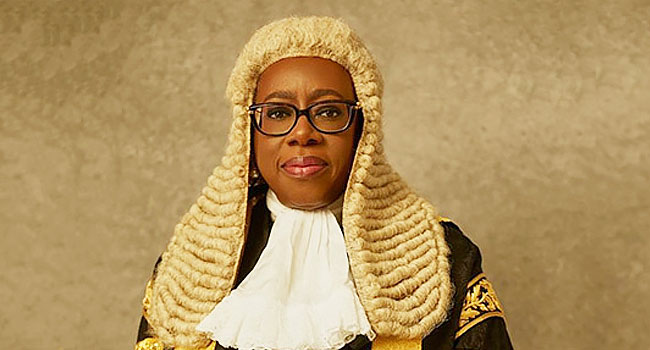
On Wednesday, Justice Kudirat Kekere-Ekun, the Chief Justice of Nigeria (CJN), informed the recently appointed justices of the Federal High Court that their admission to the bench signified their acceptance of the responsibility for impartiality, discipline, and steadfast constitutional loyalty.

The justices were sworn in by Kekere-Ekun, who cautioned: “Your appointment to the bench is not an elevation of status alone but the acceptance of a burden of impartiality, restraint, discipline, and unwavering fidelity to the constitution.”

They will have an impact on institutions, markets, public trust, and, frequently, the stability of governance itself.

By taking the oath of loyalty required by the Federal Republic of Nigeria’s constitution today, you have accepted not just an office but also a fundamental constitutional trust.

“You no longer belong entirely to yourselves; you belong, in a deep sense, to the Nigerian people, to the law, and to your conscience.”

The federal supreme court holds a crucial position in the legal system, she said, and it has authority over issues that have a direct impact on the country’s political, economic, and regulatory landscape.

Not only should the judiciary be unbiased, but it should also be perceived as being made up of both men and women whose presence fosters confidence.

As a result of your conscious efforts to uphold standards and shield appointees from inappropriate influence, you are here today; you must defend your confidence.

A worrying pattern of wide, sweeping attacks against the Judiciary in recent years, she said, made her frown.

In certain places, it has become commonplace to level general accusations of corruption against the organization.

Such broad generalizations cause profound wounds, and while constructive criticism is acceptable in a constitutional society, indiscriminate denunciation is neither just nor responsible.

They do more than just criticize decisions; they also disparage the integrity of people who have lived honorably, worked diligently, and performed their jobs with impeccable records.

According to her, the harm is communal when accusations of corruption are made without specificity, without supporting documentation, and without using the existing complaint procedures.

It unfairly taints reputations earned by decades of sacrifice, erodes public trust, and undermines institutional authority. Irresponsible comments shouldn’t cast a shadow over a judge who has served with integrity.

The CJN stated that while the judiciary does not assert its infallibility, it does guarantee that any misbehavior will be dealt with severely and openly.

According to her, the National Judicial Council is still on guard and will not hold back from disciplining any judicial officer who is proven to be deficient because judicial independence depends on responsibility.

“Independence itself must be safeguarded against reckless attacks,” she remarked. Criticism requires accountability. Claims must be supported by proof.

The rule of law itself is at risk when trust in the courts declines, thus institutions cannot be arbitrarily delegitimized, she continued.

She advised the judges to stay focused on their constitutional duties and not let either criticism or praise divert them.

“Now, My Lords, you are in this setting, where there is increased public opinion, immediate commentary, and scrutiny. Your decisions need to be clear.

When justice is delayed due to indolence or bad case management, justice is denied. Therefore, your behavior must be beyond reproach and your courtrooms must be disciplined, orderly, and punctual.

“Enter each session with the assurance that comes from studying and understanding your case files in a methodical manner.

“Let your judgments be a reflection of your clarity of thought and expression; let your ears be patient to all sides; and when you are asked to make a decision, be courageous with principles.”

Additionally, she reminded them that they now live in a world of increased public opinion, immediate comments, and surveillance.

Therefore, you have to fight off all the little pressures, whether they come from relationships, politics, society, or money.

The temptation might not always appear in a dramatic fashion; it could also appear as convenience, familiarity, or influence.

“Remember that perception is nearly as powerful as reality in judicial life, so guard your independence with jealousy and keep a measured distance from entanglements that could compromise perception.”

A modern judiciary must blend principle and innovation, Kekere-Ekun said, adding that the country wants judicial officers to be efficient, coherent, and honest at all times.

The Federal High Court is at a pivotal point in our country’s history, and the cases it hears are becoming more delicate and complex.

Judges should embrace continuing judicial education, learn new legal topics, use contemporary case management strategies, and support the court’s ongoing digitization initiatives, she urged.

In the history of judicial appointments in this nation, she continued, the judges were appointed through one of the most stringent, open, and technologically advanced selection procedures ever.

Tinubu, Atiku, Obi Urge Nigerians to Embrace Virtues of Lent and Ramadan as Fasting Begins

0

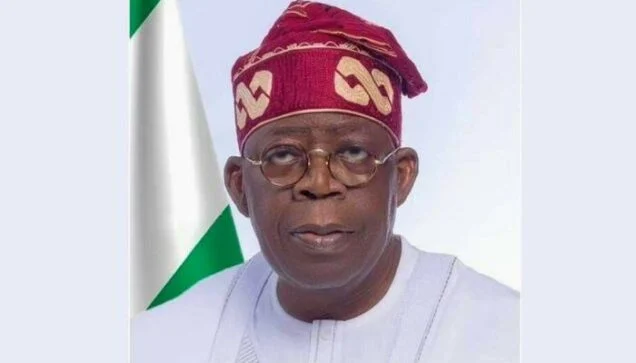
The solemn events of Lent and Ramadan, which begin on the same day this year, have been greeted with warmth by President Bola Tinubu to both Muslims and Christians in Nigeria.

In a statement, President Tinubu emphasized that all religions are based on the ideas of devotion, selflessness, and communal love, and that the coming together of the two holy times serves as a reminder of Nigerians’ unity and shared ideals.

The President called on Nigerians to pray for the advancement and security of their country and to use the holy seasons of Lent and Ramadan to advance peace, unity, and stability. He urged people to carry out their religious beliefs, encouraging neighborliness and moral behavior toward God and other people.

President Tinubu declared, “Lent and Ramadan are times for spiritual introspection, personal growth, and service to humanity.” We should strive for a more peaceful and prosperous Nigeria by living up to the principles of our own religions.

In order to guide Nigerians toward a better future for the country, the President hoped that the lessons and blessings of these holy seasons would persist with them forever.

As the Lenten season and Ramadan begin, respectively, former Vice President Atiku Abubakar has also sent heartfelt welcomes to Nigerian Muslims and Christians.

Atiku, the Waziri Adamawa, issued a statement acknowledging the Sultan of Sokoto’s declaration of the moon sighting, which signaled the start of Ramadan. During the holy month, he encouraged Muslims to practice piety, worship, sacrifice, and good actions.

Lent and Ramadan starting on the same day, according to Atiku, is a nice reminder of the kindness and sacrifice that are inherent to all religions. He underlined that the times spent in contemplation and fasting are chances to cultivate compassion and altruism for the underprivileged and impoverished.

Atiku remarked, “I hope that both Muslims and Christians have a fulfilling spiritual journey.” “Those in society who are wealthy have a responsibility to help those in need and to foster a culture of kindness and generosity.”

Nigeria’s varied religious communities are united by common principles, which are reflected in Atiku’s message. The significance of kindness, empathy, and service to humanity is emphasized by Atiku’s words as Nigerians begin these holy times.

Professor Nentawe Goshwe Yilwatda, the national chairman of the All Progressives Congress (APC), has also greeted the Christians and Muslims of Nigeria on the start of Lent and Ramadan.

“Deeply significant periods of fasting, reflection, sacrifice, and spiritual renewal for Nigerians of both faiths,” according to Professor Yilwatda, are the twin sacred seasons.

He described the rare convergence of Ramadan and Lent as a potent message to the country, saying that it is both deeply instructional and highly symbolic that the two events are starting on the same day. “It is a divine reminder that Nigerians are one people, brothers and sisters bound by a shared destiny, regardless of religious affiliation, and that peaceful coexistence is not optional but essential to national progress and stability,” he said.

Discipline, compassion, humility, love for one another, and service to mankind are among the common characteristics that are emphasized in both Ramadan and Lent, according to Professor Yilwatda.

Instead of allowing distrust, hatred, or division to permeate their daily contacts, he urged Nigerians to let these common characteristics fortify the ties between Muslims and Christians.

“I urge all Nigerians to use this holy time to offer up heartfelt prayers for our nation and the current administration of President Bola Ahmed Tinubu as it implements extensive reforms aimed at stabilizing and repositioning our economy and society at this pivotal point in our national journey,” the APC Chairman stated.

“With earnest prayers, a shared goal, perseverance, and sacrifice, these reforms will be implemented safely and provide long-term answers to our social and economic problems.”

Yilwatda was hopeful that the season will rekindle people’s faith, uplift their spirits, and strengthen Nigeria’s shared commitment to peace, unity, and the advancement of the country.

His words were, “Ramadan Mubarak. Barka da Ramadan,” addressed to the Muslim faithful. As they fast, pray, and perform charitable deeds during Ramadan, they pray that Allah would accept them.

He prayed that the Lenten season would bring Christians closer to God in faith, love, and selfless service. He also wished them a happy Lenten season.

In his closing remarks, Professor Yilwatda reiterated that Nigeria will become a more powerful, cohesive, and successful nation if its citizens remain together under God.

Budget Defence: Lawmakers Raise Concerns Over Non-Release of Security Agency Allocations, Condemn Envelope System

0

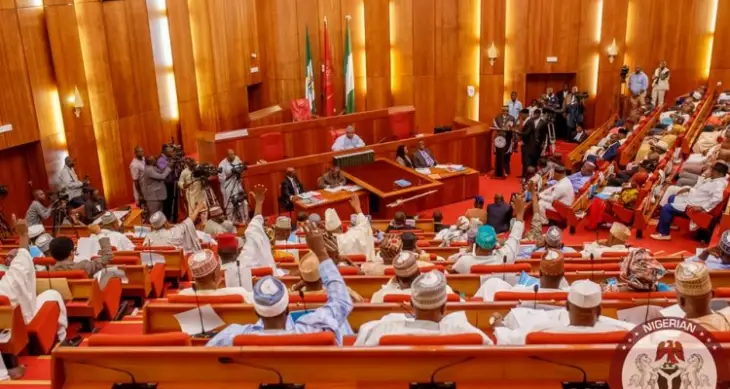
Sen. Yahaya Abdullahi, the chairman of the Senate Committee on National Security and Intelligence, criticized the envelope funding method for security and intelligence services on Wednesday.

When Mohammed Sanusi, the Permanent Secretary, Special Services, Office of the National Security Adviser, addressed the budget defense committee, Abdullahi voiced his concerns.

According to him, the purpose of the discussion was to review the budgetary provisions that would support the security and intelligence community’s operations during the fiscal year 2026.

Recalling that President Bola Tinubu had proclaimed a national security emergency, Abdullahi stated that the committee believed it was essential to provide funding to the intelligence community.

“This is to make sure it is in line with the difficulties the country is facing,” he stated.

In order for security services to function at their best and handle the numerous new security threats to national stability, the senator stated that they must have adequate funding.

“It is disappointing to observe that the budget of the security and intelligence agency is still based on the whims of the envelope system of budgeting instead of actual needs and requirements,” he said.

According to the member, it was improper for capital money designated for security services in the 2024 and 2025 budgets to either not be released at all or be released in part.

He claimed that this had a detrimental effect on both their operating capabilities and their ability to acquire supplies and cutting-edge security technology.

Abdullahi emphasized that the National Assembly must give the intelligence community the tools it needs to protect the country, its residents, and their property.

Sen. Orji Kalu of APC-Abia, a committee member, praised the security and intelligence community for showing up on time.

“Some invitees—especially some ministers—have not adhered to scheduled times in the past, arriving hours late and citing various excuses,” he stated.

“Our work is negatively impacted by such delays, particularly during this crucial budgetary period,” he stated.

Kalu stated that “delays hinder our ability to perform our constitutional duties effectively,” even if he described budget discussions as serious issues.

“I implore you to uphold this culture of timeliness and deference to institutional procedures.”

The brief encompassed the Office of the National Security Adviser and its centers, according to Mohammed Sanusi, Permanent Secretary, Special Services, Office of the National Security Adviser.

He said the centers include the Presidential Amnesty Programs, the National Center for Control of Small Arms and Light Weapons, the National Cyber Security Coordination Center, and the National Counter Terrorism Center.

Sanusi stated that using increased intelligence and community-based tactics to combat terrorism, banditry, and kidnapping was the intelligence community’s primary emphasis area for the current fiscal year.

It is important to mention that there will be difficulties with the securities’ operations and activities throughout the 2025 fiscal year.

“The envelope system of budgeting is one of the major obstacles that the intelligence community faced when implementing the 2025 budget,” he stated.

According to Sanusi, the envelope system created numerous limitations on the intelligence community’s ability to allocate resources.

“The 2025 capital appropriation release is not being implemented, the overseas service personnel shortfall is being released irregularly, and the overhead cost is being released irregularly,” he said.

As a result, he demanded that the intelligence committee have sufficient cash through supplemental funding.

This is to guarantee prompt and efficient handling of national security concerns. No country can develop without sufficient security, as we all agree,” Sanusi stated.

Additionally, on Wednesday, the Senate’s National Security and Intelligence committee made fun of the heads of federally controlled Ministries, Departments, and Agencies (MDAs) for their propensity to be late to committee meetings.

Nonetheless, it praised the leaders of the many security intelligence services for consistently showing up on time for such important meetings.

During the budget defense session, the National Security and Intelligence committee, along with the Director-General of the Department of State Services (DSS), Nuhu Ribadu, and the National Security Adviser (NSA), made harsh comments to agency heads who enjoy attending various standing committee engagements.

Senator Orji Uzor Kalu (Abia North) expressed his disgust with the majority of agency chiefs’ tardiness in arriving for the budget defense session, saying the Senate would no longer put up with this practice.

He especially stated that the late-coming mindset was most prevalent among former serving senators and members of the National Assembly who were appointed to positions in the executive branch of government.

He stated: “We are pleased that the different leaders of the intelligence and national security agencies showed there for the budget defense session prior to 11:00 am, which is when the interaction was supposed to start.

That isn’t the case for many of the other agency heads, though, especially those who are led by former National Assembly members or senators.

This is complete nonsense since all parties need to treat this budgetary time with the necessary seriousness.

“The persistent tarders always enjoy making up excuses about why they arrived late for committee assignments because of the president’s visit to the Villa, which are lies to us here.”

In agreement with Kalu’s warning, the committee’s chairman, Senator Yahaya Abdullahi (Kebbi North), stated that all impacted agency heads should consider this as a wake-up call.

In order to address the nation’s insecurity, the House of Representatives Committee on National Security and Intelligence has also urged for increased financing for intelligence collection organizations.

The call was made on Wednesday at the 2026 budget defense session in Abuja by the committee’s chairman, Representative Ahmad Satomi (APC-Borno).

In order to improve Nigeria’s security architecture, the legislator also demanded that the legislative and executive branch work together more closely.

He asserts that national security continues to be the cornerstone of progress, which is consistent with the stance previously taken by President Bola Tinubu when he presented the National Assembly with the ₦58.18 trillion 2026 Appropriations Bill.

Defense and security received ₦5.41 trillion, infrastructure ₦3.56 trillion, education ₦3.52 trillion, and health ₦2.48 trillion, he said.

The Office of the National Security Adviser (NSA) and its agencies, the Department of State Services (DSS), the National Intelligence Agency (NIA), the Presidential Air Fleet, and the National Institute for Security Studies, were allotted N664,119,740 out of the N5.42 trillion for their capital, personnel, and overhead expenses.

Additional analysis reveals that the total proposed capital expenditure for 2026 is N286,904,549,354, the entire proposed overhead cost is N131,273,507,85, and the personnel cost for all intelligence sector agencies is N245,941,663,329 for 2026.

If we look at the releases for the 2025 budget implementation, or at least the ones we are aware of, there is nothing at all to imply that the president prioritizes security and intelligence. These allocations are just appalling.

If the main goal of government is, in fact, to provide welfare and security, then releases to the security sector shouldn’t be handled carelessly.

He stated, “Therefore, this committee is fervently pleading with our beloved president to kindly investigate the financing of the intelligence sector agencies, improve them, and give them priority.”

Satomi noted that the committee visited the DSS training institutions in Bauchi, Lagos, and Enugu in 2024 and was disappointed by the poor condition of all the facilities.

He asserts that what we have seen is insufficient to provide our men and women who are giving their lives in defense of our dear nation with top-notch technical, psychological, and sociological skills.

As with the Armed Forces and police training intuitions, he urged the President to order that the training schools be given distinct financing heads in the budget and that sufficient funding be made to operate them.

“The envelope system of budgeting constituted a lot of constraints in terms of resource allocation to the intelligence community,” stated the Permanent Secretary, Special Services in the Office of National Security Adviser.

He said that the community was also limited by the erratic release of overhead costs, the execution of the 2025 allocated overhead cost releases, and the erratic release of the 2024 foreign service personnel deficit brought on by the FX disparity.

Challenges included the inability to release capital distribution, the high exchange rate, the lack of operational vehicles for both overt and covert operations, and the rising expense of foreign cash for maintaining the Presidential Air Fleet overseas rather than at home.

“We humbly ask that the intelligence community have sufficient money through a supplemental budget to guarantee prompt and efficient action to matters of national security.

We all agreed that without sufficient security, no country can develop.

By making sure that the financial provisions are in line with the government’s overall security objectives, he said, “I wish to state and reiterate that the intelligence community always assures the entire nation of its commitment to transparency, accountability, and effective resource management.”

ONSA is calling for additional money to address insecurity.

A special and supplemental budget has been requested by Nigeria’s security and intelligence community in order to guarantee prompt and efficient reaction to threats to national security and other matters.

During a budget defense session before the House of Representatives Committee on National Security and Intelligence on Wednesday, Mohammed Sanusi, Permanent Secretary, Special Services, Office of National Security Adviser (ONSA), made the plea.

He claimed that President Bola Tinubu’s recent declaration of a State of Emergency on National Security makes this even more relevant.

He emphasized that without sufficient security, no country can develop.

His brief addressed the Presidential Amnesty Programme [PAP], the National Cybersecurity Coordination Centre (NCCC), the National Centre for the Control of Small Arms and Light Weapons (NCCSA&LW), the National Counterterrorism Centre (NCT), and the Office of the National Security Adviser.

It also discussed the Presidential Air Fleet (PAF), National Institute for Security Studies (NISS), National Intelligence Agency (NIA), and Department of State Services (DSS).

According to him, the intelligence community’s main priorities for the current fiscal year 2026 are, among other things, preventing terrorism, banditry, and kidnapping through improved intelligence and community-based tactics; protecting vital infrastructure to guarantee food and economic security; strengthening the protection of vital infrastructure for oil and gas to boost oil production; and improving maritime safety and border security.

The impact of political unrest within the contiguous West African countries, the development of capacity and manpower to address emerging security challenges, the proliferation of small arms and light weapons throughout the West African corridor, the improvement of adequate cybersecurity, and the ongoing maintenance of a positive and tolerable security level within the Three Arms Zone, the entire Federal Capital Territory, and the nation in general are some of the others.

He claimed that the envelop system of budgeting, which created significant constraints on the Intelligence Community’s ability to allocate resources, was one of the main difficulties the community faced when implementing the 2025 budget.

He also mentioned the non-implementation of the 2025 allocated overhead cost releases, the irregular release of the 2024 foreign service personnel deficit because of the FX differential, and the irregular release of overhead costs.

Inadequate operational vehicles for effective and efficient covert and overt operations; high exchange rates because nearly all service level agreements are transacted in US dollars; non-release of capital allocation; and higher foreign exchange costs for maintaining the Presidential Air Fleet overseas rather than at the hangar are additional difficulties, he said.

“By making sure that the budgetary provisions are in line with the government’s overall security objectives, the Intelligence Community has consistently reassured this Committee and the entire National Assembly of its commitment to transparency, accountability, and effective resource management,” I would like to state and remind the Distinguished Members.

Lastly, the Intelligence Community expressed gratitude and recognition for Mr.

President, His Excellency Bola Ahmed Tinubu, GCFR, for his dedication and commitment to restoring security and peace to our communities. Additionally, he expressed gratitude to the National Assembly and its leadership for their understanding and support.

Engr. Ahmad Satomi, the chairman of the House Committee on National Security and Intelligence, described the funding for the intelligence sub-sector as pitiful.

“I’m also pleased that the president recognized the importance of the intelligence subsector in the broader effort to maintain a stable national security environment in his speech. “Our administration is resetting the national security architecture and establishing a new national counterterrorism doctrine — a holistic redesign anchored on unified command, intelligence gathering, community stability, and counter-insurgency,” he stated in the 2026 budget speech. The way we combat terrorism and other violent crimes will be drastically altered by this new ideology.

But according to the proposed budget for 2026, 5.41 trillion naira will go on defense and security. A total of N664,119,740 is allotted for personnel, overhead, and capital expenditures in 2026 for the intelligence subsector, which includes the Office of the NSA and its Agencies, the Department of State Services, the National Intelligence Agency, the Presidential Air Fleet, and the National Institute for Security Studies. A closer look reveals that the overall proposed capital expenditure for 2026 is N286,904,549,354, the total proposed overhead cost is N131,273,507,85, and the personnel cost for all intelligence sector agencies is N245,941,663,329 for 2026.

“These allocations are truly appalling and do not appear to align with the president’s speech to the National Assembly’s Joint Session on December 19, 2025.”

Additionally, if we look at the releases for the 2025 budget implementation—at least the ones we are aware of—there is nothing at all to imply that the president prioritizes security and intelligence. One would think that releases to the security sector wouldn’t be taken lightly if providing welfare and security was, in fact, the main goal of governance.

“Therefore, this Committee is fervently pleading with our beloved president to kindly examine the financing of the intelligence sector’s agencies, improve them, and give them priority,” Satomi stated.

He pointed out that President Bola Tinubu highlighted the importance of national security as the cornerstone of stability and economic prosperity, underscoring the government’s primary duty as stipulated in section 14 (2b) of the Federal Republic of Nigeria constitution.

According to him, this cannot be accomplished until the executive and legislative branches recognize and honor one another’s constitutional obligations as partners and stakeholders in the Nigerian project.

He claimed that anytime legislative committees attempt to exercise legislative supervision of the security sector, security and intelligence services perceive the legislature as intrusive outsiders. This is counterproductive and detrimental to the nation.

“Oversight enables the Nigerian people engage in security governance through their elected representatives; it does not imply animosity, hatred, or witch hunts. In addition to ensuring openness, accountability, and value for money in the implementation of government initiatives, programs, and policies in the security sector, this fosters public trust and appreciation for our men and women in the field,” he said.

He said that some agencies’ opposition to legislative oversight authority was unfortunate.

For the leadership and members of standing committees that supervise security and intelligence services, I dare suggest that not everything should be classified. Our oaths of membership and allegiance, as outlined in the constitution’s seventh schedule, bind us as honorable members of the National Assembly.

Therefore, I urge the impacted agencies to adopt a new mindset so that we can work together as partners in nation-building to fulfill the government’s fundamental duty of ensuring the welfare and security of all Nigerians. “No one branch of government can accomplish this on its own,” he stated.

He pointed out that the National Assembly has passed a number of laws to improve the security and intelligence community’s efficacy and efficiency.

He anticipated that in the future, the Committee on National Security and Intelligence would consistently involve all pertinent parties, especially those tasked with carrying out the body of laws in the security and intelligence domain, to guarantee that these laws are not merely on the bookshelves but that all of their provisions are carried out in order to fulfill the legislative intent behind their enactment.

This committee visited the Department of State Services’ training schools in Bauchi, Lagos, and Enugu in 2024. It has plans to visit the remaining ones in Kaduna as well as the projected institutions in Kogi and Cross River States. We also went to the NIA’s training academy in Lagos.

The poor condition of the facilities in every school we visited demoralized us as, in all honesty, we could not provide our men and women who are giving their lives in defense of our dear nation with top-notch technical, psychological, and sociological skills.

Once more, our committee urges our beloved president to order that these training institutions receive independent budgetary funding heads, similar to what is done for police and military training institutes, and that sufficient funding be provided to operate them.

As we discuss the 2026 budget proposal today, honorable colleagues, ladies and gentlemen, this committee would like to reassure you and all Nigerians that the House of Representatives is totally committed to helping the intelligence sector’s agencies succeed in carrying out their mandates.

He stated that “our institutional efforts should be collaborative and complementary in order to deliver a safe, secure, and conducive country which Nigerians and foreign residents are proud to live in and carry out their legitimate businesses.”

The Federal Government of Nigeria FGN’s delivery of justice sector reforms has also been negatively impacted by the lack of approved funds and insufficient funding in the federal ministry’s annual budgets, according to Attorney-General of the Federation and Minister of Justice Lateef Fagbemi.

He made this statement during a presentation on Wednesday in Abuja before the House of Representatives Committee on Justice at the Federal Ministry of Justice’s 2026 Budget Defense.

He informed the House Committee that the Ministry’s mission and activities are concentrated on achieving the objectives and projects specified in its Strategic Plan 2023-2027 and the National Policy on Justice 2024.

He added that these goals and programs are in line with the Renewed Hope Agenda, which is the present administration’s blueprint for the justice sector (legal and judicial changes).

However, the minister bemoaned the fact that the ministry’s ability to provide the public with essential projects and services is being negatively impacted by both delayed money releases and insufficient budgetary allocation.

He mentioned the ministry’s removal from the Financial Action Task Force’s (FATF) grey list, asset recovery, financial management, and criminal justice and counterterrorism as some of its major accomplishments in the ongoing justice reforms.

He claimed that only N6,675,702.827.32, or 82% of N7,499.524.028, was given to the Ministry as overhead expenses for a ten-month period.

Additionally, the Ministry was given a warrant for capital projects of N869.630.896.30 out of N6,749.616.425, which is only 12% of the overall capital budget. Unfortunately, even this 12% was not backed by cash.

He clarified that this circumstance is not unique to the Ministry and stated that no funds were received for its major projects in 2025.

He stated that N23,680,142,209.50 was set aside in the federal ministry’s 2026 budget plan, which was divided into capital, overhead, and staff expenses.

Hon. Olumide Osoba, the chairman of the House Committee, and other members stated that the House panel will thoroughly examine the Ministry’s and its agencies’ budget request to make sure that a lack of funding won’t impede improvements in the judicial system.

Additionally, he stated that the Committee will guarantee efficient supervision of any funds authorized for the Ministry in its yearly budgets.
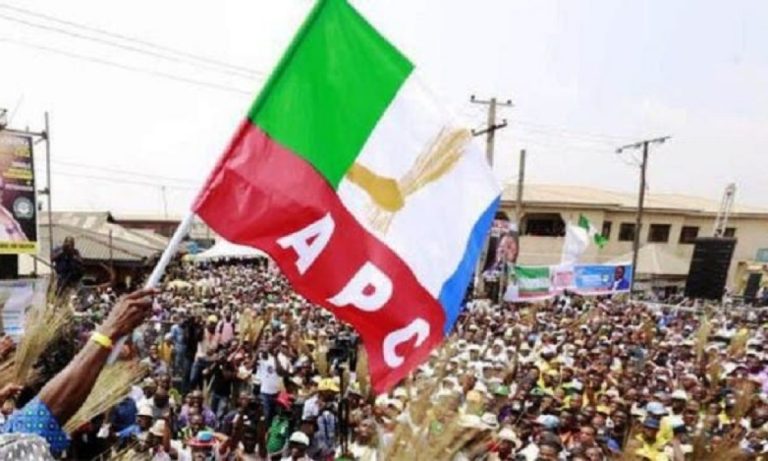
FCT Council Poll: Atiku Urges Nigerians to Reject APC

0

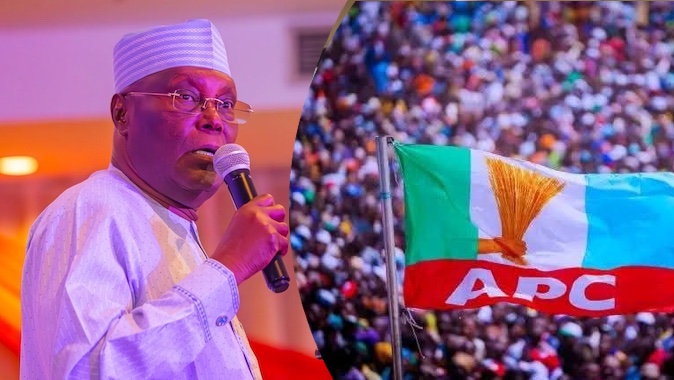
In the impending 2026 FCT council elections, former Vice President Atiku Abubakar has urged Abuja voters to reject the All Progressives Congress, or APC, calling the votes an opportunity for Nigerians to demand change.

In a social media post, Atiku stated that other ADC leaders, including Peter Obi, the former governor of Anambra State, joined him in educating citizens about the significance of the impending elections.

“This is a crucial election. It will demonstrate the readiness of our election management to conduct free, fair, and credible polls, as well as the readiness of the populace to call for political reform, he said.

“Our party has fielded candidates with competence, capacity, and character to offer quality leadership across local councils in Abuja,” he said, urging citizens to vote in large numbers in favor of ADC candidates.

Additionally, Atiku urged voters to oppose intimidation. “It is the duty of voters to resist all forms of coercion and make the correct decision,” he stated.

The former vice president accused the government of ignoring important national issues and criticized President Bola Tinubu’s administration and the ruling All Progressives Congress (APC).

“The APC-led Federal Government has failed citizens on many fronts,” he stated, adding that voters had a chance to start voting the party out in the FCT elections.

“We should start with the FCT elections and ensure that the APC is voted out in the upcoming elections.”

Adelabu Says 2025 Funding Shortfall Didn’t Stall Power Sector Reforms

0

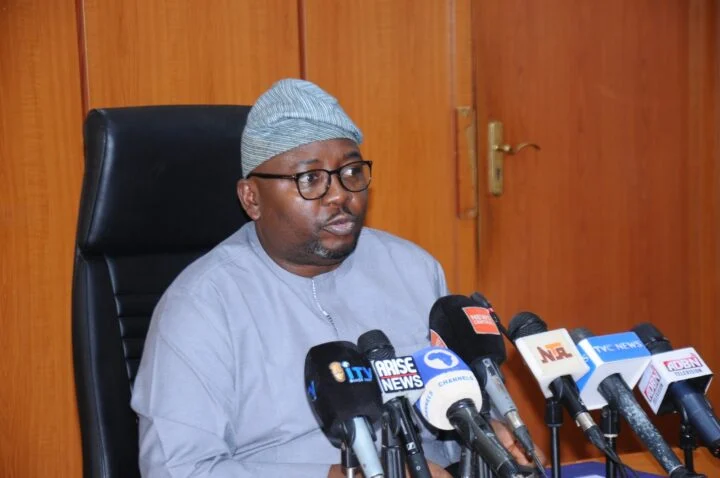
Chief Adebayo Adelabu, the minister of power, revealed on Wednesday that the Federal Ministry of Power did not receive any capital funding in the 2025 budget. However, he stated that this did not prevent the ministry from fulfilling its regulatory and supervisory duties in the electricity industry.

Additionally, Adelabu promised parliamentarians that the Federal Government has taken action to prevent the fiscal failures that hindered the implementation of the capital budget for 2025, promising better performance in 2026.

At the National Assembly in Abuja, the minister revealed during the budget defense session before the Senate Committee on Power that the lack of capital funds slowed down activities in various ministries, departments, and agencies. However, he expressed confidence that the situation would not happen again.

Although salaries and overheads were fully executed, he claimed that the ministry’s capital spending performance for 2025 was zero because there were no budget releases.
According to him, the budget is divided into three parts: capital expenditures, overhead expenses, and salaries and wages. Although we reported 0% on the capital component, we were 100% on the first two. The ministry does, however, have agencies that are able to continue their operations and make money on their own. We found it much simpler to weather the year as a result.

Despite the financial limitations, Adelabu emphasized, the ministry continues to oversee agencies and promote sector reforms.

He informed Congress that, in 2025, the nation’s grid remained comparatively steady, with only one outage, which he ascribed to vandalism and a disruption in the gas supply.
While budget performance was much better in 2024, we did record roughly four disturbances and one complete grid failure. When we received nothing in 2025, however, we only noted one disruption, which occurred in the Niger Delta due to an explosion and vandalism that impacted the gas supply,” he stated.

We were able to overcome this obstacle because of the investments made to stabilize the grid,” the minister continued. That the country was plunged into darkness in 2025 because we did not receive funding is therefore untrue.

Nigeria’s power industry has long been plagued by underfunding, inadequate infrastructure, and funding shortages. Several administrations have struggled to strike a balance between the need for significant capital infusions into transmission, distribution, and generating and budgetary restraints.

In order to improve power access, reinforce transmission networks, and increase grid capacity, capital expenditure in the sector is essential. Budget announcements that are delayed frequently result in slower project execution and less successful reforms.

Despite the 2025 setback, Adelabu revealed that in order to speed up implementation, a portion of the funding allocation would be made available in the first quarter of 2026.

According to him, the ministry should receive around 30% of the 2026 capital budget before the end of March, with the remaining 70% being implemented during the course of the year. In 2026, the Federal Government is making every effort to prevent the budgetary miscalculation that impacted the implementation of the 2025 budget.
The statement was consistent with President Bola Tinubu’s pledge to enhance budget performance in all important economic sectors, the minister said.

Senator Enyinnaya Abaribe, the chairman of the Senate Committee on Power, had earlier in his speech characterized budgeting as an essential tool for guaranteeing accountability, transparency, and efficient management of the public sector.

“In light of this, government ministries, departments, and agencies are required to present their yearly budget assessments and revenue forecasts to the National Assembly for approval,” he stated.

Abaribe emphasized the role that the electrical industry plays in promoting industrialization, economic growth, and diversification. He also said that the committee would continue to monitor approved budgets to make sure they are implemented effectively.

“As everyone knows, the power industry is essential to an economy’s ongoing success, especially during a time of fast global development and economic diversification. To guarantee that approved budgets are implemented in a tangible way and to identify issues that call for legislative support, the committee will keep working with the ministry,” he stated.

Senior officials, including Mamuda Mamman, the ministry’s permanent secretary, accompanied the minister.

With the passage of the energy Act, which decentralized the industry and gave states more authority over the production and distribution of energy, Nigeria’s electrical value chain is being strengthened through continuous changes.

MDAs got less than N1 trillion for capital projects in the first seven months of 2025, according to the figures.

The Medium-Term Expenditure Framework and Fiscal Strategy Paper (2026–2028) from the Budget Office of the Federation was analyzed to reveal that, although N18.53 trillion was allocated for capital expenditure for “MDAs and others” in 2025, the January–July pro rata benchmark was N10.81 trillion.

But during that time, only N834.80 billion in actual capital transfers were made to MDAs and associated organizations. The performance rate for the seven-month period was only 7.72 percent, leaving a pro rata deficiency of around N9.98 trillion.

Even worse was the overall capital picture. The projected total capital expenditure for 2025 was N23.44 trillion, with a pro rata amount of N13.67 trillion expected by July. The total amount of capital spending that was actually spent was N3.60 trillion, which was 73.7% less than the reference amount.

“Capital expenditure implementation was notably weak,” the MTEF/FSP document said, acknowledging that capital expenditure spending was weak in 2025. From the pro-rata capital budget of N10.81 trillion, only N834.80 billion had been disbursed to Ministries, Departments, and Agencies, indicating a performance of less than 10% throughout the review period.

Amended Electoral Act Guarantees Every Vote Counts, Says Akpabio

0

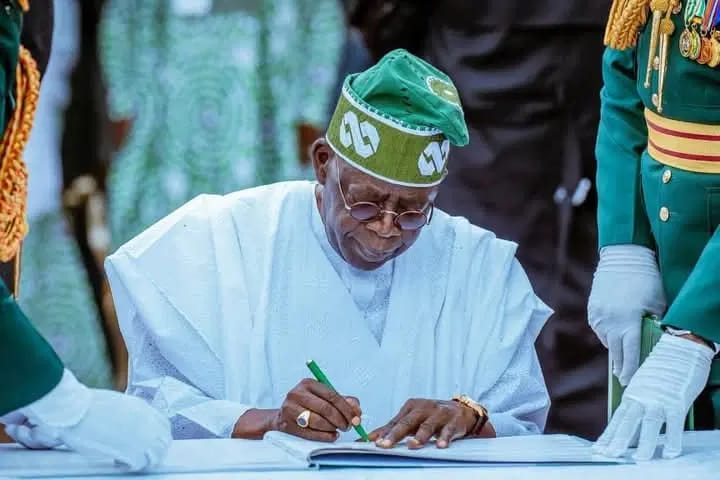
The Electoral Act 2026 (Amendment), which President Bola Tinubu signed into law on Wednesday, would guarantee that every Nigerian vote counts, according to Senate President Godswill Akpabio.

According to Akpabio, the new law does away with the long-standing issue of collation centers and polling stations manipulating results.

Akpabio told reporters shortly after the signing ceremony at the Presidential Villa in Abuja that the new law incorporates measures to improve the security and transparency of future elections while addressing the fundamental issues brought up by Nigerians over the integrity of the electoral process.

Future elections will ultimately be very beneficial to Nigerians. The Senate President declared that all votes will now be counted.

He pointed out that the change will acknowledge electronic results transmission for the first time since Nigeria gained its independence in 1960.

Following numerous claims of result manipulation during the general elections in 2023, Akpabio clarified that the amended Act requires the electronic transmission of polling unit results to the INEC Result Viewing Portal, a crucial demand made by opposition parties, civil society organizations, and election observers.

He said, though, that the law also included places with inadequate telecommunications infrastructure, guaranteeing that the EC8A forms, which are signed by polling station security staff, party agents, and presiding officers, will continue to be the major source of results.

We paid attention to places where there might not be a network, where there might not be availability or communication capabilities.

We stated that copies are distributed to everyone since the polling unit results are obtained via EC8A, which is signed by the presiding officer, the agents, and security personnel.

“At that unit, we can use that as the main source of collation,” he stated.

“And then, of course, we transmit it,” Akpabio continued. People will still be able to view it even if there is no network at the moment since it will drop into the iREV as we leave, perhaps heading toward the ward center or the local government center.

Nigerians would now be able to compare results posted to the portal with those ultimately compiled at the ward, local government, and state levels, the Senate President stated, making it impossible for results to be manipulated with after leaving polling places.

This implies that Nigerians will be able to compare if the election results were manipulated if the final results at the next center differ from those in the iREV.

And for us, the issue in the nation has always been that election results are tampered with or disfigured once they leave a voting station. Today, that has been removed,” he declared.
Insisting that the final provisions of the amendment were the result of extensive consultations and deliberations in plenary sessions of both houses, the Senate President rejected claims that the National Assembly had given in to political pressure.

He added that the Senate had given up its holiday break to finish the amendment, saying, “We are satisfied that we have met the aspiration of Nigerians, not those who are politically motivated.”

The establishment of direct primaries for political parties, which will enable party members to vote directly for candidates of their choosing instead of depending on delegate selection, is one of the other elements in the new law that Akpabio emphasized.

“Participatory democracy and greater inclusivity.” Direct primaries are now open to members of many political parties.

This implies that you are free to select the person of your choice. Naturally, a single person can compose the list and submit it, but this time, the political party members will take a stand and cast their votes for their own candidates as well as those of their choice,” he stated.

According to the Senate President, the amendment also tackles situations in which judges disqualify election winners. He pointed out that the legislation now requires new elections rather than naming the runner-up as the winner in order to guarantee that Nigerians actually choose their leaders.

“We don’t want an election where five candidates run, one of whom receives 300,000 votes, another 290,000, and then the court disqualifies him for some reason. Then the person who received 1,000 votes, who isn’t elected by the majority, will be declared the winner.

“All of those items have been removed. We have now suggested that they call for another election in cases like these,” he said.

According to him, the same rule now governs gubernatorial elections, meaning that even if a candidate receives the second-highest number of votes, they cannot be proclaimed the victor if they do not receive at least 25% of the votes in two-thirds of local government districts.

Abbas Tajudeen, the Speaker of the House of Representatives, called attention to the election notice time being shortened from 360 days to 300 days when speaking to reporters.

This may unintentionally result in the presidential and National Assembly elections taking place in January 2027, which will technically prevent elections from taking place during 2027’s Ramadan.

The Speaker stated, “I believe this is another clever move by the National Assembly to prevent voter disinterest in the upcoming general election.”

Days after INEC published the schedule for the general elections in 2027, the Electoral Act 2026 (Amendment) was released.

After INEC’s Result Viewing Portal failed on the day of the 2023 elections, leading to accusations of election tampering, the 2022 Electoral Act was criticized.Our correspondent noted that at a signing ceremony held at the Presidential Villa in Abuja at approximately 5:00 p.m., with the senior officers of the National Assembly present, Tinubu gave his assent to the Electoral Act 2026 (Amendment).

The general elections for the presidency and national assembly are set for February 20 of 2027, while the elections for governorship and state houses of assembly are set for March 6.

Senate Flags Shortfall in Tinubu’s Security Budget, Calls for More Funds

0

On Wednesday, the Nigerian Senate criticized the Federal Government’s envelope budgeting system, stating that even though President Bola Tinubu declared a national emergency on security, the funding model is not prepared to handle the nation’s worsening security situation.

The upper house made this statement at the Office of the National Security Adviser’s (ONSA) 2026 budget defense session in Abuja, when MPs questioned officials about ongoing funding shortages, postponed releases, and unfinished capital projects.

Even as the country struggles with separatist tensions in the South-East, banditry and kidnappings in the North-West and North-Central, insurgency in the North-East, and oil theft and piracy in the Niger Delta, the current envelope budgeting framework has continuously failed to meet the operational demands of Nigeria’s security and intelligence agencies, according to Yahaya Abdullahi, chairman of the Senate Committee on National Security and Intelligence.

According to Abdullahi, the funding pattern, which establishes preset spending caps for ministries, departments, and agencies, has proven to be too strict for an industry that needs adaptability and quick reaction to changing threats.

Abdullahi declared, “The envelope budgeting system is insufficient to address the magnitude of security threats confronting the nation.” “Our funding system needs to show how serious we are about defeating insecurity. Financial limitations and postponed releases hinder the ability of security services to perform at their best.

His comments are indicative of the National Assembly’s mounting dissatisfaction with what legislators say is a misalignment between fiscal reality and policy promises.

Senators maintained that while the president has frequently reassured Nigerians of his administration’s determination to restore security, such pledges need to be accompanied by sufficient and prompt funding.

Abdullahi further bemoaned the fact that security operations nationwide have been severely undermined by insufficient and postponed funding releases, especially capital allocations in the 2024 and 2025 budgets.

He said that a number of projects intended to improve logistics, operational mobility, surveillance infrastructure, and intelligence collection were either not carried out at all or were just partially done.

Failure to adequately implement capital votes, he said, has repercussions for the entire security architecture, from personnel deployment and training to equipment acquisition.

Speaking during the session as well, Mohammed Sanusi, Permanent Secretary, Special Services, ONSA, confirmed the committee’s worries, citing inconsistent overhead releases, envelope budgeting, and the failure to implement capital appropriations as the main performance barriers.

Sanusi said, “The envelope budgeting framework has presented significant challenges to our operations.” “Our capacity to efficiently coordinate and support security agencies has been impacted by irregular overhead releases and the incomplete implementation of capital appropriations.”

A dynamic funding framework that can react to sudden increases in violence, new threats, and intelligence-driven operations that cannot be postponed by bureaucratic bottlenecks is necessary for security management, Sanusi emphasized.

While ONSA coordinates several security and intelligence agencies, he informed lawmakers that the consistency and adequacy of money flows directly affect how effective the agency is.

The Senate’s censure coincides with growing national security pressures. Nigeria has experienced several attacks on rural communities, mass kidnappings for ransom, attacks on essential infrastructure and security formations, and ongoing threats from non-state actors in recent years.

Lawmakers and commentators have questioned whether the structure of releases and spending patterns mirror practical reality, despite the fact that defense and security get substantial annual allocations, which are frequently among the largest components of the national budget.

MDAs function within preset spending caps under the envelope budgeting method, which are based on anticipated revenues and financial limitations.

Although the paradigm is meant to encourage discipline and macroeconomic stability, others contend that it may hinder organizations that need flexibility, especially in emergency-driven fields like security.

Senators in attendance emphasized that extraordinary financial measures, not regular budgetary limits, should be triggered by the declaration of a national emergency on security.

They cautioned that an imbalance between treasury resources and risks on the ground could undermine public trust and give criminal networks more confidence.

The committee did, however, promise ONSA more robust legislative support to strengthen Nigeria’s security infrastructure.

Abdullahi went on, “We are dedicated to offering the required legislative backing to guarantee that our security framework is reinforced.”

Since lawmakers have hinted at the need for reforms that may provide security services more flexibility in obtaining and using funds, the assurance suggests a potential reconsideration of financing methods during the ongoing 2026 budget deliberations.

Following lengthy open-session discussions, the committee met behind closed doors to examine sensitive parts of the budget plan, such as operational requirements and classified expenditure lines.

As lawmakers work to balance budgetary restraint with the pressing need to restore peace and stability throughout the nation, the Senate’s review’s findings might have a significant impact on how funding is allocated to Nigeria’s security agencies in the upcoming fiscal year.

1% Content Levy Now Mandatory for Oil and Gas Upstream Firms – NCDMB

0

Operators, contractors, and service providers in the upstream sector have been reminded by the Nigerian Content Development and Monitoring Board (NCDMB) to adhere to the Nigerian Content Development Fund (NCDF) deduction of one percent on all contracts.

Dr. Obinna Ezeobi, General Manager, Corporate Communications Division Executive, NCDMB, made this announcement on Wednesday.

According to NCDMB Executive Secretary Mr. Felix Omatsola-Ogbe, the fund was created as a special fund for the advancement of Nigerian content in the oil and gas sector under Section 104 of the Nigerian Oil and Gas Industry Content Development (NOGICD) Act, 2010.

According to him, NCDMB has the exclusive jurisdiction to manage and administer the fund, and under the statute, firms are required to send one percent of the value of each upstream contract.

“Money raised through the NCDF is used to support local oil and gas service providers and contractors, as well as to fund industry training and capacity building.”

According to him, “the funds are also deployed to drive sustainable growth across the oil and gas value chain and to enable access to affordable finance for indigenous participation.”

The NCDF is a ring-fenced statutory development fund established by a particular Act of the National Assembly, Omatsola-Ogbe added.

It is “not classified as a Federal Government revenue payable into the Consolidated Revenue Fund and its collection and administration are expressly governed by Section 104 of the NOGICD Act,” he continued.

He emphasized that all 1% NCDF levy payments must be placed directly into the NCDMB-designated accounts.

Any transfer made outside of the accounts officially specified by the NCDMB “shall not be recognized as valid payment of the one percent NCDF Levy under the Act,” he stated.

Before making any remittances, he advised enterprises to make sure they were strictly in compliance and to ask the board for clarification if needed.

The Board is still dedicated to openness, responsibility, and efficient use of the Fund for the expansion and sustainability of Nigerian content in the oil and gas sector, the Executive Secretary reassured industry stakeholders.

Additionally, according to the NCDMB, obtaining the Nigerian Content Development Fund Compliance Certificate (NCFCC) is now a crucial prerequisite for using the board’s regulatory services and approvals.

The board stated that access to regulatory papers, certificates, licenses, and clearances issued by NCDMB would not be permitted without a current NCDF compliance certificate.

To prevent delays in operational schedules, the agency recommended that stakeholders in the oil and gas sector regularize their NCDF remittance status, apply for the document as soon as possible, and maintain continuous compliance. (nan)