Home Blog Page 2720

INEC resolves to use card reader for 2019 elections

0

The Independent National Electoral Commission (INEC) has insisted that it would use smart card reader and discarded the use of incident form for the 2019 election.

The electoral body used smart card reader in 2015 general elections as well as incident form.

Prof. Godswill Obioma, a Commissioner in INEC, revealed on Wednesday in Abakaliki at the end of a three-day training for implementers of the Election Monitoring and Support Centre (EMSC).

Obioma said that the decision was part of policy enunciations made by the Commission’s chairman, Prof Mahmood Yakubu recently in Abuja during a series of engagements with stakeholders, including the National Peace Committee.

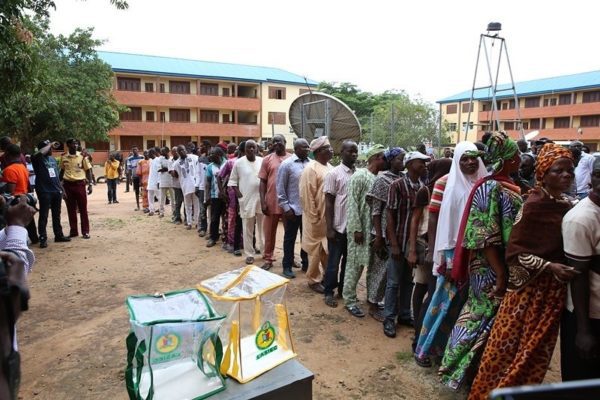
“Smart card reader will be used in the election of 2019, that is the determining factor and that is to say that smart card will be used for first level of screening of those with their Permanent Voter Cards (PVCs).

“The PVC has been configured as a biometric platform and smart card reader is supposed to recognise such biometrics.

“If you come with your PVC and it is your own, it is slotted into the smart card reader it will throw up your biometrics, including your physiognomy and your face and if that happen you move to the next stage of checking if your name is on the register.

“If your name is checked and found in the INEC’s voter register, you are given a ballot paper and that is the process we are going to use.

“But in the unlikely event that the smart card reader fails to identify your face and your name is on the register; such incident can happen, we don’t use incidence form as in the past because of all sorts of challenges associated with it.

“What we are going to do if such development occurs is to go to the register, identify your name and thick a box to show that you are the owner of the name and your thumb print will be picked in case of litigation to show that you are the one that voted,” Obioma said.

The resident commissioner commended participants to the workshop and noted that all strategic arrangements were in place for a credible, transparent and peaceful elections in Ebonyi.

He added that the training workshop was imperative for the successful implementation of the EMSC which he noted was an innovation introduced by the commission to enhance credibility of elections in the country.

According to him, the EMSC is an integrated support system for monitoring the implementation of the 2019 Election Project Plan.

He said that the EMSC initiative was an innovation by INEC to connect three components of the electoral processes which previously worked independently of one another resulting sometimes in role conflicts.

“INEC developed the EMSC to bring together the three components of the electoral processes which in 2015 worked independently.

“The three components are: election management system, election risk management and election operations support centre.

“Whereas the election operations support centre focuses on just before the election day and immediately after the elections, the election risk management focuses on risks, litigation, identifying flash points and areas that need more security.

“Election management system focuses on the entire election; so, all these components worked independently in 2015 and brought about role conflicts.

“They were not supporting one another and so the whole idea of EMSC is to bring these components together into one integral part for the effective conduct of the 2019 general elections.

“So, what the training has achieved is that we have assembled the implementers, trained them and equipped them with the necessary capacity needed to effectively function by understanding themselves as human persons”, he said.


Gov. Ayade to recruit 1,000 health workers to beef up cate delivery

0

Gov. Ben Ayade of Cross River has approved the recruitment of 1,000 primary health workers as part of efforts to improve healthcare delivery in the state.

Dr Betta Edu, Director-General, Cross River Primary Healthcare Development Agency made this known in an interview with the News Agency of Nigeria (NAN) on Wednesday in Calabar.

“The objective is to fill the existing gaps and improve healthcare delivery in the state.

“The agency is committed to a transparent process based on merit. This is healthcare and we cannot afford to play nepotism or politics with health.

“All applicants will go through examination and interview. Successful candidates will be published online in our website.

“All applications will be submitted online directly to the agency, and applicants will be applying to work in specific primary health care facilities across the state, where they will be bonded.

“On no account should any member of the public give any money to anybody for employment into the state Primary Healthcare Agency,’’ Edu said.

She warned that any applicant discovered to have bribed or paid money to any syndicate, stands automatically disqualified.

“Also, any perpetrator caught will face the full weight of the law,’’ Edu said.

Buhari presents 2019 budget

0

President Muhammadu Buhari on Wednesday appeared before the joint session of the National Assembly (NASS) to present the 2019 budget.

He was accompanied to National Assembly by Vice President Yemi Osinbajo and members of the Federal Executive Council (FEC).

Loud ovation and encomium heralded Buhari’s arrival at the joint session with shouts of “Sai Baba’’ as he waved to the crowd.

Senate President Bukola Saraki and Speaker of House of Representatives Yakubu Dogara jointly presided over the joint session with Saraki introducing the ceremony.

The budget proposal is the last Buhari would present to the 8th National Assembly.

24-hour electricity supply offends consumers

0

Residents of Maiduguri, Borno state capital, are irked by the recent uninterrupted electricity supply which has caused astronomical increase in charges.

Yola Electricity Distribution Company (YEDC) came under attack by residents who see the 24 hours electricity supply as waste and digging holes in their pockets.

The constant power supply according to the residents had caused what they described as “outrageous billings’’.

Mr. Ibrahim Suleiman, a resident at who lives in Bolori Layout, appealed to the YEDC to reduce supply of electriticy.

“YEDC should go back to the former supply system where electricity was supplied for 12 hours and not 24 hours recently being enjoyed.

Suleiman described the stable power supply as a “wastage” because many consumers cannot use electricity during working hours.

“I work from 7 p.m. to 4 p.m. So I do not need any electricity until I get home. But in this case whether you consume power or not, you will be billed to pay for it. I think this is not fair, “he said.

Residents told the News Agency of Nigeria (NAN) on Tuesday that the incurring high bills was worrisome.

They said that it was not in the interest of the masses, because it has hindered economic activities and social life of the people.

They also alleged that YEDC jacked up their electricity bills by over 100 per cent for commercial and residential areas sequel to appreciable improvement in power supply in the metropolis.

Mr Esther Chukwuma, one of the consumers, described the new billing adopted by the power distribution companies as frustrating and lamentable.

“My bill indicated that I used 605 units in November and they charged N14, 000 as against N6, 500 for September where I used the same units.

“They are charging me for what I did not consume because during the day, I spend most of my time in my shop. I only use the electricity at night at home.

“I have a prepaid metre in the shop and I don’t spend more than N2, 000 in a whole month.

“So how come I am not staying at home and i am being asked to pay N14, 000.

“I am here in their office, demanding an explanation,” she said.

Also speaking, Mrs Fatima Musa, a widow, said: “I was given a bill of N15, 000 monthly instead of the N5,000 I used to get monthly.

“I strongly disagree with this outrageous charges given without any explanation”.

She said that electricity consumers were at the receiving end especially those without prepaid metres, noting that the billing process was “opaque and lacks transparency”.

Malam Abdullahi Bako, who lives in Gwange, said how can YEDC be bringing between N9, 000 and N15, 000 to a room apartment in a month.

“We are being forced to pay for electricity we never consumed; this is extortion, we demand for transparency in the billing methodology,” Bako said.

Responding, Alhaji Usman Wakta, the YEDC Maiduguri Business Manager, said the company does not bill its customers arbitrarily.

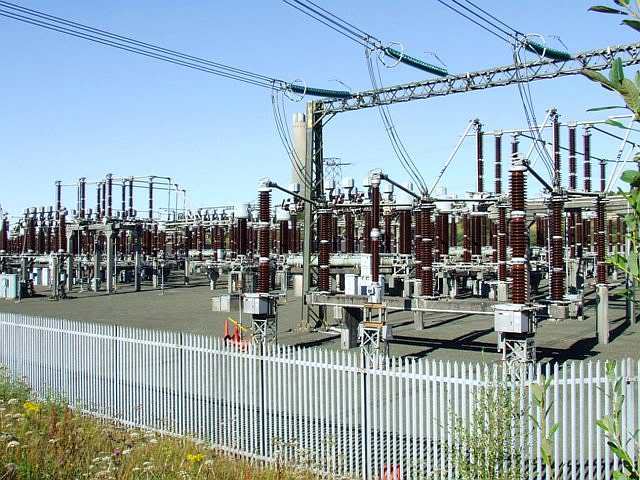
“These complaints may be as a result of the commissioning of the 330kV transmission line which now supplies electricity 24 hours.

He said that before the commissioning of the new line, the stations relied on the 132KV controlled from Biu, which can only supply for a period of ten to twelve hours per day.

“On the average, we now supply electricity in the town for a minimum of 22 hours in a day which simply implies that the consumption of energy by residents in the state have multiplied or even tripled itself.

“We took a simple study from our prepaid metres users and we found out that the people that usually came to buy unit of N2000 or N3000 in a month now have to spend N15, 000 or N20, 000 because of their energy usage.

“One thing we notice about the consumers is that they waste energy. People have this habit of leaving their lights on even in the afternoon.

“Go to some super markets or filling stations, you will see more than 200 bulbs on in the afternoon. So the more you load you use the more energy you consume.

On the allegation of exorbitant billing of consumers without meter, Wakta said : ”We go to people’s home to do load assessment based on the gadgets they have in the house and bill them accordingly.