Home Blog Page 2703

NSCDC registers 1,212 PGCs, generates N800m in 2018

0

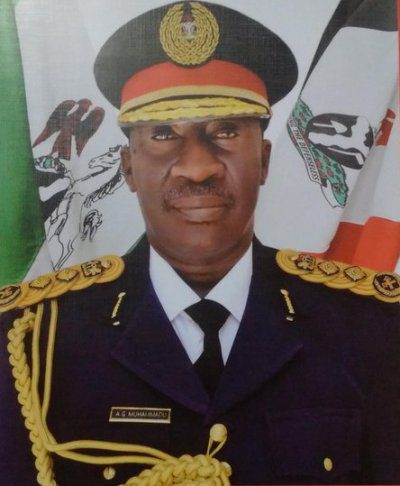
The Nigeria Security and Civil Defence Corps (NSCDC) said it generated over N800 million as revenue from approval and renewal of licences of Private Guard Companies (PGCs) in 2018.

Mr Soji Alabi, Media Assistant to the Commandant General of NSCDC, said this on Thursday in Abuja.

He said the amount was paid into the Federal Government coffers.

The aide added that the corps registered and licensed 1, 212 PGCs in the year under review.

Alabi said over 80 PGCs were sealed for non-renewal of their licences even after they had been warned by the monitoring department of the corps.

He said 102 licences of some PGCs were also revoked due to noncompliance, and that the corps assisted PGCs in the training of over 4,000 personnel for effective performance.

He advised owners of PGCs to ensure internal security standards as there were high expectations from them.

“Do not allow foreigners head your companies because it is against the law guiding the operations of PGCs in the country,” Alabi said in a statement.

Boko Haram in trouble as troops strike

0

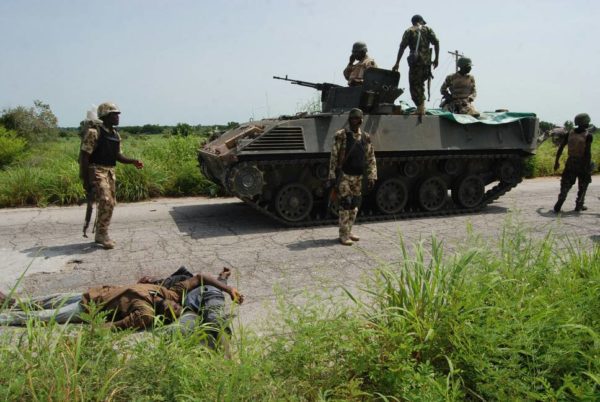
Troops have neutralised many insurgents who had earlier attacked the army’s location in Baga and successfully cleared the insurgents from communities in Borno state.

Brig.-Gen. Sani Kukasheka, the Director, Army Public Relations, said that troops of the 707 Special Forces Brigade dealt a decisive blow to the Boko Haram insurgents’ faction of the Islamic State of West Africa Province (ISWAP).

He added that the troops, which began operation on Dec. 28, 2018, successfully cleared Zare, Gudumbali, Kukawa and Cross Kauwa without resistance from suspected terrorists.

“In the determined efforts to wipe out remnants of Boko Haram terrorists that now goes by the appellation of Islamic State of West Africa Province (ISWAP), the gallant troops of the newly formed Nigerian Army Special Forces Command (NASFC), Operation LAFIYA DOLE, have given the terrorists that attacked troops location in Baga a bloody nose.

“The triumphant troops; particularly the highly revered 707 Special Forces Brigade, which is the vanguard of the great exploit, dealt the decisive blow that neutralized several terrorists along that axis despite prior warning to them by some unpatriotic elements.

“The Special Forces commenced clearance operations on 28th December, 2018; where they cleared Zare, Gudumbali, Kukawa and Cross Kauwa without any resistance from suspected terrorists.

“However, at Cross Kauwa, the unfortunate ISWAP terrorists made a costly mistake of raising their ugly heads. In professional fashion the troops exploited the situation, decisively neutralized the insurgents and captured some equipment.

“Though some of the terrorists attempted to infiltrate troops’ camp at Monguno, the gallant troops lured them, neutralized many of them and recovered some arms and ammunition”.

Kukasheka added that the troops who were in high spirit had linked up with other forces in Baga where they cleared the Naval Base and the surrounding areas.

The army spokesperson revealed that the Special Forces lost one officer and a soldier, while 5 others sustained injuries, adding that the remains of the two fallen heroes and the wounded had been evacuated.

He noted that the troops were now consolidating and clearing vestiges of the terrorists within the northern Borno and Lake Chad region.

According to him, the Special Forces attains great feat in close operational synergy with Air Task Force of the Nigerian Air Force and Nigerian Navy Special Forces.

Osinbajo, other dignitaries grace Fasehun’s funeral

0

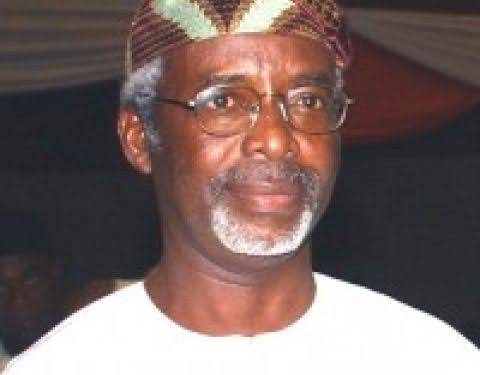
Vice President Yemi Osinbajo on Thursday attended the funeral of late Dr Frederick Fasehun, the founder of Oodua Peoples Congress(OPC) at the Cathedral Church of Saint Stephen, Oke-Aluko, Ondo, Ondo State.

The OPC chieftain passed on Dec. 1 at the Intensive Care Unit of the Lagos State University Teaching Hospital, Ikeja (LASUTH).

Osinbajo was accompanied to the service by Gov. Rotimi Akeredolu of Ondo State, Gov. Kayode Fayemi, among others.

Former governor of Ondo State, Olusegun Mimiko was also in attendance.

In his tribute, Osinbajo said it was a great honour to be at the service to express his own condolence on behalf of the President of the Federal Republic of Nigeria and the Government of Nigeria.

He said that Fasehun was exceptional in everything he did as he was medical doctor,  a sociologist as well as a versatile acupuncturist.

“He studied acupuncture in 1977; and set up the very first acupuncture centre in Africa at LASUTH.

“ He was such a brilliant medical doctor; one would have thought that he would just restrict himself to practice of medicine.

“Of course, many of us know he was the proprietor of Bestcare Hospital, which catered for the poor; so many people were able to receive medical attention.

“But beyond that, I think that what he will always be remembered for is what he did with the OPC; of course, many of us know about the struggle.

“He was not really a politician; his first interaction that we know within the democratic struggle was when he founded the Movement for Social and Economic Justice.’’

Osinbajo said that when the deceased founded the OPC, he decided that it was not enough for the Yoruba people to be recongnised for their industry and for their enterprise, but to seek beyond that.

He said that the first set of members of OPC were artisans, who Fasehun taught excellence and integrity and also at the same time, teaching them democratic principles and activism.

The vice president said that he was happy that Fasehun lived a good life and knew God.

In his tribute, Akeredolu said that Fasehun would be remembered for excellence and for championing the cause of the Yoruba nation.

Most Rev. Nicholas Okoh, the Archbishop of Abuja Province and Primate of the Church of Nigeria,  Anglican Communion, prayed God to comfort the family of the deceased and all he left behind.

Okoh, whose message was read by the Most Rev. Gabriel Akinbiyi, Archbishop, Ecclesiastical Province of Ondo and Lord Bishop, Diocese of Akoko, also prayed God to give Fasehun’s family the fortitude to bear the loss.

In his sermon,  Akinbiyi said that from the tributes from family members and friends, it was evident that he impacted on lives.

He said that Fasehun remained faithful and committed to serving God in spite the post he held.

The bishop prayed that God would give Nigeria a leader after God’s heart as the “nation goes for elections.’’

He said that one of the lessons from Fasehun’s life was that one could face trials and difficulties and still maintain standard.

Former President Olusegun Obasanjo, also sent a condolence message.

Nigeria: Prospects for peaceful, credible election high – UN

0

general elections in Nigeria will be peaceful and credible.

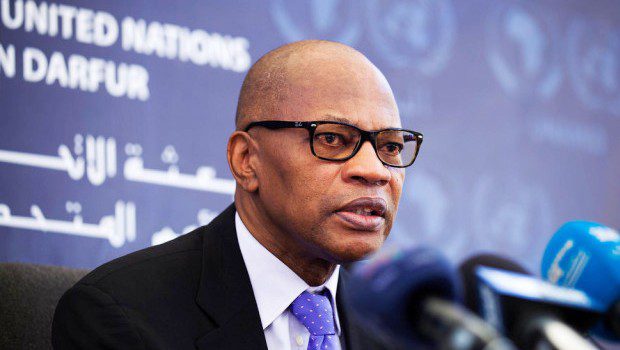
Special Representative of the Secretary-General and Head of the United Nations Office for West Africa and the Sahel (UNOWAS), Mohamed Chambas, said this in his latest briefing to the Security Council.

Chambas said: “In Nigeria, tensions are high ahead of the presidential and parliamentary elections of Feb. 16, and the governorship and state assembly elections of March 2.

“However, the prospects for peaceful and credible elections have been increased following the signing of the National Peace Accord in Abuja on Dec. 11, 2018.

“Over the coming weeks, I will continue to engage actively with all stakeholders in Nigeria, including through the organisation of peace fora in the key states of Benue, Rivers, Kaduna and Kano.”

The UN envoy said since his last briefing to the Security Council, further progress had been made in democratic consolidation in West Africa and the Sahel, in spite of persisting security challenges.

“In the past six months, presidential elections were successfully organised in Mali, regional and parliamentary elections were held in Mauritania and Togo and local elections were organised in Cote d’Ivoire.

“However, despite appreciable progress in democratic consolidation in the region, there is a need for continuous efforts to address contentious issues around elections.

” This is to prevent and mitigate election-related violence, as well as to support inclusive dialogue as a key attribute of inclusive societies.

“This is even more important as over the next six months, the region will see several high-stake elections in Nigeria, Senegal, Mauritania and Benin.”

He expressed  regret over the rising number of attacks and the increasing sophistication in the tactics deployed by extremist groups, saying it risks undermining the collective efforts in the region.

Military solutions, while necessary, are not sufficient, Chambas said, encouraging all actors to ensure holistic responses, grounded in the respect of human rights, and the socio-economic needs of the population in the affected areas.

“Through inclusive approaches predicated on national ownership, we must continue to work hard on addressing the governance deficits, the extreme poverty and lack of development that feed and sustain armed violence and extremism,” he said.

He said Boko Haram attacks in the Lake Chad Basin over the last months had increased, especially in Borno and Yobe during the last week of December alone.

“Violent clashes between farmers and herders are also continuing, although on a lesser scale, thankfully, than in the first half of 2018,” he said.

In its efforts towards advancing the long-term stabilisation goals of the region, Chambas said UNOWAS continued to work closely with regional partners, including ECOWAS, the G-5 Sahel and the Lake Chad Basin Commission (LCBC).

“Laudable progress was made in the implementation of Security Council resolution 2349 (2017) to support a regional response to the crisis in the Lake Chad Basin.

“On 30 August, the LCBC Ministerial Council adopted a Regional Strategy for Stabilisation, Recovery and Resilience of the Boko Haram-affected areas of the Lake Chad Basin.

“The meeting took place before the high-level conference on the Lake Chad region, which was held from September 3 to 4 in Berlin, during which partners pledged over $2 billion to help meet the needs of the more than 17 million people affected by this crisis.”

He also commended the holding of the ECCAS-ECOWAS joint Summit on July 30 in Lome as an important step towards addressing cross border threats facing West and Central Africa.

As one of the key outcomes of the summit, Heads of State and Government affirmed their readiness to enhance the inter-regional collaboration.

It is to jointly address threats to peace and security, including from violent extremism.

The UN envoy said the leaders also committed to holding regular meetings to identify measures for the prevention and peaceful management of farmer-herder conflicts.