Late Emir of Lafiya: End of an era
Emir of Lafia, Agwai dies at 83
The Emir of Lafia in Nasarawa state, Alhaji (Dr.) Isa Mustapha Agwai I has died at the age of 83.
The Madaki of Lafia, Alhaji Isyaka Dauda, confirmed the death on Thursday evening.
The late Dr. Isa Mustapha Agwai I was born on February 15, 1935 at Kofar Kaura in Lafia town.
He was selected by the Lafia emirate’s kingmakers on May 15, 1974 and was presented the staff of office by the then governor of Benue/Plateau state, Joseph D. Gomwalk, on October 26, 1974 at the Lafia stadium, now known as the Parade Ground.
Until his demise at age 83, Dr. Isa Mustapha Agwai I was the chairman of the Nasarawa State Council of Emirs and Chiefs, having spent 44 years on the throne. He was also the state chairman of Jama’tul Nasril Islam (JNI) and Chairman of Nasarawa State Inter Religious Council.
The late monarch also held several positions including Chairman, Governing Council of Akwanga Teachers College; Chancellor, A.T.B.U Bauchi; Chancellor, Federal University of Technology Akure (FUTA) and until his demise, the Chancellor, Federal University, Otuoke in Bayelsa state.
BRIEF BIOGRAPHY OF LATE EMIR OF LAFIA
The late traditional ruler of Lafiya, Nasarawa State, Alhaji Dr Isa Mustapha Agwai is from the descendant of Aliyu Ari royal house and he was born on 15 February 1935 at kofar kaura in Lafia town to the family of Muhammad Al-Mustapha Marafa & Hajiya Halimatu respectively.
During his early age, he was enrolled into Quaranic school in Kofar Kaura Lafia and after acquiring some elementary aspects of Islamic knowledge and some chapters of the glorious Quran, he enrolled into Lafia Elementary School in 1943.
After obtaining his first school leaving certificate from Lafia elementary school in 1951, the teenage Isa Mustapha Agwai was admitted into Benue Provincial Middle School Katsina-Ala.
Having successfully completed his secondary school in Katsina-Ala in 1958, from the Katsina Middle School the young Isa Mustapha Agwai later registered at the Institute of Administration, Ahmadu Bello University Zaria in 1958 and obtained his Diploma certificate in Accountancy 1959.
He joined the service of Lafia Native Authority where he served as assistant treasurer, revenue officer and later pay-master in charge of the entire market of Lafia Native Authority.
Isa Mustapha Agwai apart from holding several government positions, he held the traditional title of Dan Galadiman and District head of Obi. The title conferred on him automatically brought him to a position of a full-time member Lafia Native Authority Council.
The Emir was one of the longest-serving traditional rulers in Africa, spanning over 43 years on the throne.
He was a peace lover, father to all and custodian of the African culture.
He died on Thursday 10th January, 2019 after a protracted illness in a foreign hospital at the age of 84.
May Allah have mercy on him and grant him Paradise.
Nigeria will benefit from single African passport system-Abuja Chamber President

Boko Haram: “Your report on military operation in Baga betrayed national security” – Tsav tells Daily Trust
Alhaji Abubakar Tsav, retired Commissioner of Police has described as a betrayal of national security a recent story published by Daily Trust on military operation in Baga, Borno State.
Tsav, who was also erstwhile Commissioner, Public Complaints Commission, Abuja joined other Nigerians to chide the newspaper for publishing such sensitive report, especially at a time when the nation was gradually winning the war against insurgency.
The elder statesman in a statement personally signed on Thursday, warned Daily Trust against being misled by the retinue of international organizations that have been taking turns to berate the Nigerian Army for its reaction to its indiscretion.
Tsav said, “I have resisted joining the fray since our esteemed newspaper, which we regard as championing the affairs of Nigerians, north of the Niger, Daily Trust published the now contentious story titled “Military prepares massive operation to retake Baga, others”.
“But the continued berating and vilification of the military over its response to the story has made it impossible for me to remain indifferent. As someone whose entire career was in law enforcement and security, my initial reaction upon reading the story was to cringe at the implications of what I was reading.
“If Daily Trust is allowed to get away with the story without acknowledging that it did something wrong and without a commitment to cease and desist from further compromising the operations of the military then the capacity of Nigeria to respond to and counter security threats is forever endangered. This is no time to allow political, ethnic or religious orientation to push Nigeria into committing certain suicide.
“From the viewpoint of a policeman, it is like the newspaper running a story that police is about to raid the hideout of wanted criminals. The reputation of the newspaper would make the criminals treat the information with all the deserved seriousness and by the time the team of policemen arrive the hideout the wanted criminals would have escaped or worse still they could ambush the policemen with the likelihood that the casualty on the police side would be higher than would have been the case had the hardened criminals not been officially tipped off.
“What happened in the case of the military, however, has far more grievous consequences for which certain parties should accept responsibility. This is especially so when a crucial opportunity to take down the terrorists, given the magnitude of the planned operation as reported by the Daily Trust and confirmed by the high command of the military, has been irretrievably lost.
“Daily Trust should accept the responsibility for this glaring failing. It should have, in practice with the norms of journalism, crosscheck its story with the relevant military spokespersons, who would have advised on the sensitivity of running with the story when the planned attack has not been launched since the element of surprise would be lost.
“Even where it does not have cordial interaction with the military, there was the option of consulting security experts before the story was published and it would have still been warned as to the dangers of prematurely revealing information that was that strategic. The international publications and news services that Daily Trust aspires to replicate follow this procedure where security of their nations is concerned. So, following this route would not have been an exception.
“Daily Trust must not allowed itself to be misled by the retinue of international organizations that have been taking turns to berate the Nigerian Army for its reaction to its indiscretion. In reality, the criticism of the military by these organizations is condemnable, and should be so condemned by anyone that is interested in seeing Nigeria get rid of Boko Haram terrorists.
“Equally condemnable is the news report that disclosed sensitive military operation. It is abhorrent and should be condemned in its totality.
“It unacceptable that foreign agents and entities would persist in promoting neo-colonial agenda by rushing to criticize the Nigerian military for carrying out its duties while being sabotaged by a section of the media. No organization, for any reason, should sabotage national security which is paramount even in the course of a news organization performing its duty. We know that no newspaper will dare what Daily Trust did in other countries so the foreign merchants of tainted freedom of the press are free to go encourage such unacceptable behaviour in their country.
“There is, however, no need crying over spilt milk. The task of ridding Nigeria of terrorists remains ahead of us all. The Nigerian Army and Daily Trust should move forward by heeding the admonition of Mr President to resolve the contention over the story through dialogue, which does not rule out the importance of ensuring that no organization or individual should again publish classified operational information about the military operations against Boko Haram.
“The Army should on its part, using advantage of technology and in collaboration with other agencies, exploit the incident to unveil those that that have been passing out information about military operations into the wrong hands.”
Moghalu calls for massive investment in education
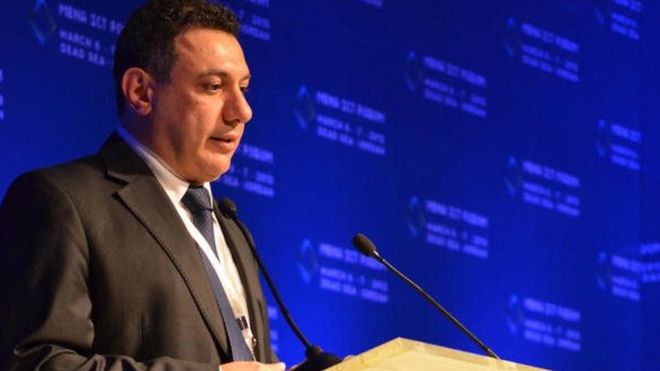
Prof. Kingsley Moghalu, the presidential candidate of the Young Progressives Party (YPP), has called for a political will for more investment in the nation’s education sector.
Moghalu, who is a former Deputy Governor of the Central Bank of Nigeria and former UN officer, made the call at a town hall meeting tagged “the Candidates’’ on Wednesday in Abuja.
He said that the major problems with the education sector were lack of political will to invest in the sector.
“We need to invest much more in education. The second thing is that we need the autonomy of the universities. Universities need to be free. Government in most advanced country do not control universities,’’ he said.
The candidate said that his investment would include teachers training, saying teachers in the primary and secondary schools had not risen to the global standard and that was affecting the quality of the students graduating the schools.
He promised that if elected his government would offer free education for students in primary and secondary schools, as well subsidise education in the public universities, while private universities bear their costs.
“We have to make sure that all the teachers in this country are re-certified to make sure that they are fit for the purpose. They have to be fit to teach our children in the 21st century.’’
Moghalu also said that his government would reform school curriculum to be more practical in terms of technology, vocational training and technology, rather than beeing theoretical.
“There are many sources of revenue in this country and there is also monumental amount of wastes that is going on in this country. If we stop security vote and put some of that money in our education we will do a better job of governance.
He said that within two years of his government, he would reduce recurrent expenditure to below 50 per cent and increase capital expenditure above 50 per cent.
Moghalu also added that his government would reform the civil service making civil servants to be productive.
“There is need to rationalise the civil service to make it productive, and people who are redundant can be moved to other areas where they would be useful.
“I also intend as president to recruit 1.5 million new policemen for the Nigerian Police and train and equipment them.’’
He added that Nigeria must invest in securing the country.
Moghalu who pledged to give attention to the diversification of the economy, also said that the country’s economy must move from politics of oil rent to innovation and manufacturing economy.
He said that the problem of diversifying the country’s economy was that political leaders had been paying lip service to the issue.
He said that there was no way the country’s economy could be diversified without restructuring and ensuring resource control.
Moghalu also stressed the need for Nigeria to become a true federation, where states of the regions would control their resources and pay rolyalty to the Federal Government.
He added that he believed in resource control and two tiers of government, namely including federal and the sub-national government.
Moghalu said that when he “become the president’’ he would interact with the National Assembly and present executive bill to push for restructuring .
Mike Adenuga trails behind Dangote as second richest African
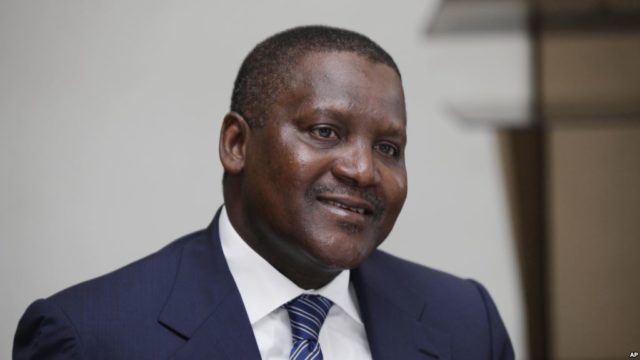
Globacom Chairman Mike Adenuga Jnr, with interests in oil exploration and real estate has moved up, ranking next to Aliko Dangote as Africa’s second richest man.
Forbes magazine said Adenuga’s net worth rose tremendously from $5.3 billion to $9.2 billion.
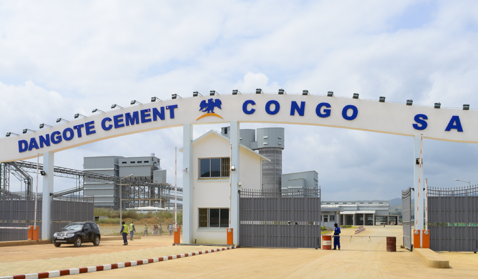
He is now just $800million away from Dangote Group President Aliko Dangote, whose wealth dipped to $10billion, from $12 billion last year.
However, Dangote retains the Africa’s richest man title for the eighth consecutive time despite.
BUA Group Chief Executive Officer Abdulsamad Rabiu featured on the list for the first time since 2015.
The merger between Rabiu’s Kalambaina Cement firm with the Cement Company of Northern Nigeria, which he controlled, in December, last year, was formally consummated in Sokoto earlier this week. He now owns 97 per cent of the entity.
Kalambaina, which operates a new cement production facility, started selling cement mid-last year just as Rabiu’s OBU Cement has expanded its operations, adding a new production line.
Mrs Folorunsho Alakija, whose net worth dropped to $1.1 billion from $1.3 billion, was ranked 19th. She is vice chair, Famfa Oil, an indigenous oil exploration company with a stake in Agbami Oilfield, a prolific offshore asset. Famfa Oil’s partners include Chevron and Petrobras.
Mrs. Alakija’s first company was a fashion label, whose customers included former military President Ibrahim Babangida and his wife, the late Maryam.
The Federal Government awarded Mrs. Alakija’s company an oil prospecting license in 1993, which was later converted to an oil mining lease.
Mrs. Alakija’s ranking tied with South African banker, Michiel Le Roux.
Forbes blamed plunging stock values and weaker currencies for the shrinking in the billionaires club in Africa.
It said: “Buffeted by plunging stock prices and weaker currencies, the number of African billionaires has shrunk to just 20, down from 23 a year ago.
“Four people fell off Forbes’ annual list of the continent’s richest since last year while one returned to the ranks after a four-year absence. All but four members of the list have smaller fortunes than a year ago.”
In a per country ranking, Egypt and South Africa are tied with five billionaires each, followed by Nigeria with four and Morocco-two.
Forbes found one billionaire each in Algeria, Angola, Tanzania and Zimbabwe.
The Nation
2019: I will not authorise use of government money to fund campaign-Buhari
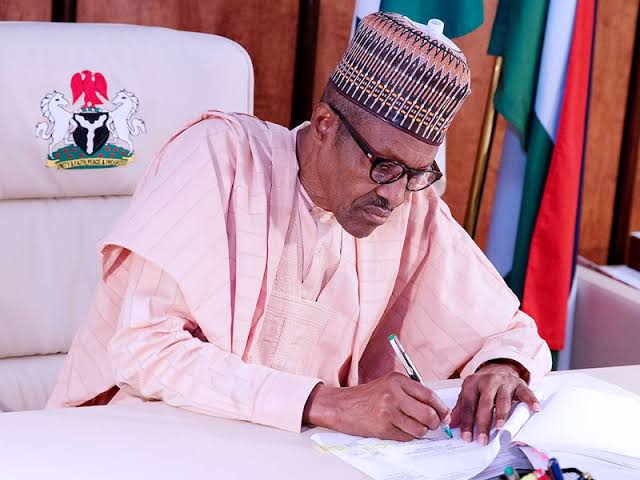
President Muhammadu Buhari Wednesday in Abuja reiterated his commitment to eliminate corruption in campaign financing in the country, pledging that he will not authorise the use of any money from the treasury for his re-election campaign.
Speaking at the close of the Federal Executive Council (FEC) meeting, President Buhari directed cabinet ministers to take advantage of technology to reach out to voters on the need to return the All Progressives Congress (APC) led administration in next month’s general elections.
“As political parties spread their ideologies and views to every nook and corner of the country, the issue of cash payment to voters and its corrupting influence in electioneering has once again become a topical issue.
“Try and use text and multi-media messages to seek votes for the party and government.
‘‘There is no money from the treasury for use in the campaigns. I will not authorise that,” he said.
President Buhari declared that the APC-led administration has a clear development agenda best suited to take Nigeria forward and sustain economic development.
‘‘This message needs to be taken to all Nigerians but we cannot use money from the treasury to share out to prospective voters.
‘‘Nigerians want change and we alone can deliver that change. Our people can no longer be swayed by money politics,’’ he said.
The President also used the occasion, which was a valedictory session for the Minister of State, Foreign Affairs, Hajiya Khadija Bukar Abba Ibrahim, to wish the minister success in her electoral contest.
The Minister had signified her desire to leave the cabinet, in line with existing regulations, to run for a legislative seat in her native Yobe State.
We did not endorse Atiku, says Ohaneze Ndigbo
The apex Igbo socio-cultural organisation, Ohanaeze Ndigbo has denied endorsing Alhaji Atiku Abubarka, the candidate of the People’s Democratic Party (PDP) in the 2019 presidential election.
The Deputy National Publicity Secretary of the organisation, Mr Chuks Ibegbu disclosed this on Thursday in Enugu at a media briefing to mark the second anniversary of the current executive of the organisation.
Ibegbu said that the clarification became necessary following misconceptions on the event of Nov. 14, 2018 where some Igbo leaders endorsed the candidacy of Atiku Abubakar for presidency.
It would be recalled that some Igbo leaders had during a meeting in Enugu attended by Atiku and the national leaders of the PDP including the Senate President, Dr. Bukola Saraki endorsed Atiku.
Ibegbu, however, clarified that the said endorsement was done by the friends of Atiku, adding that the organisation had not endorsed any particular candidate.
The deputy national publicity secretary said that the organisation needed to be circumspect, “as our children are in all the political parties.’
“It is erroneous to say that we endorsed Atiku. Ohanaeze Ndigbo did not endorse anybody. That meeting at Nike Lake Resort was organised by friends of Atiku.
“However, due to our peculiar circumstance in the country, we will identify with candidates that will restructure Nigeria if voted into power,” he said.
He said that the organisation would soon meet to take a holistic position on the 2019 general elections.
“Ohanaeze Ndigbo has been canvassing for our people to identify with candidates that will restructure Nigeria.
“We still stand on that and in the next few days we shall meet to take a holistic position on the elections,” he said.
Ibegbu noted that within the two years in office of the Chief John Nwodo led Ohanaeze Ndigbo, “we have given our modest contribution by re-jigging Igbo leadership and issues concerning our people”.
He said that the current leadership of the organisation had built synergy with its affiliate groups with a view to achieving unity in the area.
He said that the dexterity and leadership acumen of Nwodo had positively affected the relationship between the organisation and other ethnic socio-cultural associations in the country.
“This has earned the president general an award as ‘Bridge Builder of the Nation’, which will be presented to him on Jan. 17 by Daily Independent Newspapers,” Ibegbu said.
Charming posture of Nigerian Army under Buratai
By Nkechi Odoma
A few Nigerians imputed extraneous meanings into what many perceived as the “combative” interface between the Nigerian Army and Daily Trust newspaper, a publications outfit based in Abuja. While many Nigerians were fast to take side with the Army without dissecting the issues due to its patriotism, a few persons still unjustifiably bandied all manner of derogative labels on the Nigerian Army.
The Daily Trust edition of Sunday, January 6, 2019 published a story with the caption; “Military prepares massive operation to retake Baga, others.” The publication incurred the wrath of the Nigerian Army which is battling the resurgence of insurgency in the Northeast. The report divulged details of a military operation meant to flush out terrorists who have occupied Baga, and other communities in Northern Borno state.
The Nigerian Army had accused the medium of publishing classified military information, which postured the newspaper as an agent or sympathizer of terrorists against Nigeria. These were grave allegations no doubt. Obviously acting based on the spur of anger, propelled by the frustration it caused, soldiers lay a peaceful siege on the Abuja headquarters and Maiduguri offices of Daily Trust.
The action triggered mixed reactions from Nigerians. Many blamed the newspapers editors for insensitivity and overstretching the limits of freedom of the press and speech by the publication, which served insurgents unsolicited information on planned military operations.
However, a few Nigerians only saw the Nigerian Army as the aggressor in this circumstance; but refused to discern Daily Trust as an offender for the simple reason that the siege was anti-democratic.
Again, a few others delved into personality attacks on the person of the Commander-In-Chief of the Armed Forces, President Muhammadu Buhari and the Chief of Army Staff (COAS) and leader of the counter-insurgency operations, Lt. Gen. TY Buratai. And the partisan times fired and smouldered the criticisms.
Opposition politicians feasted on it like maggots on rotten meat. The substance and rationality were lost completely in the haze and in its place; name-calling, sentiments and malice resonated very loudly.
Some persons commonly referred to as “bad belle people,” in Nigerian pidgin parlance, even trumpeted a strained relationship between the Army and the Nigerian media. It was completely a misplaced predisposition on the Nigerian Army under Gen. Buratai whose watch has seen the Army transformed into the darling of many citizens.
Once in a while, where human beings interact from opposing positions, there comes a moment of strained relationship. But it does not last forever, like even in the case between the Army and the newspaper. Daily Trust will not be the first to drag the Army into such frustrations and altercations. But it has always been resolved amicably.
Gen. Buratai’s antecedents as a soldier and most especially, his leadership of the Nigerian Amy holds civilians in highest esteem. He has also re-orientated Army personnel to respect the dignity and human rights of Nigerians anywhere they are offering service to the nation. . He understands perfectly that a soldier or the Army’s basic responsibility is to protect the civil populace. And he exemplifies it consistently.
And it has not come as happenstance, but a factor of conscious reforms and innovations that Gen Buratai has imposed on the Army. Today, the Nigerian Army on internal special assignments to contain insurrections do not stealthily invade communities at nights like thieves. In the past, it was the tradition and such scenarios’ created panic and fear, leading to psychic destabilization and dislocation in communities.
Today the narrative is positively different. Military/ Civil relations is at its very best. Before any community is assailed by soldiers, the information goes out in the media to herald their presence and awareness.
Thereafter, Gen. Buratai or his representative will personally pay courtesy calls on traditional, political and religious leaders of the communities where the operations are intended. They are briefed sufficiently on the mission and their approvals voluntarily given to the Army.
Thereafter, deployed troops will mingle freely with community members who are usually bolstered by this gesture to assist the Army with information to anchor rewarding operations. A cord of fraternity is struck.
The existing harmonious working relationship between the Army and the civil population has been rewarding to the latter in multiple ways. Today, communities which had no dream of enjoying basic necessities like water, electricity, mini-bridges and roads have benefitted from the Nigerian Army’s benevolence from Corporate Social Responsibility (CSR). The Army offers free medical services everywhere they are redeployed on special assignments.
Gen. Buratai’s courtship of the civil populace is endless. His human rights reforms in the Army are legendary and far-reaching. It climaxed into the establishment of the Human Rights Desk to oversee incidents of rights abuses by Army personnel in Nigeria.
It is the Army’s Chief’s desire marched with efforts to standardize operations of the Nigeria Army that led to his rebranding reforms to give Nigerians a respectful and professionally responsible Army as an institution. Today, the Army has earned the enviable reputation of a military institution competent enough to defend the nation against external aggressions and insurrections.
It is evident in the records they have flaunted in public domain on Boko Harm counter-insurgency operations. And no matter what anybody or institution feels, the Nigerian Army must be supported to finally win the war against terrorism in Nigeria. And the with the emergence of cyberspace terrorism, Nigerian media has a vital and critical role to play in complementing the efforts of Nigerian troops at the battlefront.
That’s why Gen. Buratai operates an open-door with the media. Foreign media cannot tell the Nigerian story better than indigenous media. So, the Nigerian Army leadership has ensured the Nigerian media savours a seamless working relationship with the Nigerian Army under Buratai.
And it reflects in the celebration of the COAS as one of the most friendly media personality in the country. No Nigerian COAS in recent history has been visible in the media like Gen. Buratai because the DAPR has thrown its doors open to the media for information ceaselessly to keep Nigerians informed about its counter-terrorism operations.
But resorting to an abuse of such privileges’ by divulging classified information about movement of troops as done by Daily Trust is absurd. The mindlessness is painful because the newspaper knows Nigerians have had to bear the agony of terrorists ambush on Nigerian troops in the Northeast because of leakage of such vital information to insurgents.
This should invoke deep reflection in the covert actors, who are acting against the interest of national security. Any Nigerian or institution which aids and encourage terrorists is an enemy of the nation.
It is in this regard that the action of Daily Trust through the publication is deemed repulsive and reprehensible. To say, the contents of the publication thwarted the planned onslaught on insurgents in Baga and other surrounding localities like Doron-Baga, Kross Kawwa, Bunduran, Kekeno and Kukawa is to put it mildly.
It has also disfigured significantly the military operations in the region and emboldened the terrorists against the Nigerian nation. Painting lurid details of the operations and portraying the military as subdued by insurgents is unpatriotic and unpardonable.
No doubt, the Daily Trust publication has the tendency to hamper and momentarily halt the operations in these Northern towns of Borno under Boko Haram captivity. This newspaper has to toe the line of decency by apologizing to the military for leaking that strategic information about its operations. It’s a grave and sabotaging mistake.
In spite of everything, Gen. Buratai and his troops should not be incensed by the medium’s misconduct any further. Let them put the interest of the nation foremost by re-strategizing for another operation. Gen. Buratai should keep the spirit flying higher and dust off the temporary setback. This is imperative because to err is human and to forgive divine. So, there is every need for forgiveness.
The generality of Nigerians and every critical stakeholder must appreciate that Gen. Buratai and troops are in the Northeast for the common good of the country. There is need for synergy. Gen. Buratai’s presence in the warzone alone has thwarted the plans of the insurgents to wreak more havoc on Nigerians.
The sacrifice of the Army is on the heels of the painful moment many are beginning to think that the insurgents are back. But Gen. Buratai is standing up against insurgents for all Nigerians. Nigerians are indebted him and the troops and they must execute sacred responsibility of encouragement as against frustrations.
Odoma wrote from Asokoro, Abuja.