Home Blog Page 2641

Amnesty International: A Threat to National Security

0

By Gabriel Ikese

Nigerians are worried by the activities of Amnesty International for supporting terrorists and defending rebellion to destabilize the country. From all available records, AI’s report on Nigeria has been largely bias and full of sentiments against basic ethical standards and fundamental visions of the organization.

The report by Amnesty International on recent boko haram attack on Rann was a fabrication of falsehood which was deliberately calculated to smear the Nigerian military and government. AI alleged that 60 persons were killed on January 28, 2019 in the terror attack. The reports were investigated and discovered to be bunch of lies.

Peter Benenson is the progenitor of Amnesty International (AI). He would be resentful at the rot that has become of the NGO today. Amnesty International did not only derail from its envisaged basic ideals but had criminally skewed the vision of its progenitor, and are bent at destroying many countries through its ridiculous fabrications against legitimate authorities and institutions.

The Organization, which is now gone rogue, is reputed for institutionalized partiality and double standard reportage deliberately crafted to create animosity aimed at undermining sovereign authorities. Russia, a once strong and united union, was a victim and classical example of orchestrated evils of Amnesty International.

History they say is the best teacher. The experience of the defunct Soviet Union is enough for Nigerians to be agitated about the activities of this reprehensible organization. Some would argue that the Soviet Union suffered a bad economy, but that is not entirely true. The economic conundrum could not have been sufficient enough to collapse the Union.

The Russians have the expertise and resources to have revived the economy within reasonable time frame. Amnesty International’s disproportionate focus on the Soviet Union and its Military in their reportage, escalated internal grievances, which ultimately led to the eventual dissolution of the Union.

The rogue International NGO wants to replicate the same evil in Nigeria as evident by the many fabrications against the Nigerian Military who are risking their lives in battle against terror in the Northeast. The report claimed the military abandoned their position of deployment which led to the alleged killings of civilians in Rann attack.

The insinuations conceived by Amnesty International were certainly not the attributes of the Nigerian military. Defending the Nigeria territorial integrity and protecting the people is the pride of the military. The military has preserved the unity of Nigeria as demonstrated during the Biafra civil war and the Maitsatine uprisings with a high degree of professionalism.

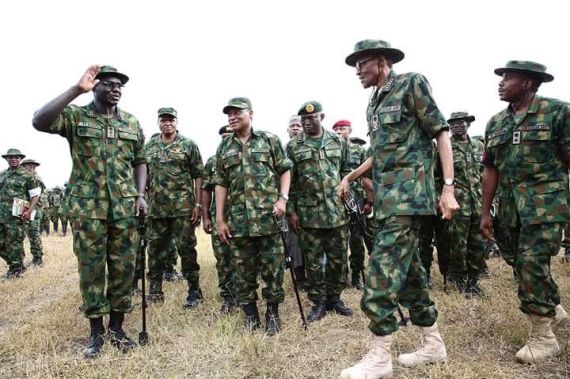
The Army Chief, Lt.Gen. TY Burutai, a disciplined Military Strategist and Patriot, whose sense of professionalism is topnotch, trained the Nigerian Army to conform to international best practice and acceptable rules of engagement in all its operations within and outside the shore of Nigeria. And the Army has always returned home with commendations and meritorious service medals as attestation to their good conduct and professionalism.

The army conducted a robust search of Rann and its environs and no 60 bodies were found. The report was therefore simply outlandish and largely unverified. It was designed to portray the Military as incapable and project the government as not protective of the people in the eyes of the global community.

Worried by the news making the rounds on Boko Haram attacks in Rann, the Coalition of Human Rights and Conflict Resolution commissioned an independent team of researchers to undertake an assessment tour of Rann with a view to leaving the realm of speculation and put the records in proper perspective for Nigerians and indeed the world to appreciate the reality of the ongoing fight against insurgency in the Northeast.

The coalition gathered that Rann attack was amplified out of proportion and misrepresented to the general public. The bulk of Amnesty International claims were not true reflection of the reality in Rann. The perceived intent of the report was to create a sense of insecurity to scare residents of the Northeast from participating in the coming general elections. However, the Independent National Electoral Commission (INEC) saw through the fallacies of the report and assured that elections would hold as scheduled. Several other civil society groups have also condemned the AI reports as mischievous and misleading.

Obviously, the Amnesty International report was orchestrated to ridicule the Nigerian government and to undermine the fight against their surrogate terrorist assets in the northeast. The sustained attacks on the Nigerian government and the military by AI is one too many. The Coalition of Human Rights and Conflict Resolution now believes that the many vituperations to undermine effort of the military are attacks on the fabric of the nation and deliberate propaganda to instigate disunity aimed at destroying Nigeria’s sovereignty.

Many Nigerians believed Amnesty International was responsible for Boko Haram insurgency in the Northeast. Their actions are in congruent with this position as they are always quick to condemn actions taken by authorities to restore normalcy and in most cases release exaggerated reports of killings that never occurred to heat up the polity unnecessarily. The organization is now reputed for releasing fake news to brainwash the gullible.

Benenson’s elementary goal for the organization is to help “prisoners of conscience”. The subsequent expansion of the mandate does not include the defense of persons or group that adopts violence to the detriment of peaceful coexistence and unity. AI’s clandestine support for terror groups and separatist activities in Nigeria is intentionally designed to destroy our national unity.

The self acclaimed prestigious International NGO that ordinarily ought to be unbiased and unblemished, lost focus and became a lethal weapon of mass destruction. Their reports are tissues of lies that many countries are now refusing to believe. The story has been the same in US, Israel, Russia, Iran, etc. AI’s reputation has been ridiculed by its limited understanding of armed conflict leading to erroneous claims and incorrect analysis.

The brave soldiers and officers of the Nigerian military has shown enough courage and capacity to crush the Boko Haram insurgency. The army has profoundly decimated the terror groups and banished remnants into the fringes of the Chad border and regained many territories that were hitherto under the control of Boko Haram terrorists. If Amnesty International cannot cooperate with the government to end terrorism in the country, the least it could do is to be fair and unbiased in its reportage.
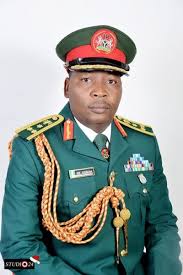
SK Usman: Idyllic Officer, Iconic Image Maker Bows Out Of Service

0

By Philip Agbese

Certainly, a big gulf has been created in the Directorate of Army Public Relations (DAPR) with the sudden voluntary retirement of its current Director, Brig.Gen. Sani Kukasheka Usman. This shining Army officer, communications expert and iconic image maker, who proceeded on terminal leave formally bowed out of the service of the Nigerian Army and our fatherland today, Friday, February 08, 2019.

Brig Gen Usman is one officer, the Nigerian Army and Nigerians would fondly remember his memorable service in countering Boko Haram Terrorism (BHT) disinformation and media hype for a long time. The devilish sect had mastery of propaganda, and circulated false, fabricated and concocted lies about their phantom triumphs and victories against Nigerians and the military in atrocious acts.

With SK on the saddle, insurgents’ propaganda suffered a big setback, when the COAS, Lt Gen TY Buratai who sighted his talents, decided to post him to retain him as the Army’s image maker. The Army Directorate of Public Relations is sensitive because it oversees the entire Army’s information management system.

Brig Gen Usman effectively dismantled terrorist’s propaganda and set new standards of disseminating information about the Army and counter-insurgency operations. To describe this humble officer and doyen of the media as endowed, efficient and proficient on the job is to state the least. But he validated his uncommon mastery of the rudiments and intricacies of managing wartime propaganda so amazingly.

Usman knew, wars are not won with arsenals alone. Propaganda plays an ostensible role. In fact, Nazi Germany wartime propagandist, Joseph Goebbels enunciated a guiding principle of war propaganda. He said, “The best propaganda is that which, as it were, works invisibly, penetrates the whole of life without the public having any knowledge of the propagandistic initiative.”

The retired Army image maker embodied this perfection throughout his service years, wherever he served. It was his efficiency that earned him elevation to the position of Director, DAPR, and the Chief Image Maker of the Nigerian Army.

And he served in this capacity for years before proceeding on a Senior Executive Course at the National Institute for Policy and Strategic Studies (NIPSS). Upon completion of his studies end of 2018, he was re-appointed as the Army spokesman because of his efficacy in managing information and dismantling terrorists’ propaganda against the Nigerian state until his voluntary retirement today.

A communications expert and member of Nigerian Institute of Public Relations (NIPR) Brig Gen Usman’s most striking legacy while in service was the spirited propaganda war he mounted against cyberspace terrorism. As soon as Gen. Buratai sensed decimated and defeated Boko Haram terrorists, including their agents had relapsed into cyberspace terrorism to create fright in Nigerians, he mandated Brig.Gen. Usman to lead the cyberspace assault.

He never disappointed. SK Usman preempted and expertly deflated terrorists’ propaganda timely. He was weeks ahead of insurgents and their sympathizers’ in deflating their fake propaganda, a step which rekindled the hope of Nigerians on the victory of the nation against insurgency.

Brig Gen Usman’s dexterous handling of cyberspace terrorism earned Nigeria, accolades, as former American Secretary of States, Mr. Rex Tillerson publicly commanded the Nigerian Army for its expert tackling of emerging cyberspace terrorism trend. Tillerson urged other nations under the spell of terrorism to emulate Nigeria’s confrontation of cyberspace terrorism.

Brig Gen SK Usman was born in 1965. He enlisted into the Nigerian Army as a Soldier in 1983. His first stint in military service was the posting to Headquarters of 82 Division, Nigerian Army, as Army Public Relations, Enugu. In 1987, SK Usman proceeded on studies at Bayero University, Kano (BUK) and by 1991 bagged his Bachelor of Arts Degree in Mass Communication. Thereafter, by 1992, he was granted Direct Regular Commission (DRC) as a Lieutenant into the Directorate of Army Public Relations (DAPR),

It marked the turning point for a prosperous Public Relations career in the Nigerian Army. Brig Gen Usman, has projected himself as a star and national asset. After cadet training at the then Infantry Centre and School (ICS), Jaji, in 1993, SK Usman was deployed to the Headquarters of the DAPR, Lagos; shortly after, to the Depot Nigerian Army and Nigerian Military School. In both instances, he served in the capacity of Army Public Relations Officer (APRO). By mid-2002, Usman was posted to 20 Battalion Serti in Taraba State.

The communications guru became Military Public Relations Officer (MPIO) of the United Nations Mission in Sierra Leone (UNAMSIL) as Nigerian Battalion 14 (NIBATT 14). He also served in acting capacity as MPIO to Nigerian Contingent/Sector West of the same mission.

By 2003, SK Usman was appointed, Acting Public Relations Officer to the then Chief of Army Staff. In 2004, he became Acting General Staff Officer Grade One in charge of Training (GSO1Training) at the Headquarters of the DAPR, where he doubled as the Nigerian Army Website Master.

The Military communications czar was in September 2005, posted to the United Nations Mission in Ethiopia and Eritrea ( UNMEE), where he served as Operations Officer at the Civil-Military Cooperation Coordination (CIMIC) G5 Cell and later, set a record as the first Nigerian to be elevated to position Chief of CIMIC.

Back to Nigeria in September 2006, SK Usman served as College Public Relations Officer of the Nigerian Army College of Logistics (NACOL), Lagos. From there another posting in 2007 catapulted him to the position of Public Relations Officer (PRO-COAS) of the Chief of Army Staff.

He was again retained in the Office of the Chief of Army Staff and appointed Public Relations Officer (PRO-COAS), to the newly appointed Chief of Army Staff in June 2007. He served two successive COAS until 2010, when Brig. Gen. Usman left for post graduate studies by October 2010.

Upon completion of the course, Usman was moved to the Headquarters of the DAPR and appointed Deputy Chief of Staff (DCOS). And in 2012, he was posted to 1 Division Nigerian Army and appointed Assistant Director, Army Public Relations. He was again posted to the 7 Division Nigerian Army, and appointed the Acting Director Army Public Relations and thereafter, appointed the Army’s spokesman.

Brig. Gen Usman has attended a legion of military and civil courses, much as seminars both in Nigeria and abroad. These include Basic Arabic Course at the Nigerian Army School of Education (NASE), Ilorin in 1994; a 2001 United States of America Department of Defence organised seminar on “Military Communications with the Public in a Democratic Government;” where he was awarded Certificate of Excellence. In 2002, he attended various Junior Staff Courses at the prestigious Armed Forces Command and Staff College, Jaji .

At UNAMSIL in 2003, SK Usman attended the United Nations Institute for Training and Research (UNITAR) Programme on “Peacekeeping and International Conflict Resolution;” Kofi Annan International Peacekeeping Training Centre, Accra, Ghana in 2005 for a “Media in Peace Operations Course.” He also attended Estimate Process/Risk Management seminar held at the Nigerian Army College of Logistics, Lagos in 2006.

SK Usman was also in South Africa 2010, for a course at African Business School Johannesburg, on “Professionalizing Protocol, Information and Press Duties for Efficient and Effective Administration.”

The retired Army image maker also attended the United States of America based Peacekeeping Operations Training Institute (POTI) on ” Global Terrorism”, “Civil-Military Coordination” as well as “Principles and Guidelines for United Nations Peacekeeping.” In 2011, he obtained a Masters of Arts Degree in Media, Peace and Conflicts Studies at the United Nations Mandated University for Peace, San Jose, Costa Rica.

Before his voluntary retirement Brig. Gen. S. K.Usman bagged several prestigious awards and honours for his hard work and excellence, among which include Silver Jubilee Medal, Forces Service Star (FSS), United Nations Medal for Peace at Freetown, Sierra Leone in 2003 and Certificate of Merit by Naeem Muslim Youth Organization in Sierra Leone.

The United Nations Training Assistance Team (UNTAT) New York also celebrated him with an award of a Certificate of Appreciation for his excellent contributions to the success of a novel Peacekeeping Course for Emerging Troops/ Police Contributing Countries to the United Nations in 2004.

He is recipient of the Chief of Army Staff’s Letter of Commendation 2004 and Force Commander’s Letter for outstanding performance as CIMIC officer at UNMEE and the United Nations Medal for Peace from the mission among others. He is also a recipient of General Operations Medal (GOM) and has been feted with the prestigious River Niger Star (RNS) award by the Army Council for his gallantry.

Brig. Gen SK Usman has retired home to the warm embrace of his beloved wife Hajiya Hadiza Sani Usman and his children. In his message to colleagues both in the Army and the media, SK Usman endearingly recalled the fond moments in these parting words;

“I am leaving highly fulfilled after contributing my best to national development, the Nigerian Army, gaining great wealth of knowledge, experience, and inestimable network of friends which I will treasure forever.”

He was most grateful to the incumbent COAS, Gen. Buratai under whose leadership of the Army a plank was raised for him to enrich his knowledge to the zenith of both his military and Public Relations careers.

Agbese is a public affairs commentator and publisher based in the United Kingdom.

Boko Haram: What PMB has done

0

By David Onmeje

Nigeria was at a crossroad at some point in our historical journey with the menace of Boko Haram. So bad it was that nowhere in Nigeria was safe anymore. I recall heart drenching incidences where innocent lives were lost daily as a result of constant Boko Haram attacks even in the federal capital territory. It was so bad that it felt like the world was coming to an end for Nigeria.

The then political authorities didn’t seem like they had a clue on how to end the menace. The gloom that pervaded the atmosphere was such that people said their last prayers before going out because nobody was sure where and how the next bomb was going to detonate. Mind you this wasn’t donkey years ago. This was between 2013 and 2014.

In my opinion, there was a couple of factors responsible for the inability of the government or the Armed Forces to deal decisively with the security threat. One was that the political leadership as it were didn’t have the required courage to make commitments and pronouncements on the position of Nigeria on the fight against terrorism, but instead, it chooses to lay the blame on the doorsteps of the opposition party.

And they continued in such fashion until the situation grew from bad to worse. And Nigeria lost it completely. The once vibrant Nigeria Army was struggling to face a vicious Boko Haram insurgents armed with sophisticated weapons. The more they tried, the more casualties it recorded. Also, the then leadership of the Armed Forces saw a loophole to enrich themselves, and they did with reckless abandon to the detriment of protecting the territorial integrity of Nigeria and the lives of Nigerians.

I recall that over 16 local government areas fell to the control of Boko Haram insurgents, and they advanced to take over more in such a manner that sent chills down our spine. At some point, it felt like they Boko Haram insurgents were all over the place and could strike at any given moment. In a way, this was the case with the bombing of the popular Nyanya Motor Park in Abuja that led to the death of hundreds and many others unaccounted for. It was such a national tragedy. This was also aside from the constant attacks of places of worship in other parts of the country.

I could continue nonstop with this narrative because a lot happened but, that is not the essence of this piece. The core is to bring to public consciousness what President Muhammadu Buhari has done in the past three years in the fight against Boko Haram insurgents. In my opinion, those that formed the habit of questioning the efforts of the Nigerian Army in this asymmetric war and the successes it had recorded thus far, are nothing but mischievous.

I do not think any rational human would come to the nasty assumption or conclusion that post-2015, Nigeria hasn’t made substantial gains in the fight against Boko Haram. It would be foolhardy for any discerning mind to infer that the Nigerian Army of today is not efficient and positioned to deal with the security challenges in the country. I stand to be corrected.

To make such arguments would be equivalent to saying America is a country in Africa. And since America is not a country in Africa, it is also a fact that the Nigeria Army has degraded the once vicious Boko Haram group and has made substantial progress in the war against terrorism in Nigeria. The government has displayed the required political will; it ensured the return of professionalism to the Armed forces through the quality of the various service chiefs, particularly that of the Nigeria Army. For the sake of emphasis, the Nigeria Army today is an epitome of professionalism and ability. And you and I know that it didn’t just happen, someone was responsible, and that person is the Chief of Army Staff, Lt. Gen. Tukur Buratai.

I think that Nigeria owes him a lot of gratitude for repositioning Nigeria Army for greater efficiency. General Buratai hit the ground running upon his appointment as the Chief of Army staff by President Muhammadu Buhari. And the result is what we have today. But make no mistakes, whatever it is the Armed forces in Nigeria have achieved that is as a result of the political leadership displayed by President Muhammadu Buhari in ensuring that the Nigeria Army was well equipped physically and otherwise for the task of protecting the territorial integrity of Nigeria.

It should also be noted that it takes only an honest leader to be able to do most of the things done in the critical security sector in Nigeria because of the dynamics involved in our system. But for the fact that President Muhammadu Buhari could display such political will, indicates that Nigeria got a good deal in electing him as president in 2015. I am not sure any discerning mind would argue against this position. And if there are, I would like to ask the following questions. Is it true that the Nigeria Army has been able to restore peace in North East Nigeria? Are there concerted efforts by this administration in rebuilding North East Nigeria? Is the Nigeria Army now well equipped to deal with the myriads of security challenges in the country? Would INEC conduct elections in North East Nigeria? If the answers to the above questions are yes, then it means those with a contrary opinion on the efforts of President Muhammadu Buhari and the Nigeria Army in the fight against terrorism and the commitment to rebuilding North East Nigeria, are enemies of progress. This is also aside from the establishment of the North East Development Commission to lead the reconstruction and development of the northeast by President Muhammadu Buhari.

With all of these, it is therefore common sense for all to know that President Muhammadu Buhari is a leader that is trustworthy and honest. In my opinion, the narrative should be the task ahead of President Muhammadu Buhari post-2019 and how he intends to consolidate on the gains made in the fight against terrorism and the reconstruction and development of the ravaged North East Nigeria.

Those that formed the habit of negating the gains of this administration should have a rethink and see things from a futuristic perspective. If not for anything, they should call a spade and spade. And with a remodelled Nigeria Army under the leadership of Lt. Gen Tukur Buratai, we can be assured that never again in our history would we be subject to the kind of humiliation in the hands of Boko Haram terrorist.

For me and the generality of Nigerians, the task for beyond 2019 is before President Muhammadu Buhari. Let us make no mistakes about that.