Home Blog Page 2629

Ethiopian PM warns of worsening ethnic violence

0

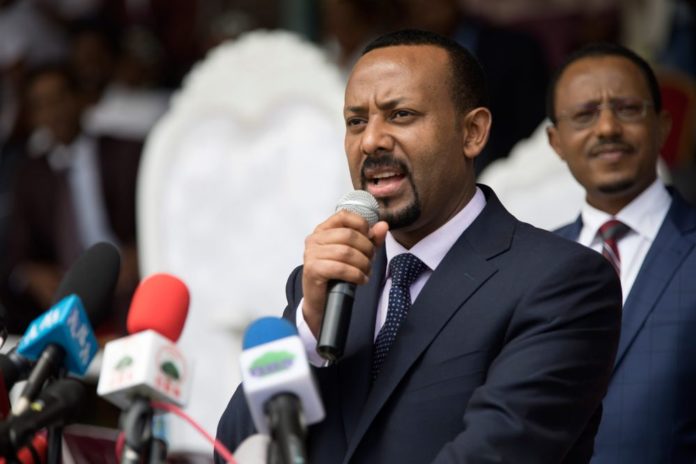
Ethiopian Prime Minister Abiy Ahmed warned Saturday of further instability and vowed to bring to justice those responsible for violence that left at least 67 people dead this week.

“The crisis we have faced will become even more fearsome and difficult if Ethiopians don’t unite and stand as one,” Abiy said in a statement issued by his office, his first remarks since the violence broke out.

“We will unswervingly work to ensure the prevalence of the rule of law and to bring perpetrators to justice.”

This year’s Nobel Peace Prize laureate also noted that what began as protests against his government had quickly morphed into clashes that took on an ethnic and religious dimension.

“There has been an attempt to turn the crisis into a religious and ethnic one. In the process our comrades have become victims in terrible circumstances,” he said.

He added that homes, businesses and places of worship had been destroyed, and that an untold number of Ethiopians had been displaced.

Violence erupted in Addis Ababa, the capital, and in much of Ethiopia’s Oromia region on Wednesday after a high-profile activist accused security forces of trying to orchestrate an attack against him — a claim police officials denied.

The activist, Jawar Mohammed, is credited with promoting the protests that swept Abiy to power last year but he has recently become critical of some of the premier’s policies.

Both men are from the Oromo ethnic group, Ethiopia’s largest, and their feud highlights divisions within Abiy’s Oromo support base that could complicate his bid for a five-year term when Ethiopia votes in elections currently planned for May 2020.

On Friday, Oromia police chief Kefyalew Tefera said 67 people had been killed there, including five police officers.

He said most of the dead had lost their lives in “clashes between civilians” rather than at the hands of security forces.

He also claimed that calm had been restored but the defence ministry announced Friday that it was deploying forces to seven hotspots to restore order, and reports of violence persisted through Friday night and into Saturday.

Abiy was in Sochi, Russia, for the Russia-Africa summit when Jawar’s supporters first started mobilising in Addis Ababa.

Prior to Saturday’s statement, he was facing criticism for saying nothing about the unrest.

In an interview with AFP Friday, Jawar accused Abiy of acting like a dictator and said he could challenge his former ally in next year’s elections.

But Jawar said he could also end up backing Abiy if he changes course.

ECOWAS Commission partners UAE on Investments

0

The Commission of the Economic Community of West African States (ECOWAS) and the Ministry of Economy of the United Arab Emirates (UAE) are to collaborate on how to make the region benefit from sustainable partnership with investors.

The 10th edition of the Annual Investment Meeting (AIM) of the UAE comes up in March 2020 at the Dubai World Trade Centre with the Theme Investing for the future: Shaping Global Investment Strategies.

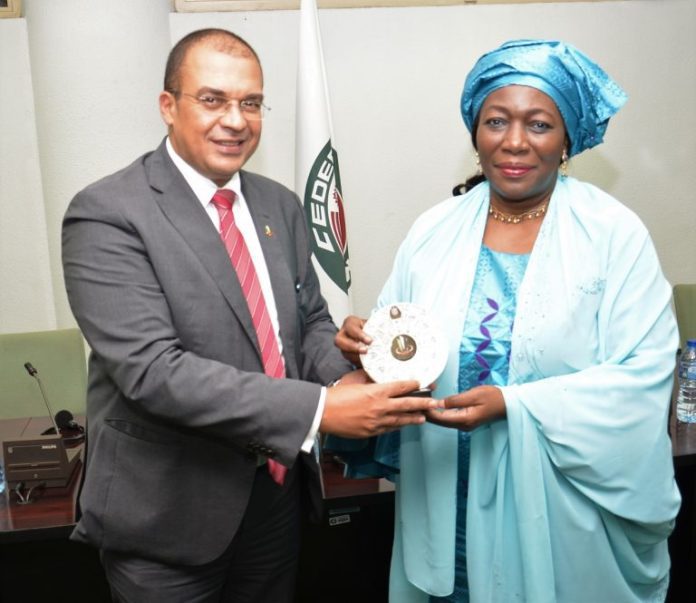
Conferring with the Director-General of AIM Mr. Walid Farghal on the 25th of October 2019 in Abuja, Nigeria, on potential collaborations through AIM, the ECOWAS Commission’s Vice President H.E. Madam Finda Koroma stated the willingness of the Commission to revitalise the existing Memorandum of Understanding (MoU) which spells out the areas of cooperation.

Vice President Koroma discussed the prospects of a High-Level ECOWAS Member States’ investment showcase where regional projects will be presented to international investors during the AIM 2020 event.

Madam Koroma assured the AIM team of the Commission’s commitment towards more meaningful exploration of the existing business partnership covering the key priority sectors of infrastructure, energy, mines, hospitality, utilities and tourism as well as agribusiness among others

In his remarks, Mr. Walid Farghal stressed the need for interactions between ECOWAS and investors; like the participants at the AIM. He expressed optimism that his meetings with government and business authorities preparatory for the AIM in 2020 will yield positive results.

The AIM team was at the Commission’s Headquarters to present their new pillars meant to support the attraction of new forms of investments to the ECOWAS region. They highlighted the importance of the involvement of the private sector in the AIM 2020 Small & Medium Enterprises Pillar, through the cooperation with the Federation of West African Chambers of Commerce and Industry (FEWACCI).

The AIM is a Foreign Direct Investment-focused event that convenes key decision-makers from around the world, bringing together businesses and countries willing to engage in sustainable partnerships with investors.

Somalia advancing towards ‘inclusive and peaceful future’ for women, deputy UN chief

0

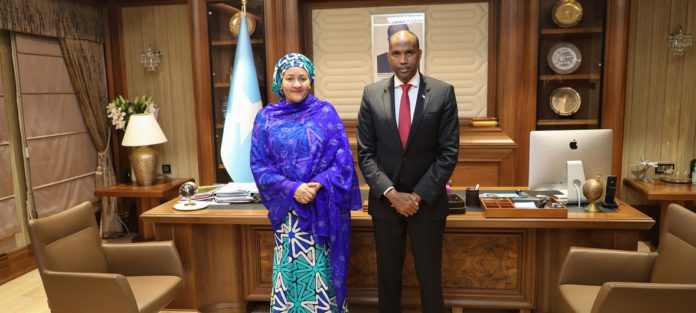
Ms. Mohammed’s one-day visit was part of a joint UN-African Union trip to the Horn of Africa region, focusing on women, peace and security. In Somalia they emphasized the international commitment to the pursuit of peace, stability and credible elections in the country.

She was joined by AU Special Envoy on Women, Peace and Security, Bineta Diop, and the Special Envoy of the UN Secretary-General for the Horn of Africa, Parfait Onanga-Anyanga.

The importance of women’s meaningful participation in elections, efforts to counter extremism, and the economic development of Somalia, were underscored by the delegation, who met with Prime Minister Hassan Ali Khayre and cabinet ministers from the Federal Government of Somalia to hear about government policy in this area, as well as with female civil society leaders.

“The opportunity to hear from a diverse range of voices about the role of Somali women in different spheres of life drove home just how vibrant and engaged they are, and also how committed they are to ensuring that the role of women and gender equality is factored into all facets of life here”, said the Deputy Secretary-General. “This means challenging some outdated traditional views on the role of women and creating a space for them to be able to fulfil their potential.”

However, the deputy UN chief noted that further progress is needed, when it comes to gender equality; the role of women in politics, peacebuilding and security; and women’s full participation in the “one person, one vote” federal elections, due around late 2020 and early 2021.

Ms. Mohammed praised the engagement of Somali women in a range of spheres, and their commitment to ensuring that the role of women and gender equality is factored into all facets of life. “This means challenging some outdated traditional views on the role of women and creating a space for them to be able to fulfil their potential.”

The delegation also met with senior officials from the UN Assistance Mission in Somalia (UNSOM), UN Support Office in Somalia (UNSOS) and UN agencies, funds and programmes.

Following the joint mission, Ms. Mohammed is due to travel to Sudan with senior UN officials. She will visit Khartoum and Darfur, including the UN Mission UNAMID, in El Fasher.

While there she is due to meet the President, Prime Minister, and other senior politicians, as well as civil society and women leaders.

Discussions will focus on the UN’s collaboration with Sudan, during the new phase of civilian-led government following months of political turmoil, in particular on economic development, and will also highlight the importance of women’s leadership.

Pilgrims cautioned of rising pickpocketing in Lourdes

0

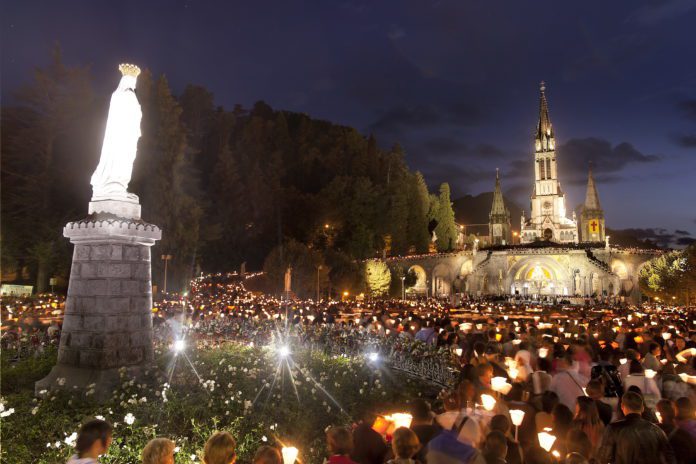
As reports of theft are on the rise at a famous Marian shrine in France, Lourdes authorities have increased security and encouraged pilgrims to be more aware of their belongings.

Pierre Aurignac, a local prosecutor, told Agence France-Presse (AFP) that the town has had a “statistical explosion” of pickpocketing. So far this year, he said, there have been 274 accounts of pickpocketing, whereas 117 incidents were recorded during the first nine months of 2018.

Most reported robberies occur in the streets near the shrine, where religious shops sell items such as rosaries, icons, statues, and Lourdes water.

“The pickpockets are highly organised professionals,” said Philippe Subercaze, a city official in charge of security.

“They arrive in waves and change all the time. As soon as one is identified or arrested, they are replaced. It’s a game of cat and mouse,” he said, according to the Telegraph.

Since last year, Lourdes authorities have installed an estimated 50 CCTV cameras, and Church officials have established more surveillance cameras near the shrine, the Telegraph reported.

The Lourdes shrine is centered around a grotto in the foothills of the Pyrenees, a mountain range separating Spain and France. In the grotto, St. Bernadette Soubirous, the first daughter of a poor miller, was visited by the Virgin Mary in 1858.

The location of the apparition was notoriously dirty – often used as a garbage dump for the small village. During one of the visions, Bernadette discovered a spring and was asked by the Virgin Mary to drink from and wash in the muddy water. After she followed Mary’s request, the water became clear.

Many pilgrims have also followed Mary’s request, and the shrine today has numerous water taps and 17 bath cubicles full of this water, to which many miracles have been attributed.

Thousands of ill and afflicted people seek out these waters each year for physical and spiritual healing. Reports of miracles are examined by the Lourdes Medical Bureau. The 70th official healing was recognized in February 2018 in which a French nun, Sister Bernadette Moriau, was regained mobility after years of spinal problems had left her restricted to a wheelchair.

According to official numbers, the Telegraph reported, over 770,000 people visited the shrine last year, but local authorities believe the number to be much higher, noting that some pilgrims do not stay for a long period of time.

While the site is known for its miracles and spiritual conversions, Subercaze cautioned people to take caution, noting that the religious site often lures people into a false sense of security.

“Many people think when they arrive in Lourdes nothing can happen and they leave their handbags open wider than they would in Paris,” Subercaze said, according to the Telegraph.

“In Lourdes, they think the Virgin will protect them and nothing will happen to them.”

Gowon solicits support for security agencies to end insecurity

0

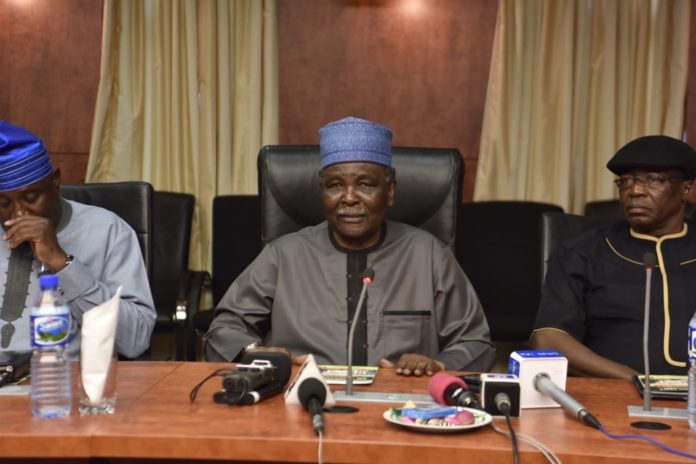
Former Head of State, General Yakubu Gowon (rtd), has called for the support of all Nigerians for the security agencies to tackle contemporary and emerging challenges facing the nation.

He made the call on Saturday during a courtesy call on the acting Governor of Kaduna State, Hadiza Balarabe, at Government House in the state capital.

The elder statesman believes the task of ensuring peace, security, and development of the society should not be left for security agencies alone.

He noted that individuals and communities have a role to play by availing security agencies with intelligence information about criminals within their domain.

General Gowon also reiterated that the peace and unity of the country were non-negotiable and urged the citizenry to support the government.

On her part, Mrs Balarabe aligned herself with the position of the elder statesman and thanked him for the visit.

She described General Gowon as a patriotic Nigerian, a role model, and source of inspiration to all Nigerians, especially for his passion in mobilising for prayers for the nation’s unity, security, and progress.

10 die in multiple auto-crash along Ijebu-Ode-Benin Expressway

0

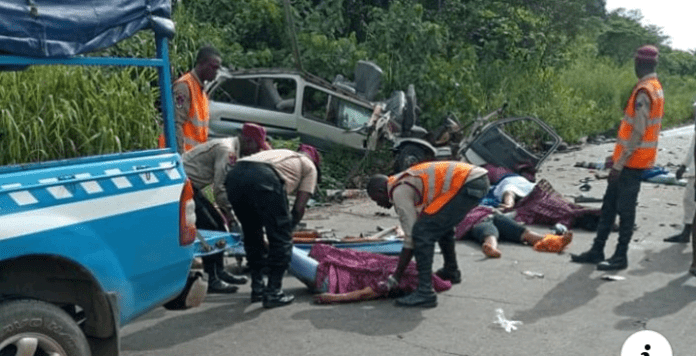
At least 10 people died Saturday in a car crashes involving multiple cars along Sagamu-Ijebu/Ode- Ore expressway.

The Federal Road Safety Corps, Ogun State Sector Commander, Clement Oladele, made this known late Saturday.

He said the first crash occurred around 5a.m. when the day was still dark, while the second crash occurred at about 8.20 a.m. on the same corridor at Ijebu Ife, Ogun State.

The two crashes involved 26 persons.

The sector commander said the first crash was suspected to have been caused by an armed robbery attack. Two people died when the driver of a Toyota Picnic suddenly reversed on the highway after sighting armed robbers.

An oncoming truck crashed into the fleeing vehicle.

“The injured victims were rescued to General Hospital Ijebu-Ode , Ogun State. The corpses of the dead victims were deposited at the General Hospital Ijebu-Ode, morgue,” he said.

Seven people died in the second crash involving a Mack tanker and a Toyota Hiace commuter bus coming from Okitipupa, Ondo State.

“The commuter bus due to excessive speed could not manoeuvre the diversion point and in the process collided head on with the truck,” Mr Oladele said.

He said the injured victims were taken to the General Hospital, Ijebu-Ode, for medical treatment.

Catholic bishop calls for ordination of women as priests

0

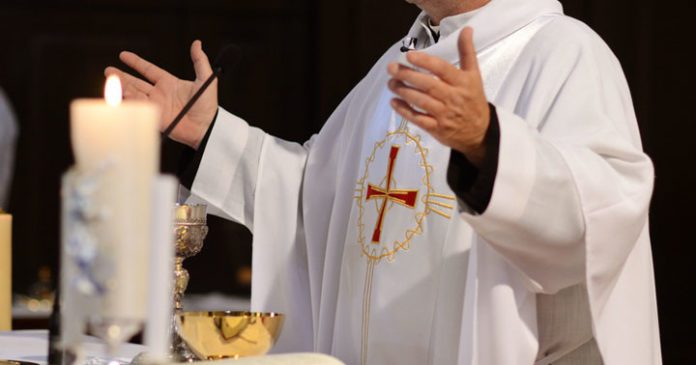
A Brazilian bishop has called for the ordination of women to the diaconate for service in the Amazon region. The bishop said that 2009 revisions to canon law could allow for the ordination of women deacons, but a leading canon lawyer in the Vatican has disputed that idea.

Bishop Evaristo Pascoal Spengler, OFM leads the territorial prelature of Marajó in Brazil and is participating as a member of the Synod on the Pan-Amazonian region in Rome.

During a press conference on Oct. 25, Spengler said that “there is a path that is open for the ordination of women,” citing a 2009 document from Pope Benedict XVI.

While referencing the role of women leaders, saints, and teachers in the history of the Church in making, Spengler did not account for the theological and sacramental impediments to such a development.

“We know that in the history of the Church there are women deacons. A role that should be expanded on.”

Spengler said a canonical possibility for the ordination of women was created by Pope Benedict in 2009.

“In 2009 the pope made a change in canon law according to which the bishop, the priest and the deacon receive their mission and the faculty to act in the name of Christ. But this was changed by Pope Benedict, who changed this paragraph [which] said that, from that moment onward, that deacons were no longer linked to Christ but be able to serve the people of God in the diaconate in the liturgy of the word and in charity,” Spengler said.

“So, we realize that there is a path that is open for the ordination of women.”

The bishop was referencing Benedict’s 2009 motu proprio Omnium in mentem, which revised canons 1008 and 1009 of the Code of Canon Law.

Benedict’s document noted that some language in canon law did not fully reflect the teaching of Vatican Council II on the nature of the diaconate, and that Pope John Paul II had already updated the Catechism of the Catholic Church to address the same issue. Benedict’s document revised the law to emphasize the distinction between diaconal and priestly ministry.

“Those who are constituted in the order of the episcopate or the presbyterate receive the mission and capacity to act in the person of Christ the Head, whereas deacons are empowered to serve the People of God in the ministries of the liturgy, the word and charity,” the revised canon 1009 says.

While the new wording reflects that deacons do not act in the person of Christ through the celebration of Mass, Benedict left intact canonical wording which reflects the unity of the sacrament of orders at all three grades of deacon, priest and bishop.

Canon 1008 states that “By divine institution, some of the Christian faithful are marked with an indelible character and constituted as sacred ministers by the sacrament of holy orders. They are thus consecrated and deputed so that, each according to his own grade, they may serve the People of God by a new and specific title.”

Benedict’s reforms left intact the essential provision of canon 1024, which states that “A baptized male alone receives sacred ordination validly.”

Bishop Juan Ignacio Arrieta Ochoa, secretary of the Pontifical Council for Legislative Texts, told CNA that Benedict made revisions to canon law to “better distinguish the ministry of priests and deacons.”

“The canon was changed to reflect the Catechism,” he added.

“Nothing is said or mentioned regarding women,” Arietta said.

Arrieta mentioned that Pope Francis established in 2016 a commission to study the female diaconate which has thus far reached no definitive conclusion Earlier this year, the pope said that while there is no consensus on questions related to the issue, the matter will continue to be studied.

Spengler also said that “we know that in the history of the Church there are women deacons. A role that should be expanded on – deaconess – and how to include this in the Church.”

In May, the pope said that the deaconesses described by St. Paul in the New Testament, and referenced by Spengler on Friday, can not be understood as equivalent to the modern sacramental notion of the diaconate.

A 2002 document published by the International Theological Commission concluded that female deacons in the early Church did not have the same functions as male deacons, and had “no liturgical function,” nor a sacramental one. It also said that even in the fourth century “the way of life of deaconesses was very similar to that of nuns.”

“The formulas of female deacons’ ‘ordination’ found until now, according to the commission, are not the same for the ordination of a male deacon and are more similar to what today would be the abbatial blessing of an abbess,” Francis said May 7 during an in-flight press conference returning from North Macedonia and Bulgaria.

“For the female diaconate, there is a way to imagine it with a different view from the male diaconate,” said the pope while insisting that the issue needed further study.

Bishop Spengler did not mention either Pope Francis or the commission for the study of women deacons on Friday.

During the press conference, several journalists groaned when Spengler was asked about the Church’s sacramental theology and its restriction of ordination to men alone.

Earlier in the session, applause broke out among some journalists after Paulo Ruffini, Prefect for the Vatican Dicastery of Communications, intervened to correct a question from veteran Vatican correspondent Sandro Magister.

Magister had made reference to an earlier event held in the Vatican gardens, during which a group of participants knelt in a circle around several carved items arranged around a controversial statue, variously identified as an earth mother figure or fertility symbol.

Ruffini insisted that the event was not an “official” synod event, and that questions about such events did not have to be answered. He also said that “there was no ritual” and “no prostration,” to applause from several journalists present at the press conference.
Buratai calls for more budgetary allocation to the Nigerian Army

0
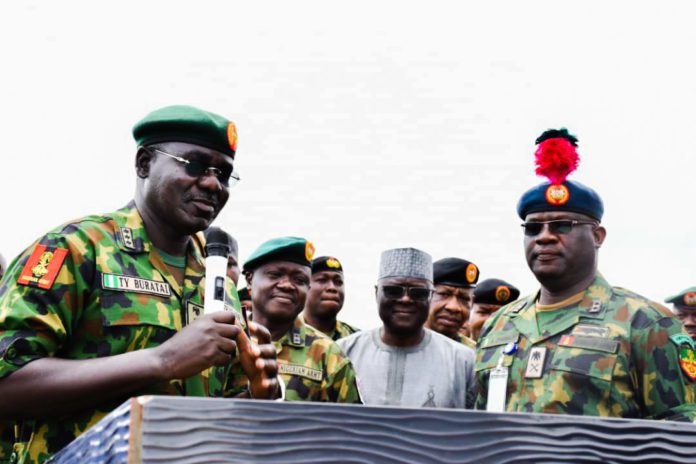
General TY Buratai commissioning projects at the Ikeja Military Cantonment

The Chief of Army Staff Lt. General Tukur Yusuf Buratai has called for more funding to enable the Army to acquire necessary platforms to conclude the war against Boko Haram terrorism and other myriads of security threats facing the country.

The Army boss made the call during the Nigerian Army budget performance appraisal for the 2019 and the Army budget defence for the year 2020 on Thursday.

He called on the National Assembly to prevail on the Ministry of Budget and National Planning to review the budget of the military.

Gen Buratai based his submission on the on-going structural changes, volatile security environment and massive engagement of troops in virtually all the 36 states of the federation.

This, he said, was because his outfit was allotted N232.4 billion as against N472.8 billion requested from the national planning ministry in the 2019 budget.

Buratai explained that for the 2019 budget, N350.5 billion would be expended on Nigerian Army Personnel Emolument, N43.6 billion for Army Overhead Budget, and N78.5 billion for Nigerian Army Capital Budget.

Meanwhile, the National Assembly has applauded the commitment and achievements of the Nigerian Army under the leadership of Lt. General Yusuf Tukur Buratai the Nigeria Chief of Army Staff.

The Chairmen of the two committees in the National Assembly on the Army, Senator Ali Ndume and Hon Abdulrazak Sa’ad Namdas promised to support the Army to secure more funding to acquire the necessary platforms required to tackle the nation’s security threats such as the Boko Haram insurgency.


Thousands protest in Guinea over Condé’s presidential bid

0

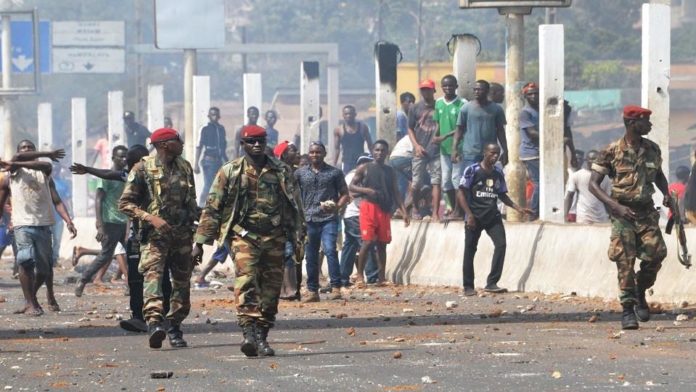
Demonstrators have returned to the streets of Guinea to contest the president’s possible bid to seek another term. Unlike smaller demonstrations which saw at least nine people killed and several opposition leaders jailed, Thursday’s march was peaceful. But the situation remains volatile amid allegations of Russian interference.

The situation in Guinea is “explosive,” says Marie-Madeleine Dioubaté, an opposition presidential candidate.

“Mr Alpha Condé is nearing the end of his mandate in 2020 and he absolutely wants to seek a third term,” she told RFI.

Eighty-one-year-old Condé has neither denied or confirmed whether he will run again in next year’s presidential race.

But the fact that he’s asked his government to look into drafting a new constitution that could allow him to seek a third term, has raised fears that he will reset the button on his presidency.

Those fears are unfounded Conde’s Information and Communication Minister Amara Somparé said.

“The demonstrations are against rumours not facts, because we don’t know yet if the president intends to stand for a third term. So, people are wasting their time,” he told RFI.

“There is a debate in the country regarding a new constitution to be submitted to the people by referendum. They will decide either yes or no. This is an act of democracy,” he said.

Crackdown on protests

The wave of demonstrations began on 14 October. At least nine people were killed that day when police opened fire on demonstrators as they ransacked military posts and blocked roads with burning tyres in the capital Conakry.

Authorities deny the use of excessive force, but have launched an investigation.

“What we saw last week were not demonstrations but riots by young people who had been brainwashed to destroy public property,” comments Information Minister Somparé.

Several opposition campaigners and politicians were arrested and sentenced to prison for inciting civil disobedience, including Abdourahmane Sanoh, a former government minister and head of the National Front for the Defence of the Constitution, behind the current protests.

Rights groups have denounced government interference in the judicial system–a charge the government denies.

“I cannot make any comments on the decisions made by justice,” says Somparé. “That is proof that the justice system is not under control, because we’re not giving instructions to them, we’re accepting their decisions,” he said.

Mining boom for who?

The public’s rage is also about corruption and discontent with a leader, whose victory in 2010 had raised hopes for democratic progress in Guinea after years of military rule.

For presidential candidate Marie-Madeleine Dioubaté, who is also the coordinator of the National Front for the Defence of the Constitution in France, Alpha Condé has failed to live up to the public’s expectations.

“The population of Guinea are protesting because they are upset. You know our country has the largest bauxite mines in the world. We have gold, diamonds and yet the people don’t get anything,” she said.

“The government takes all the resources of the mining and the population gets poorer and poorer. They don’t have even food, school, or access to health, so the population are fed up now, and want the president of Guinea to leave power.”

Guinea gets around a third of its revenues from the mining sector. Authorities insist that 15 percent of its profits are shared with communities impacted by the extractive industry and used to build social infrastructure projects around the country.

France re-opens holy site in Jerusalem after ownership battle

0

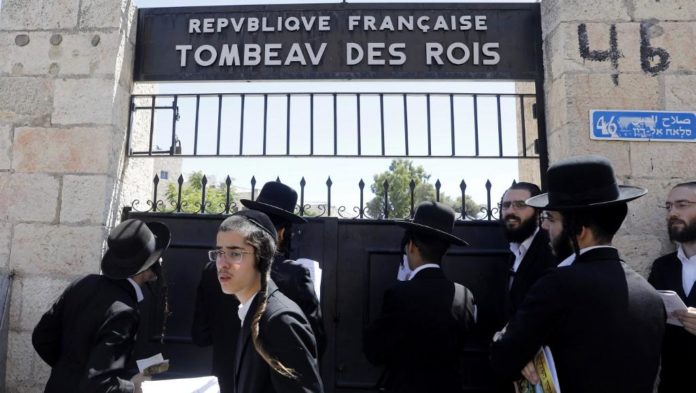
France has re-opened access to an ancient tomb in Jerusalem, after a dispute over who owns it. The Tomb of the Kings is an important religious site for ultra-Orthodox Jews and Israel has disputed the ownership of the site.

Around 30 people visited the site in Israeli-annexed east Jerusalem on Thursday morning, while other ultra-Orthodox Jews danced and prayed outside the gates while they waited for their turn to visit, with police keeping watch.

Ultra-Orthodox Jews consider the 2,000-year-old tomb to be a holy burial site of ancient ancestors.

The site has been closed since 2010, first for renovations, but then because of challenges to its ownership.

The tomb was bought by a French family after its discovery 1863, and the family then gave it to the French state. That ownership has been challenged in Israel’s rabbinical court, which rules on matters related to Jewish law and holy sites.

France had reopened the site in June, but immediately closed it after a group of ultra-Orthodox Jews tried to enter and pray, despite not having signed up as requested.

Visitors are allowed in during set hours, twice per week, and must pre-register online and pay a fee. A maximum of 30 people at a time can visit the exterior of the tomb, including ritual baths and an ancient frieze above the entry, but they are not allowed to go into the tomb itself.