Home Blog Page 2586

Boko Haram: Who is afraid of Super Camp Strategy?

0

By Richards Murphy

I was jolted out of my seat when I read the story published by Reuters titled ‘Islamic State fills the void in Nigeria as soldiers retreat to ‘super camps”. I imagined how such a piece laced with outright mischief, and illogical conclusions would have passed editorial integrity and certified fit for publication.

As a start, the whole concept of the Super Camp Strategy launched by the Nigerian Army was deliberately presented to picture a situation where troops would leave communities they hitherto protected to form clusters somewhere in a bid to avoid or minimize casualties. While this misrepresentation of fact can be stated to be uncharitable, it further reinforces the conspiracy theory that stated that Boko Haram/ISWAP fighters are receiving support from external sources, as well as the deplorable role most international NGOs are playing in the theatre of operations in North-East Nigeria.

I say this because the Reuters story quoted sources from the international NGOs in operation in North-East Nigeria and they based their judgment on what was availed them, which in my opinion is the height of unprofessionalism and unbecoming of a news medium such as Reuters.

It is more challenging to come to terms with the fact it was stated that the army’s withdrawal into large bases has coincided with a string of insurgent raids on newly unprotected towns and has left the militants free to set up checkpoints on roads as they roam more freely across the countryside. The first question is, were they referring to any part of North-East Nigeria or a neighbouring country? Because I am at a loss, just like the generality of Nigerians as to why anyone or organization would want to adopt a strategy such as the one advanced by Reuters in areas that it has complete control over. It is tantamount to leaving the comfort of one’s bedroom and taking solace elsewhere.

This is quite worrisome and somewhat an insult to our sensibilities as a people in Nigeria when foreign media organizations come in and scoop half-truths from their accomplices masquerading under various humanitarian nomenclatures in an attempt to unsettle the efforts of the Nigerian Military in the fight against terrorism in Nigeria mainly when successes are recorded and Boko Haram/ISWAP fighters retreating to the fringes of the Lake Chad Basin region.

This in my considered opinion is the height of mischief, and unsuspecting members of the general public must disregard it because, since the introduction of the Super Camp Strategy by the Nigerian Army in the fight against terrorism in North-East Nigeria, Boko Haram/ISWAP fighters have suffered heavy casualties as rightly reported by reputable news mediums in Nigeria.

The Super Camp Strategy is not a situation where troops would withdraw to “super camps” that can be more easily defended against insurgents as stated by Reuters. Instead, the Super Camp Strategy is one that is designed to create military presence everywhere in villages and localities of the troubled areas of Borno, Yobe, and Adamawa states.

I recall in a parley with members of the Borno Elders Forum, the Theatre Commander, Operation Lafiya Dole, Major General Olusegun Adeniyi, stated that the Super Camp Strategy will ensure fast mobilizing, quick reaction and more extended reach at tactical level, combined with the striking power of the Air Taskforce to see that the days of Boko Haram moving freely and passing in between static defence location is over.” Also, true to his words, the introduction of the Super Camp Strategy has seen to the presence of troops in places such as remote communities, unlike in times past where soldiers were stationed in military bases.

If the Super Camp Strategy is not a brilliant one, I don’t know what else to call it. And my guess is that those that do not want an end to the Insurgency in North-East Nigeria are those behind the Reuters story, and it is such a shame that Reuters with all its years of journalism would condescend so low to tow this dishonourable path.

This is on the heels that activities of international NGOs operating in North-East Nigeria have been suspect. For them, the war against terrorism in North-East Nigeria should not come to an end so they can continue to justify their stay in Nigeria as well as funding for their operations. This is aside from the fact that it has been speculated in some quarters that most of these NGOs are involved in espionage activities for the sponsors of Boko Haram/ISWAP terrorists.

In all of these, one thing comes to my mind, and it is the fact that with the introduction of the Super Camp Strategy, the end of Boko Haram/ISWAP is in sight, and this fact is not going down well with a group of actors and as such all must be done to discredit in its entirety. But again, would this new offensive against the operations of the Nigerian Military work? Would the Military hierarchy succumb to the Reuters blackmail?

Your guess is as good as mine. I believe that all must be done by the military hierarchy to sustain the tempo in its operations in North-East Nigeria, with regards to the Super Camp Strategy. And less I forget to mention that the Super Camp Strategy involves two critical components, which is taking the fight to the enemies in their domains and a routine introduction of counter-insurgency strategies that always takes the Boko Haram/ISWAP fighters unawares as against what was obtainable in the past.

At this point, the likes of Reuters and its accomplices should adopt another strategy in their attempt to mislead members of the unsuspecting general public. The attempt at discrediting the Super Camp Strategy is feeble in its delivery. And those afraid of the end of Boko Haram/ISWAP should do the needful, which is to pack their belongings and leave Nigeria, instead of the futile attempt at distorting facts.

Murphy is a security expert based in Calabar.

T.Y Danjuma, Governors, others perpetrate evil under farmers-herders’ crisis to undermine Buhari presidency – Ex-Senate President Ebute

0

By Lawrence Audu

Third Republic Senate President, Chief Ameh Ebute, has accused some respected politicians, serving governors and elder statesmen of leveraging on the Famers-herders’ clashes to discredit President Muhammadu Buhari’s administration.

The highly-revered ex-lawmaker made this known in a paper presented at a One Day International Conference on Good Governance and Accountability in Government organised by the Coalition for Civil Society Organizations for Change and Good Governance on Tuesday in Abuja.

In his piece titled “Appraising 100 Days of President Buhari on the saddle and building a nation where justice shall reign”, Chief Ebute gave an honest assessment of the president’s second term thus far.

According to him, out of desperation for power, certain well-known politicians have either taken to sponsoring violence or simply turned blind eyes to clashes around them for their selfish gains.

In the forefront, as stated by Mr Ebute, is former Defence Minister, LT Gen TY Danjuma (Rtd) who he claims has surprisingly remained mute despite the farmers/herders in his state, Taraba, because those affected are not from his ethnicity.

The former number 3 citizen also fingered the opposition of fuelling the wave of violence, going as far as allegedly sponsoring the Islamic Movement of Nigeria (IMN) – thus keeping to their vow to make the country ungovernable for Mr Buhari.

Despite these conspiracy, however, Chief Ebute hailed the pesident for remaining resolute and focused, holding firm to his transparent and accountable ideals.

While admitting that the positive signs points towards path to greatness for the country, the ex-Senate President urged Nigerians to embrace the excellent governance philosophy of Mr Buhari.

Read excerpts from the paper below:

It is no longer a secret that the various security challenges facing Nigeria predate the Administration of President Muhammadu Buhari. It is on the heels that before 2015, there has been insinuation in certain quarters about the sponsorship of violence as a means of achieving political, religious, and ethnic goals by elite politicians.

These politicians whom in some instances are referred to as senior citizens or elderly political leaders have exploited ethnic and religious clashes to their advantage. A good example suffices in Taraba state where a former minister of Defence is silent over the killings in Taraba state because those being killed are not from his ethnicity.

The Taraba state killings raise the question as regards the sincerity of heart and of the purpose of supposed elderly political leaders in Nigeria who have been exploiting situations for their personal and selfish gains. They turn a deaf ear if the victims of such nefarious activities are not from their ethnicity and also feign ignorance if their kin perpetrated acts of violence. When factions of political elites compete for political power at the national level based on identity, groups emerge at the subnational level in Defence of these identities.

Also, those that lost in the 2019 general elections in Nigeria have vowed to make the country ungovernable, and this explains why despite the efforts of government, some of these issues won’t go away. I believe that they intend to cause the disintegration of Nigeria and to paint a picture of incapacity before the eyes of the international community.

Nonetheless, some of us conversant with the dynamics involved in the contemporary Nigerian society would readily attest to the fact that the killings and kidnappings, as well as the rise in cases of armed banditry, is as a result of what members of the opposition have plotted thinking that Nigerians would be gullible.

They have deployed huge resources to make the country ungovernable, they have also engaged the services of both local and international media to escalate issues to their advantage, not minding the consequences of their actions.

They have also adopted a negative narrative in the clashes between farmers and herders. In the wisdom of members of the opposition, the farmers-herders conflict must be construed in such a way that would make the citizens lose faith in the present Administration. While this is not only despicable, it is also an indication that those that failed to actualize their political ambitions at the general elections have refused to move on with their lives. However, instead, they have chosen this dishonourable path of fuelling ethnic and religious conflict aimed at distracting and destabilizing and distracting the Administration of President Muhammadu Buhari.

Most politicians hide under cover of farmers-herders’ crisis to perpetrate evil in the society. They arm and sponsor militia groups to wreak havoc. This much has been witnessed in situations where there has been a hasty ascribing any form of crime or criminality to a particular ethnicity or religion.

For example, we have seen situations where people from southeast Nigeria have been arrested masquerading as herdsmen after committing a crime or engage in any criminal behaviour. I also recall a particular episode that happened in Ghana, where a Nigerian man was arrested after killing three persons. He claimed to be a Fulani herdsman but couldn’t speak Hausa or pronounced a word in Fulani.

That is the irony of the situation we face as it stands today. People are masquerading under different umbrellas to perpetuate evil and passing the blame on ethnicity or religion, which would ultimately lead to reprisal attacks on innocent people going about their normal businesses. The cases presented in the Benue-Taraba axis gives us a hint on how the political elites have continued to exploit the situation for their benefits.

The political elites understanding the gullibility of their subjects have formed the habit of taking advantage of communal clashes to paint a particular ethnicity or religion in a bad light just in an attempt to be able to perpetuate their nefarious activities thereby causing unrest in the polity.

It is most worrisome that in a state like Taraba, the government would choose to play petty and feign ignorance to the monster they created. I am particularly pained that a personality such as Lt. Gen. Theophilus Danjuma would condescend so low as meddling in petty politics despite what he has benefitted from Nigeria.

The likes of Danjuma and his cohorts have indeed shown that they do not have the interest of the country at heart. This is also on the heels that some CSOs have been able to expose the fact that a high ranking member of the opposition is behind the wave of violent protests by members of the Islamic Movement in Nigeria (IMN) with huge sums of monies.

While I consider such acts as despicable, I am gladdened with the fact that Nigerians didn’t sell their birthrights for a plate of porridge. Indeed, Nigerians were wise when they cast their votes for integrity, accountability, and transparency. If the reverse has been the case, I am sure there would have been no country called Nigeria today due to the wickedness of these individuals parading themselves as elder statesmen.

I believe that the traditional rulers must rise to the challenge instead of blaming the table of President Muhammadu Buhari. They must understand the dynamics involved in the farmers-herders’ crisis and realize that it is merely the act of political elites manipulating the system to their advantage, and at the detriment of peace and tranquillity in the system.

A good example can be seen in Zamfara state where peaceful engagements and collaboration with security agencies have helped to tame the nagging problem of insecurity. Also, the South-West Governors have been holding meetings on how to support the security agencies to address the insecurity situation.

However, some governors who have exhibited a high level of incompetence are still bent on passing the blame on President Muhammadu Buhari, whereas they are the Chief Security Officers of their respective states and they draw security votes every month.

The democratic experience in Nigeria has not come without its challenges. Some of us have witnessed Nigeria in its lowest, so much so that we feared for the worst to happen. However, our hopes were rekindled with the advent of the Muhammadu Buhari led administration, which by all standard is a worthy example of accountability and transparency in governance.

Nigeria indeed got it right in 2015, as well as 2019 with the way and manner the government has carried on since then. So in this context of this conference, which is the first 100 days in office of President Muhammadu Buhari, I am convinced to say the foundation for economic growth has been laid.

As an elder statesman, I have witnessed administrations in Nigeria, and I dare say that the level of commitment displayed by President Muhammadu Buhari in the governance of Nigeria is equal to none.

The first 100 days in office of President Muhammadu Buhari is filled with hopes for Nigeria. All the critical sectors of the economy are receiving the required attention, and it is sufficing to say that President Muhammadu Buhari has indeed displayed an unalloyed commitment to the growth and development of Nigeria and as such it behoves on all well-meaning Nigerians to lend its support to this Administration in its quest to building a country of our dreams for this generation and generations to come.

Civil society organizations (CSOs) are often assumed to be institutions that facilitate communication between citizens and policymakers. However, CSO advocacy is only as effective as the space allowed by the government, the resources available from funders, and their internal capacity.

Emerging trends point to the fact that the Muhammadu Buhari led Administration has indeed highlighted to Nigerians that when there is a will, there would always be away. This much the Administration of President Muhammadu Buhari has displayed in the first 100 days in office.

This is noteworthy that despite the conspiracy to paint the Administration of President Muhammadu Buhari in a bad light, the high level of transparency and accountability displayed has indeed negated the plot to make the country ungovernable.

The first 100 days in office of President Muhammadu Buhari has indeed proved to Nigerians that indeed Nigeria is on the path of greatness. I cannot but align with the vision and mission of this Administration, and I encourage the generality of Nigerians to do same because never in the history of Nigeria have we experienced such display of sincerity of heart and purpose and a rare demonstration of commitment to the advancement of Nigeria as a country.

The leaders and the led should embrace the excellent governance philosophy if development administration is to meet the underlying rationale it stands for. Both the leaders and the led have their roles to play to embrace good governance and strengthen development administration. Highly developed nations can attest to the promotion of national development through the application of good governance in their development administration.

President Buhari’s First 100 Days: A Nigerian Scholar’s Perspective

0

By Prof Pita Ogaba Agbese

One American that has been copied by many other countries is to assess a new administration’s performance after its first 100 days. By itself, there is nothing magical about the first 100 days. Nor is the number, 100, sacrosanct. Nonetheless, the logic behind assessing the performance after the first 100 days is that the tenor, the zeal and the overall direction of how the administration would perform for its entire term can be gauged from how it has fared in its first 100 days.

For political leaders like President Muhammadu Buhari who get re-elected, one can assess not just their first 100 days in office but a reassessment of their performance in their first term and to evaluate the what amounts to a second first 100 days against the background of their performance in their term in office.
President Buhari went through a rigorous re-election campaign. He won convincingly. He won both on his performance in his first term and his promise to take Nigeria to the “Next Level.” What do the first 100 days tell us about the trajectory of the Next Level? What can and should Nigerians expect in the next four years from the Buhari administration? Can we use the first 100 days to get a glimpse at what Nigeria would look like four years from now?

As was the case in 2015 when Buhari was first elected, his administration in the second term, was off to a slow start. Ministers were not immediately appointed as many of us had hoped and expected. Even after the ministers had been nominated, it took several weeks before portfolios were assigned to them. Now, the ministers are in place and the business of governance has started in earnest. Many of these ministers are going to be met with enormous difficulties. Take the state of roads for instance. As usual, the rainy season is upon us and that means that many roads in Nigeria are virtually impassable. Recognizing this, the administration is seriously committed to improving the conditions of our highways by repairing roads and building new ones but it seems, given the enormity of the tasks, that more efforts have to be made to create more conducive driving conditions on our roads. The administration must be commended for what it has done so far on this score but the more must be done.

Insecurity, particularly in terms of kidnapping for ransom and armed robbery, continue to be a major issue in Nigeria. Although Boko Haram is still able to launch sporadic hit and run operations, its ability to maintain arduous and sustained attacks has been seriously degraded. The Buhari administration deserves a high commendation for taming the menace of this bloody terrorist group. The police and the armed forces are doing much to curtail insecurity in its many manifestations but it is clear that the first 100 days of President Buhari’s second term have been very challenging on the security situation.

The war on corruption seems to maintain its tempo although the administration lost a few high-profile anti-corruption cases in the first 100 days. Some more recoveries of the stolen commonwealth were made and the administration must be applauded for this. I urge the administration to use proceeds from recovered assets to building infrastructure or providing some other visible means of showing the public that recovered assets are being put to use to improve the welfare of Nigerians.

Unemployment, particularly among young people, is one of the most difficult tasks in the Nigerian economy. New employment initiatives must be designed to reduce the scourge of unemployment. The administration’s commitment to raising and paying the new minimum wage must be fully acknowledged.

Bumper agricultural harvests have been recorded in many sectors of Nigeria’s agriculture. Consequently, the prices of foodstuff continue to decline. The tempo of local production of foodstuff and the curtailment of food imports must be sustained. The administration has doggedly pursued the goal of increasing local production of foodstuff and it appears that sustained local production of agricultural products will be one of the most important legacies of the Buhari administration.

All in all, if the first 100 days are anything to go by, we should expect a much better Nigeria by the time President Buhari finishes his second term. It will be a less corrupt Nigeria. More Nigerians will be gainfully employed. Stealing of public money would no longer be a directive policy of the government. New and better roads and railways will be constructed. Insecurity will be greatly curtailed.

Boko Haram: Coalition hails Super Camp, charges Borno, Yobe political leaders to back ‘masterstroke’ military strategy

0

The Coalition Against Terrorism and Extremism (CATE) has applauded the Nigerian Army’s Super Camp strategy, describing it as a “masterstroke” and the long-awaited catalyst to flush out the remnants of Boko Haram from the North-East.

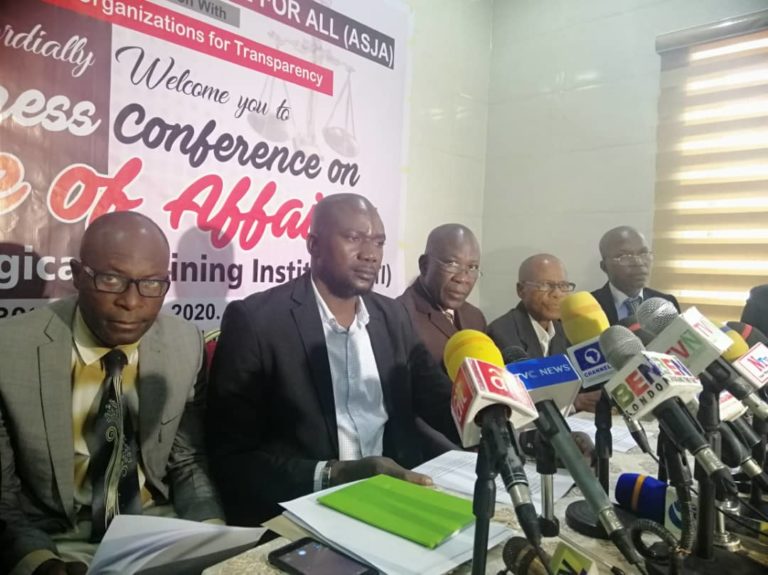
The group made this strong case for the military’s latest approach at a press conference held in Abuja by the National Coordinator, Gabriel Onoja on Sunday.

The strategy entails the concentration of fighting forces in strongholds called Super Camps with capacity to respond swiftly to the adversary.

According to CATE, this move has been a huge success, encouraging the leadership of the Nigerian Military not to relent in its efforts to get rid of the already decimated, fleeing Boko Haram/ISWAP terrorists.

The group, however, urged political leaders in Borno, Yobe and Adamawa States to lend their support to the military’s effort.

CATE further called on traditional and religious leaders to back the exercise while ensuring that their subjects do not act as spies for Boko Haram/ISWAP terrorist and against the interest of the military.

Read full press statement below:

I welcome you all to this press conference put together by the Coalition Against Terrorism and Extremism to bring to the members of the general public the effectiveness or otherwise of the efforts of the Nigerian military in the fight against Boko Haram/ISWAP terrorist in North-East Nigeria.

The Coalition against Terrorism and Extremism having reviewed the activities of the Nigerian Army in North-East Nigeria wishes to inform the members of the general public that the efforts of the Nigerian Army in the fight against Boko Haram terrorists have been quite herculean, and credit must be given to the leadership of the Nigerian Military for providing that sound and dynamic leadership that has kept the morale of the fighting troops high in the past four years.

The Nigerian Military has indeed shown an unalloyed commitment to defending the territorial integrity of Nigeria through the introduction of military strategies on a routine basis aimed at defeating the Boko Haram/ISWAP terrorists.

The Coalition against Terrorism and Extremism wish to make particular mention of the recently introduced Super Camp Strategy by the Nigerian Military that has seen Boko Haram/ISWAP terrorist suffering heavy casualties.

The Coalition Against Terrorism and Extremism notes that the Super Camp Strategy as introduced by the Nigerian Military is indeed a masterstroke and wishes to encourage the leadership of the Nigerian Military not to relent in its efforts to rid North-East Nigeria of remnants of Boko Haram/ISWAP terrorists.

This is on the heels that by all indications, the Super Camp Strategy has indeed been a huge success and as such it is expedient on all well-meaning Nigerians to rally round the Nigerian Military in its final onslaught against Boko Haram/ISWAP.

The Coalition Against Terrorism and Extremism having monitored the successes recorded by the Nigerian Military in the fight against terrorism in Nigeria also wishes to state that indeed the leadership of the Nigerian Military has displayed a high sense of patriotism and a burning desire to see to the end of terrorist activities in Nigeria.

It is against this backdrop that the Coalition Against Terrorism and Extremism is driving awareness on the need for all and sundry to lend their support to the Nigerian Military in the final push against terrorists and terrorism in Nigeria.

The Coalition Against Terrorism and Extremism wish to also call on the political leaders in Borno, Yobe and Adamawa States to lend their support to the efforts of the Nigerian Military towards the final onslaught against Boko Haram/ISWAP terrorists in North-East Nigeria.

The political leaders in North-East Nigeria must as a matter of urgency see to the provision of necessary infrastructures and social amenities in their various domains in an attempt to complement the efforts of the Nigerian Military at bringing about lasting peace in North-East Nigeria.

The traditional institutions in the North Eastern States must also lend their support to the Nigerian Military in the final push against Boko Haram/ISWAP terrorist in Nigeria by ensuring that their subjects do not act as spies for Boko Haram/ISWAP terrorist and against the interest of the Nigerian Military.

The Coalition Against Terrorism and Extremism also charges the various religious organizations in North-East Nigeria to make it a duty to propagate the message of one Nigeria where peace shall reign supreme.

The religious institutions must, as a matter of urgency, lend their voice to the campaign to end terrorism in North-East Nigeria by supporting the activities of the Nigerian Military, especially the Super Camp Strategy.

Ladies and Gentlemen of the Press and other critical stakeholders:

It is a statement of fact that the operations of the Nigerian Military in North-East Nigeria has been a huge success. The Coalition Against Terrorism and Extremism applauds the leadership of the Nigerian Military, as well as its commanders and troops in all the Sectors of Operation Lafiya Dole who are giving their best in the fight against terrorism in Nigeria.

Insecurity: ”Shutdown Abuja – Kaduna train, let’s all use the road” – Protesting Kaduna youths demand

0

Some youths in Kaduna have Protested asking for the closure of Kaduna-Abuja train so that everyone must use the roads.

Speaking to news men in Kaduna, the youths said this will make the government to arrest the security situation along the expressway quickly.

Many travellers are afraid of using the Kaduna-Abuja expressway for fear of being kidnapped.

This has however made the Kaduna-Abuja train ticket hard to get even as they are purportedly being hoarded through racketeering.

Rastafari is a religion like every other, Kenyan judge rules

0

A Kenyan judge has ruled that ‘Rastafarianism’ is a religion that deserves to be treated like any other.

Reggae legend Bob Marley used his music to promote the revolutionary ideals of Rastafari

The ruling is part of a case involving a minor who was banned from school for having dreadlocks.

The 15-year-old student at the Olympic High School in the capital, Nairobi, was sent home for sporting dreadlocks in January. School administrators argued that the hairstyle was not part of the official uniform.

High Court Judge Enoch Chacha Mwita ruled that the school’s directive was unconstitutional since dreadlocks signify the girl’s ‘Rastafari’ faith.

Rastas believe Emperor Haile Selassie is Christ in a new name

He is quoted as saying:

“A child has a constitutional right to basic education. Keeping ‘rastas’ is her way of professing her faith and it’s wrong to compel her to shave which is against her religion.”

The girl’s father had gone to court to challenge the expulsion, arguing that his family adheres to the teachings of ‘Rastafarianism’.

Snoop Dogg recently converted to the religion of Rastafari

The girl is in her first year in high school and has been attending classes after the judge issued temporary orders for her readmission, as long as she kept the dreadlocks neat and fully covered in a turban.

Kenya’s constitution guarantees citizens the right to freedom of conscience, religion, thought, belief and opinion.

Members of the Nyabinghi order chanting during reasoning.

Breaking: Osama Bin Laden’s son killed in counter insurgency operation

0

The son of Osama bin Laden has been killed in a US counter-terrorism operation, President Donald Trump has confirmed.

A statement from the White House said: “Hamza bin Ladin, the high-ranking al-Qa’eda member and son of Osama bin Laden, was killed in a United States counter-terrorism operation in the Afghanistan/Pakistan region.

“The loss of Hamza bin Ladin not only deprives al-Qaeda of important leadership skills and the symbolic connection to his father, but undermines important operational activities of the group.

Hamza bin Laden: Who was the terrorist with a $1m bounty on his head?
Hamza bin Laden

“Hamza bin Laden was responsible for planning and dealing with various terrorist groups.”

The high-ranking al Qaeda figure was rumoured to have been killed in August.

Nigerian Army Legal Director becomes President, African Military Law Forum

0

The Director, Nigerian Army Legal Services, Maj.-Gen. Yusuf Shalangwa, has been elected President of the African Military Law Forum (AMLF), on Thursday in San Remo, Italy.

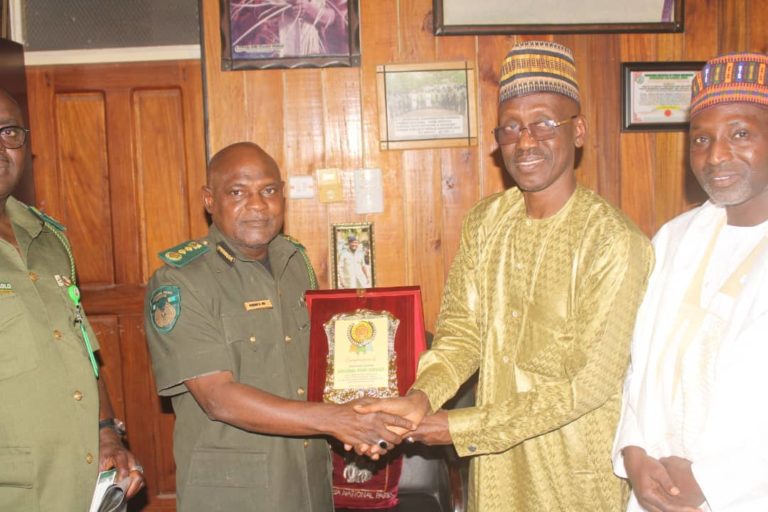
Col. Sagir Musa, Acting Director, Army Public Relations, disclosed this in a statement in Abuja on Thursday.

Musa said that Shalangwa was a member of the Nigerian Bar Association, African Bar Association, International Bar Association and the African Military Law Forum.

According to Musa, Shalangwa is a seasoned military legal adviser and has attended several seminars, workshops and conferences on different aspects of military and civil laws, both in and outside Nigeria.

“He has attended Law of Armed Conflict in Spiez, Switzerland and Legal Aspects of Counter-Terrorism at the Kofi Anan International Peace Keeping and Training Centre, Accra Ghana among others.

“He is also the Chairman Armed Forces and Security Committee of the African Bar Association and has been a member Board of Directors/Governing Council of many Nigerian Army legal and corporate entities.

“The AMLF is sponsored by the United States Africa Command, and is a veritable platform which gathers African military legal professionals together annually to discuss international best practices when advising militaries,” he said.

Reactions as Buhari critic, Seun Onigbinde takes government appointment, deletes twitter account

0
Avowed critic of President Muhammadu Buhari,  Seun Onigbinde who is also the Director and co-founder of BudgIT, has been appointed by the federal government as a technical adviser at ministry of budget and national planning.

The data analyst, who often criticised the current administration, disclosed this through his Medium account as his Twitter account is deactivated.

Onigbinde’s appointment has generated mixed reactions from Nigerians on Twitter.

Joe Abah, director of DAI Nigeria, an international development firm implementing programmes covering governance in more than 100 countries worldwide, commended the appointment.

“I am pleased that Seun Onigbindehas been given an appointment by the Federal Govt. When I tell young people not to be too extreme, they abuse me as “Fencist.” In 2015, you are all in for Buhari. 2019, you are all in against Buhari. Your country is bigger than Buhari. Think am o,” he tweeted.

But some Twitter users reacted negatively to the appointment, saying such was not expected of the BudgIT co-founder.

No photo description available.

Image may contain: one or more people

Image may contain: text

Image may contain: 1 person, smiling, text

Image may contain: text

Image may contain: text

Image may contain: text

Image may contain: 1 person, smiling, text

Image may contain: 1 person, smiling, text

Image may contain: 1 person, text

“Seun Onigbinde deleted his Twitter account after getting appointment for Buhari’s government. The same Buhari that we all detest his government. I am learning a new lesson from this. “CRITICISE THE GOVT UNTIL THEY APPOINT YOU AND KEEP QUIET,” a user tweeted.

Calls put through his mobile number didn’t go through and a message sent was yet to be responded as at the time of filing this report.

Benue gives condition for implementing National Livestock Transformation Plan

0

The Benue State Government has said it is not opposed to the implementation of the National Livestock Transformation Plan (NLTP) in the state as long as it does not conflict with the state anti-open grazing law, which bans open grazing of all animals.

The government made this position known on a day governors of the 19 northern states met under the auspices of the Northern Governors Forum and decided to adopt the NLTP as a means of addressing the incessant farmers/herders clashes across the country.

The governors, who met on Thursday at the Council chamber of Kashim Ibrahim House, Kaduna said the NLTP is different from the Ruga Initiative and that the plan has the capacity to ensure resettling and addressing the dislocated populations in the key conflict zones to enable them to become part of the agricultural modernization process.

The chairman of the Forum and Plateau State governor, Simon Bako Lalong, who read the communiqué to journalists after the meeting, said the programme, which lays out a clear path for modernizing pastoral activities “would provide a mechanism for peaceful dialogue and reconciliation in the affected communities towards a harmonious mutually beneficial future”.

He disclosed that the plan is to be implemented in seven pilot states of Adamawa, Benue, Kaduna, Plateau, Nasarawa, Taraba and Zamfara, but encouraged other states not included in the pilot project to try and key into it as it will not only develop Nigeria’s livestock sector but also address both economic and security challenges posed by the incessant conflicts between herders and farmers in the country.

Speaking to newsmen after the meeting, Benue State Governor, Dr Samuel Ortom, who was represented by his deputy, Engr Benson Abounu, said the programme would be acceptable to the state as long as it conforms to the state anti-open grazing law, which provides for the establishment of ranches and livestock administration, regulation and control.

Governor Ortom said the fundamental thing about the national livestock transformation plan is that any state that keys into the programme is expected to have it as its own programme, even if some help regarding the funding is going to come from the federal government.

“It depends on whichever state is willing to key into it. But at this initial stage, there are seven states at the pilot stage. With regards to Benue, whatever is going to happen in this area of animal husbandry, that thing has to be in conformity to the local laws of Benue that is in existence. Principally, that law says there should be no open grazing and there should be ranching of animals that anybody is going to rear”.

Image may contain: 1 person, hat and closeup