New minimum wage: Oyo Governor agrees with labour
By Bukola Olasanmi
The issue of the new minimum wage headed a positive direction on Wednesday as the Oyo State Government and the Organised Labour reached an agreement on the N30,000 as passed into law by the Federal Government in 2019.
The agreement was reached following a meeting between the State government’s delegation and the organized Labour.
The new Minimum wage according to the agreement takes effect from January 2020.
Secretary to the Government of Oyo State (SSG), Mrs. Olubamiwo Adeosun, who chaired the State’s Minimum Wage Implementation Committee, broke the news of the pact reached between Labour and Oyo State Government Wednesday evening.
She said: “We have just signed an agreement and the highlight of the agreement signed is that the least paid worker in Oyo State will earn over N30,000 monthly, in agreement with the minimum wage signed at the federal level.
“We also agreed with our colleagues all on the table here on the consequential adjustment required as a result of that minimum wage, which has also been agreed and reached.
“We just reached a landmark point in the administration of Governor Seyi Makinde today. In the past few weeks, you would probably have been aware that we have been negotiating based on the agreement reached at the federal level on the minimum wage and the consequential adjustment for the workers in Oyo State.
“It has been a long process because we have had to look deeply into the books and all the factors required to ensure that even as we sign this agreement today, we get an agreement that is sustainable, agreeable and affordable for the Government and the people of Oyo State.
“So, I am happy to let all of us know that an agreement has been reached. It has been a lot of discussions, suggestions and innovative ideas on how we can move Oyo State to truly become the Pacesetter State that it is meant to be in the last few weeks.”
In their joint response to the new agreement, the organized Labour expressed satisfaction with the new agreement, noting the details of the consequential adjustment appear a good starting point, given the resources available to the State.
The chairman of the Nigeria Labour Congress (NLC) in Oyo State, Comrade Bayo Titilola-Sodo, stated that the agreement reached, would see the least paid worker in the State earn N30,000 while the matter of consequential adjustment was agreed based on the financial strength of the State.
“We all looked at the books and what our State was generating monthly. The least paid worker in the State will earn N30,000 but what we regard as consequential adjustments, we cannot follow the model from the Federal Government, because we had to cut our coats according to our sizes,” he said.
He added that the agreement came after collective bargaining and due consideration for the resources available to the State to best of the workers’ knowledge, noting that the Government had also promised to meet with the organized Labour every three months to consider the State’s resources.
Titilola-Sodo, who noted that the organized Labour has trust in the Governor to keep his words unlike the previous administration, which he said made similar promise but reneged, said: “I will say that we finally arrived at an agreement after a series of meetings and collective bargaining. I will not say it is the best for the state but it is a good starting point, given the resources available to the state to the best of our knowledge.
“The implementation is immediate. The government has agreed to start the implementation even from January but it will be paid in full in February and the arrears for January will be paid with March salary.”
On whether the issue of consequential adjustment might cause disagreement among the workforce, Titilola-Sodo said: “But we also agreed that we would be looking at the books regarding the earnings of the State. There is another meeting coming up in the next three months and it is our belief that the Government of Governor Makinde will not be like the Government of some people, who promised that we would have this kind of meeting but reneged.
“So far, Governor Makinde has not made a promise to us and failed, so this gives us the confidence that we will all sit together with the government in the next three months to look at the situation of things. We will ensure that the agreement is not in vain.”
Senate summons 8 MDAs delaying Buhari’s loan request
By Bukola Olasanmi
The Senate on Wednesday directed eight ministries, departments and agencies of government to appear before its Committee on Local and Foreign Debts.
The President of the Senate, Ahmad Lawan, who gave the directive at plenary said the representatives of the eight affected agencies must make themselves available within a window of two-weeks.
Lawan said the agencies are expected to defend the $29.96bn loan request of the President, Major General Muhammadu Buhari (retd.) presently being considered by the National Assembly.
The call on the agencies to appear before the panel was a sequel to a point of order raised on the floor by the Chairman of the Committee, Senator Clifford Ordia.
Coming under Order 43 of the senate rules, Ordia lamented the failure of relevant ministries and agencies of government to appear before the committee.
He said their failure to appear and defend the proposed allocation of monies for projects under their supervision and captured in the $29.96bn loan request was hindering the activities of his panel.
The ministries, departments and agencies of government yet to appear before the Senate Committee, according to the lawmaker, include The Federal Ministries of Education, Power, Niger Delta Development Commission, and Water Resources.
Others are Ministries of Communication and Digital Economy, Health, Humanitarian Affairs, and Agriculture.
Lawan urged the relevant MDAs to appear before the Senate Committee on Local and Foreign Debts to provide the necessary information required by the Senate.
He said they must do so that the Senate could reach a decision on President Buhari’s loan request before the National Assembly.
He said, “Because you have come under order 43 on personal explanation, this is not open to debate.
“Let me advise that this Senate is committed to ensuring that such an important issue like the foreign loan request of the executive needs to be taken with seriousness by both sides (the Executive and Legislature).
Insecurity: Group chides Senate over inclusion of alleged terrorist sponsor, Abaribe in probe panel
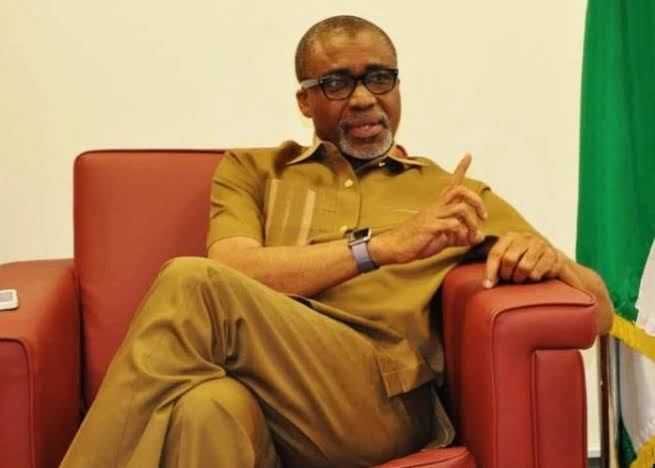
The Coalition for Nigeria has rejected the inclusion of the lawmaker representing Abia-South, Enyinnaya Abaribe, in the Senate’s adhoc committee on security challenges, describing it as an “abomination”.
The group alleges that there are overwhelming evidence indicting Mr Abaribe as sponsor of proscribed Indigenous People of Biafra (IPOB) and a known ally of its fugitive leader, Nnamdi Kanu.
Speaking at a press conference in Abuja on Wednesday, Convener/National President, Patriot Sabo Odeh, said it is morally unacceptable, an attempt which may jeopardise the military with the inclusion of Abaribe, a “known terrorist sympathiser”.
Recall that the Abia lawmaker stood in as shorty for Kanu in 2017 and only recently called on President Muhammadu Buhari to resign over security concerns.
Abaribe shouldn’t be placed in such critical position, as the Coalition believes that he has openly displayed hatred, disdain and total lack of patriotism in his financially induced sponsorship of bills and motions to pull the administration down.
The group, therefore, said it totally rejects the Senator Abaribe led committee, which according to them is “ a charade, premeditated evil and a clear sign that the Senate is out to ruin the efforts of the Buhari led administration”.
Read full statement below:
Gentlemen of the press, we have cause to invite you here today because that which should not be mentioned has been named. An abomination has been committed.
What we are talking about is the inauguration of Senator Eyinaya Abaribe as a member of the Senate ad-hoc Committee on Security Challenges. This is an aberration knowing this federal lawmaker’s role in the insecurity plaguing the country.
Going by court documents that showed he stood surety for a fugitive terrorist Senator Abaribe is a known terrorist sponsor and an unrepentant one at that. He stood surety for a terrorist kingpin in the name of Nnamdi Kanu who jumped bail in Nigeria and working from abroad to destabilize the country.
For a man who could back a terrorist in court, one can only wonder at the level and nature of support he has offered members of the terrorist Indigenous People of Biafra (IPOB) in the background.
As proof that he is unrepentant, Senator Abaribe only recently abused the sanctity of a parliamentary chamber when he used the Senate call for the resignation of President Muhammadu Buhari. We later found out that rather than being a response to any security situation, the senator’s call was ploy to effect regime change to facilitate the enthronement of a pro-IPOB government.
Abaribe has shown his open hatred, disdain and total lack of patriotism in his financially induced sponsorship of bills and motions to pull the administration down.
This is the man that Senator Ahmed Lawan, the Senate President has deemed necessary to head a sensitive national assignment like the ad-hoc Committee to review security issues in Nigeria.
This is quite unfortunate and a clear sign that the Senate has failed this nation..
The nation cannot survive if such treachery is rewarded with a sensitive security appointment as the senate has done.
It is even more dangerous when Security Chiefs are to interact with the committee and make their plans known to the Senate on how they are confronting the issues of insurgency which Abaribe’s group, IPOB has contributed largely to in the country. There is every reason to think, know and believe without being told that it will be as good as the security agencies exposing her plans to IPOB and Boko Haram terrorists.
We consequently and out rightly and totally reject the Senator Abaribe led committee as inaugurated by the Senate. It is a charade, premeditated evil and a clear sign that the Senate is out to ruin the efforts of the Buhari led administration. The committee can only make pro-terrorist findings and come up with recommendations that will worsen the security situation in Nigeria in a way that favours the balkanization of the county in line with IPOB’s manifesto.
Therefore we demand that Senator Abaribe be excluded from the committee immediately.
If the Senate President fails to do that then Nigerians should not bother herself with the committee as it will yield no result but another jamboree to cover the 37 billion naira being expended on renovation of office complex by the National Assembly.
Sanwo-olu dragged to court over Okada ban
By Bukola Olasanmi
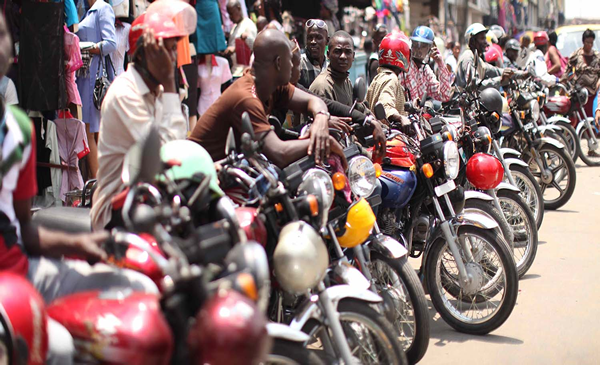
Activist and lawyer, Mr. Tope Akinyode, has sued the Lagos State Governor, Babajide Sanwo-Olu, for banning commercial motorcycles otherwise known as Okada, and commercial tricycles in six Local Government Areas and nine Local Council Development Areas.
Akinyode also joined the Lagos State Government, the state Attorney-General, the Speaker and the House of Assembly in the suit, The PUNCH reports.
In the suit with number, TEMP/5013/2020, Akinyode, who is also the National President of Revolutionary Lawyer’s Forum, asked the Ikeja State High Court to declare that the restriction on Okada and Keke NAPEP was illegal and at variance with sections 41 and 44 of the 1999 Constitution.
He is also seeking an order of interim injunction restraining the respondents or their agents from enforcing the Transport Sector and Reform Law, 2017.
The lawyer prayed the court to restrain the respondents and their agents perpetually from enforcing the Transport Sector and Reform Law, 2017.
The activist said in a supporting affidavit in support of the motion on notice that the enforcement of the new law had caused serious traffic congestion and untold hardship to himself and the people of Lagos.
He said the constitution guarantees freedom of movement and the right to own property and it would be wrong to criminalise the use of Okada and NAPEP.
The state government had on February 1, commenced enforcement of the extant Transport Sector Reform Law 2018 banning operations of motorcycles and tricycles in some LGAs and LCDAs and restricted them from some highways, bridges, and roads.
The move has been criticised by a large section of Lagosians who have had to trek for hours to get to their respective destinations.
Atiku speaks on Buhari’s claim on Boko Haram
 By Bukola Olasanmi
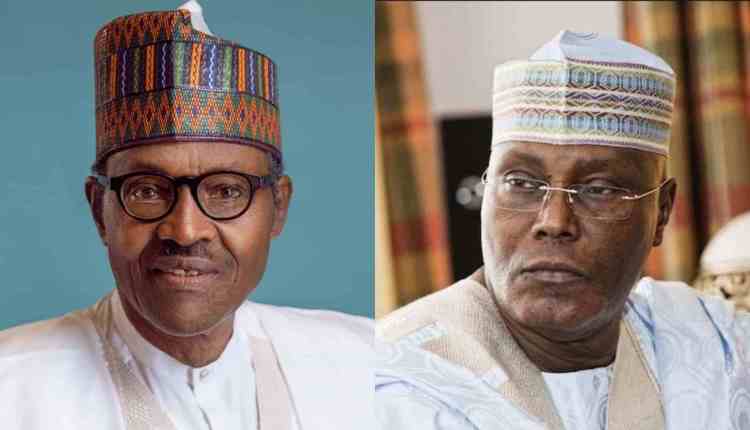
The presidential candidate of Peoples Democratic Party in the 2019 presidential election, Atiku Abubakar, has faulted claims by the President, Major General Muhammadu Buhari (retd.), that more Muslims are killed by Boko Haram.
Atiku made his position known in a tweet on Wednesday.
While replying to a report on Buhari’s claim, Atiku tackled Buhari for being concerned with the religion of the victims.
He said the activities of Boko Haram should be condemned outrightly regardless of the victims’ faith.
“We mustn’t rationalise killings. Whether Christian, Muslim, Traditionalist, or Atheist, the killing of any human being, by Boko Haram, or any misguided group is wrong and should be condemned unequivocally. There is no compulsion in religion. Only love,” Atiku tweeted.
The President had claimed that it is not true that the Boko Haram insurgency had claimed the lives of more Christians than Muslims.
He argued that the contrary was the case, insisting that “90 per cent” of deaths from attacks by the terrorists were Muslims.
Buhari gave his position in an op-ed published in Speaking Out, a guest opinion column for Christianity Today, a United States-based magazine.
The op-ed was a tribute to the Michika Local Government Area Chairman of the Christian Association of Nigeria in Adamawa State, the late Pastor Lawan Andimi.
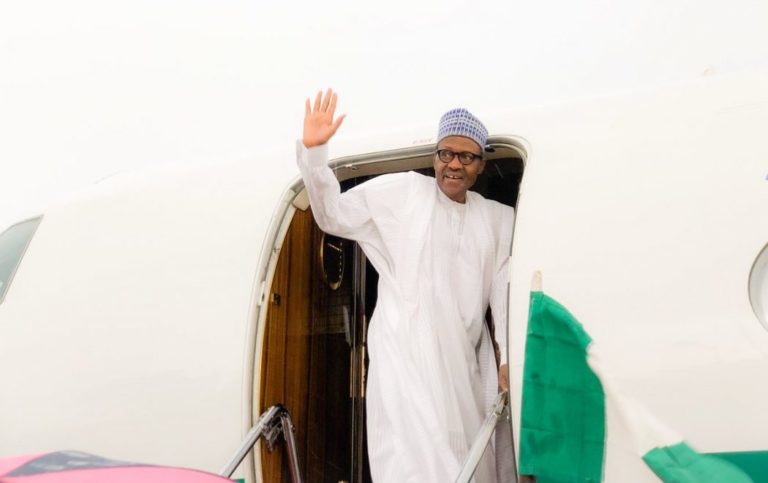
PMB: UK based Nigerian think tank expresses hope, lauds efforts towards national peace, stability
By Bukola Olasanmi
The Consultative Assembly of Arise Nigeria (UK) has expressed optimism that the menace of insecurity in Nigeria will soon become a thing of the past.
The group also lauded the efforts by the president and other security chiefs towards national peace and stability of the country.
Arise Nigeria, UK made this known after a tentative review of the governance under the administration of President Muhammadu Buhari (May 29 to January 31st, 2020); current tensions generated by insecurities.
The body also passed a Vote of confidence in Mr. President stimulated by prospects of analytical economic growth parameters on Nigeria and efforts towards national peace, stability and cohesion.
This was contained in a communiqué jointly singed by Dr. Stanley Ojua, Chairman, Communiqué Drafting Committee, Arthur Chukwuemeka Jnr, Secretary and Rosemary Olarewaju, Member at the end of the meeting.
The communiqué reads below.
The Arise Nigeria, United Kingdom (UK) is a Non-Governmental Organization (NGO) based in the United Kingdom. It is an assemblage of Nigerians in diaspora from diverse persuasions’ including professions, technocrats, bureaucrats’, politicians and international businessmen and women resident in the United Kingdom.
Arise Nigeria (UK) functions as a platform for members to meticulously engage in impartial, robust economic analyses, assess development paradigms, and ginger mutual interactions among members of the group. It is centered on issues of leadership, governance and development as it affects our home country, Nigeria.
It is an intellectual and analytical think-tank of Nigerians in Diaspora who after consideration and painstaking deliberations national matters, offer interventions, suggestions and recommendations. This is done periodically after the interspace of six months.
However, the regularity of our assemblage in-whole is naturally and expectedly disrupted at this season by the activities of end of year and the New Year festivities, usually marked by vacations, holidays and travels by a massive number of members. It is a reality further made complex by Nigeria’s 2019 general elections and the installation of new sets of democratic leaders at all tiers of government in the fifth civilian to civilian democratic transition of Nigeria since 1999.
Despite the scenario painted above, Arise Nigeria, UK recently met in the United Kingdom under the convergence auspices of a consultative symposium, comprising eminent personalities, which is by all yardstick, is a fair representation of the full House.
The deliberations focused on some recurrent/subsisting vital and sensitive national issues. These matters, enumerated above have been the concerns of Nigerians, as President Muhammadu Buhari navigates ambitiously into the #NextLevel of his administration, having spent the first six months of his second term in office.
We also analyzed the tensions generated by resurgent insecurities around the country; the fierce interplay of bipartisan forces and the ensuing heat and tensions deposited on the polity. After deliberations, the Arise Nigeria, UK observed, recommended and adopted some resolutions, elucidated as follows;
(a) At the inception of the first tenure of President Buhari, the government was confronted with a myriad of teething national problems, which gravely threatened, national cohesion, unity, peace and progress.
These multiple challenges ranged from a very weak or recessed economy; high youth unemployment; deficit social infrastructures; the bungled privatization in unbundling of the power sector, leading to poor electricity generation and distribution; high inflation; drastic drop in crude oil exploration in the Niger Delta; unstable prices of crude oil in the international market, pervasive and endemic corruption in the system.
Nigeria was also mired in hyperbolic and multi-dimension insecurity threats, like Militancy in the Niger Delta; Boko Haram threats/insurgency in the Northeast; armed banditry in the Northwest; restiveness from separatists’ agitation movements, herdsmen/farmers clashes and internal armed conflicts from a retinue of other national challenges.
In the past four years, the President Buhari administration has either vanquished or ameliorated some of these problems/challenges or stagnated or which have formed the bedrock of current problems in the country. It is regrettable that some of these malaises have shown faint shadows in Mr. President’s the second term, much as the positives have also shadowed.
Arise Nigeria, UK , observed a resilient character in the re-emergence of some of these problems especially completely surmounting the challenges posed by armed criminalities in Nigeria by this administration.
Of particular note, Boko Harm/ Islamic State West Africa Province (ISWAP) terrorism; herdsmen mercenary killings, armed banditry, kidnapping, widespread armed robbery and sundry other hi-tech-crimes have continued to sporadically disrupt the peace and security of our people, in permeating continuous social and; public disorder in Nigeria.
Arise Nigeria, UK also examined the efforts and progress (preceding and present) by the administration of President Buhari in overcoming these national malaises. It has concentrated energy and enormous national resources to extinguish all manner of insecurity threats in the country, et ceteral.
The future of Nigeria, as a country is secured for prosperity. Nigeria’s external reserves today (2019) stands at US$42.5 billion from US$23 billion in October 2016. These are reflective of favourable changes.
Excitingly too, extra measures have been taken to avoid pitfalls of the past on delays in budget preparations and implementation. We have seen the timely signing of the 2020 Appropriation Bill of N10. 594 trillion into Law, on December 17, 2019 before the beginning of another fiscal year. And a back-up law, Finance Act on January 13,2020, to support its expeditious implementation. These are plausible signals of good planning for optimum results.
On insecurities, the FGN has also taken steps to intensify security for the lives and property of all Nigerians irrespective of wherever they reside in the country. The armories of the Nigerian military have been constantly replenished.
In the past three years, domestically built armoured vehicles and surveillance equipment. Mid -January 2020, Chief of Air Staff (CAS), Air Marshal Sadique Abubakar admitted collecting two helicopter gunships for the Nigerian Air Force to battle terrorism and other insurgencies.
The 12 Tucano fighter jets ordered from America will arrive the shores of Nigeria in 2020 or latest, early 2021. There is actually massive weaponry restocking of the Nigerian Military generally to counter threats of insecurities such as the delivery of South African Paramount Marauder vehicles etc.
Nigerian Army Vehicle Manufacturing Company (NAVMC) has formally commissioned in January 2020, prototype 4×4 armoured personnel carrier and mine roller gear and assorted other types, which requires only N1. Billion ($2.7 million) to mass produce within the shortest possible time.
Furthermore, Defence Industries Corporation of Nigeria (DICON), Kaduna state and similar military schools of artilleries in the country have been resuscitated and functional. These are manufacturing various small and light ammunitions to assist the military combat Boko Haram/ISWAP terrorism in Nigeria.
Surely, these are signposts of reinvigorated Armed Forces of Nigeria and other security agencies to tackle subsisting and emerging insecurities in the country. The Government is conscious of the urgency in quenching the fires of insurgency and other security threats.
The anti-graft agencies have continued to pursue their mandate of checkmating assorted financial crimes in Nigeria. The Special Courts Bill being contemplated are some of the measures. Therefore, the 2019 Corruption Perception Index rating of Nigeria by Transparency Interventional (TI) is not a true reflection of realities on ground. The TI report is patently false, devoid of substance, but smacks of a rehearsed, influenced or induced and accordingly discountenanced as a nullity.
Thus far, Arise Nigeria, UK endorsed the following recommendations for public consumption and action by the appropriate authorities. It unanimously frowned at acts or extreme combativeness from individuals, particularly politicians and institutional leaders capable of triggering or inflaming passions of hate, discord and disunity which are likely to endanger our collective peace and progress.
Arise Nigeria, UK resolved to appeal to all Nigerians unpacified, aggrieved, dissatisfied and disenchanted with manifestations in the system to eschew bitterness. We urge all aggrieved persons to pray and support our leaders to serve the country better as another New Year begins.
There should be oneness and unity of purpose in our perceptions, interpretation and reactions to issues of national flavor, especially insecurities. Misguided, reckless and sentimental comments on such sensitive matters could aggravate the problem and blur the genuine search for solutions.
Therefore, Arise Nigeria, UK deemed the resolutions of Wednesday, January 29, 2020, by the two chambers of the National Assembly (NASS) as riled by impulsive anger and vexation.
The NASS resolution which urged Mr. President to resign because of failing security in Nigeria and or the campaign for the voluntary retirement of Service and Security Chiefs, or the canvassed sudden sack of all security Heads in Nigeria/ withdrawal of troops from the warfront on account of observable lapses or renewed insecurities in parts of the country was a decision hastily adopted by the leaders of the National Assembly and parliamentarians.
In the interim, while we urge all parties to look inward to take make an in-depth and critical scrutiny of the problems, the resolutions should be revisited, by whatever means possible. We recommended that it should be retouched or possibly, rescinded in order to enthrone a cordial atmosphere to advance a unified common front in thoughts and actions against enemies of the state.
The meeting particularly observed with great concern, the infusion of partisan sentiments in the course of the debates by parliament. We suggested that parliamentarians should be more circumspect in debating and adopting motions bothering on national security matters as done in other climes to avoid actions that would precipitate an implosion in the system.
Consequently, we implore all and sundry, to imbibe or emulate the model of patriotism and selflessness exhibited by parliamentarians of the United Kingdom’s Parliament and or, the American Congress each time issues of national insecurity crops up in the parliament. Every member of parliament supports the national cause, as against his political party logo.
For instance, in the recent debates by American House of Representatives’ to determine whether US would confront the Republic of Iran with war over the escalating tensions and counter-reactions generated by the killing of Gen. Qasem Soleimani, in the Middle East, congress placed the American agenda topmost. They added weight to the debate not as Democrats or Republican parliamentarians.
Rep. Max Rose, representing New York’s 11th District from the opposition democrats declared bluntly, that “ I refuse to play politics with questions of war and peace.” Likewise , Rep. Thomas Massie, representing Northern Kentucky district from same Republican party with President Donald Trump declared his opposition to war with Iran thus; “this vote is about exercising our constitutional authority, but more importantly, our moral obligation to decide when and where our troops are going to be asked to give their lives.” In all deliberations, the American spirit was rekindled above partisan lines.
Much more, when in December 2001, the UK Parliament approved the Anti-Terrorism, Crime and Security Act, after the 9/11 terrorists’ attacks on World Trade Towers and the Pentagon House in faraway America. It permitted the detention without trial of foreigners suspected of terrorism, which infringes on fundamental human rights, and connotes racial undertones, the parliament weighed the larger interest of the United Kingdom.
Arise Nigeria, UK resolved that it was ultra vires and counter-productive to pass a resolution calling for the resignation of the President and sack of Service and Security Chiefs. These could invoke dire consequences of uncontrollable dimensions on the counter-insurgency operations in Nigeria.
Rather, NASS should dispassionately explore their powers to ensure review/review and full implementation of Defence budgets, approve special requests by the Nigerian Army like granting approval for Nigerian Army Aviation wing and liaise with the ministry of Budget and National Planning to vacate the Army from the existing budget ceiling or allocations to enhance greater performance in their operations nationwide.
The NASS must look into, cooperate, explore areas of intervention/facilitation of the COAS, Lt.Gen. TY Buratai’s passionate pleas of sourcing for N1 billion ($2.7 million) investment into NAVMC, to build vehicles to combat terrorists and insurgents.
These remain the only antidotes to appropriately empower our military and other securities to deliver excellent results in countering insecurity threats to Nigerians. We therefore, strongly recommend the immediate submission to NASS a supplementary budget by the executive to tackle these concerns so as to reinforce /fortify our security agents with the needed equipment and combat prowess against armed criminals.
Arise Nigeria, UK encourages benign and impartially committed inclinations by Nigerian leaders at all levels when interrogating issues of national security. We objected to the overt resort to the personal prisms of ego-eccentric display of anger and exaggerated misinterpretations of germane concerns by chasing shadows, instead of substance.
Arise Nigeria, UK, convincingly passes a vote of confidence on President Muhammadu Buhari for his dedication and patriotic zeal/actions in tackling terrorism and insurrections in Nigeria.
We believe in his demonstrated abiding faith to surmount emerging insecurity threats in the country. We have total faith in the competence of Mr. President to address emerging insecurities in Nigeria, as he has repeatedly proven in the past.
Cooperation and support of Mr. President at this critical time is essential to assist him succeed in the war against enemies of Nigeria; but combative confrontations of his leadership is prone to dreary consequences on the polity and the temptation should be resisted. Mr. President remains the on only symbol and weapon the country needs to win the wars-imposed Nigerians and Nigeria by her enemies.
Also importantly, the performances of the serving Service and Security Chiefs so far, in combating the multifaceted insurgencies and insurrections in Nigeria have earned them our vote of confidence. And relevant authorities should take immediate actions towards energizing their operations, inspire courage, motivate the Nigerian military and other security agencies into greater performance to victoriously fight our battles in the trenches.
Davido buys fiancée, Chioma early valentine gift

By Aishat Salihu
Nigerian singer, Davido Adeleke popularly known as Davido OBO, has bought his fiancée, Chioma Rowland, a wristwatch as an early Valentine’s gift.
In a post shared on his Instastories on Wednesday, the singer, who is currently in Dubai with Chioma and their son, Ifeanyi, revealed the picture of the wristwatch.
“Happy early Valentine my love @thechefchi,” he said.
Meanwhile, the designer wristwatch, a Patek Philippe Aquanaut Luce Watch according to WatchesOff5th, is estimated to cost $45,999 which is about N16M.