Home Blog Page 2567

Jungle Justice: Soldier who killed two fellow soldiers shot dead

0
Image may contain: 1 person
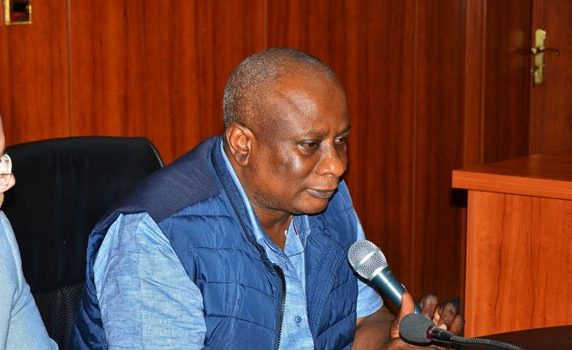
Corporal Robert Banya

Corporal Robert Banya, a Malawi Defence Forces MDF soldier who brutally killed fellow soldiers at Tsangano yesterday, has been shot dead by MDF soldiers at Mphate in Ntcheu last night.

Banya was seen around the Boma moving around with the pistol in his hand. As MDF soldiers approached him, he fired some bullets at them, and in retaliation, he was shot in the back of the head twice, his chest three times and two times in the stomach. He died on the spot.

His body was then taken to the Ntcheu District Hospital mortuary.

The operation was conducted by special team of MDF soldiers along with police detectives. At the time of his killing, Banya had a pistol with 13 rounds of live ammunition hid.

The deceased yesterday killed his fellow soldiers, Corporal Keston Mtambo and Corporal Gift Magombo, for preventing him from roughing his ex girlfriend.

Boko Haram: How Nigeria can effectively win her counter-terrorism crusade – Edward Kallon

0
Last week, Nigeria ‘s who-is-who in the realm of humanitarian affairs converged in Maiduguri, Borno state, for a 3-day “International Workshop on Improving Civil – Security Cooperation” where participants brainstormed on how to foster a better working relationship among all stakeholders.
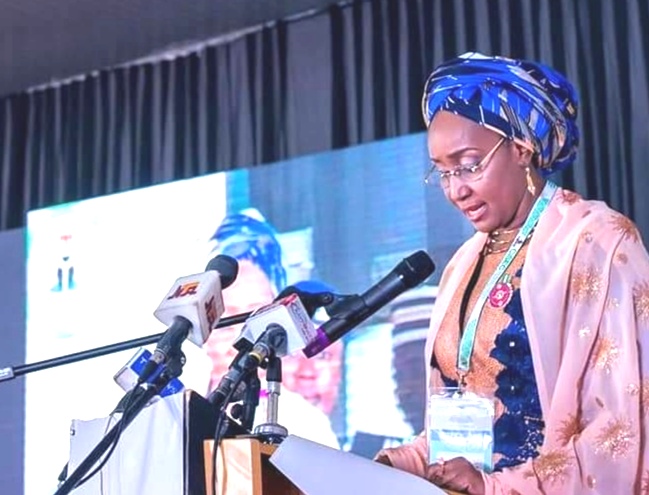
The event was convened by the minister of the newly created Ministry of Humanitarian Affairs, Disaster Management and Social Development, Saadatu Umar-Faruq, and hosted by Borno state governor, Professor Babagana Zulum.
The President of Nigeria, Muhammadu Buhari was represented by his Defence Minister Bashir Magashi, a retired Major General.
Of course, such an event is expected to be colored with speeches from the galaxy of the stakeholders in attendance. The summit which also comes as a kind of training workshop for participants also had journalists and civil society representatives in attendance.
Though the minister, as well as the rep of the president and the host governor, who led other representatives of other state governors, had delivered speeches hammering on the need for robust coordination amongst humanitarian actors, the keynote speech delivered by UN Humanitarian Coordinator in Nigeria, Edward Kallon stood out amongst others. Not necessary because Mr. Kallon has a towering height or because he represents the world’s most powerful nongovernmental, but his speech stood out because he spoke the cold hard fact about the situation in the Northeast states.
Mr. Kallon felt these are “not the time for fiction.”
His overtness about the situation in Borno state particular sent chill down the line of all those who had listened to him.
His revelations about the current state of affairs as pertains to the counterinsurgency efforts of the Nigerian government are quite mind-boggling.
Mr Kallon’s presentation continues below:
Working in a counter-terrorism environment.
“Most of us here are familiar with working in slow-onset emergencies, natural disasters, and complex emergencies. However, working in a counter-terrorism environment with a functioning Government like Nigeria requires: (i) constructive engagement, transparency and information sharing; (ii) adapting strategies and global best practices to the counter-terrorism environment; (iii) needs-based, principled humanitarian action that hold each other accountable; (iv) due recognition of the sovereignty of the Government; and (v) joint risk analysis and mitigation.
“We must pursue a coordinated joint security analysis and establish systematic information sharing with consequences for non-adherence to civil-military coordination. The humanitarian policy of stay and deliver in northeast Nigeria remain challenged and requires enhanced risk mitigation, maintaining access, coordination, enhancing advocacy and more flexible funding.
State-level leadership and ownership critical
“Logistics constraints to deliver humanitarian cargo must be overcome to ensure an effective response.
“We are here today because we share common goals of saving lives and protecting people.
“We want to recognize the role of the military and security forces in the fight against terrorism and insecurity in the country. We should always remember that in 2015 and 2016 when the Nigeria armed forces liberated most areas of Borno State including Bama, Monguno, and Rann. They were the first providers of basic humanitarian services. They carried out polio vaccination and were amongst the first to fight against severe acute malnutrition. In Bama, for example, every single day, dozens of mothers and children would cross the road separating the IDP camp from the military-run clinic where they knew they could find the support they urgently needed.
“The crisis, which once affected six states, is now contained to the three states of Borno, Adamawa, and Yobe. The international community joined all Nigerian partners to rapidly scale-up the humanitarian response in accessible LGA and provided humanitarian assistance to 5.6 million people in 2017; 5.5 million people in 2018 and over 4 million in 2019 as of October. The Nigerian Armed Forces in the northeast have been a critical component in ensuring a safe and secure environment to enable humanitarian and development partners to carry out their work.
 “A continuation of the military effort to deal with hardcore insurgents remains critical. However, this must be complemented with a political process /peacebuilding to find a durable solution to this crisis. Investments in addressing the root causes of the crisis including prolonged development deficit, human rights and Governance deficit, multi-dimensional poverty, and climate vulnerabilities are also essential. There are no humanitarian solutions to humanitarian problems. We must prioritize prevention always, development wherever possible and humanitarian action when necessary.
”     The crisis, which once affected six states, is now contained to the three states of Borno, Adamawa, and Yobe…. “
“Today and over the next three days, while we will be looking at processes, procedures, and frameworks, please keep in mind that these are designed to support our common goals, and think about the impact they have on every single person receiving aid through these old or new systems we will be discussing here.
“Our priorities should remain to see how we can collectively bring back normalcy in their lives, improve their well-being, living standards, and coping mechanisms. The collectiveness and complementarity of the work we do will be key to saving many more lives, building the resilience of others and fostering recovery, stabilization, reconstruction, and development in a safer environment.”
Improving Civil-Security “Cooperation and rebuilding trust is our priority at a time when Nigeria is facing multi-faceted and multi-dimensional humanitarian and development challenges in various parts of the country.
“Having reached its 10th year, the protracted crisis in the north-eastern states of Borno, Adamawa, and Yobe remains the largest humanitarian crisis, with over 7 million people still in need of humanitarian assistance. This crisis deserves our sustained attention and renewed commitment.
“Over the past ten years, over 35,000 people have lost their lives in this crisis. About 14,000 were civilians, but many others were members of the Armed Forces of Nigeria.
“The crisis has also had a heavy toll on aid workers and the past year has marked a turning point in our response. Aid workers, whether they are working for the United Nations, international or national NGOs or ministries, departments, and agencies, have increasingly become the target of attacks by non-state armed groups, criminals and petty thieves. Ten aid workers, all Nigerians, have died as a result of violence perpetrated by Boko Haram and other non-state armed groups in the past 18 months. Six of our colleagues are still held, hostage.
“Though we are still saving the lives of many every single day, we are also working within a continuously shrinking humanitarian space, and have reduced access to vulnerable people due to insecurity and a complex operational environment. As of this year, two more LGAs have become out-of-reach for the humanitarian community. While we strive to improve the quality of services to people we reach, there are now an estimated 1.2 million people who cannot be reached by the humanitarian community and represent an estimated 50 percent increase in geographic space and a 30 percent increase in numbers of people in comparison to last year.
“Preserving humanitarian access to the affected population within the current context of the BAY states will continue to be the most critical and challenging element to ensuring a response commensurate to the needs in 2020 and beyond.
“Armed conflicts may not be preventable, but there are rules that apply, and they have limits. Adherence and observation of laws of armed conflict is a must. Pain and losses cannot be avoided but they can be reduced.
“Nigeria, as a sovereign state, is faced with the continued fragmentation of different factions of NSAGs, the increase in criminal activities and use of asymmetrical warfare, as well as complex conflict dynamics.
“More than ever, it will be essential to understand these challenges and work with all partners. It is crucial for all of us to do our utmost to foster a principled, effective and efficient response to people’s suffering and to strife for unfettered and safe humanitarian access to people in need.
Minister of Humanitarian Affairs
and Social Development, Saadatu Umar-Farouq , convened the Workshop as part of efforts to engender a harmonised the humanitarian service in the Northeast

———————–

“Despite challenges, in 2019, the humanitarian community has so far provided critical and life-saving assistance to more than 4 million people in Borno, Adamawa and Yobe states, most of whom are women and children. This humanitarian assistance ranges from food, protection, water, shelter, and sanitation, to medicine, education and agricultural support, and is being delivered to vulnerable women, children and men across the three states.

“Together with the Government, we have built a transparent humanitarian response.
“Together we have established civil-military coordination mechanisms where we regularly share information, promote common situational awareness, discuss operational issues and troubleshoot them to the best of our abilities, but also exchange information on security incidents and their consequences on the civilian populations in Borno, Yobe and Adamawa states. These coordination mechanisms have been established at various levels: national, State and LGA levels.
“Over 700 people, half of them from the Armed Forces, have developed critical skills and capacities to work in complex humanitarian situations. They were trained by our OCHA colleagues as well as other partners to explore new ways of fostering people’s rights and ensure their protection in some of the most difficult asymmetric conflict situations in the world today.
“It is only by a better understanding of each other’s work, our common rules, the rights we aspire to foster for all Nigerians and the protection they deserve, that we will be able to continue making progress in our collective effort to bring back normalcy in the three most affected states.
“The establishment of the Ministry of Humanitarian Affairs, Disaster Management and Social Development is a clear demonstration that the Government of Nigeria is committed to enhancing coordination and creating a conducive environment for humanitarian assistance, guided by our common principles.
(From left) Minister of Humanitarian Affairs, Umar Farouq, Defence Minister, Magashi, Borno Governor,
Professor Babagana Zulum

—————————-
“I welcome the initiative and leadership of the Ministry in organizing this workshop in Maiduguri and enabling us to look at specific aspects of our collective work in some of the most challenging contexts.
“I am confident that the work we are about to embark on over the next three days will generate further integrated frameworks between the international community and national partners, in symbiosis with other mechanisms facilitating greater participation of local authorities, local communities and affected people.
“The seven-point agenda presented by the Humanitarian Coordinator last week presents an opportunity. This framework, which builds on our collective, existing agreed mechanisms, is needed to address the recurrent concerns of the Government, Military and Humanitarian actors in northeast Nigeria with the overall objective to work towards building a stronger partnership through constructive engagement at all levels.
“I am confident that discussions will build on the ‘North-East Nigeria-Specific Guidance on the Interaction and Coordination between the Humanitarian Country Team and the Nigerian Armed Forces or the Multinational Joint Task Force’ that was developed by many in this room a while ago.
“I am confident that all of us will try to better understand the modalities through which we have chosen to operate after a thorough analysis of the topography and terrain – from both the military and the humanitarian perspectives. An analysis of our strengths, weakness, opportunities, and threat will be useful.
“Our role is to make sure nobody in the north-east remains dependent on humanitarian assistance to survive and that we can help local communities help themselves and their neighbors.
“This is the first time that we, as civil authorities, as military, as humanitarian actors, national and international at all levels, are present together in one room. We must seize the opportunity offered this week to build the path for renewed and increased exchanges between all actors, under the leadership of the Government of Nigeria. There could be no better time than now, with one of our own, a true humanitarian, appointed as the first Minister of Humanitarian Affairs, Disaster Management, and Social Development.
“In conclusion, as your Humanitarian Coordinator, I count on you for your continued support to the people of Borno, Yobe and Adamawa states. Let us work together to save lives and contribute to restoring peace and stability to the region in the coming years with the joint goal of ending the crisis once and for all.”

Buratai Was Right, Nigeria Indeed Needs Counter Narratives, Prayers To Eliminate Terrorism in Nigeria

0

By Ibrahim Dahiru Danfulani

There is no doubt that the spiritual to a large extent, plays a big role in whatever happens in the physical realm.

And with the complexity of the fight against terrorism, Nigeria needs a lot of authentic religious education, counter narratives and prayers, done through spiritual warfare, to complete the successes recorded in the fight against terrorism.

That more prominent voices from the clergy, lawyers and ordinary Nigerians are beginning to key into the need for counter extremism/radicalization and prayers, shows that we might just be getting to the end of ugly episodes of criminality expressed through insurgency or terrorism.

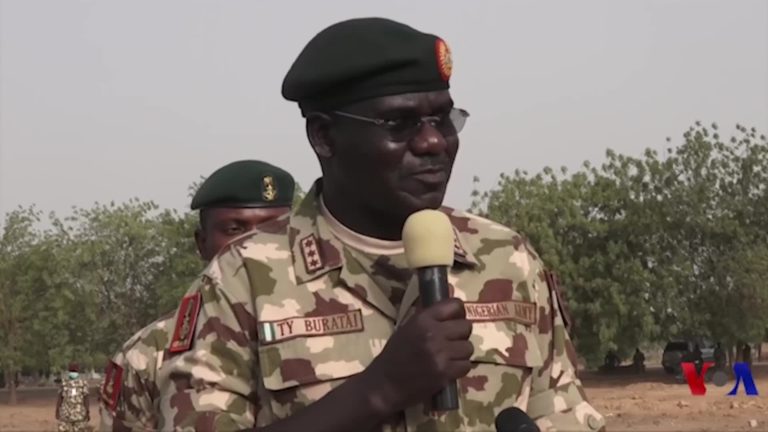
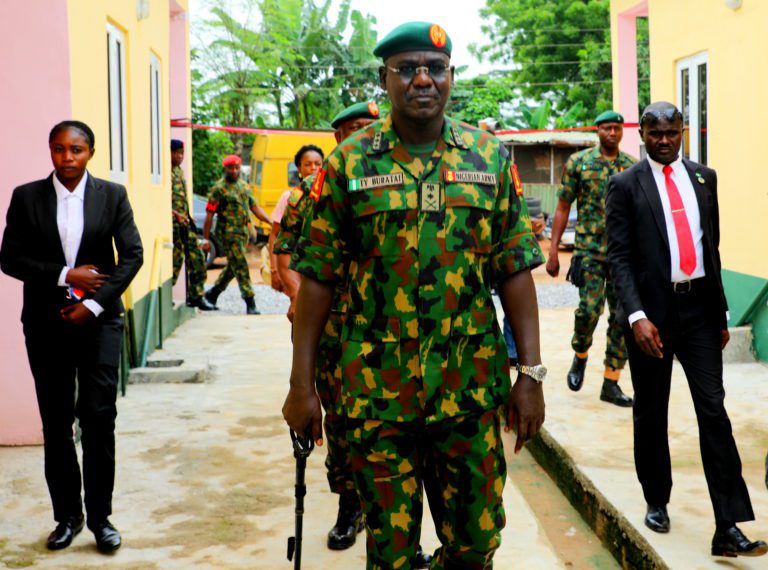
The chief of Army Staff, Lieutenant General Tukur Yusufu Buratai in his wisdom, inspired for the Army on Monday 30th September 2019, a Spiritual Warfare Seminar with the theme, ‘Countering Insurgency and Violent Extremism in Nigeria through Spiritual Warfare’, at the Nigerian Army Resource Center, Asokoro, Abuja.

The Chief of Army Staff (COAS), Lt. General Tukur Yusufu Buratai, was represented at the occasion by the Chief of Administration at Army headquarters, Maj General MS Yusuf.

Speaking to participants which included some religious leaders in Abuja, Directors of Chaplain Services Roman Catholic and Protestant as well as Islamic Affairs of the Army, and other Chaplains and Imams drawn from all Army formations, units and operations theatres across the country, the COAS said there was need for religious leaders, families and groups to join the fight against terrorism, and other security challenges through spiritual means by reorienting the people against warped and senseless ideologies.

He said, “It is easier to defeat Boko Haram and ISWAP terrorists than their ideology because while we degrade the terrorists and their havens, the narrative of the ideology grows the group”.

“Therefore, communities, families and groups should join in the fight and narratives to reject and prevent the ideologies of the terrorists and extremist groups.

“Religious bodies and organizations in particular who interface regularly with the grassroots should be in the forefront of this spiritual battle and fashion out ways of stepping up their roles.

Lt. Gen TY Buratai added, “The fight against terrorism, against BHT and ISWAP as well as other security threats cannot be left to the troops in the battlefield alone. Yes we will do out duties but the need to tackle terrorists through spiritual warfare and reorientating the followers against the ideology is also a necessity”

Architect Abu Jabir Abdullahi Penabdul delivered a lecture on the Islamic Perspective of tackling and containing the activities of violent extremists through Islamic injunction according to the Holy Quran while Very Rev Dr Uche Obodoechina delivered the lecture on countering insurgency and violent extremism, through the preachings and teaching of Biblical/Christian injunctions.

That seminar, is beginning to yield tremendous results, with the recent trending video of popular Christian cleric, Apostle Johnson Suleiman who in a widely circulated video exposed plans of the terrorists and was optimistic that prayers will thwart same.

Excerpt of the video recording where apostle Suleiman said, – “Many soldiers are dying daily. God told me that Boko Haram are planning for black Christmas, I was asking the Lord what does that mean, the Lord said that’s not your business you need to pray for our soldiers in the North East pray for them against their enemies.”

Prior to that, a well attended Borno Spiritual Workshop brought to the fore hopes of a long term solution to the insurgency, through changing the mind set of potential recruits and even brainwashed followers of terrorist groups like Boko Haram, Islamic State of West Africa province and others alike.

The Chief of Army Staff (COAS), Lt. Gen. Tukur Buratai, at the Borno Spiritual Workshop, advocated for proper religious education and enlightenment to counter insurgency and violent extremism in the country.

Buratai at the one-day seminar organized by the Nigerian Army for community and religious leaders on countering narratives of terrorism and violent extremism. which had as its theme: “Countering Insurgency and Violent Extremism in Nigeria through Authentic Religious Enlightenment,” was organized by the Nigerian Army Directorate of Chaplain Services and Islamic Affairs.

Buratai, represented by Brig Gen S.G Mustafa, the Director of Islamic Affairs, said that religious and community leaders had a greater role to play in imparting correct, – not distorted religious knowledge on the people to change the narratives of the terrorists’ ideology.

He said that the Directorate of the Chaplain Services, which included the Protestant, Roman Catholic and Islamic Religious Affairs, were and are at the forefront of enlightening the people on the dangers of violent extremism and its attendant consequences.

In continuation of the noble efforts, the seminar is aimed at producing appropriate narratives to defeat the wrong religious ideologies used by the terrorists and insurgents’ groups to recruit and indoctrinate their followers in the society.

“It is a fall-out of the initial programme of counter narratives conducted in 2018, which generated enthusiasm from leaders in Borno State.

Due to the fact that Boko-Haram terrorism is ideological in nature, there is the need for intellectual discourses to counter extremist ideology by engaging them.

“The seminar will bring to the fore, the urgent need for our spiritual leaders in the Nigerian Army and civil organizations, to come up with modalities and framework through counter narratives in countering terrorism and wrong or warped religious ideologies,” he said.

Buratai added that the seminar would avail Islamic clerics and clergy, the opportunities to identify religious ethos that would bring the faiths together to promote tolerance, peace, understanding, unity, national cohesion and sustainable development.

The army chief commended Borno State Government, community and religious leaders over their support to the counter-terrorism efforts and the de-radicalization process.

On his part, Gov. Babagana Zulum of Borno called for prayers to help the military triumph in its campaign against insurgency, banditry and other criminality in the country. He enjoined religious leaders to rise to the occasion by preaching against the terrorists’ ideology and the unwarranted killings and destruction across the nation.

In line with the persistent calls of the Chief of Army Staff, Zulum, who was represented by Alhaji Galadima Zanna, the Permanent Secretary, Ministry of Religious Affairs, said such counter narratives, authentic preaching, enlightenment and prayers were/are imperative to end insurgency, terrorism and restore peace in the country.

While lauding the military over the successes recorded in the counter- insurgency campaign and peace restoration process, Zulum pledged continued support to the military.

Following criticism from a few who misunderstood Buratai’s call for prayers a well respected lawyer, Emmmanuel Osuagwu Ugochukwu had slammed such critics, describing them as mischievous.

The Civil Rights Lawyer in a statement issued on October 1, 2019, explained that the Chief of Army Staff’s call for prayers is a good one, in view of its potentials of completely ending insurgency.

In his patriotic statement, the lawyer said, “My attention has been dawn to a sensational headline in THE PUNCH NEWSPAPER publication of October 1, 2019 titled “Knocks as Buratai seeks prayers to defeat Boko Haram”.

“According to the PUNCH NEWSPAPER , “The Chief of Army Staff, Lt. Gen. Tukur Buratai, has said terrorism and terrorist groups could not be eliminated alone by the military unless religious bodies and organisations in the country come to the ‘forefront of the spiritual battle.’ According to the PUNCH, Buratai stated these on Monday in Abuja at a spiritual warfare seminar at the Nigerian Army Resource Centre, with the theme, ‘Countering insurgency and violent extremism in Nigeria through spiritual warfare.’

“Now, if not for mischief, how does the headline justify the goal of the seminar organized by the Nigerian Army yesterday? How does the entire speech of the Army Chief amount to seeking prayers to fight a physical war as portrayed by the PUNCH?

“The speech by the Army Chief, though represented by the CHIEF OF ARMY ADMINISTRATION Major Gen S.M YUSUF, never in anyway suggested using spiritualism to fight insurgency in the war front. Rather The Chief of Army Staff, Tukur Buratai, called on religious leaders to support the Nigerian Army in eradicating ideologies fueling insurgency in the country.

“What the Army Chief stated clearly was that aside eliminating the insurgents in the battlefield their ideologies must also be killed spiritually. Ideology is not a physical realm , it is a thought process and you do not kill ideas or ideology by physical war.

“In essence, the PUNCH PUBLICATION of OCTOBER 1, 2019 was an attempt to portray the Army Chief as suggesting the use of spiritualism in the actual battle field and thus try to tarnish his image.

“Nigerians are urged to ignore the unpatriotic and sensational headline of PUNCH NEWSPAPER as no where in the entire speech did the Army Chief suggest that spiritual method will now be used to fight in the battle field. Such publications are thus misleading.”

From such developments, it is clear that the Nigerian Army is blessed with a patriotic and visionary leader, poised at ensuring the total defeat of insurgency, that will leave Nigeria peaceful, prosperous and the envy of others.

All other religious leaders should emulate Apostle Suleiman Johnson and pray fervently for our nation, educate their followers against extremist/terrorist ideology because without security and peace, there won’t be meaningful progress and development.

Breaking: Kaigama takes over Abuja Metropolitan See as Cardinal Onaiyekan bows out

0

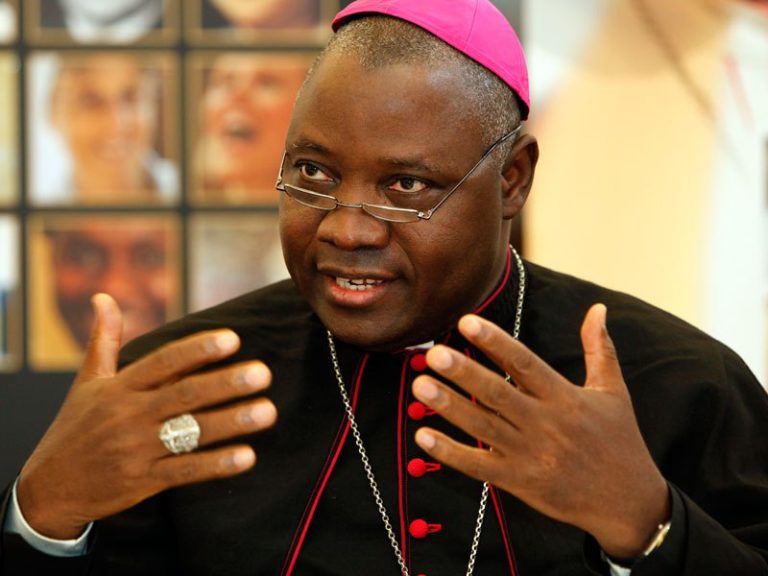
Pope Francis has ratified the appointment of Archbishop Ignatius Ayau Kaigama as the new Catholic Archbishop of Abuja. This follows the Pope’s acceptance of the retirement of His Eminence, John Cardinal Onaiyekan who clocked the retirement age of 75 on January 29, 2019.

Kaigama on March 11 earlier this year was announced by the Pope, who was represented by Apostolic Nuncio to Nigeria, Archbishop Antonio Guido Filipazzi, in Abuja during the opening ceremony of the first plenary meeting of the Catholic Bishops’ Conference of Nigeria (CBCN).

Filipazzi then named Kaigama as the Coadjutor archbishop of Abuja and administrator of Jos archdiocese, where he served as its chief Shepherd in the last 19 years.

The Chancellor of the Catholic Archdiocese, Abuja, Rev. Sebastian Musa, said on Saturday in a letter to the “Clergy, Religious and Lay Faithful” of the Archdiocese that the Pope has approved the retirement of Onaiyekan and ratification of Kaigama with immediate effects.

“The Holy Father, Pope Francis has accepted the retirement of His Eminence, John Cardinal Olorunfemi Onaiyekan as the Archbishop of the Catholic Archdiocese of Abuja and has appointed Archbishop Ignatius Ayau Kaigama as Archbishop of the Catholic Archdiocese of Abuja with effect from this announcement,” Musa said.

Who is Kaigama?

Kaigama was born in Kona, Taraba, on 31 July 1958. He studied for the priesthood at St. Augustine’s Seminary in Jos. He was ordained a priest on 6 June 1981. At the Pontifical Gregorian University, he earned a doctorate in theology in 1991.

Pope John Paul II appointed him bishop of the newly established Roman Catholic Diocese of Jalingo on 3 February 1994. He was consecrated as bishop on 23 April 1995.

The Bishop of Yola, Patrick Francis Sheehan OSA, was the principal consecrator, with co-consecrators Gregory Obinna Ochiagha, Bishop of Orlu, and Athanasius Atule Usuh, Bishop of Makurdi.

On 18 May 2000, Pope John Paul named Kaigama to succeed Gabriel Gonsum Ganaka as Archbishop of Jos.

Kaigama was President of the Nigerian Bishops Conference from 2012 to 2018 and President of the Episcopal Conference of West African Catholic Bishops. He is also chairman of the Plateau State-convened “Interreligious Committee for Peace”.

Together with the late Emir of Wase, Alhaji Haruna Abdullahi, he has been involved in promoting mutual understanding between Christians and Muslims. After the riots in Jos in January 2010, he calmed the situation and clarified the conflict in the international press.

On 25 July 2012, Pope Benedict XVI named Kaigama a member of the Pontifical Council for the Promotion of the New Evangelisation.

In 2014, the Catholic Bishops Conference in Nigeria supported legislation to make participation in a same-sex marriage a crime punishable by 14 years imprisonment. It noted the move as a “courageous act” and a “step in the right direction”.

Kaigama argued that the action was “in line with the moral and ethical values of the Nigerian and African cultures”, and blessed President Goodluck Jonathan for not bowing to international pressure: “To protect you and your administration against the conspiracy of the developed world to make our country and continent, the dumping ground for the promotion of immoral practices”.

Kaigama condemned foreign aid programs for a disproportionate emphasis on contraception. In 2014, he said: “In the first place, children die in infant mortality, in inter-tribal wars and diseases, but yet you come to say ‘decrease your population and we will give you economic help.’ We want food, we want education, we want good roads, healthcare. We are being given the wrong things and we are being asked to accept, simply because we are poor.”

Pope Francis named him Archbishop Coadjutor of Abuja on 11 March 2019 and he became Archbishop of Abuja when Pope Francis accepted the resignation of his predecessor, John Onaiyekan, on 9 November 2019.


Zimbabwe supends South African livestock import over disease fears

0

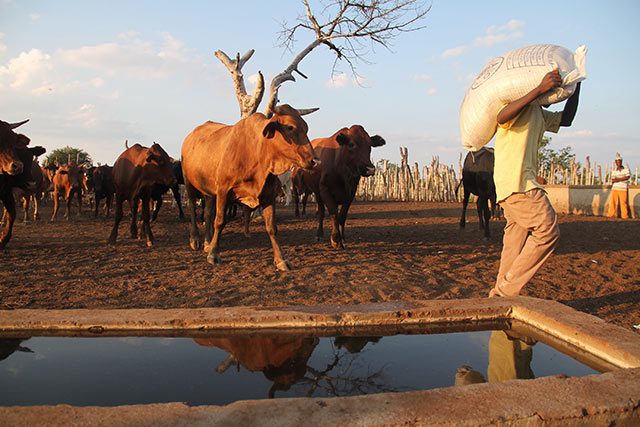
Zimbabwe has suspended imports of livestock and meat from South Africa for the second time this year after an outbreak of foot and mouth in the north of its neighbouring country.

In a statement on Friday, the agriculture ministry called the move “a precautionary measure designed to prevent the spread of the infection into Zimbabwe”.

In January, Zimbabwe joined Botswana and the Kingdom of eSwatini, formerly Swaziland, in suspending meat imports from South Africa while following the outbreak of the highly contagious foot and mouth disease.

Foot and mouth disease does not affect humans but poses a threat to cattle, goats and sheep.

The agriculture ministry said it had been notified by South African veterinary services that the latest outbreak had been identified at a farm in Limpopo province, close to the border with Zimbabwe.

Importation of live cattle, goats, sheep and pigs and related products had been suspended as authorities seek to identify the virus strain and extent of the outbreak, the ministry said.

Zimbabwe imports livestock from South Africa for breeding as well as meat products.

SOURCE: NEWS AGENCIES

Breaking: MKO’s personal physician Falomo is dead

0

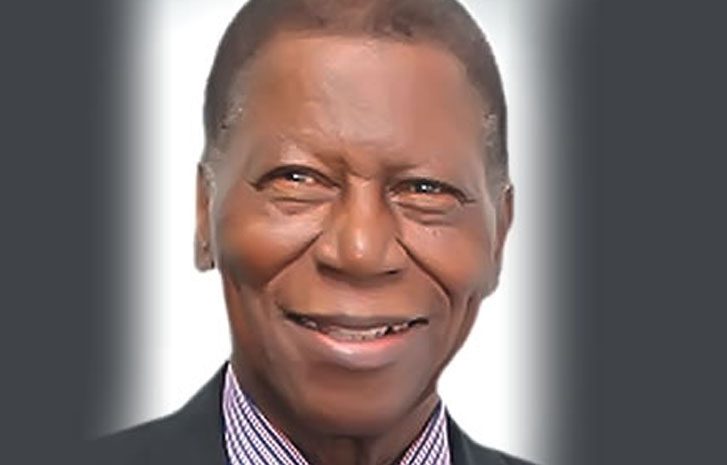
Dr. Ore Falomo, a personal physician to the the late acclaimed winner of June 12, 1993 presidential election, Chief Mashood Kashimawo Abiola, is dead.

The Nation newspaper reported that sources at his Maryland, Lagos hospital, said he died around 2am on Saturday, November 9, after a brief illness.

According to the report, the renowned doctor had many eminent Nigerians, top military leaders, monarchs, businessmen and diplomats as his clients.

It was learnt that the deceased was also subjected to a sort of psychological torture by the military, which denied him access to the detained winner of June 12, 1993 presidential poll.

The report also noted that the late human rights lawyer, Chief Gani Fawehinmi, picked quarrel with the distinguished doctor, who was permitted to briefly see Abiola but without any medical tool.

Falomo was a great friend the late philanthropist and his family held in esteem.

West African francophone nations to withdraw CFA franc foreign exchange reserves in France

0

Francophone nations in West Africa want more control over the management of their currency and plan to move some reserves from France, said Beninese President Patrice Talon.

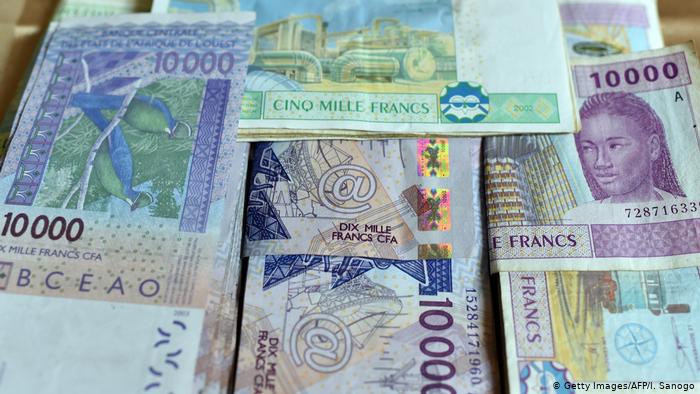
The eight-member nations of the West African Monetary Union “unanimously agree” on ending a decade-old model whereby their foreign-exchange accumulation is kept at the French Treasury, Talon said in an interview with Radio France Internationale. Their currency, the CFA franc, is pegged to the euro, and its convertibility is guaranteed by the former colonial ruler.

Established after World War II, the franc’s use frequently triggers debate about the region’s continued economic dependence on France and the view that the currency is artificially strong and curbs the region’s competitiveness. Its supporters cite the region’s low inflation and the currency’s stability relative to other African nations as reasons for its continued use.

“I can’t give you the date, but the willingness of everyone is already there,” Talon said in response to a reference to French Finance Minister Bruno Le Maire’s openness to a reform of the currency. “Psychologically, with regards to the vision of sovereignty and managing your own money, it’s not good that this model continues. ”

The regional central bank will manage the reserves and distribute them to partners around the world, including Japan, Europe, China, and North America, said Talon.

Ivory Coast, with an economy of about $40bn, is the biggest among the users of the CFA franc in West Africa. Six other nations in central Africa use the same model.

Buratai: A Professional Colossus in Military Patriotism

0

By Omoba Kenneth Aigbegbele

According to William Hazlitt, a British essayist (1778-1830), “The world judges men by their ability in their professions, and we judge ourselves by the same test; for it is on this that our success in life depends.” May I also be permitted to use the words of Johann Wofgang Von Goette, a German author (1749-1832), who said: “The man, who is born with a talent which he was meant to use, finds his greatest happiness in using it.”

Some of the seemingly intractable challenges facing Nigeria as a nation today are the pockets of crises across the country that are more serious than the dismissal of same as threats to internal security.

Today, Nigerians will agree, as the agitators for ‘Biafra’ to emanate out of the present Nigeria, gun-toting herdsmen, the Niger Delta militants, kidnappers, from all over the country are beginning to toe that evil line, which is causing a lot of people in authority and the entire nation some discomfort. The government sending troops to rout them is evidence that, indeed, they are real problems that must be confronted in a decisive manner.

However, finding a lasting solution to the problem of internal dissention has assumed an urgent dimension that can no longer be played down, let alone ignored.

The excuse of state police and community policing has been at the front burner of national discourse, but what has kept it back in the cooler is the abuse that this policy might be used to persecute perceived enemies and political opponents alike.

As the security situation in the country grows unabated, it becomes worrisome and alarming that the citizenry now have their hearts in the mouths as they go about for livelihoods and the growing fear of being kidnapped, killed, and maimed without protection whatsoever is daily becoming more frightening. It behooves on any serious government to do the needful.

Buoyed by an innate desire, coupled with patriotism to serve his country at this most critical time, Nigeria’s Chief of Army Staff (COAS), Lt. General Tukur Buratai came to the rescue of his fatherland as a colossus with multi-dimensional military reforms by introducing and implementing plans and policies focused on professionalism, discipline, transparency, and accountability to democratic ethos and patriotism.

Sequel to the emergence of General Buratai, Nigerian soldiers were notorious for indulgence in public malfeasances, denigrating their uniforms by sheer ego and bravado, without recourse to the consequences of their actions.

General Buratai embarked on word and psychological cleansing of the personnel aimed at refreshing their memories in professional ethics through seminars, courses as well as engaging in strategic military partnership across the globe to train and build the capacities of the men and officers of the Nigerian Army in the area of counter-insurgency and counter-terrorism, decapitating the Boko Haram insurgency and ISWAP terrorists in the North-East.

General Buratai also took a look within the Nigerian Army to enhance the welfare packages of the men and officers, vis-à-vis their high motivational esprit-de-corps. He also helped in building social amenities within the barracks; promotion and procurement of military hardware; creation of new military departments to conform to 21st century requirements; monumental degree of infrastructure development across all the formations of the Nigerian Army.

Indeed, remarkable increase in the Army equipment holdings and improved maintenance culture emerged. The Army is no longer on the defensive, as they now define the territory of combat and battle taken to the doorsteps of the aggressors. Under General Buratai, the Nigerian Army is a consummate Praetorian Guard of the nation’s inviolability.

Consequently, Nigeria’s 26th Chief of Army Staff (COAS) who was appointed on July 13, 2015, galvanized himself and swung into action, launching his campaign on an enduring philosophy and vision of an army devoid of politics. A man of few words, blending words with actions and by December 2015, barely five months into his appointment, Boko Haram was technically decimated and degraded, leading to their total defeat in December 2016. Unarguably, the last vestiges of the Boko Haram insurgency were displaced from the Sambisa Forest at “Camp Zero.”

The gallant Nigerian troops also dismantled the official flag of the terrorists, having liberated all the captured local government areas hitherto seized by the anarchists. What we have today are small cells where the terrorists launch opportunistic attacks to show they are still in existence. Expectedly, General Buratai’s feat has attracted odium from detractors, who have repeatedly tried to haul mud at him, but he refused to be distracted by such innuendoes and invidious campaign of calumny and media trials.

General Buratai is always there at the hour of need. It is his belief that Nigeria should come first at all times. He thinks, eats and sleeps security, peace and unity of Nigeria; these are paramount to him. His loyalty and patriotism to the nation are unequalled.

General Buratai has also done a lot of sacrifices, including the Nigerian Army which has lost men and officers at the prime of their careers in safeguarding the territorial integrity of the nation. To prove his sincerity, he initiated and launched the Human Rights Desk, the Procurement Department as well as the Civil-Military Affairs Department, the Motorized Brigade, establishment of the Nigerian Army University, Biu, and the re-introduction of military at the Nigerian Military School (NMS), Zaria.

He has compelled officers to declare their assets with the Code of Conduct Bureau (CCB). He has, as well, created adequate contingency plans for wounded soldiers.

The Nigerian Army, under General Buratai, has embarked on the provision of social amenities and infrastructure such as roads and electricity to the communities in the North-East region ravaged by terrorist attacks as part of the Corporate Social Responsibility (CSR), and soldiers at times became voluntary teachers to pupils in Internally Displaced Persons (IDPs) camps.

They also embarked on intermittent free medical treatment of ailing Nigerians in communities hosting them while on special assignments.

A lot of these terrorists and criminals had been de-radicalized and given new re-orientation by the Nigerian Army, so as to live in the society. And, a lot of Internally Displaced Persons (IDPs) had also relocated to their former homes within the North-East region and the virtual presence of the soldiers within these locations have boosted the confidence of the IDPs to reside peacefully in their abodes, all funded by the Nigerian Army, which cut across all regions, where the Army operates. All these are realities that were never linked to the Nigerian Army in the past, but came to being under the gallant leadership of General Buratai.

Indeed, General Buratai is walking the talk. As the soldier’s General, he has placed loyalty to the state above personal interest. In spite of the daunting challenges, he has reformed, refocused and repositioned the Nigerian Army for effective combat readiness in tandem with best global practice.

No wonder that is why Nigerian Army today is rated the best in Africa!

General Buratai is quietly repositioning the Nigerian Army into the strongest and most formidable force in Africa by his gradual actualization of his blue-print and road map of making the Army professionally responsive to Nigerians in the discharge of its constitutional roles and assignments.

He has, as well, consistently warned the men and officers to be apolitical in all their undertakings. That was why the Nigerian Army’s roles have been greatly acknowledged in stabilization of the policy and the electoral process.

The election observers from the international community are more excited and have argued plausibly that Nigeria did not burst into flames, all because of the dogged resolve of the Nigerian Army under General Buratai and his forces as well as its para-military security agencies.

As the Nigerian Army basks in the euphoria of a refocused, refined and repositioned 21st century army that prides itself as a super-power in the African region, Nigerians, indeed, the international community should lend their support to the army. This is because of its strategic and onerous task by safeguarding the territorial integrity of the nation, as well as joining the army leadership to re-invigorate the fight against militants, insurgents, criminals, kidnappers and herdsmen across the length and breadth of the country, for its socio-economic growth and development.

The Nigerian Army, on its own, has rekindled and pledged its support for the Nigerian constitution, as well as supportive of the democratic structures of the country in whatever aspect it is called. This is to add value and deepen democracy in the country.

As such, the suspicious nature of politicians and a few Nigerians towards the activities of the Nigerian Army in bringing about long lasting peace to the country calls for concern as operations to be embarked upon by our military are always tainted towards an ulterior motive of militarizing the space and muzzling the civil populace, which is not the case.

Worried by the incessant attacks of kidnappings, armed robberies, armed rustlings, criminalities, farmers-herdsmen clashes, insurgency and counter-insurgency within the country, the military has been, from time to time, engaged in a civil populace approach to rid the nooks and crannies of the country of these criminal elements tagged under different military operations since the advent of the 26th Chief of Nigeria’s Army Staff.

This has greatly curbed the menace once and for all. Yes, we have collectively agreed that it remains the constitutional responsibility of the Nigeria Police to deal with such issues like internal security, but the military can as well be co-opted when and where necessary because of the police unavoidable incapability to deal with ever increasing dimension of such security needs in the country.

The Nigerian Army, after critical information and intelligence gathering by its hierarchy, has discovered there was a resurgence of these criminal activities across the country, orchestrated by fifth columnists and the re-grouping of cells of Boko Haram/ISWAP terrorists across the country.

In view of the foregoing, it has decided to cleanse this Augean stable of criminal elements across the country, but was met by hues and cries from the political class, accusing the Nigerian Army of trying to muzzle the populace.

It is indeed sad, as the Chief of Army Staff was summoned to the National Assembly and a lot of Nigerians took to the social media to castigate and malign the Nigerian Army in its ask of safeguarding the territorial integrity of the nation. Is prevention not better than cure any longer? The Nigerian Army will do anything possible to secure lives and property as it is their duty and obligation to do so no matter whose ox is gored.

Yours sincerely is in tandem with these operations carried out to rid the country of criminal elements, so we can live in peace and tranquility.

The Nigerian Army has been involved in numerous operations across the country such as the Operation Harbin Kunama I, II and III, Operation Sharan Daji, Operation Lafiya Dole, Operation Safe Corridor, Operation Atilogwu Udo I (Dance of Peace), Exercise Egwu Eke (Python Dance), Exercise Ayem A Kpatema II, Operation Crocodile Smile, Operation Delta Safe, Operation Safe Conduct.

As we speak, there are various military operations going on in 30 out of the 36 states of the federation. There is no gain-saying the fact that the innovations brought by the Nigerian Army leadership should be applauded for the results so far achieved.

As these military exercises and operations are intelligence-based, it is aimed at keeping the nation secure and safe. Whatever it does today has national and security agenda and therefore, its activities should not be misconstrued by mischief makers or a few Nigerians to serve their selfish and inordinate ambitions.

Yours sincerely keenly noted that, in its task to safeguard and protect the lives and property of Nigerians, the Army has on several occasions, sacrificed young career men and officers with aged parents and families left behind. These are people that are being looked upon as celebrities, patriots and heroes. But in Nigeria, the reverse is the case.

Therefore, we need to engage Nigerians to begin to look at our military men and officers as heroes, who are ready to pay the ultimate price for peace and unity. They therefore deserve our accolades, commendations and honour for their oath of allegiance to our nation. It is high time, we celebrated the armed forces, and it is high time we accorded them their rights in their fatherland.

The Nigerian Army is usually called upon by the civil authorities to give a helping hand, which is empanelled by Section 271 of the 1999 Constitution (as amended) to assist the civil authorities on addressing internal security challenges, aside its primary constitutional role of protecting the territorial integrity of the country, which is also backed by the Chief of Defence Staff, Lt. General A. G. Olonisakin and the Ministry of Defence.

Our military forces have remained the best led, best trained and best equipped. It is therefore high time we inspired them with our words, actions and support as they go out daily to make their ultimate sacrifices. At a time when people play politics virtually in everything, the military doggedly continues to make sacrifices to keep the nation together.

It is therefore pertinent for all and sundry to support the officers and men of the Nigerian Army. Therefore, instead of castigating them, we should rather encourage them. We are enthralled each time soldiers move into communities for special assignments, they socialize with the host community instantly and make them friends for information and intelligence gathering.

Just recently, the Nigerian Army launched Operation Positive Identification, by giving information that would assist in the identification and arrest of fleeing Boko Haram terrorists in any part of the country. The operation which is to last from 1st November to 23rd December, 2019, is an integral part complementary to Operation Lafiya Dole in the North-East, Atilogwu Udo I (Dance of Peace) in the South-East, Operation Ayem A Kpatema in the North-Central, as well as Operation Crocodile Smile in South-South zone respectively.

This intelligence-based, deliberate and targeted operation was condemned by a few Nigerians, the National Assembly as well as insignificant number of civil society organizations, due to inadequate awareness on the importance of the proposed exercise.

However, this exercise was aimed at fishing out fleeing Boko Haram members and other criminal elements, who had infiltrated the length and breadth of the country at this yuletide season.

However, with the mass media campaign orchestrated by the Nigerian Army, it is changing the narrative of the Nigerian public as to the gains of the exercise and that it intends to achieve, which ostensibly led to the capture of eight Boko Haram members a few days ago in Lagos in their plan to rock the boat.

Part of the plans for the operation across the country by the Nigerian Army is that during the yuletide, there would be an upsurge in criminal activities across the country. This was discovered after meaningful security information gathering. To combat this trend, the Nigerian Army now embarks on a pro-people and civilian operation bearing in mind the rules of engagement in a democratic society and best global practices at all times.

However, a Federal High Court in Lagos recently ordered the Nigerian Army leadership to maintain the status quo, regarding the operation, pending determination of the suit challenging it.

Consequently, the National Orientation Agency (NOA) should have embarked on a nation-wide campaign to teach, create awareness and enlighten the public on the essence of the operation and what to do to counter the activities of terrorists. The campaign will educate people how to inform the police or other security agencies when a terrorist is noticed, how to discourage our wards from joining terrorist groups and as well as possible self-defence strategies. With such orientation, the society would be put on alert against criminal elements roaming about in our society.

As Buratai displays his avowed patriotism as a professional colossus towards Nigeria, no fewer than 450 armoured vehicles of various types are completely refurbished by Nigerian Army Electrical and Mechanical engineers at various workshops across the country.

This has put paid to the over-reliance on foreign equipment and spare parts which had been a huge setback in the immediate past, thereby boosting our local military prowess.

The Chief of Army Staff’s patriotism and loyalty to his country and his readiness to sacrifice even his life for Nigeria and Nigerians should stimulate passion of endearment to him.

Whether serving in the Niger Delta creeks or Bakassi Peninsula or the states on the fringes of Nigeria’s North-East region, General Buratai remains an impartial soldier, who has placed premium on national interest higher than any other consideration.

He sure deserves a national honour as a statesman, academician and gentleman soldier for the successes achieved so far as well as the various innovations brought on board.

It is therefore necessary to urge General Buratai not to relent on his oars as he drives his mission and vision of protecting the nation’s territorial integrity, and safeguarding the lives and property in the country.

Omoba Kenneth Aigbegbele is Executive Secretary, CWAI and President, COCMEGG, Abuja.
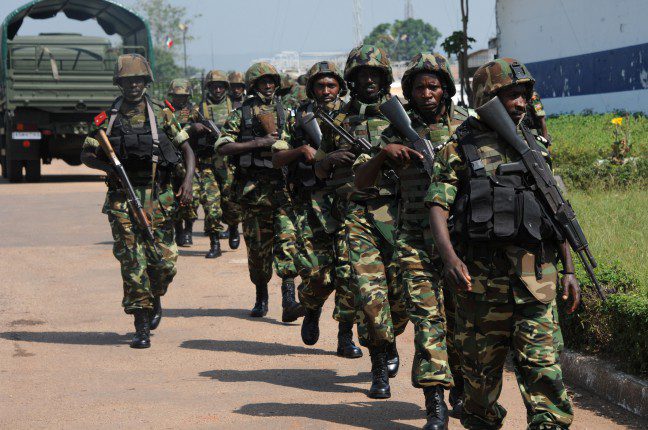
16 Boko Haram/ISWAP terrorists, spouses surrender to troops in the Lake chad Basin

Sixteen insurgents along with eight of their spouses have surrendered following the heat from the sustained onslaught by troops of Sector 1, Multinational Joint Task Force at Fotokol.

The surrender comes after increased raids, clearance patrols, sting operations, cordon & search operations as well as mortar and artillery bombardment of identified criminal insurgents and bandits’ hideouts within the past one week which equally neutralised dozens of insurgents.

In a statement, Media Coordinator of the Nigerian Army Operations Centre Col Aminu Iliyasu said several Boko Haram Logistics Suppliers and informants have been intercepted and arrested by the troops of Operation LAFIYA DOLE as well as the arrest or neutralisation of some bandits and other criminal elements in the North West and other parts of the nation.

“On 1st November 2019 for instance,  Subsequently, the surrendered insurgents were later handed over to troops of 3 Battalion (Main) at Gamboru Ngala, a border town NE of Borno State.

“During preliminary interrogation and profiling, they confessed to have actively participated in attacks conducted against both military and civilian targets at various times.” He added.

Col Iliyasu further revealed that 14 of them whose names are Ibrahim Bunu, Abba Sale, Baba Lamba Alhaji, Bukar Isa, Bukar Ali, Rawa Abba Gana, Mustapha Abatcha, Umar Abubakar, Hassan Bukar, Malam Abatcha Ali, Abba Umar Abatcha, Hussaini Babagana, Idris Mohammed and Umar Abba Bayoma all belonged to the Islamic State West Africa Province (ISWAP) led by Al – Barnawi while the remaining 2, Hassan Kawu and Babagana Bukar Adijabe belonged to Boko Haram (Abubakar Shekau Faction).

“The repentant insurgents however, regretted their participation in the heinous crimes they committed against humanity and are now calling on their former colleagues to retrace their steps and also surrender to troops before it is too late.” He added

In another development, troops deployed at Gajigana in Magumeri LGA of Borno State intercepted some Boko Haram criminals in the early hours of Tuesday 5th November 2019.

It is believed that the insurgents were on their way to attack the community to source for food items and other logistics for their survival. However, the vigilant troops blocked and neutralised 3 of the Boko Haram criminals while several others escaped with varying degrees of gunshot wounds.

Unfortunately, one soldier paid the supreme price while 2 others were wounded in action. The wounded soldiers are currently responding to treatment in a military medical facility.

Additionally, the troops captured 2 AK 47 Rifles, one Rocket Propelled Gun 7 (RPG 7), 5 AK 47 magazines, 47 Rounds of 7.62mm Special ammunition and some quantities of hard drugs during exploitation. In a related incident, another Boko Haram criminal met his waterloo on 4th November 2019 while attempting to cross into the Sambisa Forest at Bama – Banki Road Junction when own tps sighted and neutralized him.

Similarly, troops of 195 Battalion, while on clearance patrol along Gubio Road on 4th November 2019 recovered a kit bag containing 480 Rounds of 7.62mm NATO ammunition suspected to have been abandoned by escaping terrorists. In another encounter with the Boko Haram criminals on 6 November 2019 at Muchima in Damboa LGA of Borno State, 9 Boko Haram insurgents were neutralized by troops while others escaped with gunshot wounds.

Additionally, one insurgent Gun Truck was destroyed, 4 AK 47 Rifles and a cache of ammunition were recovered. Similarly, troops of Sector 2 deployed at Damaturu, Yobe State dealt a decisive blow to the insurgents’ attempt to infiltrate the town    on 7 November 2019.

The attempted infiltration was thwarted by the combined efforts of ground troops, artillery bombardment and precision air strikes by the Air Task Force of Operation LAFIYA DOLE. The encounter led to the decimation of a number of the insurgents in addition to the destruction of one Boko Haram Gun Truck. Unfortunately, one Officer paid the supreme price during the encounter.

Furthermore, during their exploitation, troops discovered and safely detonated 2 Unexploded Ordnance materials planted by the insurgents as well as the charred remains of some of the terrorists that were hurriedly buried by the criminal insurgents while withdrawing in disarray following the superior firepower of our troops.

Sowore embarks on hunger strike over detention

0

By Toby Prince

Founder of Sahara Reporters, Omoyele Sowore, has reportedly refused to eat any food in protest against his continued detention by the Department of State Services despite a court order sanctioning his immediate release.

Sowore, who has been detained for 98 days by the DSS was granted bail twice by the federal high court in Abuja.

Human rights lawyer, Femi Falana, who is defending Sowore in court, on Friday said, “Since yesterday (Thursday) he has refused to come down. He has refused to see anybody and this is in protest that his rights are being violated.

“He has not eaten because the DSS don’t feed him and he is rejecting food from the people who usually take food to him in detention.

“Yesterday, he said he didn’t want to see anyone including the people who take food to him because there is a court order asking for him to be released, the second one, so he is protesting this.”