Home Blog Page 2537

Is Nigeria still winning the war on insecurity?

0

By Philip Agbese 

Twine main polemics dominate national discourse on security issues in Nigeria. The first camp basically comprises ardent critics and opposition members who are hostile to the administration of President Muhammadu Buhari. To this club of Nigerians, enmeshed in a partial mindset, its more convenient to score the national government led by President Buhari and the ruling APC zero on security.
They claim since 2015, Buhari has proved pitiable helplessness in taming insecurities in the land, which in their perceptive view, rather escalates every day.  This is altogether not unusual with opposition elements in any clime, which does not necessarily obviate the reality anyway.

There is another clan of people. They are the impartial and neutral set of Nigerians, who glowingly glorify President Buhari for impacting positively on the previously enervating insecurity in the nation. They argue most trenchantly that there is nowhere that insecurity in a country is completely conquered and the sense can only stick if it dawns on anyone that the United States of America, the United Kingdom and many others are still under the spell of terrorism.
It is utopian to think insecurities anywhere should end in a jiffy. Rather, it is reduced to the barest minimum as exemplified by President Buhari, if measured against the insecurity realities prior to his ascension to power in 2015.

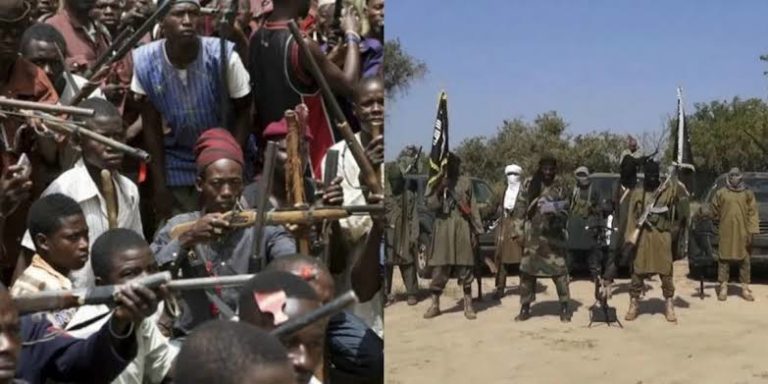
These disparate and counter-reactive views on the insecurity situation in Nigeria have subsisted. However, all opposing camps accept that wild insecurity engulfed Nigeria and predated the administration of President Buhari. The anti-establishment analysts on security cite resurgent acts such as  in Boko Haram/IWSAP terrorists; armed banditry, ethno-religious conflicts,  organized and commercialized kidnapping  and communal strifes to impulsively  buttress their standpoint.

But the pro-establishment camp, whose voice aligns more to the truth, ancient wisdom and informed reason extrapolate that such erratic traces of insecurities are expected, normal and curbed gradually to ensure greater safety of lives and property. It is not difficult to discern the reality of an immolated insecurity by the ruling APC government led by President Buhari, despite intermittent resurgence of attacks and killings. Those who obstinately stick to views that nothing has changed on security in Nigeria under the Buhari Presidency deserve pity. It is certain that they are pretentious, prejudiced, sentimental or genuinely oblivious of its intensity before now.

The severity of insecurity threats to Nigeria was encapsulated in President Buhari’s 2020 New Year open letter to Nigerians tagged “Nigeria’s Decade;” He stated that “We have been fighting on several fronts: violent extremists, cultists and organized criminal networks. It has not been easy. But as we are winning the war, we also look to the challenge of winning the peace, the reconstruction of lives, communities and markets. The North East Development Commission will work with local and international stakeholders to help create a new beginning for the North East.”
The presidential perspective on insecurity in Nigeria is more clearly elucidated by the recent position of the Arewa Consultative Forum (ACF) through its Secretary-General of ACF, Mr. Anthony Sani.
Appraising President Buhari’s administration on security of the nation, especially in Northern Nigeria where Boko Haram had engrained its  reign of terror , the ACF said; “He, therefore, decided to confront the challenges and recorded some appreciable successes which consigned Boko Haram to fringes of the North East and their attacks were reduced to occasional suicide bombings using small girls. Consequently, the fears which hitherto overwhelmed the North gave way to hope and confidence that comes with normal life.”

Two elements can be deduced and denoted from the submissions of ACF, a body which also has Northern Nigeria as its primary constituency. The first is that Boko Haram and its later variation is no longer the severe nightmare of the entire North and, again, its atrocious activities have been consigned to the fringes of the Northeast equally being tackled. It is no less a reflection of the true reality. Truth be told that many Nigerians started enjoying this bliss from terrorism and allied criminalities as far back as 2016. There was a time armed banditry and cattle rustling sacked and permanently displaced natives in most states of the Northwest and same for monstrous militancy in the Niger Delta. The Nigerian Army’s series of special operations flushed out these criminal elements and restored peace and normalcy.

No one has ever argued that insecurity has deserted Nigeria terminally, but it is considerably tamed. Unfortunately, though, the relaxed tide in insecurities across the country has irked certain interests who believed the best style to de-market the administration of President Buhari is to infuse political dimension into security.
Therefore, apart from covertly recruiting and arming youths, while silently pursuing political ambitions, the consciousness of such plotters of breach of security has never reconciled with the reality of a changed scenario on the security trajectory.

As far back as 2016 signs to this effect manifested as trumpeted by the COAS and leader of the counter-insurgency operations, Lt. Gen. TY Buratai.  He told an unsuspecting nation, which incidentally never spared a thought to his outbursts or acted appropriately that ”All these cries of insecurity which some groups and individuals are taking it as a political game I think they should have a rethink because it is no longer the case. ”

Interestingly, shadows of the induced and politically motivated insecurity in the country would later de-robe itself with public statements from prominent opposition members and their minions. In one of his campaign affronts on the Buhari Presidency in 2018, the 2019 PDP presidential candidate, former Vice President Atiku Abubakar gave the inkling of politically induced insecurities, in a somewhat blackmailing fashion of Nigerians to magnate undeserved votes.
Atiku was blunt that if Nigerians fail to vote him as their President in 2019, insecurity and herdsmen killings in the country will continue. The statement smacked of the insight of an insider.  But as usual Nigerians ignored him. It was only when Boko Haram/ISWAP terrorism and herdsmen bloodbath intensified in the months leading to the 2019 general elections that the full import of his utterances dawned on Nigerians. In protests to such devilry, Nigerians again massively reelected Buhari.
Nigerians were also appalled at the quantum of illegal/ smuggled arms and ammunition into the country in the build-up to the last general elections. Security agents impounded many of these illicit arms and ammunitions, at different points in the country.  And to every sane mind, these arms in the possession of political thugs were actively used to cause electoral violence and killings in the few areas security vigilance relaxed. Most of those armed have retained these arms; after being abandoned by their masters.
They have turned the force and anger against innocent Nigerians by perpetrating all manner of crimes, attacks and killings. Last year, a bewildered President Buhari directed the Inspector General of Police (IGP) to mop us these arms, as indication of his perturbance.
In fact, each time these criminal armed gangs pull the trigger in mindlessly violent extermination of Nigerians, it is the opposition’s voice that is heard first. And it is usually rare in sympathy with victims of such attacks, but virulent castigation of the Buhari Presidency’s failings on securing lives and property of Nigerians. Even when external bodies which independently understudies the insecurity dilemma in Nigeria applauds Buhari’s efforts, opposition elements are quick to counter the narratives’ as false.
A recent report by the United States based Non-Governmental Organization by the identity, “Centre for Diplomacy and Democracy” praised President Buhari for standing up to the challenge of multiple insecurities. And   Atiku again broke his silence.
After pouring invectives on the NGO, Atiku furiously stated that “President Buhari and the APC have shown without equivocation that the job at hand is overwhelming for them. And because they lack the basic clue of how to tame the bogey that they have created….”
A part from the jejune that drapes throughout the length and breath of the statement; the contents’ riled,  rhymed, alluded and indeed, connoted the actualization of the plots on  threats  of insecurity Atiku reeled out before the general elections.
Whatever anybody thinks, and including the opposition elements, President Buhari and Nigeria are winning the war on insecurities. And like President Buhari remarked on 2020 New Year day epistle; “The Federal Government will continue to work with State Governors, neighbouring states and our international partners to tackle the root causes of violent extremism and the networks that help finance and organise terror. Our security forces will receive the best training and modern weaponry… We will use all the human and emerging technological resources available to tackle kidnapping, banditry and armed robbery.”

Agbese wrote this article from the United Kingdom.
We’re not constrained by manpower, equipment – Buratai

0

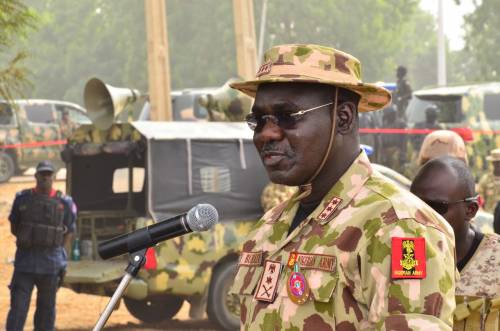
Lieutenant-General Tukur Buratai, the Chief of Army Staff (COAS), in an exclusive interview with Daily Trust on Sunday spoke on how his troops are winning the war against terrorism in Nigeria, the strategies employed by the insurgents, the preparedness of the Nigerian military to tackle the ISWAP and other security issues bedevilling the country.

*We understand that you visited the National Assembly, together with your colleagues in other security agencies. What’s the outcome of the discussion, and what necessitated it?*

You are very much aware of the hues and cries over insecurity across the country, the seemingly resurgence of Boko Haram terrorists in the North-East, kidnappings and banditry in the North-West, and some other criminal clashes. This calls for concern. The government is very concerned, and in their constitutional responsibilities, the National Assembly felt there’s a need for us to meet and discuss these issues. Essentially, that’s why we were invited. And we had a very useful discussion on the security situation in the country, and of course, the way forward. The most important thing is that there is an understanding for us to address the issues. One interesting thing is that we have always been proactive. We have always been pursuing the goal of ensuring security across the country. We have agreed to work together, based on understanding, and for them to give us the support needed towards a successful execution of our mandate. And to bring insecurity in the country to the barest minimum. This is the key issue we all agreed to pursue; and let everybody go about their normal businesses.

*We are aware that you are outstretched in almost all the states in the country; did your discussion address the issue of manpower shortage in the army?*

Some of the issues of specifics are strategic. These are issues we would continue to address without even being prompted or getting unnecessary tension or misunderstanding. These are issues that have to do with strategic and operational issues. The issue of internal security is not primarily the responsibility of the military; we are called in to support the police, and that is the grand norm. We always come in to support the police, and we are doing that.

The issue of manpower is something we have always addressed as it comes. There is a difference between the 1960s, 1970s, 1980s, 1990s and now. So we would not see the issue of manpower as anything that has to do with fighting insecurity. This is because we have so many force multipliers that would facilitate whatever shortcoming we have in manpower. And that’s very important. The issue of manpower is not something you would start today, and tomorrow you say you have sufficient.

It requires time to train and equip the person you trained, as well as organise further training, which is the most important aspect of it. Anybody can have basic training for one week, two weeks, one month, six months, but that is not enough. So personally, I don’t see the issue of manpower as something that is too critical to affect what we are doing on the ground. But it is important. If we are relating insecurity to manpower we may not get the solution, but it is important.

*We understand that there is difficulty in getting the required equipment, especially from foreign countries, is it also affecting the capability of the troops in fighting insurgents and other operations across the country?*

Like the issue of manpower, equipment are very important and quite strategic. We can have all the equipment we need, you can also have all the resources you need to fight insurgency or any war, but if you don’t utilise it well you cannot achieve the needed results. People are talking about equipment and relating it to the resurgence of insecurity; they are also linking both equipment and manpower to the resurgence of insecurity.

This has always been the issue. If there are challenges that crop up at a time, people complain that equipment and troops are not enough. This has always been the trend. I am not saying that these are not the issues; they are quite cogent and important, but we have achieved so much with the present level of equipment we have. From 2015 till date, we have achieved a lot. Let’s cast our minds back to 2015 and 2014 and you would see the extent of damage that Boko Haram was doing. But when we entered 2015, 2016, 2017 you can see that the level of apprehension virtually fizzled out. Your correspondent in Maiduguri cannot say the same thing in 2015 is obtainable today.

He can say the same thing for Damaturu, Mubi, Gwoza, Buni Yadi and so many other places. We achieved that with the same equipment we have. The point is that we are not fighting a regular adversary; we are fighting an irregular enemy. Even the United States, one of the world’s super powers, with all the array of arsenal and equipment in their inventory, cannot say they would win every war.

When it goes to asymmetric and non-conventional warfare, this is what we are facing. Surely, we need more equipment, including booths on the ground. Those are the basics and very important, but we must follow it up with training. We must do tactical and communication training.

We must also get training on equipment and troops operations. We must also get those force multipliers like intelligence equipment, drones, surveillance equipment. Then we have support from the Air Force, the police and government. These are force multipliers and all factors that will lead to success.

We also need support from the press, so you don’t talk of tactical issues. We relay such issues that are organizational, and strictly remain within that narrow perspective, to say this is the cause of the issues, or this is the cause of the insurgency, or this is the cause of the insecurity we are facing. It is far beyond that. As strategists we must always find the way and look for the means to achieve our goals. These are critical.

We are here as strategic leaders, we are not talking of the equipment, we are not talking of manpower, but they are also very critical. What we are doing is to prioritise the men on ground. We prioritise the deployment of equipment, then we now talk of the best use of the space we have. That is what we have been doing, and that is what has brought us to this stage. Yes, on pedestrian interpretation you would just be talking about manpower and equipment, but we are missing the main point, which is critical. We need them in a good number, we need them sufficiently to be deployed to cover key areas. But we must train, which is very important. And we have been doing that, as far as I am concerned.

*You don’t believe there is resurgence?*

It is a minimal resurgence. If you say resurgence, it means in the overall perspective that you guys cannot even stay here. Nobody would stay in Maiduguri. So tell me the intensity of resurgence and in what perspective. I just came back from Maiduguri last week. You may have watched the documentary. In the same period I opened the road from Maiduguri to Damboa and Biu, but social media was saying no road was safe in the whole of Borno State.

We are relying so much on terrorist propaganda. It is bad to kill one person, but the rate at which the propaganda goes out is so alarming. Go to Maiduguri today, nobody is bothering himself. If commuters are attacked on the road, the whole world would hear it and it would overshadow every other peaceful moment enjoyed this period. People are drawn back to pre-2015 challenges.

During that period, every day we had bombings in mosques and churches in Maiduguri; at times three to four times every day. But the attacks started going down. Yes, there was an attack in Limankara and Madagali; there were also abductions and killings by terrorists, but all those things are limited to Borno State.

*Why is there a threat on the Maiduguri-Damaturu road?*

In 2016 there was no threat on that road, and people were plying it. In 2017 there was no threat and nobody asked that question. In 2018 there was no issue of abduction along that road and nobody would ask that question. It was the same thing in 2019 until around December/January when they started attacking. But people have not asked why that road has not been closed. All these years, there was no threat to anybody on that road; it is only within these three months that everybody is raising the alarm, and it has overshadowed previous efforts, even the ongoing efforts in other places.

When we introduced this Super Camp concept we had some opposition. I don’t know why anybody would be interested in operational or tactical issues. You are not a military man or tactician; you are not a strategist in military doctrine, but suddenly a strategy was adopted and you said no. When we adopted this Super Camp strategy, we were completely in a different mode of operation and needed to realign and redeploy our troops, units and formations to those identified gaps. It took us time to identify these gaps. When we bridged those gaps, a seemingly peaceful road is no longer tenable to the Boko Haram terrorists.

It caused a serious threat to their activities. They were used to crossing and moving about, but what they are doing now is using abductions to force the troops to leave that area. They are no longer finding it easy, but they would do anything possible to dislodge the troops there. But as at today, it is not possible for them. It is just a matter of time.

We have gone this far since 2015 and we are moving. Insurgency is not what you defeat and it would just fizzle out; they would revert to other tactics. That is terrorism. They will promote propaganda, to the effect that all the institutions of government would be seen to be ineffective. This is what they are doing. They are exploiting the fault lines in our economic and political endeavours to expand the gulf of so-called discord and acrimony amongst various ethnic and religious groups. Why are they doing this propaganda, blocking the road and capturing individuals because they are of a particular religion? Unfortunately, they murder those individuals and send it to the world. These are propaganda strategies of the terrorists. You need to study the terrorist propaganda way of operation and see how things are. These individuals may be living with you and you would not know they are terrorists. They have a series of informants and logistics suppliers. They have a series of leadership strata that live in the communities and towns nearby. They pass information and organise those that are hidden along the borders in remote areas or communities who come, attack and go back. They also have a series of recruiters. Looking at it from this perspective, you would see that it is a complex operation you cannot wish to just go. At the National Assembly today, I said indoctrination of the citizens did not start in 2009, it started much earlier. And it grew until it reached that point where they took arms against the state. It is an indoctrination that has taken roots between 10 and 40 years back. And for you to de-radicalise an individual to bring him back to sanity, you think it would just take you three years, four or 10 years? These are people that were brain-washed to believe that when they die they would go straight to heaven. And you think they would believe in you to bring them back to mix with people they refer to as unbelievers? You have to look at this context. How long have all the terrorist activities happening across the world been going on? We must understand this thing. It is an issue of existential threat we are facing as a nation-state. When they were in Kano, Sokoto, Kogi, Niger, Abuja, Jos, Kaduna, Gombe, Adamawa and started penetrating other places, nobody took them seriously. We will continue to wish that they would not attack the next town. You guys can count how many locations they attacked in Abuja, including the Force Headquarters. Does it take a little indoctrination for somebody to load explosives and go to the Force Headquarters and explode? And people are looking at it as merely between the military and insurgents. It is not a war between the military and insurgents, it is between Nigeria and the insurgents.

*Some experts are saying that if you want to successfully counter this insurgency, its leadership must be eliminated. It is believed that this would help reduce the confidence their foot-soldiers have in their course and bring the organisation down. There was a story that some of the Chibok girls were sighted in Sambisa forest. Last week, there was a negotiation, after which they released one of the captives. Since you know where all these people are, when do you think you would be able to eliminate some of the top commanders of these insurgents?*

Decapitation operation is key; and it is in our plan. It may work, and it may not work. Look at Al-Qaida, a group that has taken attention across the world. All the anti-terror operations were focused on eliminating Osama bin Ladin, with the belief that once he was eliminated Al-Qaida would end. But what happened? We had several others that came up after him. It has not stopped.

Back here in Nigeria, it is the same thing. It was believed that when the leader of Boko Haram, Mohammed Yusuf was eliminated (although it was not a government policy), the movement would stop. But another leader came up, Shekau. The Shekau group also split into different factions, and within the two camps they have been trying to eliminate each other. They eliminated one of their leaders.

Recently, Al-Baghdadi was eliminated and they brought up another leader. Instead of being discouraged, they have even been getting stronger. But that does not mean it would not work in certain areas. If there is consistent targeting of the leadership, at a certain point they just have to capitulate. But it has to be comprehensive. I want you to also take note of the difference between military operations and the intelligence line of operations. These two must work together. As far as leadership is concerned, our effort is still working on identifying where they are because you can say they are in Abuja; but where in Abuja. You can say they are in Kaduna, but where in Kaduna? You can also say they are in Falgore forest; which Falgore forest? When you say they are in Sambisa forest, do you know the size of the forest? It requires extensive and intensive surveillance arrangement, very good intelligence to pinpoint and identify all those issues. Nobody is resting on his oars. All these things are being done in search of all other captives, including the Chibok girls. The process is still ongoing, it has not been closed. These are issues that have to do with asymmetric warfare, counter insurgency and intelligence operations, some civil-military activities, and purely civil line of operations, which can lead to so many results.

*If you are targeting the head to decapitate, you must have been on their tracks; how close have we ever gotten close to eliminating Shekau?*

This is a military operation. Late last year, there was a report in which the Air Force bombarded their camps and many of their leaders were eliminated. Even the attack on Damaturu, about two of their commanders were eliminated. In Goneri also, one of their commanders was eliminated. We will continue to target them individually and as a group until we narrow the overall leader. It requires some intelligence.

As I said, this insurgency did not start yesterday; it started over 40 years back.

*What about international collaboration?*

Just recently, Chadians withdrew their troops from the theater; how is it affecting operations? There is this misconception that Chadian troops are withdrawing from the Multinational Joint Task Force (MNJTF) operations, No! They are not withdrawing; the MNJTF headquarters is in N’djamena, the capital of Chad. The Lake Chad Basin Commission is also in N’djamena, so the mission of the headquarters and the command element of the MNJTF are all there.

The MNJTF usually organises operations periodically to identify a particular threat area and all the forces come together, operate and go back to their territories. This was done in 2016, 2017, 2018 and even last year, up to early this year.

They only completed their operations and withdrew to their territory. It was after Operation Yancin Tafki. So they are not withdrawing from the MNJTF. In the real sense, they were not here before the Operation Yancin Tafki; they came for a particular task. And they completed the task and went back. They are not blocking any other area. We had been on ground before they came and we would continue to remain where we are and do our operations without any external force.

*Did their exit open a corridor for the terrorists to operate?*

That’s what I have just said. Which corridor? They have not blocked anywhere, that’s what I said. They came around and were to go back around July. They left and came back around August or September, so there is no gap left.

They left some weeks ago and we have not felt any negative impact since then. Our troops are there and effective. The Islamic State of West African Province (ISWAP) carried out some major attacks in Niger Republic, which led to the loss of over 100 soldiers. The attacks raised the question about our level of preparedness.

*What assurance would you give Nigerians that the ISWAP would not set root in Nigeria?*

What happened in Niger was unfortunate. That area is the border between Niger and Mali. That place is one of the ungoverned spaces. It is a complex environment where there is a lot of movement and foreign countries operating. There are complex operations, with different types of militias, militants, bandits and terrorists. We will do everything possible to protect our troops and our people. We have to increase surveillance across our borders. We have to increase the awareness of troops, as well as the people, to know that any threat being seen would have been envisaged. We are in a good position to counter any of such happenings, and I believe we would not give them that room. We will try to build more confidence in our troops.

*When you met with the National Assembly today, did the issue of your resignation come up?*

No comment on that.


Presidency hits Ango Abdullahi, describes him as a paper tiger

0

By Bukola  Olasanmi

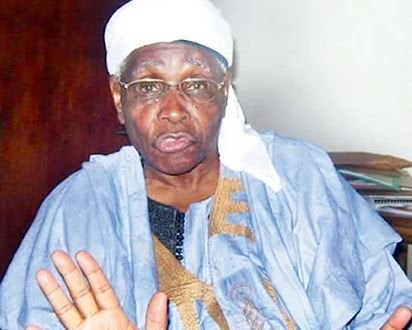
The Presidency has described the Northern Elders’ Forum (NEF) as a mere mouthpiece of one man, Professor Ango Abdullahi, devoid of any credible membership.

In a statement by the Special Adviser to the President on Media and Publicity, Mr Femi Adesina on Sunday evening, the Presidency said the Nigerians know better and “don’t need a paper tiger’ to tell them anything”.

“Professor Ango Abdullahi on Sunday signed a statement and declared President Muhammadu Buhari a failure.

“The former vice chancellor signed the statement under the banner of Northern Elders Forum (NEF). Hearing that title, you would think the body was a conglomeration of true elders.

“But the truth is that NEF is just Ango Abdullahi, and Ango Abdullahi is NEF. It is a quasi-organization that boasts of no credible membership, and its leader is akin to a General without troops.

“Before the 2019 presidential election, the one-man army called NEF had shown its antipathy against President Muhammadu Buhari, and its preference for another candidate. They all got beaten together.

“NEF is merely waving a flag that is at half-mast. President Buhari steadily and steadfastly focuses on the task of retooling Nigeria, and discerning Nigerians know the true state of the nation. They don’t need a paper tiger to tell them anything,” the presidency said.


Get real time updates directly on you device, subscribe now.


Boko Haram never blocked Maiduguri-Damaturu road, Army remains in charge – Col Sagir Musa

0

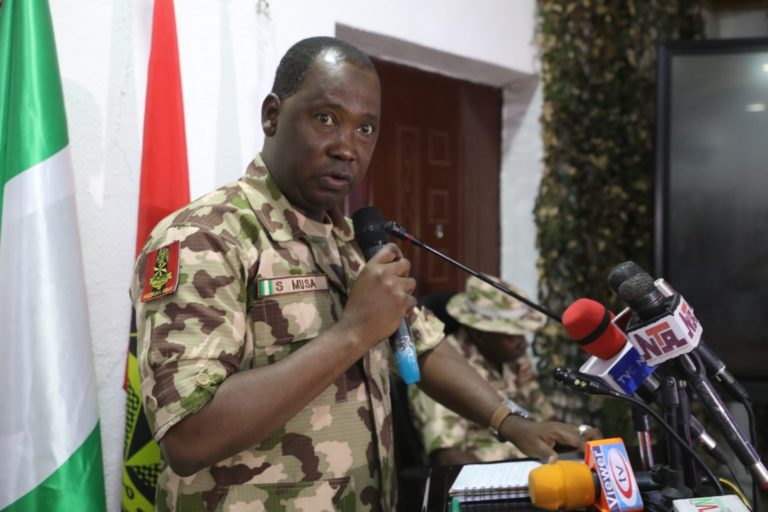
The Nigerian Army described as false, false rumours that Boko Haram blocked a section of the Maiduguri-Damaturu road thereby making commuters and other road users to scamper for safety.

The Acting Director of Army Public Relations, Col Sagir Musa allayed the fears while speaking exclusively with our correspondent in Maiduguri.

Recall that a team of journalists both local and international are currently on a tour of the Northeast to access devastation caused by the insurgency.

News of the alleged blockade came to many users of the road as a surprise particularly when a team of journalists who are in Borno on tour of the state to ascertain the level of restoration of normalcy, spent considerable time plying the road, visiting Auno and IDP camps without witnessing any such blockade.

From close observation by Journalists, the presence of agile Nigerian Army troops checkpoints within a short radius from each other and regular patrols would have made it highly unlikely that Boko Haram would dare to block the road.

Reacting to the allegation, Acting Director, Army Public Relations, Col Sagir Musa said no such blockade ever took place on the Maiduguri-Damaturu road.
Col Sagir said, “Soldiers are on the road ensuring that Nigerians move safely. You saw the situation of the road on Friday. Nothing like that happened on that road”.

There had been unsubstantiated insinuations that  travellers were running on foot back to Maiduguri for their dear lives following blockade of the road.

TheNigerian News Judiciary Review – February 3rd to 8th

0

Our Judiciary correspondent, Bukola Olasanmi, reviews the biggest stories from Nigeria’s third-arm of government in the last one week.

Supreme court affirms conviction of Ex-Taraba Governor, Jolly Nyame

The Supreme Court has affirmed the conviction and 12-year imprisonment of former Governor of Taraba State, Reverend Jolly Nyame by the Court of Appeal, Abuja.

The Court of Appeal, in a November 16, 2018 judgment upheld Nyame’s conviction and sentencing over his fraudulent conduct while in office as governor. Details >>>>>>>>>>>

Ex-AGF, Adoke ill, transferred to hospital

A former Nigerian Attorney-General of the Federation and Minister of Justice, Adoke Bello, has been moved to an Abuja hospital after his health condition worsened while in the custody of the EFCC, his lawyer said.

Other sources familiar with the matter confirmed on Thursday that Mr Adoke was moved from the custody of the anti-corruption agency to the Federal Medical Centre in the Jabi district of Abuja. Details>>>>>>

Maina to remain in prison as Senators refuse to stand as sureties

Afam Osigwe, counsel to the former chairman of the Pension Reform Task Team (PRTT), Abdulrasheed Maina, says senators are reluctant to stand as sureties for his client.

Osigwe made this known during the ongoing criminal trial of his client at the federal high court, Abuja, on Thursday. Details>>>>>>>

FG to receive $318m Abacha loot in the next 72 days

The Attorney General of the Federation and minister of justice, Mr Abubakar Malami, said on Wednesday that the Federal government will in the next 72 days receive the sum of $318,460,329 looted by former Head of State, General Sani Abacha, from the United States of America.

The AGF Malami made this disclosure via a telephone interview on Channels Television during a programme tagged: Politics Today. Details >>>>>>>>>

El-Zakzaky, wife can see doctor – Court

Justice Gideon Kurada of Kaduna State High Court has issued an order for the leader of the Islamic Movement of Nigeria (IMN), Ibrahim El-Zakzaky, and his wife, Zeenat, to be given access to their private doctors at the Nigerian Correctional Service (NCS) facility in Kaduna with close supervision of the facility management.

The judge gave the order on Thursday following the resumption of the trial. Details>>>>>>>

Ex-NBA Chairman cries out, says Law school curriculum outdated

A former Chairman of the Nigerian Bar Association Section on Business Law, Mr Olumide Akpata, has advocated a review of the Nigerian Law School curriculum to reflect the current realities in today’s legal practice.

Akpata, who is the Head of Commercial Practice at Templers, a front-line Nigerian commercial law firm, said experience with fresh law graduates had shown that they lack the knowledge to fit into today’s law practice. Details>>>>>>

‘Overconfident’ security agents nab fake lawyer while representing clients in court

A fake lawyer was arrested in court while he was representing some clients, attempting to secure bail for the clients.

According to Ghana Crimes, the fake lawyer identified as, Iddrisu Yahaya, was looking all confident and properly dressed as a lawyer before he was nabbed for being an impostor during a court session. Details>>>>>>>>

Sanwo-Olu dragged to court over Okada ban

Activist and lawyer, Mr. Tope Akinyode, has sued the Lagos State Governor, Babajide Sanwo-Olu, for banning commercial motorcycles otherwise known as Okada, and commercial tricycles in six Local Government Areas and nine Local Council Development Areas.

Akinyode also joined the Lagos State Government, the state Attorney-General, the Speaker and the House of Assembly in the suit, it was gathered. Details >>>>>>>

Ihedioha approaches Supreme Court for review of judgement

Former Imo State Governor, Emeka Ihedioha, on Wednesday approached the Supreme Court for a review of the judgement which ousted him and ordered the swearing-in of Hope Uzodinma as governor.

The Peoples Democratic Party, Details>>>>>>

Court reinstates Colonel Auwal Suleiman sacked four years ago

The compulsory retirement slammed on a serving military intelligence officer, Colonel Mohammed Auwal Suleman, by the Nigerian Army Council in June 2016 has been voided and set aside by a law court.

The Court rejected the claim of the Nigerian Army that Colonel Suleman ought to serve 18 years only in the military service. Details >>>>>>>>>

Buhari’s daughter dragged to court for using presidential aircraft

0

By Toby Prince

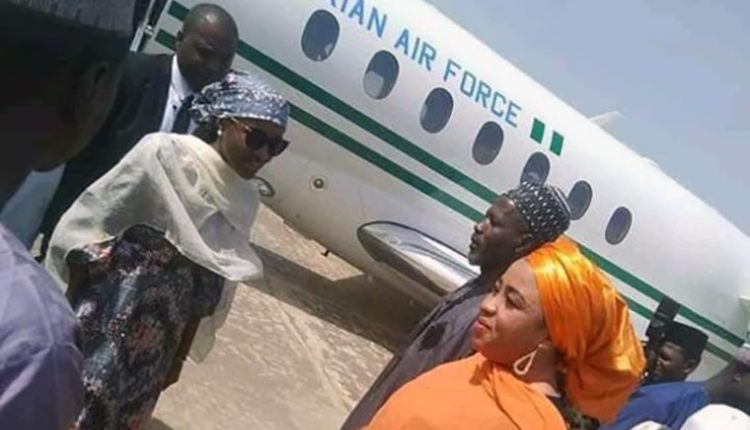
Hanan Buhari, the daughter of President Muhammadu Buhari has been dragged to court for alleged illegal use of the presidential aircraft for a private visit to Bauchi State on January 10.

TheNigerian obtained copies of the processes filed by an Abuja-based lawyer, Mr Oluwatosin Ojaomo, at the High Court of the Federal Capital Territory in Abuja on February 6.

Hanan is the sole defendant in the suit marked CV/1023/2020.

The claimant urged the court to order Hanan to refund the costs of both the “fueling” of the aircraft and “the travel logistics” incurred to the Federal Government’s consolidated revenue fund account.

Ojaomo also urged the court to make a “declaratory order” that she “has no statutory right to use the presidential aircraft which is provided for the President of the Federal Republic of Nigeria and other public officers for the purpose of performance of their official functions.”

He also sought “a perpetual injunction restraining the defendant, not being a public servant from using the presidential aircraft for private purposes as was done in Bauchi State.”

He also sought another order compelling her “to pay 10 per cent interest on the judgment sum pending the final liquidation of any judgment sum” that might be ordered by the court.

He urged the court to also issue an order compelling her “to pay the sum of N2m as the cost of litigation.”

In his statement of claim accompanying his writ of summons, the claimant who described himself as “a taxpayer” and “an advocate of probity and accountability”, noted that he knew “it costs Nigerians over N5bn to maintain the  presidential fleet in the 2020 budgetary allocations approved by the National Assembly.”

He said Hanan was not a public servant hence she was not entitled to spend public funds on her private projects in whatsoever means.”

Ojaomo also stated that “the reason many Nigerians voted Major General Muhammadu Buhari into office is because he promised Nigerians that he would ensure that corruption was fought to a standstill and to also ensure that all leakages in public spending were nipped in the bud and that all public funds should be spent judicially and judiciously in accordance with statutory provisions in Nigeria.”

He noted that a huge sum of money had been spent from the public purse to offset the flight fueling and other logistics to fly the jet to Bauchi State by the Federal Government of Nigeria.”

He said the Ministry of Finance was in the best position to tell the court the total amount spent on the travel itinerary of the defendant to Bauchi.”


Supreme Court: Ihedioha, PDP embark on fast and prayer

0

By Toby Prince

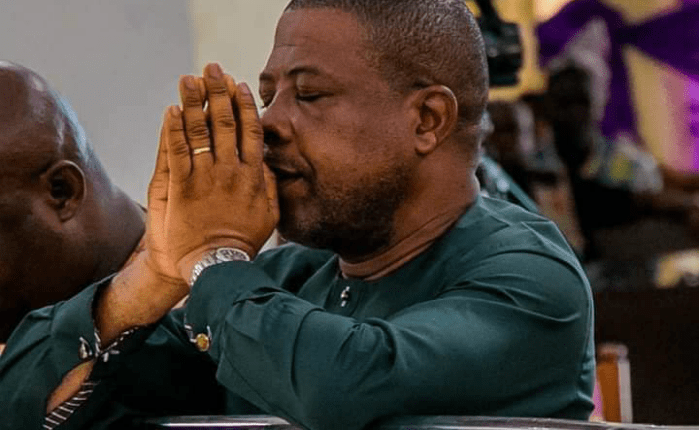
In a bid to revert the Supreme Court judgement, the Imo State chapter of the Peoples Democratic Party, Saturday, declared a one week fast and prayers for God to restore the mandate of Emeka Ihedioha.

The party stated that the spiritual exercise would commence on Sunday, February 9 and terminates on Sunday, February 16, 2020.

In a statement signed by the party’s State Secretary, Nze Ray Emeana, on Saturday, the party stated that “during this period, all ward excos should request for mass in their local churches and assemble at LGA party secretariat daily at noon for prayers and breaking of fast.

“Prayer point is asking God to intervene and restore the victory of Emeka Ihedioha as the duly elected governor of Imo State.

“We enjoin the Imo people to remain peaceful and prayerful as we await judgment on the review filed by the winner of the governorship election, Hon. Emeka Ihedioha at the Supreme Court.”

The statement also instructed the party members in the state to dress in black during the spiritual exercise.


Get real time updates directly on you device, subscribe now.

TheNigerian News Politics Review – February 3rd to 8th

0

Our politics connoisseur, Sylvanus Okpe, reviews the biggest stories from his ever-busy world in the last one week.

Why I can’t interfere in Ganduje, Sanusi feud – Buhari

President Muhammadu Buhari, on Friday, lamented that he lacks the constitutional powers to wade into the lingering crisis between Governor Umar Ganduje of Kano State and Emir Sanusi III.

The President stated this when he received the Governor Ganduje and some elected members of the National Assembly from Kano state at the statehouse. Details>>>>>>>

Furore over fresh constitution review by Senate

Divergent reactions have continued to trail the move by the Nigerian Senate to review the 1999 Constitution.

The President of the Senate, Ahmed Lawan had constituted a 56-man committee charged with the responsibility of reviewing the constitution. Details>>>>>>

Edo 2020: Court bars PDP from conducting LGA congresses

A High Court sitting in Ekpoma, Edo State, has restrained the People’s Democratic Party from conducting ward congresses in the state.

Justice Joy Okeaya-lnneh granted the order following a motion filed by former members of Edo State House of Assembly, Hon Eruanga Gallant, Victor Idiakheoa and Jide Obalowoshe. Details>>>>>>

I won’t tolerate any more protests in Imo, Uzodinma says

Governor Hope Uzodimma of Imo State has threatened to deal with politicians sponsoring protests in the state.

The governor stated this while addressing members of the National Union of Road Transport Workers and Joint National Association of Persons with Disabilities (JONAPWD), who organised a solidarity rally for him. Details>>>>>>

Reps reject Innoson made- in-Nigeria SUVs as official vehicles

Members of the House of Representatives have rejected plans to hand over Nigerian-made Innoson cars as their official vehicles.

Accordingly, it was further learnt that the lawmakers insisted on brand new imported SUVs against the locally assembled and made-in-Nigeria brands. Details>>>>>>

INEC deregisters 74 political parties

The Independent National Electoral Commission (INEC) said it has de-registered 74 political parties.

The commission further announced September 19 as of the date for the governorship election in Edo State and October 10 for that of Ondo state. Details>>>>>>

I have kept my promise to end Boko Haram – Buhari brags

President Muhammadu Buhari, on Thursday, said that he has delivered on his promise to end Boko Haram and other forms of criminalities during his inauguration as President in 2015.

He prided that the subsequent decimation of the terror groups has shown that he kept his word. Details>>>>>>

Drama as protest disrupts APC South-West caucus meeting in Osun

There was a mild drama at the secretariat of the All Progressives Congress (APC), Osun State chapter, Osogbo, on Tuesday, when the meeting of the party’s caucus in the South-West was disrupted by protest from members of the APC in Ekiti State.

The protest was not unconnected to the squabble to occupy the position of the APC Deputy National Chairman, South, which became vacant following the appointment of Otunba Adeniyi Adebayo as Minister of Trade and Investment by President Muhammadu Buhari in 2019. Details>>>>>>>

South West Governors ratify legal framework for Amotekun

0

By Bukola Olasanmi

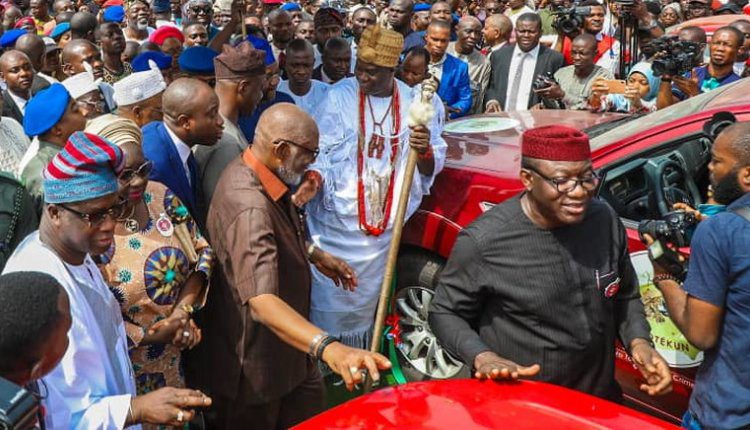
The Attorneys-Generals of the six South West states have put finishing touches to the required legal framework for the operation of Operation Amotekun, the security outfit for combating crimes in the region.

The AGs concluded work on the legal framework on Friday night.

According to the available details, each of the states will have its legislation and security network operatives, which will be known as Amotekun Corps.

Those who attended the meeting, which started at about 7pm in Ibadan, the Oyo State capital, were: Prof. Oyewole Oyewo (Oyo), Oluwafemi Akande (Osun), Olawale Fapohunda (Ekiti), Adekola Olawole (Ondo), Akingbolahan Adeniran (Ogun) and Moyosore Onigbanjo (Lagos), who was represented by the Director of Civil Litigation, S.A. Quadri.

The meeting, which lasted for about three hours behind closed doors at Davies Hotel, Bodija, Ibadan, was also attended by officials of the South West regional think tank Development Agenda for Western Nigeria Commission, led by the Director General, Seye Oyeleye.

Speaking with newsmen after the meeting in the presence of others, Oyewo said the bill will be sent to the various states Houses of Assemblies after it has been seen by the separate State Executive Councils.

He said the operational details and structural procedures will be common across the six states to allow for avenues for operational collaborations.

He reiterated that the security network is to complement the existing apparatus but would be using local intelligence, expressing optimism that the bill will not take too long before being passed to laws by the individual states.

Oyewo said: “The meeting of the Attorneys-General of the six South West states just concluded and we deliberated on the plan to evolve a collaborative security network/agency in the South West.

“We have been able to come up with a legal framework to back up such establishment of security network in each of the states.


Get real time updates directly on you device, subscribe now.

RMAFC may slash salaries of President, VP, CJN, Governors, NASS members

0


There were indications at the weekend that the Revenue Mobilisation, Allocation and Fiscal Commission (RMAFC) may cut the salaries and wages of politicians and judicial officers, including those of the president, the vice president, governors of the 36 states of the federation, National Assembly members and other political office holders.

Chairman of the commission, Mr Elias Mbam, who spoke to journalists in Abuja at the weekend refused to disclose whether the review of the salaries and wages of political officeholders and judicial officers was going to be downward or upward.

He stated however that the salary review was in line with current economic realities and President Muhammadu Buhari’s directive to the RMAFC team to “do everything to increase the size of the cake, block leakages and reduce the cost of governance”.

He also revealed that the commission has commenced verification of the books of Deposit Money Banks (DMBs) collecting revenues, including Stamp Duty on behalf of all the government revenue generating agencies from January 2016 to December 2019.