Home Blog Page 2532

Lawan, APC mourn Ignatius Longjan

0

By Sylvanus Okpe

Senate President Ahmad Lawan has expressed sadness over the death of the lawmaker representing Plateau South, Ignatius Longjan.

The chairman of the National Assembly also commiserated with the family of late Sen. Ignatius Longjan who died at a Turkish hospital in Abuja on Sunday.

Special Adviser on Media to Lawan, Ola Awoniyi, made this known in a statement on Monday in Abuja.

The Senate president also extended his condolences to the government and people of Plateau over the sad loss of the senator who represented Plateau South at the Senate before his death.

Lawan acknowledged the contributions of Longjan both at the state and national levels as former Chairman of the Board of Governors of the National Institute for Policy and Strategic Studies, NIPSS, Kuru.

He was also a former Chief of Staff at the Government House in Jos and Plateau Deputy Governor between 2011 and 2019.

Mr Lawan said that the Senate would miss Longjan who was Vice Chairman of the Senate Committee on Culture and Tourism as well as the Senate Committee on Foreign Affairs.

The Senate President prayed God to grant those he left behind the fortitude to bear the great loss.

Similarly, the All Progressives Congress (APC) joined to mourn the late senator.

In a statement by Mallam Lanre Issa-Onilu, National Publicity Secretary, the ruling party “We extend our condolences to Senator Longjan’s immediate family, constituents, the National Assembly, the government and entire people of Plateau State. May the Almighty God grant all comfort during this time of grief and may the soul of Senator Longjan rest in peace.

” and implementation of policies that impact positively on the people. He was a loyal party man who championed party supremacy over personal interest in all party matters and decisions, as displayed in the emergence of the leadership of the current 9th National Assembly.”


Serving corps member, 8 others abducted on Abuja-Lokoja road

0

By Bukola Olasanmi

Gunmen suspected to be kidnappers, have abducted a batch A corps member, Samuel Adigun, and eight others near Idu village, along Abuja -Lokoja road.

The corps member is serving with Abaji area council secretariat, when he boarded a bus on his way from Abaji to Lokoja.

He was kidnapped along side other passengers. A resident of Idu village, who preferred anonymity, told our reporter on Monday that the incident happened last Thursday afternoon, after the gunmen wearing army uniforms with sophisticated weapons emerged from the bush.

He said the gunmen suddenly shot the tyres of the unmarked Toyota commuter bus, which he said forced the driver to stop, before the gunmen whisked away the corps member and eight other passengers. “I was actually inside the river by the bridge washing my motorcycle, when I heard a sound of gun shot and I quickly take cover. Until some few minutes later when the kidnappers emerged from the bush and whisked away passengers inside the bus,” he said. Meanwhile, a senior staff with the National Youth Service Corps (NYSC ) who preferred anonymity, confirmed the abduction of the corps member, saying contact has since been established with kidnappers as negotiations were ongoing. “Even as I am not position to speak to the press about the incident, but a contact has since been established with kidnappers, which we are hoping that the victim would be set free either today or tomorrow, ” he said. When contacted, the spokesman of the Kogi state police command, CSP Williams Aya, promised to call our reporter back in 5 minutes, which he didn’t call back after waiting for 15 minutes


Malabu oil scam: Adoke gets fresh bail

0

By Bukola Olasanmi

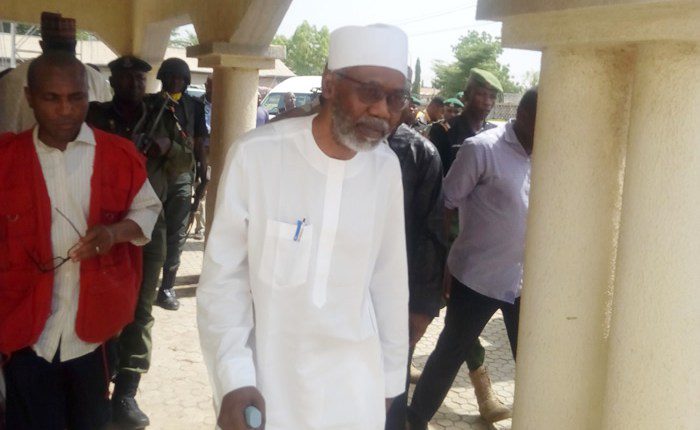
A Federal high court in Abuja has granted bail to Mohammed Adoke, former attorney general of the federation, on liberal terms.

The Economic and Financial Crimes Commission (EFCC) had refused to release him after he fulfilled the terms of a previous bail he was granted.

The anti-graft agency had re-arraigned him for alleged money laundering but Binta Nyako, the presiding judge, granted him bail.

She held that she would rely on the bail conditions previously given by Abubakar Kutigi, judge of a federal capital territory (FCT) high court in Gwagwalada, where Adoke and six others were arraigned on 42 counts of alleged fraud.

Kutigi had granted Adoke bail with a bond of N50 million. He also ordered the former AGF to produce one surety who has a landed property in the FCT.

The surety must provide evidence of tax clearance for the last three years. The defendant was also ordered to submit his international passport to the court and to sign an undertaking to always attend trial.

In her ruling, Nyako said although the two cases were different, the courts are of the same jurisdiction. She ordered the EFCC to respect the order of the court.

She said: “I have no more conditions to add. I take the same conditions as the FCT high court.”

Nyako ordered the anti-graft commission to deposit the defendant’s passport which is in its custody before the high court in Gwagwalada.

Adoke and Aliyu Abubakar, a businessman, were arraigned on seven counts of alleged money laundering. Adoke was said to have received gratification to the tune of N300 million from Aliyu Abubakar in September 2013.

The duo pleaded not guilty to the allegations preferred against them.

Mike Ozekhome, Adoke’s counsel, had urged the court to grant bail to his client on liberal and favourable terms.

He prayed that his client should not be remanded in custody of the EFCC owing to the mental torturewhich he was subjected to.

The case has been adjourned till April 1 for commencement of trial


Nigerians tasked to rise up against plot by Iran, Amnesty International to destabilize the country

0

By Bukola Olasanmi 

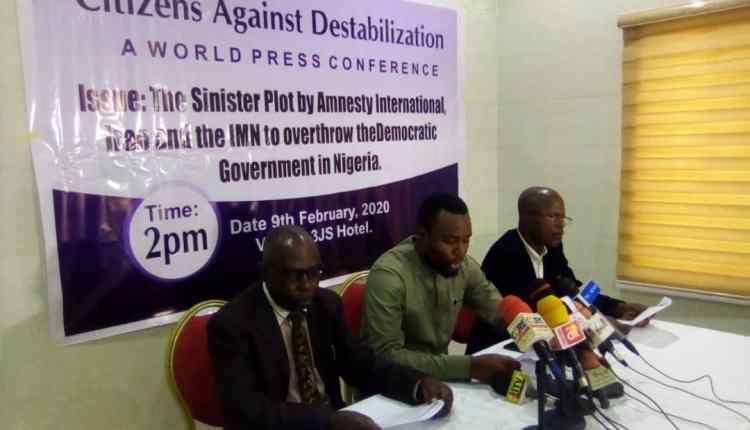
The Citizens Against Destabilization (CAD) has urged Nigerians not to succumb to the plot by the Iranian government and Amnesty International to destabilize the country.

CAD made this known at a press conference on Iran’s nefarious plot to wreck havoc through their proxies on Sunday in Abuja.

In a statement signed by President, Comrade Stephen Okenarh, the group revealed that the destabilization plot by Iran is part of the broader strategy towards securing the release and escape into exile of their stooge and leader of the Islamic Movement of Nigeria (IMN).

According to them, Iran had budgeted a whopping $500 million for the destabilization plot and this much is evident in the way and manner the adherents of the IMN had carried themselves in recent times.

The Citizens against Destabilization, however, stated in unequivocal terms that should the federal government fail to act fast in addressing the threat posed by the IMN and Amnesty International, the consequences might eventually lead to the disintegration of Nigeria.

The group, therefore, urged Nigerians to disregard any statement from Amnesty International and their affiliates on Nigeria as this is indeed a part of the plot to make the citizens gullible for the smooth execution of the destabilization plot as arranged by the Iranian.

Read full statement below:

The Citizens against Destabilization, a Civil Society Organization at the vanguard of exposing the nefarious plots by organizations and individuals against Nigeria through its vast network of members, is holding this press conference to intimate Nigerians on a recently revealed conspiracy against the Unity of Nigeria.

We wish to state that the Government of Iran has perfected plans towards the destabilization of Nigeria in cahoots with some organizations and individuals in Nigeria.

The destabilization plot by the Iranian Government is part of the broader strategy towards securing the release and escape into exile of their stooge and leader of the Islamic Movement of Nigeria (IMN)

This has consequently seen to the covert supply of arms and ammunitions to the IMN in Nigeria through unconventional means all aimed towards launching a violent attack on Nigeria that would include jailbreaks across the country.

We have credible information stating that the Iranian Government had budgeted a whopping $500 million for the destabilization plot against Nigeria, and this much is evident in the way and manner the adherents of the IMN had carried themselves in recent times.

The Citizens against Destabilization wishes to state that the Iranian Government had also enlisted the services of Amnesty International to spread propaganda against Nigeria through the publication of false and fictitious reports meant to distract the security agencies in an attempt to allow the arms piling and movement of the IMN across the country where there are prisons and concentration of critical government infrastructures marked for destruction.

This much Amnesty International has agreed to do as credible information at our disposal indicates that colossal sum of monies was paid for these services to the country representative of Amnesty International in one of the African countries to evade the prying eyes of the EFCC and the DSS in Nigeria.

The Citizens against Destabilization wishes to state in unequivocal terms that should the Government fail to act fast in addressing the threat posed by the IMN and Amnesty International; the consequences might eventually lead to the disintegration of Nigeria.

We also wish to state that this sinister plot has reached the peak, and it’s only a matter of time before the full implementation across the country in an operation tagged unleash sorrow, tears, and blood.

The Citizens against Destabilization wishes to inform members of the general public that it should do well to disregard any statement from Amnesty International and their affiliates on Nigeria as this is indeed a part of the plot to make the citizens gullible for the smooth execution of the destabilization plot as arranged by the Iranian Government.

This is of great concern because the Iranian Government must understand that Nigeria is a sovereign country that is governed by laws and any attempt to impose their ideologies on Nigerians, as they have attempted with the sponsorship of the activities of the IMN in Nigeria, would be resisted by all and sundry through civil actions.

The Citizens against Destabilization wishes to call on our security agencies to beam their searchlights on the activities of the IMN and Amnesty International to nip in the bud the destabilization plot against Nigeria. We also call on the Federal Government to seek collaboration with its western allies in truncating this threat posed by the Iranian Government to Nigeria.

The Citizens against Destabilization wishes to call on the Federal Government to expel these agents of darkness out of the country for the Peace and Unity of our country. Enough is indeed Enough.


‘Coronavirus, a serious imminent threat to public health’ Britain declares

0

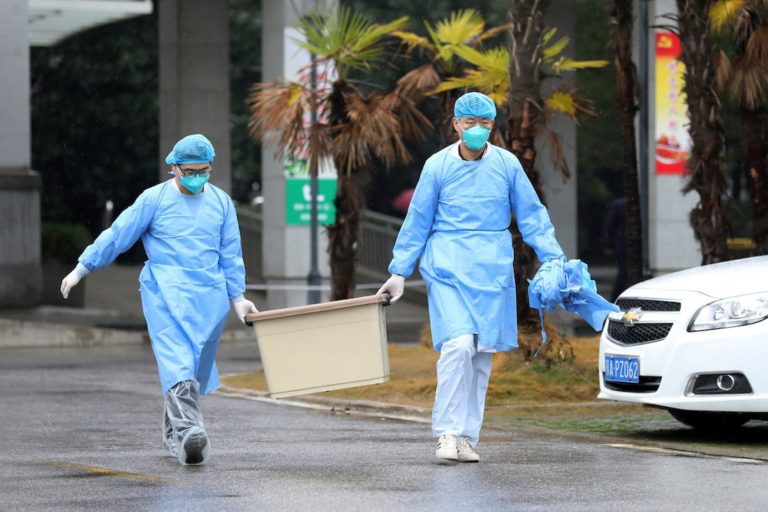
Britain on Monday declared the new coronavirus a serious and imminent threat to public health, giving the government additional powers to isolate those suspected of being infected.

Britain has recorded four cases of coronavirus so far while British nationals, who have been flown back from Wuhan, the Chinese city where the epidemic broke out, are being quarantined for 14 days. The virus has killed more than 900 people, all but two in mainland China, and has spread to at least 27 countries and territories. Britain’s health ministry said new measures were aimed at delaying or preventing further transmission of the coronavirus.

“We are strengthening our regulations so we can keep individuals in supported isolation for their own safety and if public health professionals consider they may be at risk of spreading the virus to other members of the public,” a health ministry spokesman said.

Arrowe Park Hospital, near Liverpool in northern England, and Kents Hill Park, in Milton Keynes, have been designated as isolation facilities. The death toll of 97 on Sunday was the largest in a single day since the outbreak was detected in December. It has been linked to a market selling animals in Wuhan, the capital of Hubei province.

A team of experts headed by the World Health Organisation (WHO) was flying into Beijing on Monday to help assess the latest outbreak. The virus had infected more than 330 people. The epidemic has caused huge disruptions in China with usually teeming cities becoming virtual ghost towns during the past two weeks as Communist Party rulers ordered lockdowns, canceled flights and closed factories and schools.

China’s central bank has taken a raft of steps to support the economy, including reducing interest rates and flushing the market with liquidity. From Monday, it will provide special funds for banks to re-lend to businesses combating the virus. (Reuters/NAN)

Why I displayed my four wives by Honourable Doguwa

0

Bukola Olasanmi

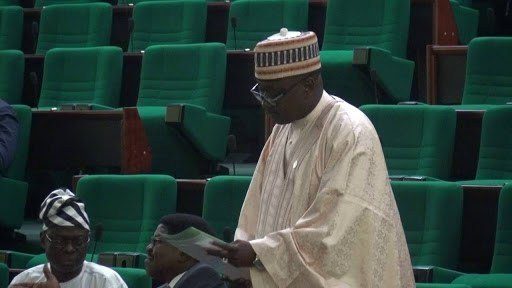
House of Representatives Leader Hassan Ado Doguwa has threatened a woman columnist, Fatima Abubakar, for criticising him that he brought his four wives to the floor of the House during his inauguration.

The lawmaker expressed anger at such criticisms, saying what he did was in line with his religious practice and that he was proud to have four wives.

He said: “I’m not only disappointed, I’m disenchanted by the kind of reactions I received, especially on social media, when, on the day of my swearing-in, I brought my four wives with me to the floor of the House of Representatives. I told the House that these women are here to respect the institution of the House of Representatives.

“These are my legitimate wives; everybody knows them, starting from Abuja down to my village. I’m a Muslim; not only a Muslim, but a proud practising Muslim.

The most fundamental pillar of every faithful person in Islam is that Prophet Muhammad (SAW) should be your watchword, the Prophet should be your role model in actions and in thoughts.

So, as a proud Muslim, marrying four wives is in all ramifications copying the practice of Muhammad (Peace be upon him).

“I’m allowed by my religion to marry four wives, produce and reproduce.

“So, if there’s anything that can now be subject of ridicule, subject of reactions, write-ups on pages of papers, and unfortunately, sometimes by Muslims.

“I have to be very particular about a lady called Fatima Abubakar, who wrote an analysis on the back page of Daily Trust. The paper is seen as a northern paper. The writer is presumably a Muslim.

“Fatima Abubakar wrote a column, making references to my name, attacking my personality, attacking my family. If she’s really a Muslim, I should not be a subject of ridicule simply because I took the challenge of Prophet Muhammad (Peace be upon him)

“What I did on the floor of the House, for me, was an act of pride. For my four wives, it was an act of pride, and all of them went home very happy. It’s because I have control over them.

“I’m not a soldier; I’m a democrat. For me to bring together my four wives to the floor of the House and they all played along with me in peace, that confirmed that I’m a reliable husband.

“I want to say with all sense of sincerity and seriousness that as long as I’m a free Nigerian, if anybody dares to write about me in this kind of a ridiculous manner, either about my family or my person, I’m telling you I’ll take it up. I must take it up. I’ll not take this lightly, and I want you to take this public.

“This is unfortunate. Fatima, who wrote about me in Daily Trust …has no business with my family. None of my wives was embarrassed; none of my children was embarrassed.

As a good Muslim that I am, I tell you that I’m proud of my family. I’m proud of marrying four wives; I’m proud these four wives are not even imported.

“We have a lot of people here who call themselves VIPs and who went out to import wives. My wives are indigenous wives; not only are they indigenous, they are my village people. All four of them are from Doguwa Local Government Area.”


Nnamdi Kanu threatens to hunt down the children of Abia Police Commissioner, Ene Okon 

0

Nnamdi Kanu, the leader of the Indigenous People of Biafra (IPOB) has threatened to hunt down the children of Abia Police Commissioner, Ene Okon if any killing occurs at the burial ceremony of his parents in Afaraukwu on Friday February 14.

The IPOB leader addressed the Abia Commissioner as “Inspector Okon” and also attached his photo in the Facebook post in which he passed off his threat.
Nnamdi Kanu wrote;
“If Inspector Okon and his commanders come to my father’s house to kill anyone on 14th February 2020 at my parents’ burial, we will hunt down their children.”
This is coming few days after the Abia Commissioner, Ene Okon warned IPOB members to steer clear of the burial.

He was quoted saying;
“Do you think we will sit down here and allow IPOB to participate in the burial? Whoever thinks along that line is fooling himself. IPOB will dance during the burial and the police elephants will dance too.

“I have already reached out to the traditional prime minister of Afaraukwu (Nnamdi Kanu’s community) and told him that if they want the burial to go smoothly and for police to give them security, they should tell IPOB not to near the area not to talk of participating in the burial. If they fail to adhere to what we’ve told them, that means they do not want the burial to go on smoothly because we are going to scatter the place.

“IPOB is proscribed by the Federal Government. I, as the Commissioner of Police in Abia cannot sit here and allow any proscribed group to operate anywhere in this state. I am saying this again for emphasis that there is no way police will allow a proscribed group to participate in the burial of the King and Queen of Afaraukwu simply because they are the parents of their acclaimed leader, we will not allow that and we cannot take anything for granted in the face of abundant intelligence on threat by IPOB.

“If the burial committee writes to police to provide security during the burial, we will oblige them on the condition that they will guarantee us that IPOB will never, ever be part of the burial, IPOB will never get near there, in fact that IPOB will never, ever enter Umuahia. That police will not see any Biafra flag, I
POB insignia or IPOB member disguising as Jewish or Zionist Church members”.

Is Nigeria still winning the war on insecurity?

0

By Philip Agbese 

Twine main polemics dominate national discourse on security issues in Nigeria. The first camp basically comprises ardent critics and opposition members who are hostile to the administration of President Muhammadu Buhari. To this club of Nigerians, enmeshed in a partial mindset, its more convenient to score the national government led by President Buhari and the ruling APC zero on security.
They claim since 2015, Buhari has proved pitiable helplessness in taming insecurities in the land, which in their perceptive view, rather escalates every day.  This is altogether not unusual with opposition elements in any clime, which does not necessarily obviate the reality anyway.

There is another clan of people. They are the impartial and neutral set of Nigerians, who glowingly glorify President Buhari for impacting positively on the previously enervating insecurity in the nation. They argue most trenchantly that there is nowhere that insecurity in a country is completely conquered and the sense can only stick if it dawns on anyone that the United States of America, the United Kingdom and many others are still under the spell of terrorism.
It is utopian to think insecurities anywhere should end in a jiffy. Rather, it is reduced to the barest minimum as exemplified by President Buhari, if measured against the insecurity realities prior to his ascension to power in 2015.

These disparate and counter-reactive views on the insecurity situation in Nigeria have subsisted. However, all opposing camps accept that wild insecurity engulfed Nigeria and predated the administration of President Buhari. The anti-establishment analysts on security cite resurgent acts such as  in Boko Haram/IWSAP terrorists; armed banditry, ethno-religious conflicts,  organized and commercialized kidnapping  and communal strifes to impulsively  buttress their standpoint.

But the pro-establishment camp, whose voice aligns more to the truth, ancient wisdom and informed reason extrapolate that such erratic traces of insecurities are expected, normal and curbed gradually to ensure greater safety of lives and property. It is not difficult to discern the reality of an immolated insecurity by the ruling APC government led by President Buhari, despite intermittent resurgence of attacks and killings. Those who obstinately stick to views that nothing has changed on security in Nigeria under the Buhari Presidency deserve pity. It is certain that they are pretentious, prejudiced, sentimental or genuinely oblivious of its intensity before now.

The severity of insecurity threats to Nigeria was encapsulated in President Buhari’s 2020 New Year open letter to Nigerians tagged “Nigeria’s Decade;” He stated that “We have been fighting on several fronts: violent extremists, cultists and organized criminal networks. It has not been easy. But as we are winning the war, we also look to the challenge of winning the peace, the reconstruction of lives, communities and markets. The North East Development Commission will work with local and international stakeholders to help create a new beginning for the North East.”
The presidential perspective on insecurity in Nigeria is more clearly elucidated by the recent position of the Arewa Consultative Forum (ACF) through its Secretary-General of ACF, Mr. Anthony Sani.
Appraising President Buhari’s administration on security of the nation, especially in Northern Nigeria where Boko Haram had engrained its  reign of terror , the ACF said; “He, therefore, decided to confront the challenges and recorded some appreciable successes which consigned Boko Haram to fringes of the North East and their attacks were reduced to occasional suicide bombings using small girls. Consequently, the fears which hitherto overwhelmed the North gave way to hope and confidence that comes with normal life.”

Two elements can be deduced and denoted from the submissions of ACF, a body which also has Northern Nigeria as its primary constituency. The first is that Boko Haram and its later variation is no longer the severe nightmare of the entire North and, again, its atrocious activities have been consigned to the fringes of the Northeast equally being tackled. It is no less a reflection of the true reality. Truth be told that many Nigerians started enjoying this bliss from terrorism and allied criminalities as far back as 2016. There was a time armed banditry and cattle rustling sacked and permanently displaced natives in most states of the Northwest and same for monstrous militancy in the Niger Delta. The Nigerian Army’s series of special operations flushed out these criminal elements and restored peace and normalcy.

No one has ever argued that insecurity has deserted Nigeria terminally, but it is considerably tamed. Unfortunately, though, the relaxed tide in insecurities across the country has irked certain interests who believed the best style to de-market the administration of President Buhari is to infuse political dimension into security.
Therefore, apart from covertly recruiting and arming youths, while silently pursuing political ambitions, the consciousness of such plotters of breach of security has never reconciled with the reality of a changed scenario on the security trajectory.

As far back as 2016 signs to this effect manifested as trumpeted by the COAS and leader of the counter-insurgency operations, Lt. Gen. TY Buratai.  He told an unsuspecting nation, which incidentally never spared a thought to his outbursts or acted appropriately that ”All these cries of insecurity which some groups and individuals are taking it as a political game I think they should have a rethink because it is no longer the case. ”

Interestingly, shadows of the induced and politically motivated insecurity in the country would later de-robe itself with public statements from prominent opposition members and their minions. In one of his campaign affronts on the Buhari Presidency in 2018, the 2019 PDP presidential candidate, former Vice President Atiku Abubakar gave the inkling of politically induced insecurities, in a somewhat blackmailing fashion of Nigerians to magnate undeserved votes.
Atiku was blunt that if Nigerians fail to vote him as their President in 2019, insecurity and herdsmen killings in the country will continue. The statement smacked of the insight of an insider.  But as usual Nigerians ignored him. It was only when Boko Haram/ISWAP terrorism and herdsmen bloodbath intensified in the months leading to the 2019 general elections that the full import of his utterances dawned on Nigerians. In protests to such devilry, Nigerians again massively reelected Buhari.
Nigerians were also appalled at the quantum of illegal/ smuggled arms and ammunition into the country in the build-up to the last general elections. Security agents impounded many of these illicit arms and ammunitions, at different points in the country.  And to every sane mind, these arms in the possession of political thugs were actively used to cause electoral violence and killings in the few areas security vigilance relaxed. Most of those armed have retained these arms; after being abandoned by their masters.
They have turned the force and anger against innocent Nigerians by perpetrating all manner of crimes, attacks and killings. Last year, a bewildered President Buhari directed the Inspector General of Police (IGP) to mop us these arms, as indication of his perturbance.
In fact, each time these criminal armed gangs pull the trigger in mindlessly violent extermination of Nigerians, it is the opposition’s voice that is heard first. And it is usually rare in sympathy with victims of such attacks, but virulent castigation of the Buhari Presidency’s failings on securing lives and property of Nigerians. Even when external bodies which independently understudies the insecurity dilemma in Nigeria applauds Buhari’s efforts, opposition elements are quick to counter the narratives’ as false.
A recent report by the United States based Non-Governmental Organization by the identity, “Centre for Diplomacy and Democracy” praised President Buhari for standing up to the challenge of multiple insecurities. And   Atiku again broke his silence.
After pouring invectives on the NGO, Atiku furiously stated that “President Buhari and the APC have shown without equivocation that the job at hand is overwhelming for them. And because they lack the basic clue of how to tame the bogey that they have created….”
A part from the jejune that drapes throughout the length and breath of the statement; the contents’ riled,  rhymed, alluded and indeed, connoted the actualization of the plots on  threats  of insecurity Atiku reeled out before the general elections.
Whatever anybody thinks, and including the opposition elements, President Buhari and Nigeria are winning the war on insecurities. And like President Buhari remarked on 2020 New Year day epistle; “The Federal Government will continue to work with State Governors, neighbouring states and our international partners to tackle the root causes of violent extremism and the networks that help finance and organise terror. Our security forces will receive the best training and modern weaponry… We will use all the human and emerging technological resources available to tackle kidnapping, banditry and armed robbery.”

Agbese wrote this article from the United Kingdom.

We’re not constrained by manpower, equipment – Buratai

0

Lieutenant-General Tukur Buratai, the Chief of Army Staff (COAS), in an exclusive interview with Daily Trust on Sunday spoke on how his troops are winning the war against terrorism in Nigeria, the strategies employed by the insurgents, the preparedness of the Nigerian military to tackle the ISWAP and other security issues bedevilling the country.

*We understand that you visited the National Assembly, together with your colleagues in other security agencies. What’s the outcome of the discussion, and what necessitated it?*

You are very much aware of the hues and cries over insecurity across the country, the seemingly resurgence of Boko Haram terrorists in the North-East, kidnappings and banditry in the North-West, and some other criminal clashes. This calls for concern. The government is very concerned, and in their constitutional responsibilities, the National Assembly felt there’s a need for us to meet and discuss these issues. Essentially, that’s why we were invited. And we had a very useful discussion on the security situation in the country, and of course, the way forward. The most important thing is that there is an understanding for us to address the issues. One interesting thing is that we have always been proactive. We have always been pursuing the goal of ensuring security across the country. We have agreed to work together, based on understanding, and for them to give us the support needed towards a successful execution of our mandate. And to bring insecurity in the country to the barest minimum. This is the key issue we all agreed to pursue; and let everybody go about their normal businesses.

*We are aware that you are outstretched in almost all the states in the country; did your discussion address the issue of manpower shortage in the army?*

Some of the issues of specifics are strategic. These are issues we would continue to address without even being prompted or getting unnecessary tension or misunderstanding. These are issues that have to do with strategic and operational issues. The issue of internal security is not primarily the responsibility of the military; we are called in to support the police, and that is the grand norm. We always come in to support the police, and we are doing that.

The issue of manpower is something we have always addressed as it comes. There is a difference between the 1960s, 1970s, 1980s, 1990s and now. So we would not see the issue of manpower as anything that has to do with fighting insecurity. This is because we have so many force multipliers that would facilitate whatever shortcoming we have in manpower. And that’s very important. The issue of manpower is not something you would start today, and tomorrow you say you have sufficient.

It requires time to train and equip the person you trained, as well as organise further training, which is the most important aspect of it. Anybody can have basic training for one week, two weeks, one month, six months, but that is not enough. So personally, I don’t see the issue of manpower as something that is too critical to affect what we are doing on the ground. But it is important. If we are relating insecurity to manpower we may not get the solution, but it is important.

*We understand that there is difficulty in getting the required equipment, especially from foreign countries, is it also affecting the capability of the troops in fighting insurgents and other operations across the country?*

Like the issue of manpower, equipment are very important and quite strategic. We can have all the equipment we need, you can also have all the resources you need to fight insurgency or any war, but if you don’t utilise it well you cannot achieve the needed results. People are talking about equipment and relating it to the resurgence of insecurity; they are also linking both equipment and manpower to the resurgence of insecurity.

This has always been the issue. If there are challenges that crop up at a time, people complain that equipment and troops are not enough. This has always been the trend. I am not saying that these are not the issues; they are quite cogent and important, but we have achieved so much with the present level of equipment we have. From 2015 till date, we have achieved a lot. Let’s cast our minds back to 2015 and 2014 and you would see the extent of damage that Boko Haram was doing. But when we entered 2015, 2016, 2017 you can see that the level of apprehension virtually fizzled out. Your correspondent in Maiduguri cannot say the same thing in 2015 is obtainable today.

He can say the same thing for Damaturu, Mubi, Gwoza, Buni Yadi and so many other places. We achieved that with the same equipment we have. The point is that we are not fighting a regular adversary; we are fighting an irregular enemy. Even the United States, one of the world’s super powers, with all the array of arsenal and equipment in their inventory, cannot say they would win every war.

When it goes to asymmetric and non-conventional warfare, this is what we are facing. Surely, we need more equipment, including booths on the ground. Those are the basics and very important, but we must follow it up with training. We must do tactical and communication training.

We must also get training on equipment and troops operations. We must also get those force multipliers like intelligence equipment, drones, surveillance equipment. Then we have support from the Air Force, the police and government. These are force multipliers and all factors that will lead to success.

We also need support from the press, so you don’t talk of tactical issues. We relay such issues that are organizational, and strictly remain within that narrow perspective, to say this is the cause of the issues, or this is the cause of the insurgency, or this is the cause of the insecurity we are facing. It is far beyond that. As strategists we must always find the way and look for the means to achieve our goals. These are critical.

We are here as strategic leaders, we are not talking of the equipment, we are not talking of manpower, but they are also very critical. What we are doing is to prioritise the men on ground. We prioritise the deployment of equipment, then we now talk of the best use of the space we have. That is what we have been doing, and that is what has brought us to this stage. Yes, on pedestrian interpretation you would just be talking about manpower and equipment, but we are missing the main point, which is critical. We need them in a good number, we need them sufficiently to be deployed to cover key areas. But we must train, which is very important. And we have been doing that, as far as I am concerned.

*You don’t believe there is resurgence?*

It is a minimal resurgence. If you say resurgence, it means in the overall perspective that you guys cannot even stay here. Nobody would stay in Maiduguri. So tell me the intensity of resurgence and in what perspective. I just came back from Maiduguri last week. You may have watched the documentary. In the same period I opened the road from Maiduguri to Damboa and Biu, but social media was saying no road was safe in the whole of Borno State.

We are relying so much on terrorist propaganda. It is bad to kill one person, but the rate at which the propaganda goes out is so alarming. Go to Maiduguri today, nobody is bothering himself. If commuters are attacked on the road, the whole world would hear it and it would overshadow every other peaceful moment enjoyed this period. People are drawn back to pre-2015 challenges.

During that period, every day we had bombings in mosques and churches in Maiduguri; at times three to four times every day. But the attacks started going down. Yes, there was an attack in Limankara and Madagali; there were also abductions and killings by terrorists, but all those things are limited to Borno State.

*Why is there a threat on the Maiduguri-Damaturu road?*

In 2016 there was no threat on that road, and people were plying it. In 2017 there was no threat and nobody asked that question. In 2018 there was no issue of abduction along that road and nobody would ask that question. It was the same thing in 2019 until around December/January when they started attacking. But people have not asked why that road has not been closed. All these years, there was no threat to anybody on that road; it is only within these three months that everybody is raising the alarm, and it has overshadowed previous efforts, even the ongoing efforts in other places.

When we introduced this Super Camp concept we had some opposition. I don’t know why anybody would be interested in operational or tactical issues. You are not a military man or tactician; you are not a strategist in military doctrine, but suddenly a strategy was adopted and you said no. When we adopted this Super Camp strategy, we were completely in a different mode of operation and needed to realign and redeploy our troops, units and formations to those identified gaps. It took us time to identify these gaps. When we bridged those gaps, a seemingly peaceful road is no longer tenable to the Boko Haram terrorists.

It caused a serious threat to their activities. They were used to crossing and moving about, but what they are doing now is using abductions to force the troops to leave that area. They are no longer finding it easy, but they would do anything possible to dislodge the troops there. But as at today, it is not possible for them. It is just a matter of time.

We have gone this far since 2015 and we are moving. Insurgency is not what you defeat and it would just fizzle out; they would revert to other tactics. That is terrorism. They will promote propaganda, to the effect that all the institutions of government would be seen to be ineffective. This is what they are doing. They are exploiting the fault lines in our economic and political endeavours to expand the gulf of so-called discord and acrimony amongst various ethnic and religious groups. Why are they doing this propaganda, blocking the road and capturing individuals because they are of a particular religion? Unfortunately, they murder those individuals and send it to the world. These are propaganda strategies of the terrorists. You need to study the terrorist propaganda way of operation and see how things are. These individuals may be living with you and you would not know they are terrorists. They have a series of informants and logistics suppliers. They have a series of leadership strata that live in the communities and towns nearby. They pass information and organise those that are hidden along the borders in remote areas or communities who come, attack and go back. They also have a series of recruiters. Looking at it from this perspective, you would see that it is a complex operation you cannot wish to just go. At the National Assembly today, I said indoctrination of the citizens did not start in 2009, it started much earlier. And it grew until it reached that point where they took arms against the state. It is an indoctrination that has taken roots between 10 and 40 years back. And for you to de-radicalise an individual to bring him back to sanity, you think it would just take you three years, four or 10 years? These are people that were brain-washed to believe that when they die they would go straight to heaven. And you think they would believe in you to bring them back to mix with people they refer to as unbelievers? You have to look at this context. How long have all the terrorist activities happening across the world been going on? We must understand this thing. It is an issue of existential threat we are facing as a nation-state. When they were in Kano, Sokoto, Kogi, Niger, Abuja, Jos, Kaduna, Gombe, Adamawa and started penetrating other places, nobody took them seriously. We will continue to wish that they would not attack the next town. You guys can count how many locations they attacked in Abuja, including the Force Headquarters. Does it take a little indoctrination for somebody to load explosives and go to the Force Headquarters and explode? And people are looking at it as merely between the military and insurgents. It is not a war between the military and insurgents, it is between Nigeria and the insurgents.

*Some experts are saying that if you want to successfully counter this insurgency, its leadership must be eliminated. It is believed that this would help reduce the confidence their foot-soldiers have in their course and bring the organisation down. There was a story that some of the Chibok girls were sighted in Sambisa forest. Last week, there was a negotiation, after which they released one of the captives. Since you know where all these people are, when do you think you would be able to eliminate some of the top commanders of these insurgents?*

Decapitation operation is key; and it is in our plan. It may work, and it may not work. Look at Al-Qaida, a group that has taken attention across the world. All the anti-terror operations were focused on eliminating Osama bin Ladin, with the belief that once he was eliminated Al-Qaida would end. But what happened? We had several others that came up after him. It has not stopped.

Back here in Nigeria, it is the same thing. It was believed that when the leader of Boko Haram, Mohammed Yusuf was eliminated (although it was not a government policy), the movement would stop. But another leader came up, Shekau. The Shekau group also split into different factions, and within the two camps they have been trying to eliminate each other. They eliminated one of their leaders.

Recently, Al-Baghdadi was eliminated and they brought up another leader. Instead of being discouraged, they have even been getting stronger. But that does not mean it would not work in certain areas. If there is consistent targeting of the leadership, at a certain point they just have to capitulate. But it has to be comprehensive. I want you to also take note of the difference between military operations and the intelligence line of operations. These two must work together. As far as leadership is concerned, our effort is still working on identifying where they are because you can say they are in Abuja; but where in Abuja. You can say they are in Kaduna, but where in Kaduna? You can also say they are in Falgore forest; which Falgore forest? When you say they are in Sambisa forest, do you know the size of the forest? It requires extensive and intensive surveillance arrangement, very good intelligence to pinpoint and identify all those issues. Nobody is resting on his oars. All these things are being done in search of all other captives, including the Chibok girls. The process is still ongoing, it has not been closed. These are issues that have to do with asymmetric warfare, counter insurgency and intelligence operations, some civil-military activities, and purely civil line of operations, which can lead to so many results.

*If you are targeting the head to decapitate, you must have been on their tracks; how close have we ever gotten close to eliminating Shekau?*

This is a military operation. Late last year, there was a report in which the Air Force bombarded their camps and many of their leaders were eliminated. Even the attack on Damaturu, about two of their commanders were eliminated. In Goneri also, one of their commanders was eliminated. We will continue to target them individually and as a group until we narrow the overall leader. It requires some intelligence.

As I said, this insurgency did not start yesterday; it started over 40 years back.

*What about international collaboration?*

Just recently, Chadians withdrew their troops from the theater; how is it affecting operations? There is this misconception that Chadian troops are withdrawing from the Multinational Joint Task Force (MNJTF) operations, No! They are not withdrawing; the MNJTF headquarters is in N’djamena, the capital of Chad. The Lake Chad Basin Commission is also in N’djamena, so the mission of the headquarters and the command element of the MNJTF are all there.

The MNJTF usually organises operations periodically to identify a particular threat area and all the forces come together, operate and go back to their territories. This was done in 2016, 2017, 2018 and even last year, up to early this year.

They only completed their operations and withdrew to their territory. It was after Operation Yancin Tafki. So they are not withdrawing from the MNJTF. In the real sense, they were not here before the Operation Yancin Tafki; they came for a particular task. And they completed the task and went back. They are not blocking any other area. We had been on ground before they came and we would continue to remain where we are and do our operations without any external force.

*Did their exit open a corridor for the terrorists to operate?*

That’s what I have just said. Which corridor? They have not blocked anywhere, that’s what I said. They came around and were to go back around July. They left and came back around August or September, so there is no gap left.

They left some weeks ago and we have not felt any negative impact since then. Our troops are there and effective. The Islamic State of West African Province (ISWAP) carried out some major attacks in Niger Republic, which led to the loss of over 100 soldiers. The attacks raised the question about our level of preparedness.

*What assurance would you give Nigerians that the ISWAP would not set root in Nigeria?*

What happened in Niger was unfortunate. That area is the border between Niger and Mali. That place is one of the ungoverned spaces. It is a complex environment where there is a lot of movement and foreign countries operating. There are complex operations, with different types of militias, militants, bandits and terrorists. We will do everything possible to protect our troops and our people. We have to increase surveillance across our borders. We have to increase the awareness of troops, as well as the people, to know that any threat being seen would have been envisaged. We are in a good position to counter any of such happenings, and I believe we would not give them that room. We will try to build more confidence in our troops.

*When you met with the National Assembly today, did the issue of your resignation come up?*

No comment on that.
 

Presidency hits Ango Abdullahi, describes him as a paper tiger

0

By Bukola  Olasanmi

The Presidency has described the Northern Elders’ Forum (NEF) as a mere mouthpiece of one man, Professor Ango Abdullahi, devoid of any credible membership.

In a statement by the Special Adviser to the President on Media and Publicity, Mr Femi Adesina on Sunday evening, the Presidency said the Nigerians know better and “don’t need a paper tiger’ to tell them anything”.

“Professor Ango Abdullahi on Sunday signed a statement and declared President Muhammadu Buhari a failure.

“The former vice chancellor signed the statement under the banner of Northern Elders Forum (NEF). Hearing that title, you would think the body was a conglomeration of true elders.

“But the truth is that NEF is just Ango Abdullahi, and Ango Abdullahi is NEF. It is a quasi-organization that boasts of no credible membership, and its leader is akin to a General without troops.

“Before the 2019 presidential election, the one-man army called NEF had shown its antipathy against President Muhammadu Buhari, and its preference for another candidate. They all got beaten together.

“NEF is merely waving a flag that is at half-mast. President Buhari steadily and steadfastly focuses on the task of retooling Nigeria, and discerning Nigerians know the true state of the nation. They don’t need a paper tiger to tell them anything,” the presidency said.


Get real time updates directly on you device, subscribe now.