A special report by the Lake Chad Counter-Terrorism Crusade Network (LCCTCN) has applauded Nigeria for spearheading counter-terrorism campaign in the Lake Chad Basin region.
The group’s commendation followed a thorough research and extensive analysis of the dynamics involved in the counter-insurgency operations of the member countries.
In the report signed by the President, McCarthy Ronald, the group harked back to the genesis of the Boko Haram/ ISWAP menace, reawakening of the Multinational Joint Task Force (MNJTF) and how each nation has fared afterwards.
According to the Lake Chad Counter-Terrorism Crusade Network, aside Nigeria, other countries have not displayed a substantial commitment to the regional efforts towards ending terrorism.
While the Nigerian troops constantly led onslaught against the radical Islamic sect , neighbouring nations held back, especially Chad, with the terrorists finding refuge in their shores.
To put a lasting end to the Boko Haram/ISWAP fighters, the Lake Chad group, however, recommended that other countries must emulate the efforts of the Nigerian authorities.
Read full report below:
Preamble:
The Boko Haram Insurgency in North-East Nigeria has spiralled into the Lake Chad Basin Region comprising of Nigeria, Chad, Niger, and Cameroon. The impact of the insurgency has been felt in these countries, and that necessitated the formation of a Multinational Joint Task Force intending to bring to an end the Boko Haram insurgency.
The Lake Chad Counter-Terrorism Crusade Network, an organization devoted to appraising the effectiveness of the counterinsurgency efforts of the countries under the Lake Chad Basin Region, subsequently researched the effectiveness of the counterinsurgency efforts of the various countries towards bringing to an end the Boko Haram Insurgency.
The research dwelled on military strategies, the commitment of the political authorities of the various countries, as well as the successes recorded in the war against terrorism as well as the sets backs recorded by the different countries.
Introduction:
The Lake Chad Basin is the largest endorheic drainage basin in Africa, centered on Lake Chad. It has no outlet to the sea and contains large areas of desert or semi-arid savanna. The drainage basin is roughly coterminous with the sedimentary basin of the same name. However, it extends further to the northeast and east. The basin spans seven countries, including most of Chad and a large part of Niger. It has an ethnically diverse population of about 30 million people as of 2011, growing rapidly. However, the geographical area that is of concern is the four countries bordering Lake Chad: Cameroon, Chad, Niger, and Nigeria.
The Lake Chad Basin region is the setting of a violent campaign by Jama’atu Ahlis Sunnah Lidda’awati w’al Jihad (People Committed to the Propagation of the Prophet’s Teachings and Jihad), commonly known as Boko Haram. The violence perpetrated by Boko Haram has resulted in the deaths of nearly 30,000 people since 2009, with extensive physical destruction, the displacement of over 2 million people and economic activity has effectively ground to a halt.
From the outset, nationals from Niger, Chad, and Cameroon traveled to northern Nigeria, attracted by Mohammed Yusuf’s charismatic sermons and by the small loans offered to his followers. This thus provided the foundation for a multinational sect.
Given Boko Haram’s pre-2014 focus on north-east Nigeria, neighboring governments initially responded to the threat mainly by keeping the sect under surveillance, and in some cases, reportedly agreeing non-aggression pacts. Governments were reluctant to launch a major crackdown in border regions, possibly for fear of retaliation and, more concretely, owing to their limited capabilities. As Boko Haram’s territorial control expanded across north-east Nigeria and the threat the group posed spread across the borders of Cameroon, Chad, and Niger, regional concerns increased, pushing governments towards military cooperation.
The Multinational Joint Task Force (MNJTF) – created by the Lake Chad Basin Region (LCBC) in 1998 to address cross-border security issues in the Lake Chad region – was reactivated in 2012 with an expanded mandate to encompass counter-terrorism operations. It was given a more specific strategy against Boko Haram at the Extraordinary Summit of LCBC member states and Benin in October 2014. Unlike its previous iteration, the task force included Cameroon among its troop-contributing countries. It was provided with pledges of financial support from international actors, including the African Union (AU).
The mandate included conducting military operations to prevent the expansion of Boko Haram activities; conducting patrols; preventing transfers of weapons or logistics to the group; actively searching for and freeing abductees, including the girls kidnapped from Chibok in April 2014; and carrying out psychological operations to encourage defections within Boko Haram ranks.
Each country agreed to deploy a battalion of up to 700 troops within its national boundaries, in addition to the deployment of soldiers to the MNJTF headquarters.
Nigeria:
Nigeria is a highly complex and ethnically diverse country, with over 400 ethnic groups.
This diversity is played out in the way the country is bifurcated along the lines of religion, language, culture, ethnicity, and regional identity.
Nigeria’s significant response to the insurgency since 2010 has been the deployment of its Joint Task Force (JTF), consisting of the Army, Air Force, Navy, State Security Services, and Police under unified command structures. It encouraged increased intelligence-sharing, force coordination and unity of direction, which are considered essential for any counterinsurgency operation, although this has been limited.
The Nigerian parliament passed anti-terrorism legislation, initially introduced in 2011, in 2013. The law was designed, in part, to facilitate greater counter-terrorism coordination. However, interagency cooperation and information sharing remain limited by Nigeria’s federal structure, which has caused confusion between chief state security officers and federally-controlled security forces.
On his inauguration in May 2015, President Muhammadu Buhari immediately began strengthening cooperation with neighbouring governments and took on the leadership of the Multinational Joint Task Force for the entire duration of its mission.
Counterinsurgency operations by the Nigerian Military increased in scale and power throughout 2015 and 2016. Except for its stronghold in the Sambisa forest and Gwoza Hills in north-eastern Borno state, Boko Haram became confined mainly to Abadam, Mobbar, Guzamala, Kukawa, Gubio and Nganzai local government areas (LGAs) by late 2016. However, continued insecurity prevented the reestablishment of civilian administration in areas ‘liberated’ by the Nigerian Military.
In adjacent border regions, the massive military bombardment of Boko Haram by the Nigerian Military pushed them further into the far northern region of Cameroon, the Lac region in Chad, and the south-eastern Diffa region in Niger. Many militants were killed or apprehended, forcing Boko Haram to resort to coerced recruitment in these areas increasingly.
After a peak in Boko Haram–related violence in 2014 and 2015, the number of casualties attributed to the group fell dramatically. The Nigerian Military pushed Boko Haram out of several provinces in north-eastern Nigeria. However, the group retains control over some villages and pockets of territory. It continues to launch deadly suicide attacks and abduct civilians, mostly women, and children.
The conflict has been primarily contained in the north-east, particularly in Borno state. However, it has displaced millions of people in the region. In June 2018, the Nigerian Army announced that thousands of internally displaced people were to return home.
The Nigerian Military had been the most active amongst the countries in operation in the Multinational Joint Task Force through the renewed concept of Operation YANCIN TAFKI, under Sector 3.
Cameroon:
Cameroon is an example of an increasing number of countries confronting both separatist rebellions and jihadist-armed groups. Two characteristics are nevertheless remarkable in the Cameroonian case. First, the fact that unlike some countries facing similar crises, no confusion is possible between the two insurgent fronts (in terms of territory, social base, resources mobilization channels, tactical interests, and even repertoire of violent action). One deploys under the Boko Haram flag and is located in the northern margins of the country, where hostilities began in 2014. The other, raging since 2017, is linked to secessionist demands within the Anglophone minority in the western regions.
In May 2014, Cameroon declared war on Boko Haram at the Paris Summit. Since then, Boko Haram has intensified its activities in the Far North Region of the country, making Cameroon the second most targeted country, in terms of attacks, by the sect.
The penetration of Boko Haram in Cameroon took place gradually and in several phases. At each period, the group has been able to change its modus operandi and adapt to the response of Cameroonian defense forces. While the first frontal attack of Boko Haram against Cameroon dates back to March 2014, the presence of members of the sect in the Far North was signaled as far back as 2009.
Boko Haram’s interest in Cameroon grew between 2011 and 2013. It was during this period that Boko Haram started spreading its religious ideology, mainly in the Logone and Chari and Mayo Sava divisions of the Far North, recruiting Cameroonians as fighters and using this part of the territory as a rear base or haven.
Specifically, from 2011, in addition to seeking refuge on Cameroonian territory after attacks in Nigeria, members of Boko Haram regularly bought foodstuffs on different markets in the far North. They also infiltrated former networks involved in trafficking, smuggling of motorbikes, adulterated fuel (zoua-zoua), and Tramadol (drug) in the far North.
Boko Haram started launching a frontal attack on Cameroon because the Government strengthened the security apparatus in the Far North and dismantled about ten arms caches of the sect, as well as corridors for the transit of weapons. Cameroonian authorities were in an increasingly untenable situation at the beginning of 2014.
Despite the head-in-the-sand policy adopted at the beginning, which consisted of turning a blind eye on the presence of Boko Haram members in the Far North in the hope that they would not take on Cameroon, the sect continued to abduct foreigners and Cameroonians. Moreover, the Nigerian Government and press accused Cameroon of serving as a rear base and support for Boko Haram. Faced with such pressures and following the abduction of ten Chinese nationals at Waza, the only rational option for Cameroon was to declare war on the sect. Of course, once the war was reported in May 2014, Boko Haram, in turn, increased its attacks in Cameroon to the extent that the country became the second primary target of the Islamist group.
To combat Boko Haram, Cameroon has deployed two military operations, namely Operation EMERGENCE 4 made up of units of the regular army and Operation ALPHA comprising of units of the Rapid Intervention Battalion (BIR), the elite corps of the Cameroonian Military. In addition to these operations, we have the multinational joint task force whose first military sector is based in Mora and comprises of 2450 Cameroonian troops. On the whole, about 7000 men have been deployed by Cameroonian defense forces in both operations they and the Multinational Joint Task Force have efficiently warded off conventional attacks by Boko Haram.
Niger:
Niger has been at war with Boko Haram. The conflict has disrupted the country’s development, especially public finances, and destabilized the southeast, the main scene of armed clashes. In this region, located some 1,350km from the capital and faced with an economic collapse, the battle against Boko Haram has stoked up local intercommunal tensions and exacerbated violence over access to resources.
Nigerien forces have been unable to put a stop to attacks by insurgents, some of whom have links to the Islamic State (IS). The military option has produced results but has also shown its limits. Nigerien authorities initially responded to the Boko Haram threat by keeping the movement under surveillance. They believed that it was mainly a Nigerian problem.
This attitude changed in 2014 when the threat became more pressing. Boko Haram’s territorial expansion toward the Niger border was accompanied by a new push to recruit hundreds of young Nigeriens. Persuaded by its regional and international partners to become more actively involved, Niger joined the military efforts of the Multinational Joint Task Force (MNJTF).
The Diffa region is suffering from both Boko Haram attacks and counterinsurgency measures taken by the Nigerien authorities, such as the extension of the state of emergency introduced in February 2015 that includes a ban on some commercial activities. On the shores of Lake Chad, in the extreme east of the Diffa region, Boko Haram’s presence has aggravated intercommunal tensions, which have degenerated into deadly conflicts since May 2016.
Chad:
Since early 2015, attacks in Chad by Boko Haram have killed hundreds, displaced more than 100,000, and damaged the regional economy of the Lake Chad Basin. Violence peaked in 2015 with suicide bombings in the capital and the Lake region. Chad’s military engagements and its role in the fight against terrorism – around Lake Chad and elsewhere in the region – have mainly been lackadaisical.
To counter the ongoing threat while responding to the immediate and longer-term needs of the population, Chadian authorities need to build on the relatively successful regional security cooperation, start to move away from their highly militarized response to include a more significant civilian component, elaborate a more coherent economic development plan and deal more effectively with Boko Haram.
Boko Haram’s presence in Chad has been most strongly felt around Lake Chad, which lies primarily within Chadian territory. The area combines rich agriculture, pastoralism, and fishing. It is a magnet for migrants from all over the Sahel, leading to tensions over control of resources. Boko Haram has taken advantage of the geography of the lake seeking refuge on its many islands.
The violence Boko Haram unleashed has led to over 100,000 displaced and 7,000 refugees on Chadian territory by the beginning of 2017. In 2015, this heightened longstanding antagonisms between communities and made community-level conflict management more challenging.
Boko Haram’s success in establishing itself on the lake and its recruitment of youths with few prospects despite the area’s economic dynamism cast a harsh light on the commitment of the Chadian authorities.
At present, the profoundly flawed Chadian judicial system fails to deal with the Boko Haram issue: since the start of the conflict, only one – much-criticized – trial has been organized, resulting in the imposition of death sentences on ten suspected members of the group.
Today, between 500 and 1,000 suspected Boko Haram members are reportedly detained at Koro Toro, a prison located in the desert, near Faya Largeau, and dubbed the “Chadian Guantanamo.” The prisoners, drawn from various ethnic groups and nationalities, have one thing in common. In essence, they have all been locked up without prior judgment and for indefinite periods. Some might be active members of Boko Haram, but others are business people. This situation carries risks.
Conclusion:
This report drew lessons from the various countries reviewed. It concluded that, but for Nigeria, the other countries, mainly Chad, have not displayed a substantial commitment to the regional efforts towards ending the Boko Haram menace.
Chad:
Chad is a weak state with a military, known for its brutal treatment of combatants and civilians. In late July, without notifying the U.N., the Chadian Army ordered an evacuation of all islands in the southern basin, warning that anyone who was still there in a week would be considered a member of Boko Haram.
Chadian authorities are ill-prepared to deal with suspected Boko Haram members who have surrendered or been captured.
Chadian authorities should propose clear political options for the future of the lake. They should elaborate on a medium and longer-term plan for the development of the Lake Chad region, together with the development donors and in consultation with the local population. It should be sensitive to the needs of a highly mobile population.
The Chadian Rebels have turned a large swathe of the area in the Northern part of the Lake Chad Basin region into abode from where they launch offensives against the Government of Idriss Deby. The presence of these rebel groups has, in numerous ways, buoyed the operations of the ISWAP faction of the Boko Haram sect, which has continued to leverage on the platform to carry out attacks in Nigeria and retreat to regroup when they come under heavy bombardment from Nigerian troops.
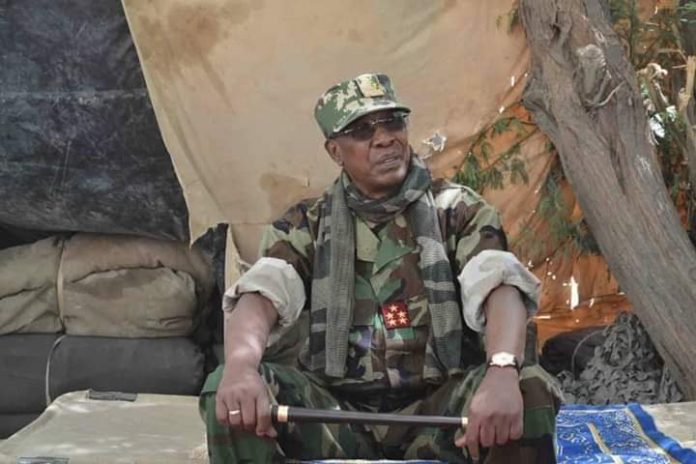
The Government of Idriss Deby has not shown enough commitment to the regional efforts in place by the various countries under the Lake Chad Basin Region. This is mainly because his 30-year rule has been met with stiff resistance from a segment of the population that desires a change in Government.
The Chadian Government has been more involved in fighting the threats posed by rebels seeking to overthrow the Idriss Deby led Government to the detriment of the regional security of the Lake Chad Basin region.
The recent exploits of the Chadian army in operation in the North of Lake Chad was a retaliatory operation in the aftermath of the attack by rebel groups that led to the death of 92 Chadian soldiers.
The operation was haphazardly done in such a way that it has threatened the efforts of countries like Nigeria, Cameroon, and Niger.
Nigeria:
The Nigerian political authorities have displayed a commitment towards ending menace posed by the Boko Haram sect by strengthening ties with countries under the Lake Chad Basin Region.
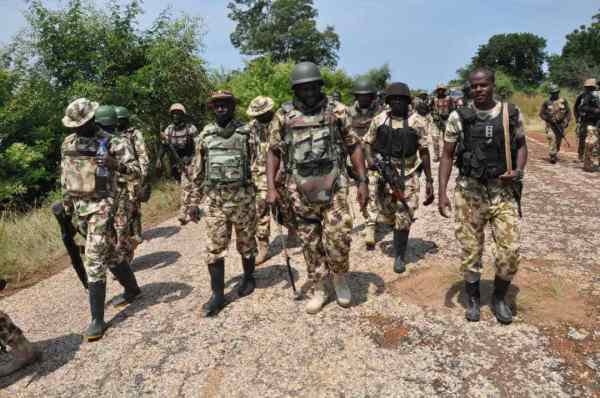
The Nigerian Military has been fully involved in the fight against terrorism. However, their efforts have been mainly hampered by the uncooperative attitude of the Chadian authorities’ that have done very little to curb the activities of rebel groups that have teamed up with the ISWAP faction of Boko Haram to launch offensives in Nigeria.
The Nigerian authorities’ have also been confronted with the challenge of insider collaborations in thwarting the operational effectiveness of its Military. Such a disposition has seen the efforts of the Nigerian Military go unnoticed.
The various stakeholders must join hands with the administration of President Muhammdu Buhari in its final push towards ending the Boko Haram insurgency, given the fact that the francophone countries in the Lake Chad Basin Region have not shown enough commitment in the success of the Multinational Joint Task Force.
The Nigerian authorities’ must develop a strategy that would elicit the much-needed cooperation from Chad since it has been established that the Boko Haram sect has found a haven in Chadian soil from where they regroup and launch attacks in Nigeria.
Cameroon:
The authorities in Cameroon have acted only in times when the Boko Haram threats directly affect them. Their level of commitment to the operations of the Multinational Joint Task Force is below average.
Their lacklustre disposition to Nigeria is somewhat enforced by the fact that Nigeria is not a francophone country. This has seen in the fact that Boko Haram fighters use the route from the North of Cameroon to bring in logistic supplies for their operations.
The Mandara Mountains in Cameroon has also been used as recruitment and training ground by the Boko Haram sect.
The Cameroonian authorities must join hands with Nigeria by ensuring that the Northern part of Cameroon is secured and made uninhabitable for the Boko Haram sect and must also carry out joint operations with the Nigerian troops when the need arises.
Niger:
Niger is challenged economically to face squarely the threat posed by the Boko Haram sect. However, there is a need for unalloyed cooperation with member countries in the Lake Chad Basin Region, especially Nigeria.
The Government in Niger must, as a first, prevent the further recruitment of young Nigeriens into the ranks of the Boko Haram sect as many pieces of evidence suggests that the Boko Haram sect has seen a large pool of willing recruits from Niger due to the economic challenges faced in the country.
The Government in Niger must show commitment to the Multinational Joint Task Force by ensuring that it passes Intel to the command in areas it is handicapped and incapable of dealing with.
Recommendation:
The Lake Chad Counter-Terrorism Crusade Network, having extensively studied the dynamics involved in the Counter-Insurgency operations of the member countries, herby states that the solution to the Boko Haram menace lies in urgent need for all countries to emulate the efforts of the Nigerian authorities.
It has also been established that regional efforts would prove to be the magic wand in the final defeat of the Boko Haram insurgent group. Even though the Nigerian authorities have not relented in its onslaught against the Boko Haram sect, all of these efforts would not yield the desired result as some of these countries have not been forthcoming in carrying out their roles in line with the mandate of the Multinational Joint Task Force.
The threat posed by the Boko Haram sect has assumed a regional dimension. It is expedient that the member countries under the umbrella of the Lake Chad Basin Region put their interests’ aside and work towards attaining a common goal.
The Lake Chad Counter-Terrorism Crusade Network commends the Nigerian authorities for its commitment this far and also encourages Cameroon, Chad, and Niger to join forces with Nigeria in defeating the Boko Haram sect.