Home Blog Page 2474

COVID-19: Reps Seek 2-Month Electricity Payment Waiver for Nigerians

0

The House of Representatives is to consider a fresh Stimulus Bill that will ensure that Nigerians get free electricity supply for two months to mitigate the effects of the COVID-19 pandemic, Speaker Rep. Femi Gbajabiamila has said.

The Speaker said the proposed Bill is to help in boosting the economy through the informal sector as the country prepares for the aftermath of the coronavirus.


The proposed Bill, which will be the second Stimulus Bill by the Green Chamber, is to be considered immediately the House reconvenes from its ongoing break, declared due to the pandemic.

It has, however, been agreed by the leadership of the National Assembly that the resumption date, initially slated for April 7, will be extended by one week in compliance with government’s 2-week stay-at-home policy.

Gbajabiamila spoke at the National Assembly on Saturday during a meeting between the National Assembly leadership and the Minister of Finance, Zainab Ahmad, the Director-General of the Budget Office of the Federation, Ben Akabueze, among others.

The Senate President, in his opening remarks, noted that the meeting, the second in about 10 days, was a testimony of the commitment of both arms of government at addressing the issues holistically.

He assured that the Nigerian parliament would perform its constitutional roles towards ensuring that Nigerians benefit from all efforts aimed at mitigating the effects of the disease.

While noting that Nigerians must be assisted to weather the storm of the virus, Lawan added that critical decisions needed to be taken but must be legal, which makes it important that the legislature is part of the entire process.

On his part, Gbajabiamila said the country could not afford to be unprepared for the effect of Covid-19 on its economy.

Explaining the necessity for the proposed stimulus bill for the electricity sector, the Speaker said electricity, being a commodity consumed by every household, has a greater effect on the people and that since more Nigerians are in the informal sector, the effects would be more felt by the economy.

“The issue of electricity, you’ll agree, because the Minister did say that she has been inundated by the public, just as we are, on several suggestions and ideas and I am almost a hundred percent sure that, from those ideas will be the issue of some kind of shelter, as far as electricity is concerned.

“It is one thing that will touch every household. As I said earlier, when we engaged, I discussed with the electricity Distribution Companies (DisCos) that packaged whatever they would require, if the government can give them, for us to allow for two months free electricity for Nigerians, they would be able to guarantee it.

“We have figures. I think we should look very seriously into that as part of our package for economic stimulus because stimulus means something that will stimulate the economy. When you are stimulating the economy, most of it will come from the informal sector.

“When you are saving people their electricity and the fact that they now have stable electricity for two months, you are also saving the monies that would go into the payment of those bills at least for two months.”

On the need by the Executive arm to source for funds in the fight against coronavirus and its socio-economic effects, the Speaker restated the determination of the National Assembly to partner the Executive in efforts aimed at mitigating the effects of the disease on Nigerians and the economy.

He, however, noted that all government funds and private donations must be transparently accounted for.

He said: “Definitely, you will be taking loans from the Special Accounts, and as the Senate President said, it has to be backed by law, which again emphasizes the need to collaborate as earlier stated by the Minister.

“There has to be a collaboration. It cannot be a unilateral decision from the National Assembly; it can’t be a unilateral decision from the Executive; there has to be a collaboration. I’m glad that we are on that trajectory.

“I’m glad that my earlier discussion with the Honourable Minister on food and other items seized by the Nigerian Customs Service (NCS) has been taken care of, as stated by the Minister.

“We need to, as soon as possible, and let the public know. On the issue of Presidential Task Force (PTF), none of us here, I don’t think any legislator can point to, who exactly is in charge. Where does the buck stop?

“Who is in charge of the disbursement? Who is in charge of the distribution of cash? Who decides what money goes where?

“Now, it is incumbent on the National Assembly to follow the money. Constitutionally, any money that comes into Nigeria, there has to be oversight.

“That is why, we in the House have directed our Committees on Health, Disaster Management and Preparedness and Donor Agencies to talk to the PTF, talk to the Minister of Health and the Central Bank of Nigeria.

“I wrote letters to all these people, but I wasn’t sure where exactly the buck stops. We need to clearly define exactly who is handling the money, who is handling what?

Gbajabiamila also urged the Finance Minister and her team to consider all options put forward by experts on preparation against the economic effects of coronavirus outbreak.

Earlier, the Minister for Finance, said among other measures, the establishment of a N500bn Covid-19 Crisis Intervention Fund is on the table.

She said the money is expected to be raised from various Special Funds and Accounts in consultation with and with the approval of the National Assembly.

The intervention fund will be utilized to finance the Federal Government’s support to state in improving their healthcare facilities and also finance the creation of a Special Public Works Programme

She also explained the need to revisit the 2020 national budget has become imperative, saying, “It has been established that Nigeria is currently facing significant fiscal risks due to the worsening global economic outlook.

“Specifically, Nigeria is highly vulnerable to the current global economic disruption caused by the COVID-19 crisis; and exposed to the risks of both a pronounced decline in oil prices and spikes in risk aversion in the global capital markets.”
 

COVID-19 lockdown: Hard times await 50% of Lagosians —Yusuf, LCCI DG

0

With Lagos and Ogun states’ businesses and firms projected to lose N1.08 trillion and N119.5 billion respectively, in terms of productivity during the two-week Federal Government-ordered lock-down, Sunday Vanguard sought the views of Dr. Muda Yusuf, the Director-General of Lagos Chamber of Commerce and Industry on the economic impact and implications on the people and industries in the two states, Nigeria, as a whole, and the West African sub-region. Excerpts:

Impact of the two-week shutdown of the nation’s economic nerve centres of Lagos and Ogun states

The lock-down of Lagos has far-reaching implications for the Nigerian economy, the Lagos economy, the welfare of the people, government revenue, business losses and many more.


The impact is far beyond Lagos. Being the commercial nerve centre of the country, Lagos feeds the other states with many products used either for consumption or production.

Lagos is an economic and commercial hub, not just for Nigeria, but for the sub-region. Lagos ports hosts over 80% of the imports into the country.

Daily loss and envisaged loss for two weeks

The economic cost of the Lagos lock-down, therefore, will run into trillions of naira. There will surely be significant job losses. Not many small businesses can afford to retain [for long] staff that are not working.

Those of them that are magnanimous may pay for a few weeks; but majority may not be able to afford that. Besides, Lagos is host to a huge informal sector. They account for over 50% of the Lagos economy.

Many of them live on daily income to survive. The lockdown, therefore, will greatly hurt the informal sector players. They are perhaps, the most vulnerable group.

Suggestions that shutdown ought to have been staggered to prevent disruption of operations and production processes of companies

The lock-down cannot be staggered otherwise the objective will not be achieved. It is a sacrifice that we must make to avert a major health and economic crisis. It is this non-pharmaceutical solution that had worked in China to ensure the containment of the pandemic. Government does not have many options in this matter.

Brunt on patronage and consumption of essential products in food and beverages sector

The lock-down adversely affected all sectors, including the industrial sector. However, it is noteworthy that the lock-down increased the demand for essential products. Citizens prioritized their spending on food, medicaments etc.

It would thus appear that the food segment of the food and beverage sector experienced a surge in demand for their products following the outbreak of the pandemic.

The challenge, however, would be in the area of replenishment of their stocks because of the disruptions in the global supply chains.

However, industries that depend more on local raw materials will benefit much more at this time. They will generally be more competitive given the exchange rate depreciation.

Reality of work-at-home order be for business operations

Working remotely can be very cost effective and efficient. One of the major benefits of this current experience is the fact that it compels many companies to adopt the remote working model for their operations.

There are some operations that could work well with this model.

I am sure after the pandemic disruptions, many firms would embrace the practice or culture of working from home. Things have to evolve. In a cosmopolitan city Lagos, this practice needs to be imbibed by many organizations.

It would reduce the traffic congestion on Lagos roads. It is also good for the welfare of the workers because it saves them the stress of driving through the sometimes-horrific Lagos traffic.

Supply chains disruptions with states indiscriminately shutting borders to vehicles bringing food items to Lagos and southern markets

Food security will be at risk if there is no proper coordination and control about the various directives by state governors closing interstate borders.

This is recipe for chaos. It would compound the hardship of the citizens and may create a food crisis. For instance, a cosmopolitan city like Lagos, with a population of over 20 million depends largely on other states for food supply.

This closure of interstate borders would create a major problem of food shortages across the country. Such closures are not in consonance with the presidential directive on exemptions of some vehicular movements in the country. There is a lot of work to do to ensure the coordination of states restriction policy.

Effectiveness of government palliatives in face of looming hunger

There is a major problem with the appropriateness of the palliatives announced by the President. The school feeding programme for instance is not relevant at this time.

All schools are closed already. There is the issue of the currency of the database of the vulnerable people. It was compiled few years ago.

The segment of the vulnerable that should be targeted at this time are the urban poor, many of them are in the slums of Lagos especially, and other states currently on lock-down.

This was the expectation around the palliatives that was anticipated in the wake of the pandemic and eventual lock-down. The pre-COVID 19 pandemic palliatives should be markedly different from what should happen at this time.

There is need for a comprehensive review of social intervention programmes to bring it in alignment with the current social crisis resulting from the Corona virus pandemic. The context has changed; therefore, the intervention model should change as well.

The much-touted stimulus package

A stimulus package of N3. 5 trillion is staggering and unprecedented. There were additional policy measures announced by the CBN to cushion the effects of the coronavirus outbreak on the Nigerian economy.

It is an initiative that is laudable. But effective targeting is important to achieve the desired outcomes. Certainly, it would have positive enterprise level impact on businesses that can access the facility.

It will impact their liquidity and operating cost. Other complementary measures announced by the apex bank include a one-year moratorium on CBN intervention facilities; interest rate reduction on intervention funds; creation of N50 billion credit facilities for SMEs; restricting and refinancing opportunities for existing facilities; activation of N1.5 trillion InfraCo project for building infrastructure; N100 billion facilities for pharmaceutical companies and healthcare practitioners, and N1 trillion loans to boost local manufacturing and production across sectors.

The health sector component of the fund is particularly laudable because the most critical issue at the moment is the fixing of the looming public health crisis.

Therefore, focusing on the health sector is perhaps the most important thing to do at this time. This is a time to prioritize measures that can deliver quick wins.

It is also important to ensure seamless access to the funds, especially by the small businesses [without compromising the security of the funds]. Many SMEs have complained in the past about difficulty of access to the intervention funds

Problems with the measure

However, like in most economic challenges, monetary intervention can only fix a fraction of the problem. There are fundamental macro-economic issues that investors would still have to contend with.

These are issues around the impact of the coronavirus pandemic on crude oil price, exchange rate depreciation, and depletion of foreign reserves, inflationary pressures, stock market slump and general investors’ sentiments.

These are critical drivers of investors’ confidence. Unless the external sector normalizes, there is very little domestic policy responses can do to fix these disruptions, especially in the light of the vulnerabilities of the Nigerian economy.

Need to bolster purchasing power of Nigerians

The interventions are focused largely on the supply side of the economy. However, a supply side stimulus needs a complementary demand side fortification otherwise there would be the unintended outcomes of unsold inventories build up. It is therefore, important to bolster purchasing power of citizens which has been decimated by the slump in economic activities. Both fiscal and monetary measures are imperative to make this happen. Meanwhile, we await the guidelines that would spell out the details of how the facilities would be managed.


COVID-19 Lockdown: Ogun targets 500,000 households for stimulus package

0


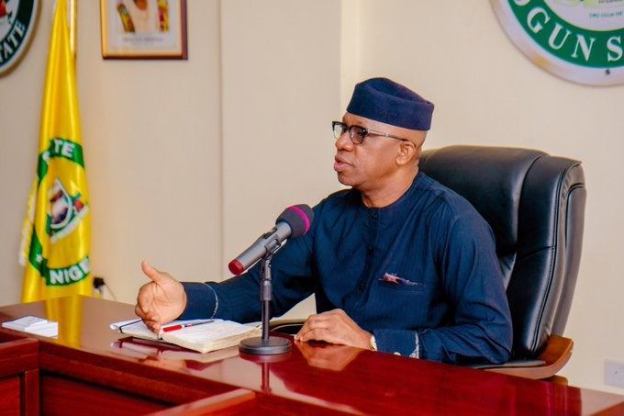
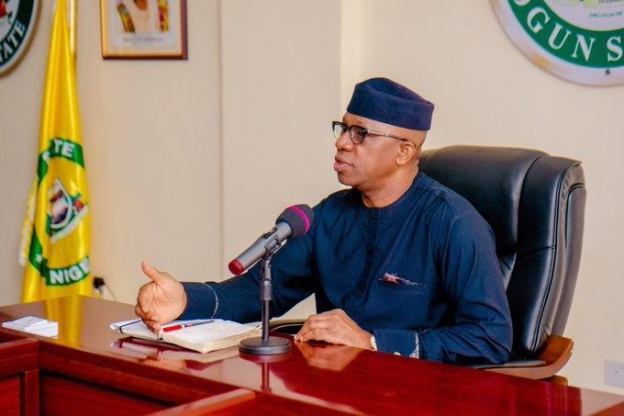
COVID-19 Lockdown: Ogun targets 500,000 households for stimulus packageOgun State Governor, Dapo Abiodun

James Ogunnaike

As the much anticipated lockdown in Ogun state begins Friday night, the State Governor, Prince Dapo Abiodun on Friday disclosed that the State is targeting 500,000 households in its stimulus package to cushion the economic effect of the exercise on the masses.

He equally declared a total “no movement” from Friday 3rd April till Tuesday morning of 7th April across the state.

Abiodun, who made the declaration, while addressing newsmen at his private residence at Iperu Remo in Ikenne local government area of the state said the total lockdown of the state for the first three days is to allow for complete fumigation of the state.

ALSO READ: Lockdown of Lagos, Ogun, FCT: You’re wrong, Buhari is right, Malami replies Adegboruwa

The governor also announces that the third index case of COVID-19 who was tested positive about 14 days ago, was expected to be discharged Friday evening having shown considerable improvement in his health condition.

He explained that the relief package, which comprised of 5kg each of rice, beans, “gari”, as well as tomatoe pastes, vegetable oil, salt and seasoning cubes among others were principally targeted for poor and the vulnerables in the state.

While appreciating the support and donations from well meaning Nigerians in the efforts to fight the dreaded Coronavirus pandemic, Abiodun singled out a-9 year old  Oluwasikemi Ogunleye who donated a sum of #950 as her personal contribution for the management of Covid-19 challenges in the state.

The governor explained that the total lockdown would be relaxed at every 48-hours beginning from 7a.m Tuesday morning till 2p.m in the afternoon for residents to replenish their food stores while the lockdown lasts.

Abiodun further declared that the state government would begin to enforce compulsory wearing of face mask as from Tuesday morning of 7th April till the expiration of the lockdown.

He also announced that the state taskforce constituted by his administration to monitor the daily report and distribution of the stimulus packages from state government to all the 236 wards of the state.

Vanguard News Nigeria.


All copyrights for this article are reserved to TheNigerian News

COVID-19: Ogun to relax total lockdown every 48-hours

0

As the much anticipated lockdown in Ogun state begins Friday night, the State Governor, Prince Dapo Abiodun on Friday disclosed that the State would be relaxing the total lockdown at every 48-hours.

According to Abiodun, this will begin from 7a.m Tuesday morning till 2p.m in the afternoon for residents to replenish their food stores while the lockdown lasts.


He also stated that the state is targeting 500,000 households in its stimulus package to cushion the economic effect of the exercise on the masses.

He equally declared a total “no movement” from Friday 3rd April till Tuesday morning of 7th April across the state.

Abiodun, who made the declaration, while addressing newsmen at his private residence at Iperu Remo in Ikenne local government area of the state said the total lockdown of the state for the first three days is to allow for complete fumigation of the state.

The governor also announces that the third index case of COVID-19 who was tested positive about 14 days ago, was expected to be discharged Friday evening having shown considerable improvement in his health condition.

He explained that the relief package, which comprised of 5kg each of rice, beans, “gari”, as well as tomato pastes, vegetable oil, salt and seasoning cubes among others were principally targeted for poor and the vulnerable in the state.

While appreciating the support and donations from well meaning Nigerians in the efforts to fight the dreaded Coronavirus pandemic, Abiodun singled out a-9-year-old Oluwasikemi Ogunleye who donated a sum of #950 as her personal contribution for the management of COVID-19 challenges in the state.

Abiodun further declared that the state government would begin to enforce compulsory wearing of face mask as from Tuesday morning of 7th April till the expiration of the lockdown.

He also announced that the state task force constituted by his administration to monitor the daily report and distribution of the stimulus packages from the state government to all the 236 wards of the state.


COVID-19: Abiodun commends 9-year-old girl who donated N950

0

COVID-19: Abiodun commends 9-year-old girl who donated N950

James Ogunnaike

The Ogun State Governor, Dapo Abiodun, on Friday, while appreciating the support and donations from well meaning Nigerians in the efforts to fight the dreaded Coronavirus pandemic, singled out a-9-year-old girl, Oluwasikemi Ogunleye, who donated a sum of N950 as her personal contribution for the management of Covid-19 challenges in the state.

Abiodun also disclosed that the State is targeting 500,000 households in its stimulus package to cushion the economic effect of the lockdown exercise on the masses.

He equally declared a total “no movement” from Friday 3rd April till Tuesday morning of 7th April across the state.

Abiodun, who made the declaration, while addressing newsmen at his private residence at Iperu Remo in Ikenne local government area of the state said the total lockdown of the state for the first three days is to allow for complete fumigation of the state.

ALSO READ: COVID-19 Lockdown: Abiodun gives food items to stranded students

The governor also announces that the third index case of COVID-19 who was tested positive about 14 days ago, was expected to be discharged Friday evening having shown considerable improvement in his health condition.

He explained that the relief package, which comprised of 5kg each of rice, beans, “gari”, as well as tomatoe pastes, vegetable oil, salt, and seasoning cubes among others were principally targeted for poor and the vulnerable in the state.

The governor explained that the total lockdown would be relaxed every 48-hours beginning from 7a.m Tuesday morning till 2p.m in the afternoon for residents to replenish their food stores while the lockdown lasts.

Abiodun further declared that the state government would begin to enforce compulsory wearing of face mask as from Tuesday morning of 7th April till the expiration of the lockdown.

He also announced that the state taskforce constituted by his administration to monitor the daily report and distribution of the stimulus packages from state government to all the 236 wards of the state.

Vanguard News Nigeria.


All copyrights for this article are reserved to TheNigerian News

Lagos begins manhunt for contacts of dead coronavirus patient

0

… Oyo records new case

…FG proposes N500bn fund

By Chioma Obinna

The race to trace the contacts of a man who died of coronavirus in Lagos on Friday began yesterday. His coronavirus status was unknown because his friend who took him to the Lagos University Teaching Hospital (LUTH) on Thursday unconscious didn’t disclose it.

The 55-year old victim just returned from Holland.

He earlier performed a coronavirus test at Yaba, according to a statement by LUTH’s Chairman, Medical Advisory Committee, Prof. Wasiu Adeyemo, which turned positive.

The statement also revealed that the victim was a diabetic hypertensive patient who had a transplant for chronic kidney disease and was on immuno-suppressant drugs.

Lagos State Commissioner for Health, Professor Akin Abayomi, described as unfortunate the news of the first COVID-19 death in Lagos but the fourth in the country.

The other deaths were recorded in Edo (two) and Abuja (one).

READ ALSO: COVID-19: LUTH 120-bedded isolation centre ready for use — Bode

As of yesterday, there were 209 confirmed cases in the country spread across 13 states and the FCT with 25 patients discharged. Lagos topped the  list with 109 cases. The breakdown:

FCT- 41

Osun- 20

Oyo- 9

Akwa Ibom- 5

Ogun- 4

Edo- 7

Kaduna- 4

Bauchi- 3

Enugu- 2

Ekiti- 2

Rivers-1

Benue- 1

Ondo- 1

No new cases were announced by the Nigeria Centre for Disease Control (NCDC) yesterday.

The developments on the Lagos death came on a day the Minister of Finance, Budget and National Planning, Zainab Ahmed, met with the leadership at the National Assembly on an executive proposal to establish a N500 billion COVID-19 Crisis Intervention Fund.

Contact tracing

The LUTH statement said its Department of Community Medicine had moved swiftly to trace, follow-up and assist gallant staff who managed the deceased patient.

It further implored all LUTH staff to continue observing strict standard protocols while handling all patients as medical personnel are especially at increased risk from such undisclosed exposure.

Details

Giving details about the incident in the statement, they said: “A man was brought unconscious to LUTH Emergency late in the evening of Thursday 02/04/2020 by his friend and although they denied any history of recent travel, his presentation strongly suggested Covid-19.

“He was handled professionally by the Infectious Diseases Consultant and his team without unduly exposing LUTH staff to danger. He died a few hours later.

“Further investigations later revealed he had earlier performed a test at Yaba soon after he returned to Nigeria from Holland and the test was positive. He was a known Diabetic Hypertensive patient. He had also had a kidney transplant for chronic kidney disease and was on immuno-suppressant drugs.

“The corpse has since been handed over to the appropriate unit of the Lagos State Ministry of Health for safe burial according to international best practices.”

Required items

The statement added that all efforts are being made to ensure the availability of all required items to continue the effective management of such cases that come to LUTH.

The management also added that efforts are also in top gear to complete the isolation facility in LUTH for management of any possible spillover from the Yaba Infectious Disease Hospital, IDH, if the surge in patients’ load continues.

Lagos State Commissioner for Health, Abayomi, described as unfortunate the news of the first COVID-19 death in Lagos.

The Commissioner, on his twitter handle- @ProfAkinAbayomi, said: “I regret to announce the first COVID-19 related death in Lagos State.’’

According to him, the deceased, a 55-year-old Nigerian male, lived in Holland and returned to Lagos two weeks ago but failed to provide full account of his travel history or medical circumstances to the attending doctors in keeping with the global trend and to enable guided treatment for COVID-19 related vulnerability due to severe underlying ill-health.

Abayomi said the patient, however, showed some signs of an upper respiratory chest infection and later tested positive for COVID-19 but died in the early hours of April 3, 2020, from cardiac arrest.

“He had a kidney transplant seven years ago and also diabetic. May his soul rest in peace”, he said.

N500bn intervention fund

Meanwhile, the meeting the Minister of Finance, Budget and National Planning, Zainab Ahmed, had with lawmakers was a follow-up to the one held on March 25, 2020, between the National Assembly leadership and members of the Presidential Task Force on COVID-19.

Also in attendance were the Speaker of the House of Representatives, Mr. Femi Gbajabiamila, Deputy President of the Senate, Sen. Ovie Omo-Agege; Deputy Speaker, Idris Wase, and some principal officers of both Chambers.

N500 billion

According to the minister, “what we are proposing is the establishment of a- N500 billion COVID-19 Crisis Intervention Fund. This Fund that we are proposing to be created will involve mopping up resources from various special accounts that the government has.’’

She added that the proposed intervention fund would also be sourced from grants being expected and loans from multilateral institutions.

“Our general view is that this crisis intervention fund is to be utilised to upgrade healthcare facilities as earlier identified. The Federal Government also needs to be in a position to improve health care facilities not only in the states but to provide intervention to the states,” she said.

Ahmed explained to the lawmakers that the Fund if approved would also take care of special public work programmes currently being implemented by the National Directorate of Employment (NDE).

Vanguard


All copyrights for this article are reserved to TheNigerian News

Pipeline explosion averted in Lagos

0

By Bose Adelaja

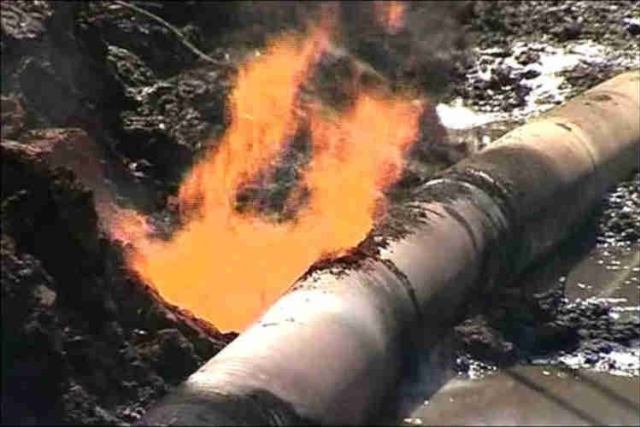
What could have resulted into an explosion in Lagos State  was averted, yesterday, when a  pipeline belonging to the Nigerian National Petroleum Corporation, NNPC, was discovered to have been tampered with by some unknown persons.

A  combined team of emergency responders was able to avert the disaster.

READ ALSO: Lagos Emergency Food markets: Ikorodu residents flock out to get essentials for homes

The Director General, Lagos State Emergency Management Agency LASEMA, Dr. Femi Oke-Osanyintolu, said the pipeline, supplying Premium Motor Spirit (fuel) along Aboru/Mosan Bus-stop, off Cacatin Area, Ipaja, was discovered to be criminally diverted at about 6am but as soon as this was noticed, emergency responders were deployed to the area.

He said their prompt arrival revealed that the leakage was from a major NNPC pipe which had been tampered  to continuously divert and siphon fuel.

Vanguard


All copyrights for this article are reserved to TheNigerian News

COVID 19: Global cases, 1.14million; deaths, 61,174

0

CORONAVIRUS: We Expect Confirmed Cases to Keep Rising — Ihekweazu, NCDC DG•US deaths exceed 7,000


•Casualties in UK rise above 700 in 24 hrs


•Italy nears breaking point


•India warns of lock down extension

By Victor Tunde Oso (with agency report)

Coronavirus deaths have hit 61, 174 globally from 1, 140, 129 cases worldwide with 236, 229 victims fully recovering from the pandemic case. United States has 7,159 casualties and United Kingdom recorded an increase of 708.

In a horror-like movie, bodies are strewning the streets of Ecuador owing to the near collapse of public services in the country’s most populous city of Guayaquil.

U.S deaths surpass 7,000 as 90% Americans affected by stay-at-home order

The US has surpassed 7,000 deaths and some state leaders say there’s still a lot they’re missing in the battle against the coronavirus. Even as case tallies continue to rise, state leaders say they still don’t have enough tests to get a clear picture of infections.

“Everything about the tests are very difficult to come by, and there’s no federal plan for this, so every state is on their own,” Illinois Gov. J. B. Pritzker said. “As I’ve said, it’s the Wild West out here.” At least 278,458 people in the United States have become infected and 7,159 have died, according to Johns Hopkins University’s running case count.

At least 90% of the country — 297 million Americans — are affected by some kind of stay-at-home order. State governments have asked residents to shelter in place and go out only for essential services, with the goal of encouraging social distancing, and thereby reducing the spread of the coronavirus and “flattening the curve” so healthcare systems aren’t overwhelmed.

UK deaths rise above 700 in 24 hours

The latest United Kingdom coronavirus figures have been released by the government.

Officials says that as of 17:00 BST on Friday, 3 April, of those hospitalised in the UK who tested positive for coronavirus, 4,313 have died – an increase of 708 from the previous day.

READ ALSO: US evacuates citizen who tested positive for COVID-19 in Nigeria

As of 09:00 BST on Saturday a total of 183,190 people have been tested of whom 41,903 have tested positive.

Fears of crisis looms in Tokyo

The daily count of new coronavirus cases has doubled in the past week, from about 40 in the final days of March to 97 on Thursday and 89 on Friday, according to the Tokyo Metropolitan Government. If the current trend continues, the outlook is bleak, said Kentaro Iwata, an infection control specialist from Kobe University, who has repeatedly warned that Japan isn’t doing enough to halt the spread of the virus. “Japan needs to have the courage to change, when we are aware we are on the wrong path,” Iwata said. “We might see the next New York City in Tokyo.”

Bodies left on the streets in overwhelmed Ecuador

The streets of Ecuador’s western city of Guayaquil are deserted, with few residents in sight — and a few dead, as bodies are being left in the streets of this overwhelmed place.

The coronavirus pandemic is overloading the public services in the country’s most populous city to a point of collapse. Hospitals have no beds left to accept sick patients, and morgues, cemeteries and funeral homes are straining. With no place left to put them, some residents say they have no choice but placing them outside.

China remembers the dead

Just before the allocated time for a three-minute pause to remember those who’ve died from the coronavirus in China, it seemed as though the idea could be a non-starter.

We went out to a random crossroads in Beijing to see how many people would participate and, at a few minutes to 10:00 (03:00 BST), there was no sign that anything would happen.

Then, bang on 10:00, we heard what sounded like an air-raid siren go off nearby.

Suddenly cars stopped. People stopped. A car horn, then another and another. Soon a cacophony of noise filled the street as more and more drivers joined in.Pedestrians bowed their heads, as did bike riders sitting still next to the frozen traffic.

Spain’s Coronavirus patients surpass Italy

Spain’s Covid-19 cases have surpassed Italy as Europe’s two main epicenters continue to grapple with curtailing the virus. A slower pace of fatalities and new cases though is offering hope that Spain’s outbreak may be edging toward a peak.

Confirmed cases increased by 7,026 to 124,736 over the past 24 hours, according to Health Ministry data, while deaths rose by 809 to 11,744. Total cases are now higher than Italy’s 119,827.

Prime Minister Pedro Sanchez is likely to extend a national lock down for another two weeks until April 26, according to reports in local media. The restrictions had already been extended until April 11.

Italy nearing breaking point

Four weeks into a nationwide lock down, very few Italians are still singing from their balconies or banging pots and pans in solidarity. Instead, flags were lowered to half-staff this week for the nearly 15,000 coronavirus victims including doctors, nurses and health care professionals who have perished since February 23.

The lock down, which was originally scheduled to end Friday, April 3, has now been extended to beyond Easter, and Italians from north to south are nearing a breaking point just as the draconian measures have begun to show signs of stopping the spread of Covid-19.

Death toll rise by 168 in Germany

In Germany meanwhile the number of coronavirus deaths and confirmed cases climbed further, a day after Robert Koch Institute President Lothar Wieler warned the country might require further intensive-care space. Germany has boosted capacity by more than 40% since the outbreak began.

Deaths rose by 168 to 1,275 on Saturday, according to data from Johns Hopkins University. Some 91,159 people are infected, the third highest in Europe, with new cases rising 6,365 from Friday. The death rate in Europe’s largest economy has been well below the levels seen in Italy and Spain, but government officials and health care experts insist it’s too early to ease social distancing rules and transport restrictions.

India warns of lock down extension

The number of confirmed new coronavirus cases in South Asia country of India neared 6,000 on Saturday, even as authorities in some cities tightened restrictions on movement and warned lockdowns could be extended in a bid to rein in the pandemic.

“If people don’t obey the rules seriously and cases continue to rise, then there may be no option but to extend the lock down,” Rajesh Tope, the Health Minister of Maharashtra State, which includes the financial hub, Mumbai, told Reuters. “It could be extended in Mumbai and urban areas of Maharashtra by two weeks.”

Vanguard

All copyrights for this article are reserved to TheNigerian News

SCARCITY OF VENTILATORS: Mimiko paints worst case scenario

0

FORMER Governor Olusegun Mimiko of Ondo State has asked the Federal Government to focus on producing manual ventilators as the COVID-19 pandemic escalates in the country.

In a statement entitled ‘Just thinking aloud’, Mimiko asked Nigerians to look inwards as they face the COVID-19 challenge.


“The time is now for Nigerians to prepare for the worst case scenario and look inwards to carve out its own peculiar strategies”, he said.

While noting that the President’s recent address should give added momentum to the combat against the killer virus, the former governor said that “the most crucial equipment at the clinical stage is the mechanical ventilator, the scarcity of which is now global”, saying, obviously, Nigeria does not have enough to match a population of 200 million people.

“While trying to procure more of this life-saving gadget which are hardly available anyway, we should start mobilizing massively for manual ventilators and start training paramedics who may be called to use them as instruments of last resort in emergency”, he said.

“Even New York is already making arrangements in case it needs to go through that route.

“I am sure that if we ransack medical stores in hospitals around the country, we may be able to retrieve a lot of old fashioned manual ventilators that can be fixed for use and also importantly to serve as prototype for local production.

READ ALSO: Akeredolu condoles with Mimiko over mother’s death

“Local companies like Innoson Motors, though may face challenges trying to produce modern type mechanical ventilators because of sophisticated software and electronic parts, will produce any type of manual ventilators as quickly as would other similar or related local industries, if challenged.

“After all, the basic principle of most types of ventilators, positive pressure creators, is more or less the same as that of time honored bellows that our traditional smiths were so dexterous at”.

The former governor expressed doubts about any effort by government officials to engage Innoson since their reported claim against its capacity to produce ventilators.

“Simultaneously, we must start mobilizing our local capacity and start building oxygen plants for what may turn out to be an astronomical demand”.

He added that the troubling issue is how to sustain a stay-at-home order when perhaps up to 40 percent of our adult population earn their daily bread on daily basis.

While appreciating governors already trying to provide food palliatives to households, Mimiko said: “In 2016, in Ondo State, we delivered food palliatives to about 150,000 households, seamlessly in 3 weeks!”

He advocated that N20, 000 palliative be given to every Nigerian with a BVN account to cushion the effect of the pandemic

“We are quick to complain of lack of data, but we have BVN”,

“I’m told we have 40 billion BVN accounts. Adopting a benchmark of say annual turnover of below 360,000 needing palliative, and assuming that up to 50 percent, i.e. 20million qualify for palliative, say 20,000 Naira each, that will amount to just about 40billion Naira which we must find.


Coronavirus Crisis: NGO expresses worry over PTF’s silence on water supply to Nigerians

0


A Non-goverment Organisation, WASHMATA Initiative, Saturday, expressed worry over silence by Presidential Task Force on control of Coronavirus, COVID-19, on clean water supply and accessibility by Nigerians to contain the spread of the deadly virus.


Expressing concern over lack of clean water to Nigerians despite rising number of infected persons with the virus, the Executive Director, WASHMATA Initiative, Dr Boluwaji Onabolu, in a statement signed by her pointed out that there is need for urgent inclusion of the Minister for Water Resources, Commissioners for Water Resources and Heads of the Rural Water, Supply and Sanitation Agencies in the National and State Task Forces for COVID-19.

The statement reads in part, “Firstly, as a Public Health Expert with over a decade of work experience with the United Nations in various countries and capacities focused on ensuring water supply, sanitation and hygiene, I would like to commend the efforts of the Nigerian government through the Presidential Task Force on the control of COVID-19.

“However, the silence of the Presidential Task Force on the provision of adequate quantities of water for people to wash their hands with soap under running water for 20 seconds as is being recommended by the WHO and the NCDC for the effective control of COVID 19 is very worrisome.

“In a country where two-thirds of the populace lack clean drinking water, 94 per cent of the health facilities and almost all the overcrowded motor parks and markets (91%) lack water, sanitation and handwashing facilities; a plan to urgently and systematically provide WASH services, in the  COVID-19 National response is critical otherwise it may result in an exponential rise in coronavirus cases as is being seen in ‘superpowers’ USA and Italy.

“We entreat the task force and all citizens at large to understand that it will be extremely difficult for many Nigerians especially the poor and vulnerable, living in overcrowded urban slums and rural areas, to adhere to the handwashing recommendation, thereby, rendering the Task Force’s laudable interventions ineffective.

“Prevention and Treatment need water!  Simply put “how can the citizens of Nigeria implement the preventive measure to wash hands with soap under running water for 20 seconds  if there is no running water”?”

The statement also added, “Furthermore, the isolation centers cannot function hygienically without adequate water, supply and sanitation thus unduly increasing the risk of infection of the extremely important medical personnel.

“The WHO Guidelines to countries on the effective use of this lockdown period includes the equipping of treatment centers with critical facilities.

“It is not just about infrastructure, there have been several instances of citizens insisting that there is no COVID-19 in the country or washing their mouths with sanitizer due to a lack of sensitisation.

“The WASH sector is trained in community mobilization and sensitization using water as an entry point into resistant communities, after all in the words of a famous musician everyone loves water; i.e ‘water no get enemy’.

“The relegation of the Water supply, Sanitation and Hygiene sector to the distant background is alarming and indicates a gap in the global best practice of collaboration between WASH and Health which is required to prevent the coronavirus from spreading like wild-fire in Nigeria.

“A key indicator of the poor integration of WASH into the COVID-19 response plan is the absence of the Minister for Water Resources on the Presidential Task Force, though the Ministry is statutorily responsible for water, sanitation and hygiene services in the country; a major component of the global responses to COVID-19.”

The organization also warned that it will be disastrous if the issue of water is not urgently given attention.

“We must do all we can not to go down the route of the USA, Italy, and Spain; failing to implement preventive measures, their normally robust health systems are overwhelmed, and medical personnel is being infected.

“The present response can be strengthened by incorporating the WASH in emergencies partnership with the Health sector. We must join hands to prevent the spread”, it stressed.

Meanwhile, the organization also recommended that “Urgent inclusion of the Minister for Water Resources, Commissioners for Water Resources and Heads of the Rural Water, Supply and Sanitation Agencies in the National and State Task Forces for COVID-19

“Support the FMWR, SMWR, and RUWASSAs to trigger the WASH disaster response mechanism already in place for WASH-related emergencies such as COVID-19

“Collaborate with the FMWR, SMWR, and RUWASSAs to ensure that facilities at which COVID-19 cases are managed have adequate water supply, sanitation, and handwashing facilities.

“We commend the Federal Government of Nigeria on actions taken so far and entreat that in the interest of all Nigerians they will implement our recommendations.”