Home Blog Page 2463

Ogun police arrest 150 suspected cultists over Ifo/Ota crisis

0

The police in Ogun have arrested no fewer than 150 suspects following supremacy clashes between rival cult groups in Ifo and Sango- Ota axis of the state.

The Ogun Commissioner of Police, Kenneth Ebrimson, stated this on Sunday at the Ifo Divisional Police Station where he paraded the suspects

.The News Agency of Nigeria (NAN) reports that the high point of the crisis occurred on April 4, as many residents fled for their lives and others lost possessions in the mayhem.

Ebrimson, however, refuted claims  that armed robbers hijacked the crisis, adding that “there was no report or complaint of robbery made to the command by anyone from the troubled  areas”

The CP described the incident as “a case of cult clashes among seven rival groups within the areas as a result of recent death of one of the members” .

He explained that the command swung into action immediately it received the information and had since effected arrests in connection with the incident.

“We deployed our men from the  Special Anti-Robbery Squad, Anti-Cultism unit, Anti-Kidnapping unit, the Special Forces and conventional policemen drawn from the Ifo and Ota area commands.

“Our men smoked the suspected criminals out of their hideouts and recovered various weapons.

“We recovered eight locally made guns, 52 live cartridges, eight knives, 12 handsets, two scissors, large quantity of weeds and several cutlasses,” he said.

“It all started on April 4 as a reprisal attack on other rival cult groups from a cult group which had earlier lost a member.

“I want to say that there was no single case of armed robbery or any case of kidnapping that has been reported to us.

“The basic issue is cultism that emanated from the killing of one of them in Ifo and spread to Sango, Ijoko and Agbado areas,” he said.

COVID-19 Lockdown: FCTA arrests Imam, 2 foreigners, impounds 269 vehicles

0

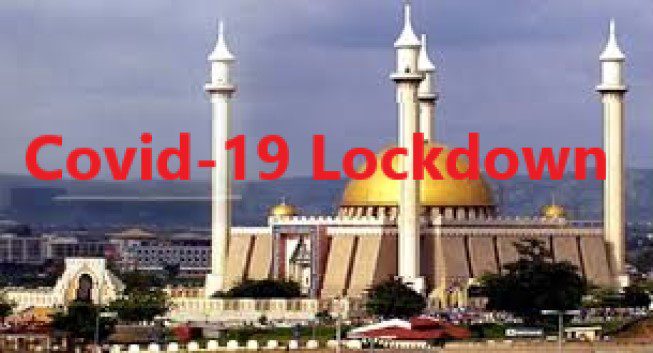
The Enforcement Team of the Federal Capital Territory (FCT) Administration has arrested the Chief Imam of Wuye District Mosque for violating the presidential lockdown order in the FCT which was put in place to control the spread of the Novel Coronavirus in the territory.

This was as the team also arrested a driver who apart from violating the lockdown, had four military caps in his possession.

Chairman of the FCTA enforcement team, Ikharo Attah, who stated this yesterday, added that the team has also impounded more than 269 vehicles for violating the presidential order.

He said the team also arrested a violator, who decided to strip himself, resisted arrest and claimed that the COVID-19 pandemic was a hoax.

Speaking on activities of the team, Attah said; “Early this morning, we commenced operations following calls from residents that the Christ Embassy Church in Durumi was in full session, but we went there and discovered that it was not true, as the pastor was inside the church with some cameramen, or a production crew.

“We found out that they were doing a live streaming online for their members at home but the generating set was on. That was the noise that people heard and concluded that it was a church service.

“We then proceeded to other areas around town. We got to Area 1 Roundabout, where a particular man was arrested with four military caps -he kept one Army cap in his boot, then another one for Nigeria Air Force, as well as two other ones for Nigeria Navy, all in one vehicle. We took him and handed him over to the FCT Commissioner of Police.

“Then we also had another case of a man whose vehicle was taken to VIO office in Area 1, and immediately he decided to strip himself naked, removed all these clothes in protest that he must work, that he did not believe in existence of Coronavirus.

“We then moved to the mosque at Wuye District, because we had gotten several complaints that the man (Imam) had conducted congregational prayers on Friday. But that Friday, we were at Kuje and so we could not have come back within five minutes. So, we got there today and invited him to come and explain; and we cautioned him at the FCT Police Command, Garki”.

On why his team arrested a Turkish and an Angolan during the exercise, he said: “We arrested two expatriates at Glo Junction for violating the President’s order, going out without permit. One of them is from Turkey, while the other is from Angola. They were taken to the Maitama Police Division.”

According to Attah, his team also impounded more than 269 vehicles, warning residents, particularly uniform personnel and diplomats against breaking “this important and lifesaving law.”


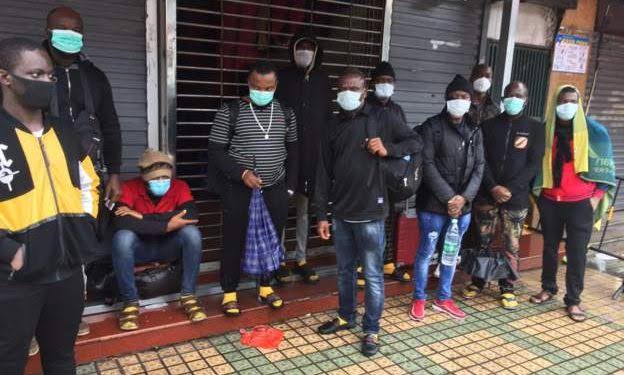
Nigeria leads protest against Chinese mistreatment of African citizens

0

After the meeting between the Foreign Minister and the ambassador, the Speaker of the lower house of parliament also piled more pressure when he chided the ambassador in a separate meeting on Thursday.

The Chinese Foreign Ministry Spokesperson insisted that relations between the country and Africa remained robust despite the latest round of friction.

“FM Spokesperson Zhao Lijian said: ‘China and African countries are united more than ever, demonstrating brotherhood in times of adversity. We treat all foreign nationals equally in China. We reject differential treatment, and we have zero tolerance for discrimination’,” the embassy tweeted.

On Saturday, the African Union Commission Chairperson also tweeted that his office had summoned the Chinese envoy to the AU over the recent reports.

“My Office invited the Chinese Ambassador to the AU, Mr Liu Yuxi, to express our extreme concern at allegations of maltreatment of Africans in Guangzhou plus called for immediate remedial measures in line with our excellent relations. The African group in Beijing is also engaging with the govt,” AUC chair Moussa Faki Mahamat posted on Twitter.


X-raying Nigerian Army’s unmatched record in counter-terrorism

0

By Richard Murphy

In August 2015, UN Secretary General, Ban Ki Moon, had cause to commend Nigeria’s effort towards counter terrorism in the West African sub region.

He said while speaking at a Dialogue on extreme violence and other issues bedeviling Africa that though no country can tackle the threat of terrorism on its own, Nigeria’s increased cooperation with countries of the region is welcomed.

It came as a little pat on the back for Nigeria given that it had only recently then experienced a regime change and the new administration of President Muhammadu Buhari was putting structures to confront the challenges.

But three years down the line, Nigeria qualified for more than a pat on the back from world leaders.

United States president, Donald Trump, while speaking about Nigeria’s fight against terrorism at a joint press conference with President Buhari at the White House, in April 2018, had more to say about Nigeria in that regard.

While thanking President Muhammadu Buhari for Nigeria’s partnership and leadership role in the fight against terrorism, Trump said, “Nigeria was one of the first African nations to join the coalition to defeat ISIS, and Nigerian forces are currently leading regional efforts against ISIS in West Africa, and doing very well.”

He said, “Nigeria is also leading African nations in the fight against Boko Haram, and — another ruthless jihadist terrorist group.”

Terrorism, defined as the unlawful use of violence and intimidation, especially against civilians, in the pursuit of political aims; and insurgency, a rebellion against a constituted authority when those taking part in the rebellion are not recognized as belligerents has been recorded in many parts of the globe for centuries.

The Nigerian army even when it was part of a West African Frontier Force, is not new to both as it has been involved in counter terrorism and anti-insurgency operations mostly outside Nigeria since the 60s and has given good accounts of itself wherever it is involved.

Nigeria according to verifiable documents, has contributed more than 20,000 troops to various UN missions since 1960.

What is worthy of note in all these exercises is that Nigerian troops have come out with higher reputation as disciplined and well trained force after each assignment and has been the leader in many tough military assignments.

It has been sent on UN and ECOWAS missions as far as in the former Yugoslavia, Guinea-Bissau, Sierra Leone and other places .

When UN forces in Somalia were trapped and humiliated by rebel forces at the beginning of the war in Somalia, Nigerian troops led in the operation that later restored sanity, albeit temporarily to the war torn country.

The troops for that particular operation were drawn from Nigerian Army’s 231 battalion in Biu and were trained at the Nigerian Armed Forces Simulation Center in Jaji.

Nigeria through its troops has also played a prominent role in the West African sub-region through the commitment of substantial military capacity to peace keeping missions.

The reputation of the Nigerian army in counter insurgency operations was so high at a time that its expertise was being sought in all troubled spots across the globe.

This had seen the Nigerian army leading the Economic Community of West African States (ECOWAS) force to Mali and contributing 900 of its troops to that country.

The role Nigeria played in restoring democracy to countries like Sierra Leone and Liberia has remained green in the memory of the citizens of these countries who never fail to applaud Nigeria’s role in saving their countries from unending wars and bloodshed.

In October 2004, Nigerian troops again were deployed into Darfur, Sudan to spearhead an African Union force to stop the genocide in Darfur.

Nigeria’s role as a big brother was constantly accentuated by the success of its military in every given mission.

But as the Nigerian army fought for other countries, the time came for its capacity to be tested at home.

The first was in the late 60s when the civil war broke out and the second was the taking up of arms against the Nigerian state by the Boko Haram terrorists in 2009. On both occasions, Nigerian army showed it has the capacity to reenact the feat it has achieved abroad at home.

As the largest component of the Nigerian Armed Forces responsible for land warfare operations, the NA bears the brunt of the nation’s security challenges.

It did not disappoint even with asymmetric warfare introduced by the Boko Haram and later the ISWAP terrorists. It is well known how the army was called in to intervene when the insurgency of the Boko Haram got out of hand in its early days and how the army discharged its duties effectively and arrested the sect’s leader and handed him over to another agency.

It took several years after that before the insurgents again regrouped and took up arms against the Nigerian state. But even after that, the Nigerian army has been relentless in proving its capacity to safeguard the country.

This much came to the fore with the coming of Lt. Gen. Tukur Yusuf Buratai as the Chief of Army Staff.

This time the focus shifted from launching counter attacks to leading offensives against the insurgents and in their turf. The operations became so successful that the terrorists could no longer launch attacks on communities as any attempt they make are preempted and dispelled.

In 2015, the Nigerian army repelled an attack by suspected Boko Haram militants in the town of Biu in the north-eastern state of Borno where the militants had entered the town firing guns very early in the morning causing many residents to flee. The army had engaged the militants in intense battle and the insurgents were killed and driven back and calm was restored to the town. There have been several other instances after that but mentioning a few remarkable ones would suffice.

In June 2019, Nigerian troops again thwarted an ISWAP attack on a military formation in the Northeast where the Boko Haram came in seven gun trucks and motorcycles and stormed the base at Goniri, Yobe State. The ambush did not succeed as dozens of the terrorists were annihilated while many of them fled with injuries.

In that encounter, five gun trucks, weapons and rounds of ammunition were recovered from the militants, while their motorcycles were destroyed. Again in December 2019, Nigerian troops fought back Boko Haram insurgents at Gonar Bukar settlement on Gashua Road on the outskirts of Damaturu, the Yobe capital. They had attempted to infiltrate Damaturu metropolis in the evening and troops engaged the insurgents and sent them fleeing.

Then in January this year there was massive shooting in Monguno, a major town in northern Borno State, as the Nigerian military repelled an attack by the terrorists.

Suspected members of the ISWAP faction of Boko Haram attempted to invade the community that now serves as a mega camp for internally displaced persons and soldiers battled for several hours to repel the attack. In March 2020 Nigerian troops also devastated Boko Haram militants in Damboa, a town 85 kilometers away from Maiduguri.

Governor of Borno State, Babagana Zulum, who is slow in commendation was so overwhelmed that he was full of praises for the Nigerian troops. He said the troops demonstrated unprecedented gallantry when they tackled the insurgents saying 19 gun trucks were recovered from the insurgents while an unspecified large number of them were killed. “‎I find it compelling to salute our gallant soldiers of the Nigerian Army and Air Force, under operation Lafiya Dole for a decisive blow against Boko Haram insurgents on Wednesday morning in Damboa town,” he said.

In all, the Nigerian army has shown that it is unrivalled in the fight against insurgency and terrorism.

Murphy is a security expert and wrote this piece from Calabar
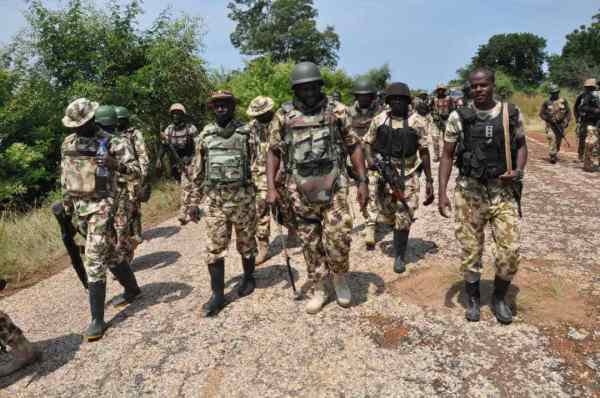
COVID-19 LOCKDOWN: Nigerians Express Satisfaction With Conduct Of The Military

0

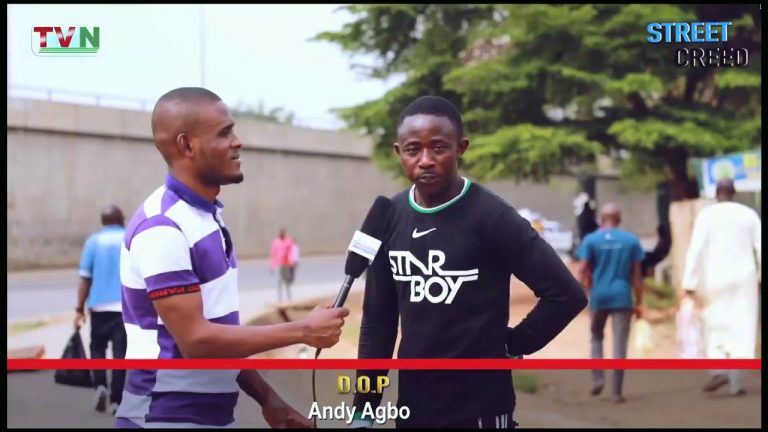
watch the reaction of Nigerians to the involvement and conduct of soldiers during the COVID-19 Lockdown.

My Website

My Video Player


Deby Itno’s pseudo-heroism and our gang of fake activists 

0

By Julius Orya

When the Nigeria police in February announced that it undertook a combat operation that led to the killing of 250 alleged terrorists in Birin Gwari, Kaduna State, many Nigerian activists questioned the announcement saying there were many gaps in the story.

They demanded picture and video evidence and challenged the police to take newsmen to the scene of the fight to convince them.
When gallant Nigerian troops repelled a planned invasion on the town of Biu, Borno State, last December and took out quite a number of the insurgents as they tried to escape, cynicism greeted the cheery news from the camp of activists who wanted to reduce the feat as insignificant.

But last week, when the Chadian President, Idriss Deby Itno, came out and announced that his troops have killed over 1000 of the Boko Haram and ISWAP terrorists, Nigerian activists did not demand a picture or video evidence from him. He, rather got a standing ovation.

The same people that tried to fact check the announcement by the Nigeria police and downplay the liquidation of insurgents by Nigerian troops never deemed it fit to subject the claim by the Chadian President to scrutiny.

Deby Itno had said that while Chadian troops liquidated over 1000 of the insurgents, that only 52 of his men fell in the ‘daring’ operation on the fringes of the Lake Chad, which has been code named ‘Operation Colero de Borno.’

Those who have bothered to fact check the claim of the Chadian President have however uncovered lots of misinformation, half truths, exaggeration and outright lies in the Deby story.

The first is the claim by Deby Itno that he is fighting Boko Haram and ISWAP terrorists. The second is the claim on the identity of those liquidated and the third is the motive for moving against the militia.

Of the four countries directly affected by the activities of the Boko Haram and ISWAP terrorists,  that is, Nigeria, Cameroun, Niger and Chad none of them has been so receptive and welcoming of the groups like Chad.

While the three other countries had committed to a joint multinational task force and were doing all they could to suppress the insurgents, Chad under Deby on the other hand had preferred to play the ostrich.

Over the years, Chad would pretend to be with the multinational task force in the day, but in the night, when the other countries send troops to go after  the insurgents, it will allow them safe abode deep within its borders and beyond the 25 kilometers allowed for penetration by the multinational force. This is why while the other countries have been able to keep the population of insurgents low, Chad has seen to a boom in their population.

Fact check revealed that since the insurgents began to seize territories in 2013 and hoist their flags, they do not at any one time station more than 300 of their men at a particular location preferring to be itinerant for fear of being subdued.

When the insurgents seized Gwoza in Borno State and made it the capital of its caliphate, facts on ground showed that it kept only about 400 of its militia to secure and administer the place until they were flushed out by Nigerian troops.

In other smaller communities that the insurgents manage to capture, residents say after the initial invasion when they come with so many of their men, they quickly retreat leaving about 100 of them to hold on and maintain the siege.

For any country to have 1000 of the fighting men of the Boko Haram and ISWAP terrorists, as claimed by the Chadian President therefore, means that either the country is accommodating the two terrorists groups or the claim in number and identity is not entirely true.

One has a cause to believe that while Chad harboured the terrorists and was using them to extort money from other bigger countries, it also had its own share of rebel militias that are almost indistinguishable from the Boko Haram and ISWAP terrorists. This is because their activities are known to overlap.

Militancy in Chad evolved from a series of mutiny that has become part and parcel of the politics of that country over the years since the days of Goukouni Oueddei who was shoved off the throne by Hissen Habre.

Habre also got a worse treatment from Deby who was his associate and the culture of schemes, betrayal and power tussle has become the order in Chad.
Deby Itno himself has survived many putsch and in the bid to make himself the life president,  removed term limit for the presidency and has been winning elections since then.

This, needless to say, has set him against a section of the country who are yearning for regime change and for the enthronement of true democracy in the tiny country. A mutiny even arose from within the armed forces which was however quelled and the leader arrested and detained.

Deby Itno, to sustain his grip on the nation, had to keep political opponents behind bars for several years and under inhuman conditions.
Despite all that, he has not been able to shake off the fear that he might lose the throne the same way he got it hence never cease to look over his shoulders.

Matters got to a head last year, when there was an agitation from the civil populace against bad governance. As the agitation grew, Deby Itno decided to move against the largest concentration of armed militia in his country which he by default allowed and which could be used against him.

The militia, realising they were about to be sacrificed in the political chess game, decided to preempt the Chadian President by moving against his killer squad and succeeded in killing 98 of them.
This angered the Chadian President who saw the political implication of the liquidation of his strike force and decided to retaliate by giving the militia a bloody nose.

It was so personal to him and relevant to his survival on the throne that he had to lead the operation himself as he trusted no one else to do that for him given the level of disenchantment and mistrust even in the armed forces . So the Chadian President in leading the troops was basically fighting for his own political  survival . Hence on the first fact check, Chad is not fighting Boko Haram in the Lake Chad.

One the second fact check,  it is equally important to probe the identity of the militia the Chadian troops engaged. It is a well known fact that 80 percent of Boko Haram/ISWAP are Chadian Rebels as virtually all of them are found in Lake Chad Islands within the Chadian Territory. Deby Itno in dislodging his country’s rebels who have grown in number and have mingled with the terrorists across the border for his political survival, has turned his political fight into a propaganda to portray him as a warlord fighting terrorism and insurgency.
Unfortunately, this is the version our Nigerian ‘activists’ want to believe. Whatever they chose to believe, no one can sell the dummy to us that there was any 1,000 terrorists killed anywhere by the Chadian President who is fighting for his own survival.

Orya wrote this piece from Karu, Nasarawa State.

Chadian forces to end operations outside its territories after losing scores of soldiers

0

President Idriss Deby has said Chadian troops will no longer participate in military operations outside the country’s borders as part of national army campaigns against armed groups active in the Lake Chad region and the Sahel.

“Our troops have died for Lake Chad and the Sahel. From today, no Chadian soldiers will take part in a military mission outside Chad,” he told national TV on Thursday.

Deby’s remarks echoed frustration as Chadian armed forces ended a major offensive against Boko Haram in the Lake Chad region.

On Thursday, the army claimed that dozens of fighters had been killed in the operation while Fifty-two of the army’s troops were also killed.

The offensive was launched after at least 92 Chadian troops were killed in a Boko Haram raid on a base at Bohoma on March 23 – the biggest one-day military loss in the country’s history.


COVID-19 LOCKDOWN Day 10: Abuja Residents Share Experience, Kicks Against Possible Extension

0

Abuja Residence Share Their Experience After 10 Days Of Lockdown Saying It Is A Biter One And Beg Federal Govt Not To Extend The Lockdown, There Is Hungary In The Country.

Watch the reaction of Nigerians

COVID-19: Rivers Bishop directs Catholics not to congregate on Sunday despite Wike relaxing lockdown

0

Amid rising cases of the novel Coronavirus in the country, the Catholic Bishop of Port Harcourt Diocese Rev Camillus Etokudo has instructed that no Mass should be conducted on Easter Sunday.

The instruction is coming contrary to Gov Nyesom Wike’s state-wide broadcast relaxing the lockdown to enable Christians celebrate Easter.

Bishop Etokudo said the Church will not risk the lives of its members by worshipping on Sunday.

In a letter addressed to priests, religious and the laity, the Bishop said:’ ‘However in the face of the threats of COVID-19 and having prayerfully considered the implications of the risks to our expected crowded congregation on normal Easter celebrations.

”We hereby request you our priests and lay faithful to continue to keep to the CBCN and our Diocesan Pastoral directives for the celebrations of Holy Week including Easter Sunday till further notice.”