US government hails Abba Kyari’s patriotism
Czech eases lockdown, but extend state of emergency
The Czech Republic eased restrictions on Thursday aimed at slowing the spread of coronavirus after a drop in new cases sparked optimism the outbreak had so far been brought under control.
The country lifted a ban on non-essential movement and travel abroad, Health Minister Adam Vojtech said after a government meeting.
The government will allow up to 10 people to meet in public – instead of the current two – as of Friday, and reopen universities as of Monday.
The sharp policy turn also includes speeding up the opening of shops, but there was no change announced in the obligation to wear face masks in public or the ban on larger public gatherings or events.
The Czech government has meanwhile approved plans to ask the lower house of parliament to extend the country’s state of emergency until May 25, CTK news agency reported on Friday, citing Interior Minister Jan Hamacek.
The plan should go to lawmakers on Tuesday. The current state of emergency is in place until April 30 and gives the government powers to limit people’s movements and close businesses.
The central European country in March introduced what were at the time some of Europe’s toughest measures to prevent an uncontrolled spike in the new coronavirus epidemic.
Vojtech said the measures were key to avoid overwhelming hospitals and could now begin to be eased, as demanded by business groups as well as some senior medical experts, although epidemiologists have warned against hasty steps.
“We have been able to manage the pandemic exceptionally well on the territory of the Czech Republic,” Vojtech told a televised news conference.
Those who travel abroad will have to present a negative coronavirus test upon return or be subject to two-week quarantine, he said. At the moment, only people visiting families or doctors and commuters are allowed to leave.
The Interior Ministry said it was also slightly relaxing a ban on entry for foreigners to allow entry to university students and business travellers from the European Union, subject to conditions.
Industry Minister Karel Havlicek said that most shop openings would be sped up compared to what was planned in an earlier schedule.
“There will be 14-day intervals [in the reopening], at the moment [the schedule] roughly copies what is done in Germany or Austria,” he said.
The relaxation followed analysis from health ministry experts that showed the reproduction factor of the virus was around 0.7. The number indicates how many people get infected by every newly infected person, and a figure below the neutral level of one means the epidemic is on the decline.
The country has seen the daily increase of reported cases drop to an average of 119 in the past week, less than half of levels in early April.
It has reported 7,138 cases in total, while the number of active cases fell below 5,000 on Wednesday for the first time since April 8. There have been 210 deaths.
Havlicek said the easing may be reversed if the situation worsens again.
From Monday, shops with floor space of up to 2,500sq metres (27,000sq feet) will reopen, along with fitness centres and libraries.
Shopping centres and hairdressers were slated to open from May 11, while restaurants, hotels, theatres and most other services will begin to open on May 25.
US FDA warns against use of hydroxychloroquine to treat COVID-19
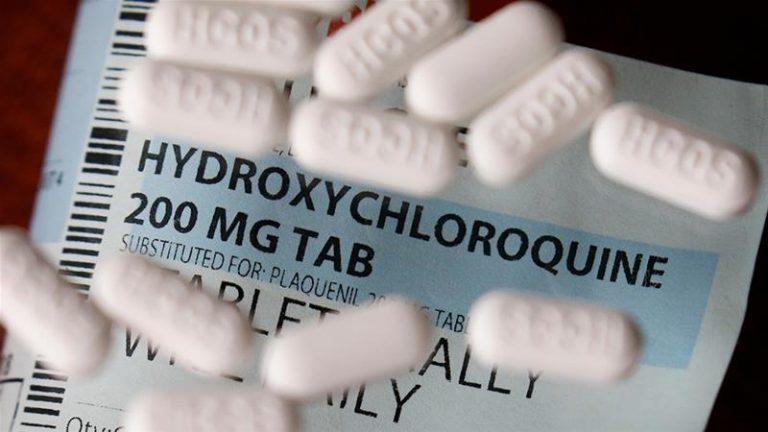
The United States Food and Drug Administration (FDA) warned against taking anti-malarial drug hydroxychloroquine, touted by President Donald Trump as a possible treatment for COVID-19, outside of a hospital or formal study on Friday, citing “serious and potentially life-threatening heart rhythm problems”.
Trump has repeatedly stated that the drug is a possible treatment for COVID-19 and could be a “game-changer”, seemingly based on anecdotal evidence.
No conclusive tests have been completed to prove its effectiveness.
FDA Commissioner Dr Stephen M Hahn said in a statement: “We understand that healthcare professionals are looking for every possible treatment option for their patients and we want to ensure we’re providing them with the appropriate information needed for them to make the best medical decisions.
“While clinical trials are ongoing to determine the safety and effectiveness of these drugs for COVID-19, there are known side effects of these medications that should be considered.”
Pending approval
Trump said at an April 4 news briefing regarding hydroxychloroquine: “What do you have to lose? Take it.”
The president has hedged these remarks by saying people should confer with their doctors.
Hydroxychloroquine and chloroquine, a similar drug, are approved by the FDA to treat malaria and other ailments.
Once a drug is approved by the FDA, the release explained, it may be prescribed for unapproved uses by doctors, depending on a physician’s assessment.
The drugs have been approved for purchase and addition to the Strategic National Stockpile and may be prescribed by doctors for the treatment of COVID-19 when clinical trials are not available or feasible.
But the medicines “have not been proven safe or effective for treating COVID-19”, the FDA said in its release.
“We encourage health care professionals making individual patient decisions closely screen and monitor those patients to help mitigate these risks,” Hahn said.
“The FDA will continue to monitor and investigate these potential risks and will communicate publicly when more information is available.”
State stockpiles
State and local governments have obtained more than 30 million doses of the malaria drug.
At least 22 states and Washington, DC secured shipments of hydroxychloroquine, according to information compiled from state and federal officials by The Associated Press. Sixteen of those states were won by Trump in 2016, although five of them – including North Carolina and Louisiana – are now led by Democratic governors.
Oklahoma spent $2m to buy the drugs, and Utah and Ohio have spent hundreds of thousands on purchases. The rest of the cities and states received free shipments from drug companies or the US government over the last month. Ohio received a large donation from a local company.
Several states including New York, Connecticut, Oregon, Louisiana, North Carolina and Texas received donations of the medication from a private company based in New Jersey called Amneal Pharmaceutical. Florida was given one million doses from Israeli company Teva Pharmaceutical Industries.
The Federal Emergency Management Agency has sent 19 million doses of hydroxychloroquine to 14 cities including Washington, DC, Philadelphia and Baltimore from the federal government’s national stockpile, a source that also provided South Dakota and California with supplies. The US government received a donation of 30 million doses from Swiss drugmaker Novartis on March 29 to build up the stockpile, which does not normally stock the drug.
“If he [Trump] hadn’t amplified the early and inappropriate enthusiasm for the drug, I doubt if the states would have even been aware of it,” said Dr Kenneth B Klein, a consultant from outside of Seattle who has spent the last three decades working for drug companies to design and evaluate their clinical trials.
Klein said it’s understandable that government and health officials looked into hydroxychloroquine – which is approved for treating malaria, rheumatoid arthritis and lupus – as a possible remedy during a frightening pandemic, but the time and energy has been misspent. The potential side effects are worrisome, especially because many coronavirus patients already have underlying health conditions, he said.
“The states and the federal government are reacting in light of that fear, but it’s not a rational response,” Klein said.
Face masks meant o prevent asymptomatic people from spreading virus – NCDC
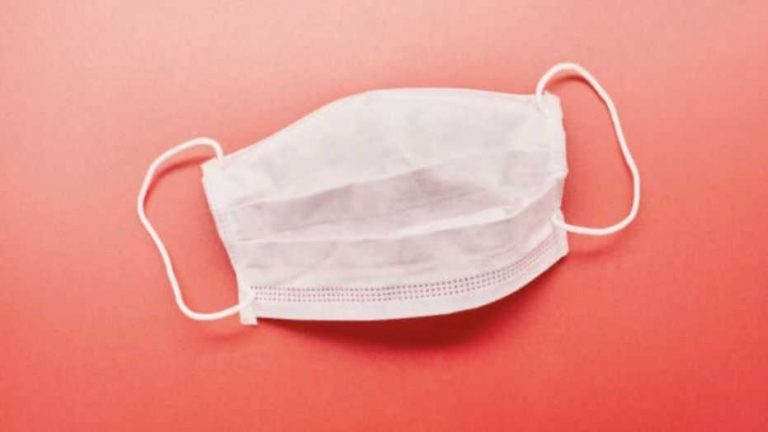
The Nigeria Centre for Disease Control (NCDC) has said the use of face masks is to help those who are asymptomatic from spreading COVID-19.
In a tweet on its handle, Thursday, the NCDC, shared the guideline on the use of face masks.
“This provides guidance on the effective use of masks in non-healthcare settings,” the NCDC tweeted.
According to the agency, the use of face mask is primarily “to prevent those who
are infected but asymptomatic from spreading the virus. Masks have to be properly disposed of in waste bins. Improper handling and frequently touching masks can increase the risk of infection.”
The advisory added that “Improvised masks are also an option – as long as they are properly washed regularly. They can be made out of cloth or other materials.”
Also, the advisory called on older persons who are above 60 years, and those with ongoing respiratory conditions,to wear masks.
The NCDC in the guideline, noted that the use of face masks should be in addition with other safety measures.
“The wearing of face masks alone will not protect against COVID-19, but
must be combined with physical distancing, handwashing, respiratory
hygiene, cleaning and disinfecting frequently touched surfaces and other
advice from NCDC,” the body said.
Trump to sell ventilators to developing countries to fight virus
President Donald Trump’s administration said Friday it would sell ventilators to at least four developing countries to fight the coronavirus, saying US needs were being met.

Trump said he spoke by telephone to the presidents of Indonesia, Ecuador, El Salvador and Honduras and promised that the United States would send the vital medical equipment.
“We will be sending them desperately needed Ventilators, of which we have recently manufactured many, and helping them in other ways,” Trump wrote on Twitter of his call to President Lenin Moreno of Ecuador, which has seen a spike in coronavirus cases.
Michael Kozak, the top US diplomat for Latin America, confirmed the United States was selling the ventilators.
“We’re seeing our own needs met; we can become an exporter again,” Kozak told reporters.
“I think in many of these cases that the countries just want to buy them. They aren’t asking us for financing,” he said.
But Kozak said some countries may use assistance from the United States to make the purchases.
Governors led by New York’s Andrew Cuomo said they were seriously short of ventilators at the start of the pandemic and had faulted the federal government.
But Cuomo last week said New York would send ventilators to Michigan and Maryland as the situation had stabilized in his own state — the worst-hit by the pandemic that has killed more than 50,000 people in the United States.
With companies such as Ford and General Motors switching to ventilator production, Trump has boasted that the country as a whole is in good shape and said foreign leaders were asking him for supplies.
“No country is equipped like we are. We have 11 different places making ventilators,” Trump told reporters Thursday.
“Our country, as you know, doesn’t need them now. Our governors are very happy,” Trump said.
In his tweets, Trump praised Honduras and El Salvador for helping curb emigration to the United States — a signature issue for the mogul-turned-president.
Guatemala is also a major source of migrants but has temporarily stopped accepting deported citizens from the United States due to coronavirus infections.
Kozak said that Guatemala — not mentioned in Trump’s tweets on ventilators — was not being punished.
“There isn’t some hard linkage here between cooperation on removals and ventilators. We’re trying to get medicine and medical supplies to anybody who needs them”
Vice President Osinbajo, Ministers Discuss Buhari’s Forthcoming Sustainability Plan
In furtherance of the work of the Economic Sustainability Committee, the Vice President Yemi Osinbajo met today with a group of Ministers who were directed by the President to jointly develop a comprehensive policy for a Nigerian Economy functioning with COVID – 19.
The President had asked that the Economic Sustainability Committee should support the said Ministers in executing the directive.
Today, the Vice President proceeded with the Ministers of Industry, Trade and Investment; Communication and Digital Economy; Science and Technology; Transportation; Aviation; Interior; Health; Works and Housing; Labour and Employment; and Education on the work of coordinating the efforts in order to produce a comprehensive Economic Sustainability Plan that will turn the current economic challenges into opportunities for the Nigerian people as envisioned by the President.
Next week, the Economic Sustainability Committee will also be meeting with the Presidential Economic Advisory Council ahead of the completion and submission of its report to the President.
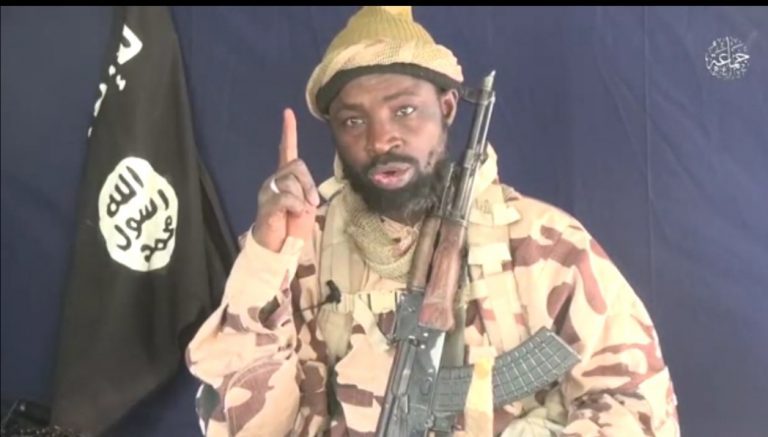
Boko Haram: If Shekau surrenders, we will accept – Military
The Military says it will accept the offer of the leader of Boko Haram, Abubakar Shekau to surrender.
It said that if Shekau follows the laid down procedures for surrendering during conflict o r war, the military will profile him according to international standard.
The Coordinator of the Directorate of Defence Media Operations (DDMO), Major General John Enenche, disclosed this on Friday during an interview on Channels TV
“Shekau’s recently released videos are subjected to forensic analysis. There are rumours that they are ready to surrender. If the insurgents truly want to surrender, there is a procedure to do that. If he (Shekau) surrenders through the procedure, we will accept it,” he said.
It would be recalled that the Military authorities recently said that with the grand offensive mounted by the Armed Forces of Nigeria against Boko Haram and the Islamic State for West African Province (ISWAP), the body language of Shekau, is that of surrender.
Meanwhile the military through the Air Task Force of Operation LAFIYA DOLE, said it destroyed compounds housing Boko Haram terrorists’ leaders at Bulawa in Sambisa Forest, Borno State.
In a statement signed by Major General Enenche, the air strikes were executed on 21 April based on credible human intelligence reports as well as Intelligence, Surveillance and Reconnaissance missions that led to the identification of the target compounds within the settlement.
He said fighter jets dispatched by the Air Task Force to take out the compounds accurately hit the target area leading to the destruction of some of the structures as well as the neutralization of some of the terrorists occupying the compounds.
He noted that Boko Haram fighters, who attempted to reposition to engage the attacking aircraft, were mopped-up in follow-on attacks by the jets.
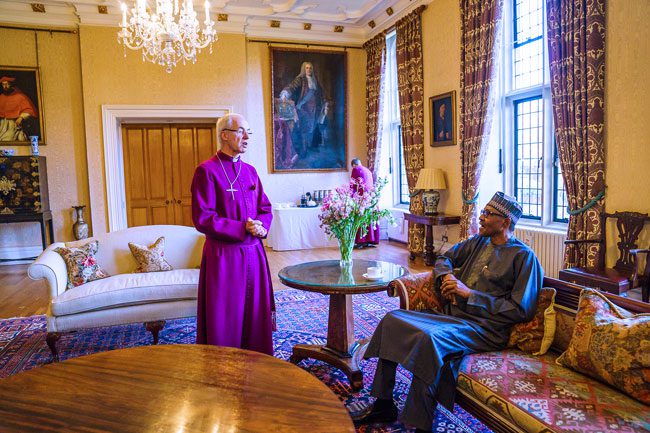
Archbishop of Canterbury, Chief Horsfall, others condole with Buhari over Abba Kyari
The Archbishop of Canterbury, The Most Reverend and Right Honourable Justin Welby, has expressed sadness over the passage of the Chief of Staff to the President, Mallam Abba Kyari.
In a letter of condolence dated April 21, 2020 to President Muhammadu Buhari, the revered world religious leader said he recognised that “the Chief of Staff is a role on which one depends more than almost any other,” stressing that occupants of that strategic position “need to be trusted…and willing to have your interests most closely at heart.”
According to the Archbishop, who is a personal friend of the President, “The fact that you entrusted Abba Kyari with your messages to me and to others demonstrates the faith you have in him,” adding, “I am sure that his death is a significant blow to you personally, as well as to your government.”
“This letter therefore brings my condolence at the loss of a man who struck me as remarkably intelligent and thoughtful…” he noted, while also extending his commiserations to Mallam Kyari’s family.
The pioneer Director-General of the National Intelligence Agency, Chief (Ambassador) Albert Korubo Horsfall, also sympathized with President Buhari on the loss of his Chief of Staff.
The Oil and Gas Trainers’ Association of Nigeria (OGTAN) in a condolence letter signed by its President, Dr Mayowa Afe to President Buhari, described Mallam Kyari as “a trusted friend, dependable ally and a man of uncommon loyalty…” while also acknowledging his contributions to strengthening the “economy and the Oil and Gas Industry.”
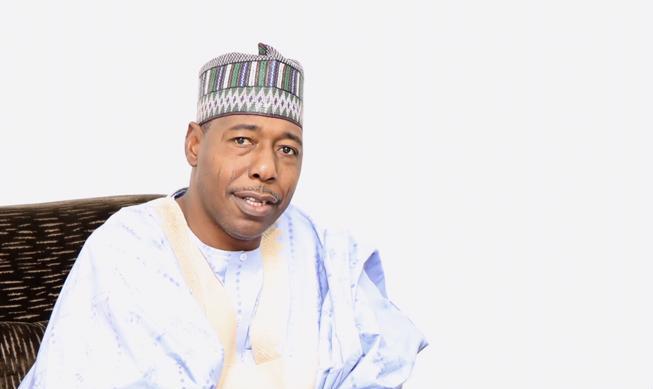
COVID-19: Borno confirmed cases rise to 15 as IDP, two others test positive
Three more cases have been confirmed in Borno State, one of which is an Internally Displaced Person.
The IDP was identified during contact tracing of an earlier confirmed case, and tracked to an Internally Displaced Camp where he lives and invited for isolation.
He was there after tested along side other samples taken which came back positive.
The High Powered Response Team for the Prevention And Control of Covid 19 in Borno made the revelation during the daily media briefing at the government house in Maiduguri.
145 close contacts of the three infected persons have been reached out to, and they are all under surveillance and in self isolation, according to the Commissioner of health.
Two persons that have manifested some symptoms have also been evacuated from Dikwa local government while 17 samples of close contacts of the index case have been brought from Pulka For testing.
Borno State on the second day of its lock down order recorded 95 per cent compliance, police say.
The Rapid Response Squad enforcing the order in the capital city, Maiduguri, says this was achieved because of the involvement of the traditional institution in sensitization of the populace.
The Congregational Jumaat prayers did not hold in any of the mosques in Maiduguri town, it is not clear if the order was observed in other parts of the state or not.
Nigeria’s COVID-19 Cases Exceeds 1,000 As NCDC Confirms 114 More Infections
Nigeria’s COVID-19 Cases exceeded 1000 on Friday, following the recording of 114 new cases of the novel coronavirus.
According to the Nigeria Centre for Disease Control (NCDC), 80 of the new infections were recorded in Lagos, 21 were in Gombe and 5 were recorded in the FCT.
The country’s total deaths from the virus now stands at 32 while 208 have recovered.
114 new cases of #COVID19 have been reported;
80 in Lagos
21 in Gombe
5 in FCT
2 in Zamfara
2 in Edo
1 in Ogun
1 in Oyo
1 in Kaduna
1 in SokotoAs at 11:30 pm 24th April there are 1095 confirmed cases of #COVID19 reported in Nigeria.
Discharged: 208
Deaths: 32 pic.twitter.com/NIDV1zTh9o— NCDC (@NCDCgov) April 24, 2020