![BREAKING: Boko Haram attacks Convoy of Ex-Borno Governor, Ali Modu Sheriff [PHOTOS]](https://tvn.ng/wp-content/uploads/2020/04/BREAKINGn-1.png "BREAKING: Boko Haram attacks Convoy of Ex-Borno Governor, Ali Modu Sheriff [PHOTOS]")
Boko Haram attacks Convoy of Ex-Borno Governor, Ali Modu Sheriff [PHOTOS] appeared first on Politics Nigeria.
BREAKING: Governor Obaseki Reacts to resignation of Chief Of Staff
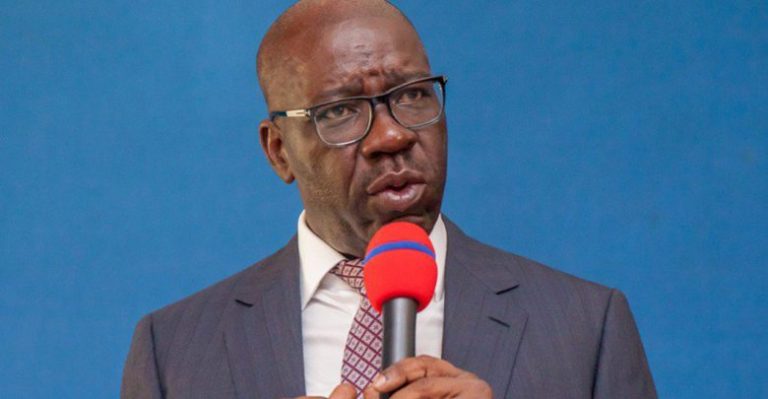

Governor Godwin Obaseki of Edo State has reacted to the resignation of his Chief of Staff, Taiwo Akerele.
POLITICS NIGERIA had reported that Akerele resigned from his position on Friday, saying that he was leaving his position based on principles.
He added that he was still in support of the governor’s drive to transform the state.
“I am solidly with His excellency Mr Godwin Obaseki in his quest to transform Edo state. His mission and vision resonate with mine. This is all I have to say, I will like to be given the opportunity to go private as I part ways administratively with the government based on principles.”
However in a statement
JUST IN: List of Properties ICPC seized from Ex-JAMB Registrar, Dibu Ojerinde
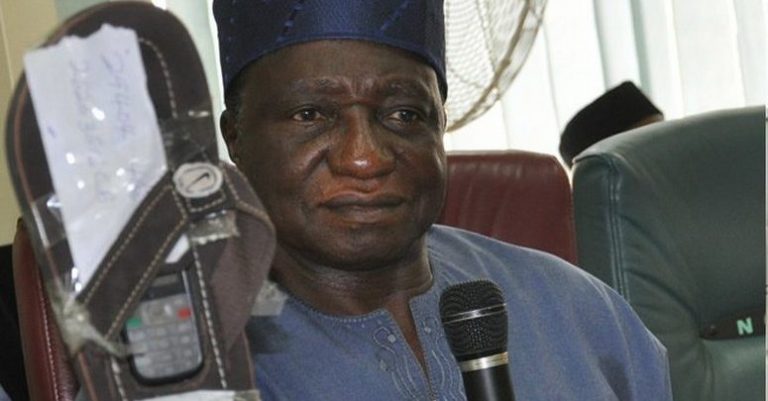

The Independent Corrupt Practices and Other Related Offences Commission, ICPC has taken over several properties belonging to a former registrar of the Joint Admission Matriculation Board, JAMB, Professor Dibu Ojerinde.
The seizure followed a court order from a federal high court in Abuja. The order which was published in a national daily on Friday instructed the anti-corruption outfit to immediately take over Ojerinde’s Properties which were reportedly acquired with public funds obtained through corrupt practices.
“An order of this Honourable Court is hereby made for the interim forfeiture to the Federal Republic of Nigeria of all the immovable properties listed in A attached to the affidavit in support and marked by the Independent Corrupt Practices and Other Related Offences Commission (ICPC) upon reasonable suspicion that each of the said properties was acquired with public funds and/or represents the proceeds of unlawful corrupt activities.”
“An interim order of this Honourable Court is hereby made that the properties attached/forfeited ad-interim and be managed and controlled by the Independent Corrupt Practices and Other Related Offences Commission.” the publication read.
Here are some of the properties;
- Oke Afin Hostels located at Opposite Ladoke Akintola University of Technology, Ogbomoso,
- Sapati International School Buildings and Premises located at Ajase Ipo Road, Ilorin, Kwara State,
- Doyin Filling Station along Lagos Ibadan Expressway,
- Doyin Gas, Ibadan,
- Soka Filling Station, Lagos Ibadan Expressway,
- Gravity FM Radio Station, Igboho,
- Tejumola House, Ikeja,
- Mansion at No 14 Yobe close, Maitama Abuja
Shares in banks, fixed deposits and money in bank accounts were also part of the properties listed to be forfeited.
COVID 19: YOUTH GROUPS TO DONATE RELIEF MATERIALS TO OSUN RESIDENTS
– Youth Led Organisations to crowdfund resources to provide palliatives for vulnerable citizens
– Initiative to be implemented by fellows of New Voices Citizen Fellowship residing in their local government areas and submit accountability report
– Imploring Osun indigenes outside the state and in the diaspora to donate to the relief fund
A coalition youth led civil society groups have concluded plans to donate relief materials to residents of Osun state in south west Nigeria.
In a press release, the groups said the move became imperative considering the prevalent economic woes and vulnerability of many residents of the state and Nigeria at large.
The statement also read in part; Coronavirus Disease (COVID 19) pandemic has caused unprecedented disruption to human activities across the globe. Nations and international agencies are formulating measures to combat these changes, curtail the spread of the virus and proffer solutions to issues emerging from the disease.
In Nigeria, the Federal Government has been compelled by the severity of the spread of the disease to take the drastic measure of temporary lockdown across certain states of the federation. State governments have also commenced efforts to enforce the lockdown. Unfortunately, this decision, although necessary, has negatively impacted on the livelihood of millions of Nigerians, majority of whom depend on daily engagements for their financial sustenance.
Understanding the economic hardship resulting from the lockdown and the role of civil society in rising to the challenges of the day and of the people they seek to serve, Raising New Voices Initiative, My Voice My Future and YNAG will be collaborating on an initiative to provide palliative measures to combat the harsh effects of the lockdown in Osun State, Nigeria.
This initiative tagged “Osun beats Covid 19” will be implemented by the New Voices Citizens Fellows in the State and will be focusing on providing relief materials and protective equipment for vulnerable residents of Osun State with a focus on youth and women.
Osun State is grappling with various challenges such as fiscal sustainability and poor infrastructure. The citizens of the State will need the support of everyone to cushion the adverse effects that Covid 19 has on the people of the state.
The youth groups also called on well meaning Nigerians who are willing to donate to the initiative through their zenith bank account or via bit.ly/osunbeatscovid19 .
Troops kill 89 bandits, recover arms, rescue kidnap victims in Zamfara State.

Over 89 bandits have been killed by troops of Sector 9 Operation HADARIN DAJI on 24 April 2020.

The operation was supported by Troops of 35 Battalion and Quick Response Group of 17 Brigade of the Nigerian Army, Two helicopter gun ships of the Nigerian Air Force, personnel of Nigeria Police Force and elements of Nigerien Army, along Gidan Jaja in Zurmi Local Government Area of Zamfara State.

Scores of bandits reports say escaped with gunshot wounds during the operation.
Items recovered include: 19 AK 47 rifles, 1 PKT machine gun,9 magazines, 167 rounds of 7.62 (Special), one dane gun and one locally made pistol were recovered.
Additionally, 322 rustled cows, 77 motorcycles and 9 cell phones were recovered. Five kidnapped victims comprising 3 females and 2 males were rescued as the bandits camps were cleared by troops.

In a statement, the Coordinator Defence Media Operations Major General John Enenche said there was no loss of troops or equipment in the operation, while formal handover of kidnapped victims and rustled cows will be carried out following due process.

US government hails Abba Kyari’s patriotism

The United States government has described the late Chief of Staff to the President, Mallam Abba Kyari as a dedicated public servant and respected interlocutor for the American government.
In a condolence message to President Muhammadu Buhari, the Assistant Secretary of State for African Affairs, Tibor Nagy, eulogized the important role played by Kyari in the repatriation of over $300 million in funds stolen by former head of state, Sani Abacha.
‘‘Kyari was a valued and respected interlocutor for the U.S. government and particularly for our leadership team in Abuja.
‘‘We appreciate working with him on many important matters, including the return to the Nigerian people of over $300 million in funds stolen by Sani Abacha.
‘‘He envisioned the funds going to three geographically disparate infrastructure projects as a way to unite Nigeria economically,’’ Nagy said.
The U.S. Assistant Secretary noted that this vision, encapsulated by the late Chief of Staff, was a reflection of his tireless championing of a solid and prosperous future for Nigeria.
‘‘His dedication to this matter, to fighting corruption, and to countless other investments and policies for the future of Nigeria will leave a lasting impact on your country,’’ President Trump’s lead diplomat for Africa wrote in the condolence message.
While commiserating with the government and people of Nigeria, the Kyari family on the loss, the U.S. government pledged to stand with Nigeria in the struggle against the coronavirus pandemic.
The President also received condolence messages from Usani Uguru Usani former Minister of Niger Delta, Alhaji Sabiu Bako, Kano-based businessman and Bataure Abdulazziz, a trade union leader.
Czech eases lockdown, but extend state of emergency

The Czech Republic eased restrictions on Thursday aimed at slowing the spread of coronavirus after a drop in new cases sparked optimism the outbreak had so far been brought under control.
The country lifted a ban on non-essential movement and travel abroad, Health Minister Adam Vojtech said after a government meeting.
The government will allow up to 10 people to meet in public – instead of the current two – as of Friday, and reopen universities as of Monday.
The sharp policy turn also includes speeding up the opening of shops, but there was no change announced in the obligation to wear face masks in public or the ban on larger public gatherings or events.
The Czech government has meanwhile approved plans to ask the lower house of parliament to extend the country’s state of emergency until May 25, CTK news agency reported on Friday, citing Interior Minister Jan Hamacek.
The plan should go to lawmakers on Tuesday. The current state of emergency is in place until April 30 and gives the government powers to limit people’s movements and close businesses.
The central European country in March introduced what were at the time some of Europe’s toughest measures to prevent an uncontrolled spike in the new coronavirus epidemic.
Vojtech said the measures were key to avoid overwhelming hospitals and could now begin to be eased, as demanded by business groups as well as some senior medical experts, although epidemiologists have warned against hasty steps.
“We have been able to manage the pandemic exceptionally well on the territory of the Czech Republic,” Vojtech told a televised news conference.
Those who travel abroad will have to present a negative coronavirus test upon return or be subject to two-week quarantine, he said. At the moment, only people visiting families or doctors and commuters are allowed to leave.
The Interior Ministry said it was also slightly relaxing a ban on entry for foreigners to allow entry to university students and business travellers from the European Union, subject to conditions.
Industry Minister Karel Havlicek said that most shop openings would be sped up compared to what was planned in an earlier schedule.
“There will be 14-day intervals [in the reopening], at the moment [the schedule] roughly copies what is done in Germany or Austria,” he said.
The relaxation followed analysis from health ministry experts that showed the reproduction factor of the virus was around 0.7. The number indicates how many people get infected by every newly infected person, and a figure below the neutral level of one means the epidemic is on the decline.
The country has seen the daily increase of reported cases drop to an average of 119 in the past week, less than half of levels in early April.
It has reported 7,138 cases in total, while the number of active cases fell below 5,000 on Wednesday for the first time since April 8. There have been 210 deaths.
Havlicek said the easing may be reversed if the situation worsens again.
From Monday, shops with floor space of up to 2,500sq metres (27,000sq feet) will reopen, along with fitness centres and libraries.
Shopping centres and hairdressers were slated to open from May 11, while restaurants, hotels, theatres and most other services will begin to open on May 25.
US FDA warns against use of hydroxychloroquine to treat COVID-19
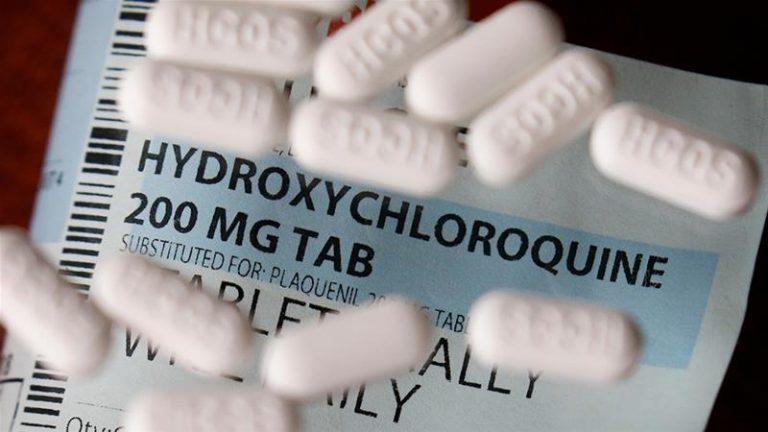
The United States Food and Drug Administration (FDA) warned against taking anti-malarial drug hydroxychloroquine, touted by President Donald Trump as a possible treatment for COVID-19, outside of a hospital or formal study on Friday, citing “serious and potentially life-threatening heart rhythm problems”.
Trump has repeatedly stated that the drug is a possible treatment for COVID-19 and could be a “game-changer”, seemingly based on anecdotal evidence.
No conclusive tests have been completed to prove its effectiveness.
FDA Commissioner Dr Stephen M Hahn said in a statement: “We understand that healthcare professionals are looking for every possible treatment option for their patients and we want to ensure we’re providing them with the appropriate information needed for them to make the best medical decisions.
“While clinical trials are ongoing to determine the safety and effectiveness of these drugs for COVID-19, there are known side effects of these medications that should be considered.”
Pending approval
Trump said at an April 4 news briefing regarding hydroxychloroquine: “What do you have to lose? Take it.”
The president has hedged these remarks by saying people should confer with their doctors.
Hydroxychloroquine and chloroquine, a similar drug, are approved by the FDA to treat malaria and other ailments.
Once a drug is approved by the FDA, the release explained, it may be prescribed for unapproved uses by doctors, depending on a physician’s assessment.
The drugs have been approved for purchase and addition to the Strategic National Stockpile and may be prescribed by doctors for the treatment of COVID-19 when clinical trials are not available or feasible.
But the medicines “have not been proven safe or effective for treating COVID-19”, the FDA said in its release.
“We encourage health care professionals making individual patient decisions closely screen and monitor those patients to help mitigate these risks,” Hahn said.
“The FDA will continue to monitor and investigate these potential risks and will communicate publicly when more information is available.”
State stockpiles
State and local governments have obtained more than 30 million doses of the malaria drug.
At least 22 states and Washington, DC secured shipments of hydroxychloroquine, according to information compiled from state and federal officials by The Associated Press. Sixteen of those states were won by Trump in 2016, although five of them – including North Carolina and Louisiana – are now led by Democratic governors.
Oklahoma spent $2m to buy the drugs, and Utah and Ohio have spent hundreds of thousands on purchases. The rest of the cities and states received free shipments from drug companies or the US government over the last month. Ohio received a large donation from a local company.
Several states including New York, Connecticut, Oregon, Louisiana, North Carolina and Texas received donations of the medication from a private company based in New Jersey called Amneal Pharmaceutical. Florida was given one million doses from Israeli company Teva Pharmaceutical Industries.
The Federal Emergency Management Agency has sent 19 million doses of hydroxychloroquine to 14 cities including Washington, DC, Philadelphia and Baltimore from the federal government’s national stockpile, a source that also provided South Dakota and California with supplies. The US government received a donation of 30 million doses from Swiss drugmaker Novartis on March 29 to build up the stockpile, which does not normally stock the drug.
“If he [Trump] hadn’t amplified the early and inappropriate enthusiasm for the drug, I doubt if the states would have even been aware of it,” said Dr Kenneth B Klein, a consultant from outside of Seattle who has spent the last three decades working for drug companies to design and evaluate their clinical trials.
Klein said it’s understandable that government and health officials looked into hydroxychloroquine – which is approved for treating malaria, rheumatoid arthritis and lupus – as a possible remedy during a frightening pandemic, but the time and energy has been misspent. The potential side effects are worrisome, especially because many coronavirus patients already have underlying health conditions, he said.
“The states and the federal government are reacting in light of that fear, but it’s not a rational response,” Klein said.
Face masks meant o prevent asymptomatic people from spreading virus – NCDC
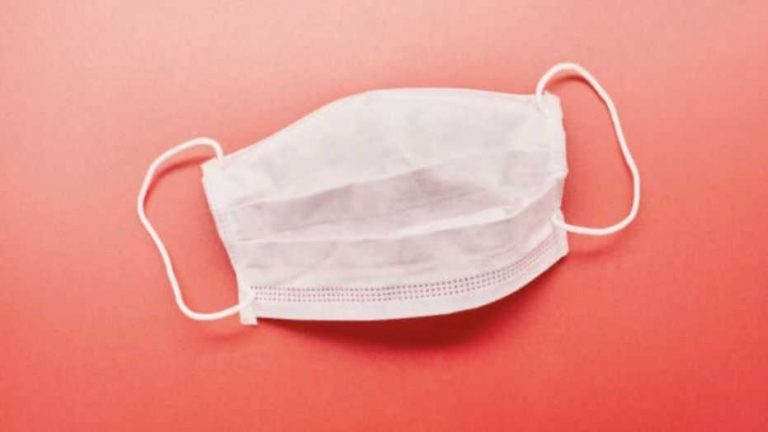
The Nigeria Centre for Disease Control (NCDC) has said the use of face masks is to help those who are asymptomatic from spreading COVID-19.
In a tweet on its handle, Thursday, the NCDC, shared the guideline on the use of face masks.
“This provides guidance on the effective use of masks in non-healthcare settings,” the NCDC tweeted.
According to the agency, the use of face mask is primarily “to prevent those who
are infected but asymptomatic from spreading the virus. Masks have to be properly disposed of in waste bins. Improper handling and frequently touching masks can increase the risk of infection.”
The advisory added that “Improvised masks are also an option – as long as they are properly washed regularly. They can be made out of cloth or other materials.”
Also, the advisory called on older persons who are above 60 years, and those with ongoing respiratory conditions,to wear masks.
The NCDC in the guideline, noted that the use of face masks should be in addition with other safety measures.
“The wearing of face masks alone will not protect against COVID-19, but
must be combined with physical distancing, handwashing, respiratory
hygiene, cleaning and disinfecting frequently touched surfaces and other
advice from NCDC,” the body said.
Trump to sell ventilators to developing countries to fight virus
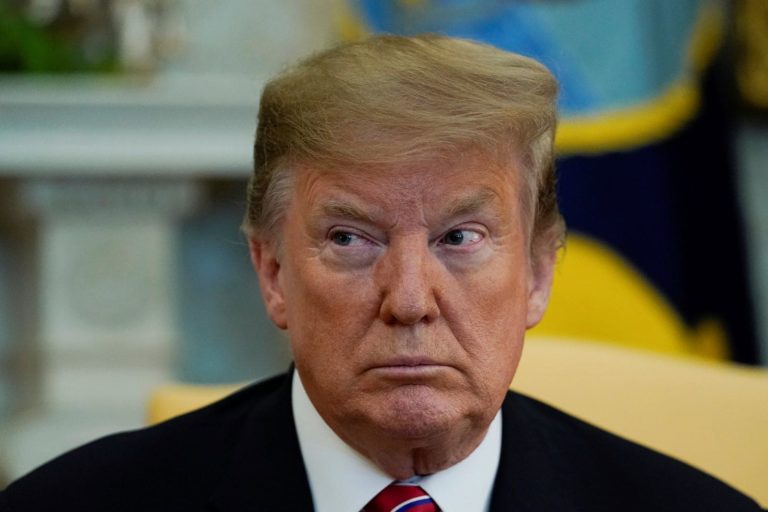
President Donald Trump’s administration said Friday it would sell ventilators to at least four developing countries to fight the coronavirus, saying US needs were being met.

Trump said he spoke by telephone to the presidents of Indonesia, Ecuador, El Salvador and Honduras and promised that the United States would send the vital medical equipment.
“We will be sending them desperately needed Ventilators, of which we have recently manufactured many, and helping them in other ways,” Trump wrote on Twitter of his call to President Lenin Moreno of Ecuador, which has seen a spike in coronavirus cases.
Michael Kozak, the top US diplomat for Latin America, confirmed the United States was selling the ventilators.
“We’re seeing our own needs met; we can become an exporter again,” Kozak told reporters.
“I think in many of these cases that the countries just want to buy them. They aren’t asking us for financing,” he said.
But Kozak said some countries may use assistance from the United States to make the purchases.
Governors led by New York’s Andrew Cuomo said they were seriously short of ventilators at the start of the pandemic and had faulted the federal government.
But Cuomo last week said New York would send ventilators to Michigan and Maryland as the situation had stabilized in his own state — the worst-hit by the pandemic that has killed more than 50,000 people in the United States.
With companies such as Ford and General Motors switching to ventilator production, Trump has boasted that the country as a whole is in good shape and said foreign leaders were asking him for supplies.
“No country is equipped like we are. We have 11 different places making ventilators,” Trump told reporters Thursday.
“Our country, as you know, doesn’t need them now. Our governors are very happy,” Trump said.
In his tweets, Trump praised Honduras and El Salvador for helping curb emigration to the United States — a signature issue for the mogul-turned-president.
Guatemala is also a major source of migrants but has temporarily stopped accepting deported citizens from the United States due to coronavirus infections.
Kozak said that Guatemala — not mentioned in Trump’s tweets on ventilators — was not being punished.
“There isn’t some hard linkage here between cooperation on removals and ventilators. We’re trying to get medicine and medical supplies to anybody who needs them”