Home Blog Page 2449

188 terrorists, 412 bandits killed by troops, 236 kidnapped victims rescued within 3 weeks – DHQ

0

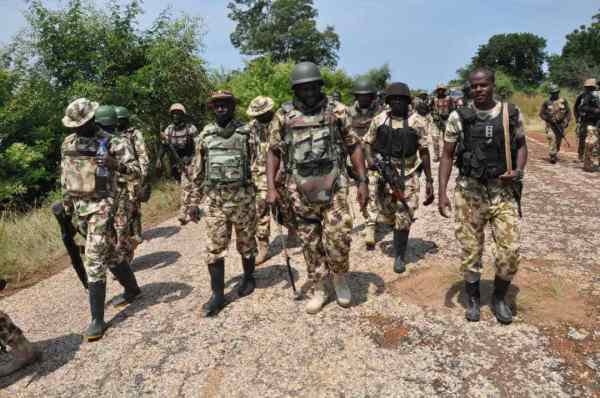
Over 188 terrorists in the North East and 412 bandits including armed militia in North West and Central states have been killed while about 236 kidnapped victims have been rescued in various operations by troops within the last 22 days, the Armed Forces of Nigeria said.

Coordinator, Defence Media Operations, (DMO)  at the Defence Headquarters, Maj. Gen. John Enenche, disclosed this while briefing newsmen on the updates of operational activities of Armed Forces of Nigeria from 6th to 28th May, 2020 in Abuja.

Enenche said that the milestone achievements were the product of joint operations by all components of the military including the Nigerian Army, Nigerian Navy, Nigerian Air Force and other security agencies.

According to him,their joint operations had considerably degraded and reduced the terrorist activities and other criminality in the country.

Gen. Enenche further gave the highlights of the operations under the various theatre operations as follows .

Under Operation Lafiya Dole, he said the troops had killed scores of Boko Haram/ISWAP fighters and their senior commanders.

Enenche further disclosed that the troops also destroyed terrorist’s logistics facilities, gun trucks and other structures as they recovered some arms and ammunition during the period under review.

DMO Coordinator also said, a total of 188 BHT/ISWAP fighters were killed and several others suffered various degrees of gunshot wounds with narrow chances of survival as some kidnapped victims were rescued.

“This is in addition to several others killed in air bombardments. The troops also rescued a total of 236 civilians – women and children, who were abducted by the terrorists.

“The victims have undergone medical checkups and treatments at our health facilities”. He stated.

Under Operation Hadarin Daji, Gen. Enenche hinted that , the troops had in various clearance operations neutralised 392 armed bandits in Katsina and Zamfara States within the period.

The troops,he further said had destroyed some dwellings and logistics warehouses of the bandits at Dunya, Abu Radde’s Camp and Ibrahim Mai Bai’s Camp in Jibia and Danmusa Local Government Areas of Katsina State.

He said that same destruction also took place at Maikomi and Kurmin Kurain Birnin Magaji and Zurmi Local Government Areas of Zamfara State.

This, according to him, is in addition to several others killed by air bombardments that led to destruction of several logistics facilities and compounds, housing some key bandits’ leaders.

Operation Whirl Punch that operates in the North Central states of Benue, Taraba and Nasarawa, Enenche said had killed 20 armed bandits in Benue and Taraba States.

He explained that the troops also carried out a raid operation on a criminal hideout off Zaki Biam and Katsina-Ala highway where a notorious armed robber, Terugwa Igbagwa alias Orjondu, was killed.

According to him, troops also recovered large cache of arms and ammunition within the period under review, adding that a notorious Benue kingpin Terwase Agwaza Alias Gana had narrowly escaped with gunshot wounds during the raid out operation.

In maritime operations, the coordinator disclosed that a Nigerian Navy ship (Pathfinder) Patrol Team, on May 26, conducted Anti-Crude oil theft/anti-illegal bunkering operations around Briakiri off Onne and Abise community off Abonema Akukutoru Local Government Area of Rivers state.

He said that the team located two illegal refining sites with four storage tanks laden with estimated 400,000 litres of products suspected to be illegally refined AGO during the operation.

Enenche explained that the products were impounded while two pumping machines were recovered to the base, adding that no arrest was made as the perpetrators fled on sighting the patrol team.

According to him, on May 25, the Navy Ship Delta intercepted a wooden boat and a speed boat around Ilaopashe, Bennett island and Lokpobri communities in Warri and Burutu South Local Government Areas of Delta State.

He added that, the team located four illegal refining sites with 14 dug-out pits, 32 surface metal storage tanks and 43 ovens laden with about 628.98 barrels of suspected stolen crude oil as well as 72,000.00 litres of product suspected to be illegally refined AGO.

“Likewise the team located a 3-inch pipe and associated fittings close to NPDC pipeline around Bennett Island, suspected to have been laid by crude oil thieves.

“Subsequently, the team disconnected the pipes and fittings. The storage facilities were dismantled while the speed boat was recovered to the base.

“Similarly, the Forward Operating Base IBAKA on 26 May 2020 while on routine patrol around Ewang Creek intercepted and arrested a medium size wooden boat laden with drums of products suspected to be stolen PMS with two suspects.

“Suspects and items recovered from the arrest include 49,000 litres of products suspected to be stolen PMS.

“The suspects are currently undergoing investigation and will soon be handed over to the relevant prosecuting agency.

“Furthermore, within the period under review, the Nigerian Navy in furtherance of its quest to secure our Exclusive Economic Zone, and the Gulf of Guinea rescued a Chinese fishing trawler Hailufeng 11, rescued 18 crewed and arrested 10 sea pirates”.

Gen. Enenche however extended the commendations of the Military High Command to the public for providing credible information that facilitated the successes of various operations.

He enjoined the public to be proactive in the provision of timely information on suspicious movements and strangers within their locality to military operations headquarters in their areas.

He therefore, pledged the commitment of the Armed Forces of Nigeria in launching the offensives against the terrorists, banditry other criminality in the country.

Court upholds INEC’s power to de-register political parties

0

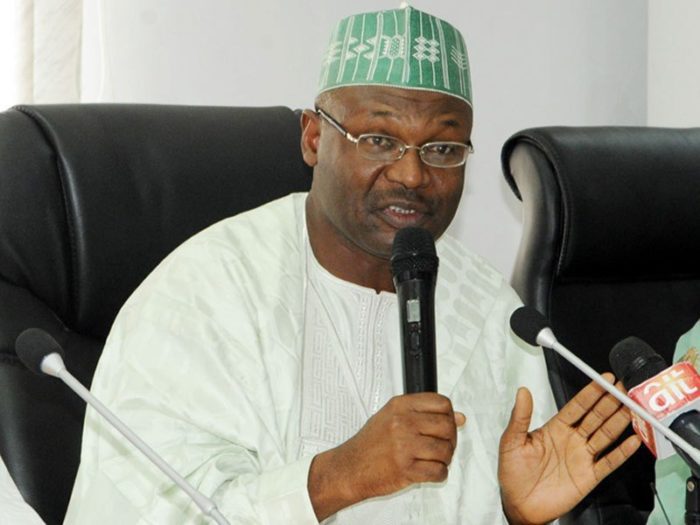
The Federal High Court in Abuja has affirmed the Power of the Independent National Electoral Commission, INEC to deregister political parties which failed to comply with the provisions of the law particularly Section 225 A of the 1999 Constitution as amended.

Justice Taiwo O. Taiwo in a landmark judgment delivered in the Suit filed by the National Unity Party, one of the 74 parties deregistered by INEC in February affirmed that the constitutional power of the electoral commission and the reasons given by the Commission for the  deregisteration of parties are valid,in conformity with the law , sacrosanct and could not be affected by the fact of anticipated Local govt elections by some states which dates were not fixed, certain or even ascertainable.

The Court therefore held that the deregistration of National Unity Party as a political party in Nigeria was lawfully done in exercise of vested constitutional powers of INEC in accordance with Section 225A  of the 1999 Constitution.
It would be recalled that INEC Chairman, Professor Mahmood Yakubu, in February announced de-registration of 74 out of the 91 parties in the country.

With the development, the country now has 18 political parties.
The 18 parties that survived

The 18 parties that survived INEC’s hammer include Accord Party (A), Action Alliance (AA), African Action Congress (AAC), African Democratic Congress (ADC), African Democratic Party (ADP), All Progressives Congress (APC), All Progressives Grand Alliance (APGA) and Allied Peoples Movement (APM).

Others are Labour Party (LP), New Nigeria Peoples Party (NNPP), National Rescue Movement (NRM), Peoples Democratic Party (PDP), Peoples Redemption Party (PRP), Social Democratic Party (SDP), Young Progressive Party (YPP) and Zenith Labour Party (ZLP).

Yakubu, however, said one of the political parties, Action Peoples Party (APP), filed a suit in court and obtained an order restraining the commission from deregistering it, and so remained registered pending the determination of the case by the court.

He also said the 18th party, which was a new political party, Boot Party (BP), registered by court order after the 2019 general elections, will also continue to exist.

Breaking: Buhari splits Police Force CID, approves additional Commands

0

The Force Intelligence Bureau will soon be detached from the Force Criminal Investigation Department so that it can become a full-fledged Department.
The Inspector General of Police, Mohammed Adamu, disclosed this in a memo he personally signed

Adamu said after the FIB is excised from the FCID, a Deputy Inspector General of Police will be appointed as Head of the new Department.
“This is expected to fully integrate intelligence-led policing strategy to the community policing initiative in addressing the threats that the dynamics of crime poses to the country,” said the IGP.

According to him, President Muhammadu Buhari in his capacity as Chairman of the Nigeria Police Council has approved the re-organisation of the Nigeria Police Force with immediate effect.

Adamu, in the memo titled: “Force Re-organisation,” said with the approval, the NPF now have eight Departments.
In order to bring Police service closer to the citizens, the Police boss said Buhari has also approved the creation of additional five Zonal Commands.

They include Ondo/Ekiti Commands, with the Headquarters in Akure; Enugu/Anambra/Ebonyi Commands, with the Headquarters in Awka; Bayelsa/Rivers Commands, with Headquarters in Yenagoa; Yobe/Borno Commands, with the Headquarters in Maiduguri; and Katsina/Kaduna Commands, with headquarters in Katsina.

Adamu said: “In order to enhance the capacity of the four premiere Police Colleges in Kaduna, Ikeja, Maiduguri and Orji-River towards meeting the training and capacity development projection of the Force in relation to junior cadre officers, Mr. President approved that the status of the Commandants of the Colleges be upgraded to the rank of Assistant Inspector General of Police.

“This will strengthen administration, enhance the commitment of staff, and engender higher level of discipline and the quality of training at the Colleges. These approvals were granted by the President in furtherance to the need to expand and strengthen the Intelligence Department towards driving the intelligence-led policing strategy of the Force leadership and to aid in the entrenchment of the community policing practice as approved by the Federal Government.”

Infectious Disease Bill: Court Did Not Stop Probe Of CUPP Spokesman Over $10m Dollars Bribery Allegation

0

Justice Taiwo Taiwo of the Federal High Court has said that he did not stop the probe of $10m dollars bribery allegation made against the House of Representatives by the Spokesman of the Coalition of United Political Parties, Chief Imo Ikenga Ugochinyere.

The court made the clarification yesterday after media reports that the Speaker of the House of Representatives, Honourable Femi Gbajabiamila, was summoned by the court over the invitation of Ugochinyere, to appear before a committee of the House of Representatives to substantiate the allegation he made against the House.

After he was invited, he rushed to the court to stop his invitation but the court declined and said that his counsel to serve the processes on the House of Representatives to intimate them  pendency ofbtge suit.

When the case came up yesterday, counsel to the Speaker, Dr. Kayode Ajulo, told the court about the misrepresentation of the facts of the matter in the media.

Justice Taiwo, in his response expressed disappointment and added that he never made any order asking the Speaker to appear before the court.

He said some persons are trying to use the media to mislead members of the public in respect of this case.

Justice Taiwo Taiwo emphatically stated that he hasn’t made any order against the Speaker nor asked the Speaker to be brought before the court.

Ajulo told the court that he could not file his responses due to the public holidays and sought to file the responses in court.

The court  granted the request and adjourned the matter to June 8 for hearing.

Last week, it was reported that the court ordered the House of Representatives to Appear before the court over ongoing moves by the House to invite the  CUPP Spokesperson.

Ugochinyere  had dragged the Speaker, Clerk of the National  Assembly and the Inspector General of Police before the court to challenge his invitation to substantiate the bribery allegation made against them.

Amnesty International’s Latest Report Against Military Fallacious, Lacking In Objectivity- CALSER

0

The Centre for Africa Liberation and Socio-Economic Rights (CALSER) has rubbished Amnesty International’s latest report against the Nigerian Military in the war against Boko Haram/ISWAP terrorists.

Amnesty had alleged that children in the North-East were being subjected to unlawful treatment and detention in inhumane conditions.

However, in a counter-report signed by Princess Ajibola, on Wednesday, CALSER described the claims as “ fallacy, lacking in objectivity”.

The Centre said this may just be another coy by the international humanitarian organization in its characteristics penchant for distracting the Nigerian troops when the morale is high.

CALSER added that this is even more striking, especially as the report was based on an interview conducted on only 48 children held in detention, as well as 22 adults.

Contrary to AI’s allegation, the Centre disclosed that the military have been conducting operations that led to the rescue of thousands of women and children, granting them access to medical care before release to their families.

CALSER noted that in all of its engagements, “we have not been able to establish cases of torture by the Nigerian Military as put forward by Amnesty International”.

The Centre for Africa Liberation and Socio-Economic Liberation, therefore, stated that the recent report by AI is lacking in all ramifications and should be disregarded by all and sundry.

It, however, pledged its commitment to continue working with the military in the war against terrorism in Nigeria.

Read the full report below:

The Centre for Africa Liberation and Socio-Economic Rights Statement on Amnesty International’s report “‘We dried our tears’: Addressing the toll on children of Northeast Nigeria’s conflict” accusing the Nigerian Military subjecting children in North-East Nigeria to unlawful treatment and detention.

The Nigerian Military has been engaged in the prosecution of the war against terrorism in North-East Nigeria since 2009 when the Boko Haram terrorist group began a violent campaign against Nigeria.

As standard with warfare, there are bound to be casualties of immeasurable proportion. But the report by Amnesty International in fulfilment of its supposed mandate of bringing to the fore perceived cases of human rights violations in countries where it operates, Nigeria inclusive is lopsided.

In the report by Amnesty International, it alluded that the Nigerian Military’s treatment of those who escape such brutality has also been appalling. From mass, unlawful detention in inhumane conditions, to meting out beatings and torture and allowing sexual abuse by adult inmates – it defies belief that children anywhere would be so grievously harmed by the very authorities charged with their protection.

This statement is at best a fallacy that lacks objectivity as the activities of the Nigerian Military in North-East Nigeria has continuously been scrutinized by a coalition of civil society organizations including the Centre for Africa Liberation and Socio-Economic Rights.

The Centre for Africa Liberation and Socio-Economic Rights believes that the motives of Amnesty International in this regard could be hinged on a disdain for the successes recorded since 2016 when the Nigerian Military gained ascendency over the Boko Haram terrorist group.

This is on the heels that the report was based on an interview conducted on 48 children held in detention, as well as 22 adults. It is indeed questionable that conclusions can be drawn from such sample size given the population of North-East Nigeria that as at 2011 stands at 23,558,674 or 13.5% of the country’s population.

It must be stated that such a sample size cannot avail a reasonable conclusion in research. As such, there is a high level of mischief on the part of Amnesty International, which might not be unconnected with its insatiable desire to see to the festering of the crisis in North-East Nigeria to suit their purpose and cause a distraction to the operations of the Nigerian Military.

The Centre for Africa Liberation and Socio-Economic Rights have in times past questioned the genuineness of the reports of Amnesty International on Nigeria. This position of ours had led to the commissioning of various researches to ascertain the veracity of the claims made by Amnesty International.

It suffices to state that on these occasions, there was a wide disparity between what was reported by Amnesty and our team of independent researchers. This has been the trend, and it has assumed a worrisome dimension with the recent report by Amnesty International.

Amnesty International in its report also posited that most of such detentions were unlawful; children were never charged or prosecuted for any crime and are denied the rights to access a lawyer, appear before a judge, or communicate with their families. The widespread unlawful detentions may amount to a crime against humanity.

It is common knowledge that the use of children in war is a crime against humanity. And as such, it is indeed bewildering that Amnesty International can feign ignorance to these ignoble acts by Boko Haram. While it is understandable that Amnesty International would feign this ignorance, it is nonetheless against all known protocols why such anomalies should be encouraged rather than rebuked.

The Centre for Africa Liberation and Socio-Economic Rights is in receipt of the fact that the Nigerian Military has been conducting rescue operations that have led to the rescue of thousands of women and children have been rescued from the Boko Haram captivity. It is also public knowledge that the Nigerian Military has availed those rescued from captivity access to medical care, as well as counselling before they are released back to their families.

Therefore, there is no record in the archives of the Centre for Africa Liberation and Socio-Economic Rights that indicates otherwise. We have also been painstaking in scrutinizing cases of human rights violations in North-East Nigeria and the bulk of the summary of our scrutiny highlighted gross violations by the Boko Haram group. Case studies were seen in the Chibok girls, the Dapchi girls, as well as the Buni Yadi massacre of young boys in their dormitory by the Boko Haram group.

It must be stated that children rescued from Boko Haram captivity are not detained or charge for terrorism as in the first instance, the involvement of children was more forceful and against their wishes. This fact, the Nigerian Military highlighted and stated that counselling sessions are availed rescued captives regardless of their age or gender.

Amnesty International was economical with the truth when it stated in the report that almost everyone fleeing Boko Haram territory, including children, is “screened” by the Military and Civilian Joint Task Force – a process that, for many, involves torture until the person “confesses” to affiliation with Boko Haram. Alleged Boko Haram members and supporters are transferred and held, often for months or years, in squalid conditions in detention centres including Giwa Barracks in Maiduguri and the Kanji military base in Niger State.

Every discerning mind would agree that screening is a precautionary measure put in place by the Nigerian Military to ensure that fleeing Boko Haram terrorist do not infiltrate the civilian populace and wreak further havoc. The Centre for Africa Liberation and Socio-Economic Rights observed that these precautionary measures have indeed drastically reduced incidences of suicide bombings in markets, places of worship, communities and other places in times past.

Moreover, in all of our engagements, we have not been able to establish cases of torture by the Nigerian Military as put forward by Amnesty International. We are indeed aware that the Nigerian Military has a Directorate for Civil-Military relations, as well as the establishment of human rights desks.

It is worthy to state that the establishments of these initiatives have seen to the reprimanding and consequent prosecution of errant soldiers that were caught violating human rights in North-East Nigeria.

It is therefore awkward that Amnesty International estimates that at least 10,000 people, including many children, have died in detention during the conflict. There is no iota of truth in this claim, and this much Amnesty International must own up to.

Amnesty International contradicted itself in its report wherein it stated that conditions are better at the Operation Safe Corridor site than elsewhere in military detention, and former detainees spoke positively about the psychosocial support and adult education there.

For inexplicable reasons, Amnesty International refused to acknowledge the fact that the detention facilities of the Nigerian Military operate under the same conditions. This much the Centre for Africa Liberation and Socio-Economic Rights can attest to given the fact that it has on several occasions, visited the various detention centers of the Nigerian Military in various locations.

The Centre for Africa Liberation wishes to advise Amnesty International to dedicate substantial time to conducting field research instead of relying on hearsays and desk research with regards to the operations of the Nigerian Military in North-East Nigeria.

Conclusion:

The Centre for Africa Liberation and Socio-Economic Liberation states in unequivocal terms that the recent report by Amnesty International is lacking in all ramifications and should be disregarded by all and sundry.

The accusations are with sinister motives and not a reflection of the issues on the ground. The general public must realize that acts of terrorism are of various dimensions and Amnesty International through its recently released report has availed us the possibility of intellectual terrorism.

The Centre for Africa Liberation would continue to work with the Nigerian Military in the war against terrorism in Nigeria.

Breaking: COVID-19 deaths in US exceed 100,000

0

The number of deaths from Coronavirus in the United States has surpassed a tragic milestone of 100,000.

The U.S. reached the grim milestone according to a count by Johns Hopkins University.

Despite the large number of cases and deaths, a new poll released Wednesday by The Associated Press-NORC Center for Public Affairs Research shows only half of Americans would get a COVID-19 vaccine if scientists create one.

Meanwhile, U.S. officials are pushing hard to reopen even as more than a dozen states are still seeing increasing new cases. Georgia, Alabama, Arkansas, South Carolina are among states with some of the least restrictive guidelines for reopening, and where coronavirus cases are increasing.

Kaduna State PDP expels John Danfulani

0

Kaduna state’s chapter of the Peoples Democratic Party has expelled Dr John Danfulani, who was earlier suspended for alleged anti party activities, alongside senator Hunkuyi and other chieftains.

The expulsion letter which was a collective decision, by the state’s executive caretaker committee states that; “based on the powers conferred on it under section 57 (3) of the PDP constitution (as ammended 2017) resolved to expulse Dr John Danfulani from the party in line with the recommendation of the disciplinary committee.

Reacting to his expulsion, Dr John Danfulani posted the letter on his official Facebook page, with the caption; LETTER OF EXPULSION:

The CTC of Kaduna State PDP expelled me from the party this day 26th May 2020.


French court rejects request to release Rwandan genocide suspect

0

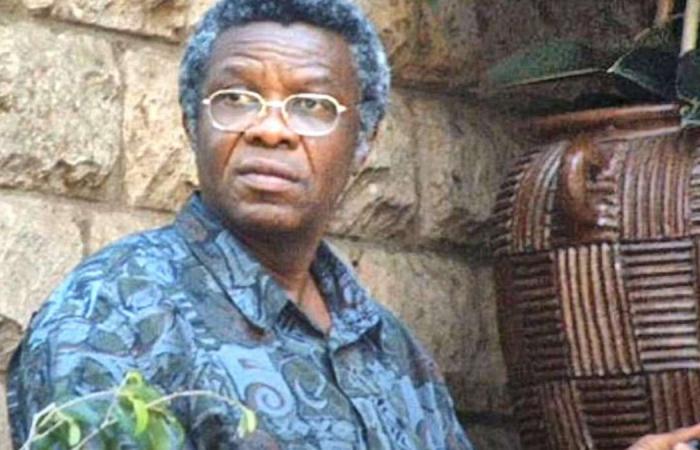
A French court has rejected a request to release Rwandan genocide suspect Felicien Kabuga under court supervision.

The court on Wednesday denied his lawyer’s argument that Kabuga should be released on bail because of poor health, saying continued detention ensured he would not abscond. Kabuga can appeal the decision.

Kabuga is accused of financing and arming ethnic Hutu militias that slaughtered some 800,000 people in 1994 [Benoit Tessier/Reuters]

The genocide suspect, meanwhile, told the court the international charges against him were “lies”.

Kabuga, who was arrested near Paris earlier this month after more than 20 years on the run, is accused of financing and arming the ethnic Hutu militias that slaughtered some 800,000 Tutsi and moderate Hutus in 1994.

The one-time tea and coffee tycoon was seated in a wheelchair at the front of the court, with his hands folded in his lap, wearing a blue shirt and dark blue trousers as well as a face mask.

Asked if he understood the charges made by a United Nations tribunal, Kabuga told the court through an interpreter: “All of this is lies. I have not killed any Tutsis. I was working with them.”

He confirmed his identity saying he was born in 1933, rather than 1935 as stated in court documents.

“It’s a major arrest but of course we must respect the presumption of innocence,” Etienne Nsanzimana, a Rwanda genocide survivor said.

“He was one of the main figures of the old Rwanda and he was wanted on several charges – so it’s a huge relief he has been caught.”

According to an indictment from the International Criminal Tribunal for Rwanda (ICTR), Kabuga chaired the notorious Radio Television Libre des Mille Collines (RTLM) and used it to incite hatred between Hutus and Tutsis.

The indictment alleges RTLM “incited the commission of genocide through broadcasts that expressly identified persons as Tutsis, provided their locations, described them as the enemy, and called for their elimination”.

Kabuga also agreed with others to create and fund a militia in the capital, Kigali, with the aim of stirring up ethnic hatred and committing genocide against Tutsis, according to the indictment.

Extradition

Should the Paris Court of Appeal approve Kabuga’s extradition, it will order him to be handed over to the International Residual Mechanism for Criminal Tribunals.

The mechanism tries Rwandan cases in neighbouring Tanzania, but prosecutors are asking that Kabuga be held temporarily at The Hague, in the Netherlands, in light of the coronavirus pandemic.

Kabuga’s lawyers, however, have said the suspect wishes to be tried in France where he was living for several years, Al Jazeera’s Natacha Butler reported from Paris.

“They say he is elderly, he is 84 years old, and his health is frail, and extraditing him would simply be too much for a man that age,” she said.

It is likely Kabuga will first be transferred to The Hague and then to Arusha, Tanzania, for trial, Grace Farvel, a Paris-based lawyer, told reporters.

However, Farvel added: “It is still possible that the validity of the arrest warrant would be challenged, and the court would accept that argument.”

The international arrest warrant for Kabuga was issued in August 1999.

“I imagine one of the issues will be that the information that was gathered then was still valid,” Nicola Palmer, a senior lecturer at King’s College said.

“This will be a very hard argument to sustain. Before the UN tribunal closed, it took a number of interviews to make sure it retained the initial evidence that it had gathered. And I think this is unlikely to go forward now that trial will go before this residual mechanism, which is really about completing the work of the UN International Criminal Tribunal of Rwanda, which has been in existence since 1994.”

US acuses Russia of sending advanced fighters, jets to aid mercenaries in Libya

0

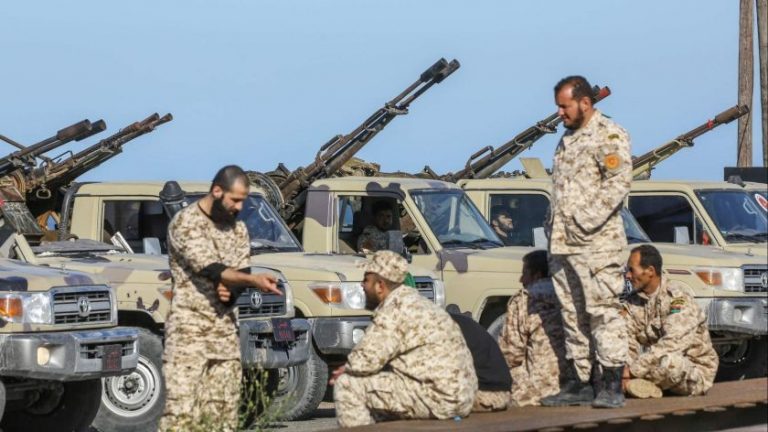
The US military accused Russia of deploying fighter aircraft to Libya “repainted to camouflage” their origin in support of mercenaries fighting for eastern-based commander Khalifa Haftar’s forces.

The allegation came as Russian Foreign Minister Sergey Lavrov on Tuesday told a Haftar ally that Moscow backed an immediate ceasefire and political talks that would culminate in united governing authorities.

The United States’ fighter jet accusation against Russia raises concerns of a new escalation in the nine-year-long conflict, despite Lavrov’s call for a truce.

“Russian military aircraft are likely to provide close air support and offensive fire,” the US Africa Command (Africom) said in a statement.

The US statement said the aircraft arrived in Libya “recently” from an airbase in Russia after briefly stopping in Syria, where they were repainted to conceal their Russian origin.

The Russian defence ministry said it would “not comment right now” on the Africom statement. But Andrei Krasov, a member of the defence committee in Russia’s lower house of parliament, dismissed the allegation as “fake” news.

On Wednesday, Vladimir Dzhabarov, first deputy head of the upper house’s international affairs committee, said Russia had not sent military personnel to Libya. Interfax news agency cited Dzhabarov as saying that the Russian upper house of parliament had not received a request to approve such a dispatch.

Moscow has long denied any involvement in Libya’s conflict.

The fighting in Libya has drawn in regional and global powers with what the United Nations described as a huge influx of weapons and fighters in repeated violation of a 2011 arms embargo.

Russia, the United Arab Emirates, and Egypt support Haftar’s self-styled Libyan National Army (LNA), which launched an offensive 13 months ago ago to seize the capital, Tripoli, from the the internationally recognised Government of National Accord (GNA).

However, in recent weeks the GNA has, with extensive Turkish military backing, pushed Haftar back from his foothold in southern Tripoli and other parts of the northwest.

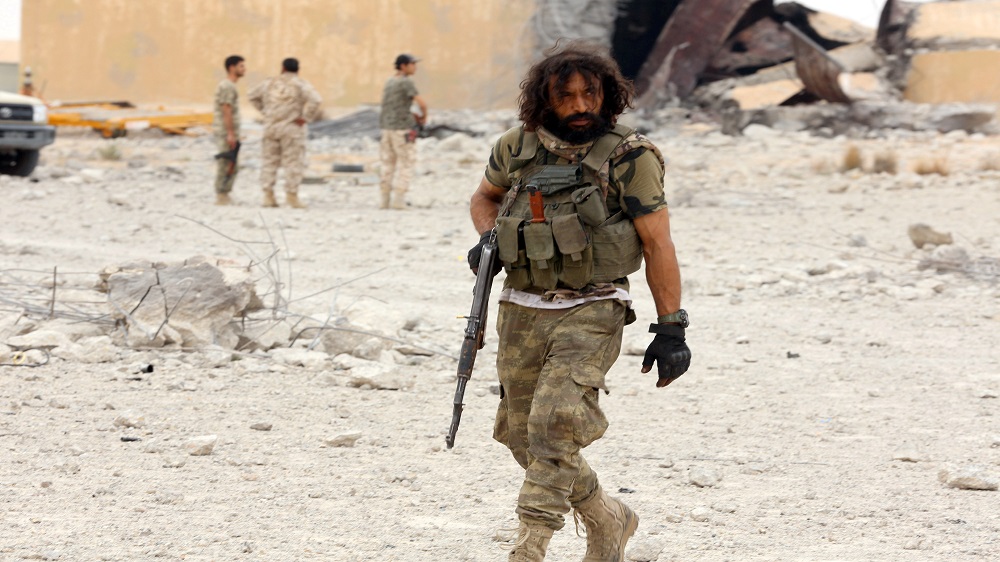
Hundreds of Russian military contractors were reportedly evacuated into central Libya during the past few days after retreating from fighting on the capital’s front lines.

‘Tip the scales’

US Army General Stephen Townsend described the Russian planes as “fourth-generation jet fighters”.

“Russia is clearly trying to tip the scales in its favour in Libya,” he said.

“Just like I saw them doing in Syria, they are expanding their military footprint in Africa using government-supported mercenary groups like Wagner,” he added, referencing the Russian private military contractor Wagner Group, which the UN said last month had 1,200 fighters in Libya.

The US statement said Russia had used Wagner “to conceal its direct role and to afford Moscow plausible deniability of its malign actions”.

US Air Force General Jeff Harrigian warned if Russia seized military bases on Libya’s coast it would “create very real security concerns on Europe’s southern flank”.

Libya

The statement added neither the LNA or foreign mercenaries would be able to “arm, operate and sustain these fighters [jets]” – without support from Russia.

Al Jazeera’s Mahmoud Abdelwahed in Tripoli reported people in the town of Bani Walid, a city 150km (93 miles) southeast of the capital, said 1,500 foreign “mercenaries” were now based there.

“The question now is whether they’re going to leave the country after the news they’re being re-deployed and provided advanced fighter jets,” he said.

‘Talk is cheap’

Meanwhile, Russia’s foreign ministry said in a statement that Lavrov conveyed a message to Aguila Saleh Issa, speaker of the Libyan House of Representatives who is aligned Haftar, that he wanted an immediate ceasefire and political negotiations in Libya.

Analysts questioned the motive behind the Russian call for a truce and negotiations.

“Russia is on the back heel with Haftar and the recent military victories by the western-backed government, so it is advantageous for Russia to call for talks … which creates some space for retreat and re-positioning,” said William Lawrence, a professor at the American University in Washington, DC.

Mansour el-Kikhia, a professor at the University of Texas at San Antonio, said Lavrov’s call was disingenuous.

“The Russians have supplied aircraft all along under the guise of spare parts. Talk is cheap, ultimately what is the reality on the ground? They might withdrawal their forces, but their military hardware will get in one way or the other, directly or through Egypt or some other source,” el-Kikhia told Al Jazeera.

“It’s a zero-sum game. Neither the Russians nor the Turks are willing to give up their gains in Libya, nor the Egyptians either. I assure you if Haftar loses more territory than Egypt will intervene, too … It’s a catastrophe. This war is going to last another 15-20 years.”

IEDs targeting civilians

The announcements came as the UN mission in Libya “strongly” condemned what it called the use of improvised explosive devices against civilians in the Libyan capital.

A statement released late on Monday voiced alarm about reports that residents of the Ain Zara and Salaheddin districts in southern Tripoli had been killed or wounded by IEDs placed in or near their homes.

The statement did not name who was believed responsible but came after the GNA on Monday accused Haftar’s forces of planting land mines in houses before pulling back from positions in the south of the capital, killing two civilians on Saturday as they returned home in Salaheddin.

“This grotesque transformation and deterioration of the conflict that has occurred while families were seeking the safety and comfort of their homes for the Eid holiday demonstrates deliberate targeting of innocent civilians,” the UN statement.

“These acts, which serve no military objective, provoke extreme fear among the population and violate the rights of innocent civilians who must be protected under international humanitarian law.”

AfDB president, Akinwumi Adesina faces probe

0

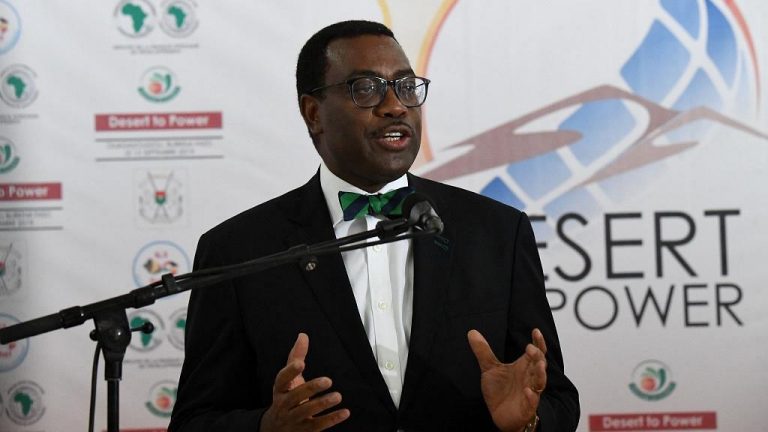
The African Development Bank’s board agreed to an independent probe of its president, Akinwumi Adesina, after the U.S. rejected an internal investigation that cleared him of allegations of favoritism.

Africa’s largest multilateral lender decided on the inquiry after several governments backed U.S. Treasury Secretary Steven Mnuchin’s criticism of a bank-led examination into the allegations, the people said, asking not to be identified because details aren’t public.

Adesina, who has repeatedly denied wrongdoing, may have to step back from the role until the probe is completed, they said.

If there are questions from major shareholders on the appropriateness of an internal process, clearly it’s not harmful if that is put into a different light and looked at from the outside world with fresh eyes. We don’t necessarily require such or we don’t advocate for such.

Allegations

Unidentified whistleblowers accused Adesina, 60, of handing contracts to acquaintances and appointing relatives to strategic positions. The Abidjan-based lender declined to comment. Adesina didn’t respond to an emailed request seeking comment, while a call to his mobile phone didn’t connect.

The proposed investigation comes three months before the bank’s annual meeting, at which Adesina is the sole candidate to extend his five-year term. The AAA-rated lender’s 80 shareholders in October pledged to provide funding that will help to more than double its capital base to $208 billion.

Denmark, Sweden, Norway and Finland are among countries that wrote to the AfDB to back Mnuchin’s demands for professional outsiders to look into the allegations, the people said. A representative for the Nordics declined to comment.

US unhappy with exoneration

Mnuchin last week wrote to the AfDB to express “deep reservations” about the integrity of the lender’s ethics committee, after it exonerated Adesina.

The scope and detail of the allegations are serious enough for a further inquiry to ensure the AfDB’s shareholders have confidence in the bank’s leadership, Mnuchin said in the May 22 letter addressed to Niale Kaba, the chairwoman of the bank’s board of governors.

The U.S. is the AfDB’s biggest shareholder after Adesina’s home country of Nigeria. The demands for an independent probe are aimed at ensuring that if the allegations are baseless, the process of reaching that conclusion is public and transparent, one of the people said.

Shareholders of the AfDB include 54 nations on the continent and 27 countries in the Americas, Europe, Middle East and Asia. It has an AAA rating from Fitch Ratings, Moody’s Investors Service and S&P Global Ratings.

“If there are questions from major shareholders on the appropriateness of an internal process, clearly it’s not harmful if that is put into a different light and looked at from the outside world with fresh eyes,” S&P analyst Alexander Ekbom said before the decision of the probe was taken. “We don’t necessarily require such or we don’t advocate for such.”

Support from within

Prior to Mnuchin’s letter to the board, African leaders including South African President Cyril Ramaphosa and his Nigerian counterpart, Muhammadu Buhari, expressed support for Adesina and commended him for his efforts to help secure funds for Africa to deal with the fallout from the disease.

U.S. criticism of the bank’s internal processes follows comments by World Bank President David Malpass in February that multilateral lenders including the AfDB tend to provide loans too quickly, and, in the process, add to African nations’ debt problems.

The bank rebutted the statement, saying it undermines its governance systems, impugns its integrity and that there is no risk of “systemic debt distress” on the continent.

In March, the lender issued a $3 billion social bond to help African countries deal with the fallout from the coronavirus pandemic. The bank also launched a $10 billion crisis-response facility for African nations.