



Opinion: COVID-19 pandemic in Nigeria, why lockdown is the hard way and the only way.
By Dr Sani Musa
It is no longer news that COVID-19 pandemic has reached the shores of Nigeria and has so far affected eleven states plus FCT. At the same time, there seem to be a widespread misunderstanding by the Nigerian public of the implications of a full-blown COVID-19 outbreak which could negatively affect the country’s response. COVID-19 is a new disease that is not well understood and countries, therefore, rely largely on the experiences of afflicted countries to inform their interventions.
Since Nigeria is facing this infection for the first time, only time could tell whether the country is going to experience the milder, same or worse form of the disease. It is, therefore, critical for the government to be proactive and prepare for the worst. As for the public, they need to fully comply with outlined government interventions.
In issues of life and death, it is always better to err on the side of caution, no matter how extreme it may look. Taking the Nigerian context into consideration, this article attempts to postulate the possible dire consequences of a full-blown COVID-19 outbreak in the country. It also proffers some realistic recommendations for the Nigerian government and the general public.
First, the experience from China, Italy and other affected countries has shown that everyone could be infected with the virus. However, while it could infect anyone, the disease takes a higher toll on the elderly and those with coexisting illnesses such as diabetes, HIV infection, asthma, hypertension and chronic kidney disease.
According to the latest WHO statistics, Nigeria has about the same prevalence of these coexisting sicknesses and could even have higher because of underreporting of cases. The underestimation of the cases is partly due to poor health-seeking behaviour of a significant number of the populace and the corresponding weakness in our health reporting system. For the same reason, Nigerians with coexisting illnesses could be poorly controlled compared to those living in developed countries whichwill predispose them to greater risk of severe COVID-19. Moreover, our younger population may not be as healthy as the ones in the developed nations.
A significant number of Nigerian children of them are undernourished which could predispose them to severe disease.
The corona viruses are a family of virus that characteristically causes mild illnesses such as the common cold. However, from time to time new species of the viruses do emerge and cause severe disease in humans. Examples of the severe forms are the Severe Acute Respiratory Syndrome (SARS) pandemic which took place in 2003 and started from china and the Middle East Respiratory Syndrome (MERS) first reported in Saudi-Arabia in 2012.
Late in 2019, a novel specie of these viruses emerged in city of Wuhan China and rapidly spread resulting in a global pandemic and causing severe form of the disease in some cases. The virus was spread to other continents mainly by importation through air travels. The new virus was named SARS-COV-2 and the disease referred to as COVID-19. The virus is transmitted when suspended viral particles in the air from an infected patient are deposited on eyes, nostrils, and mouth or even swallowed. These viral particles could also be deposited on inanimate objects and surfaces where it remains viable for up to 24 hours or more depending on the surface. More disturbing, is the possibility that the virus could remain suspended in the ambient air for up to 72hrs, during which it could be transmitted.
Now, looking at the typical Nigerian setting; the crowded worship places, schools, motor parks, markets, slums with overcrowded rooms, one will not help, but see a fertile ground where COVID-19 outbreak could propagate.
The most worrying aspect of the COVID-19 is its potential to shut down our healthcare system. Firstly, a good number of our hospitals are designed and sited without prior consideration for the control of infectious disease and do not have functional isolation facilities. This implies that, if there are cases of COVID-19, the hospital itself may serve as a breeding ground for its transmission. When the disease is transmitted to a healthcare worker, they take ill or at least become a contact of a COVID-19 patient and have to go on quarantine.
This is almost inevitable, given that when a COVID-19 patient walks into a typical Nigerian hospital for the first time, he/she will have to mingle with virtually all the hospital staff. These include the security personnel, the cashiers, record officers, nurses, doctors, pharmacists, phlebotomists, and of course the patients infected samples go to mingle with the laboratory staff. This is in addition to mingling with other patients in long poorly organised queues at every point mentioned above. These other patients and visitors could be infected and take the virus back to the community and reinforce the cycle of transmission.
Now, supposing the index patient has contact with only one healthcare worker at each of the points described above, the implication is that, at least six healthcare workers have to go on quarantine. This means that these workers have to be away from their place of work, with nobody to replace them due to the chronic shortage. By the time you have ten of such patients, then you have to send sixty staff out of the hospital with no replacement. In fact, the experience with the Ebola outbreak was such that, once a few suspected cases were recorded, some healthcare workers panicked and abandoned their duty post. Thus, the consequence of this is that, as few as fifty COVID-19 cases are enough to shut down or severely overwhelm any of the Nigerian tertiary hospitals.
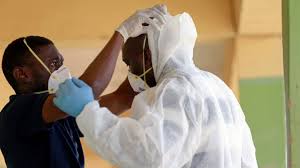
By the way, we should make no mistake thinking that, healthcare workers will be guaranteed protection at this time. First, corona virus (SARS-CoV-2) can be transmitted in the early stages of the disease (COVID-19), whence such patient may casually walk into the hospital with symptoms as mild as the common cold. Healthcare workers only wear the full complement of personal protective equipment (PPE) (such as facemask, gloves, aprons, googles, gowns etc) when confronted with a suspected or confirmed cases of a contagious diseases. They cannot always be in the full PPE because of the discomfort associated with wearing it and more importantly, the cost of its purchase.
As a matter of fact, this pandemic has made them extremely scarce even in countries that manufacture them. Perhaps, the current scarcity is best illustrated in the recent suggestion by the US president to disinfect and re-use facemasks. These PPE are disposed off after every use; hence, they could be exhausted very quickly in the face of severe global scarcity and in Nigeria, a country that does not manufacture them.
Additionally, COVID-19 patients do not share things with the other patients so as not to infect them. This implies that they have to have a dedicated ward, dedicated doctors and nurses, and in order to cater for those with the severe form of the disease, there has to be dedicated intensive care units, ventilators, dialysis machines, and so on. Practically, this means creating a five-star hospital within the existing hospital, and in the case of Nigeria, where one hardly existed. When we saw China build a new hospital in Wuhan within days, it was not necessarily because their existing hospitals did not have enough space to accommodate the patients.
Their aim was to avoid infecting other patients with the virus. Again, converting stadia and other places to isolation facilities may seem a good idea, however, the question remains as to where to get the staff to man those places. Already there is a shortage of healthcare workers in the country, no thanks to the alarming exodus of doctors and other healthcare workers for greener pastures in recent times. Further, when it comes to intensive care, most Nigerian healthcare workers do not have the requisite skills and experience, particularly with the use of gadgets such as ventilators and the likes. Aside from this, our healthcare system at the moment will hardly accommodate ventilators. The constant electricity as well the ample oxygen supply required to use them are difficult to come by or simply not available. Perhaps all you need are five patients on continuous high flow oxygen for a week and all the oxygen available in a Nigerian tertiary hospital is completely exhausted. Now, COVID-19 patients that are critical will require oxygen and in fact some are being discharged home on oxygen in US at the moment.
Another potential problem is that of poor testing/testing low number of cases because of the scarcity of test kits and specialised laboratories. This implies that many COVID-19 cases will be walking in our midst unconfirmed and continue to spread the virus. While the general public could carry on its usual business due to blissful ignorance, this will contribute to the panic by the health care workers, and possibly, abscondment from duty post.
Consequently, one of, or all the above reasons described could easily cause healthcare system breakdown in a matter of days. When this happens, healthcare workers will desert the hospital and the hospitals will not be working. This is where the real calamity of COVID-19 will manifest its ugliest face; When all emergencies, simply become automatic deaths. When Patients with HIV and TB who go to the hospital to obtain free drugs will end up dying from this condition helplessly at home (they can neither access the drugs nor buy them). When patients with chronic illnesses that depend on regular hospital visits to survive such as those on dialysis, hypertensive patients, diabetics, asthmatics and the likes will simply perish at home. These are just a few scenarios to illustrate what healthcare system breakdown entails, but it is much more complicated than we can imagine.
As grievous as this sound, it is not hard to imagine the consequences. It happened during the 2014 Ebola crisis that took place in some West African countries. During the disaster, much more patients died of other diseases than those who died of the Ebola itself. Patients with emergencies that were used to be rushed to hospital before Ebola were left to die on their own and in some instances, their corpses littered the streets. Perhaps the only potential difference between the Ebola catastrophe and the potential COVID-19 calamity will be that Ebola crisis was limited to West Africa which gave the rest of the world the wherewithal to bring in their support. In present COVID-19 pandemic, some of those countries are, unfortunately, already overwhelmed by their own crisis. Furthermore, the global economy is already in recession and there are acute shortages of medical supplies. With a clear trajectory where the stronger healthcare systems in the world are being overstretched, Nigeria’s healthcare system could easily be overwhelmed should COVID-19 outbreak become full-blown.
To avoid this, quick, frantic and comprehensive measures have to be put in place. Since this illness was imported through the airports, lockdown is the most potent measure of preventing the infection from entering our population. Thankfully, this is already being implemented. However, it needs to be countrywide and coordinated. It needed to have been instituted early enough before a critical number of cases are reached. Once that number is reached, a vicious circle of community transmission will be ignited which will in turn quickly trigger a cascade of events that will rapidly breakdown hospitals and bring the country’s economy to its knees. Indeed, history is there to remind us that pandemics have shattered countries in the same way or even worse than they could be ravaged by war.
However, public health related interventions normally succeed when contextualised to specific settings and the perceptions of the local populace taken into consideration. Consequently, while partial lockdown such as closure of schools, stadia and overcrowded worship places should subsists while the pandemic lasts, the complete lockdown ought to be intermittent. Perhaps a period of complete lockdown of four to five days (to include Friday, Saturday and Sunday) should be followed by one or two to four days of ease. This will enable poor masses that live from hand to mouth to look for food and the retail shops of basic needs to re-stock before the next cycle of complete lockdown. It will also provide avenues for dissemination of information concerning the pandemic such that more people are carried along. It will further enable the attendance of hospitals for routine services and wellness clinics such as the vaccination clinics for children. Again, it will serve as a golden opportunity to teach the public practically how to observe physical distancing, hand sanitation before and after entering public places, tricycles, taxis etc. The complete lockdown period on the other hand could be used to disinfect public places.
Throughout this period, however, government should also look at how to provide food for the extremely poor and those whose jobs are directly truncated.
Importantly, all hands must be on deck to defeat this virus and every responsible citizen needs to play his part. The least one could do is to stay at home, observe physical distancing, wash hands more often and propagate the message. It is no time for lamentations, rhetoric, conspiracy theories and blame game. When your house is on fire, the first thing to do is quench the fire first before you start discussing what caused the fire, if at all, you need to.
At this material time, it is gladdening to see that the philanthropists, private sectors, non-governmental organisations and politicians have started supporting the government in this fight in various ways. This is a welcome development and ought to continue even after COVID-19 pandemic. Perhaps the unused funds/left over funds could be converted to a dedicated fund, handed to trusted individuals or foundations and used to revamp the countrys ailing healthcare system. This will help to tame the tide of medical tourism and brain drain in the health sector which has been draining the countrys material and human resources. Finally, remember to check on your neighbour and share your food while the lockdown lasts. Keep us alive, stay at home!
Dr Sani Musa, MBBS (ABU), MTID (LSTM), FPMCpaed.
Consultant Paediatrician,
Infectious Diseases Unit
Department of Paediatrics,
Ahmadu Bello University/Teaching Hospital, Shika-Zaria,
Kaduna State.
07039667354, asmaummama@gmail.com
Police redeploys four commissioners
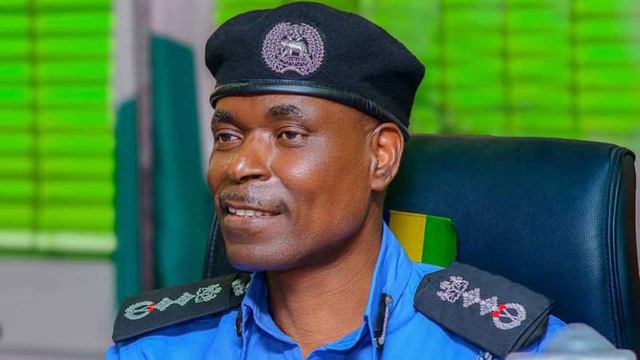
The Inspector General of Police, Mohammed Adamu, has ordered the posting of four Commissioners of Police to states and police formation
The Force Public Relations Officer (FPRO), Frank Mba, a deputy commissioner of police, disclosed this in a statement on Tuesday in Abuja.
He said the CPs deployed are: Olugbenga Adeyanju, Adamawa, Isaac Akinmoyede, Imo, Audu Madaki, Force Criminal Investigation Department (FCID), Abuja and Edward Chuka, Plateau.
Mr Adamu enjoined the residents of the affected states to accord the CPs maximum support and cooperation.
He charged the newly posted officers to ensure they effectively consolidate and improve on the performances of their predecessors.
The IGP said the postings were with immediate effect.
Revealed: Nnamdi Kanu’s Clone to Address IPOB Members
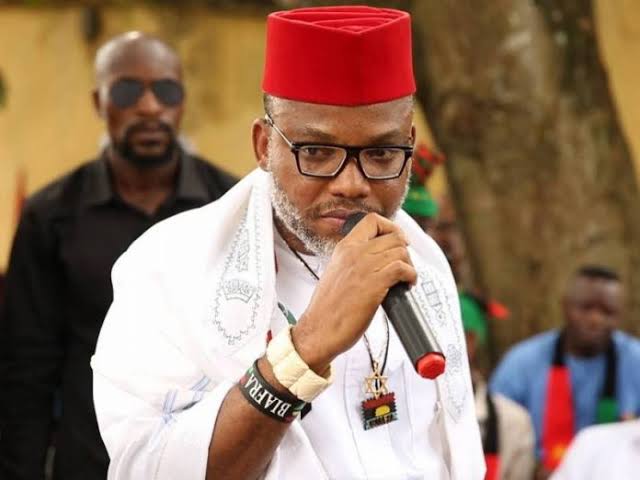
The Indigenous People of Biafra (IPOB) is reportedly set to use a clone of its leaders, Mazi Nnamdi Kanu to address its members via online video streaming as the group, which has been outlawed as a terror organization, remains under intense pressure to prove that Kanu is still alive and had not succumbed to corona virus diseases as reported in some media.
IPOB spokesperson, Emma Powerful, had released a handwritten note purportedly from Kanu announcing that “I will be LIVE here on Facebook, on this page at 7pm with no edited speech or digitally remastered video by the Chinese.”
The assertion was in response to a report by online journalist, Kemi Omololu-Olunloyo, who had revealed that doctors in an Italian hospital have confirmed Kanu’s demise from COVID-19. She had exclusively reported the death of the deceased Chief of Staff to President Buhari, Abba Kyari, from COVID-19 two weeks before the announcement of his death.
A source familiar with the situation said “The senior layer of IPOB has weighed the situation and it is truly a precarious one because people are asking for Kanu to appear in person on video as audio messages could be faked by anyone with access to state of the art software. By a stroke of luck there had been a contingency plan long in the offing.”
Investigations revealed that the contingency plan referred to by the source may not be unconnected with the cloning of Kanu, whose DNA material was harvested by the scientist when he was on exile in Israel. The decision to create a clone was out of IPOB’s fear that he could be assassinated at any time and it would be then be left without a leader. The clone is now being put to use after he reportedly died of the virus.
According to the source, while not specifically making reference to a clone, “IPOB, being a superior and more dynamic organization, has taken care of all possible outcomes. People want to see Ohamadike Nnamdi Kanu on video, they will see him, and it will not be any photo trick, it will be superior science.”
Pressed further for details, the source only said, “Stand by and watch on the appointed time that our leader gave.”
Another source in the security circle who craved anonymity because he did not have the clearance to speak revealed that even the international counterparts of Nigerian security agencies are aware that the IPOB leader is deceased from COVID-19 in the worst case scenario and is certainly in no shape to anchor a video stream if he is still considered as being alive.
The source said, “At the very best Kanu is on life support and disconnecting him to make a video broadcast will certainly kill him. So, if IPOB says they are bringing Kanu to talk to people on video then it tallies with intelligence from the past that he might have created a clone of himself to evade arrest at that time.
“The update we have is that someone that looks like him have been working international consultants, voice actors, a movie director and a body language expert to recreate the persona of Kanu without anyone noticing. The brief if that whoever will appear in the said video stream will be shorter, bulkier and slightly fairer than the Kanu we once have in custody,” he said.
In his view, getting the biometrics of the person that will appear in the video is key to verifying their true identity. He also hinted that the recent social media postings purportedly from Kanu betray slight variations from his original posts, which further fuels concerns that someone else is posting messages on his behalf.
Troops rescue kidnapped victims, uncover illegal refineries, recover arms and stolen crude in Niger-Delta
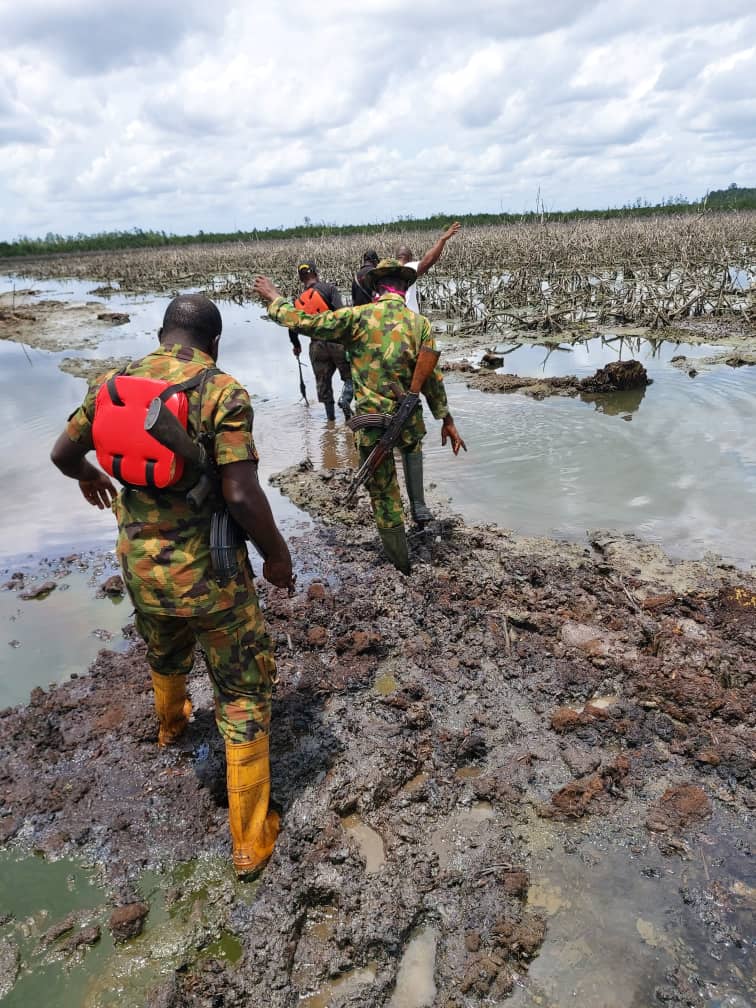
Troops of Sector 2 while on routine patrol at Nembe Owelesu, Bayelsa State encountered sea robbers at Abuja Open Water-Nembe. The Sea robbers on sighting the troop’s gunboats escaped into the creeks. However, troops rescued 15 persons held hostage in 5 speed boats by the hoodlums.
Similarly, on 23 April 2020, acting on a tip off, Nigerian Navy Ship PATHFINDER patrol team intercepted and arrested 3 Barges (MV Rock 1, JULIANAH and an unnamed barge) laden with illegally refined Automotive Gas Oil (AGO) at AGIP waterfront for suspected involvement in illegal bunkering activities.
The Team also arrested another barge laden with suspected stolen crude oil around Okochiri River entrance.
Also, troops of Sector 3, Operation DELTA SAFE conducted raid on four Illegal refining sites along Dema Abby – Oputumbi – Nanabie – Promise Land – Otobie and Ogono general area. Items discovered and appropriately handled, include 7 boilers, 9 storage tanks, 8 metal tanks, 1 dugout reservoir all filled with stolen crude oil, 8 metal tanks, 18 metal drums, 11 reservoir tanks filled with illegally refined AGO and Dual Purpose Kerosene (DPK). Also, 2 empty Cotonou boats, 1 generator set, 1 pumping machine, 2 welding machines, 1 filing machine, rolls of hose, and 1 speedboat mounted with 75 HP engine (use for illegal bunkering activities) were also discovered within the sites.
Additionally, troops of Sector 3 on patrol intercepted a barge laden with suspected illegally refined AGO around Orutoru general area of Rivers State. Relatedly, on 25 April 2020, following intelligence report, troops of Headquarters Operation DELTA SAFE discovered and appropriately handled an Illegal refining site at Uzere community at Ughelli North LGA of Delta State. Additionally, on 23 April 2020, troops of Sector 2 Operation DELTA SAFE deployed along KCTL pipeline at Odau Community in Abua/Odual LGA of Rivers State arrested 3 suspected pipeline vandals around Shell Petroleum Development Company pipeline.
Overall, a total of 3 weapons were recovered, 48 illegal refineries, 28 surface metal storage tanks, 60 cooking ovens and 18 Cotonou boats amongst others were discovered while about 58,500 liters of
DPK, 11, 750 liters of PMS, 855,900 liters of AGO and an estimated 1, 507,000 liters of crude oil were seized by troops.
All rescued victims, recovered items and arrested suspects are to be handed over to the appropriate authorities at the end of preliminary investigation.
NIFROP extends 21-day fasting and prayers
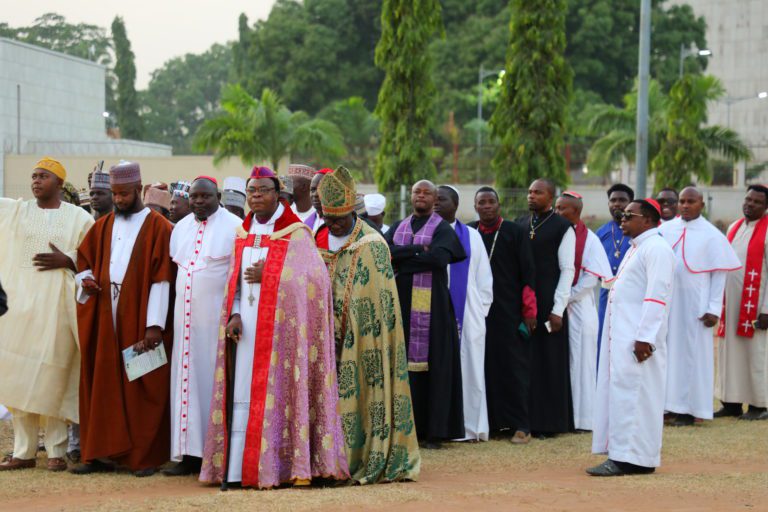
The National Inter-Faith and Religious Organizations for Peace (NIFROP) has announced an extension to its 21-day fasting and prayer till the end of Ramadan.
According to NIFROP, this is in light of the prevailing circumstances in the country and a show of solidarity to its members as well as other Muslims around the country.
The group made this known in a statement signed by Chairman, Board of Trustees, Archbishop Julius Ediwe, on Tuesday.
NIFROP, however, encouraged all members to be steadfast in the prayer for Nigeria against the further spread of COVID-19, as well as an end to the nefarious activities of the Boko Haram/ISWAP terrorist group.
It further declared that the end of terrorism is imminent as “God has revealed to us during our fasting and prayers that indeed Abubakar Shekau would be captured and Nigeria shall be free from the clutches of the Boko Haram/ISWAP terrorist activities”.
Read full statement below:
The National Inter-Faith and Religious Organizations for Peace wishes to inform the general public of the extension of its 21 Day Fasting and Prayer session for divine intervention in halting the further spread of COVID-19, the impending economic meltdown as well as the capture of Abubakar Shekau and an end to the activities of Boko Haram/ISWAP in Nigeria.
The 21 Day Fasting and Prayer session would continue till the end of the Ramadan in light of the prevailing circumstances in the country and a show of solidarity to our Muslim brothers and sisters, and members of NIFROP, as well as other Muslims around the country.
NIFROP has been in the vanguard of uniting adherents of different faiths under one umbrella in prayer and supplication to God for divine intervention in the affairs of Nigeria.
We are standing by the word of God in the Book of Mathew 6:16 “When you fast, do not look somber as the hypocrites do, for they disfigure their faces to show others they are fasting. Truly I tell you, they have received their reward in full.”
We encourage all our members across the country to be steadfast in the prayer for Nigeria against the further spread of COVID-19, as well as an end to the nefarious activities of the Boko Haram/ISWAP terrorist group.
We wish to state that the end of the Boko Haram/ISWAP group is imminent as God has revealed to us during our fasting and prayers that indeed Abubakar Shekau would be captured and Nigeria shall be free from the clutches of the Boko Haram/ISWAP terrorist activities.
NIFROP has been connecting with our members all around the country through a virtual platform through sermons and words of exaltations from Pastors and Imams from different churches and mosques across the country.
We are mandated to pray together in the book of Ephesians 3:16-19 which states that “And I pray that you, being rooted and established in love, may have power, together with all the saints, to grasp how wide and long and high and deep is the love of Christ, and to know this love that surpasses knowledge – that you may be filled to the measure of all the fullness of God.”
We wish to state that our prayers and fasting programme is structured through an online format where our members link up to an online platform where we pray together and after that break our fast.
In the past days, we have prayed for God’s intervention in the affairs of Nigeria. We have also prayed for the grace of God upon the life of our leader, President Muhammadu Buhari, to continue to lead Nigeria with the fear and grace of God.
We have also prayed for our troops engaging the Boko Haram terrorist in North-East Nigeria. We pray for God in his infinite mercies to continue to protect them and grant them victory.
The leadership and members of NIFROP felicitates with all Muslims in Nigeria in the month of Ramadan fasting, prayer, and reflection.
NIFROP, since the commencement of its prayer and fasting programme, our Unity Church and Unity Masjid is reaching out to over 5000 families through the provision of food items and direct cash transfers to ease hardship brought about by the compulsory lockdown in the country and the negative impact of Covid-19 on our daily living. With the support of our brothers and sisters all over the world, we will be able to increase this number as it may please the lord of host.
May God, in His infinite mercies, continue to protect Nigerians and the rest of humanity in this challenging period.
BREAKING: Tinubu’s CSO died of COVID-19, aide says
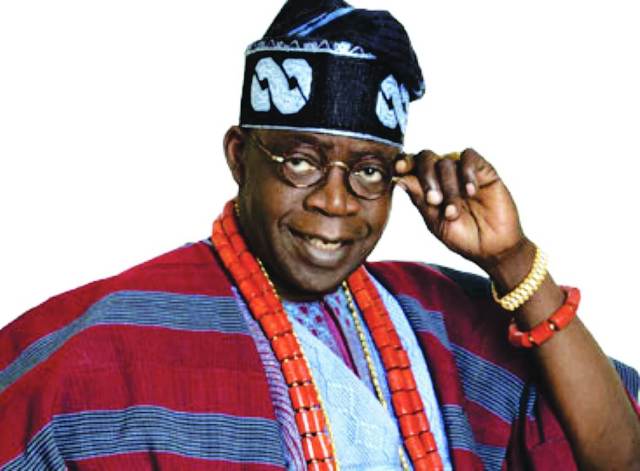
The late chief security officer (CSO) to Bola Ahmed Tinubu, Lateef Raheem, had COVID-19, the media office of the former Lagos state governor has said.
But Tinubu and his wife, Remi, have both tested negative to the disease, Tunde Rahman, his spokesman, said in a statement issued on Monday afternoon